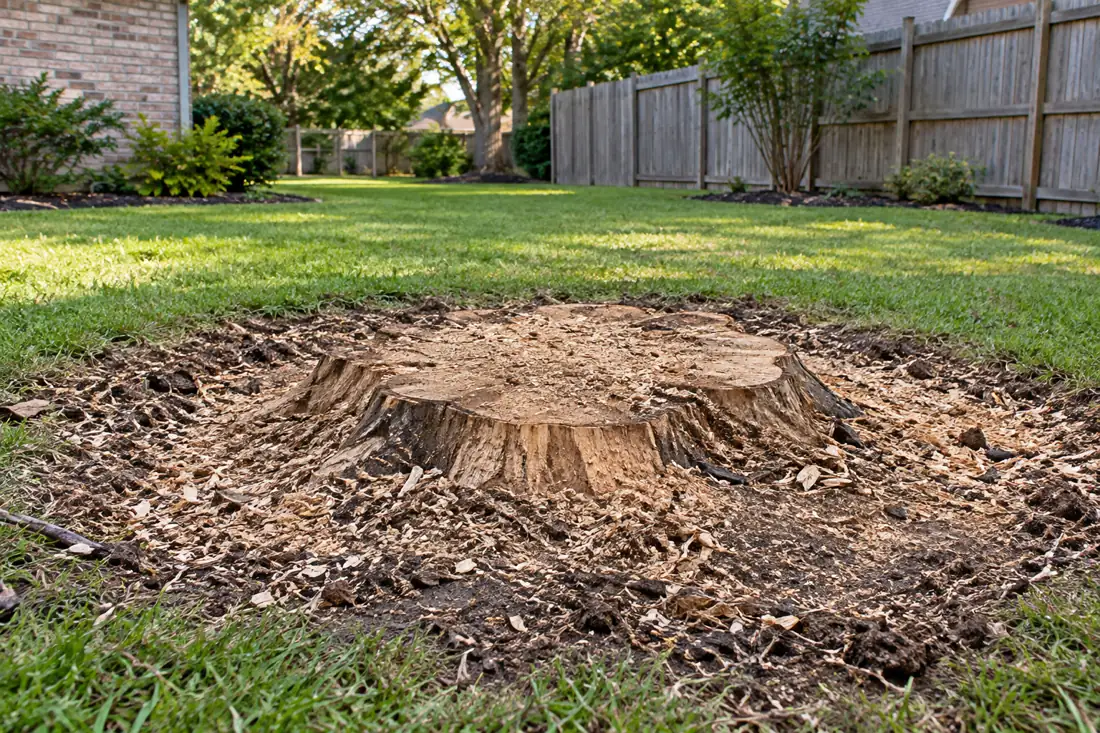
Stump-grinding depth should be based on what the site needs afterward. A stump being covered with mulch may not need the same treatment as an area being returned to lawn or prepared for another project.
Write a measurable grinding finish before the machine arrives
The phrase ‘grind the stump’ leaves important work undefined. State whether depth is measured from existing lawn grade, pavement grade or the highest exposed stump surface, and identify the outer limits of any buttress roots included. The desired finish for a mulched bed, new sod or a later concrete slab should be documented separately.
Grinding does not certify that soil is ready for construction or a replacement tree. Determine who will remove chips, import soil, check grade and address remaining lateral roots. Photograph the marked work boundary and request confirmation of the finished area before the next trade covers it.
Roots can remain
Grinding the stump does not remove every lateral root. Construction or paving projects may require additional excavation beyond normal stump grinding.
Ask about the grindings
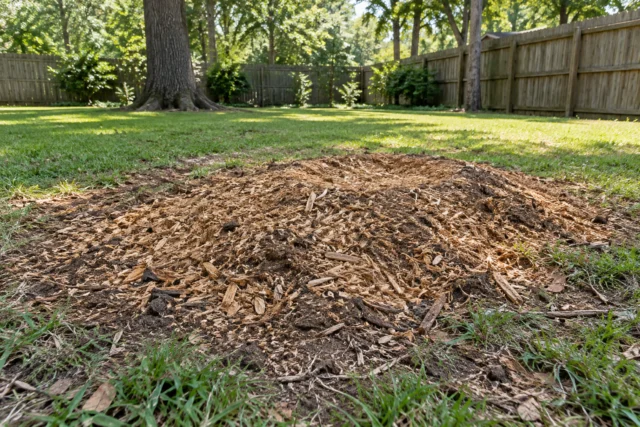
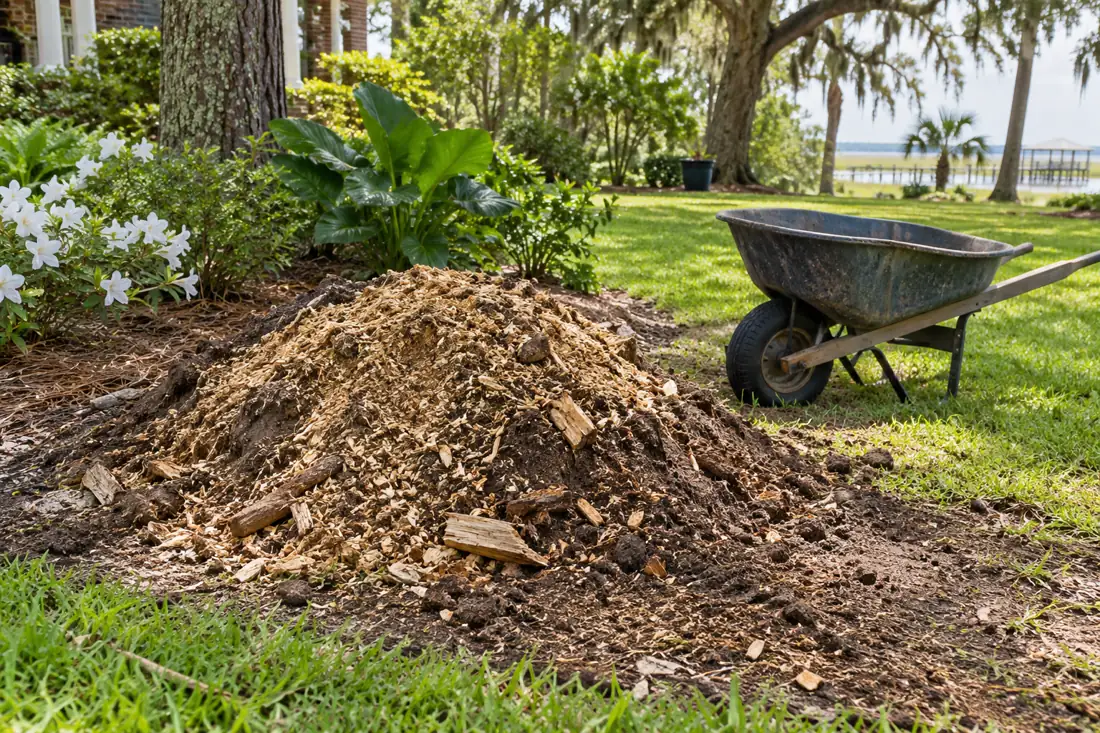
Decide whether the chip-and-soil pile stays or is hauled before the job begins.
Tell the contractor what the ground must do afterward
A lawn repair, a new planting bed and a concrete project do not ask the same thing of a former stump area. Explain the next use before discussing a depth. If another contractor needs the area prepared, obtain that provider’s actual requirements and share them with the grinder. A general request to take the stump below ground can sound complete while leaving important wood, soil and excavation questions unresolved.
Describe the work footprint with a simple photograph or site sketch that identifies the stump and nearby features. Say whether the goal is a smoother lawn surface, space for a particular planting or preparation for a designed project. The stump contractor can then discuss what grinding covers and what may require excavation or another provider.
Do not choose a number from a general article and assume it certifies the area for every future use. A useful specification connects the requested result with the actual site and the responsibilities of the next trade.
Agree on the grade from which depth is measured
Depth has little meaning if the parties are using different starting surfaces. A raised stump mound, surrounding lawn and proposed finished grade may all be at different levels. Show the contractor which surface or project reference matters and ask how the agreed depth will be described. If a designer or concrete contractor supplies the reference, keep that requirement with the work scope rather than relaying it as an approximate verbal instruction.
A quote should make any important access or obstruction limits visible. Ask what happens if the agreed result cannot be achieved because of a previously unknown constraint. The answer should be a review and authorization process, not an assumption that the crew will keep grinding into uncertain conditions.
At completion, compare the work with the accepted scope using an appropriate safe method agreed with the provider. The owner should not enter an active work area or probe around uncertain utilities to check a measurement during operation.

Specify the footprint as well as the vertical depth
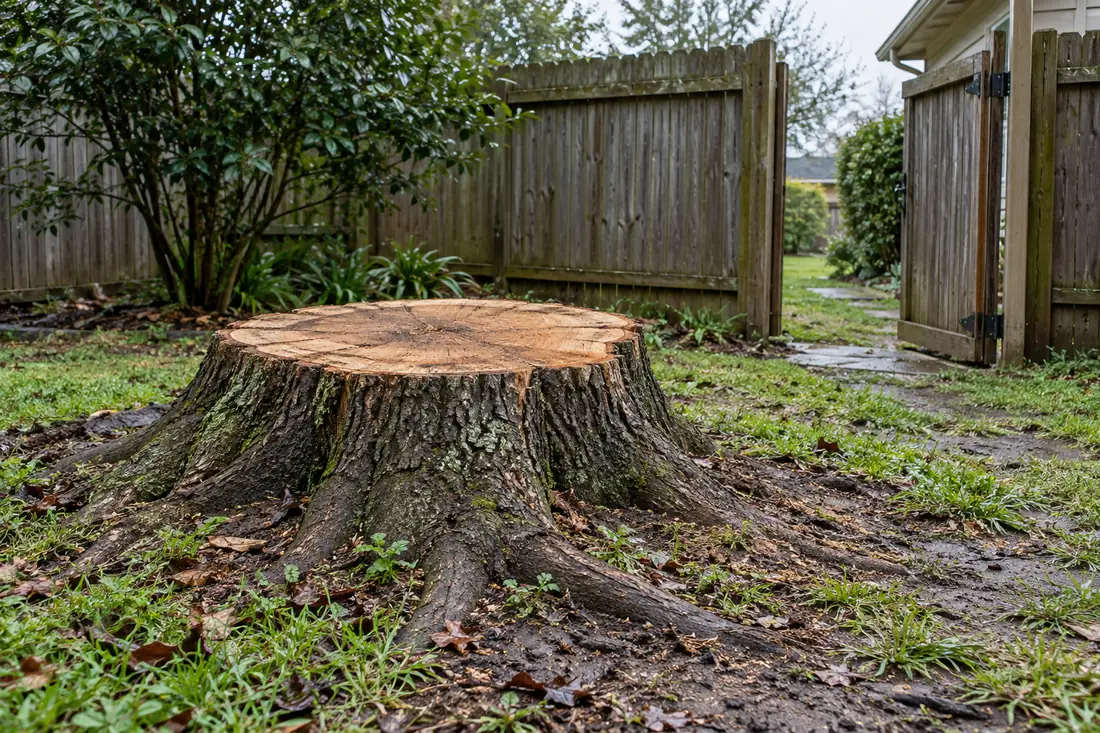
Grinding the visible center does not necessarily address every stump flare or surface root that affects the next project. Identify the area the owner wants treated and discuss which surrounding woody material is included. A broad oak base may extend beyond the upright trunk, while a small stump near a path may have one particular root that matters. The scope should describe the intended footprint without implying removal of every root across the property.
The SDSU Extension stump-removal overview distinguishes grinding from the separate cleanup and filling that owners may need afterward. Use that distinction when discussing the finished area. Ask whether the request includes only the stump, selected visible flares or additional agreed surface roots. Do not treat a wider grinding footprint as permission to damage roots of a neighboring retained tree. If the work could affect another tree or structure, raise that concern before a method and price are confirmed.
Clarify what happens to roots that remain
Stump grinding is different from excavating a root system. If your next project depends on removing particular woody material, state that requirement explicitly and ask whether ordinary grinding can meet it. A provider may need to coordinate with an excavator, builder or landscape contractor. The relevant question is the actual project requirement, not whether every root in a yard can be followed and removed as part of one standard service.
For planting, ask the landscape provider where the new plant should go and what soil preparation is needed. For paving or a structure, obtain the responsible designer’s or contractor’s requirements rather than relying on a tree-service webpage as an engineering specification. Keep those requirements and any exclusions with the quote. This prevents a later disagreement in which the grinder delivered the accepted stump scope but another trade expected a different subsurface result. Clear handoffs are especially helpful when different companies work on different dates.
Resolve utilities and nearby fixtures before grinding
Identify known irrigation, drainage, lighting, pet-fence and other private systems near the stump and access route. Arrange the appropriate utility-location process and discuss any additional locating needed for customer-owned systems. Do not assume one type of locate identifies everything underground. Give the contractor available plans and mark known features through an agreed process, without digging or probing to investigate a line yourself.

Specify a measurement basis and the surface afterward
A quoted grinding depth needs a reference surface and a usable description of the footprint. Ask whether the measurement is below the existing soil grade or another agreed mark, and what happens where roots flare beyond the central stump. A number stated without those assumptions is difficult to verify afterward.
Explain what is planned for the site: turf, flowerbed, pavement or another tree. Some uses may require work beyond ordinary grinding, and underground utilities or drainage can affect what is permissible. The contractor should clarify which root material may remain rather than implying that grinding removes a complete root system.
Agree on what to do with grindings, any open depression and the final site condition before the equipment arrives. Additional excavation, topsoil, grading or landscaping may require a separate provider. Use a handover photo of the agreed area without suggesting it certifies the buried depth.
Explain nearby fences, concrete, rocks and retained planting as well. These can affect the working area and the result that is practical. Ask who arranges preparation, disconnection or separate repairs where needed. If a newly found obstruction changes the scope, stop for the agreed review rather than treating a promised depth as a reason to proceed blindly. The owner needs a feasible finished result and a clear responsibility for unresolved items, not a depth figure that ignores the actual conditions around the stump.
Specify grinding by the final use of the surface
Describe what you intend to do over the stump footprint before the contractor offers a depth. Returning an area to turf, covering it with mulch and preparing for a new structure do not have identical requirements. The starting surface elevation and desired finished grade should be stated in the scope, especially on an uneven lot. A numerical depth without an agreed reference surface can lead to misunderstandings after the chips settle.
Grinding the center of a stump does not guarantee that the wide lateral roots below a driveway or landscaping bed disappear. Show the contractor the approximate stump flare, nearby sidewalks, utility routes and any irrigation or landscape wiring. Do not assume underground services are visible from the top of a stump. The work method and safe limits should be confirmed with the appropriate locating and site-control procedures before excavation or grinding starts.

Depth, width and remaining roots are separate decisions
Specify the horizontal footprint as carefully as the vertical treatment. An old stump with several buttress roots may need a different work area from a narrow trunk. Decide whether exposed surface roots, protruding wood and surrounding mounds are included, and what will remain outside the agreed limits. Existing patios, fences, foundation edges and tree roots intended to be retained can restrict machine access and acceptable disturbance.
Ask what the final surface will actually contain. Loose wood chips can settle, decompose and behave differently from clean soil; they are not equivalent to an engineered base for pavement. If topsoil, grading, sod or excavation by another trade is desired, list those as separate deliverables. Take safe before and after photographs showing the same area so the agreed footprint and cleanup finish can be checked without implying all roots were excavated.
For stump grinding, tell Tree Huggers whether the area will become lawn, landscaping or construction space. Ask for written depth and footprint assumptions, chip handling and separate restoration responsibilities.
Include chips, soil and the surface finish in the quote
Grinding produces material that occupies the area where the stump stood. Decide whether the grindings remain, are redistributed as agreed or are hauled. Ask whether imported soil, grading, sod or planting is included by any provider. These are distinct tasks even when the owner thinks of the whole project as stump removal. A quote can be accurate while leaving a different surface than expected if the finish was never defined.
The grindings handling guide explains how to frame that choice. Tell the contractor if a landscaper will complete the surface and ask what condition that provider requires. Keep the timing coordinated so an open or uneven area is managed appropriately between visits. Do not assume the freshly ground material is equivalent to compacted structural fill or finished planting soil. The next use should govern the handover specification, with the relevant provider explaining the preparation its own work requires.
Plan access for the actual stump and machine
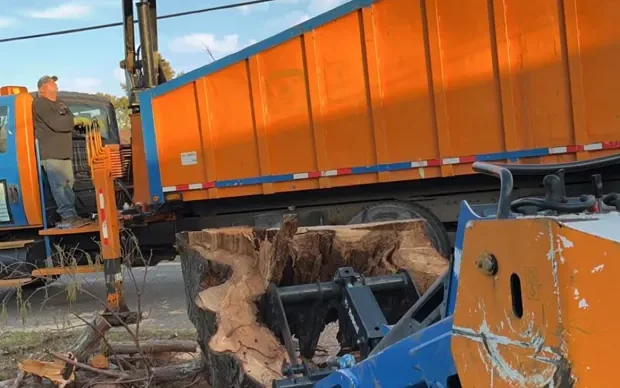
Send a view of the full route from the street to the stump, including gates, turns, steps and overhead restrictions. A stump that looks accessible in a close photograph may sit behind a narrow opening or fragile landscaping. Tell the company about soft ground, a recent rain-related change and any surface that cannot be crossed. The provider needs to confirm equipment suitability instead of relying only on the diameter of the wood.
Do not remove a fence panel or move fixed fixtures until the contractor confirms the accepted plan and responsibilities. If access uses another property or a shared route, secure the necessary arrangements first. Include who restores a temporary opening and what routine cleanup covers. This practical information makes the estimate more dependable because the contractor is pricing the real route and finished scope. A nominal depth should never be treated as the sole measure of completion when access or handling assumptions differ between proposals.
Request a depth specification you can use
Tell Tree Huggers the stump location, next intended use, known utilities and nearby retained features. Provide safe photographs showing the stump base, surrounding grade and access route. If another trade has supplied a written requirement, share it and ask whether the proposed grinding scope can meet it. Confirm the measurement reference, treated footprint, remaining roots and material handling before scheduling.
See stump grinding for service inquiries and measuring a stump for an estimate to prepare useful initial information. At handover, keep any limitation or remaining excavation item in the record for the next provider. The result should be a shared understanding of what was ground and what remains, rather than a generic depth claim. That makes the project easier to price, verify and continue, whether the next step is lawn repair, planting or another professionally specified improvement.
How Deep Should a Stump Be Ground? questions
Is there one correct grinding depth for every stump?
No. Define the next use, site constraints and actual scope instead of assuming one number suits lawn, planting and construction equally.
What reference surface should depth use?
Agree on the relevant grade or project reference before work so the owner and contractor are measuring the same result.
Does grinding remove every lateral root?
No. Specify the stump footprint and any separately agreed roots; full root excavation is a different scope.
Should my concrete contractor supply requirements?
Yes. Obtain the responsible provider's actual preparation requirements rather than relying on a general tree guide as a construction specification.
What matters besides depth?
The treated footprint, remaining roots, utilities, access, grindings handling and final surface all need clarification.
Will a utility locate find my irrigation and pet fence?
Do not assume it identifies every private system. Disclose known systems and discuss any additional locating needed.
Should I dig near a line to check clearance?
Do not probe or excavate around uncertain utilities. Resolve the location and responsibilities through the appropriate process.
Can grinding affect a retained tree nearby?
Raise that concern before work. The request should not be treated as permission to remove another tree's roots indiscriminately.
Are chip hauling and new soil automatically included?
No. Confirm grindings removal, imported soil, grading and landscaping separately in the agreement.
Can grindings be assumed to be structural fill?
No. The responsible provider must specify suitable preparation and material for the actual future project.
Should I remove a gate or fence first?
Only after the actual access plan, permissions and restoration responsibilities are confirmed.
What should the first request include?
Send the address, stump and grade views, access, next use, known utilities and any requirement from the next trade.
Let’s plan your tree work.
Send the property address, safe tree photos and the result you need. Include access restrictions and the person who can approve the work.