Storm cleanup begins after hazards are controlled
Make the safe cleanup boundary visible
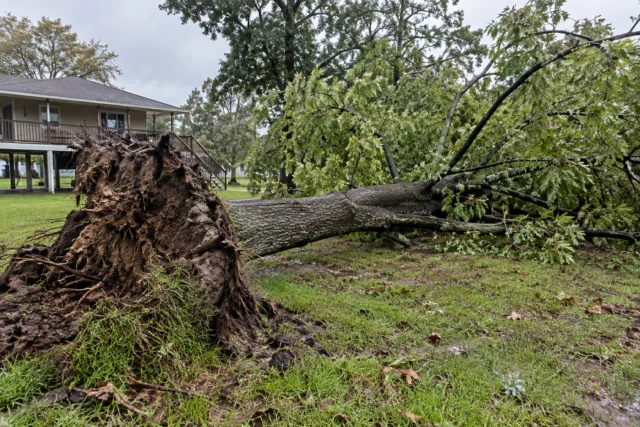
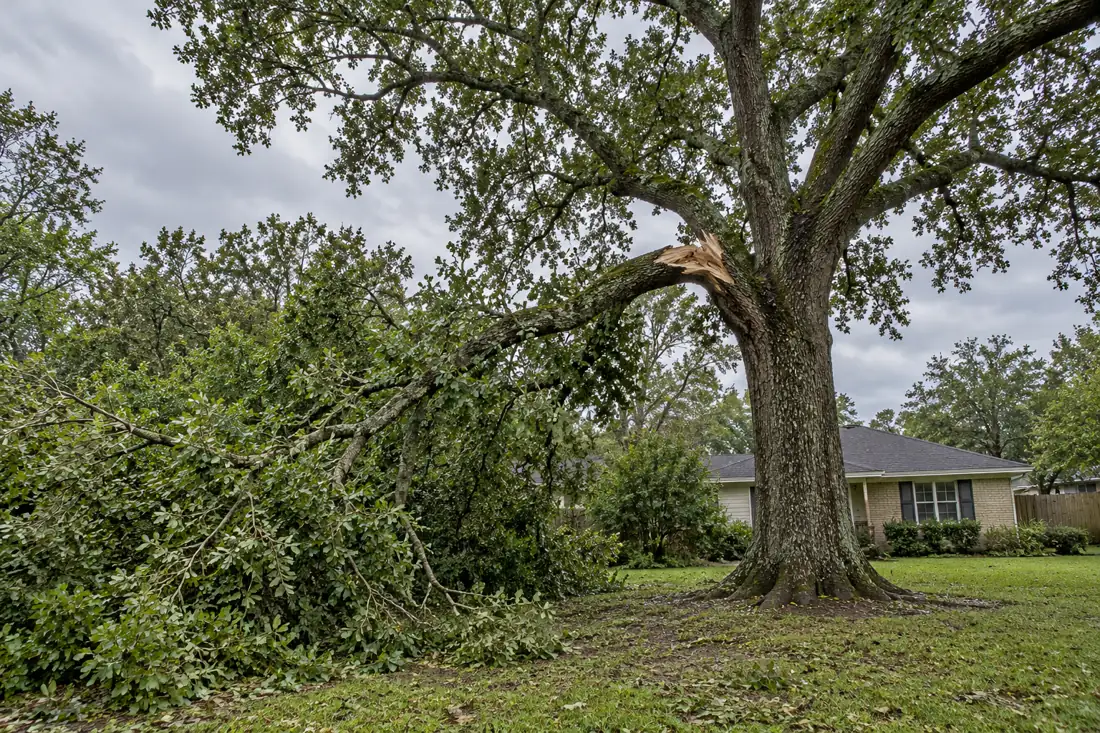
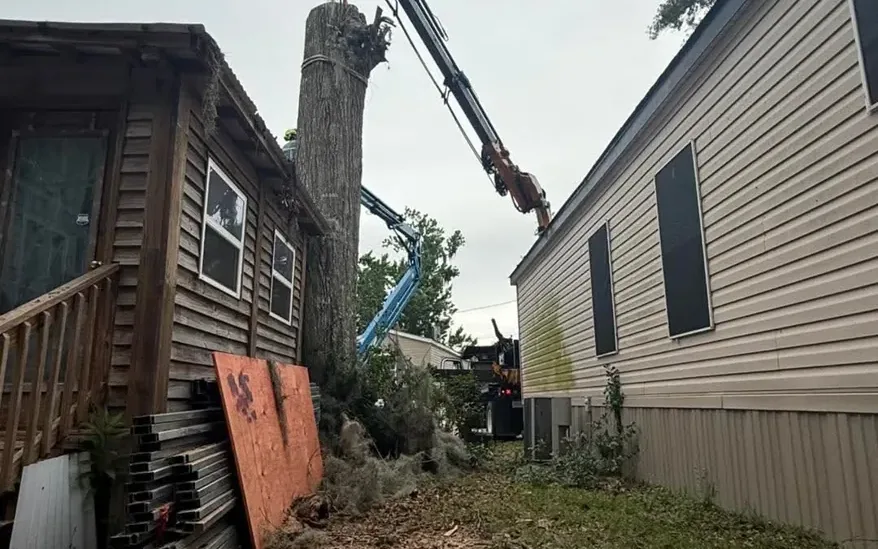
When the wind has passed, a property may contain cut limbs, scattered brush, embedded branches, damaged fencing and still-unstable trees. Start by identifying areas that can be entered safely and those that remain isolated. The cleanup estimate should not treat a limb hanging over the work path as a pile that can simply be dragged out. Separate immediate tree-risk issues for professional evaluation from loose ground material, and flag utility lines, waterlogged soil, damaged culverts or inaccessible alleys before equipment arrives.
Specify what clean means at the end
A practical finish description may identify removal of trunk pieces, brush and loose chips; clearing a gate or walkway; and whether raking, stump work, soil repair or replacement landscaping is outside the scope. Photos from safe areas can establish where material was before collection and what surfaces need protection. For a tree that remains down under tension, begin with fallen-tree removal. For a standing tree with new defects, the relevant path is storm-damage tree assessment. Keeping those tasks distinct makes a cleanup quote easier to compare and reduces surprise add-ons.
Cleanup starts with hazards, not appearance
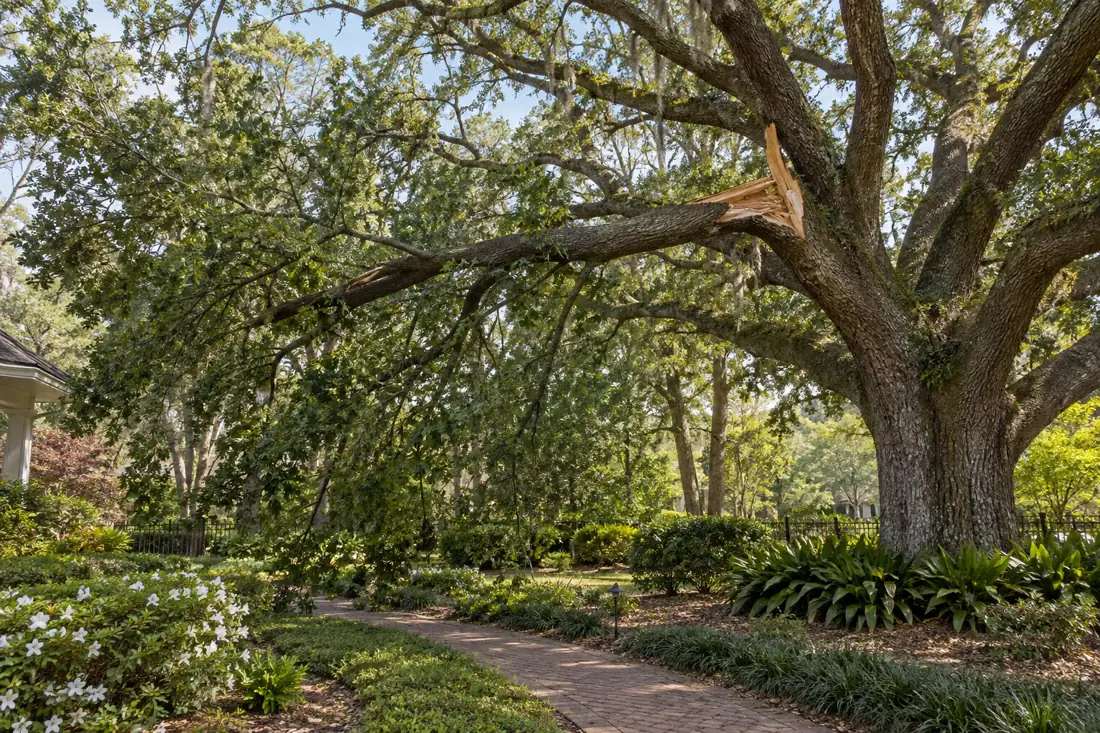
Before hauling debris, we look for unstable trees, suspended limbs, split trunks and other conditions that could create another failure while crews are working underneath. Once hazards are controlled, material can be processed and moved more efficiently.
Practical scope and safety guidance: Storm cleanup often combines several different jobs: opening safe access, cutting damaged material, removing logs and brush, grinding stumps, and repairing disturbed ground. Treat those as separate decisions instead of assuming one cleanup price includes every task. Begin with a safe-distance overview of each work area, show blocked routes and note soft ground, gates, overhead wires or areas a truck cannot enter. Keep homeowners and helpers away from piles that may move when a trapped limb is cut.
On a commercial site, identify who controls public access and which operations must continue during work. Before agreeing to a scope, confirm how debris will be staged, whether material leaves the property, whether roots or stump chips remain, and what restoration is excluded. If there are multiple properties, use an address and marked photo set for each rather than a single general estimate that obscures quantities and responsibility.
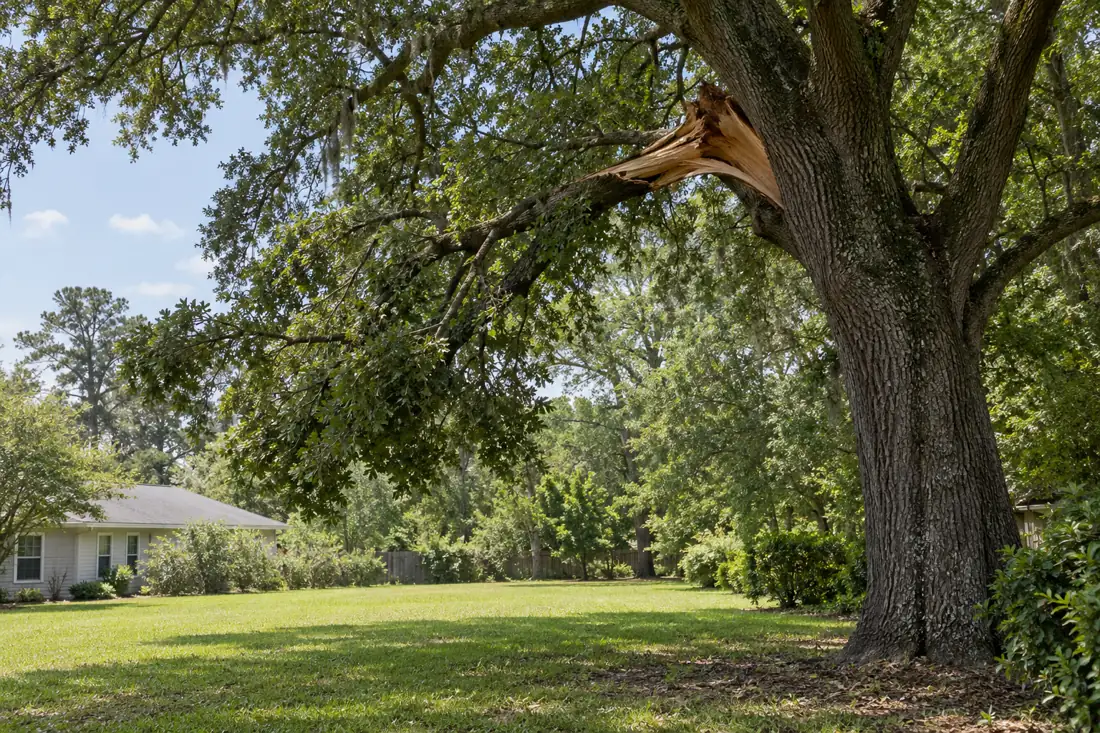
Identify hanging limbs, unstable trees and access hazards.
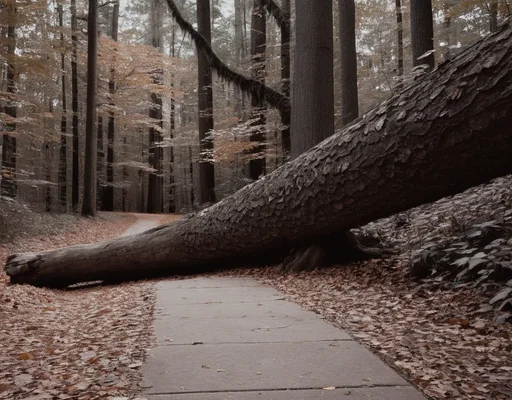
Separate removal from finished-site cleanup
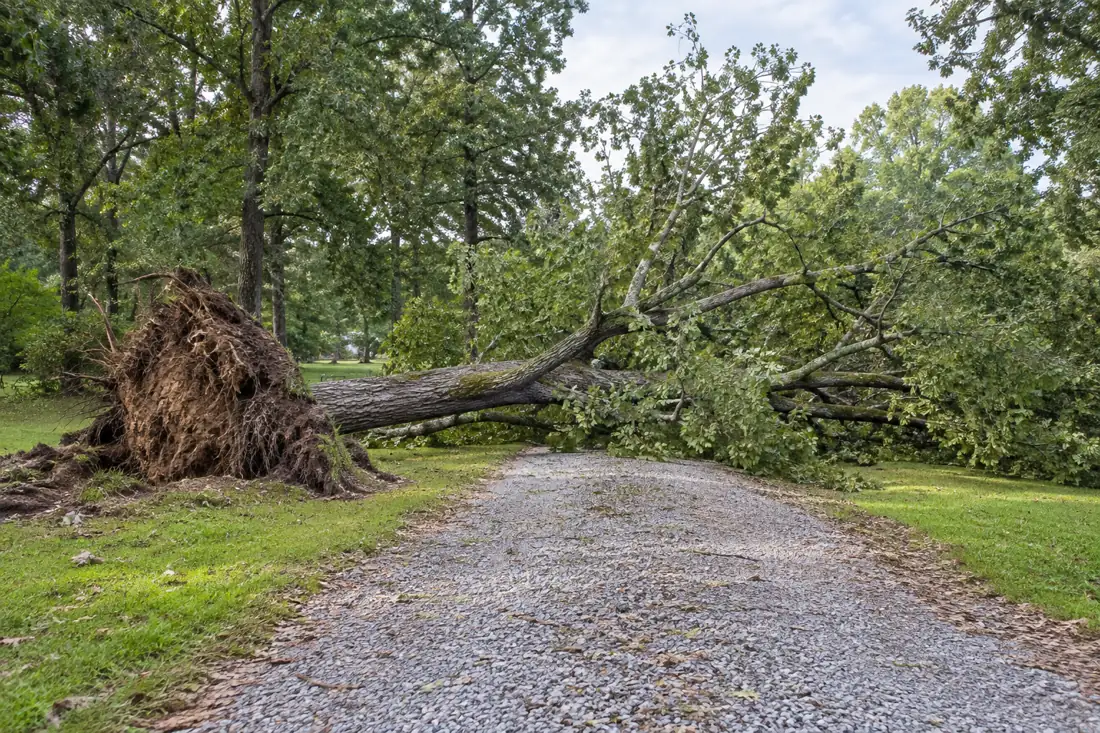
Define whether the job is stabilizing and removing hazardous limbs, collecting cut branches, hauling larger wood, raking smaller material or returning surfaces to use. Those may be separate tasks. Keep piles out of entrances, drains and traffic areas while coordinating what the scope actually includes.
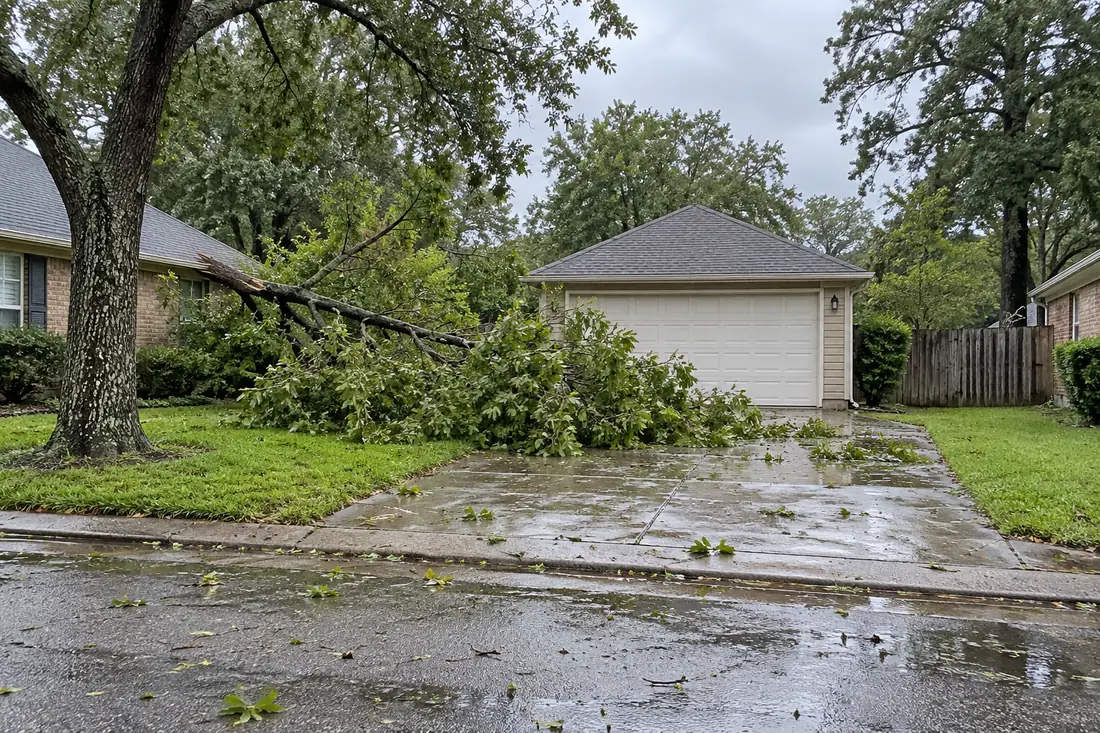
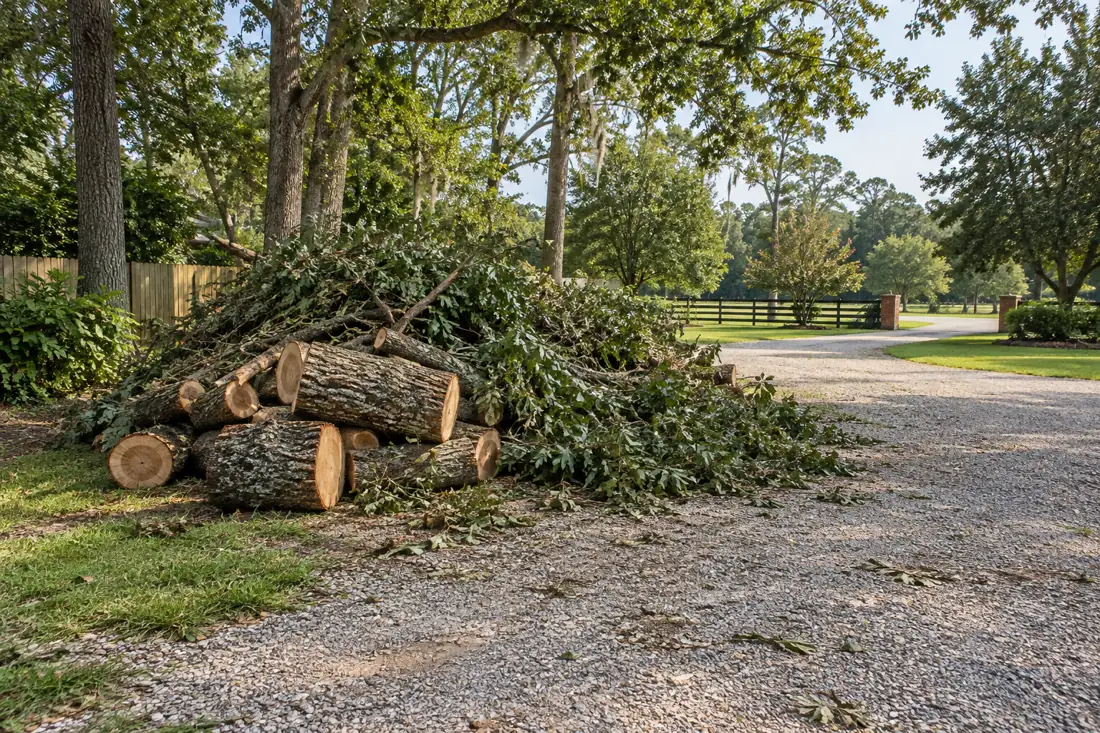
Cut, move and organize logs, limbs and brush for efficient handling.
Clear drive lanes, work areas and the agreed debris footprint.
Residential and commercial storm cleanup
A homeowner may need a driveway, roof area or backyard cleared. A commercial property may need entrances, parking, service lanes and occupied areas prioritized. Larger projects benefit from a site sequence that keeps equipment and debris movement from interfering with critical access.
Related services
Begin with a safe overview of the property
Describe the areas affected and any tree damage still above them. Material on the ground can draw attention away from a broken limb or standing tree nearby. Do not walk under damaged canopy or climb over supported wood to survey the site. Tell the company which observations were made safely and which areas remain unviewed. An honest limit is more useful than assuming the whole property is ready for routine hauling.
Use the storm-damage service for related standing-tree concerns. If the situation presents an immediate threat to people or involves electrical lines, contact the appropriate emergency or utility service. Call Tree Huggers at 504-458-8336 to discuss current response availability. A cleanup inquiry should distinguish the tree hazard from the later material task; it is not a remote declaration that work can safely begin throughout the site.
Divide scattered damage into recognizable areas
Use location labels that will still make sense when the crew arrives: front drive, rear lawn, service gate or building entrance. Photograph each area from a safe position and connect it to the request. Several close-ups without locations can make a manageable property look like an unexplained collection of wood. Clear labels also help the customer compare a quote with what is actually being authorized.
For a larger footprint, describe the route between areas and whether any section has a different access contact. Include material that lies behind visible piles or beyond the initial photo frame. Do not assign every item to the same scope simply because one storm created it. A tree against a shed and loose branches across open grass may need separate handling. An organized area list lets the work discussion retain that difference while keeping the overall cleanup objective clear.

State which route needs to work first
Explain the practical priority, such as an occupied entrance, driveway or service lane. Tell the company whether an alternate route exists and who controls it. The immediate task may be to restore a particular access path, with broader processing and hauling arranged separately. Ask what is proposed rather than assuming the first visit includes every piece of material across the property.
The fallen-tree page addresses a major obstruction already on the ground. For an occupied commercial property, the commercial response page provides coordination context. Keep people away from damaged areas while access arrangements are discussed. An opening visible through a fallen tree does not establish a safe passage for people or vehicles. The accepted scope should name a practical access objective without guaranteeing a sequence or completion time before current conditions are reviewed.
Identify wood and mixed contents separately
Describe logs, brush, leafy limbs, chips and stump material in ordinary terms. Mention fencing, roofing, metal or other non-tree objects mixed into the damage. If contents are concealed, say what is known and what is not. Do not sort a questionable pile to produce a complete inventory. The company needs an accurate material boundary before confirming handling or a separate arrangement for items outside tree-debris work.
The debris removal service explains the difference between accepted vegetative material and an open-ended mixed cleanup. Include older piles or unrelated rubbish as separate items. Clarify whether a fallen tree still needs processing, rather than booking only hauling for unfinished tree work. That distinction matters when a supported trunk, exposed root plate or damaged standing tree remains part of the area the customer wants cleared.
Plan movement through the site
Show the path from each work area to processing or loading. Gates, turns, surfaces, ground conditions and available setup space belong in the request. Rain or damage may have changed a previously usable route. Tell the estimator about those changes and any restrictions on neighboring or shared property. Do not move material into the street or a neighbor’s access simply to create a presumed loading position.
Equipment and handling options need to match the actual property. The equipment guide organizes useful observations without asking the customer to select a machine. Discuss retained trees, garden beds, parked areas and utility features along the route. On a managed site, connect loading to deliveries and occupancy. A workable cleanup plan considers where material travels, not just where it started or how large the most visible pile appears in a photo.
Decide what remains after the main wood leaves
Ask about the practical condition of the ground and access surfaces. Removing large branches does not automatically include all small fragments, soil repair, sod replacement or restoration of damaged landscaping. Stumps, roots and holes need an explicit decision. Describe the intended next use so the accepted finish fits the customer’s actual objective rather than a vague promise that the property will be completely restored.
The stump planning hub can help with remaining stump questions. If wood is being retained, agree on which material and its location before processing. A later visit or another contractor may be needed for separate restoration work. Make that handoff visible in the work list. Customers can then compare proposals on the same finish and understand what remains, rather than discovering different assumptions after the major debris has been removed.
Coordinate the people who authorize and use the area
For a home, identify the person who approves the work and can arrange entry. For a managed property, distinguish the purchaser, on-site contact and person coordinating occupants or maintenance teams. Keep the same location labels in their messages. A single current list prevents separate conversations from creating conflicting instructions about which piles are included or where material may be staged.
If another contractor will repair a roof, fence or landscape, explain that sequence without assuming tree work includes those services. Use the agreed direct channel for private access details. Changes should be reviewed by the authorized contact rather than silently added to an accepted cleanup scope. This is particularly useful when more damage becomes visible as material is removed. A clear decision path keeps the project moving while preserving the customer’s control over what work is being approved.
Confirm a measurable cleanup result
Before approval, review the affected areas, tree handling, material accepted, loading route, retained wood and finish. Ask which items are excluded and what would trigger a revised discussion. A quote that names the work area and end condition is easier to use than one based only on a truck size or a broad statement to clean everything. Keep current photos and the agreed location list available for the final review.
For example, clearing the front drive and hauling loose branches while leaving a rear stump for later grinding is a specific staged plan. It is a planning example, not a completed customer project claim. Tell Tree Huggers the result you need and whether another provider follows. The handoff should leave the next task understandable, with no assumption that opening access, hauling all debris and rebuilding the landscape are the same operation.
Stage storm cleanup to preserve clear responsibilities
Storm conditions often combine loose branches, damaged standing trees, blocked access and material owners want to save. First identify unsafe areas from a distance, especially hanging limbs, shifted trunks and any contact with electrical lines. Do not mix emergency hazard control with ordinary load-out instructions. Appropriate emergency or utility services should handle their own hazards before anyone treats the zone as routine debris cleanup.
Divide the property into recognizable areas and connect each to safe overview photos. Opening a driveway may matter before clearing an unused rear corner. Explain where residents, deliveries and service vehicles must move while work occurs. Narrow gates, saturated soil, overhead clearance and drainage ditches can alter the equipment and hauling discussion. Avoid assuming yesterday’s route remains suitable after another heavy rain.

Separate hazardous trees, hauling and landscape restoration
List what should be chipped, hauled, neatly retained or left for a separate stage. Mixed fencing, building materials and unknown waste may require other arrangements. Explicitly discuss stumps, grindings, compacted turf, soil disturbance and later landscaping. Moving vegetative debris does not automatically restore every lawn surface or fix drainage changed by the storm. Those are separate outcomes unless included in the accepted proposal.
For each finished stage, compare the tree list and material choices against the agreed scope and record remaining items. If another provider will handle paving, utilities or soil repair, name that next responsibility clearly. When subsequent wind changes a standing tree or creates new debris, update the plan rather than relying on old photographs. A staged record describes genuine work completed without overstating the result.
Storm Cleanup questions
Where should a storm cleanup request start?
Describe remaining tree hazards, affected areas, blocked access and the material on the ground from safe observation positions.
Should I gather everything into a pile first?
Discuss handling before moving material. Do not work below damaged trees, alter supported wood or obstruct public or neighboring access.
Can cleanup be organized by property area?
Yes. Use consistent labels, photos and an accepted work list so each area has a clear scope and finish.
Does clearing a driveway include the whole property?
Not automatically. Confirm the immediate access task and any later processing or hauling separately.
What if tree debris contains roofing or fence wire?
Disclose mixed contents and unknown material. It may need different handling or a separate provider.
Will you remove an older brush pile at the same visit?
Identify it separately and ask whether it is included. Its presence does not automatically expand a storm-cleanup agreement.
Are stumps and exposed roots included?
Confirm those tasks explicitly. Main-tree cleanup, grinding, excavation and ground restoration are different operations.
Can logs stay for the owner?
Discuss retained material, processing and placement before accepting the scope. Do not assume particular log lengths or splitting.
Does cleanup restore grass and landscaping?
Ask what finish is included. Hauling material and repairing the landscape are different responsibilities unless expressly arranged.
Who should coordinate a managed property cleanup?
Name an authorized purchaser, an access contact and the person coordinating occupants or other contractors.
How should new damage found during cleanup be handled?
Report it to the authorized contact and review the relevant scope rather than silently adding work.
Does an online cleanup request confirm dispatch?
No. Call about current availability for urgent tree concerns, and use emergency or utility services where appropriate.
Separate urgent hazards from ordinary cleanup
Describe whether the request is for fallen trees, hanging limbs, loose brush, hauling or post-storm property cleanup. Identify blocked exits, lines, buildings and any restrictions on truck access from a safe location. Do not handle energized wires or enter an unstable tree zone to take photographs. Clarify which material should be removed and whether surface repair is a separate project. An inquiry does not confirm dispatch or an emergency response window.