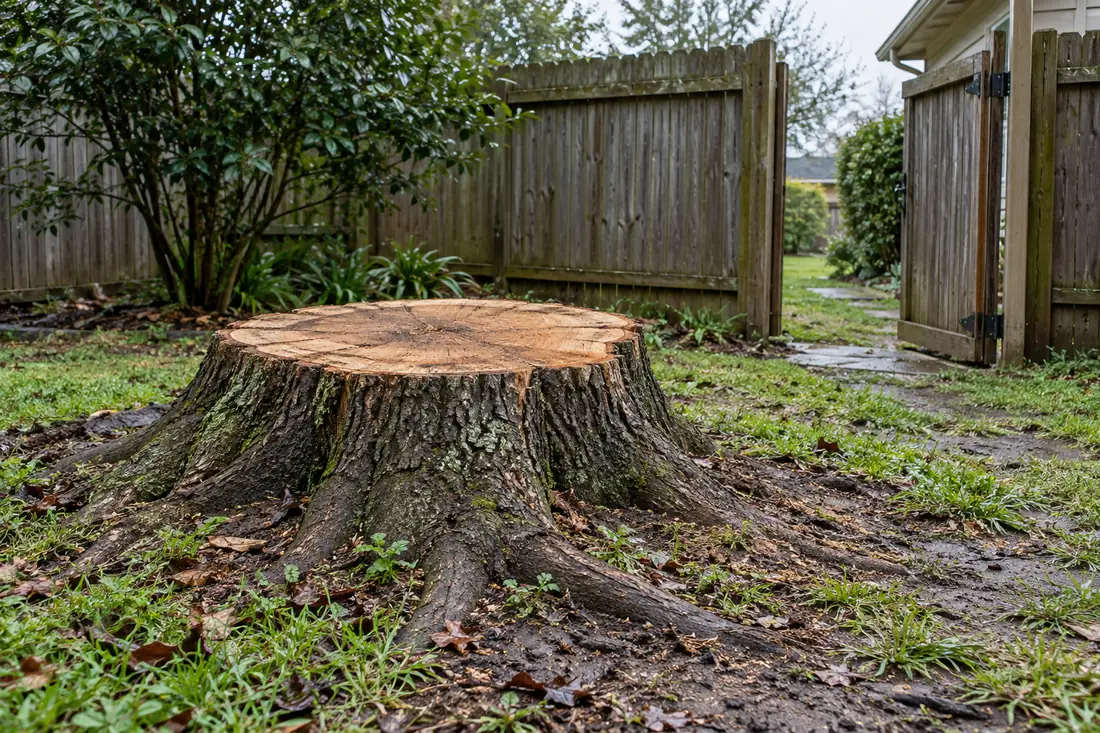
Set access, depth, chip handling and the finish needed for the next use of the property.
A stump-planning checklist should precede a fixed-price assumption
The next use determines the needed finish
Before asking for a grinder, decide whether the space will remain lawn, support a new tree, carry a fence, receive pavers or be built over. Each outcome can require a different conversation about depth, lateral roots, chip handling, added soil and future settlement. Grinding a stump is not automatically equivalent to excavation or complete root removal.
Mark irrigation, drainage fittings and utility concerns and tell the estimator whether gates, steps, wet turf or narrow access limit equipment. Do not assume the location of every buried line from an old drawing.
Compare proposals on identical scope
Ask each estimator to state which stump or stumps are included, the intended finished grade, how wood chips are treated, what surface repair is excluded and whether the area is safe to replant immediately. These are discussion points, not a promise that soil conditions permit the intended construction or planting. For the contractor’s actual grinding service and its access requirements, use the service page. For a deeper planting-specific decision, see stump grinding before replanting. Keep the project sketch and any measurements tied to the right location so an estimate is not based on a generic stump size.
Make the stump-finish specification match the next use of the ground
Stump grinding is not a single universal depth or finish. A lawn repair, new tree planting, fence footing and concrete slab have different needs. Before accepting an estimate, explain what will occupy the area and ask what portion of the stump and major exposed roots is included, how close the machine can operate to utilities or paving, and what will happen to the grindings.
A grinder may leave buried wood outside the accessible cutting path, so the finished appearance of the surface does not prove the whole root system has been removed.
For replanting, allow room to evaluate remaining roots, soil structure and drainage without assuming the original stump cavity is a suitable planting hole. Fresh wood chips mixed deeply into soil may complicate settling and nutrient management; discuss how the area will be backfilled and restored. For paving or structural work, the designer or installer should define excavation and compaction requirements. Keep the stump-grinding work order distinct from any later grading, soil replacement, new planting or hardscape installation.
A replanting plan changes the stump question
Before anyone schedules grinding, decide whether the space will become turf, a planting bed, hardscape or an access surface. Mark the stump footprint and the desired next use. Grindings mixed into soil can settle or limit planting preparation; clarify what material must be removed and who will provide clean soil and the final grade. A replacement tree should not automatically be positioned directly above remaining buried wood.
This planning page helps owners define the desired outcome so a contractor can quote meaningful exclusions and restoration. It does not certify soil suitability or establish a uniform grinding depth. Once the space requirements and access constraints are known, use the linked stump-grinding service page for a site-specific quote. Keep the plan separate from the completed-work record, including how debris and chip material were actually handled. Stump Grinding.
A scope matrix for future use
Start the planning conversation with the destination: ordinary mowing, new sod, a planting bed, a replacement tree or proposed hardscape. Each calls for different discussion of accessible grinding radius, expected remaining roots, chipped material, soil replacement and the next contractor's work. A line that simply says 'grind stump' does not resolve these boundaries. Give the estimator a written description of the intended result and identify the next trade that must accept the area; avoid promising complete root excavation from stump grinding alone.
A practical scope matrix can be written in plain language: location and access; grindable wood limits; depth and reach; chip removal; desired finished grade; buried-service verification; and restoration responsibility. Confirm which items are included, excluded or conditional. Use the cost guide to compare bids for the same result, rather than treating a lower advertised price as evidence that the crews have quoted equivalent work. For the related but distinct decision, see Stump Grinding Cost in New Orleans.

Decide the chip and soil finish before grinding starts
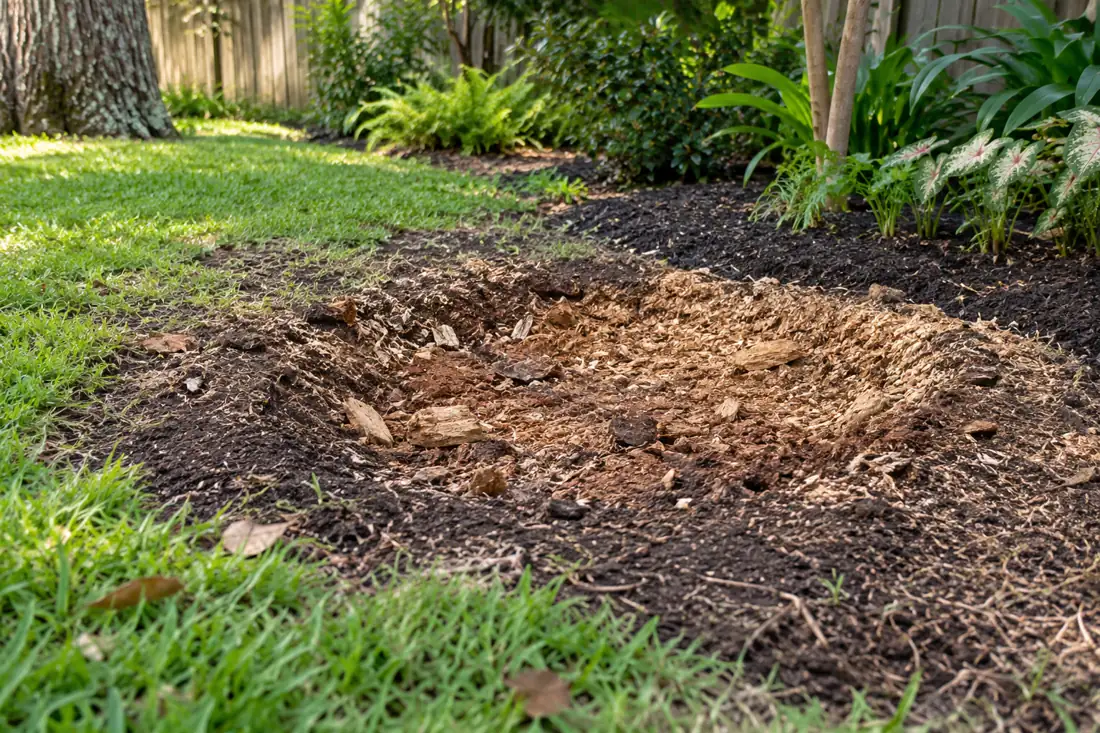
The finished appearance depends on what will happen next. A lawn repair may need grindings removed and suitable soil brought back to grade, while a planting bed may accept some woody chips away from new roots. A fence footing, paved surface or new tree calls for a different excavation and preparation decision. Record whether chips stay, are hauled away or are partly reused, and who handles imported soil and final grading.
Mark irrigation lines, buried cables, edging and structures before equipment arrives; do not assume every underground service is visible. A stump may have lateral roots outside the main grinding circle, so a stated grind depth must not be mistaken for complete root removal. Photograph the exposed finish before subsequent landscaping covers it, and confirm any settling or follow-up work belongs to the correct trade.
Write the desired post-grinding condition into the scope. Describe whether the cleared area is intended for lawn leveling, a path, planting or future construction, because the same stump diameter can lead to different finishing needs. Ask what depth and horizontal extent are realistically accessible around roots, utilities and obstacles, and whether grindings will be spread, hauled away or left in a pile. Mark nearby irrigation, lighting, drains and private lines for the estimator; utility locating may be required before excavation or grinding. Woody chips settle and are not automatically appropriate backfill for a new tree or paved surface. Record who will import suitable soil, restore grade and handle later settlement, rather than assuming stump grinding includes full landscape restoration.
Begin with what the space needs to become
A stump in an unused corner and a stump in the line of a new walkway present different planning questions. Before discussing the machine or price, explain the next use: mowing, a garden bed, replacement planting, fencing or construction. That tells the estimator what result you need and which details must be coordinated with another contractor. A general request to get rid of it can otherwise leave the finish undefined.
Tree Huggers’ stump-grinding service is separate from the decision to remove the standing tree. If the tree is still present, discuss both tasks while the access and handling route are being reviewed. If another crew already removed it, send a current photograph and say what material remains. The estimate should describe the actual stump area, rather than assume it looks like the site before the removal.
Identify the whole work area around the stump
Take a safe wide view of the stump, surrounding surface and nearby structures. Include a detail that helps show the cut top and root flare, but do not rely on a close-up alone. Note whether the stump sits against a fence, beside paving or among retained plants. If several stumps are involved, mark them consistently and show where each one is located rather than sending a group of indistinguishable wood photos.

Define the ground finish before hiring a grinder
A stump beside a path, fence or buried utility has access and depth limitations that a price based only on trunk diameter may miss. Give the estimator a full view of exposed root flares and nearby surfaces. Then identify what should happen next: lawn restoration, a new planting site, gravel or future hardscape. Each final use demands a different handoff.
Ask what depth and footprint the contractor proposes, whether chips stay or leave, and whether soil replacement and final grading are included. Grinding reduces wood but does not certify complete root removal, soil stability or suitability for a new concrete base. Assign responsibility for any later settlement or planting preparation.
Tell the contractor about known debris, metal, buried components or other unusual material in the area. Do not excavate around the stump to investigate on your own. The work area can extend beyond the visible cut face, and access may require room beside it. The grinding-depth guide explores the related finish question. A suitable scope depends on the intended use and site, not only on the apparent diameter of the cut trunk.

Follow the grinder route before scheduling
Photograph the way equipment would reach the stump. A side gate can be wide enough while a turn behind it is too tight, or a direct route can contain steps, a fragile path or a low overhang. Show the narrowest opening and the approach in both directions. Tell the company what can be moved and what is fixed, including air-conditioning equipment, bed edging and a raised patio.
If temporary access work is proposed, agree on preparation and reinstatement. Another owner’s yard or a shared drive needs an authorized arrangement. Avoid removing a fence panel before the route is reviewed. Ground support and sensitive surfaces should be discussed for the actual equipment and conditions. Wet ground or a new obstruction can change the plan, so update the company before the workday rather than assuming a different route will fit the accepted scope automatically.
Specify stump access and the next land use before seeking a machine
This project-planning page helps owners decide what the stump area must become. A stump beside a walkway, house foundation, privacy fence or narrow gate may be reachable only by certain equipment, but a photograph cannot determine a machine will fit or safely operate. Document the smallest passage, steps, ground condition, likely buried irrigation and the stump flare. The point is to create a realistic scope for a site visit, not to guarantee that a compact grinder is available or appropriate for every tight passage.
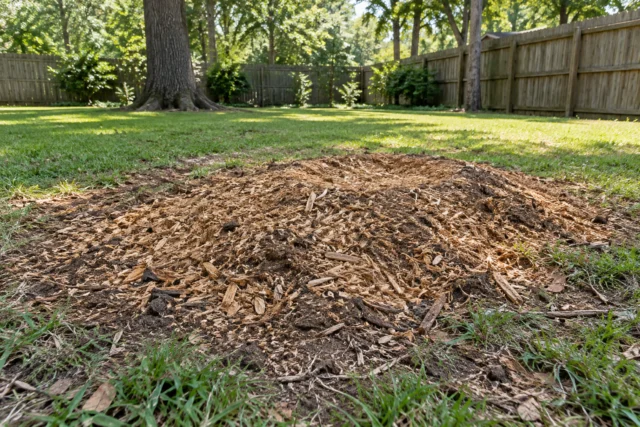
Describe the desired grind boundary and depth, the fate of chips and any later sod, paving or planting. A completed grinding pass may leave shredded wood and underground roots, so avoid representing it as fully restored soil. If the customer simply wants to hire someone to grind an accessible stump, the stump-grinding service page gives the direct inquiry route. Use this guide when access permissions, multiple stumps, next-use requirements or unrelated restoration trades make the scope more complex.

Why a narrow side path needs a machine-specific access check
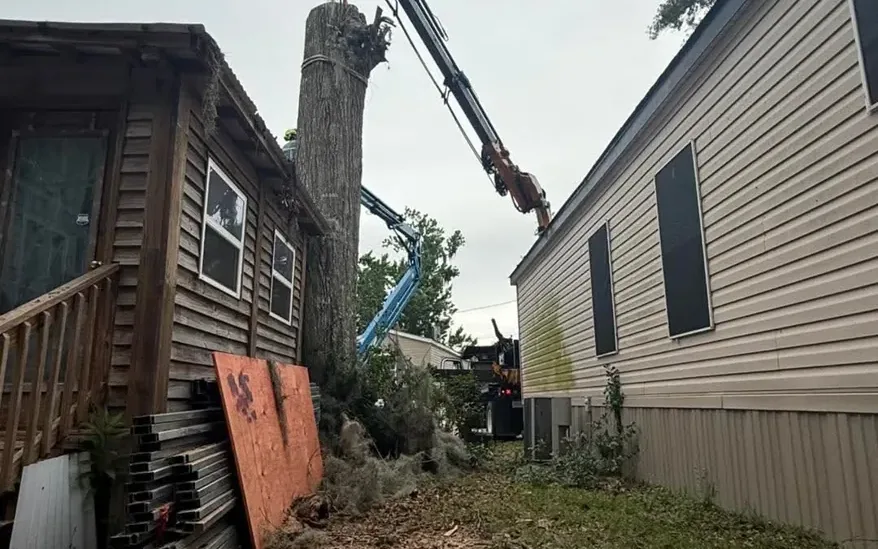
The available travel width can change at the house corner, drainage outlet, raised threshold or gate hinge. A machine that fits the straight passage may not be able to turn or leave room for an operator and protection materials. Photograph the entire route from the unloading point, then measure the tightest section at ground and handle height.
The illustrated passage is only an access-planning reference. No stump or grinder appears in the scene, so it is not evidence that any particular equipment can reach a real stump. The contractor must select machinery and methods based on the site, buried services, slopes, permission to remove a gate and the requested grinding depth.
Point out utilities and landscape systems
Identify known irrigation, lighting, drainage, service lines and other buried features near the stump and route. Share existing plans or location information through the agreed business channel where useful. A small valve box can be easy to miss in a distant image but important to the work. Ask what appropriate locating or coordination is needed before grinding is scheduled; do not infer an entire buried layout from the position of one visible fixture.
Retained plants and trees also deserve attention. Explain which roots or beds are part of the requested task and which belong to vegetation you want to preserve. The contractor should review those relationships before promising a particular grinding area. Stump work is not a general authorization to cut every root nearby. Keep any separate utility, irrigation or landscape repair responsibility visible in the project notes so the finish does not depend on several unstated assumptions.
Define the stump finish required by the next project
State the intended use of the ground after grinding: mulched planting area, lawn, fence line, paving or future construction. Each needs a different finish, and stump grinding alone should not be confused with complete root removal or a compacted construction subgrade. Show the stump, visible buttress roots, adjacent grade and any fence or foundation edge in a wide photo. Explain whether equipment must pass through a gate, cross a lawn or approach from the street.
Before work, identify irrigation, landscape lighting, buried utilities, drainage structures and known underground obstructions. Arrange any appropriate utility location and mark private features rather than assuming they are obvious. The grinder operator must determine access and working limits. If the stump lies close to a wall or shared boundary, specify what is authorized and what discovery requires a revised scope. A stated grind depth should be confirmed against the actual next use and site conditions.

Decide what a finished stump area should look like
Stump grinding is a useful step, but the desired finish can mean different things. A property owner preparing turf, a garden bed or future construction needs to say which area and depth are involved. Mark irrigation, landscape edging, visible utilities and nearby pavement before discussing equipment access. Do not assume grinding removes all underground roots or that the resulting chips will be hauled away. Ask where grindings may remain, whether excess material is included in the quote and what backfill or grading, if any, is planned. If the stump is on a slope or near a wall, access and debris containment may change the method. A clear final-condition description helps avoid a mismatch between the mechanical task and what the property owner expects to see.
Planning example: lawn finish versus a fence line
Suppose two owners have similar-looking stumps. One wants a mower-friendly lawn area; the other has a fence installer planning a footing through the stump location. The visible wood may look alike, but the required handoff can differ. Each request should show the stump, nearby features and equipment route. The second owner should also provide the fence layout and relevant installer requirements rather than assuming a general grinding task prepares the footing automatically.
For both properties, agree on grinding extent and material handling. Decide whether chips remain, where any retained material can go and who places soil or performs the final surface work. Compare quotes against those decisions, not simply the same approximate stump diameter. If another contractor needs a different preparation method, resolve that interface before scheduling the next stage.
This hypothetical example does not specify a universal grinding depth. It explains why the intended use, surrounding features and finish belong in the estimate even when the customer’s first description is simply one stump to remove.
Define grinding depth and extent by the objective
Ask the estimator how the proposed depth and area relate to the intended finish. A lawn objective can differ from a fence footing or structural excavation requirement. Share the exact location of a planned feature if another trade has already laid it out. Grinding should not be represented as automatic removal of every root throughout the property or as proof that the ground is ready for any future structure.
If the next contractor needs a particular condition, bring that requirement into the discussion before accepting the stump scope. The relevant provider may need a different form of excavation or preparation. This avoids paying for one result and discovering that the next stage required another. Keep the tree contractor’s task understandable: which stump, what agreed grinding extent, what material handling and what remains when that task is complete.
Account for chips, roots and buried services
Ask where grinding chips and soil will go. Grinding does not automatically include hauling chips, adding clean fill, compaction, sod or concrete preparation. An estimate should make these separate outcomes visible. At completion, photograph the treated surface and document remaining roots, inaccessible areas and any retained material. Give that information to the next landscape or construction trade; do not promise a final load-bearing surface merely because the stump is no longer visible.
Decisions to confirm
- State the future use of the stump location
- Map buried and edge-of-property constraints
- Separate grinding from chip disposal and restoration
- Record the actual finish and excluded roots
Choose whether grindings stay, move or leave
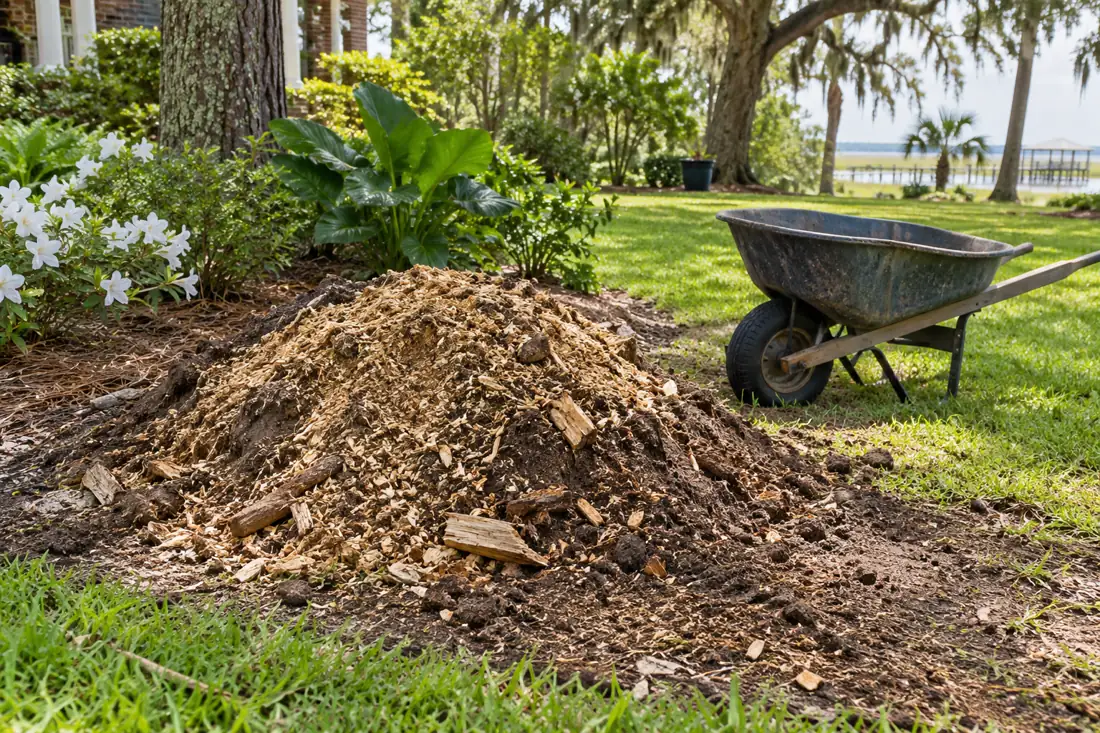
Grinding produces mixed wood material and soil in the work area. Decide what happens to it before the machine arrives. Leaving material, relocating a feasible amount and hauling it away are different handling arrangements. Show where any retained material can sit without blocking an entrance, drainage path or the next contractor’s access. A narrow yard may have little practical storage space even when the stump itself is easy to reach.
The grindings guide explores that decision. Ask whether the quoted work includes removing excess material, placing soil or grading the area. Those finish tasks should be explicit rather than hidden behind a broad cleanup phrase. If you intend to use wood material elsewhere, discuss suitability and handling with the relevant landscape professional instead of assuming every mixture from every stump serves the same purpose.
Coordinate the landscape or construction handoff
A ground area after grinding can need further work before it matches the surrounding lawn or supports a new project. Identify who handles backfill, final grade, planting or turf installation. If the tree contractor is not doing those tasks, make the handoff clear to the next person. The project should not rely on each contractor believing the other is responsible for the same hole, chips or bed edge.
For a replacement tree, discuss planting location and ground preparation with the appropriate tree or landscape professional. For a fence, path or building project, use that contractor’s requirements. The clearing service page provides related context when several stumps sit within a larger site task. Keep that broader project distinct from isolated grinding so the quote and completion review reflect the work you are actually approving.
Inspect the agreed finish with the same reference points
Before acceptance, read the quote against your photographs and intended use. Confirm the stump identifiers, access plan, grinding area, chip decision and any separate surface work. Ask for clarification when two proposals use the same word removal but describe different results. A low trunk cut, grinding and full excavation should not be treated as interchangeable just because each makes the tree less visible.
At completion, compare the visible area with the accepted task and identify any follow-up responsibility. Keep the invoice and useful photographs, especially if another contractor will arrive later. To request an estimate, send the address, stump views, access photos and the result you need. Include any related fence, planting or construction plan. A clear description of the space after the stump is often the most useful information in the first message.
Plan the next use before choosing stump-work specifications
This planning resource is intended for the owner who has not yet decided the final use of the stump area. A future lawn, tree, fence post, garden bed or hardscape can call for different questions about depth, root conflicts, material removal and soil replacement. Drawing the intended use on a simple site sketch prevents a grinder quote from becoming a substitute for design decisions that belong to the owner and subsequent trades.
Compare proposals against the same stated outcome, including access limits and where material will be staged. For a replacement tree, get planting-location and soil advice before assuming it should occupy the old stump center. For concrete or footings, obtain the builder’s excavation and subgrade requirements rather than relying on grinding alone. Once the use and handoff are clear, the stump-grinding service page is the appropriate next stop for describing equipment access and requesting a specific estimate.
- List the next trade or property use and the condition that trade needs to receive.
- Identify utilities, drainage, irrigation and narrow equipment routes before setting a target depth.
- Separate stump cutting, root excavation, chip hauling, imported soil and restoration as distinct scope choices.
For the related but different decision, see Stump Grinding. Confirm the work required for this property before relying on a general example.
Stump Grinding Project Planning questions
What should I decide before requesting stump grinding?
Explain the next use of the area: lawn, planting, fence, paving or construction. That objective helps define grinding, material handling and the later handoff.
Does tree removal always include grinding?
No. Confirm the stump task separately in the accepted scope, including extent, grindings and any finish work.
Which photos help identify the stump area?
Send the stump, surrounding surface, nearby structures and the full equipment route. Mark multiple stumps so the quote refers to the correct locations.
Should I dig around the stump first?
Do not excavate to investigate on your own. Describe known features and let the contractor review the work area and appropriate coordination.
Is gate width the only access measurement?
No. Turns, steps, overhead clearance, surfaces and setup space also matter. Show the complete route in both directions.
What buried features should I mention?
Identify known irrigation, lighting, drainage, utilities and unusual material near the stump or route. Ask about appropriate locating and coordination before work.
Will grinding remove every root in the yard?
No. Agree on the actual grinding area and depth. Root excavation across the property is a different scope.
Can grinding prepare a fence footing?
Share the footing location and contractor requirements first. The intended foundation or excavation may require more than the proposed grinding task.
Do grindings have to remain on site?
Discuss leaving, relocating or hauling material before pricing. Identify a feasible retained-material location if that is part of the plan.
Is backfill automatically included?
Only if stated. Clarify excess material removal, soil placement, grading and any planting or turf work as separate finish responsibilities.
Can I plant exactly where the stump stood?
Discuss the location and preparation with the appropriate tree or landscape professional. Do not assume the ground is ready merely because grinding is complete.
How do I compare stump quotes?
Compare the same stump, access, grinding extent, chip handling and final surface. Clarify differences between cutting low, grinding and excavation.
Choose the next use before agreeing to a stump finish
A stump job becomes easier to scope when the owner names the next activity rather than only requesting that wood disappear. Mowing over the spot, installing a planting bed, placing a walkway and setting fence posts each imply different finished surfaces. Draw a simple plan showing the stump, grade transitions, hardscape and retained roots. Mark visible surface fixtures and tell the estimator about known utilities or irrigation; a drawing from the owner is an orientation aid, not a substitute for locating underground lines.
Use the stump-grinding service page for the basic operation, access route and general debris choices. Use the new-sod guide only when a lawn installer will take over the area; it gives a tighter handoff for wood-chip removal and soil restoration. For a paved or structural project, ask its designer or contractor what excavation and verification are required before treating grinding as sufficient.
Record the agreed depth, extent, debris handling and next contractor's acceptance condition in the estimate so the final inspection can use the same reference points.
Related decisions: Stump Grinding · Stump Grinding Before New Sod
Define the stump finish for the next project
Share an overview photograph, the approximate stump location, gate and access constraints, and whether sod, planting, paving or a structure is planned afterward. Discuss grinding depth, the limits of root removal, wood-chip handling and who is responsible for any later soil preparation. Stump grinding is not excavation clearance for structural foundations or underground services. Utility identification and any construction-specific requirements need separate confirmation before work is authorized.