A clearer picture of the scope


Example: Storm-fallen tree clearance
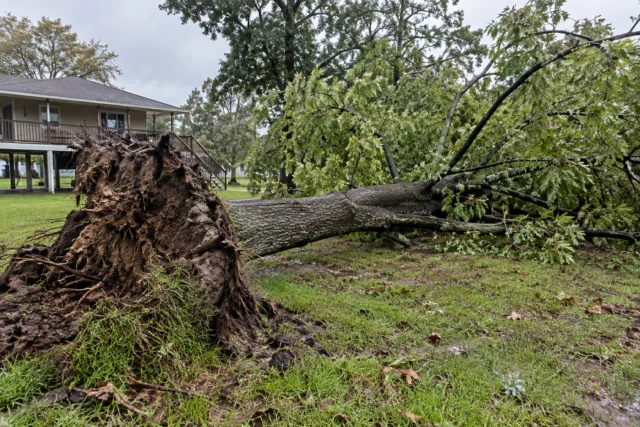
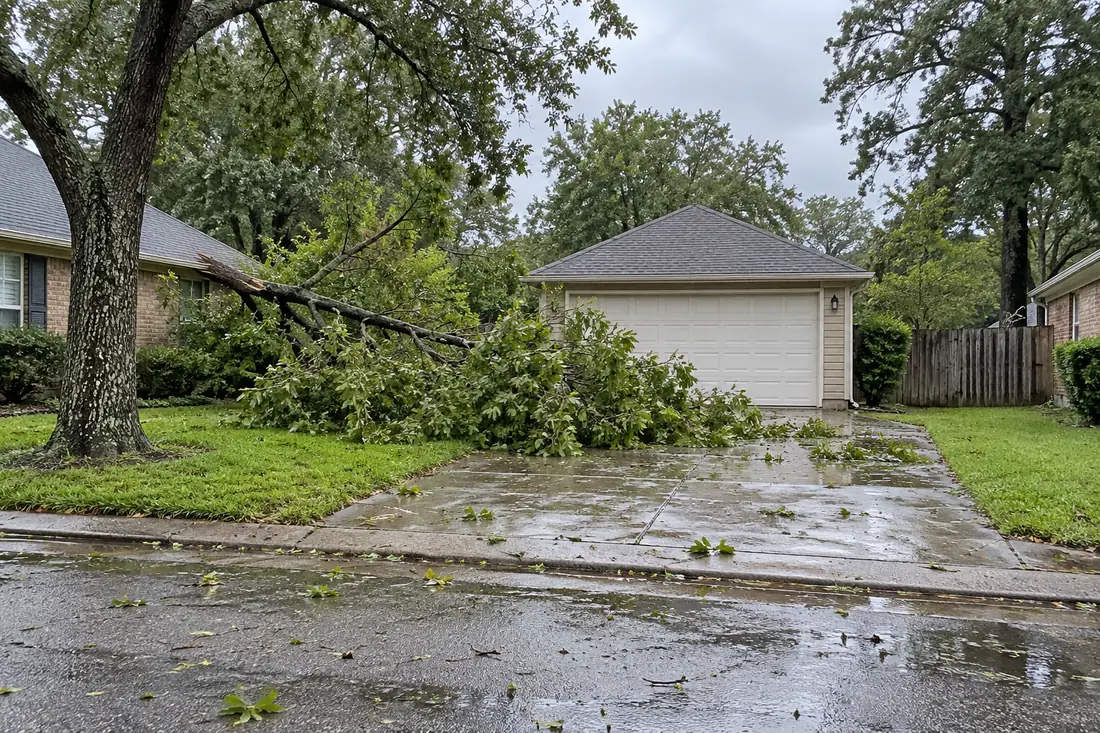
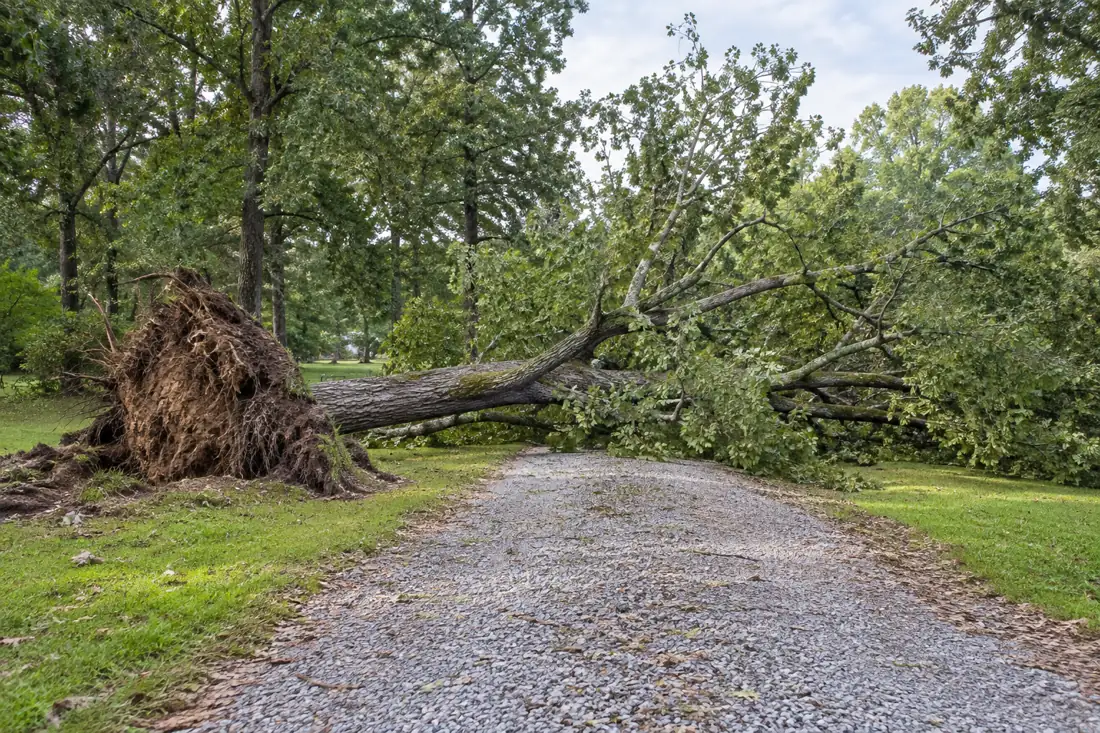
The fallen tree is cleared from the driveway. Root-ball treatment and the final site finish remain separate scope decisions.
Urgent hazard versus routine storm cleanup
Describe the active exposure first
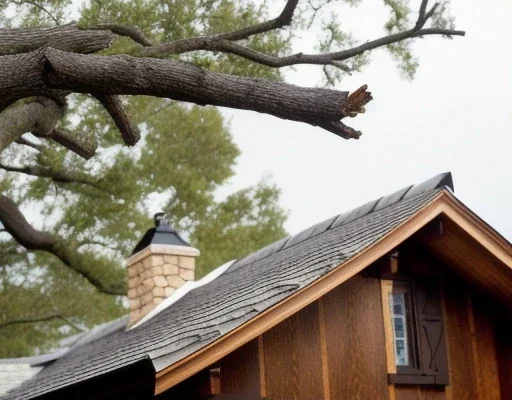
A hanging limb directly over a used entrance presents a different decision from a pile of branches already resting safely on the lawn. When contacting a tree contractor, start with people, occupied rooms, blocked driveways, public sidewalks, vehicles and anything else directly exposed. Say whether the condition is changing or appears to be supported by a building, another tree or overhead lines.
Do not go underneath a suspended limb to obtain a photograph. Keep clear and contact the utility or emergency services when wires, injuries or an immediate life-safety emergency are involved.
Define the first safe outcome
The first work phase may be hazard isolation or controlled removal, while hauling and yard restoration may be separate tasks. Ask what access can be used without putting equipment on unstable ground, and whether the request concerns one tree or multiple hazards. Avoid describing an unknown tree as safe merely because the wind has stopped. When the situation is stable enough for planning rather than urgent response, use the storm preparation guide; for material that is already down and safe to handle, see post-storm cleanup. Availability and work timing must be confirmed for each inquiry.
What qualifies as an emergency?
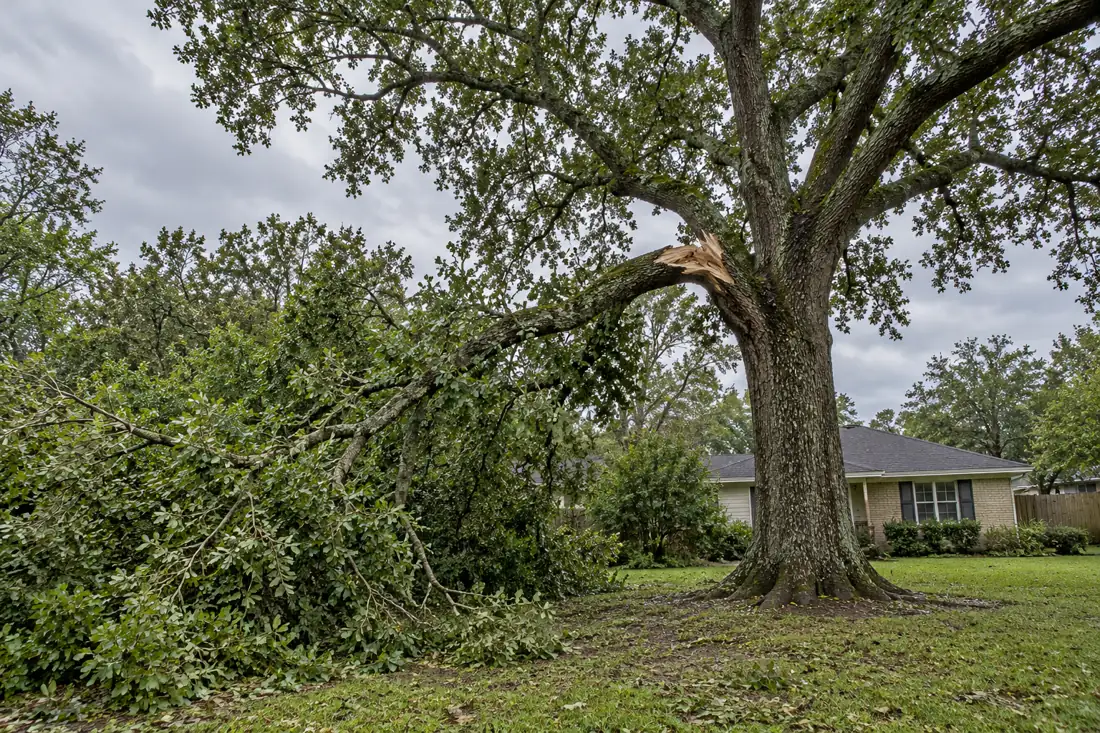
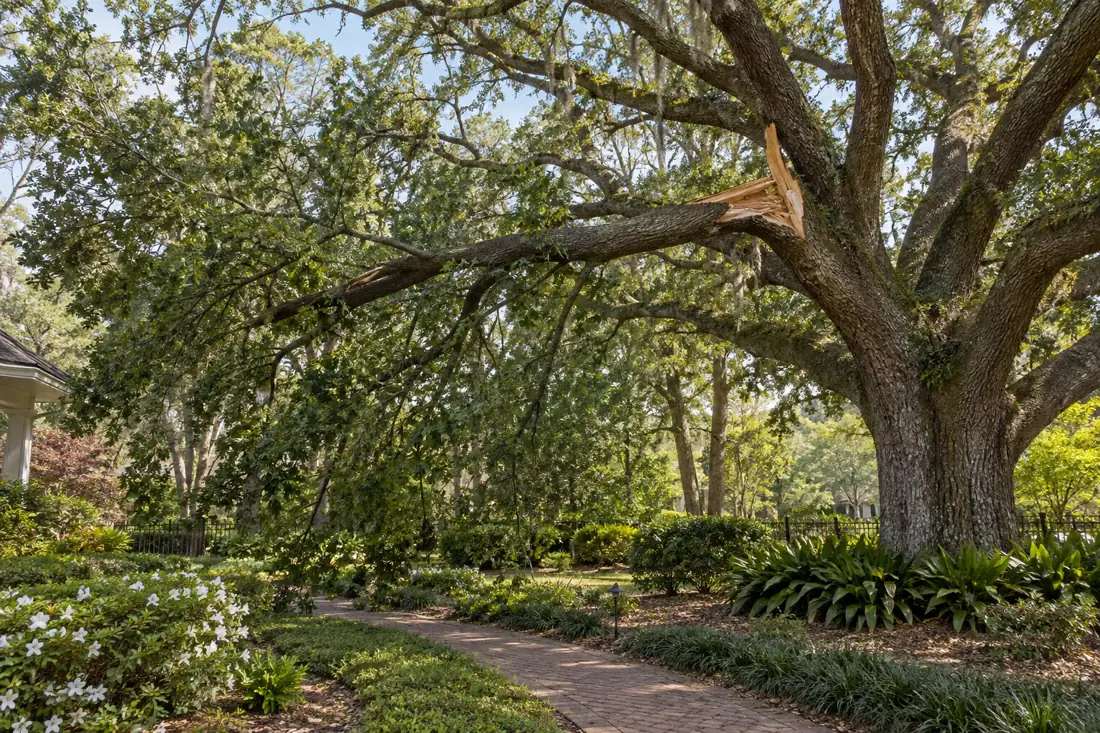
A condition becomes urgent when a tree or limb presents an immediate risk to people, structures, vehicles, access routes or critical operations. Storm damage can leave trees partially failed, with weight still suspended in the canopy or trunks loaded against buildings and fences.
Practical scope and safety guidance: For an urgent tree incident, the first priority is separating occupants and bystanders from a potentially unstable area. Avoid moving a tree that is resting on a roof, vehicle, fence or another tree; cutting a loaded limb can release stored force unexpectedly. Stay away from downed lines, damaged electrical service and any area restricted by emergency responders. When it is safe to do so, share a wide photo of the scene, a close photo from the ground, the address and whether a driveway, entrance or emergency route is blocked.
State if structural damage is suspected and whether utilities or other contractors must coordinate entry. A qualified onsite assessment determines what can be addressed immediately and what requires a separate repair or follow-up visit. Document the visible condition before cleanup when safe, but never delay emergency safety precautions for a photograph.

Give responders the active exposure first
Start with occupied rooms, open routes, vehicles and nearby electrical conductors rather than an estimated tree size. Keep people away from the suspected falling area. A web inquiry is not a guaranteed emergency dispatch or confirmed arrival time; use the appropriate emergency or utility service for immediate danger.
Keep people away from unstable trees, hanging limbs and damaged structures.
Wide views, the trunk base, damage points and equipment access help us triage faster.
We plan the sequence to reduce movement and remove material without creating avoidable secondary damage.
Storm response for homes and commercial properties
Residential emergencies often center on roofs, driveways and neighboring property. Commercial response adds tenant access, parking, operating hours, documentation and site coordination. Larger regional storm events may justify mobilization beyond Greater New Orleans.
Related emergency services
Make the first call about the actual hazard
The most useful first information is the address and what the tree is doing now. Say whether it is resting on a building, blocking a drive, newly leaning or holding a damaged limb above an occupied space. Explain what changed and when you noticed it. You do not need to identify the tree species or select a machine before describing an urgent situation to the company.
Call 504-458-8336 to discuss current response availability. Keep people and pets away from the affected area while the next step is being arranged. For an immediate threat to people or an electrical hazard, use the appropriate emergency or utility service. A routine website form is useful for follow-up information, but it does not confirm that a crew has been dispatched or that the property can be entered safely.
Give a location that the response team can use
Include the full work address and a practical entry point if the property has several drives or buildings. A rear service entrance may be more relevant than the mailing address. For a managed site, identify the current contact who can arrange entry and explain the condition. Keep private gate codes or other sensitive access information in the agreed direct channel rather than putting them into publicly shared images.
Describe the obstruction in ordinary terms. A tree across the only driveway differs from branches beside an unused rear fence. Tell the company which entrance or operation is affected and whether an alternate route exists. The fallen-tree service addresses related material already on the ground. Precise location and access information help the conversation focus on the actual site without assuming that every large-looking tree presents the same immediate problem.

Stay outside the damaged tree’s working area
A storm can leave wood suspended, attached in unexpected ways or loaded against another object. Do not climb, pull, shake or cut damaged material to test its stability. Keep clear of hanging branches and unstable root plates, including when the trunk appears to be lying still. A quiet moment is not proof that the condition has stopped changing or that a person can safely walk beneath the remaining crown.
If wires are present, do not touch the tree, conductor or connected objects to investigate. Involve the appropriate utility or emergency service. The tree-work request should describe the conflict from a safe position. The hanging-limb page offers related scope context. Safe communication is more useful than trying to prepare the hazard yourself; the work needs an appropriate assessment and method for the condition that actually exists.
Describe an urgent tree hazard before requesting a crew
Emergency tree service concerns an exposure or obstruction, not merely how quickly someone prefers to remove yard debris. A limb held above a doorway, a fallen trunk on a roof and a tree blocking the only exit may require different immediate actions. Stay clear of the potential fall zone, damaged structures and electrical conductors. If people are in immediate danger, contact emergency services or the utility rather than waiting for a normal online inquiry. Never move a loaded limb for a better photograph.
From a safe location, explain the address, condition, nearest occupied areas and any access that remains usable. Ask the service provider what further information is necessary to evaluate a response and whether another trade or responder must first secure the location. Keep cutting, hauling, stump treatment and building repairs as separate steps in the written scope. Safe photographs can clarify the issue but do not prove stability or insurance coverage. Avoid assuming an inquiry form guarantees availability, timing or a fixed price.
Send context when photographs are safe to obtain
A wide view should show the tree, what it touches and the route a crew might use. Add detail images only from positions that do not require approaching damage. If a view cannot be taken safely, explain what is missing. Do not enter a damaged building or climb onto a roof to provide evidence. An honest description can introduce a concern that a photo cannot safely capture.
Keep photos current and label separate trees or locations. Avoid crops that hide a wire, roof or another damaged tree relevant to the response. If another person is sending information for you, make sure the address and identifiers stay attached to the images. The storm planning hub organizes a fuller request. Photographs help prepare the discussion; they do not replace every field observation or establish that a site is ready for cutting and handling.
Understand what the first tree-work task includes
An initial scope may focus on a specific damaged tree, an obstruction or an agreed access objective. Ask what is proposed now and which work requires later review. Removing all material, grinding a stump and restoring the landscape can be different tasks from addressing the first urgent condition. Keeping those stages clear helps the customer understand what result is being authorized.
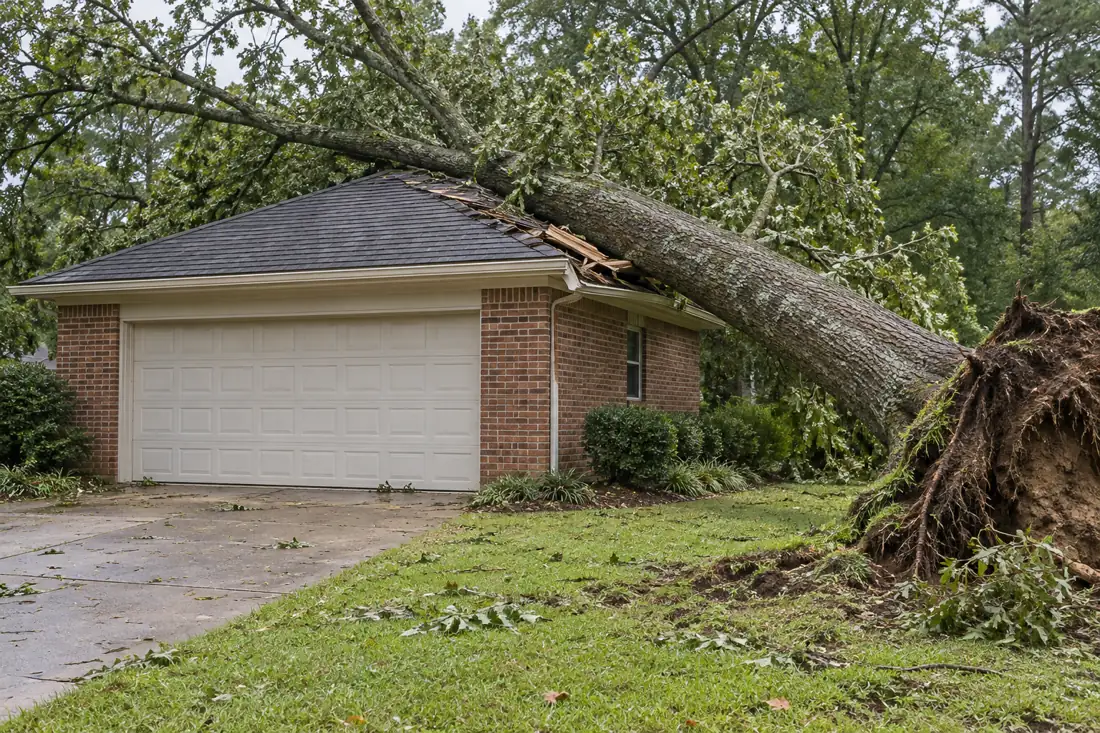
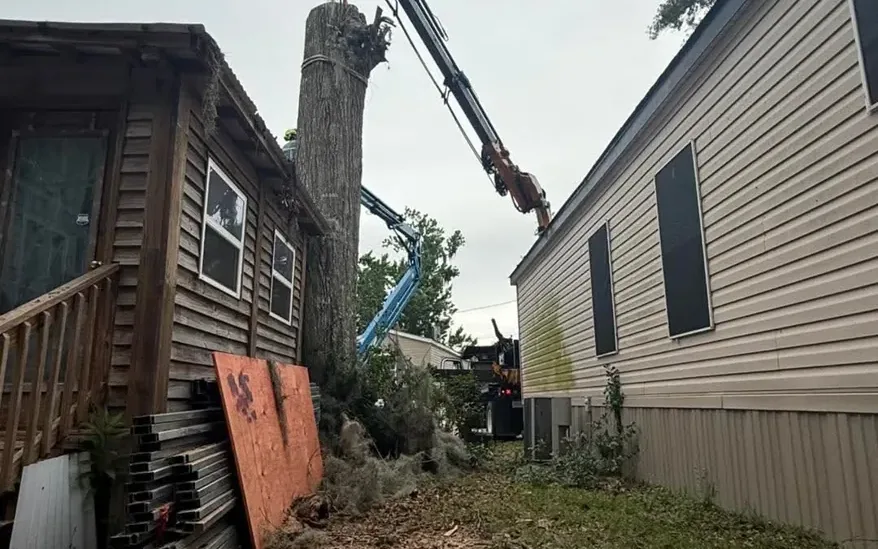
For a tree on a structure, review the tree-on-house page and discuss the actual condition directly. Tree handling, utility coordination, building evaluation and repairs may involve different providers. The tree company should not be assumed to perform unrelated electrical or structural repair work. A usable first scope identifies the tree task and practical completion point while leaving separate responsibilities visible to the people coordinating the property.
Coordinate the site contact and approval contact
A neighbor, tenant or maintenance employee may be the first person to report damage, but someone still needs authority to approve the proposed work. Explain that arrangement during the call. If the owner is away, identify who can provide access and how the decision maker can be reached. Keep the accepted task clear enough that the site contact does not have to reinterpret it for the arriving crew.
For an operating property, include occupied routes, deliveries and any critical entrance. The commercial response page provides related guidance for managers and larger sites. Do not assume normal activity can continue through the affected zone. A coordinated contact can help keep people away and resolve practical access questions without issuing several conflicting instructions as the condition or work sequence is reviewed.
Keep cleanup and documentation tied to the event
After the immediate task is understood, discuss wood, brush, hauling and any remaining stump decision. Identify mixed building material before treating a pile as ordinary vegetative debris. Ask what finish is included and what belongs to another contractor. A broad instruction to make everything normal again can leave tree work, landscape restoration and building repairs tangled together in one undefined expectation.
Keep factual records of the request, accepted scope, authorized changes and work performed. Request labeled job photographs where appropriate, without interfering with the response. Coverage decisions belong with the relevant insurance contact; a tree invoice does not guarantee reimbursement. The documentation page introduces that separate conversation. An accurate record explains the tree work without inventing a cause, promising coverage or describing a later restoration as already completed.
Use direct confirmation for the next step
Current availability, weather, utility coordination and the actual site can affect what is feasible. Ask the company to confirm the next step for the request rather than relying on a general service description as an arrival promise. Report a new failure, changed lean or altered access while waiting. Keep people outside the affected area and follow the direction of the appropriate emergency or utility services where they are involved.
For urgent tree help, call with the address and condition. Text safe photos as useful follow-up, or use the estimate form for a nonurgent request. The emergency and storm overview connects related services. The purpose of a clear call is practical: identify the problem, establish current information and arrange an appropriate discussion of the tree-work scope, without asking the customer to investigate a dangerous condition first.
Make an emergency inquiry actionable without entering the hazard
The most useful first report tells the responding company exactly what changed and which access route is affected. Provide the property address, a reachable on-site contact, whether a tree is down or still standing, nearby structures, blocked vehicle or pedestrian access, and any known utility involvement. If the normal street entrance is inaccessible, describe the alternate meeting location. Do not publish gate codes or other private access details in public comments, and do not approach a damaged tree to gather a better angle.
Prioritize conditions that require a different responder. Electrical wires, active fire, severe structural instability, or an immediate threat to people may require emergency services or the utility operator before tree work can proceed. An online form does not dispatch a crew. Ask directly whether Tree Huggers can review the situation, what information is needed, and how availability will be confirmed. Keep occupants and visitors away from suspended limbs, lifted root plates, and areas where material could shift.
Separate the initial hazard-control request from later work. The first visit may be about making one entrance usable or addressing a defined unstable piece, while hauling, stump removal, replacement landscaping, fencing, and surface repairs need their own scope decisions. Tell the estimator who can authorize a revised plan if the crew discovers hidden loading or additional damage. Written records and safe photographs help everyone agree on the work actually performed without implying a guaranteed arrival time.
Emergency tree inquiry: report the hazard without approaching it
Keep clear of unstable limbs, damaged buildings and possible electrical lines. When people, public routes or utilities are immediately threatened, contact the appropriate emergency service or utility. A website inquiry is not proof of dispatch. Do not step under broken branches just to obtain a better photograph.
From a safe place, provide the exact address and describe the obstruction or threatened target. A wide view can help explain whether a tree rests on a house, blocks a driveway or hangs above a used area. Note whether emergency responders, building staff or utilities are already managing the scene.
Request separate descriptions of immediate authorized work and eventual cleanup. Opening an access route, removing wood, grinding a stump and repairing surfaces can be different stages. The tree-on-house guide addresses building coordination, while insurance documentation covers factual records without promising coverage.
Three details to settle before an estimate
- Stay clear; escalate immediate danger
- Give the location, hazard and affected access
- Separate urgent scope from final cleanup
Turn the emergency report into an authorized scope
Describe the hazard’s exact position, whether it appears to be moving, the area threatened and any nearby utility or building. Keep people outside the possible failure area. A utility or electrical hazard belongs with the proper authority, not a homeowner approaching for better photographs.
After conditions can be assessed, distinguish urgent stabilization or removal from later cleanup, stump work and repairs outside tree-service scope. Record who can authorize additional work and which site observations are confirmed rather than inferred from images.
Emergency Tree Service questions
What should I say first on an emergency tree call?
Give the address, what changed, what the tree touches and which route or occupied space is affected. Describe visible hazards from a safe location.
Does the online form dispatch a crew?
No. Call about urgent conditions and current availability. A form starts communication and does not confirm dispatch or an arrival time.
When should emergency services or the utility be involved?
Use the appropriate service for an immediate threat to people or an electrical hazard. Keep clear rather than approaching or touching the tree or wires.
Can a tree on the ground still be unstable?
Yes. Branches, supports and root plates can hold load. Do not cut, pull or climb over material to test or clear it.
Do I need close photographs for the first request?
No. Safe wide views and a plain description are useful. Explain any view that cannot be obtained without approaching damage.
What if the property has several entrances?
Give the practical access point and the affected route, along with the address. Identify an available site contact who can explain current conditions.
Can a tenant approve emergency work?
The company needs the authorized approval arrangement. A report from a tenant or neighbor is useful information but does not automatically establish authority for the scope.
Does urgent tree work include all restoration?
Only the accepted tasks are included. Complete hauling, stumps, landscaping and building repairs may require separate scope decisions.
Can a business keep using the tree area?
The affected and active work zones need controlled access. Discuss alternate routes and operations with the property contact and contractor.
What changes should I report while waiting?
Report new failures, changed lean, lifted ground, blocked access or utility involvement. Keep clear while the next step is reviewed.
Does a removal invoice guarantee insurance coverage?
No. Coverage and claim decisions are separate. Keep factual work records and discuss reimbursement with the appropriate insurance contact.
How do I start an urgent request now?
Call 504-458-8336 with the address and condition. Send safe photos as follow-up and ask directly about current response availability.
Let’s plan your tree work.
Send the property address, safe tree photos and the result you need. Include access restrictions and the person who can approve the work.