
NEW ORLEANS TREE REMOVAL · STORM RESPONSE
Big Trees.
Mass Deployments.
Bigger Solutions.
A dangerous tree. A massive oak. A job that needs more than a chainsaw. Talk directly with Tree Huggers about protecting your home, property or community.
Emergency? Call for current availability. Keep away from hanging limbs, unstable trees and power lines.
Start here · Free estimate
Get a clear estimate.
Tell us about your tree and property.
Urgent tree danger? Call for current availability. A request does not confirm dispatch.
The right approach for the job
Serious tree work.
Careful around what matters.
A tree over a roof is different from a tree in an open field. We plan around the tree’s condition, equipment access, neighboring property and everything underneath it.
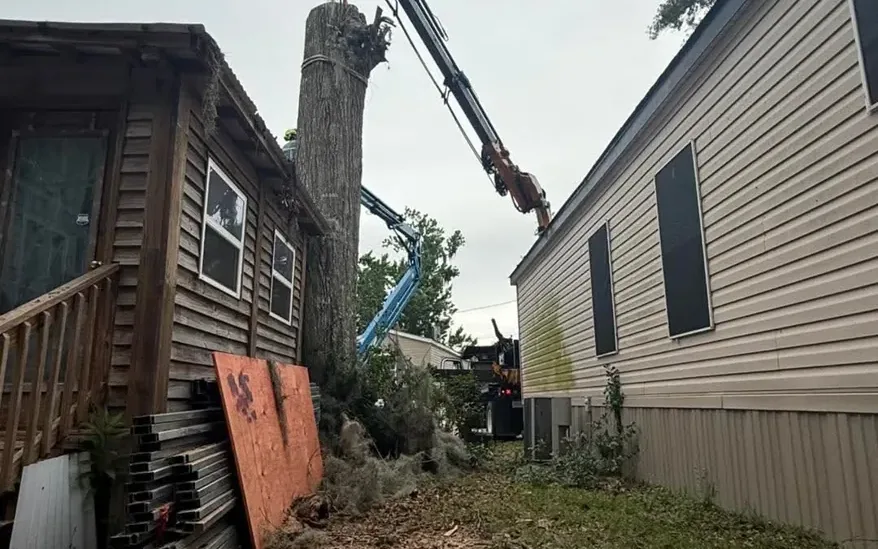
Tree removal
Dead trees, oversized oaks, awkward access and limbs over buildings. Start with a site assessment and a clear removal scope.
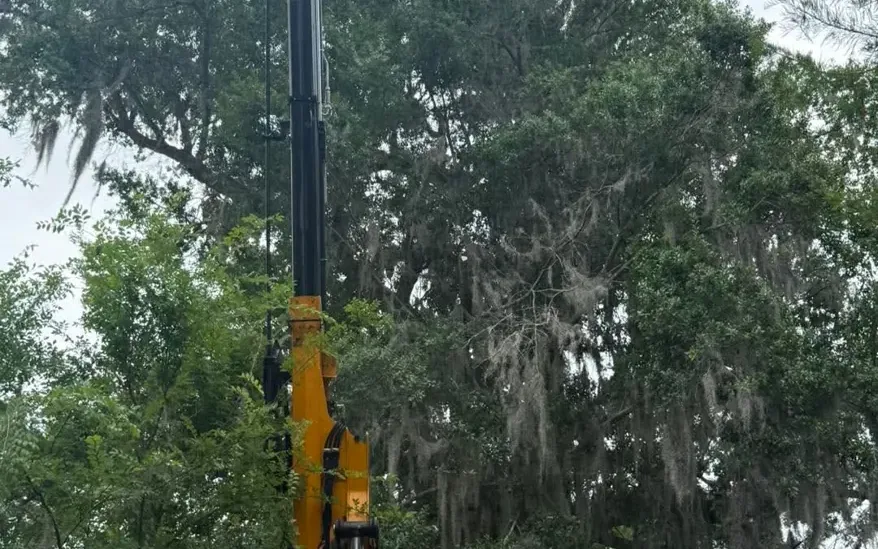
Tree trimming & pruning
Create clearance, remove deadwood and manage branch structure while keeping the long-term health of the tree in view.
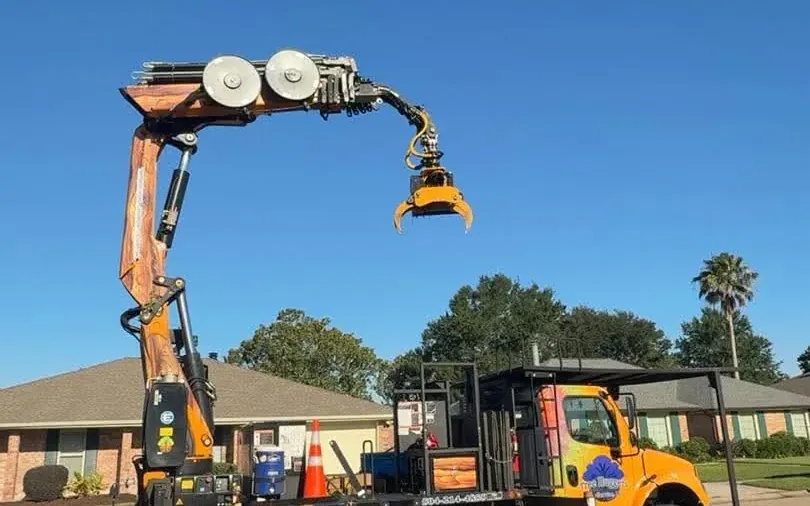
Emergency & storm response
Trees on structures, broken limbs and fallen trees blocking access need a careful response based on present conditions.
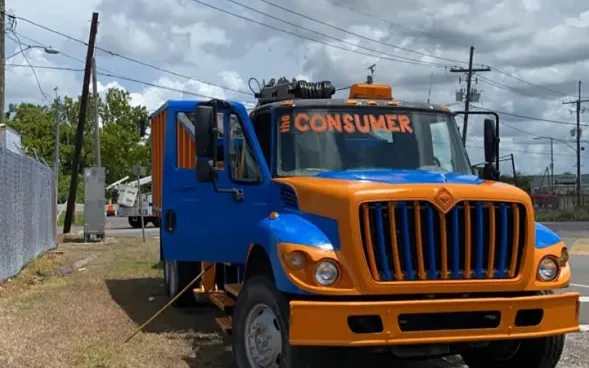
Crane & remote-controlled removal
Specialized handling for large sections, difficult reach and sites that need an equipment-led removal plan.
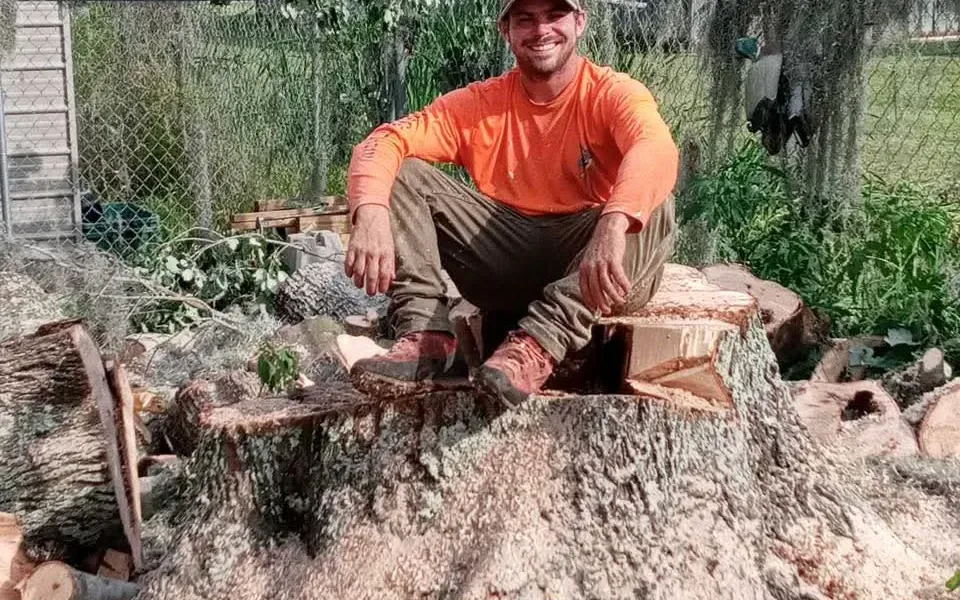
Stump grinding & cleanup
Agree on grinding depth, debris hauling, wood chips and site finish before work begins. A clean scope prevents surprises.
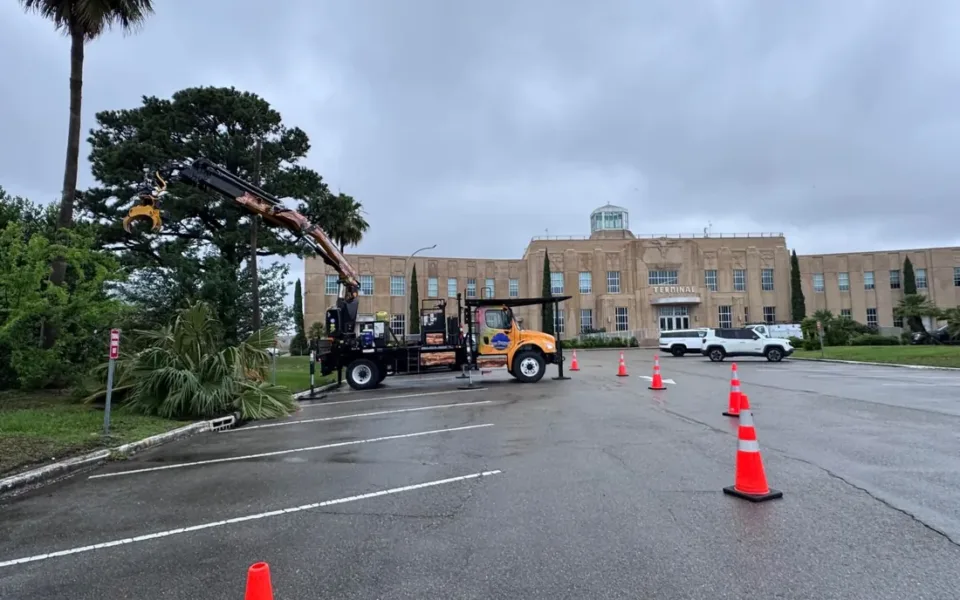
Commercial & municipal work
Coordinate site access, occupied properties, work windows, debris handling and documentation with the people responsible.
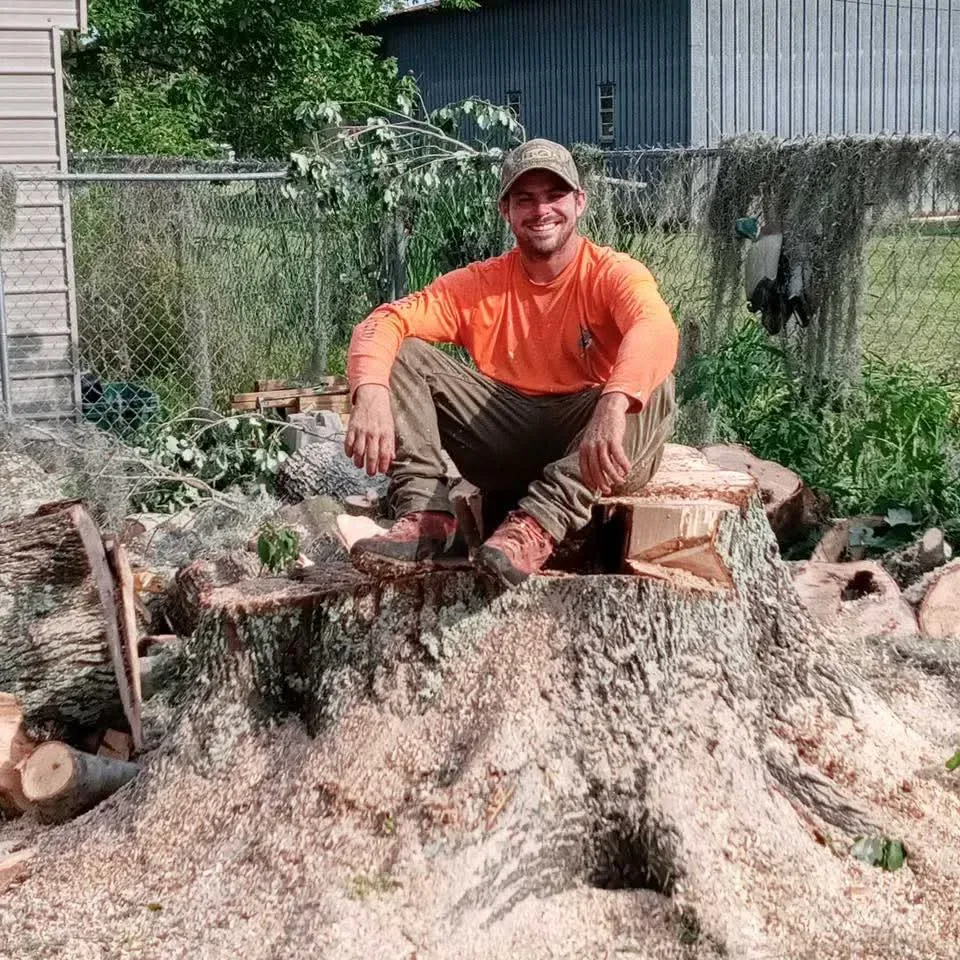
Real people. Real equipment.
A local company for the hard jobs.
Tree Huggers Tree Service LLC is based in Marrero and serves Greater New Orleans. Homeowners call about large trees close to houses, branches over roofs, storm damage and cleanup. Property managers and public buyers need the same careful work, with additional coordination and a scope that can be reviewed and approved.
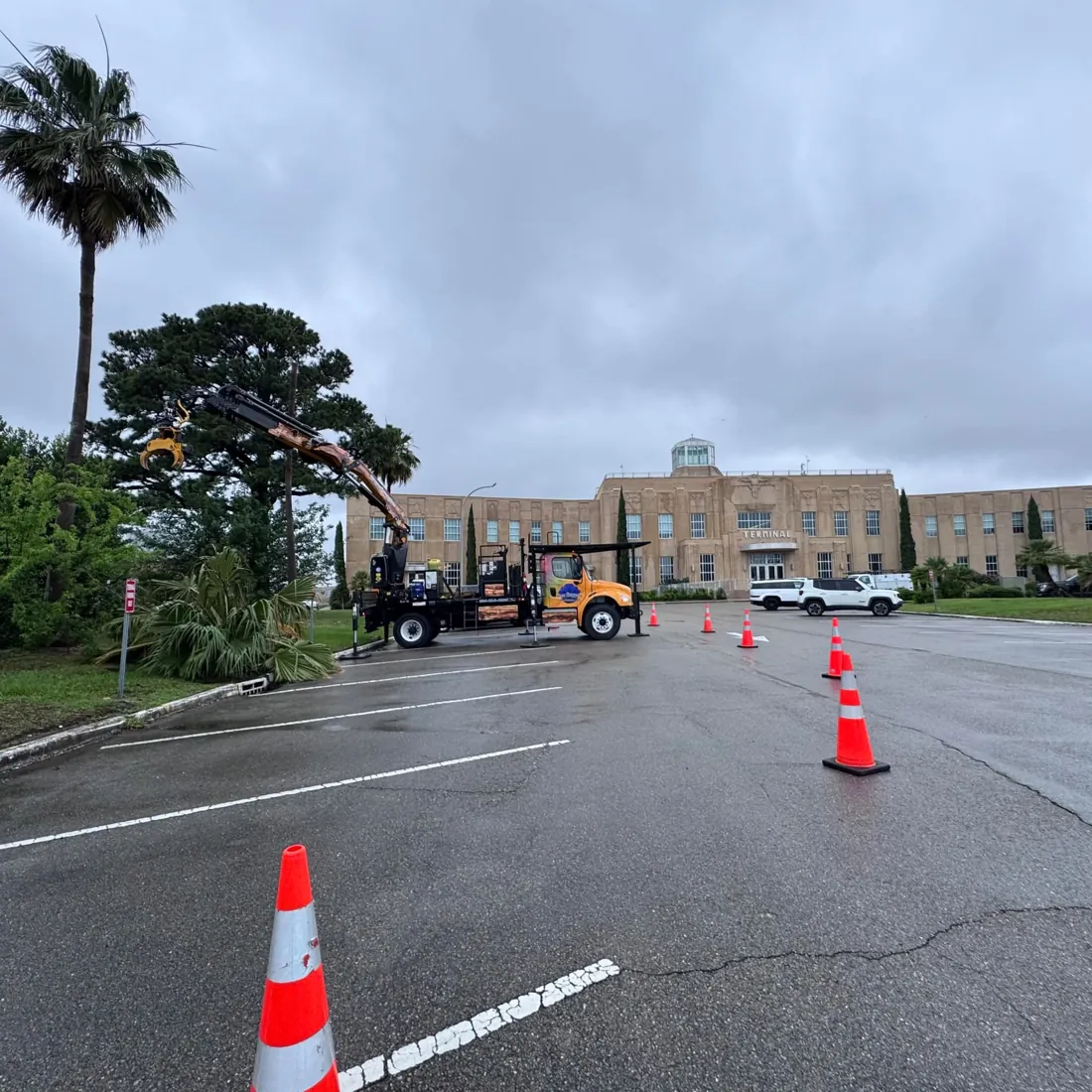
Camille and the equipment shown here are from the company’s own photo collection. You can see the truck, grapple equipment and tight-access field conditions in our work gallery. The right method for your property still depends on an on-site evaluation.
Before & after · Illustrated
See what changes.
Know what’s included.
Compare a large-oak removal with the same property afterward. The tree, debris, stump and final ground finish are separate details to define in the estimate.
These generated examples help explain the scope. Our gallery also contains genuine company equipment and field photos.


Example: Large oak removal
The same home with the large oak removed. Stump finish, hauling and restoration should be specified in the estimate.
Removing a big oak starts with a plan.
A mature oak can stretch across a house, a fence, the neighbor’s yard and the street at the same time. Before discussing the first cut, we need to understand which sections are sound, where material can be lowered and whether machinery can safely reach the work area.
- Inspect the tree and its surroundings. Visible decay, split unions, lean, roots and nearby structures all affect the approach.
- Match the equipment to the property. Gate openings, pavement, soil, utility lines and staging space matter as much as tree height.
- Define the finish. Removal, hauling, stump grinding, chip removal and restoration are separate items to settle in writing.
Text photos from a safe distance to begin. Include the whole tree, its base and the route equipment would take. A photo helps us prepare; it does not replace a site assessment or establish that a tree is safe.
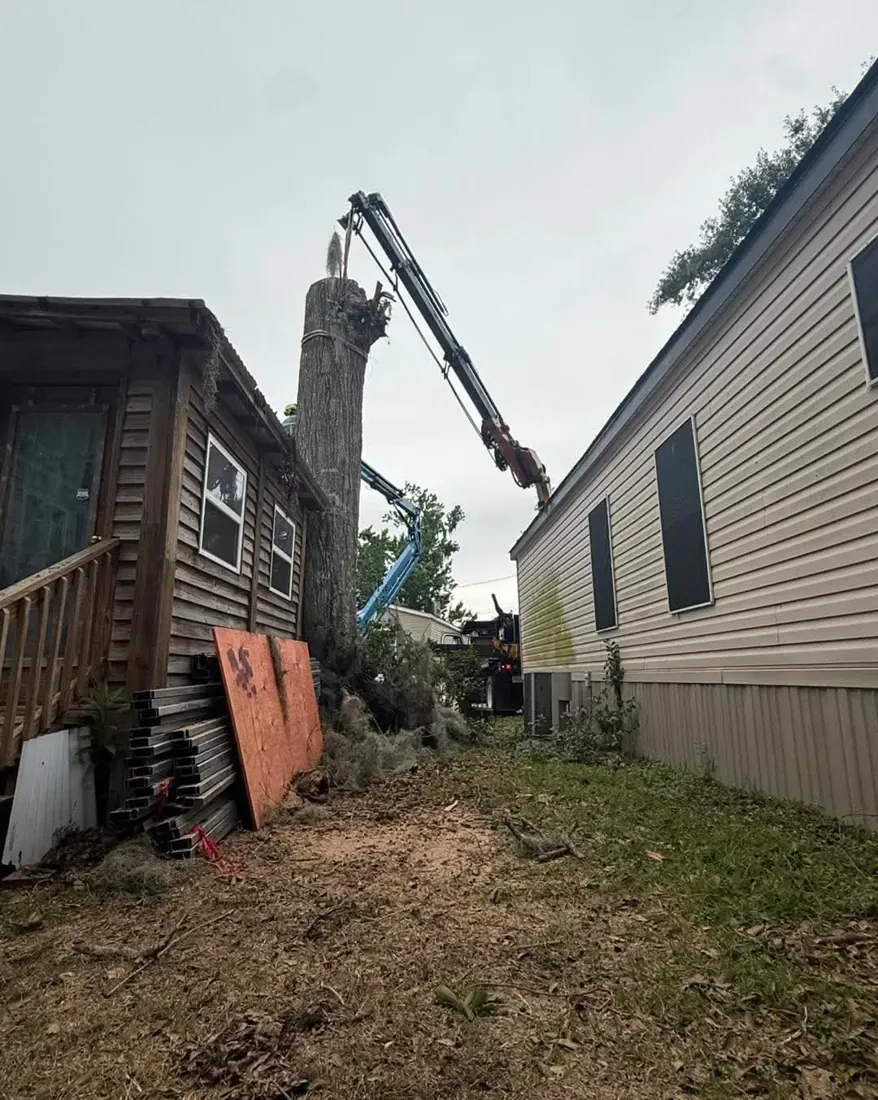
Emergency tree help
Tree on a building?
Keep clear. Call first.
Broken wood, loaded branches and partially uprooted trees can move unexpectedly. Keep people and pets outside the affected area. Stay away from trees touching wires and report utility hazards to the utility or emergency services.
Tell us whether the tree is on a house, whether anyone is in danger, whether wires are involved and whether access is blocked. We will discuss current availability and the next step. A website form is an estimate request, not a confirmed emergency dispatch.
When the damage is widespread
Storm work often begins with stabilization and access, followed by planned removal and debris handling. Larger commercial and storm projects may require mobilization beyond the metro. Location, scope, crew availability, weather and site conditions determine whether a deployment is practical.
For the people buying the work
Public property.
Occupied sites.
Clear communication.
A government buyer needs a usable scope and a dependable contact. A property manager needs tenants, vehicles and entrances accounted for. A prime contractor needs the tree work coordinated with other trades. We make those conversations part of the project planning.
Send the property address, tree locations, photographs, access restrictions, work window and the desired cleanup standard. For bid or subcontract opportunities, include the solicitation number, submission deadline and the documents requested by the buyer. Ask directly for current licensing, insurance, registration and equipment information; eligibility is specific to the contract.

Plan from the whole property, not the closest branch
Before deciding what work should happen, identify the actual tree, the nearby roof and driveway, the ground beneath it and the route that equipment or debris would need to follow. A close image of one limb can show a concern, but it cannot explain whether a branch can be lowered safely or whether nearby landscaping needs protection. Wide context helps separate the goal from the method.
An effective estimate conversation also distinguishes immediate hazards from planned pruning, stump work or preservation. Send photographs only from a safe position; never stand under a suspended limb or approach a downed wire for a clearer view. State who controls the property, whether gates or parked vehicles affect access, and whether a neighbor must authorize entry. The team can then explain what still requires on-site evaluation.
Good planning includes the finish: debris handling, stump height or grinding depth when applicable, what remains on site, and which property surfaces need special care. Those details are easier to compare before work begins than after the yard has been cleared.
Local knowledge. A scope that travels.
New Orleans properties bring mature trees, narrow access and structures close to the canopy. We serve homeowners and organizations across the metro, with larger-project travel evaluated separately.
BBB Accredited · A+
Specialized handling
Large and difficult tree work
Home to public property
Residential and commercial scopes
Original field photos
Meet the people and equipment
Understand the tree and the property before choosing the equipment
Tree Huggers handles residential and commercial tree work across the New Orleans area, but the first decision is what should happen to the particular tree. A declining trunk beside a house, an overextended limb above a roof, and a healthy oak restricting a driveway are three different requests. The right conversation starts with the tree condition, the target below it and the outcome the property owner wants. Equipment is then considered for the site, not advertised as a one-size-fits-all answer.
One wide view of the whole tree and its surroundings can help explain the property. Follow it with closer photos, taken from a safe place, of the canopy concern, the access gate and any roof, fence or parking area beneath the work. Do not stand under hanging wood or enter a damaged area to get a better angle. A photograph can clarify the initial inquiry, but it cannot replace an on-site inspection when structural condition, overhead electrical conductors or equipment placement matters.
For routine pruning, identify the specific clearance or deadwood concern rather than asking to reduce the entire canopy. For removal, say whether the stump is part of the request and whether brush and wood need to leave the property. For storm damage, report whether any limb, trunk or cable is unstable and keep people out of the affected area. If there is an immediate hazard, call to ask about current availability; a web form does not confirm dispatch or a response time.

Give the estimator a useful starting point
When you compare estimates, look for the same defined scope: the trees included, access assumptions, material handling, stump treatment, protection of nearby features and what is excluded. A low figure for cutting alone may not describe the same job as a proposal that includes debris removal or specialized rigging. Tree Huggers can discuss the practical options after learning about the property, without assuming a price, an equipment method or a result before assessment.
Trees around an occupied house deserve a clear description of what must stay in use while the work is underway. Tell the estimator whether there are separate entrances, tenants, deliveries, parking restrictions or a narrow shared drive. For a business, identify pedestrian paths and operating areas that may need to remain accessible. These details affect staging, scheduling discussions and the proposal scope, even when the tree itself appears easy to reach. If another owner controls access, raise that issue before a crew is mobilized.
Tree retention can also be a valid outcome. A healthy canopy may need targeted deadwood removal or clearance rather than wholesale removal, and a declining tree may warrant further assessment before work is chosen. Ask what signs support the recommendation and how the plan addresses surrounding vegetation, roots and drainage. The site is not a generic equipment demonstration; it is a property with people, structures and trees worth considering together. The photo shown here is a generated educational illustration, not proof of a past Tree Huggers project.
Before you hire a tree company.
A good estimate explains what work is included, what must be protected and how the property will be left. Ask who is responsible for access, utility coordination, any required approvals, wood hauling and stump treatment. Compare complete scopes instead of assuming every tree-removal quote includes the same finish.
Our tree advice center helps you prepare for those conversations. It covers warning signs, large-tree removal, storm planning, equipment access and buying work for managed properties. If your situation appears urgent, call instead of waiting for an online reply.