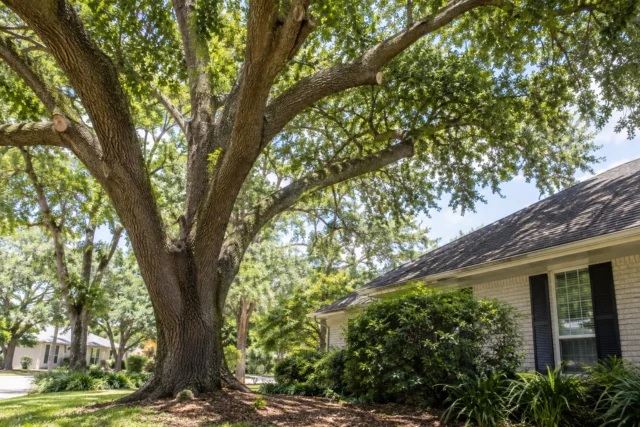
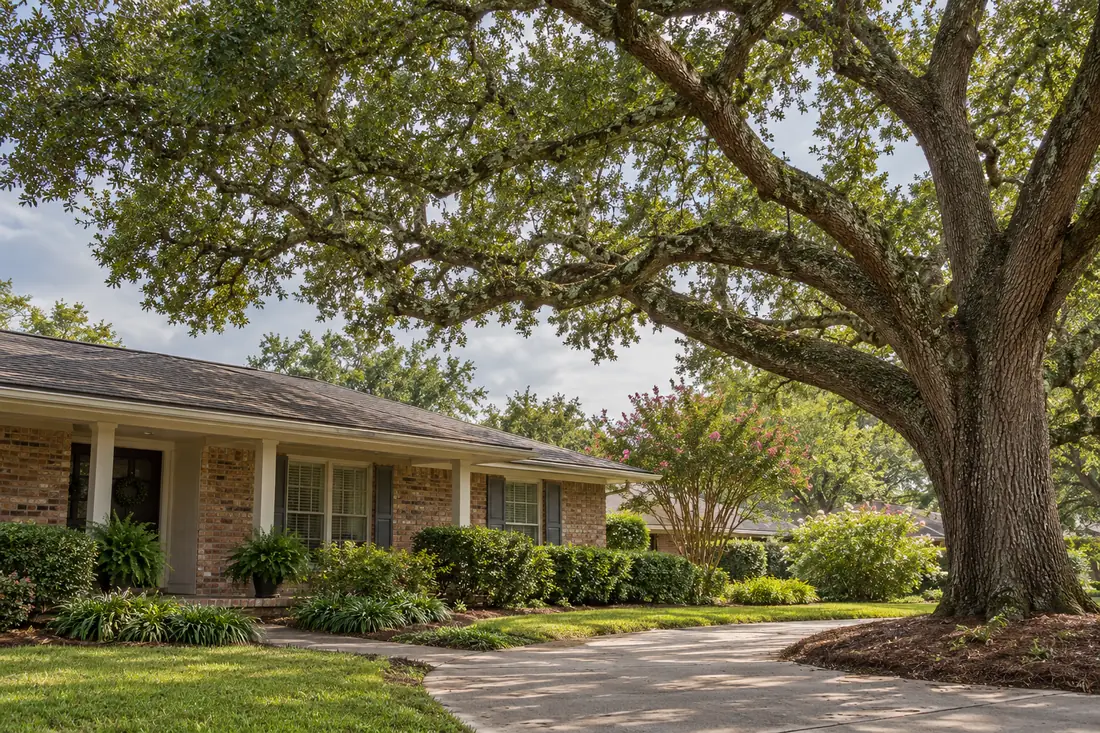
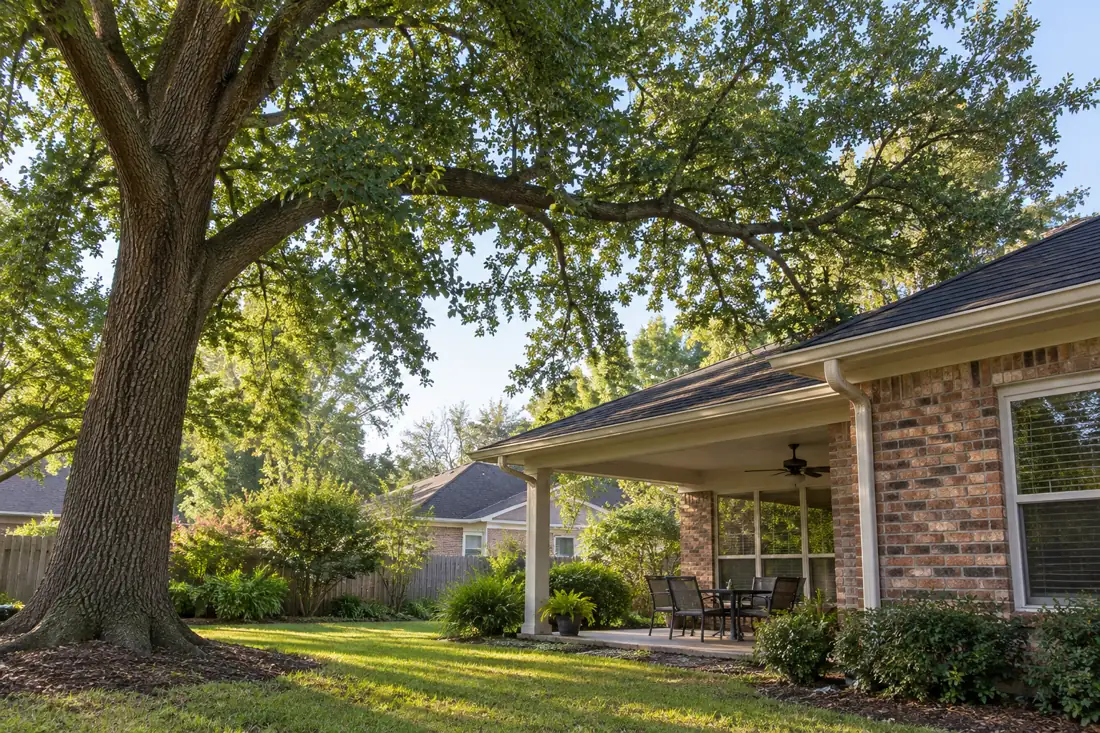
Construction may affect a tree through root injury, soil compaction or broken branches. Pruning should not be used as an automatic response to every construction impact. Explain what work occurred and where machinery operated. An assessment can help separate damaged branches from broader concerns that may require monitoring or another specialist.
Post-construction tree condition review
Document where soil was stockpiled, where machines traveled and which trenches crossed the tree’s likely rooting area. Keep construction-period photographs when available; a green canopy immediately after work does not establish that roots escaped injury.
Evaluate branch breakage separately from buried root flares, compaction, altered grade and cut roots. Canopy pruning cannot reverse every root problem. A site professional should identify limitations where hardscape prevents inspection.
Record follow-up observations such as new dieback, drainage changes and trunk-base conditions. Define which contractor handles tree care, earthwork repair and monitoring, with an urgent-hazard escalation route if a new defect appears.
Start with a site map showing where equipment traveled, soil was stockpiled, trenches were dug and hard surfaces were installed. A tree may show dieback after construction because the root environment changed; cutting back the visible crown does not undo compaction or lost roots. Photograph the tree, surrounding grade and any changes in drainage, and document when symptoms first appeared. Keep vehicles and material storage out of the remaining root area while the cause is being evaluated.
Ask the assessor to distinguish dead or broken limbs that may need attention from living branches that are responding to root stress. Explain whether new utilities, paving or foundations limit future work around the tree. If pruning is proposed, require a description of the specific safety or clearance objective and how it relates to the tree’s current vigor. Coordinate any soil, irrigation or construction corrections with the responsible trades; do not present cosmetic crown thinning as a complete solution to underground damage.
Reconstruct the construction timeline before pruning
A tree beside a completed renovation may look normal even when grading, trenching or heavy equipment altered its growing environment. Begin by learning what happened, not by prescribing a cosmetic cut. Ask the contractor or property owner when excavation occurred, whether soil was added or removed, where machinery traveled and how close work came to the trunk. A sketch of utility trenches, temporary access routes and stored materials can identify possible root-zone impacts that are not visible from the canopy.
Separate conditions observed before construction from changes noticed afterward. Photographs with reliable dates can help, but do not invent a capture date or attribute damage to a contractor without supporting evidence. A branch broken by equipment needs a different assessment from sparse foliage that appeared after drought. The pruning discussion should address observed branch damage and tree structure while recognizing that root injury, soil changes or drainage problems may require further evaluation beyond pruning.

Inspect the root zone and disturbed soil first
Roots commonly occupy a broad area beyond the trunk, so disturbance can occur under a driveway, future patio or utility route. Look for exposed or severed roots, newly compacted soil, buried root flare, changed drainage and evidence of repeated vehicle passes. Do not dig around suspected major roots just to confirm their position. A professional can evaluate the context and decide whether more investigation is warranted before choosing canopy work.
If fill soil or paving was placed near the trunk, note its extent and whether water now pools or runs toward the foundation. A raised grade can affect root aeration even when the tree still has green leaves. Conversely, not every surface crack or isolated exposed root proves a stability hazard. The goal is to understand the tree's growing conditions and any ongoing site stress, because trimming foliage alone will not restore lost roots or correct soil compaction.
Investigate construction impacts before prescribing pruning
A tree may show delayed stress after a driveway replacement, trench, fence installation or prolonged material storage over the rooting area. Soil compaction and root loss cannot be corrected simply by removing an equal amount of canopy. Document where equipment traveled, where soil was excavated and whether changes in drainage or grade occurred.
If there are dead branches, confirm whether they should be removed for safety or tree health, but avoid assuming every leaf symptom is caused by one recent construction activity. A professional assessment may require reviewing construction plans, site conditions and the tree’s previous condition. Do not direct workers to expose or cut roots merely to gather photos.
Assess branch damage without removing too much leaf area
Construction can break branch tips, scrape bark, leave suspended limbs or reduce clearance as scaffolds and roofs change. A qualified tree professional should distinguish dead, broken and hazardous growth from healthy branches that simply look uneven. A tree already coping with root disturbance may have limited resources for replacing large amounts of foliage. Ask for targeted cuts that address specific damage while retaining as much functional crown as appropriate.
Do not order uniform thinning to 'balance' a tree merely because the crown appears lopsided after construction. The relationship between foliage and roots is more complex than making the silhouette match on both sides. If major damaged limbs require removal, have the professional explain the effect on crown structure and whether another treatment or staged plan is justified. Where a hanging limb or newly unstable tree is suspected, keep people away from a safe position and seek qualified assessment promptly.

Assess the construction footprint before removing more live crown
After construction, the visible canopy may be only one part of the tree's story. Ask where machinery entered, where soil or building materials were stored, whether grading changed, and whether roots were cut during trenching or foundation work. Compare current photos with any images taken before the project. A tree that looks unchanged immediately after a driveway or room addition may show stress later, and an isolated yellow leaf does not prove the cause. Record observable facts and the dates of major activities rather than attributing every symptom to one contractor without evidence. Keep new vehicle traffic away from the rooting area while the condition is evaluated.
The instinct to remove a large amount of foliage to 'balance' suspected root loss is not a reliable general remedy. A qualified tree assessor should look at crown condition, damaged branches, root-zone disturbance and any structural concerns together. Dead or broken limbs may need separate attention, but healthy foliage is important to recovery.
If the tree has existing decay or changed lean, ask whether an independent risk assessment is warranted before normal use continues beneath it. Soil compaction, drainage changes, new paving and buried utilities can require cooperation among the property owner, landscaper, builder and arborist rather than being addressed with a single pruning visit.
Give an estimator a plan showing the construction limit, new structures, remaining trees, access route and known underground services. Separate immediately needed clearance from diagnostic questions and longer-term monitoring. If repairs are still happening, discuss whether equipment can be staged without creating fresh injury to remaining roots or finished surfaces.
A useful written scope states the specific proposed cuts and why, describes property protection and debris removal, and identifies any observations that require another professional. Keep dated photographs and follow-up notes across growing seasons. A post-construction pruning invoice is not evidence that the tree's condition has been fully restored.
Owners should resist the temptation to diagnose a tree solely from the construction contractor's photographs or a single canopy image. Trees experience natural seasonal changes, and multiple stresses can occur together. Where concerns involve subsurface rooting conditions, an arborist or other appropriate specialist may need more information than a routine pruning quote provides.
Keep heavy stored materials off the root area while determining the next steps. If a tree must be removed, the decision should rest on a documented site assessment and realistic alternatives rather than retrospective assumptions about fault.

Look for delayed stress and changing canopy response
Some consequences of root disturbance become apparent gradually, especially through a hot or dry season. Watch for unexpected dieback, smaller leaf growth, premature color changes and altered branch density, while remembering that weather, species and unrelated pests may also contribute. Keep dated observations rather than declaring a single definitive cause. Compare conditions with nearby trees only as context; one tree may have a different rooting environment or prior history.
A pruning plan may need to be conservative until the tree's response is clearer. Removing living limbs to hide thinning foliage can mask the symptom without addressing the cause. An arborist may recommend monitoring, soil or irrigation adjustments, testing or further risk assessment. The proper course depends on the tree and site, not a blanket rule that every post-construction tree must be cut back. A written timeline gives future inspections a meaningful starting point.
Pruning after construction: investigate root and soil disturbance first
Construction near a retained tree can alter soil grade, drainage, oxygen availability and roots even when the canopy was untouched. Ask what work occurred, when machines crossed the root area, whether trenches or fill were used and whether the tree's leaves changed afterward.
A visibly thin crown may be a response to root damage rather than a call for heavy thinning. Do not excavate to find cut roots or prune extensively just to match the appearance of healthier trees. Photograph the site from fixed points and retain construction notes if available.
Before approving canopy work, request a qualified assessment of the tree's current condition and whether selective removal of dead or damaged material is warranted. Irreversible pruning cannot replace severed roots or correct compacted fill. Keep vehicle loads and material storage away from the remaining root zone where feasible.
Discuss possible monitoring, moisture management or soil measures through the appropriate professional rather than guaranteeing recovery. If a branch presents an immediate safety concern, isolate that issue from the longer-term diagnosis. At closeout, document completed work and a separate observation plan so a future decline is not mistakenly described as pruning failure.
Protect remaining rooting area during follow-up work
If construction is ongoing, mark a practical root-protection zone and keep storage, washout and repeated vehicle traffic outside it where possible. Coordinate with the site supervisor to avoid unauthorized trenching and grade changes. The owner should record what measures are feasible and what unavoidable conflicts need specialist review.
Ask the tree contractor to distinguish immediate deadwood management, soil or water investigations and longer-term observation. A written estimate for pruning should not be presented as a complete remedy for unknown root damage. Keep photographs and plans as supporting context while recognizing that the actual below-ground condition may remain uncertain.
See the related Tree Huggers service and request an appropriate assessment
Check building clearance and new structures separately
An addition, fence, pergola or roof extension may now lie closer to branches than the old building did. Measure the actual interference and consider how the branch moves in wind before asking for removal. Some conflicts can be solved with selective pruning, while others may be reduced by adjusting a fixture or planning a different access route. If a new utility service crosses the canopy, its safety requirements govern work nearby and cannot be treated as ordinary branch clearance.
Do not permit unqualified workers to cut around energized lines or reach over fragile roof edges. Photograph the relationship from the ground and identify the building surface involved. A contractor should evaluate safe equipment positioning and whether a branch can be reduced to a suitable lateral without creating a weak stub. The request for an estimate should keep building-clearance work distinct from the tree's broader post-construction health assessment.

Protect the recovered rooting area from another disturbance
After a renovation, the temptation may be to use the remaining soil under a tree for leftover pallets, a dumpster or future parking. That can continue the very compaction and surface damage the tree needs relief from. Establish a practical protection area based on professional advice and site constraints. Preserve existing drainage and avoid stockpiling soil against the trunk. Ground protection for future maintenance must be planned rather than assumed.
Discuss irrigation with attention to actual moisture conditions. A schedule that was suitable before new paving or grading may now deliver too much or too little water. Mulch can help moderate surface conditions when correctly placed, but it should not be heaped against bark or used to hide exposed defects. Do not cut roots or install new edging through the root zone without considering consequences. Protecting the site is often as important as choosing one more pruning cut.
Clarify responsibility among contractors and the owner
A general contractor, landscaper, electrician and tree service may all be involved on the same property, but their scopes differ. The tree professional evaluates tree condition and proposes tree work; the property owner coordinates access and authorizes decisions; drainage or structural specialists address their own systems. Put these boundaries in the estimate so a tree-pruning job is not misconstrued as a guarantee against settlement, roof damage or future decline.
If a conflict or damage claim exists, keep factual notes and original photographs rather than assigning fault in a marketing description. A professional may be able to document observed conditions without determining when every injury happened. If the owner needs a formal assessment for insurance or a dispute, ask about qualifications and the desired report separately from routine pruning. Clear records reduce misunderstandings without inventing job history, testimony or an outcome that the evidence cannot support.
Plan equipment access around finished improvements
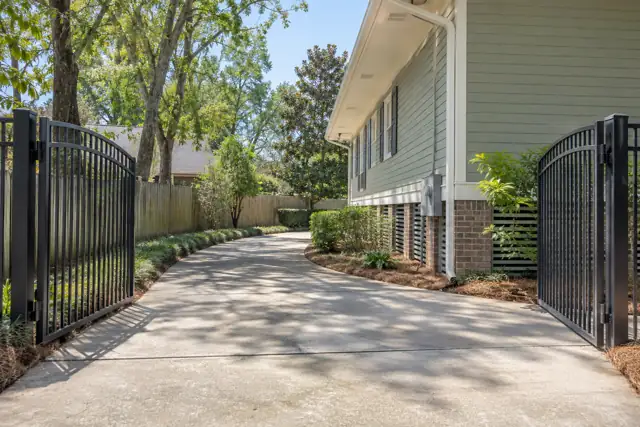
New paving, walls, irrigation and landscape beds can make tree access very different from before construction. Identify which surfaces may safely support equipment and where branches can be lowered without striking new features. A small backyard tree may still require careful rigging if there is no open landing area. The crew should define its exclusion zone, staging area, vehicle route and restoration responsibilities before any cutting begins.
Photograph delicate finishes from a safe position and discuss reasonable protection measures. A protective board is not automatic proof a surface can take a heavy machine load; the contractor must assess the support and equipment requirements. Keep pedestrians and occupants away from active cutting, and avoid routing debris through a newly occupied entrance. If access would create disproportionate harm, discuss alternative methods or phased work rather than treating damage as unavoidable.
Decide which cuts are essential now and which can wait
A staged response may make sense when there is immediate damaged wood plus longer-term uncertainty about root health. Essential risk-related work should be identified clearly, while nonurgent shaping can sometimes be deferred until the tree's response is better understood. Ask the arborist to explain why a specific branch should be removed now and what happens if it is monitored instead. This approach avoids using routine pruning as a substitute for diagnosis.
Any decision to defer should include practical indicators for reinspection, such as new cracks, a changing lean, additional deadwood or substantial canopy loss. These are prompts for qualified review, not a prediction that a tree will fail. If the tree presents an apparent immediate danger, restrict exposure rather than waiting for a calendar reminder. Write down who will monitor the property and how to contact a professional when changes are observed.

Build an honest post-construction tree record
Collect a site plan showing affected trees, a brief construction history, current full-tree photographs and specific branch concerns. The inquiry can note whether grade, drains, walls or new service lines changed near the roots. Avoid uploading unnecessary names, license plates or unrelated building documents. The contractor can then prepare for an assessment focused on observed conditions, while recognizing that photographs may not reveal underground injury.
After work, preserve the actual pruning scope, retained tree structure, relevant observations and genuine images of the site. Do not describe educational scenes as completed local jobs or treat a new appearance as proof of restored root health. Put follow-up reviews alongside other property maintenance so later staff can compare changes. Tree Huggers can discuss the tree-care portion of the project without promising a diagnosis from the web form or assuming construction was responsible for every later symptom.
Questions about this project
When should tree work be discussed on a building project?
As early as practical, while the footprint, access, excavation and staging can still be coordinated. Identify retained trees and share drawings before clearing or other site activity creates avoidable conflicts.
Does stump grinding complete construction site preparation?
Not necessarily. Excavation, root removal, base preparation, compaction and grading may require separate work and acceptance criteria. Coordinate the tree scope with the contractor responsible for the next construction phase.
Is leaving the trunk untouched enough to protect a tree?
No. Roots, soil conditions and nearby work can matter even when the trunk is not cut. Identify retained trees before planning access, excavation and storage, and ask what site-specific protection is appropriate.
Can pruning undo construction-related root damage?
Do not assume it can. Share the work history and ask for an assessment of the current tree and site. Pruning, monitoring or other recommendations should address an identified need rather than substitute for protection planning.
How should I describe the pruning I want?
Explain the objective: clearance for a route or building, deadwood, a damaged branch or structural development. Ask for suitable tree-specific work rather than requiring an arbitrary shape or amount of canopy to be removed.
Will pruning resolve every tree concern?
No. Root, trunk and major structural problems may need a different assessment or response. State the full concern so pruning is not used as a substitute for evaluating the condition that prompted the call.
Is a free work estimate the same as a written risk assessment?
Not necessarily. Explain whether you need pricing, condition advice, a documented assessment or a combination. Ask what the visit includes, who provides it and what limitations apply to any findings or recommendations.
What history should I share?
Share known storm damage, prior failures, construction, root disturbance, flooding, pruning and recent changes. Include the timing and nearby property use. Useful history supports the evaluation without replacing inspection of the current tree and site.
How should extra work be approved?
Use the agreed approval process and identify the change, reason, scope, price or schedule effect as applicable. Confirm who has authority before treating an additional tree or task as part of the original job.
What completion records are useful?
Keep the agreed scope, tree or area identification, authorized changes, invoice and labeled photos where appropriate. Include unresolved items and a contact. Contract-specific records should follow the buyer's stated requirements.
What should I tell Tree Huggers about pruning a tree after construction?
Explain the property address, the work you want and the specific concerns: root disturbance, damaged branches, construction history. Send safe photos of the tree, surroundings and access route. The contractor can then discuss the assessment and scope needed for this situation.
How do I request an estimate for this work?
Call 504-458-8336, text photos or use the estimate form on this page. Include the address, desired outcome and any timing constraints. The company will need to review scope and availability; an online request does not confirm a price, appointment or emergency dispatch.
Get a scope for your property
After construction near a tree, supply the dates and areas where excavation, heavy equipment, soil stockpiles or grade changes occurred, if that information is known. Photograph the trunk, visible root zone and changed branches from a safe position. Do not assume that pruning alone repairs compacted soil or damaged roots.
Ask for an assessment that separates broken-limb cleanup from root-zone concerns, potential decline and any monitoring recommendation. The written scope should identify unavoidable pruning, access limits and work that may need an arborist or another contractor, while avoiding unsupported claims that the tree is either healthy or doomed.