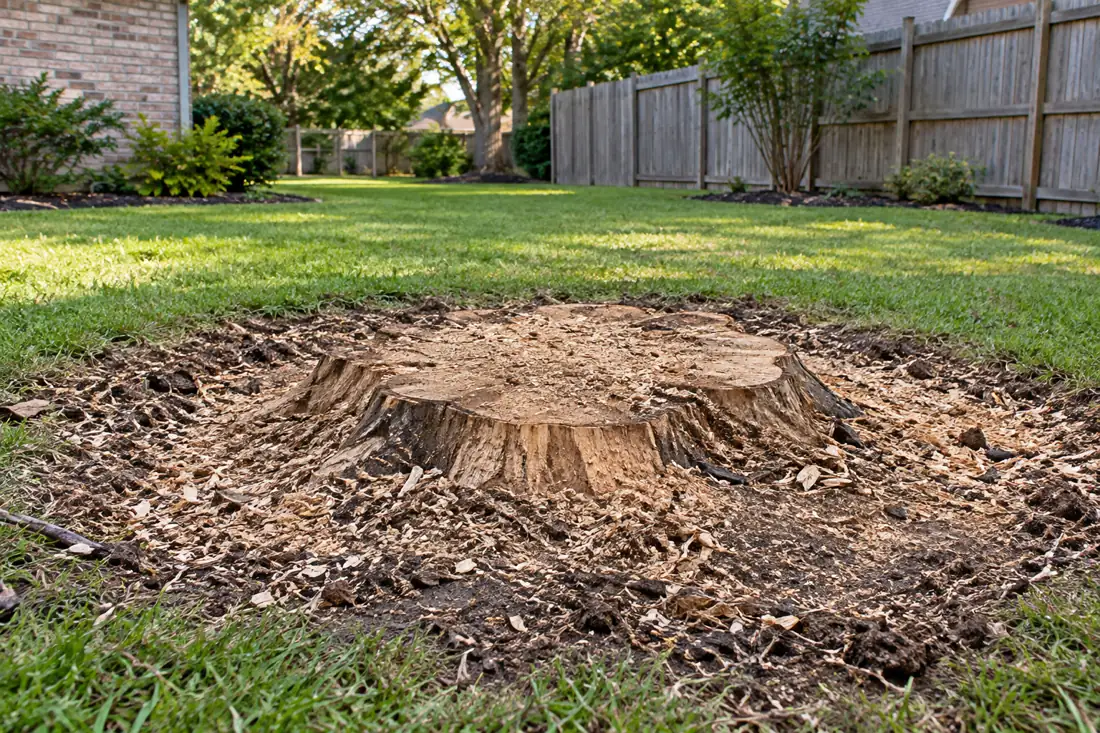
There is no single right answer for stump grindings. Some customers use the material as temporary fill or mulch, while others want the area cleared for sod, planting or construction.
Site planning detail: Leaving stump grindings on site can reduce hauling effort, but chips are not automatically a suitable finished planting soil. A fresh pile may contain large wood pieces mixed with earth, and the eventual surface can settle as organic material decomposes. Decide whether the area will remain a mulched bed, be covered with sod, receive a replacement tree or become a hard surface. Each outcome has different requirements for removing excess chips, adding suitable soil and allowing for settlement.
Ask whether grinding depth and the resulting material are included in the quoted scope, and whether hauling or spreading costs extra. Do not bury thick chips beneath fresh sod and assume roots will thrive. If utilities, irrigation or nearby roots are involved, identify them before the machine arrives and review the intended finished grade.
Leaving grindings
Leaving material can reduce hauling cost and may be useful where appearance is not critical.
Hauling grindings
Removal creates a cleaner starting point for landscaping but adds labor and disposal volume.
Start with the next use of the former stump area
The decision is easier when you describe the result you want. An unused garden corner, a lawn being repaired and a site prepared for another contractor can need different finishes. Tell the grinder whether you want material retained, the pile removed or a handover for landscaping. Do not use complete cleanup as the only specification. That phrase can leave the owner and contractor imagining different amounts of material removal and different final surfaces.
Ask what the grinding price includes before accepting it. If you want hauling, identify whether that means removing the loose pile, extracting material from the depression or another stated finish. If you plan to keep some material, say where it should be placed and how much handling is included.
A clear choice at the estimate stage helps the company plan loading, transport and access. It also prevents an avoidable second visit caused by deciding after the equipment has left that the remaining pile is not what you expected.
Understand the material you are deciding about
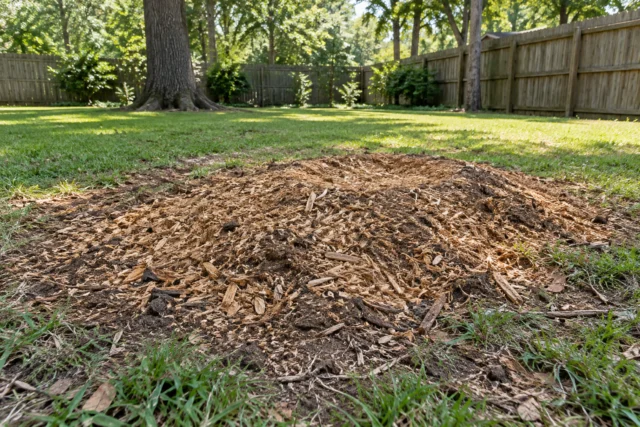
Stump grindings are not necessarily the same as a clean load of uniform landscape mulch. The pile can include wood fragments, bark and soil from the grinding area. Look at the actual material and tell the provider what use you have in mind. An illustration of a tidy pile is only a planning example, not a promise of the exact texture, volume or condition produced by your particular stump and site.
If disease or a specific contamination concern was involved in the original tree, ask the appropriate tree-care or extension professional whether reuse is suitable. UC IPM’s mulch and plant-pathogen guidance explains why the source and handling of woody material can matter. Do not assume every pile should be spread around other trees or that every diseased-tree pile has the same restriction. Keep the decision tied to the identified concern and actual material, rather than making an unsupported blanket claim about all wood chips.

Define what leaving the material actually means
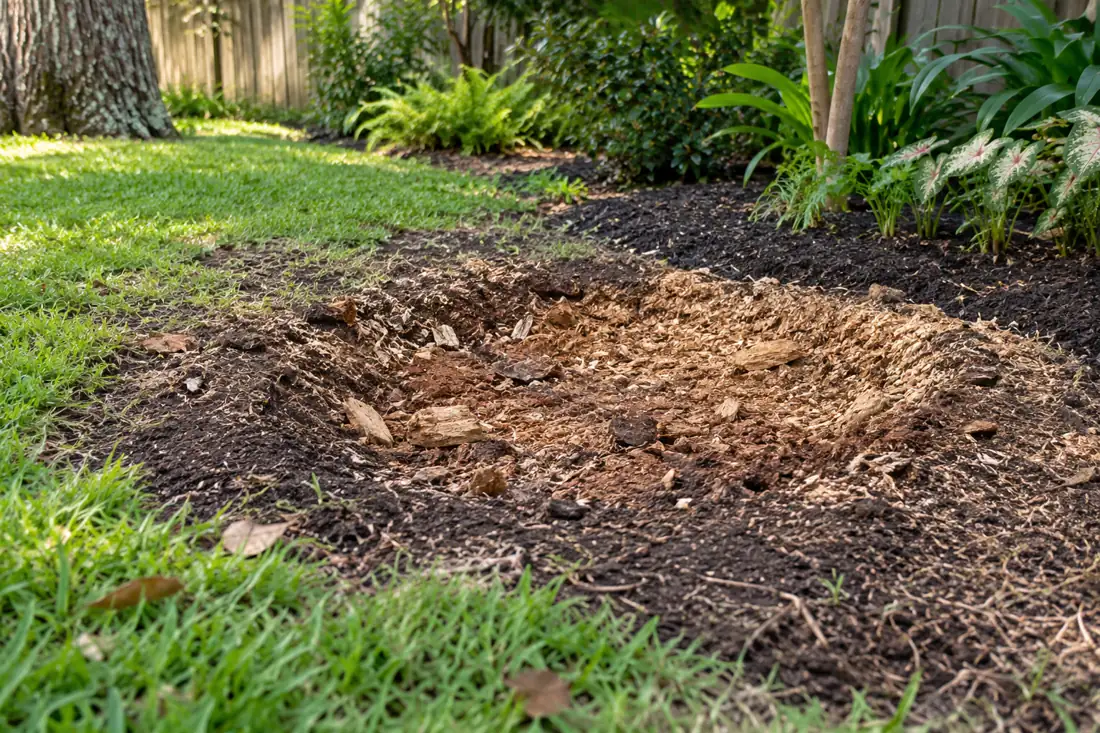
Leaving grindings can mean a pile beside the work area, material placed back into the depression or another agreed arrangement. Choose the description that matches your needs and confirm what the contractor will do. Identify nearby paths, drains and entrances that should remain usable. The decision should not create an unexplained obstruction simply because hauling was excluded. If material must be moved to another part of the yard, include that handling in the discussion.
Keep children, pets and visitors away from active work and manage uneven ground appropriately afterward. Ask what the provider recommends for the handover condition and what separate surface work remains. Do not assume a pile of mixed chips is a finished lawn or a permanent answer to a hole.
The future use still matters. An owner retaining the material for a later project should have a practical place for it and a clear understanding of who will complete the next stage, rather than treating retention as a way to avoid deciding what happens to the ground.
Specify hauling by the agreed finished condition
A hauling scope should state what material is loaded and what remains. Ask whether the agreement includes the visible pile only or a defined cleanup of the ground area as well. Discuss access for loading and the surfaces that may be crossed. A narrow backyard route can affect handling independently of the original stump size, so send pictures of the whole path rather than only the material to be removed.
Put the chip pile and final surface into the quote
The decision to leave grindings is not just a yes-or-no line. Clarify whether the material will stay in the hole, be spread over an agreed area or be piled for later pickup. The volume and height of the pile can affect drainage, walking routes and the next landscape task, so identify the intended location.
For hauling, ask whether the quote includes loading, transport and site raking, and whether it leaves an empty depression that someone else will fill. For retention, decide who will move material later and whether the use is appropriate for that property. Tree chips are not automatically a substitute for clean planting soil.
Record the decision before work and compare the finished condition with the accepted description. A clear photograph of the stump area can help identify how much material remains, but it does not establish future settling or guarantee a level lawn.

If you are obtaining several prices, use the same description for each provider. One may quote removal of loose grindings while another includes additional surface preparation. Those are different jobs. Ask about the treatment of roots, rocks or other material outside the grinding pile if present; do not assume a tree-debris price covers unrelated waste. At completion, compare the result with the stated finish. A clear hauling record should describe what was actually removed without implying that the area is already prepared for every landscaping or construction use.

Keep soil replacement and lawn work distinct
If the goal is new sod or planting, tell the landscape provider what grinding and hauling will leave behind. Ask that provider what preparation and material its work requires. Imported soil, grading and planting may be separately contracted even when the grinder also removes the chips. The important point is a coordinated handoff, not assuming one provider has silently accepted responsibility for the entire finished yard.
For a lawn project, identify the intended surface level and how the area will be managed between visits. For planting, agree on the planting location and soil preparation with the appropriate provider. Do not read a freshly smoothed pile as proof that the subsurface condition meets those requirements.
Retained wood and changing material can affect later surface expectations. Keep any remaining preparation item in writing so the owner and next contractor understand what still needs to be done before committing to an installation date or judging the completed stump work.
Choose a chip-handling finish before the crew arrives
Stump grindings are not simply interchangeable with clean topsoil. They can contain shredded wood, bark and soil in proportions that vary with the stump and grinding process. Before the work begins, decide whether the chips are allowed to remain as a mound, spread over a designated landscape bed or be removed from the site. These are different cleanup outcomes and should appear separately in the estimate.
Consider the quantity in relation to the space around the stump. A broad trunk and major surface roots can produce more material than a small decorative stump, while wet ground or a restricted gate can complicate collection. Identify whether the haul route crosses planted beds, pavers or a neighbor's access area. If a trailer cannot reach the location, transferring material by hand or small equipment may affect the scope.

Plan for volume, settling and the next trade
Leaving some material may make sense for noncritical landscape reuse, but avoid burying thick fresh wood-chip layers where turf or new planting is expected to establish. Ask the appropriate landscape professional about soil preparation, settling and replacement with suitable growing medium. If a builder later needs excavation or a specified compacted subbase, stump grinding and chip removal alone should not be described as construction-ready site preparation.
Define the finish by something observable: material stockpiled in an approved area, excess chips hauled, the cavity left ready for a separately arranged soil delivery or a documented grading task. Retain dated safe images of the location before and after work. A photo of a cleared surface does not establish that all buried roots were removed. Keep restoration and planting responsibilities with the party actually hired to perform those tasks.
State whether grindings should be left, spread or hauled away, identify a permitted staging point and describe any separate soil or turf work so the final condition is clear before the estimate is accepted.
Decide about reuse with a real destination in mind
If you want material retained for a garden use, explain the destination and ask whether the actual grindings suit that purpose. The mixed material may differ from what you would select for a finished decorative bed. Ask the relevant provider about handling where tree disease or other site concerns exist. Do not promise excess material to a neighbor before the condition and suitability are understood, particularly when the original tree had an identified problem.
Confirm whether moving retained material is included and how the destination can be reached. Avoid storing it across a walkway, against a building access point or on a surface another contractor needs. A practical retention plan identifies the pile location, responsible person and next use.
If no one actually wants the material or can complete the follow-up, hauling may be the clearer scope to compare. The decision should reflect the owner’s real plans rather than an assumed saving that leaves an unwanted pile to handle later.
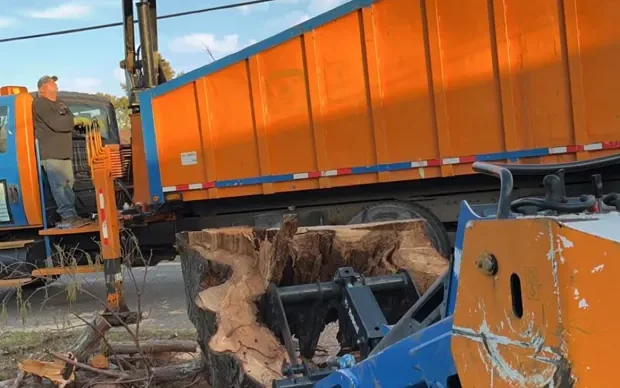
Plan the logistics before the appointment
Tell the company about gates, turns, soft ground, fences and the distance from the stump to the loading area. Identify private irrigation or other systems along the route as well as near the stump. If the route uses shared or neighboring property, confirm the required permission before scheduling. A contractor needs the actual handling route to evaluate the request, and should be told if the route changes after the estimate.
Do not move fixed fixtures or open a fence until the accepted access plan calls for it and restoration responsibilities are clear. If another crew will arrive for soil or sod, coordinate dates directly rather than assuming the hauling appointment finishes every dependency. Ask who receives completion updates if the owner is absent.
These details can be more important to a smooth cleanup than the pile’s appearance in one photograph. They make the work repeatable, understandable and easier to verify at the point where the next stage begins.
Choose the finish in your estimate request
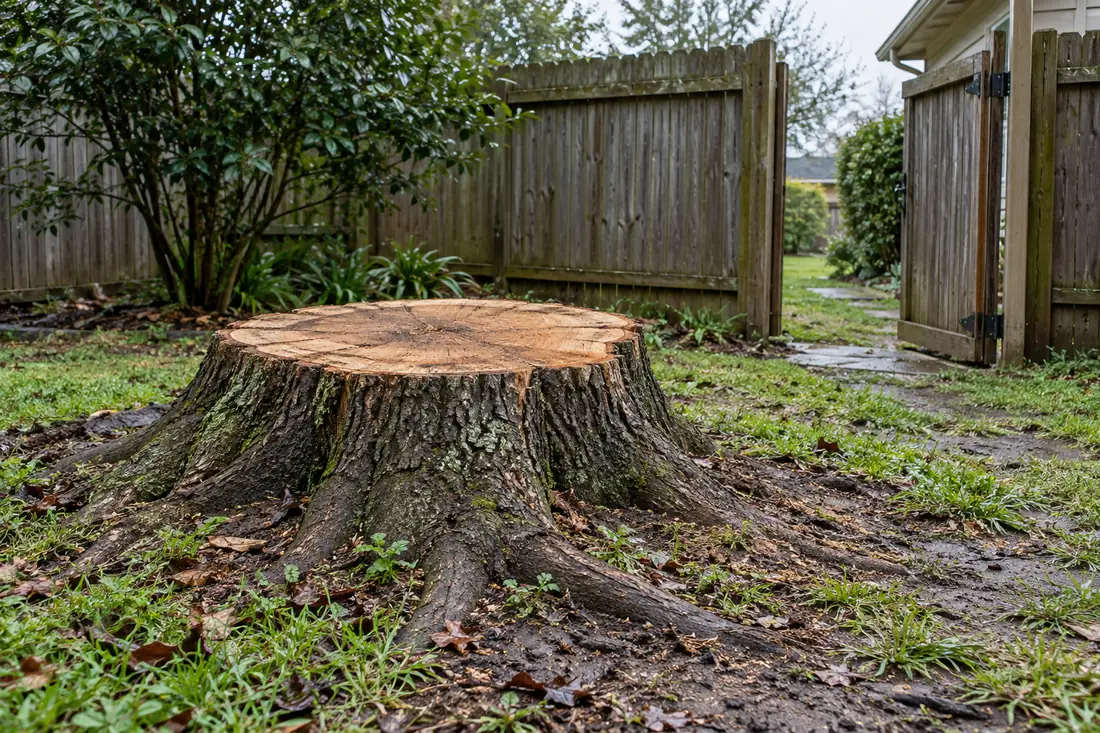
Send the address, safe stump or pile views, a full access-route view and your intended next use. Say whether you want all agreed grindings hauled, a stated amount retained or pricing for both options. Ask what the proposed result includes at the surface and what landscaping or excavation remains separate. If the stump has not yet been ground, make this decision part of the original scope rather than leaving it to a conversation after the pile appears.
Use stump grinding for the full work inquiry and grinding-depth planning when the future project also depends on a specific footprint or grade. Keep the accepted handling choice with the quote and final invoice. The useful result is not merely a smaller pile: it is a clearly understood property handover, with the right material retained or removed and the next provider’s responsibilities identified. That gives the owner a finished scope instead of another cleanup decision after the crew leaves.
Should Stump Grindings Be Hauled Away or Left? questions
Does stump grinding always include hauling the grindings?
No. Confirm chip handling and the finished surface explicitly in the quote.
Are grindings identical to clean decorative mulch?
Not necessarily. They can contain mixed wood, bark and soil; review the actual material and intended use.
What does leaving the pile mean?
Specify whether material stays beside the area, goes into the depression or is moved to an agreed place, including any handling.
Should I request prices for both choices?
You can. Use the same stump, access and finish assumptions so retention and hauling options are comparable.
Does hauling mean the site is ready for sod?
Not automatically. Coordinate soil, grading and installation requirements with the landscape provider.
Should material from a diseased tree always be reused?
Do not assume suitability. Ask about the identified disease, source material and appropriate handling before reuse.
Can I give the pile away before grinding?
Wait until the actual material and suitability are understood, and confirm any moving or loading responsibilities.
What should a hauling scope identify?
State which material is removed, the access route, the agreed surface finish and exclusions such as unrelated waste.
Can material be left across a drain or walkway?
Plan a suitable destination that preserves needed access and site use rather than leaving an unexplained obstruction.
Who handles new soil and landscaping?
Confirm the responsible provider and scope. Those tasks are separate unless expressly included.
What if I will be absent during cleanup?
Name a reachable contact and agree on the finish and completion update before the visit.
What helps an estimate request?
Send pile or stump views, access, the intended next use and a clear preference for hauling, retention or comparable options.
Let’s plan your tree work.
Send the property address, safe tree photos and the result you need. Include access restrictions and the person who can approve the work.