A clearer picture of the scope


Example: Dead-frond palm cleanup
Dead brown fronds are removed while the living green crown and the palm height remain.
Trim what needs trimming
Dead or hanging fronds and certain fruiting structures may need removal for clearance and cleanup. Excessive removal of healthy green fronds is not automatically better and can reduce the palm’s functional canopy.
Differentiate palm pruning and palm removal
Identify completely dead fronds, heavy fruit stalks, trunk concerns and possible crown decline separately. Palms are not branching hardwood trees, and removal of large numbers of healthy green fronds can injure them.
Photograph the whole palm, nearby wires, pool enclosures, roof edges and machinery access from safe ground. Do not attempt to pull hanging material for a better photograph. Crown or trunk damage requires a site-specific evaluation.
For maintenance, specify dead material versus cosmetic cutting. For removal, document trunk height left behind, root ball or stump scope, disposal, adjacent plant protection and any preparation needed before replanting.
Loose or hanging material over walkways, parking and entrances should be addressed.
Leaning trunks, crown damage and broken material deserve evaluation after severe weather.
Changes in the crown, trunk or growth pattern can indicate health problems that need diagnosis.
When palm removal makes sense
Removal may be appropriate when a palm is dead, severely declining, structurally compromised or poorly located for the property. Access and trunk height determine the safest removal method.
Related resources
Identify the palm before choosing a trimming method
Palms are often grouped together in service requests, but a Louisiana landscape may contain cabbage palms, Washingtonia fan palms, date palms, windmill palms, pindo palms and other types with different leaf arrangements, cold tolerance and maintenance needs. A palm is not pruned like an oak: its growing point is typically concentrated at the crown, and removing that growing point can kill a single-stemmed palm.
Start with an accurate species identification, the condition of the trunk and canopy, and a clear statement of what is causing concern.
Photograph the whole palm from a safe distance and note whether the newest central leaf is emerging normally. Old brown fronds at the bottom of a healthy crown can be expected, while sudden collapse of the central spear, widespread discoloration or a visibly damaged crown deserves expert investigation. Avoid diagnosing disease or nutrient deficiency solely from a close-up of one yellow leaflet. The care plan should consider species, season, storm history, irrigation and whether the fronds are actually dead, partly functional or still green.
Leave healthy green fronds to do their job
One of the most common mistakes in palm maintenance is removing too many green leaves to create a narrow tuft at the top. UF/IFAS Extension warns against severe hurricane cuts and recommends preserving the functional canopy. Green fronds produce energy and contribute to the palm’s recovery after stress; an overpruned palm may look tidy but have reduced capacity to grow. A crew should not simply strip everything below the vertical line of the trunk or take whatever fronds are easiest to reach.
Dead fronds and genuinely dangerous hanging material can often be removed, while healthy horizontal and upward-growing fronds should generally remain. Some older yellowing foliage may still be moving nutrients to new growth, depending on the cause of discoloration. Ask which leaves will be cut and why. Avoid tools that damage the trunk or growing bud while removing petioles. A neat palm should still have a full, species-appropriate crown, not the feather-duster appearance left by repeated aggressive pruning.

Palm trimming is not interchangeable with tree pruning
A palm has a different growth structure from a branching shade tree. Removing too many healthy green fronds can reduce the plant’s capacity to support growth and may leave an unnatural silhouette. Dry, hanging material, sight-line clearance and storm-damaged fronds deserve specific review rather than a request to strip the entire crown.
Discuss the palm type and observable condition, and keep people clear of any loose overhead fronds or fruit structures until handled safely.
Plan palm work around fronds, growing point and site access
Palms differ from branching hardwood trees. Removing excessive live fronds simply to create a tidy silhouette may harm the palm, while a damaged growing point raises different concerns from ordinary dead-frond removal. Record the condition of the upper crown, trunk and base from the ground. Never climb a palm or reach into overhead damaged fronds for closer photos.
A tall palm near a pool enclosure, narrow gate or utility service drop can require controlled section removal and careful equipment positioning. Ask how fibrous material, trunk sections and any stump will be handled. A leaning palm cannot be declared safe from one picture, and a pruning quote is not automatically a removal plan.
Reject the idea of hurricane-proof pruning
The phrase hurricane cut sounds protective, but removing most green fronds before storm season is not an evidence-based guarantee of wind resistance. UF/IFAS materials describe observations from past hurricanes in which severely overpruned palms experienced more crown damage than palms retaining fuller canopies. This does not mean every full palm will survive a major storm. Roots, trunk condition, species and site exposure still matter. Maintenance should address genuine dead or broken fronds and documented hazards rather than an automatic annual scalp.
Before a storm, inspect loose material, the crown attachment, lean and exposed roots from the ground. Move furniture and vehicles away from obvious potential fall zones where possible. Do not climb a palm to remove fronds once severe winds or lightning become likely. After a storm, some bent green fronds may remain capable of photosynthesis and contribute to recovery. A qualified professional can distinguish leaves that are safely retained from material crossing the central bud or threatening people below.
Evaluate the center spear and growing bud
Unlike many broadleaf trees, a typical single-trunk palm depends on the health of its terminal growing point. A lost or severely damaged bud can have far more serious implications than the loss of several older outer fronds. A dry or loose central spear, failure to make new leaves or rotting tissue may indicate a problem, but identification and diagnosis require care.
Avoid pulling hard on the center leaves or pouring chemicals into the crown based on a guess. Such actions can worsen an already stressed plant.
When the palm stops growing, record when the change began, whether a cold snap or hurricane occurred, and whether similar palms are affected. A specialist may evaluate nutrition, insects, disease or freeze damage; the appropriate treatment differs. Repeatedly cutting lower green fronds cannot restore a damaged bud and may remove resources that the palm needs. If the growing point is confirmed dead in a single-trunk species, removal may become necessary, especially when a weakened crown or trunk could affect occupied space.
Recognize the differences among trunks and leaf bases
Some palm species retain a skirt of dead fronds, while others shed old leaf bases or have a self-cleaning crown. Removing a dry skirt may be appropriate when it creates a falling-debris or pest issue, but scraping the trunk until it appears smooth can injure living tissue. The result depends on the species and whether old bases release naturally. Frond bases on tall fan palms can fall unpredictably, and a ladder beneath a loose skirt is not a safe substitute for proper equipment.
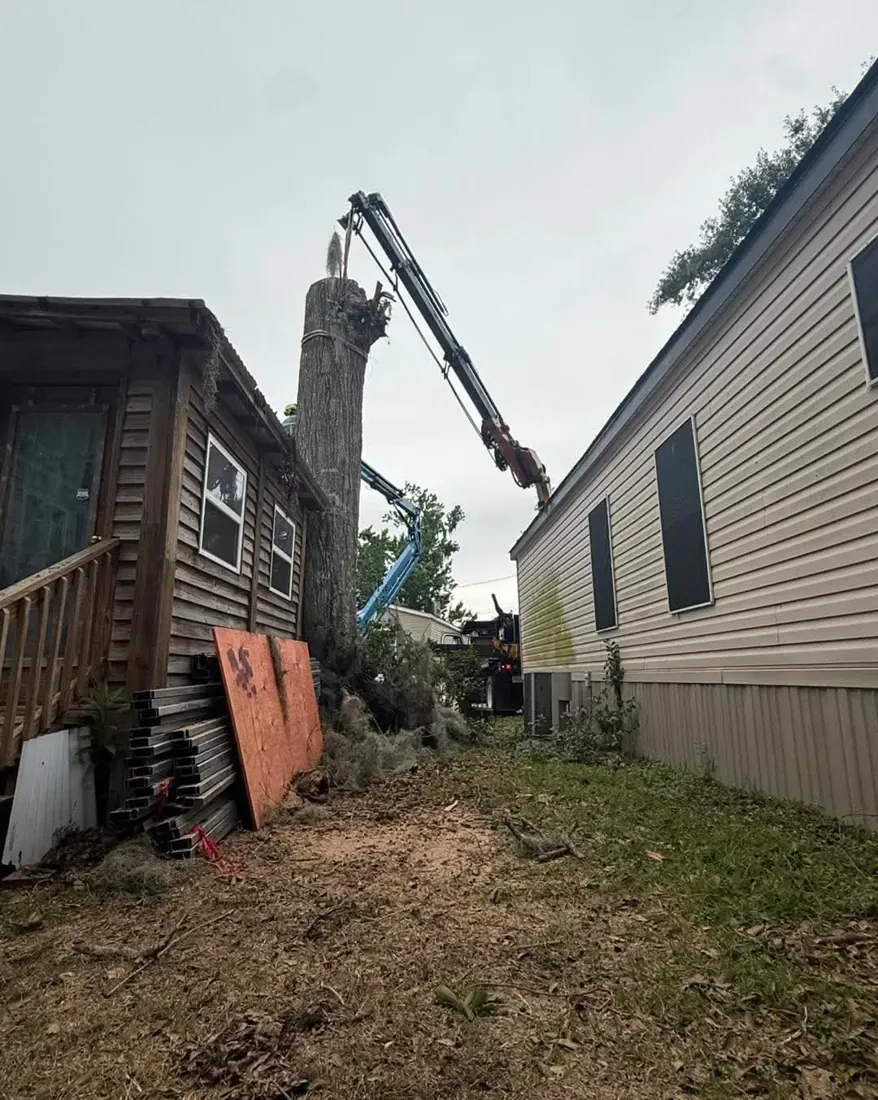
A trunk may also show old leaf scars, fiber, cavities or changes following freeze injury. Not every irregular surface means decay, but soft areas, major cracking, sudden lean or a shifting base warrant closer inspection. When documenting the problem, photograph the entire trunk as well as details so the professional can connect symptoms to the overall tree. Keep pedestrians and vehicles out from under loose heavy material until it is assessed. The objective is to remove genuine hazards without cosmetically carving the palm.
Consider fruit and flower stalks as separate work
A palm may drop fruit, flowers and seed stalks onto patios, pools or vehicle parking, even when its fronds are healthy. Depending on the species and the client’s goals, removing accessible flower or fruit stalks can reduce litter without the unnecessary loss of green leaves. The crew should cut those structures carefully and avoid damaging the crown. Fruit collection and debris handling can make a substantial difference to cleanup time, so this item should be explicitly listed in the quote.
The presence of fruit is not proof of a healthy trunk or a sound root system, and a year with less fruit is not an automatic diagnosis of decline. Some palms produce heavy bunches that require controlled handling over walkways or delicate landscaping. Ask whether the work includes collecting fallen fruit and hauling all cut material.
If fruit attracts unwanted visitors or repeatedly clogs a drain, property management may be more effective than severe canopy pruning. Match the solution to the nuisance rather than treating every palm as overgrown.
Be careful after a freeze or prolonged cold
South Louisiana can experience freezes that brown or collapse leaves on palms that usually thrive in mild winters. Brown outer foliage after cold exposure does not always mean the growing point is dead. UF/IFAS guidance cautions against immediate severe pruning of cold-injured palms while additional cold may still occur; remaining foliage can offer some protection and the bud’s condition may take time to evaluate. Observe whether a new central leaf emerges when conditions recover before reaching a final decision.
Keep notes on the freeze date, minimum conditions if known, which leaf layers were injured and when growth resumes. Do not automatically drench the crown with unproven treatments or fertilize heavily because leaves look damaged. A horticultural specialist can recommend species-appropriate diagnosis and recovery care. If loose fronds pose an immediate falling hazard, safety comes first, but retain as much functional tissue as practical. A palm that survives one freeze may still be unsuitable for an exposed location with repeated severe cold.
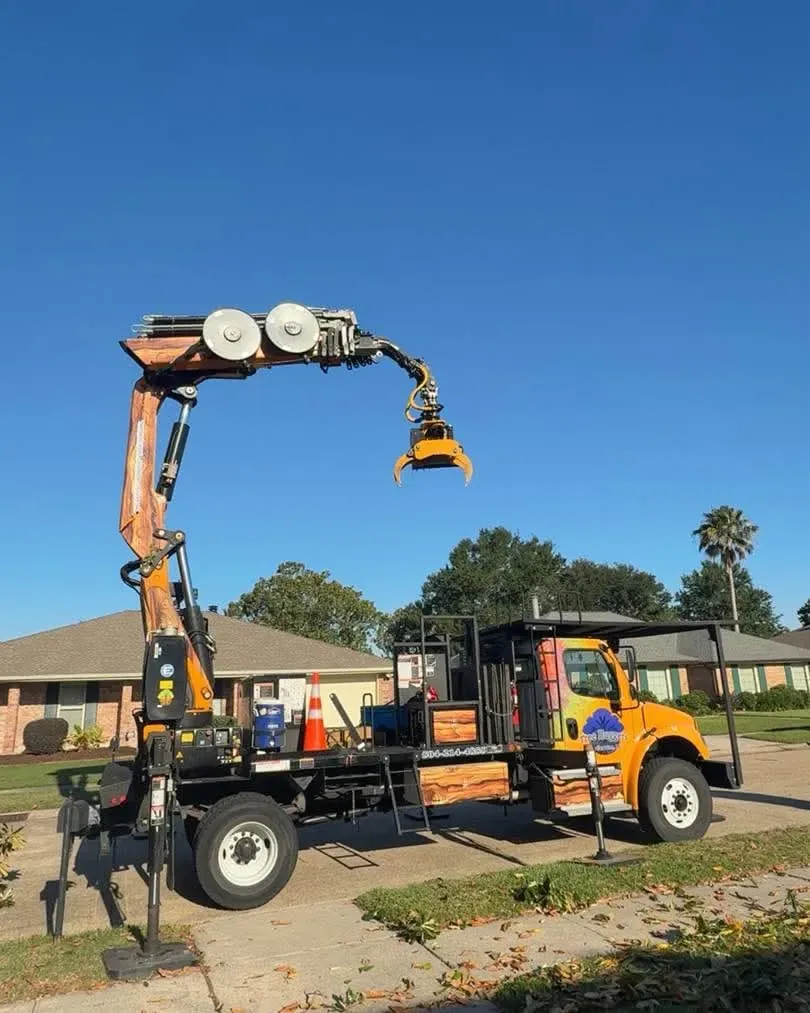
Plan safe removal for a tall or unstable palm
Removing a mature palm beside a pool cage, house, utility line or narrow driveway is a controlled access problem. The trunk may be tall and heavy even if the leaf canopy appears modest. A contractor should identify how segments will be lowered, whether equipment can reach the trunk, where cut material will go and whether adjacent hardscaping needs protection. Do not assume a climber can safely ascend a trunk that is compromised by decay, storm movement or unknown structural damage. Specialized access may be required.
If the palm is contacting a power line, keep clear and contact the utility. If it is leaning suddenly, cracked or partially uprooted, restrict access until trained personnel determine a safe method. For planned removal, ask whether the stump will be cut flush, ground or excavated and whether the root mass affects nearby pavement. A palm stump can be fibrous and may require different grinding techniques from hardwood trees. Confirm haul-away, equipment route and final cleanup in writing instead of assuming every item is included.
Palm crown care is different from oak pruning
Palms grow from a central crown and are not managed with the same branch-reduction decisions used for live oaks. Identify the palm type before judging its fronds: fan-shaped palmetto foliage and feather-like leaves are not interchangeable. A few dry lower fronds do not necessarily mean the palm is dying. Where fronds are loose or present a clearance issue, the work should focus on that actual condition rather than removing healthy green foliage for appearance alone.

Treat palm fronds, trunk and stump as separate work decisions
Palm maintenance should start with the species and which tissue is actually dead or damaged. Healthy green fronds help the palm grow; removing them for a uniform appearance can weaken it. A brown hanging frond can also be heavy and difficult to reach. Ask a qualified tree-care professional to distinguish sanitation, clearance for pedestrians, removal of damaged material and complete palm removal rather than requesting a broad hurricane cut.
Photograph the full palm and the crown from a safe ground position, then note utility clearance, nearby windows, gates and what occupies the ground beneath the trunk. The growing point near the center cannot simply be replaced if badly damaged. If the palm is declining, request a species-specific assessment rather than assuming symptoms have the same cause as defects in a hardwood tree.
When removal is selected, confirm whether the proposal covers fronds, fibrous trunk sections, stump grinding, root-mat cleanup, protection of the hardscape and disposal. Palm bases and debris behave differently from oak logs. Record where equipment can set up and where heavy cut pieces can be safely lowered. This educational palm image does not document a customer job.
The popular hurricane-cut appearance can leave an excessively thin crown and may remove fronds that are still performing useful functions. Do not assume aggressive trimming makes a palm safer during a storm. The center spear, trunk condition and overall crown changes are more useful observations to describe than a request to strip the crown. A declining growth point or severe trunk defect deserves evaluation rather than a cosmetic trimming plan.
Show the crown and ground conditions together
When a palm is beside a parking space, entry walk, pool or low roof, document the target beneath it and the path used to reach it. Height, trunk access, slope, neighboring structures and electrical clearances can change the work method. Do not climb, pull down hanging fronds or approach electrical lines for photography. Ground-level wide shots and a zoomed crown view from a safe position are sufficient to start an inquiry.
If a palm is proposed for removal, ask whether the estimate includes complete trunk handling, debris removal and stump or root-base treatment. If only maintenance is requested, identify which dead or hanging material is included and what remains. A clear before-work scope avoids misunderstandings about fruiting structures, healthy fronds and cleanup, while leaving the actual safety method to the contractor.
Clarify the crown and removal scope before equipment arrives
A declining palm requires attention to the growing point and overall condition; a photograph of brown lower fronds alone does not establish whether the palm is failing. If full removal is proposed, explain nearby access, structures, irrigation and how the trunk will be lowered or removed from the property.
Specify whether haul-off, stump or root-base treatment, and surface restoration are included. A clear scope avoids assuming that a trimmed palm and a removed palm require the same crew or equipment.

Make routine palm care a sustainable schedule
Not every palm needs trimming at the same interval. Some self-cleaning species may shed old fronds without much intervention, while others retain large dry material that can accumulate over time. Observe the growth and the use of the area beneath the crown, then plan inspections rather than ordering an aggressive cut every few months. If several palms share the property, record their species and condition individually so one damaged tree does not determine the treatment of the rest.
A good maintenance record includes past freeze injuries, irrigation changes, fertilization history, prior pruning and photographs of the central spear. Ask the crew to explain how it will preserve green leaves, avoid cutting into the trunk and handle flower stalks or debris. If yellowing persists, nutritional assessment may be warranted, but that service is separate from ordinary cutting. A practical scope can maintain appearance and safe clearance while keeping the palm’s growing tissue and characteristic canopy intact.
Request an estimate that states what stays as well as what goes
A useful palm quote identifies each tree, planned dead-frond removal, any loose skirt or fruit-stalk work, the access system and how the site will be cleaned. The words palm trimming alone leave too much room for an undesirable hurricane cut. Ask whether green fronds will be retained and whether the crew has identified any safety concerns that change the scope. For removal, request specific notes about controlled lowering, proximity to power and underground obstructions. Avoid verbal assumptions about stump grinding and hauling.
For further background, consult the UF/IFAS palm pruning guidance, including its discussion of harmful overpruning, and the post-hurricane tree assessment guide. These are educational references, not substitutes for examination of a particular palm. Tree Huggers can discuss practical tree service access and scope; diagnosis of a palm disease, nutrient problem or growth-bud injury may call for a qualified horticulture specialist before any cutting decision.
Palm pruning or removal versus the remaining stump
Palm tree care often involves distinct decisions about dead fronds, the crown, a declining trunk or complete removal. Removing green fronds unnecessarily can harm the palm, while a visibly compromised stem near a building may require a broader assessment. A quote should distinguish selective trimming from dismantling the whole palm, especially where the crown extends over a roof, pool or access route.
Once the above-ground palm has been removed, the remaining root mass and stump present another scope. The palm stump planning guide explains machine access, grindings, irrigation protection and the surface finish needed for planting or landscaping. Ask whether the stump is included in the palm-removal quote; neither trimming nor removal automatically guarantees below-ground work.
Questions about Palm Tree Removal & Trimming in New Orleans
What is a harmful hurricane cut on a palm?
It is severe removal of green fronds that leaves only a small tuft at the top; UF/IFAS advises against this practice.
Should I remove green palm leaves before storms?
Generally no. Green fronds help the palm photosynthesize and recover; pruning should target genuine dead or hazardous material.
Can a palm die if its central bud is cut?
Many single-stemmed palms depend on one growing point. Serious bud injury can kill the trunk.
Do all palm species need the same trimming?
No. Crown form, old leaf-base behavior, growth rate and climate tolerance differ between species.
What should I do about old brown hanging fronds?
Have loose or hazardous material assessed and removed with methods that avoid trunk and bud damage.
Should I scrape the leaf bases off a palm trunk?
Not routinely. Some species shed naturally; aggressive stripping can injure living trunk tissue.
Can a yellow palm frond still help the tree?
Sometimes. Yellowing foliage may still contribute nutrients or energy and should not always be removed immediately.
How do I know whether a palm survived a freeze?
Watch for new spear growth after temperatures recover, and obtain specialist advice before declaring a bud dead.
Can palm fruit stalks be removed without green fronds?
Often yes when appropriate for the species, but the cut must avoid damaging the crown.
What should I do when a palm leans after a hurricane?
Restrict the potential fall area and get professional assessment of the trunk and roots; do not try to pull it upright yourself.
Is palm stump grinding included in removal?
No universal rule. Confirm separately whether the fibrous stump will be cut, ground, hauled or left.
When is a tall palm removal a specialist job?
Near power lines, buildings, pools or unstable trunks, controlled access and rigging need an appropriately qualified professional.
Get a scope for your property
Palm care is different from broadleaf tree pruning. A crown with healthy green fronds does not benefit from an indiscriminate hurricane cut, and trunk injury or a damaged growing point can be serious. From safe ground, document brown fronds, hanging material, leaning trunks, crown changes and any signs of recent cold or wind damage. Avoid pulling fronds by hand, climbing with improvised equipment or working near electrical lines. The species and actual condition help determine whether trimming, observation or removal is appropriate.
When requesting work, state the number and approximate location of palms, whether dead fronds or old boots are involved and what access restrictions exist near pools, patios and utility equipment. Ask the provider to specify which fronds will be removed, whether seed or fruit stalks are included and how debris will be kept out of the surrounding property.
If a palm may be unstable or dead, request an assessment and controlled removal plan rather than an ordinary trimming quote. Confirm hauling, stump work and final cleanup separately.