Direct public procurement and prime-contractor work are different routes
An agency seeking a direct tree-service contractor may evaluate solicitation documents, required insurance, credentials, schedule assumptions, detailed tree lists and the accepted procurement method. A specialty contractor assisting an already-selected prime generally works within the prime’s approved scope and change-control process, not an independent agency award. Neither route should be described as a guaranteed contract or an existing vendor qualification without supporting records.
For a buyer assembling an invitation, identify the decision maker, tree or area identifiers, site access, traffic or pedestrian controls, evidence expected at completion and who will approve changed conditions. For the different prime-to-specialty relationship, use the tree-service subcontractor guide rather than treating it as a second procurement checklist.
Make it easy to evaluate the contractor
Public-sector buyers need fast access to the information that determines whether a contractor is appropriate for a scope. This page centralizes Tree Huggers’ service capabilities, mobilization approach and the documentation that can be provided during bidding or onboarding. Request the current identifiers, registrations, certifications and insurance details required for the opportunity.
Evaluate public-sector readiness with a current document matrix
A public buyer should be able to match a particular proposed tree service to the documents required by that solicitation. Use a simple matrix for licensing and registration requirements, insurance certificates, references if requested, equipment and personnel capability, safety procedures, bonds when required and any subcontracting limitations. The applicability and expiration date matter: a generic capability statement is useful background, not evidence of compliance with every bid.
Procurement contacts should use the published solicitation, addenda and authorized question channel for any clarification. Keep the estimate, tree inventory, map, service quantities, debris-disposal expectations and access restrictions together so bidders evaluate the same work. Do not assume that a company is prequalified or that an agency will accept substitutes without written confirmation through its own process.
Scope Review
Send bid documents, site lists, maps, photos, schedules and line-item requirements for review.
Insurance & Documentation
Current insurance and requested vendor documents can be provided during the procurement process.
Pricing & Bid Support
Tree scopes can be priced from defined quantities, field inspections or a combination of both.
Mobilization Planning
Large projects are evaluated for equipment transport, crew logistics, staging, disposal and duration.
Core public-sector capabilities
Tree Huggers’ core work includes tree removal, pruning, high-risk removals, crane or mechanized tree work, stump grinding, storm response, vegetative debris, access clearing and larger commercial or municipal scopes. The exact equipment and production plan depend on tree size, access, targets, site controls and the contract requirements.
Procurement information should stay current
Registrations, vendor numbers, insurance limits and certifications can change. Provide the project reference and the documents your organization requires. Current records should be checked for the specific opportunity before award.
Related procurement resources
Government Tree Services

Capability Statement

Municipal Tree Service
Use this page to discuss government procurement & vendor information with Tree Huggers. Start with the current condition, the property and the outcome you need. The sections below explain the information a contractor needs, the responsibilities to clarify and the way to compare the proposed work with the finished result. The right scope depends on the tree and site; a general service description does not confirm a method, price or arrival time.
Government procurement may require more than a price for cutting and hauling. Start with the published solicitation, plan sheets, addenda, contract period and required bidder submissions. Identify whether the intended service is on-call maintenance, storm response, project clearing or a defined set of trees, and mark all work areas in the documents available to vendors.
Clarify who issues notices to proceed, who inspects work, which materials require tickets or disposal proof, and what work must be approved in writing before proceeding. Do not assume that standard private-property terms satisfy a parish, city or agency’s contract language.

Describe the actual tree services being requested
A procurement response should distinguish removal, selective pruning, storm-damage work, stump treatment, vegetation clearing and debris hauling. These tasks involve different equipment, quantities and safety controls. Provide a map or tree list showing the intended locations and desired results, plus any special handling such as retaining logs or protecting neighboring landscaping. Avoid a one-line description that simply says tree service as needed.
Where the buyer requests on-call capability, clarify dispatch scope, availability confirmation, approval steps and how individual task orders will be issued. Do not promise guaranteed response times without a verified commitment. If sites differ greatly, use location-specific assumptions rather than a uniform rate disconnected from access, trees and disposal obligations. The goal is an evaluable service package, not a broad advertisement.
Make the procurement scope auditable before bids are compared. A public tree-work solicitation should state the site inventory, anticipated service categories, access windows, traffic and pedestrian controls, disposal requirements and how additional work will be approved. Distinguish unit-price work from emergency response or unknown conditions so bidders are pricing a comparable scope. Clarify documentation, insurance and invoicing expectations through the procurement process. Tree Huggers can discuss technical field constraints, but purchasing decisions and vendor eligibility remain with the responsible public agency.
Confirm procurement authority before treating an inquiry as an award
A public facility manager’s request for a walkthrough is not necessarily a purchase order or permission to start. Record the contracting entity, applicable solicitation number, approved scope document and the office authorized to issue changes. Requirements for insurance, bonding, prevailing wages or certification should be checked in the actual solicitation rather than assumed from a general webpage.
Site maps should distinguish public right-of-way from adjacent private property and identify who controls any road or path closure. The response should also state whether debris disposal documentation, daily logs, site photos and final acceptance records are expected under the proposed agreement.
Write a procurement scope that can be checked in the field
For government or institutional work, a useful scope identifies individual tree locations, the intended treatment, site restrictions, access windows and what counts as completion. Photos and a location schedule are more actionable than a broad request to make trees safe. Specify whether vegetative debris will be staged, removed, reduced or handled under a separate contract.
The request for qualifications and insurance should match the actual work and procurement rules of the issuing agency. Document traffic or pedestrian controls, utility coordination, inspections and closeout deliverables before bids are compared. Tree Huggers can respond to a defined scope, but the public agency remains responsible for its own purchasing procedures and authorization decisions.

Prepare a compliance checklist grounded in the actual bid package: deadlines, licensing or insurance requirements where stated, prevailing specifications, vendor registration, subcontracting declarations, safety coordination and records retention. If an ambiguous item could change price, raise it through the official question procedure rather than promising an unsupported interpretation. Separate emergency authorization from ordinary purchase orders. A contractor’s proposal should identify tree-by-tree or unit-price work items, exclusions, approved change process and measurable closeout materials. Avoid fictional certifications, bid eligibility or award claims. Accurate documentation is more useful than broad marketing assurances on a public-facing vendor information page.
Start with the solicitation and buying authority
Public procurement varies by agency and opportunity, so the current solicitation is the controlling source of submission requirements. Provide the reference number, contracting entity, closing date, site list, scope and the contact authorized for vendor questions. A general capability page can explain services, but it cannot establish that a company is eligible for an award or that a particular procurement method applies.
Ask whether the opportunity involves a sealed bid, request for proposals, emergency purchasing process, cooperative contract or subcontract under another prime. Requirements for each may differ. Follow the buyer’s designated question and addendum channel. Do not assume a verbal conversation with a facility manager modifies published terms or authorizes work before the relevant agreement is executed.
Request current identifiers and registrations directly
Buyers may need legal entity information, tax forms, insurance certificates, licenses or enrollment in a particular vendor system. Those details should come from current authorized company documents. Do not infer registration status, disadvantaged-business certification, federal identifiers or insurance limits from a logo or marketing page. Requirements depend on the solicitation and jurisdiction.
Keep sensitive identifiers in the appropriate secure submission channel, not public page markup or a marketing screenshot. A document checklist can say what must be supplied without publishing private records. Confirm who is authorized to sign responses and whether the required forms must bear the same legal entity name as the eventual contract. Administrative accuracy is part of making a bid usable.

Make site and access assumptions visible
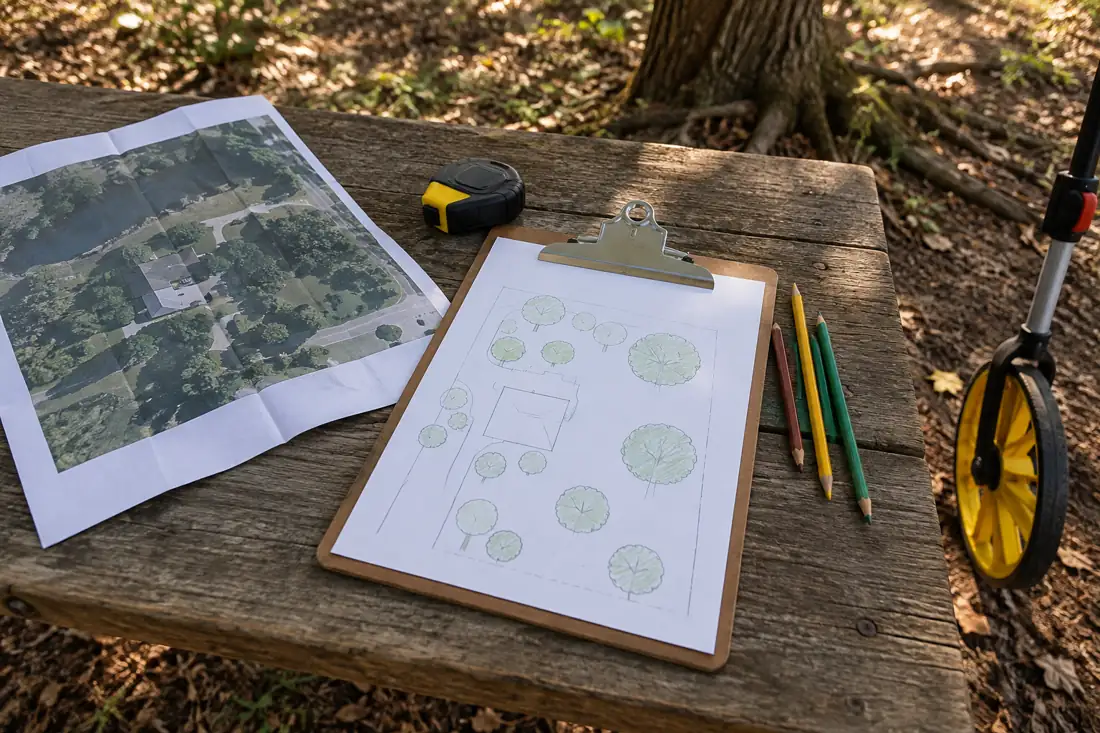
Tree work may be located in parks, public rights-of-way, school yards, utility facilities or secured government offices. Each setting has different access, work windows and public exposure. Send maps and photos showing gates, overhead conductors, drainage features and adjacent structures. Note known restrictions on equipment, noise and closures. A bid based only on tree height misses significant production factors.
Ask for a scheduled site walk or written clarification where essential conditions cannot be observed safely. A contractor should not enter restricted property or measure damaged limbs without authority. If the buyer controls traffic or provides a staging area, state that explicitly. Clear assumptions allow better comparison between bids and reduce unauthorized field changes after award.
Prepare the procurement response around the live solicitation
Read the current solicitation before adapting a standard tree-service capability statement. Identify the buying agency, response deadline, submission portal, required forms, site list and whether questions must be issued through a formal addendum process. An agency employee can explain operational conditions, but an informal conversation may not modify the controlling procurement documents. Keep each clarification with the version of the scope used in preparing the response.
Structure pricing around the requested measurement method. A bid may ask for identified trees, diameter bands, work categories, time-and-material units or task-order conditions. State assumptions about mobilization, equipment access, pruning objectives, stump work, woody debris disposition and restoration. If important quantities or access rights are uncertain, submit precise questions tied to the listed location instead of inventing numbers or promising an unrestricted method.

Keep private vendor credentials off public pages
Gather current legal and administrative records only through the buyer’s authorized secure channel. Do not display tax identifiers, insurance certificates, private contact records or presumed registrations on a public marketing page. If certifications or local permissions are required, verify their present status directly rather than borrowing language from a past proposal. A public page explaining capabilities is not evidence of an award or universal procurement eligibility.
After a contract or task order is actually authorized, connect each location and work item to a release, documented change process, required field record and acceptance route. A completed photo should show actual work where photography is permitted, with appropriate location labels and privacy controls. Do not substitute synthetic scenes for field evidence. Closeout should identify unresolved work and retain records according to the buyer’s own requirements.
Define public safety and qualified trade interfaces
Work near occupied facilities, electrical distribution or road traffic requires coordination with the responsible authorities. Identify who controls closures, utility locating, line clearances and required protective arrangements. A tree company should not represent that any street or conductor can be managed solely through an ordinary work order. Some operations may require another qualified provider or a revised method.
Include the buyer’s current safety submission requirements and ask how unexpected conditions will be handled. A scope should say who can pause the work and what information is required for resumption. Claims of universal safety, zero risk or guaranteed completion are not useful procurement assurances. A workable process is much more valuable than a slogan.

Explain pricing units and the approval mechanism
Public buyers may request lump-sum proposals, unit-rate schedules, hourly arrangements or task-order pricing. The chosen basis should specify what is included in mobilization, cutting, rigging, chipping, hauling, stump work and restoration. Tree counts alone rarely show the full differences among sites. Define when quantities are measured and who verifies them for payment.
If another tree, material type or access constraint changes the task, follow the buyer’s contractual change process. Do not treat a field request as automatically approved expenditure. A clear schedule of inclusions and exclusions helps evaluators compare compliant proposals and later helps inspectors understand which visible results are part of the contracted work.

Public-space procurement walkthrough
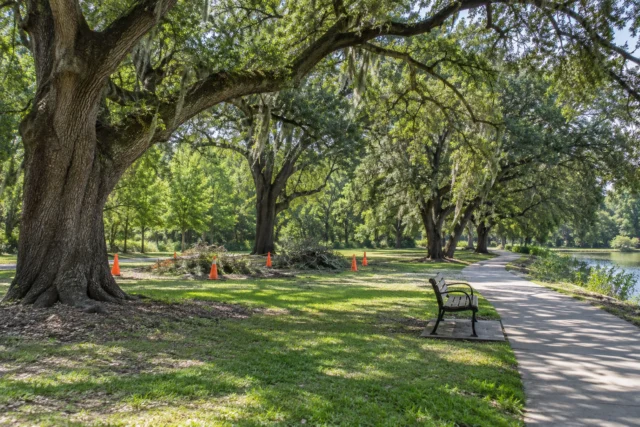
A sidewalk beside an ordinary public building demonstrates why a tree-work bid should include public access, tree locations and staging restrictions rather than broad marketing claims. Identify pedestrian detours, accessible entry points, overhead obstructions and hours when the site may be occupied. Any proposed control must match the owner’s actual requirements.
Separate contractor qualifications, scope quantities, waste handling, measurement units, change approvals and closeout evidence. Do not infer that a depicted public place is a real Tree Huggers customer or that a particular municipal contract was awarded.
Address material disposal and documentation
Vegetative material may need to be chipped, loaded, hauled, left in a designated location or processed according to facility requirements. Clarify whether preexisting piles and mixed storm debris are included. Public facilities may have rules for disposal documentation, load tickets or environmental controls; the actual solicitation must define these rather than an assumed industry standard.
Identify where trucks can stage and whether access remains open to employees and the public. Do not use an unauthorized drainage shoulder as a stockpile simply because it is close to the tree. At closeout, tie material records to the completed tree tasks and report exclusions or deferred disposal clearly. This helps public buyers distinguish production from final site restoration.

Prepare a verifiable closeout and record package
Buyers should specify the desired proof of work before field operations begin. A location-labeled photo register, quantity worksheet, approved change log and completion list may be appropriate. Photographs should identify actual trees and work phases, not imply that an arbitrary image proves a performed project. If inspection or acceptance must be conducted by a public official, keep that responsibility with the buyer.
Records should separate completed cutting, cleanup, restoration and unresolved concerns. Follow retention and submission rules specific to the contract, including any privacy or security limits on facility images. A well-organized closeout helps agencies answer audit questions and plan future tree maintenance without reconstructing details from unverified marketing claims.
Make the site visit request useful to the buyer
A pre-bid site visit request should state which locations and conditions require inspection, not simply ask to walk the project. Identify locked areas, overhead restrictions, multiple similar trees, uncertain debris quantities or access routes that affect the proposed method. Follow the solicitation’s scheduling and equal-information requirements so one vendor does not receive an unfair private scope change.
Record questions for the official clarification process rather than relying on a facility employee’s quick estimate. An approved addendum should update the quantity list or conditions for all affected bidders. If a safe observation is impossible, note the uncertainty and request a contractually valid way to price or verify the task.

Separate purchasing questions from field inquiries
The contracting office may answer eligibility, pricing and submission questions while facility staff explain routes or operational restrictions. Identify the proper contact for each type of question. Do not send sensitive vendor documentation to a generic public form when the buyer provides a secure submission portal. Likewise, an estimate conversation does not establish award, procurement compliance or mobilization authorization.
A responsible vendor response describes what information can be supplied and what remains to be verified. If a task order is eventually issued, connect its exact scope, location and approval to the crew’s plan. This separation helps public buyers maintain an orderly procurement record and allows tree-service personnel to focus on the work actually authorized.
Questions for the official purchasing channel
Government tree-work opportunities should be evaluated against the current solicitation, not assumptions about what a public buyer usually accepts. Verify the exact response route, due date, site-access instructions, registration requirements, required forms, measurement units and whether alternatives are permitted. A facility employee may describe a tree or gate, but only the designated purchasing channel can provide the controlling clarification or addendum for the procurement.
If tree counts or debris quantities are uncertain, submit a specific written question linking the location identifier to the conflicting drawing, measurement or instruction. Keep any answer with the version of the documents used to prepare the response. When a project eventually proceeds, distinguish accepted tree work from excluded site restoration, permits or traffic services assigned elsewhere; do not imply that general service capability proves an award, registration or qualification.
Questions about this project
What should a government buyer send first?
Send the agency or prime contact, project reference, site, scope, deadline, access conditions and required documents or submission format. Identify the authorized contact for questions and the buyer’s process for clarifications.
Does a capability page prove contract eligibility?
No. Request and verify current documentation relevant to the particular opportunity. Registration status, certifications, licensing, insurance and availability should not be inferred from a broad marketing statement.
Is a total tree count enough for a large quote?
Usually the parties also need locations and tasks. Use consistent tree numbers, marked photos or a site plan so the estimate and crew instructions refer to the same trees and retained areas.
Does a work inventory include a condition assessment?
Only if that service is expressly part of the scope. A list used to identify and price tasks should not be mistaken for a documented assessment of every tree’s condition or risk.
How should extra work be approved?
Use the agreed approval process and identify the change, reason, scope, price or schedule effect as applicable. Confirm who has authority before treating an additional tree or task as part of the original job.
What completion records are useful?
Keep the agreed scope, tree or area identification, authorized changes, invoice and labeled photos where appropriate. Include unresolved items and a contact. Contract-specific records should follow the buyer’s stated requirements.
Can the crew block a public sidewalk or road?
Required arrangements must be coordinated with the appropriate authority. Identify public routes and restrictions before scheduling. A private work agreement should not be treated as automatic permission to occupy or close public space.
When should parked vehicles be moved?
Set the timing and responsible contact before the work window. Vehicles may need to leave the tree zone, equipment route and loading area. Confirm where access must remain available during each phase.
What should I compare besides the price?
Compare tree identification, work objectives, access assumptions, hauling, stump treatment, site finish and exclusions. Ask whether permits or other coordination are part of the scope and who can approve changes if conditions differ.
Does an online request book the crew?
No. A request starts the estimate conversation. The company still needs to discuss scope, availability and any site assessment. For a dangerous or urgent condition, call 504-458-8336 rather than relying on a form response.
What should I tell Tree Huggers about government procurement & vendor information?
Explain the property address, the work you want and the specific concerns: project requirements,authorized scope,completion records. Send safe photos of the tree, surroundings and access route. The contractor can then discuss the assessment and scope needed for this situation.
How do I request an estimate for this work?
Call 504-458-8336, text photos or use the estimate form on this page. Include the address, desired outcome and any timing constraints. The company will need to review scope and availability; an online request does not confirm a price, appointment or emergency dispatch.
Get a scope for your property
For vendor or procurement questions, supply the solicitation number, issuing entity, due date, actual tree-service scope and required secure document-submission route. Request current vendor documents directly and do not treat general site content as proof of registration or award.