A clearer picture of the scope


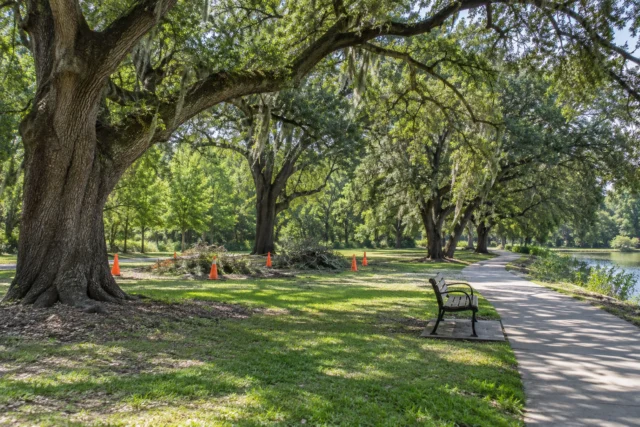
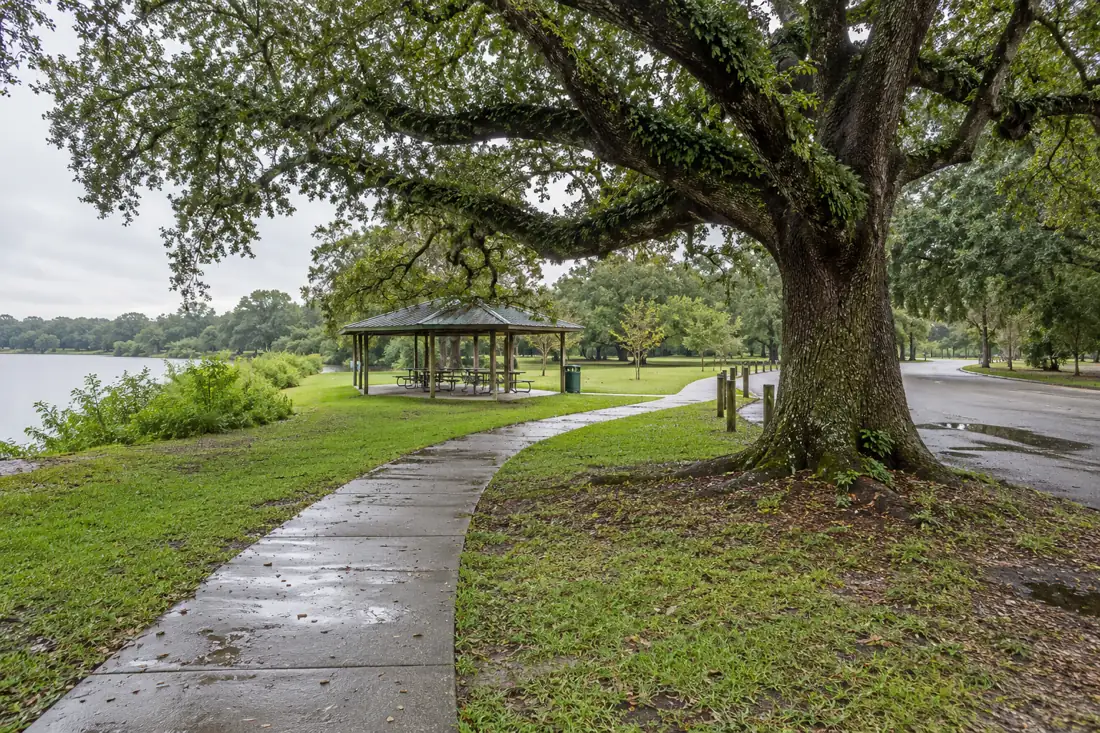
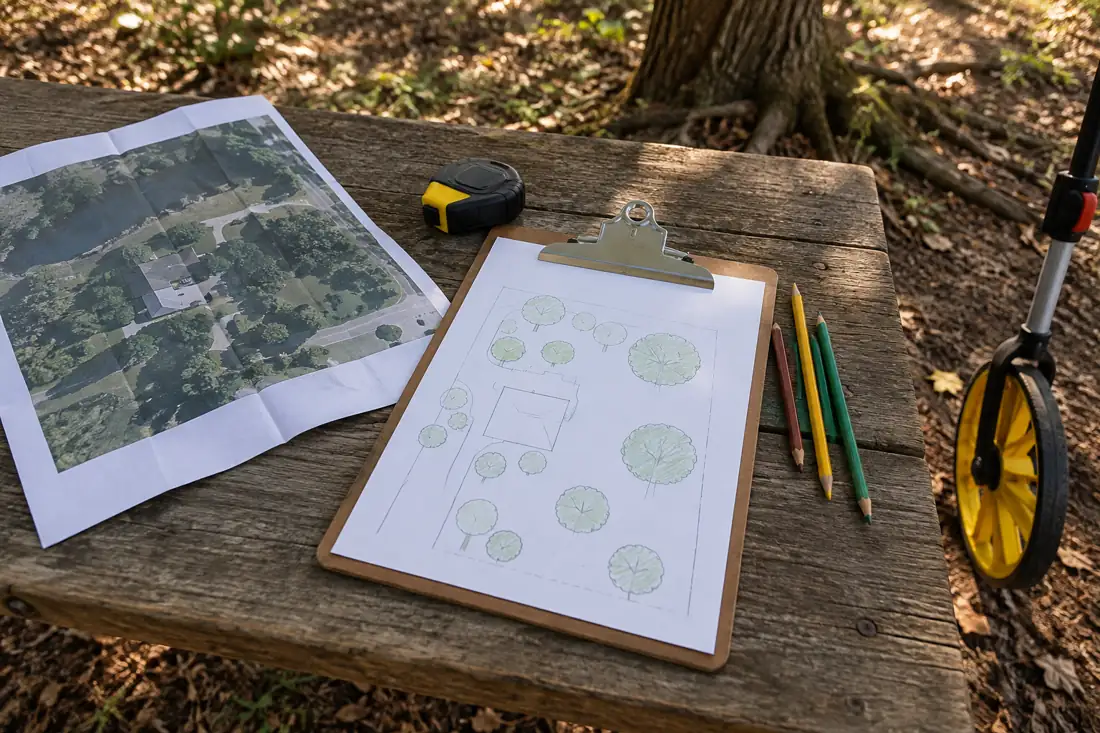
Example: Hazard removal at a public park
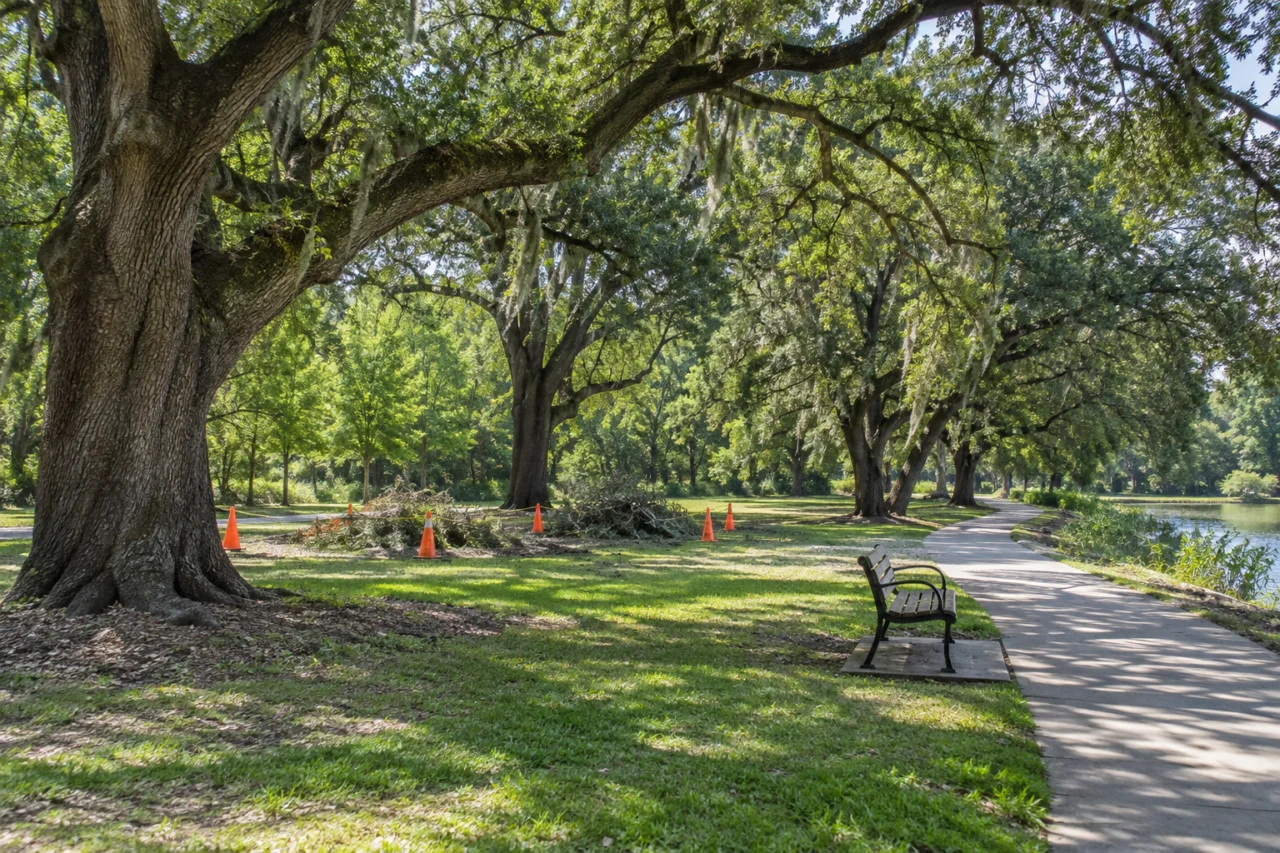
The broken tree and debris are cleared while healthy shade trees remain. A remaining stump needs its own finish specification.
Public spaces require deliberate sequencing
Municipal properties add pedestrian and vehicle traffic, occupied facilities, public access and scheduling constraints. Tree work must be planned around those conditions while keeping production efficient and the scope easy to document.
Practical scope and safety guidance: Municipal tree requests often involve more than the tree itself: a sidewalk, crossing, streetlight, drainage inlet or travel lane may be affected. Identify the owning department, exact location, property boundary and right-of-way limits before deciding who can authorize work. Photographs should show the tree in relation to the public route, not just an isolated close-up of a branch. Provide the relevant clearance concern, nearby utilities, scheduled events or school routes and any known access restrictions.
A written scope should define which limbs or stems are to be addressed, how pedestrian and traffic movement is protected, and whether stump work, debris disposal, signs or surface repair are included. Separate routine maintenance from emergency hazard response. Do not rely on a general service page as proof of a municipal contract or promise compliance without checking the requirements for the actual project.
Dangerous trees, hanging limbs, blocked access and high-occupancy targets.
Plan equipment, staging, traffic or pedestrian separation and debris flow.
Finish the agreed removal, pruning and cleanup work with project records as needed.
Storm and high-risk capability
After major weather events, public sites may need access restored quickly. Large damaged trees, broken limbs and vegetative debris can be prioritized by hazard and operational importance, with mechanized equipment used where it improves production.
Make the asset list usable in the field
Identify each tree with the municipality’s asset number or another agreed reference. Include the street segment, park area or facility location and photographs tied to that identifier. A long list of addresses can leave uncertainty about which side of the road or which tree at a shared location is intended. Keep reported concerns, requested tasks and preliminary observations in separate columns so the estimator can understand what has already been decided.
For grouped work, distinguish individual tree entries from broad areas awaiting review. The government services page provides related purchaser context. Identify the department contact who can confirm ownership, location and work limits. A resident’s report can help locate a concern, but it does not itself authorize work or establish the full condition of surrounding trees. Use the same identifiers in the inquiry, accepted scope and completion record.
Put public use beside the work priority
Describe the ordinary use of paths, entrances, parking, public facilities and nearby occupied areas. Explain any known change such as a closure, event or altered traffic route. The tree’s location matters together with the people and property around it. A request to handle the largest tree first may not reflect the operational priorities of the site; explain why an entry needs attention and who sets the accepted order.
Keep urgent observations current. Newly hanging wood or changed movement should be reported without sending staff into the affected area. Call 504-458-8336 about current tree-work availability. An online request is not dispatch confirmation. Immediate threats to people or electrical involvement need the appropriate emergency or utility response. The assessment page helps distinguish a reported concern, a work estimate and any separately requested documented evaluation.

Coordinate the area that must be available
Identify public routes, work access, setup space and the material-loading route on the same map. State who coordinates required closures, pedestrian arrangements or other site controls, and what remains to be confirmed. An unlocked gate alone does not mean the full work area is available. Tree handling and hauling may involve more of the property than the space directly beneath the trunk.
Share applicable site requirements before a visit or quotation depends on them. Keep responsibility for those requirements explicit rather than assuming the tree company or the municipality handles every interface automatically. The equipment planning hub explains why task, access, support and surroundings inform method selection together. A public parking area or existing maintenance road should not be presumed suitable for every proposed machine or setup without review of its actual conditions.
Match the work list to the purchasing scope
Separate selected removals, pruning objectives, stump work and hauling. Explain whether the request is for a defined work list, an area review, a phased program or a response to a particular event. Supply the current purchasing instructions and required response format through the authorized contact. This service overview does not establish a bid response, awarded contract, purchasing eligibility or agreement to a buyer’s terms.
Connect municipal tree IDs to public access
For a municipal inventory, the address alone may not locate the correct stem. Use a stable tree ID and a map point, then identify the side of the street, nearby intersection, and work objective. A photograph should show the base and relevant overhead context where practical. If the original location is ambiguous, request an on-site confirmation before authorizing removal or pruning. Misidentifying an adjacent tree can invalidate the entire work record.
The pedestrian plan deserves equal attention. A saw operation may affect a crossing, bus stop, accessible ramp, or sidewalk even when equipment never touches the road. Record which route must stay available and where an approved detour would begin. Traffic and accessibility controls are site-specific municipal decisions, not generic promises that a contractor can safely close any public area on arrival.
After work, match the completion photo and approved task to the original ID, not just to a street name. Include any stump status, remaining obstruction, or later pavement responsibility if it belongs in the agreed scope. This gives public works staff a durable maintenance record and prevents the next crew from repeating an assessment based on outdated or mismatched tree identifiers.

The procurement planning guide can help organize the information exchange. Request current project documentation directly when needed and allow time for its review. Do not infer a particular insurance limit, certification or registration from a general capability page. The accepted scope should make important assumptions and exclusions visible, including what happens when the field condition differs from the original list or a proposed task needs separate authorization.
Define the material destination before mobilization
Ask what happens to branches, logs, chips and other agreed vegetative material. State whether the purchaser has a proposed receiving location, operating hours or material requirements. A nearby open parcel is not automatically an approved destination. Discuss the actual material flow from the work location through loading and transport to the accepted destination, with responsibility for each stage clear in the scope.
The hauling page gives related service context. Identify mixed material, inaccessible piles or other conditions that may change the task rather than describing every pile as ordinary tree debris. If material stays on public property, agree on processing, placement and the intended next use. Cutting a tree down, preparing wood for a recipient and completing a separate grounds project are different tasks. Confirm which of those results the municipality is requesting.
Keep stump and surface work visible
Describe what the area will be used for after the tree work. A public path edge, lawn, planting area and future construction footprint can have different next steps. The stump planning guide helps frame those distinctions. Identify known irrigation, drains, utilities information and other relevant features, together with the person responsible for confirming requirements before affected work is accepted.
Do not use the word cleanup as a substitute for the required finish. Stump grinding, removing grindings, excavation, backfill, grading and surface restoration are separate operations. If another municipal team or contractor completes the later work, record the condition they need at handoff. A completion review is easier when a location can be compared with a stated result instead of a broad expectation that all evidence of the tree and work will disappear.
Organize a storm response into practical phases
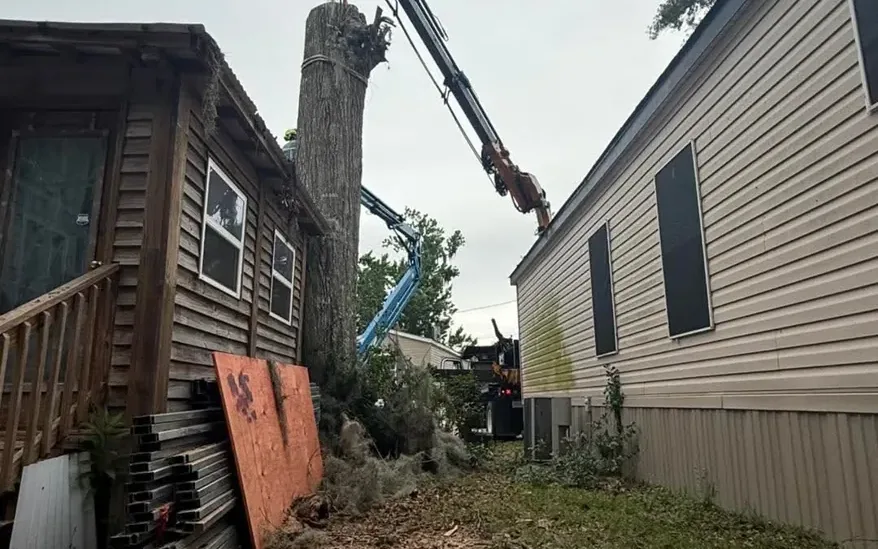
After weather, use current location references and safe observations to identify blocked routes, failed trees and hanging material. Explain which facilities or routes have an immediate operational priority. The mobilization page addresses related regional project inquiries. Availability, scope and deployment arrangements still need direct confirmation; an online description cannot reserve a crew, define arrival time or establish a response commitment.
Separate the first accepted access or tree task from wider debris processing and later property restoration. A route may become available before every material pile is removed, while another area may still need specialist work. Give the municipality and tree company a shared way to record those stages. Keep changing priorities connected to an authorized contact so reports from different departments do not silently expand the scope or send crews toward a location that has changed.
Close the loop against the original identifiers
Name the person who can approve additions and accept completed tasks. Keep the tree list, authorized changes, material decisions and completion requirements together. If photographs, quantities or a particular report format are needed, discuss them before work starts. Records should describe the actual accepted tasks and any remaining items, without implying an uncommissioned inventory, condition certification or assessment of every tree in the surrounding public space.
For example, a park request could combine selected path-clearance pruning, one identified removal and a later lawn repair by a separate municipal team. Each task has a recognizable location and handoff even when it is organized under one project. Send the location list, photos, public-use context and purchasing contact to start a focused discussion about the work Tree Huggers can evaluate for the property.
Account for public notice and accessible detours before crews mobilize
Municipal tree work often changes how people reach everyday public destinations. A plan that names only the tree and work date may overlook a bus stop, sidewalk corner, park entrance, bicycle route, or accessible path. Before scheduling, identify which routes must remain open, where lawful temporary diversions may be established, and who has authority to approve closure devices or public notices. A contractor should not be assumed to have authority to close a roadway or sidewalk simply because the work is on public property.
Match each tree or work zone to an asset identifier and map that field personnel, purchasing staff, inspectors, and the public-information contact can all recognize. For projects near schools, markets, transit stops, or community facilities, record the peak-use periods and any special access requirements. Where work crosses a jurisdictional boundary, ask which department or property owner controls approvals. The project brief should state these constraints before equipment selection or pricing is treated as final.
At closeout, review the original tree list against actual work, material removal, stump disposition, temporary protection, and any landscape or pavement issues that remain outside the tree scope. Keep change orders and quantities tied to the same identifiers. This supports a clear public record without substituting generic promises about emergency availability, procurement eligibility, or completed projects for facts about the specific site.
Municipal Tree Service questions
How should a municipality identify trees?
Use asset numbers or agreed references, precise locations and photographs tied to each entry.
Does a resident report authorize tree work?
No. The responsible public-property contact must confirm work limits and authorization.
What makes a priority list useful?
Connect observed concerns with public use, affected routes and the authority setting the accepted order.
Does an unlocked gate confirm the site is available?
No. Review the complete work area, access, loading route and applicable site arrangements.
Is this page a bid or contract commitment?
No. Provide the current purchasing instructions for direct project review.
Where should current vendor documents be requested?
Ask Tree Huggers directly about the specific documents and requirements for the project.
Can public land be assumed available for debris placement?
No. Confirm the destination, material requirements and responsible parties before acceptance.
Does removal include surface restoration?
Only the agreed scope determines that. Clarify stump work, grindings, ground work and the next team’s finish.
How should a storm tree list be prepared?
Use current identifiers, safe photos, route priorities and an authorized coordination contact.
Does a form request reserve a response crew?
No. Call about current availability and confirm arrangements directly.
Can completion photos replace an assessment?
No. They document agreed visible tasks, not an uncommissioned evaluation of surrounding trees.
What should the first inquiry contain?
Send locations, requested work, photos, public-use constraints, priorities, purchasing instructions and the approval contact.
Let’s plan your tree work.
Send the property address, safe tree photos and the result you need. Include access restrictions and the person who can approve the work.