An instruction to cut every branch back by the same distance does not account for branch structure or tree response. Selective pruning starts with an objective and identifies suitable cuts. Explain whether the concern is clearance, deadwood or a defective branch. Ask for a defined scope rather than a percentage chosen without examining the tree.
Replace blanket cutting with a defined pruning objective
Identify the safety, clearance or structural issue instead of asking crews to cut every branch back. Wide and detail photos should show both the defect and what could be struck if it fails.
Selective pruning requires choosing cuts that serve the stated objective while retaining healthy structure. Ask whether monitoring, support or another treatment could be more appropriate. Topping and arbitrary reduction are not interchangeable with risk management.
Confirm access, boundaries, electrical clearances and debris handling in writing. Preserve before and after images so a future contractor can tell planned cuts from storm or construction changes.
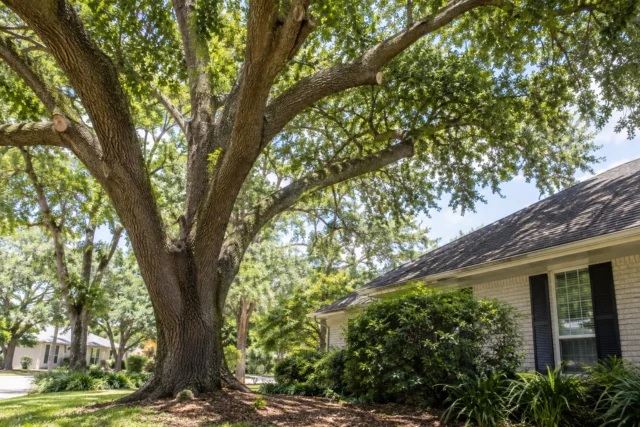
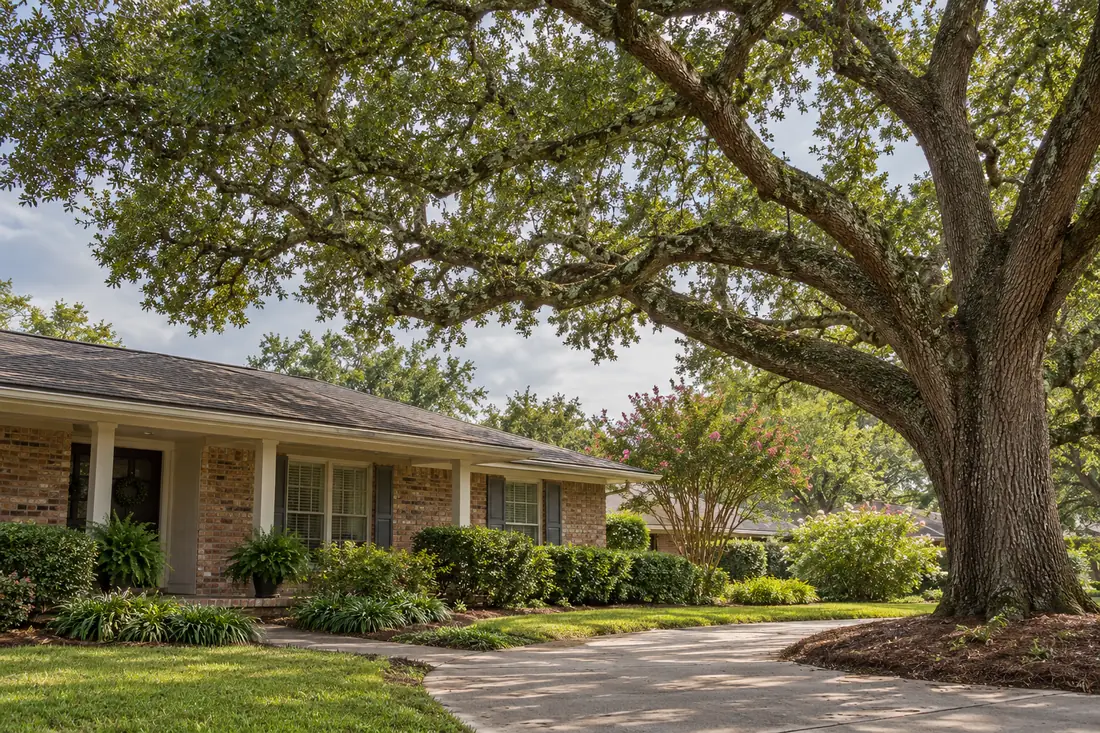
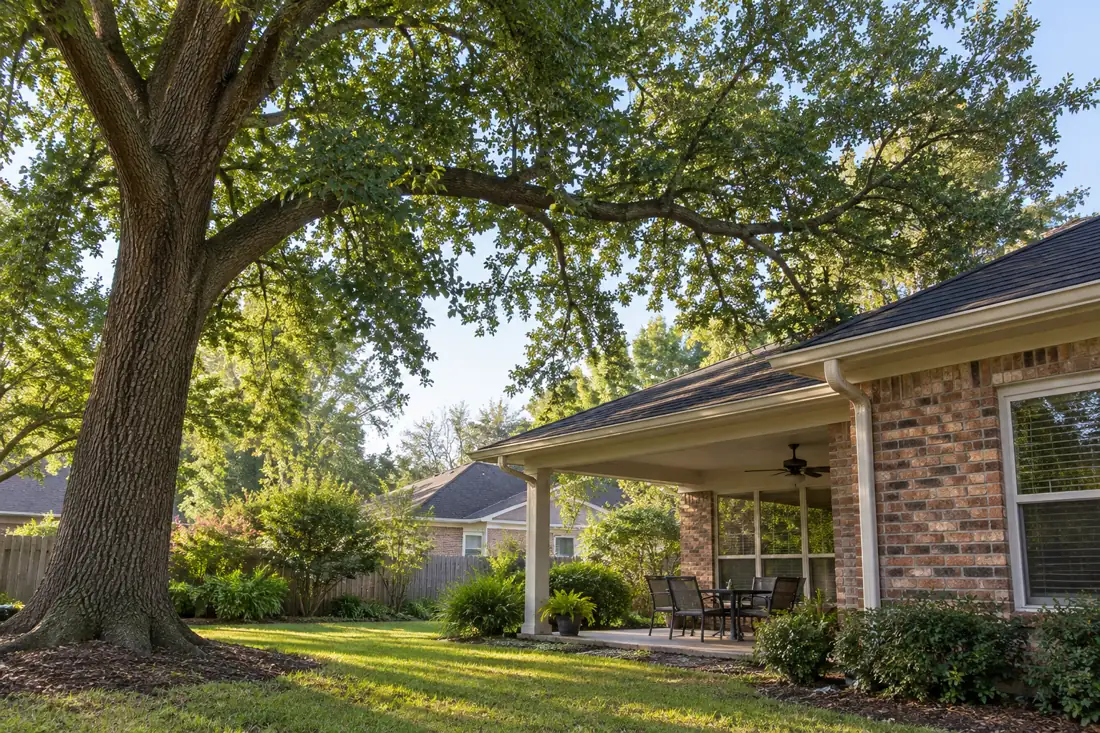
Describe the problem caused by specific branches, not an overall percentage to remove from the tree. Targeted pruning can address a rubbing limb, a limited clearance conflict or a broken branch while preserving healthy foliage elsewhere. Cutting every branch back to a uniform edge may create large wounds, alter natural form and stimulate poorly placed regrowth. Photograph the full crown and the particular conflicts from more than one side so an assessor can identify what is actually driving the request.
Ask the estimator to state which branches would be removed, which would be reduced to appropriate lateral branches and which would remain untouched. Clarify whether the proposed work is meant to improve clearance, reduce a defined structural concern or correct storm damage. Ask for a sketch or marked photographs if terminology is unclear. A written, selective scope makes it easier to compare proposals without confusing a low bid for indiscriminate cutting with a plan that retains tree health and appearance.
Start with the problem instead of the phrase 'cut it all back'
A request to shorten every branch usually describes frustration with size, leaf litter or blocked space rather than a specific arboricultural objective. Before pruning, list the actual concerns: a dead branch over a drive, limbs touching siding, crowded interior shoots or a canopy interfering with an entrance. A qualified tree professional can assess whether each problem warrants removal, reduction, monitoring or a non-tree solution. Treating all branches alike is rarely appropriate because their positions and structural roles differ.
Photograph the whole tree and the affected areas from safe ground locations. Mark which branch causes each complaint, and distinguish observed defects from a general dislike of a broad crown. A tree can be healthy and simply outgrow its space, while an apparently neat tree may have serious attachment problems. The assessment should establish what can reasonably be improved without assuming that shorter branches everywhere means a safer or more vigorous tree.

Understand selective removal and reduction cuts
Selective pruning considers individual branches and the reason for altering them. Removal takes a branch back to the proper attachment when appropriate; reduction shortens a limb to a suitable remaining lateral. The choices depend on branch size, position, attachment and the tree's condition. An arborist should avoid cutting through the branch collar or leaving large stubs. Proper cuts are made for a defined structural or clearance objective, not to draw a uniform outline around a living crown.
Ask the estimator to identify representative cuts and explain the expected remaining form. Some branches may need no treatment at all. Removing a damaged branch over a route can be sensible without stripping healthy interior foliage. Reducing one competing leader may be useful on a developing tree without cutting the top out of the crown. Precision gives the owner a better basis for comparing scopes and evaluating finished work than an instruction to trim an unspecified percentage off every side.
Specify an objective, not a uniform cut length
A request to cut all branches back by the same distance treats a tree like a hedge, ignoring branch diameter, attachment and natural crown form. Identify the reason for intervention first: deadwood, an actual clearance conflict, competing stems or a documented structural concern. A professional can then explain which cuts serve that objective and which living branches should remain.
Uniform heading cuts on a mature tree can stimulate dense regrowth and leave large wounds without resolving a real risk. This is not a reason to forbid every reduction cut; correct reduction depends on location and branch structure. Ask for the scope to state the target limbs and pruning method instead of using only vague terms such as trim back hard.
Why topping creates long-term problems
Topping removes large portions of a tree's crown at arbitrary points rather than respecting the branch structure. It can leave extensive wounds, remove large amounts of leaf area and stimulate dense shoots near cuts. Those shoots may develop attachments that require ongoing management, while the tree loses some of its natural shape. Topping also does not permanently solve a size conflict: vigorous regrowth can quickly occupy the same airspace that the owner wanted to clear.
If height or spread is fundamentally incompatible with a building, utility corridor or narrow planting strip, the professional should discuss the limits of pruning and realistic alternatives. Repeated topping is not a sustainable substitute for planning. A smaller, appropriately selected tree in the right location may be a better future design decision, but removing a mature tree requires separate assessment and authorization. The goal is to avoid making an irreversible large wound simply to create a temporary visual change.

Write the objective as branch decisions, not an arbitrary percentage
The phrase 'cut it all back' leaves unanswered what is wrong with the tree and what success would look like. Identify which branches are dead or damaged, where a building or pedestrian route needs clearance, and which attachments may warrant a closer examination. The correct result is not necessarily a symmetrical silhouette. Mature trees develop differing growth patterns depending on sunlight, earlier pruning and nearby structures. A targeted reduction to a suitable lateral may address one conflict, while whole-crown heading cuts can create multiple vigorous shoots near the wounds. Use a marked photograph of the tree to show priorities instead of choosing a canopy percentage from memory.
Ask how the proposed work will leave sufficient healthy foliage and reasonable branch distribution. Removing many interior shoots while retaining weight at the tips can create a sparse, lion-tailed appearance; extensive topping can introduce avoidable wounds and future maintenance challenges. This is why a visual 'make it smaller' instruction is not a substitute for inspecting structure.
Shade, privacy, storm exposure and habitat can also be legitimate owner objectives, but none justify ignoring actual defects. A qualified assessment should decide if pruning is appropriate, whether another kind of tree care is more relevant, or whether a specific unsafe area needs immediate access restrictions.
For comparing bids, request descriptions of target branches, reasons for the cuts, handling of large limbs, protection of nearby property and the final debris standard. Ask whether the proposal is intended as structural development, deadwood removal, clearance pruning or risk mitigation, because those goals should not be interchanged.
Do not assume the most aggressive scope is more thorough. Maintain dated before/after photographs from consistent ground positions and record any future observations rather than demanding repeated drastic trimming on an automatic calendar. When a tree has recently been heavily cut, the next visit may be best used for assessment and a staged recovery plan, not another broad reduction.
A useful follow-up question is whether a proposed cut solves a measurable conflict or merely changes the silhouette for a short time. Ask to see the branch objective on a photograph, including the remaining lateral or attachment where relevant, before treating a low quote as equivalent to a detailed proposal.
Trees respond differently by species, age and condition; an owner should not expect a universal percentage rule. If previously topped branches are present, the contractor should assess those attachments rather than repeat the original pattern by default.

Avoid lion-tailing and excessive interior thinning
Lion-tailing removes many inner and lower branches while leaving foliage concentrated near the ends of long limbs. The result can look airy, but it may alter branch loading and deprive the tree of useful leaf area. Excessive thinning through an entire crown can also expose previously shaded limbs and trunk tissue. A request to 'let more wind through' should not automatically lead to indiscriminate internal removal, because tree response to wind is more complex.
Selective work may remove particular rubbing, weak or damaged branches while leaving the broader framework intact. Ask which branches are being selected, what percentage of living foliage may be affected and whether the tree has enough vigor for the work. A storm-preparation plan should include assessment of real structural concerns, root conditions and targets rather than a promise that thinning makes a tree windproof. The quality of the remaining crown matters more than the number of cuts.
Selective pruning: agree on the defect, not the amount cut
An instruction to cut every branch back the same distance creates a shape, not a tree-care objective. The concern might be roof contact, a dead limb, a rubbing branch or a competing stem, and each should be named separately. Start with dated whole-tree views, photographs of the actual target and a sketch showing where people or structures could be affected.
A branch that looks long may be structurally sound; a shorter branch can still have a serious attachment problem. Avoid making a diagnosis from photographs alone when decay, roots or structural defects are involved.
A meaningful pruning plan identifies individual cuts and appropriate reduction points rather than percentages of canopy removal chosen for appearance. Ask how much live foliage will be removed, whether large wounds are unavoidable and what the tree is expected to retain. Excessive crown thinning or lion-tailing can change how limbs respond to wind without addressing the underlying issue.
If the request is really for sunlight or a wider view, discuss reasonable alternatives and limits instead of promising the tree can be forced into an arbitrary silhouette. Final acceptance should refer to resolved targets and retained structure, not brush volume or a newly sparse canopy.
Compare proposals by tree outcome, not branch count
When two estimates differ, ask each contractor to mark or describe the key limbs, work method, cleanup and access requirements. A proposal that removes more wood is not necessarily better value. Clarify any planned large-diameter cuts and whether assessment is needed before pruning a suspect union.
The finished job should be judged against the agreed objective and the tree’s remaining structure. Confirm that unwanted stubs, torn bark and unnecessary removal of live foliage were avoided where feasible. Keep dated photos taken safely from the ground and the scope document for future maintenance, without representing the work as a guarantee against storms.
See the related Tree Huggers service and request an appropriate assessment
Keep enough live foliage for recovery
Leaves supply energy for maintenance, roots and future growth. Removing a large share of them can stress a tree, particularly one experiencing drought, root disturbance, pests or a previous major pruning. A professional should consider species, maturity, season, vigor and existing leaf area before recommending extensive cuts. There is no universal amount of removal that is safe for every tree. Severe pruning on a declining specimen can compound problems rather than remedy them.
If several changes are genuinely needed, discuss whether some can occur over separate visits. That decision should rest on observed condition and reasonable objectives, not a guaranteed recovery schedule. A newly installed young tree, a mature oak and a storm-damaged tree may respond very differently. Document which branches are being left to support the crown and why. An attractive-looking silhouette immediately after work is not proof that the tree retained sufficient energy or long-term structural integrity.

Target clearance where there is a real conflict
Roof contact, walkway headroom and sight lines are legitimate reasons to consider targeted branch work. The relevant branch and setting should be measured or described safely, not translated into a blanket instruction to raise and shorten the entire canopy. For example, one smaller lateral touching an awning may be reduced without removing the broad scaffold that provides shade. A delivery route may need attention on one side while the tree's lawn-side branches remain undisturbed.
Where the conflict involves a wire, public road, shared property or protected tree, ownership and safety procedures must be resolved before work. Do not attempt unqualified cutting near electrical equipment or assume any branch crossing a boundary can be cut without restrictions. A clear scope identifies the site condition, authorized party and intended result. This helps the owner see when selective pruning is sufficient and when an alternative such as moving a fixture or changing circulation may be smarter.
Choose structural priorities rather than visual symmetry
Tree crowns are rarely perfectly balanced, especially when they grow beside buildings or under the influence of prevailing light. An uneven shape may be natural and does not automatically mean branches on the fuller side need removal. Structural priorities involve attachment strength, co-dominant stems, deadwood, defects and distribution of growth appropriate to the species. An arborist should explain the evidence behind any proposed correction rather than promising symmetry as a safety measure.
On a young tree, selective training can influence future scaffolds with relatively small wounds. On a mature tree, forcing symmetry may require removing major healthy limbs and creating avoidable defects. Keep the original environment in mind: a strong branch above an empty bed poses a different exposure than a compromised limb over a doorway. Decisions should relate to both tree condition and what could be affected, without guessing about failure probability from appearance alone.

Review safety, access and debris controls
Even a small number of selected cuts can involve significant hazards if they occur above a roof, vehicle or public footpath. The contractor should establish an exclusion zone, safe equipment route and appropriate lowering plan. Identify underground irrigation, delicate paving, nearby utilities and confined access before scheduling. Do not let residents watch beneath the canopy or attempt to assist with ropes. Selective pruning does not mean a casual operation; one well-placed large limb may require substantial planning.
Ask what the finished cleanup includes, where cut material will be staged and whether the crew will preserve surrounding planting beds. Confirm who authorizes extra work if a concealed defect is discovered. A quote that separates assessment, pruning and hauling is easier to compare than a single vague charge for 'cut back tree.' Weather or changing site conditions may alter the sequence, so a responsible contractor should retain the ability to pause rather than forcing the original plan.
Request an estimate with a marked-up tree photo
A useful owner submission includes a wide view of the tree, closer photos of the problematic branches from safe ground positions and a brief statement of each concern. Label branches A, B or C on a copy of the image if that is clearer than a long verbal description. Indicate whether shade preservation is a priority, if the tree was previously topped and whether roots or site conditions have changed. Do not climb or approach power lines to get photographs.
Invite the professional to explain what it recommends leaving in place. That is as important as the list of cuts. Ask for the scope in language that distinguishes appropriate reduction from topping or broad shearing. The website inquiry should collect project information without promising a particular price, risk diagnosis or response time. If a broken limb is hanging over an occupied area, restrict access and seek qualified help rather than using a routine estimate request as an emergency guarantee.

Measure success by retained structure and future care
When selective pruning is complete, the tree may still look full and asymmetric. That is not a failure if the intended clearance and structural objectives were achieved while retaining healthy branches. Compare the original concerns with the finished condition, confirm that no hanging cuttings remain and review the work-zone cleanup. Keep actual photographs and a written scope that identifies treated branches, deferred concerns and any recommended reinspection.
Trees keep growing, so the next maintenance plan should focus on new conditions and the response of previously cut branches. A property manager should not reorder the same generic cutback each year without checking whether it remains appropriate. For young trees, the plan may include future structural training; for mature trees, observation and targeted work may be sufficient. Tree Huggers can discuss a specific tree-care concern using submitted context, preserving a truthful distinction between educational images and verified project evidence.
Questions about this project
How should I describe the pruning I want?
Explain the objective: clearance for a route or building, deadwood, a damaged branch or structural development. Ask for suitable tree-specific work rather than requiring an arbitrary shape or amount of canopy to be removed.
Will pruning resolve every tree concern?
No. Root, trunk and major structural problems may need a different assessment or response. State the full concern so pruning is not used as a substitute for evaluating the condition that prompted the call.
Is leaving the trunk untouched enough to protect a tree?
No. Roots, soil conditions and nearby work can matter even when the trunk is not cut. Identify retained trees before planning access, excavation and storage, and ask what site-specific protection is appropriate.
Can pruning undo construction-related root damage?
Do not assume it can. Share the work history and ask for an assessment of the current tree and site. Pruning, monitoring or other recommendations should address an identified need rather than substitute for protection planning.
Does healthy-looking foliage mean a tree is structurally safe?
No. Leaves do not establish the condition of roots, trunk or branch connections. Explain visible defects and recent changes, and ask for an assessment appropriate to the tree and nearby targets.
Should I test a cracked branch or trunk?
Do not pull, shake, climb or cut damaged material to test it. Keep clear of the affected area and describe the condition from a safe location. Qualified assessment and an appropriate work plan are needed.
What should I compare besides the price?
Compare tree identification, work objectives, access assumptions, hauling, stump treatment, site finish and exclusions. Ask whether permits or other coordination are part of the scope and who can approve changes if conditions differ.
Does an online request book the crew?
No. A request starts the estimate conversation. The company still needs to discuss scope, availability and any site assessment. For a dangerous or urgent condition, call 504-458-8336 rather than relying on a form response.
Is a free work estimate the same as a written risk assessment?
Not necessarily. Explain whether you need pricing, condition advice, a documented assessment or a combination. Ask what the visit includes, who provides it and what limitations apply to any findings or recommendations.
What history should I share?
Share known storm damage, prior failures, construction, root disturbance, flooding, pruning and recent changes. Include the timing and nearby property use. Useful history supports the evaluation without replacing inspection of the current tree and site.
What should I tell Tree Huggers about selective pruning versus cutting back every branch?
Explain the property address, the work you want and the specific concerns: work objective, branch selection, inappropriate topping. Send safe photos of the tree, surroundings and access route. The contractor can then discuss the assessment and scope needed for this situation.
How do I request an estimate for this work?
Call 504-458-8336, text photos or use the estimate form on this page. Include the address, desired outcome and any timing constraints. The company will need to review scope and availability; an online request does not confirm a price, appointment or emergency dispatch.
Get a scope for your property
When comparing selective pruning with cutting every branch back, identify the actual reason for work: clearance, a damaged limb, conflicting branches or an overall shape concern. Send safe full-tree photos alongside close views of the issue from the ground. Request a proposal that names specific branches or pruning objectives and explains why uniform heading cuts or topping may be inappropriate.
Branch structure, species response and the amount of live foliage removed deserve consideration before agreeing to a dramatic height reduction. Ask for the expected finish and cleanup without relying on a promise that the tree will look unchanged after significant pruning.