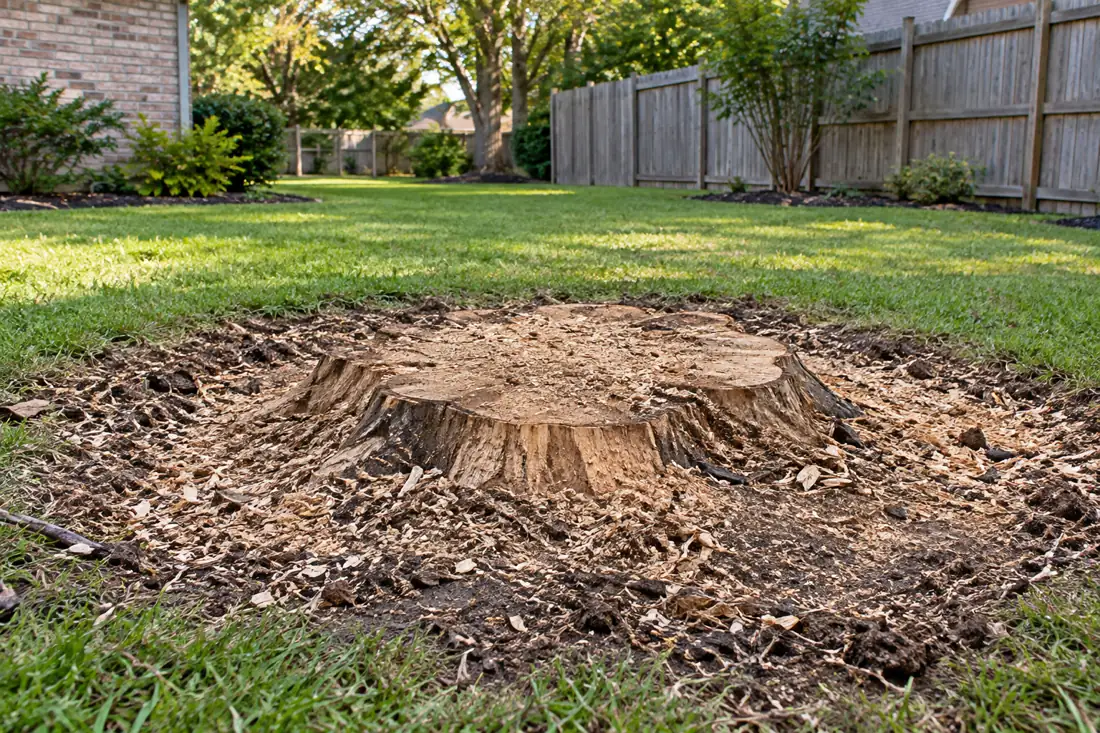
Several stumps may share travel and setup needs, but each can have different access and grinding requirements. Mark or number the stumps and specify the desired finish. The quote should list the work clearly so no stump is missed or confused with one you want to retain.
Site planning detail: One setup can sometimes serve several stumps, but that benefit depends on the route between them. Number and photograph each stump, show the approximate widths and exposed roots, then map gates, fences, elevation changes and areas where equipment cannot travel. Mark which stumps are near structures, buried services or delicate landscaping, because a straightforward front-yard stump should not be priced or scheduled as though it has the same constraints as a confined backyard stump.
Decide whether the owner wants a single final grade across all areas, chips left at each location, or haul-away. The proposal should list the agreed grinding depth and restoration assumptions for each stump or group. Keep later additions and unexpected obstructions documented as a scope change rather than quietly changing the whole project.
Several stumps are not one repeated task: one may be beside a wall, another near irrigation, and a third on soft ground behind a narrow gate. Number each stump on a simple site sketch and photograph its location, widest base and intended finish. Identify included surface roots separately for each.
The contractor can then evaluate travel, setup, debris handling and access across the property without assuming every stump has identical constraints. Ask if chips remain in their individual holes or are consolidated elsewhere and who restores soil afterward. A numbered inventory makes the final walk-through more reliable and avoids overlooking hidden stumps.
Make an actual stump inventory before comparing prices
A single visible stump can be straightforward to describe, but a property with several remnants needs a numbered inventory before anyone discusses a work sequence. Walk the yard and note each stump's approximate width at the root flare, apparent height, surrounding grade, and distance to hardscape.
Include small stumps hidden under vines or grass, and distinguish intact trunks from old mounds that may contain decayed wood or soil. An estimate based only on a photograph of the largest stump can omit the features that make the other locations difficult.
Use an annotated sketch or a set of numbered photos to show which stumps are included in the request. Point out whether one is in a front lawn, another lies behind a narrow gate, and a third touches a raised bed. The purpose is not to calculate a grinding price by adding diameters together. It is to let the contractor inspect the actual number of work positions, choose suitable equipment, and document any location that must be excluded until access or buried services are resolved.

Understand why multiple stumps are not simply one larger stump
Grinding one broad stump involves one setup, one concentration of debris, and one surface-restoration decision. Grinding several small stumps may require repeated repositioning, protecting separate planting areas, loading and unloading equipment, and cleaning debris from different zones. Conversely, several accessible stumps along an open drive may require less repositioning than two hidden behind fences. The relevant comparison is the entire movement and protection plan, not just the combined visible wood diameter.
Ask the contractor to describe whether a grouped visit can handle all marked locations without changing machinery or crossing vulnerable surfaces. An efficient sequence might start near the unloading area, move toward the farthest stump, and finish where the truck is parked. A more cautious sequence may be necessary around sprinklers or soft turf. If a location is not ready, keep it as a clearly priced option instead of pretending the whole group will receive identical treatment.
Agree on the removal depth stump by stump
A homeowner replacing a stump with turf may need a different finished cavity from someone preparing a vegetable bed or planning paving. Grinding depth depends on stump anatomy, access, equipment limits, buried utilities, and the intended reuse of the area. A single advertised depth applied to every stump is not a substitute for assessing conditions. Record the requested below-grade target for each location while allowing the contractor to identify any clearance or safety constraint that makes the target impractical.
A grinder pulverizes accessible wood; it does not excavate a complete root system or certify that subsurface material is ready for construction. If a future fence footing, slab, or structural element is planned, that work may require separate engineering or excavation. Discuss this distinction before scheduling multiple sites. Otherwise the property owner may assume that finishing the visible grinding operation completes a different construction preparation task that was never in the quote.

Compare the complete work plan when several stumps are on one property
Make a measured inventory before comparing a one-stump price with a grouped visit. For every stump, record the broadest flare at ground level, visible height, nearby hardscape, surface roots and proposed finish use. The second stump might be easy to reach while a smaller third stump behind a gate requires additional setup. Label them on an overhead sketch or sequential photos so a contractor can match quantities to locations. Count every stump actually included in the request rather than assuming that a single photograph of the yard communicates the work scope.
The travel path often matters more than the count. Ask whether the same grinder can reach all locations without crossing a raised patio, wet lawn, gravel bed or irrigation line. Note access widths, slopes and any removable gates, but do not remove structures before the operator confirms a safe plan.
One clustered group may require fewer moves than three isolated stumps at opposite ends of a long property. A bundled estimate should identify whether mobilization, debris handling and surface protection have been combined or still apply separately to restricted locations.
Specify grinding depth and the desired after-use stump by stump. A shallow reduction for mowing is a different outcome from preparation for sod, a replacement tree or future paving. Roots that extend under a foundation, utility or existing walkway may remain even when the visible stump is gone. Record which spots require chips removed, which can retain chips and which need clean soil and grading by another provider. An apparent per-stump discount is not useful if important cleanup or restoration was excluded from the proposal.
Before the work is closed, walk all marked locations with the scope in hand. Look for overlooked stump collars, unexpected chip piles, wheel ruts and disturbed edging. If the ground is wet, document any area deferred for turf protection rather than pretending that it was completed.
Ask for a clearly labeled change if another buried stump is discovered or if one turns out to be larger than the measurements suggested. A location-by-location checklist makes a multi-stump project easier to verify without inventing uniform conditions or promises of a fixed total price.

Map the access route between every work position
The first stump may be within reach of a truck-side machine while the second requires passage through a gate, around a pool, or across a slope. Measure the narrowest clear opening, note sharp turns, and identify low limbs, steps, edging, and drain covers. A machine's published width does not determine whether it can negotiate a particular turn or support surface. A site walk is especially valuable when grouped work moves equipment across different parts of the property.
Do not make access decisions from an aerial photograph alone. Ask what path the machine would use and where the crew would stage screens, mats, fuel, and collected grindings. If a neighbor's property or common area appears to offer an easier shortcut, obtain permission rather than assuming that route is available. Clear access details help make an honest grouped estimate and protect landscaping that is not part of the requested removal work.
Quote multiple stumps as a route and cleanup plan
Grinding two stumps next to each other is not necessarily twice the work of one. A crew may position equipment once, while a distant stump behind another locked gate requires a separate access route. List each stump with its location and approximate diameter; number them on a simple property sketch. That helps prevent a larger stump from being mistaken for a cluster of small surface roots or an old pile of wood chips.
Ask the estimator to show whether access, travel within the property, grinding depth, chip removal and backfill are included for every stump. A grouped price can be practical, but it should still identify work that would be omitted if one stump is inaccessible or if underground obstructions are discovered. Never assume the first quote includes removal of every lateral root or restoration of irrigation. Photos and measurements allow the contractor to clarify the work before equipment arrives.
Identify underground systems at every stump location
One utility marking does not mean every stump on a large property has the same underground conditions. Public services, private irrigation, drainage, lighting wiring, and low-voltage systems may follow different routes. Ask for the appropriate utility-location process and provide information about private systems that standard utility markings may not cover. A visible sprinkler head or cleanout is a warning about what could exist nearby, not evidence of the precise location or depth of the entire line.
Where any buried feature remains uncertain, record that uncertainty against the specific numbered stump. The contractor may need a separate locating service, shallower work, or a revised scope. Do not probe with the grinder or promise a clearance based on guesswork. A grouped project becomes safer and easier to communicate when each work area has its own list of known services, open questions, and practical limitations.

Plan sequencing without damaging completed areas
Several stump locations can create a traffic problem if the crew finishes one area and then drives heavy equipment over the freshly worked soil to reach another. The sequence should protect completed surfaces, avoid crossing soft cavities, and account for how chips will be moved. Where the farthest stump has a constrained exit, starting there may reduce repeated travel. Where a gate or driveway is shared with daily household activity, the crew may favor a different approach.
Ask the contractor to define staging zones for temporary chips and any material being hauled away. Keep children, pets, and visitors out of the equipment path while work is in progress. The crew should control access and follow its own safety procedures; a homeowner should not attempt to guide a grinder through a tight opening. A clear route plan is part of the grouped service, not an optional decorative detail.
Choose chip handling separately from grinding
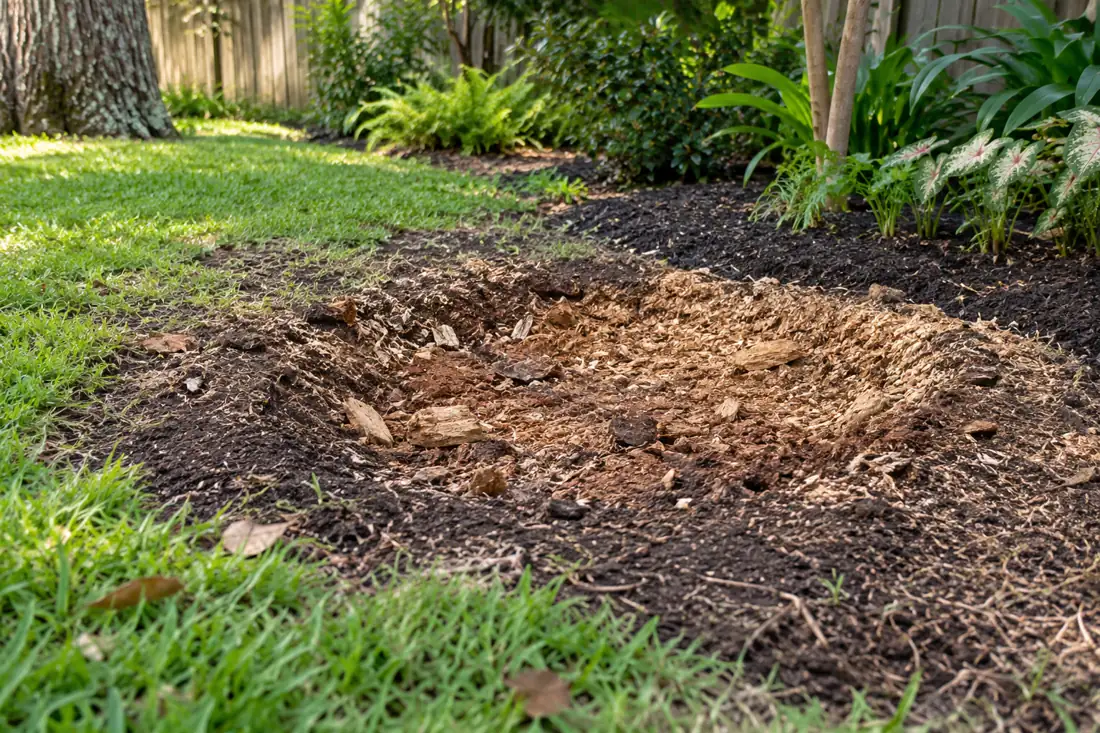
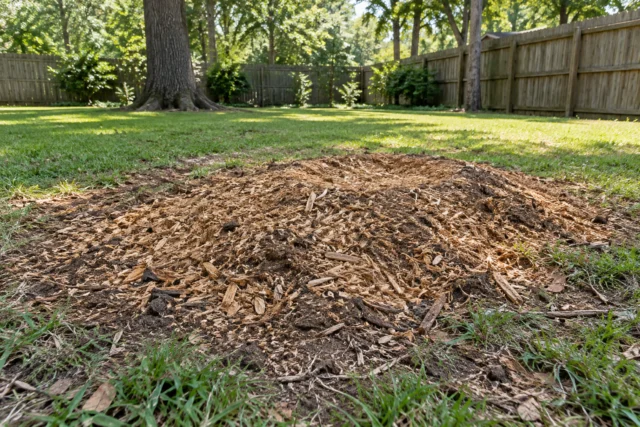
A multiple-stump project can produce piles in several parts of the yard. The pile visible immediately after grinding is a mixture of wood fragments and displaced soil, not a ready-made level lawn. Decide which areas can safely retain chips, which need excess material hauled, and whether sweeping nearby patios is part of cleanup. A single phrase such as leave clean can mean very different things to the contractor and the property owner.
If backfilling or seeding is planned, discuss whether those tasks are included or left to a landscaper. Organic chips settle and decompose; packing them into a deep cavity may create later depressions. Keep a record of each stump's intended finish: chips left in place, material removed, rough grade, or a separately quoted restoration. This distinction is especially important when one stump is near a walkway and the others are in informal planting areas.

Protect turf and planted areas along the whole route
Stump grinding can disturb more lawn than the grinding head touches because machines, protective screens, and debris handling require working space. On a property with several stumps, identify delicate planting beds, exposed roots of trees being retained, irrigation heads, and decorative borders along every route. Decide whether temporary ground protection is practical and who will move garden ornaments or outdoor furniture. A route passing over a small lawn during wet weather can be more damaging than the grinding itself.
Do not assume that scattered grindings will be harmless around every plant. They may bury delicate crowns, block drainage, or interfere with a freshly planted bed. Ask the crew to keep chips within agreed zones and to avoid piling them against living tree trunks or foundations. Document preexisting rutting or cracked edging beforehand so post-work inspection focuses on actual changes rather than guesses about what the yard looked like.
Request a scope-based estimate with clear exclusions
For one stump, a quote may describe location, size, grinding depth, and debris handling in a few lines. For multiple stumps, request an itemized location list even if the contractor offers one bundled price. The scope should identify any special access fee, protective measures, separate cleanup expectations, and what happens if a hidden object prevents grinding. It should also explain whether the proposed price includes return visits if one location cannot be worked safely on the scheduled date.
Avoid comparing estimates solely on a single total when they describe different outcomes. One may grind only visible wood and leave large piles; another may include material movement and rough leveling. Mark what the homeowner needs from each zone, then compare like for like. An accurate grouped estimate helps prevent a disagreement about the smallest stump being skipped or a hard-to-reach stump requiring an unplanned second mobilization.

Inspect each location and preserve a usable record
After equipment has left, walk the numbered stump list with the scope in hand. Look for remaining accessible protruding wood relative to the agreed target, chip piles near drains, disturbed edging, and any unaddressed hazards. Do not put hands into fresh cavities or probe for roots. Take photographs from stable ground and note whether an area is ready for the next planned landscaping stage or needs settling, backfill, or additional work under a separate scope.
For the next project, keep the marked inventory, invoices, utility-location information, and photos together. These records can help a future landscaper understand where wood was ground and where a new planting or hardscape may need a different foundation. If any site cannot be completed, request an explicit written explanation rather than marking the whole group complete. The aim is a verifiable finish at each location, not merely a count of stumps on a receipt.
Questions about this project
Is a total tree count enough for a large quote?
Usually the parties also need locations and tasks. Use consistent tree numbers, marked photos or a site plan so the estimate and crew instructions refer to the same trees and retained areas.
Does a work inventory include a condition assessment?
Only if that service is expressly part of the scope. A list used to identify and price tasks should not be mistaken for a documented assessment of every tree's condition or risk.
Does stump grinding remove the entire root system?
Grinding normally addresses an agreed stump area and depth. It should not be assumed to extract every underground root. Describe your future use of the site and ask what additional work or coordination is needed.
Can the area be paved or planted immediately afterward?
That depends on the intended project and the agreed finish. Chips, remaining roots, excavation and soil preparation may need separate attention. Coordinate the grinding scope with the installer who is responsible for the next phase.
What access information helps an estimator?
Send the narrowest opening, overhead obstacles, turns and the distance between the tree and the loading area. Include photos of the entire route and identify steps, soft ground or features that must remain protected.
Should I remove a fence before the visit?
First ask the contractor to assess access and agree on any temporary opening. Identify who owns the fence, who can authorize the change and who will reinstall it. Do not assume the opening is necessary or included.
Does cleanup include every root and wood chip?
That depends on the written scope. Tree removal, stump grinding, chip hauling and root excavation are different tasks. Ask what material is removed, what remains and whether soil or landscape restoration is separately included.
What should a final walk-through check?
Compare the identified trees and tasks with the agreement. Check agreed debris handling, stump treatment, access openings and any listed restoration. Record unresolved items clearly instead of relying on a general impression that the property looks finished.
What should I compare besides the price?
Compare tree identification, work objectives, access assumptions, hauling, stump treatment, site finish and exclusions. Ask whether permits or other coordination are part of the scope and who can approve changes if conditions differ.
Does an online request book the crew?
No. A request starts the estimate conversation. The company still needs to discuss scope, availability and any site assessment. For a dangerous or urgent condition, call 504-458-8336 rather than relying on a form response.
What should I tell Tree Huggers about grinding one stump versus several stumps?
Explain the property address, the work you want and the specific concerns: stump inventory, varying access, consistent finish. Send safe photos of the tree, surroundings and access route. The contractor can then discuss the assessment and scope needed for this situation.
How do I request an estimate for this work?
Call 504-458-8336, text photos or use the estimate form on this page. Include the address, desired outcome and any timing constraints. The company will need to review scope and availability; an online request does not confirm a price, appointment or emergency dispatch.
Do not estimate in-ground stump work from loose wood rounds
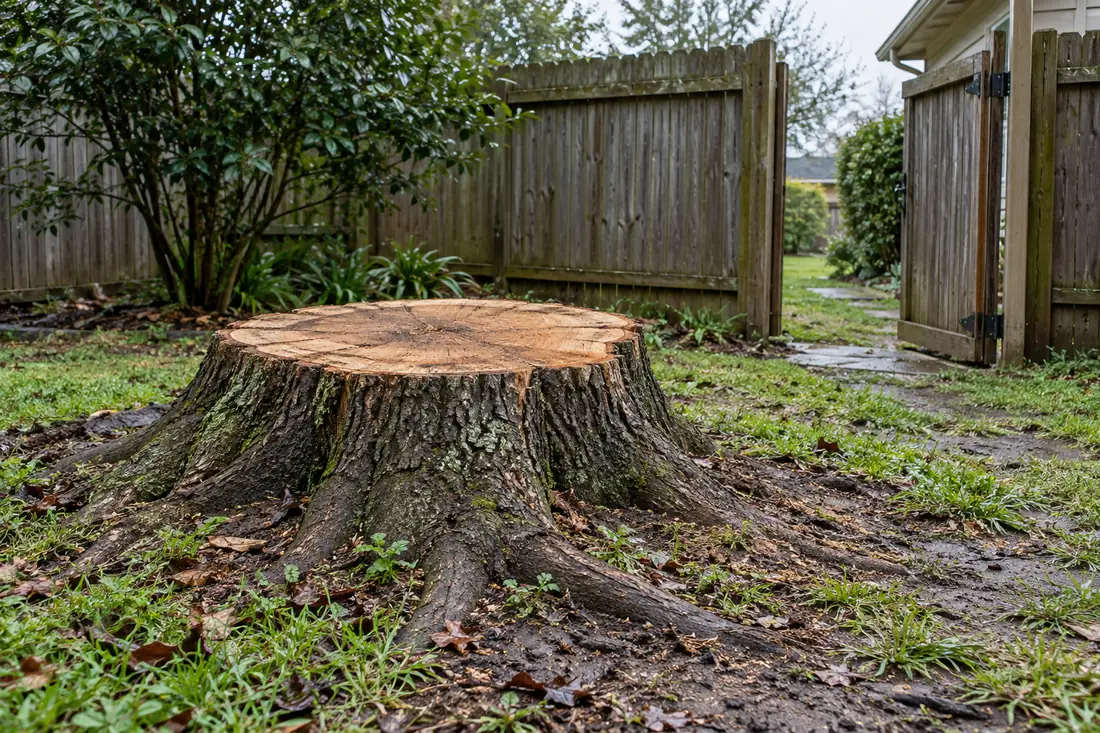
A cut log section that can be lifted from the lawn is not the same job as a stump still connected to soil and roots. In a multi-stump request, identify and number each actual rooted stump, estimate its diameter at the ground line and note the remaining height, nearby hardscape, fences, underground services and proposed replanting use.
Include a wide site photograph that shows the access path rather than sending only close-up wood faces. A small cluster of stumps behind a gate may require a different setup from one large stump in an open yard.
Agree in writing whether grinding, chip removal, backfill, surface cleanup and future planting preparation are included. Do not infer a grinding depth or a final restoration standard from an illustrative image or a count of sawn pieces.
Get a scope for your property
One stump and a cluster of stumps require different planning even if their combined diameters look similar. Prepare a simple inventory with numbered photographs, approximate sizes, location notes and the route between them. Identify which stumps are against a fence, beside pavement, inside a narrow backyard or in soft ground.
Tell the estimator whether all the work can be done during the same property access window and whether there is a safe place for equipment staging. A total count without locations can conceal the most difficult part of the project.
Request an itemized or clearly grouped scope identifying every stump, access exceptions, selected grinding limits and one consistent plan for chips, debris and grading. Clarify whether a return visit is needed if access is unavailable or utilities must be verified. If some areas will become turf and others planting beds, record those different finishing requirements rather than using a blanket instruction. Comparing one versus several stumps should focus on mobilization, site constraints and defined deliverables, not an invented price or guaranteed discount.