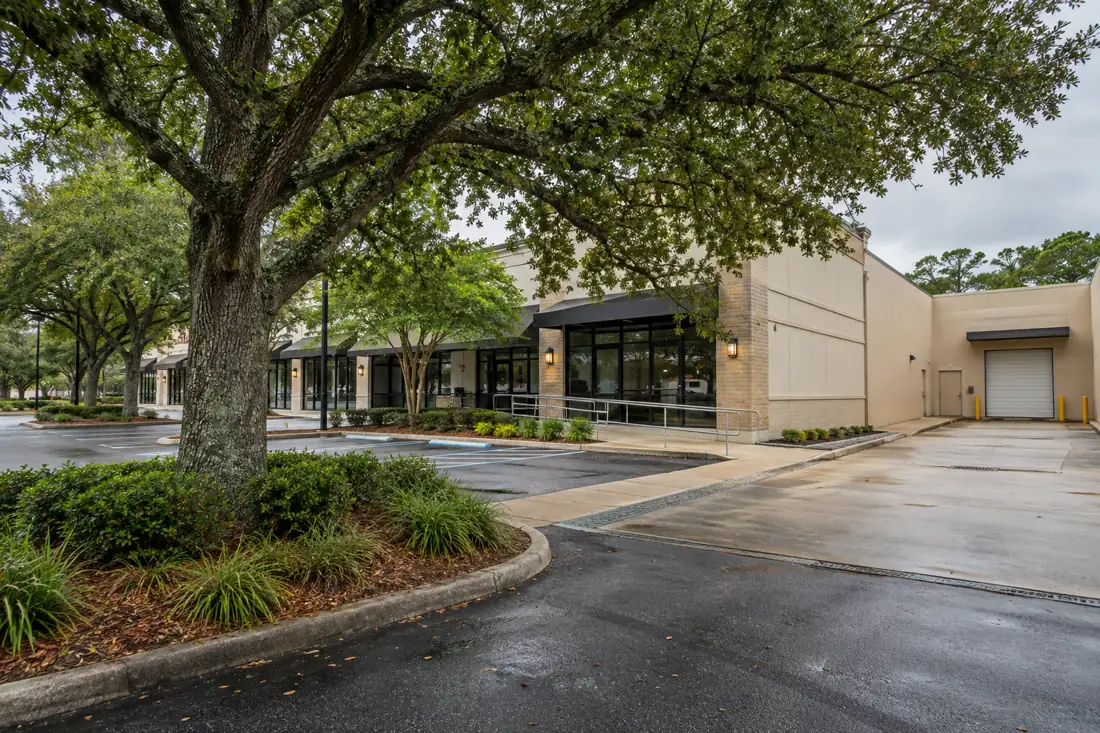
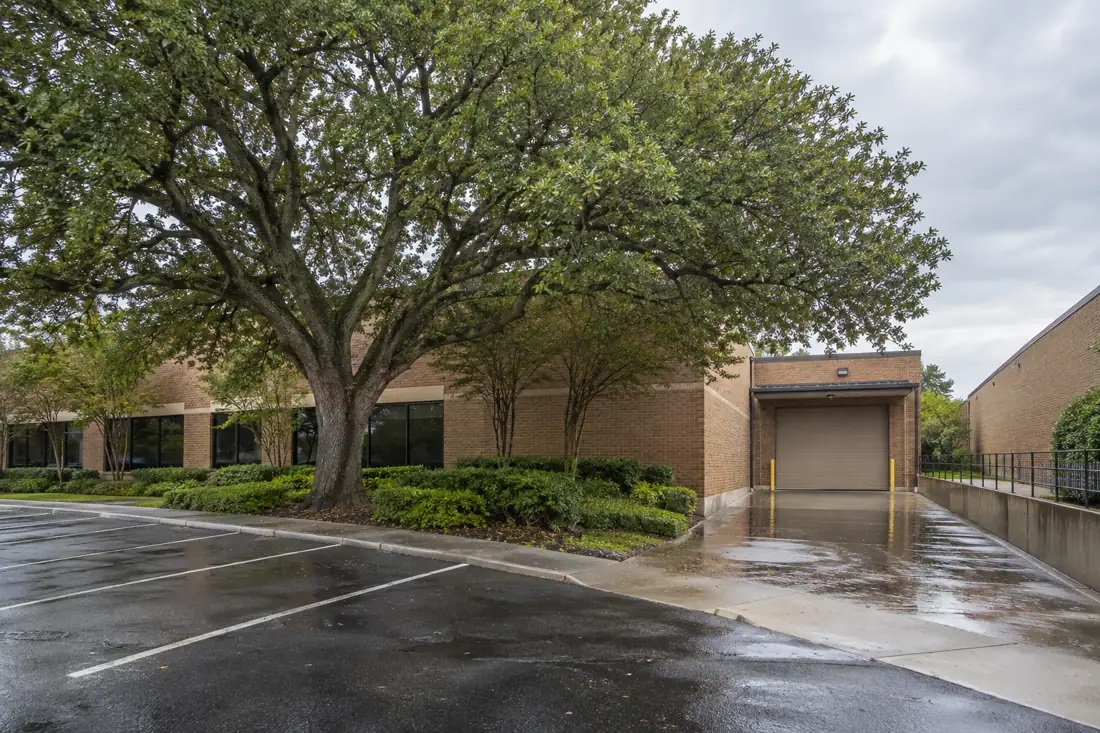
Shopping centers combine public foot traffic, deliveries, parked vehicles and tenants with different schedules. Identify the trees, work areas and entrances affected. The contractor needs a practical work window and access plan before equipment arrives. A phased scope may preserve operations while keeping people outside the active tree-work zone.
Practical scope and safety guidance: Divide shopping-center tree work into zones that reflect customer access and tenant operations. Mark accessible parking, cart returns, doorways, curb ramps, outdoor seating, delivery lanes and tree islands on a manager-approved drawing. A contractor may find an empty parking row during an estimate, but the tenant may control those spaces under a lease or require them for a pickup period. Ask management who can approve the closure and send notices.
Keep pedestrian detours separate from the area where sections are lowered or carried; cones alone do not establish a safe route. Specify whether the job occurs before opening, after a delivery period or over several phases. The quote should identify each phase’s closures, haul-off plan and cleanup endpoint, including small debris near tires and walkways. A site representative should inspect and accept each reopened zone rather than assuming the entire center can resume normal access at once.
Map each affected tree against storefront entries, accessible parking, grocery carts, outdoor seating, loading areas and routes emergency vehicles may need. Record peak shopping and delivery times, then choose phases that limit the footprint exposed to falling or moving material. A tree standing in a median may look isolated on a site plan while its branches extend over an occupied parking aisle.
Provide the contractor with a tenant contact, the lot-management authority and a current diagram showing where vehicles may be relocated. Do not treat a short closure estimate as permission to block an accessible route or emergency entrance.
A practical quote specifies which rows close, who moves temporary signs or parked cars, how a pedestrian detour is approved and how debris trucks travel through the property. Ask whether work is performed before opening, in separate phases or after a delivery window, and clarify how weather delays affect notices.
Protect drains, planters and pavements along the chip and log route, and keep temporary wood piles away from customer traffic. Before the area reopens, walk every affected entrance, cart return, curb ramp and parking row. Written closeout notes and after-work photos are much more useful than an unsupported assertion that the entire shopping center was unaffected.
Map the tenant-facing areas before planning work
A shopping center is a collection of customer journeys, not merely a parking lot with trees. Mark storefront entrances, accessible paths, cart returns, pedestrian crossings, outdoor seating, bicycle parking and routes from transit stops. Show where each target tree stands in relation to these features. A tree near an empty parking row may still affect a pedestrian shortcut or the only practical path to a particular business.
Ask property management for the current tenant roster and important access obligations, but do not assume all tenants operate on the same schedule. A pharmacy, restaurant, salon and delivery operation may need different accommodations. Share an annotated plan with the estimating contractor so the proposal reflects the occupied property. Keep observations and confirmed restrictions separate from proposed closures that still need approval.

Identify who controls parking and common areas
Determine whether the owner, managing agent, anchor tenant or another party controls the spaces needed for access and loading. A tree-service estimate should not be based on an assumed right to occupy parking areas reserved under a lease. Note shared drives, service roads and parcels managed by different organizations. If public property is involved, applicable permissions must be coordinated separately.
Identify one site representative who can approve a temporary parking change and send tenant notices. If several parties must agree, record that before selecting the work date. A contractor can explain the footprint it needs, but cannot substitute for the property manager's understanding of lease, access or security obligations. A clear authorization chain prevents an equipment truck from arriving to find the staging row already occupied.
Keep Shoppers and Deliveries Moving While Trees Are Serviced
A shopping-center estimate should begin with an ordinary operating-day map. Mark the busiest pedestrian crossing, the accessible route from parking, the truck delivery lane, storefront service doors and any tree islands beside parked vehicles. If a large limb overhangs several tenant spaces, those spaces need an identified closure plan; the contractor should not discover occupied stalls after equipment arrives. Divide trees into phases that leave a practical path to the open businesses whenever feasible.
Ask management for its real tenant and delivery constraints before choosing a work window. Restaurant deliveries, morning opening staff and curbside pickup may overlap even if customer parking looks empty. A weekend can be the worst time for one storefront and the quietest for another. The job contact should know who can authorize temporary closures, who tells tenants and what happens if a weather delay leaves a partly completed work zone.

Build a phase plan around entrances rather than a single closure
Protect the small details that make a commercial site function. Tree-island irrigation, curbs, pedestrian ramps, exterior lights, overhead wires and storm drains must be included in staging decisions. Avoid placing branches where runoff could wash loose material toward drains. Require a clear end-of-shift route rather than accepting a pile of debris across a shared entrance. Separate clearance pruning from structural evaluation of a declining tree so the purpose of each action remains honest.
For quote comparison, request a tree-by-tree scope with access time, vehicle relocation responsibility, debris routing, excluded repairs and reopening conditions. If a tree needs removal rather than pruning, review that decision before approval rather than using the cheapest treatment as a substitute. A helpful completion record identifies what was done, which parking areas were reopened, and what needs a later professional review. It does not claim that every retained tree has been certified hazard-free.
Schedule around peak customer and delivery periods
Record the busiest periods for the affected businesses, including weekends, lunch rushes, holiday shopping and morning deliveries. A window that suits one store may block another's vendor access. Compare possible work dates with the proposed method, equipment setup and debris handling. The work window must cover arrival, active tree operations, loading and cleanup rather than only the time spent cutting.
Some projects may be divided into separate zones so one part of the center can continue operating while another is restricted. Define the phases on the property plan and identify when each area can reopen. Avoid promising a fixed reopening time before the contractor has assessed weather, tree condition and site logistics. Any revised schedule should be communicated through the same tenant-contact process as the original notice.

Protect storefront entrances and accessible routes
A queue outside a shop can extend farther than the door, and customers may change routes unexpectedly when they see equipment. Walk the area from each affected entrance to the nearest practical parking and accessible routes. Ask the contractor and property manager how an exclusion boundary would affect these movements. Do not rely solely on a temporary sign to keep visitors clear of an active tree-work operation.
Consider whether a safe alternate route is genuinely usable for people with mobility limitations, shopping carts and strollers. Staff cannot assume that everyone can walk around a remote corner or climb a curb. The appropriate property and regulatory responsibilities should be confirmed by the site operator. The contractor should control its work zone while the center manages visitor communications and any authorized circulation changes.
Maintain emergency, drive-through and service access
Mark fire lanes, emergency vehicle approaches, drive-through lanes, loading docks, grease and refuse collection points, and service corridors. A crane, chipper or log truck may not be able to share the same lane with ordinary deliveries. Explain which routes must remain available at all times and which temporary arrangements can be authorized. Do not assume that moving a cone makes a restricted lane acceptable for through traffic.
Restaurants and grocery tenants may receive temperature-sensitive deliveries that cannot simply be delayed without coordination. Make room for the full route of those vehicles, including their turns and unloading position. If the tree work requires an alternate schedule or access point, have the property representative agree with affected tenants beforehand. Good planning acknowledges these constraints instead of treating them as inconveniences to solve on the day.

Confirm the equipment footprint and surface limits
A contractor may need a setup area, chipper location, loading vehicle and a separate zone for handling branches. Measure apparent parking rows and access turns for discussion, but leave equipment placement and support decisions to the qualified team. Tell the estimator about underground drainage, irrigation, landscaped islands, decorative pavement and any areas known to settle or hold water after storms.
Photograph existing curbs, pavement defects and planting beds before work begins. Discuss protection expectations realistically: mats or barriers can reduce impacts but cannot guarantee no marks or damage. If a method depends on crossing a raised island or using neighboring land, confirm that it is permissible and included in the scope. The chosen equipment should fit the operating environment, not force unauthorized alterations to it.
Give each tenant a clear, usable notice
An effective notice states the expected date, affected parking or walking area, the alternate entrance if one is approved, and the property contact for questions. Avoid a vague announcement that tree service will happen somewhere on the site. Share updates through the management channels tenants already use. For customer-facing messages, provide enough direction to reduce confusion without making promises about exact completion times.
Keep one version of the site map and update it when the work zone or schedule changes. A store manager may pass information to staff who work different shifts, so last-minute verbal instructions are unreliable. If a tenant reports a critical conflict, send it to the authorized site contact and contractor before work begins. Do not ask store employees to step inside a tree-work exclusion area to escort customers.

Coordinate debris management with shoppers nearby
Wood and brush cannot be allowed to spill into active customer areas during transport or loading. Ask where material will be staged, how vehicles will access it and whether the operation requires an additional truck movement. A shopping center often has landscaping islands close to parked cars, signs and lights, so the path from tree to loading location matters as much as the position of the tree.
Clarify whether chips, logs, stump grindings or surface roots are included in removal. A clean work zone is not fully restored if sharp debris remains around a walkway or parking stall. Make a completion checklist for the affected surfaces and adjacent entrances. Leave technical handling decisions to the crew; the property manager should monitor the agreed result from outside the controlled area.
Set a change and weather communication procedure
Tree condition, ground saturation or a suddenly unavailable parking area can alter the plan. Choose an authorized person who can approve scope changes and communicate revised access instructions. Agree on how tenants will receive updates if the operation is postponed or a phase lasts longer than expected. The contractor must remain free to stop or adapt work when conditions are unsuitable.
Do not turn an unexpected discovery into an informal instruction from the nearest store employee. Record the tree identifier, proposed change and any impact on cost or reopening before the owner approves it. If the center must remain partially restricted until debris is cleared, say so plainly. Reliable communication is more valuable than an unsupported assurance that every operation will finish before opening.

Request a comparable, location-specific estimate
Send the property address, photographs of the target trees, an annotated parking and tenant-access map, known utility conflicts, delivery restrictions and desired cleanup. Ask the contractor to specify which trees and tasks are included, who arranges permissions, what equipment and staging assumptions apply, and whether the stump and debris are covered. The estimate should recognize real occupancy rather than price only the trunk size.
Compare proposals on the same result: safe access planning, authorized work area, completed tree services, debris removal and an agreed reopening check. Ask about relevant credentials and documentation through the property's normal procurement process. Preserve the final scope and tenant notices so the site manager and crew use the same plan. No online checklist can replace a professional on-site assessment where a complex operating center is involved.
Questions about this project
Can a business stay open during tree work?
That depends on the site and scope. Discuss occupied routes, exclusion areas, loading and work windows with the contractor and property representative. Do not assume normal access can continue through the active work zone.
Who should communicate with tenants or visitors?
Agree on that responsibility with the property representative. The contractor needs a clear site contact, while the owner or manager should use the property's established process to communicate access changes and work windows.
Can the crew block a public sidewalk or road?
Required arrangements must be coordinated with the appropriate authority. Identify public routes and restrictions before scheduling. A private work agreement should not be treated as automatic permission to occupy or close public space.
When should parked vehicles be moved?
Set the timing and responsible contact before the work window. Vehicles may need to leave the tree zone, equipment route and loading area. Confirm where access must remain available during each phase.
Is a total tree count enough for a large quote?
Usually the parties also need locations and tasks. Use consistent tree numbers, marked photos or a site plan so the estimate and crew instructions refer to the same trees and retained areas.
Does a work inventory include a condition assessment?
Only if that service is expressly part of the scope. A list used to identify and price tasks should not be mistaken for a documented assessment of every tree's condition or risk.
How should extra work be approved?
Use the agreed approval process and identify the change, reason, scope, price or schedule effect as applicable. Confirm who has authority before treating an additional tree or task as part of the original job.
What completion records are useful?
Keep the agreed scope, tree or area identification, authorized changes, invoice and labeled photos where appropriate. Include unresolved items and a contact. Contract-specific records should follow the buyer's stated requirements.
Does cleanup include every root and wood chip?
That depends on the written scope. Tree removal, stump grinding, chip hauling and root excavation are different tasks. Ask what material is removed, what remains and whether soil or landscape restoration is separately included.
What should a final walk-through check?
Compare the identified trees and tasks with the agreement. Check agreed debris handling, stump treatment, access openings and any listed restoration. Record unresolved items clearly instead of relying on a general impression that the property looks finished.
What should I tell Tree Huggers about planning tree work for a shopping center?
Explain the property address, the work you want and the specific concerns: tenant coordination, parking, public access. Send safe photos of the tree, surroundings and access route. The contractor can then discuss the assessment and scope needed for this situation.
How do I request an estimate for this work?
Call 504-458-8336, text photos or use the estimate form on this page. Include the address, desired outcome and any timing constraints. The company will need to review scope and availability; an online request does not confirm a price, appointment or emergency dispatch.
Get a scope for your property
Shopping-center tree work should minimize exposure at storefronts, accessible parking, customer aisles and delivery corridors. Send a marked site map showing tree locations, tenant hours, entrances, outdoor seating and any urgent limb concerns; use only safe, permitted photographs. Ask for phased work zones, a contact to coordinate with tenants and a plan for rerouting pedestrians and vehicles as needed.
The proposal should identify pruning or removal per tree, debris collection positions, surface and signage protection and what constitutes a reopened area. Do not assume after-hours access or permission for equipment parking without property management approval.