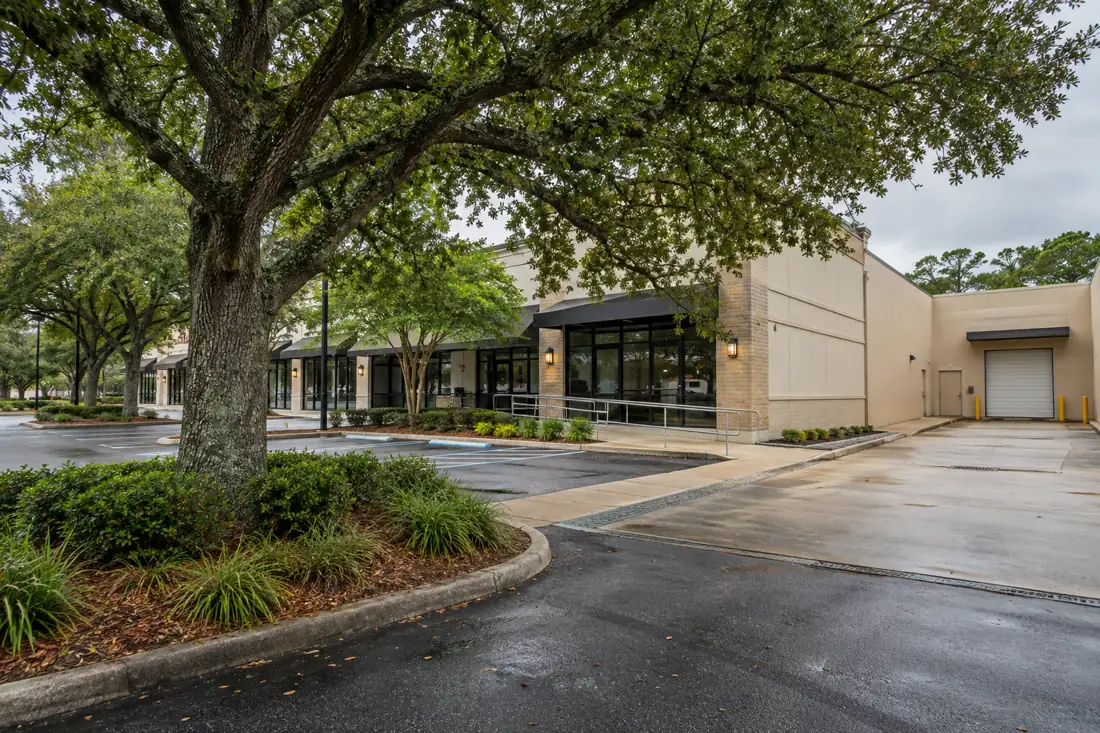
Coordinate occupied properties, site access, maintenance scopes and completion records.
Commercial projects benefit from one shared tree inventory and work sequence
A commercial property may contain very different tree needs near storefronts, loading docks, employee parking, utility equipment and public walkways. Begin with an inventory using location labels, a clear photo and the requested objective for each tree. Separate hazard assessment, routine clearance, removal, stump work and debris hauling. This avoids treating a complex property as one vague maintenance line item.
Build a sequence around operations that cannot safely be interrupted. Consider delivery windows, fire-lane access, tenant entrances, security gates, pedestrian detours, underground utilities and noise restrictions. A contractor should explain how work zones and vehicle movements will be controlled; the property manager should identify the person authorized to approve changes to the scope.
Keep documents proportional but useful: agreed tree identifiers, work specification, permit or utility coordination responsibilities, before-work observations and a closeout list of remaining concerns. If a particular tree cannot be accessed or the condition differs from the estimate, log it as a change for review rather than quietly substituting work. Avoid equating a completed invoice with independent proof that every tree received its planned treatment.
Write a brief the site team recognizes
Start with the property’s function and what the tree project needs to achieve. A retail site may need clearance over customer parking; an industrial property may have a restricted service lane; a school may need work considered around occupied areas. Name those conditions directly instead of assuming the building type explains them. The contractor needs to understand how the particular site operates and which constraints affect the proposed tree work.
The commercial service page leads to the estimating conversation. This hub organizes the decisions that help an owner or manager prepare. Include the work address, operational contact, approval contact and preferred window. If several people hold those roles, explain the arrangement. A property brief should remain usable when a person who missed the initial walkthrough needs to understand what is being requested and who can decide.
Translate tree concerns into task identifiers
Use a map or photographs to number the trees and affected areas. Connect each number to the observed concern and requested outcome. Keep tree assessment, pruning, removal and later landscape preferences distinct. A single instruction to service all trees can leave uncertainty when different conditions and objectives exist across a large property.
A consistent task list supports pricing and completion, but it is not automatically a condition assessment of every tree. State whether documented evaluation is required. The assessment page provides related context. Keep proposals, accepted tasks and optional future work labeled separately. That distinction helps prevent an observation during a walkthrough or a tenant request from becoming an unrecorded addition to the authorized field scope.

Choose a work window that matches operations
Ask the site team about deliveries, refuse collection, opening hours, special events and other contractors. Share the actual constraints before requesting a fixed schedule. A desired early or weekend window is useful information; it still needs review against availability, site conditions and the method. Do not announce a closure to tenants on the assumption that a requested date has already been booked.
Consider what happens during loading and cleanup as well as cutting. A route may remain unavailable longer than an individual branch operation. If phasing is possible, identify the areas and reopening responsibility. Property-management planning is useful where several site contacts or addresses are involved. The operating plan should give the contractor realistic conditions and give occupants practical alternatives, rather than asking either group to improvise around the other.
Give each sector the information it actually needs
A hospital, apartment courtyard and warehouse have different entry arrangements and movement patterns. Describe those specifics in the brief. The healthcare, multifamily and industrial pages introduce related scope questions. Use them to prepare, not as substitutes for current site rules and a direct conversation with the person controlling access.
If the property has onboarding, escort or document requirements, provide them before mobilization is promised. Identify critical entrances and any activity that cannot be interrupted without separate arrangements. Keep sensitive entry information in the agreed private business channel. A commercial tree contractor should receive the actual interface requirements instead of being expected to infer everything from a general sector label or a photo showing an apparently empty building.

Build an operating brief that staff can actually execute
Commercial tree work needs more than a tree list. Put the actual operating constraints beside each work item: opening hours, delivery times, tenant access, emergency vehicle clearance, pedestrian routes and who controls the affected space. A row marked prune tree does not tell the crew when a delivery truck may be present or where rigged wood can safely be lowered.
Give the site contact and crew lead the same marked plan with work zones, protected planting, utility conflicts, acceptable staging areas and contact numbers for changes. If an unexpected defect, weather event or vehicle obstruction makes the plan unsafe, pause that segment and document the revised approval. The tree contractor should not assume authority to close a public lane or adjacent business entrance.
Close out by location rather than with one global completed statement. Record what was cut, what material was hauled or retained, which barriers were lifted and whether follow-up work remains. This enables a facilities manager to reconcile an invoice with actual service, while keeping a tree-care decision separate from a formal risk assessment.
Keep business access decisions in the written plan
A commercial tree scope needs the property operating plan alongside the tree assessment. Identify entrances, customer parking, deliveries, accessible routes, loading docks and tenant contact points. Mark each selected tree on a location plan, then identify which lanes or areas may need a controlled closure during work. A site manager should confirm authority to restrict access rather than assuming a tree contractor can close a shared space without approval.
Separate routine pruning from urgent hazards and state who can approve changed scope. A large hanging limb above a public entrance has different urgency from foliage obscuring a sign. If machinery or staging trucks are proposed, describe the space they may occupy and how occupants will be redirected. Ask for distinct items covering pruning or removal, debris handling, surface protection and separately contracted landscape or pavement repairs. Comparable quotes need comparable finish expectations.
Plan around actual business operations
Commercial tree work must fit the property’s use as well as the tree. Identify tenant entrances, delivery windows, emergency access, pedestrian routes and any area that cannot be closed. A site map or simple marked aerial image can help distinguish the requested tree from nearby planting.
Ask the contractor how work zones, hauling and temporary access restrictions would be coordinated with the property representative. If the area includes storefront glass, signs, canopies or parking, share those details before a method is selected. Define whether the project covers one tree, several mapped trees or a recurring maintenance scope.
The estimate should describe the work included, access assumptions and the person authorized to approve field changes, avoiding a vague all-trees request.

Planning example: pruning beside a working delivery lane
Suppose a business wants clearance work beside its only loading approach. The area is empty during the walkthrough, but deliveries arrive throughout the proposed morning. The brief should include those appointments and the contact who can coordinate them. The tree list should identify the exact task, while the operating plan should explain what route or work window may be available. An apparently convenient empty photo is not enough to confirm normal operations can continue beside the active area.
The company and site representative can discuss feasible timing or phasing, with loading and cleanup included in the work-zone conversation. The owner should compare proposals against the same restriction and clarify the finish. If a landscape contractor follows, identify the handoff instead of assuming tree cleanup completes every surface task.
This hypothetical example demonstrates a project interface, not a promise that the lane can remain open or that a particular after-hours slot is available. It shows how the tree objective and daily operation need one coordinated brief before the site team tells staff or tenants what to expect.
Include equipment and loading in the operational brief
Show the proposed route from the entrance to the trees and the space available for setup and trucks. Mark overhead conflicts, known buried features, fragile surfaces and retained landscape. A wide parking lot does not necessarily provide a suitable setup beside every tree, particularly if the usable area is needed for deliveries or customer access during the proposed window.
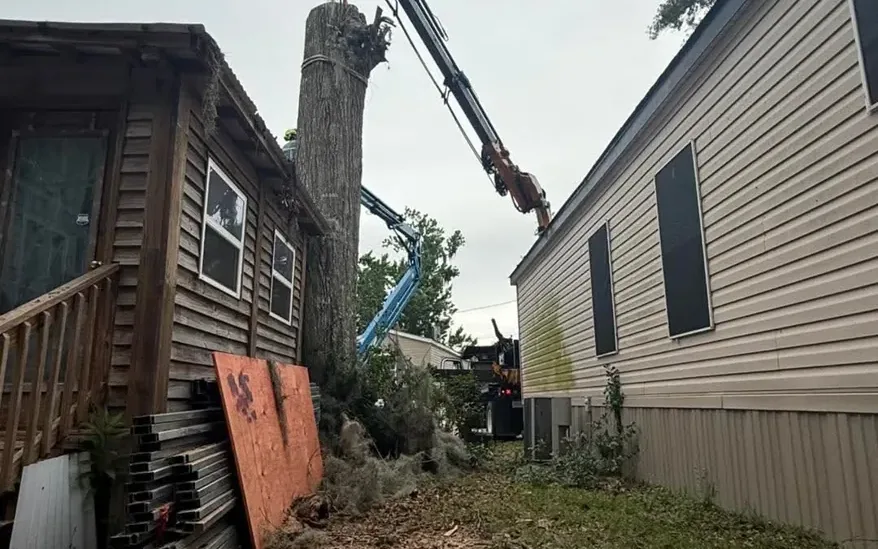
Discuss equipment options in relation to those conditions. Ask where material moves and which spaces must be cleared. The company can review the task and explain an appropriate approach; a machine photograph does not confirm suitability for your site. If the property’s operations change after estimating, provide an update. The accepted plan needs the site as it will actually function on the day, including loading and cleanup.
Close out each commercial location separately
At completion, retain a location-indexed set of safe photographs, the work authorization, any changes and a list of deferred items. Note which access restrictions have ended and which tree concerns still require observation. A maintenance visit does not certify that future failure is impossible. Managed properties benefit from a handoff a new facilities employee can understand without relying on a salesperson's memory, generic photos or undocumented assumptions about work at other sites.
Decisions to confirm
- Map tenant and customer movement routes
- Identify a scope-change authority
- Separate tree work from site restoration
- Archive location-specific completion and follow-up records
Prepare buyer requirements before comparing prices
Send required insurance documents, submission formats, purchase-order references and reporting expectations early. Request current information relevant to the opportunity rather than inferring specific limits or qualifications from a general capability statement. If the request is still for budget planning, label that stage honestly. A firm scope and a preliminary discussion may require different assumptions and follow-up.
Ask bidders to price the same trees, objectives, handling, stump treatment and finish. Document exclusions and unclear items before using the totals as a comparison. A seemingly low bid may omit a work area, hauling or an operational constraint another proposal includes. Keeping the requirements visible improves the usefulness of each response and gives the reviewing owner a clear basis for understanding what a proposed price actually covers.
Connect tree cleanup with the next provider
A tree project can leave work for a landscape, irrigation, paving or building contractor. Identify the desired handoff before accepting the tree scope. Removal, stump grinding, chip handling, grading and replacement planting are different tasks. If the next project needs a particular area or surface condition, share that requirement with the relevant providers while the scope can still be adjusted.
For debris, describe mixed material and any destination or record requirement. The cleanup hub organizes those questions. Do not assume a tree crew’s cleanup includes every repair or restoration item visible on the property. A useful finish description lets the site manager inspect the accepted work and lets the next contractor arrive with a correct understanding of what has already been completed and what remains.
Use the completion record as the project’s final checklist
Before work, agree on labeled photos, task status or invoice information the owner needs. At completion, reconcile the marked tree list with authorized changes and deferred tasks. A remote reviewer should be able to connect the record to the site without reconstructing several unlabelled photo messages. Keep claims specific to the work and visible result, rather than treating a completion photo as a guarantee of every retained tree’s future condition.
Start a commercial planning request with the address, brief, task list, access restrictions and decision deadline. For a newly dangerous storm condition, call about availability and keep the response scope distinct from later restoration. The commercial storm page provides related context. Good preparation gives the manager, owner and contractor one coherent project: clear objectives at the start and an understandable result at the end.
Commercial Tree Project Planning questions
What belongs in a commercial tree brief?
Include the address, property operation, marked tree tasks, site and approval contacts, access restrictions, preferred window and required records.
Does the building type explain all site rules?
No. Provide current entry, movement and operating requirements for the actual property rather than relying on a general sector description.
Is a tree list a condition assessment?
Only when that evaluation is expressly part of the scope. A task inventory used for pricing serves a different purpose.
Can we announce work before the date is confirmed?
Treat requested windows as preferences until the company confirms suitable arrangements and availability for the accepted scope.
Should deliveries be considered during cleanup?
Yes. Loading and cleanup also use routes and space. Plan the complete work window rather than only the cutting stage.
How should several site roles be named?
Identify who controls access, who coordinates daily operations and who can approve scope and price changes. They need not be the same person.
What buyer documents should be requested?
Send the actual opportunity requirements and verify current relevant information directly. Do not infer insurance limits or qualifications from general marketing copy.
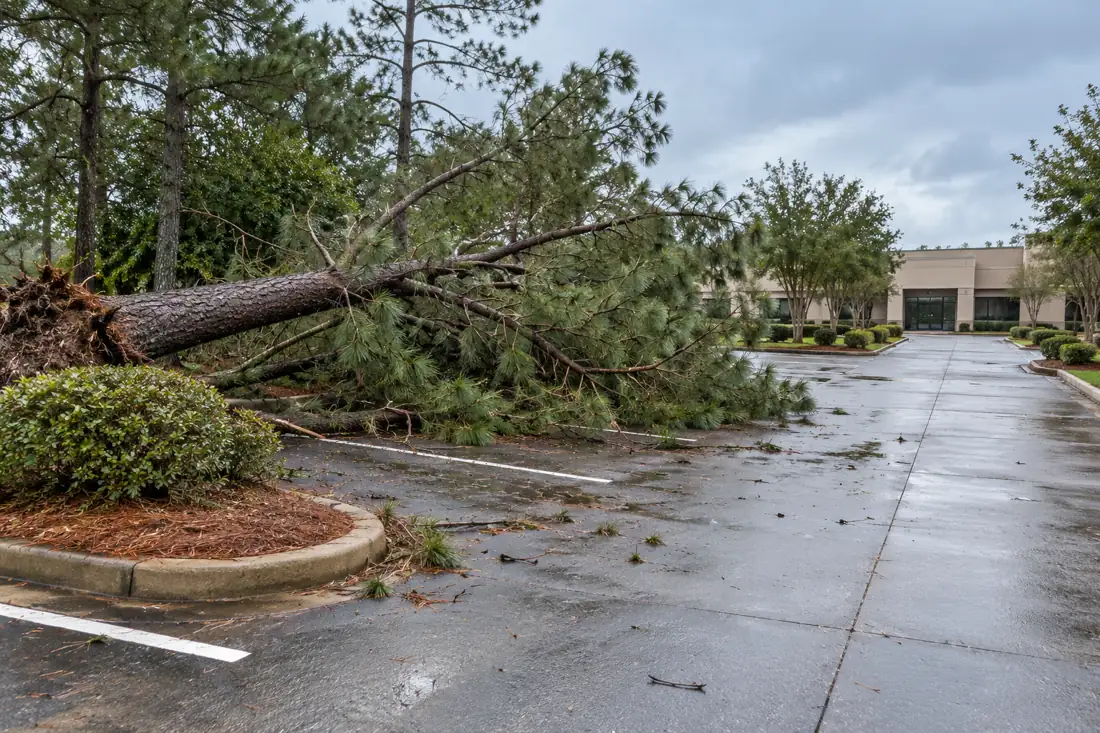
Can equipment be selected from the parking-lot photo?
Photos help introduce the site. Setup, reach, ground support, tree condition and operational constraints still need review.
How can bids be compared fairly?
Use the same tree identifiers, tasks, access assumptions, hauling, stump treatment, finish and document requirements for each response.
Does tree cleanup finish our landscape project?
Only the agreed tasks are included. Clarify the handoff for soil, turf, plants, irrigation, paving and other separate work.
What should completion photos show?
Label the tree or area and visible result. Connect photos to the accepted tasks and approved changes so an absent reviewer can follow them.
How should storm work be requested?
Call with the address, obstruction and visible hazards from a safe place. Separate urgent response from later removal, hauling and restoration decisions.
Plan tree work around business operations
Tell us whether the site includes occupied storefronts, deliveries, employee parking, customer traffic or restricted work hours. A marked access route and safe photos can help identify equipment staging and protection needs before an estimate is prepared. Name the person authorized to approve work and any property-management requirements. A project inquiry cannot by itself establish a work date or authorize closing access; those details require separate agreement.