Emergency work on public trees needs two decisions kept separate: protecting people immediately and authorizing a defined contract scope. This guide helps public buyers preserve that distinction.
Site-specific planning checkpoint: Emergency authorization should define the immediate hazard and which limited actions are permitted before ordinary procurement or permitting processes resume. A fallen limb obstructing an evacuation route is different from a tree that may need routine maintenance later. Record the conditions, the official authorizing work, a safe exclusion area and any utility coordination. If the full tree cannot be addressed immediately, specify what temporary protection or follow-up assessment remains. Keep photographs and time records accurate; avoid reconstructing dates or claiming work was completed when only initial stabilization occurred. The final report should distinguish emergency response, subsequent removal, hauling, restoration and any later review by the public owner.
Separate protective closure, dispatch and purchase authorization
In an urgent situation, record the location, observed condition and the person responsible for limiting public access without sending anyone beneath an unstable tree for a closer photograph. Closing a walkway, moving a program to another entrance and informing emergency services can be immediate protective actions; they are not automatically an executed tree-removal contract. Ask the authorized public buyer which emergency procurement or existing contract procedure actually applies.
If work is authorized, specify the first limited operation, such as isolating a branch over an occupied access route, separately from complete removal, stump work or hauling. The incident log should show who approved the scope, the time and medium of approval, whether a utility company must act first, and how subsequent work will be approved if conditions change. Do not put crews into energized-line or unstable-tree conditions on the strength of an ambiguous call.
After the initial hazard is controlled, keep remaining cleanup and reopening decisions explicit. The acceptance record should document what was actually done, not suggest every safety concern was eliminated by one emergency response.
Read the related public tree work photo documentation guide · Review public-sector tree-work services
Make-safe actions versus permanent work: Emergency authorization should identify the immediate public hazard and the limited action needed to control it. A blocked emergency entrance, suspended limb above an occupied walkway and uprooted trunk threatening an active road may require different isolation and response plans. Document the reporting time, visible condition, incident location, temporary closure and person authorized to direct the work. The tree crew still needs appropriate clearance for power lines and room for equipment; “emergency” does not make a hazardous approach safe.

Keep people out of the affected zone before discussing removal
The first useful action may be to prevent entry rather than to remove a tree immediately. Identify occupied doors, sidewalks, transit stops, parking aisles, playgrounds, emergency exits, and accessible routes that pass beneath or near the damaged tree. Agency staff can arrange barriers and alternate routes using their established emergency procedure; the contractor should not promise a safe boundary without seeing the actual condition. A suspended limb, freshly disturbed root plate, or tree leaning toward a structure deserves distance, not a closer photograph by an untrained employee.
Tell the responding team which access route remains open for emergency vehicles and which entrance must not be blocked by equipment. If a public route needs traffic control or closure, identify the road authority and permitting or incident-command requirements rather than expecting a tree crew to invent a traffic arrangement. Public-facing notices should describe the closed area without offering a premature clearance time. When the site is busy, designate someone to communicate with visitors so field workers are not asked to make contradictory access decisions.
Establish who can authorize the first response
A storm-damaged tree beside a public building can affect several departments before anyone has issued a work order. The site supervisor may be able to close a walkway, while a purchasing officer or authorized emergency manager may be the only person who can approve spending.
Record the name, role, reachable number, and authority of the person directing Tree Huggers. Do not assume a verbal request from a concerned visitor, tenant, or field employee is valid purchase authorization. The immediate public-safety decision and the contract decision may travel through different channels.
Before a crew is dispatched, identify the legal owner or managing agency, exact facility or road segment, incident identifier if one exists, and procurement procedure the agency is actually using. Ask how emergency authorization is documented, who signs a field change, and where invoices and evidence must be submitted.
If the buyer uses an existing contract or prime contractor, confirm whether tree removal, limb stabilization, hauling, or only initial hazard isolation falls under that agreement. A useful record shows the authority and the limits of that authority.
Distinguish the immediate hazard from work that can be scheduled
A branch across a single entrance, a hung piece above a corridor, and a damaged trunk beside a vacant storage yard are not interchangeable priorities. Describe what is preventing safe use now and what can remain isolated pending assessment. Emergency scope could be limited to opening a critical passage, reducing an immediate overhead exposure, or removing accessible debris. Tree preservation, complete removal, stump grinding, landscape repair, and optional pruning should appear as separate tasks unless the authorized work order specifically includes them.

Gather evidence without entering the danger area
Useful photographs show the approach to the site, the location of the standing tree, the affected building or route, and the debris extent. They should be taken from a place that is already safely accessible. A photo taken directly below a hanging limb adds danger and rarely improves the scope. Put the address, gate number, tree tag or map reference, and approximate time of observation alongside each image. If a fallen limb blocks visibility, describe what the photo cannot show instead of making a claim about the hidden trunk or roots.
For publicly owned sites, preserve the incident log, closure notice, dispatch record, authorization, contractor quote, and any direction that changed the original request. Keep the first photographs and later progress images as separate records. If weather or lighting prevents a clear view, note that limitation. Do not add an invented location stamp, exact failure time, or unverified statement about why the tree failed. Causation may require a separate professional assessment and should not be inferred from a dramatic photograph alone.
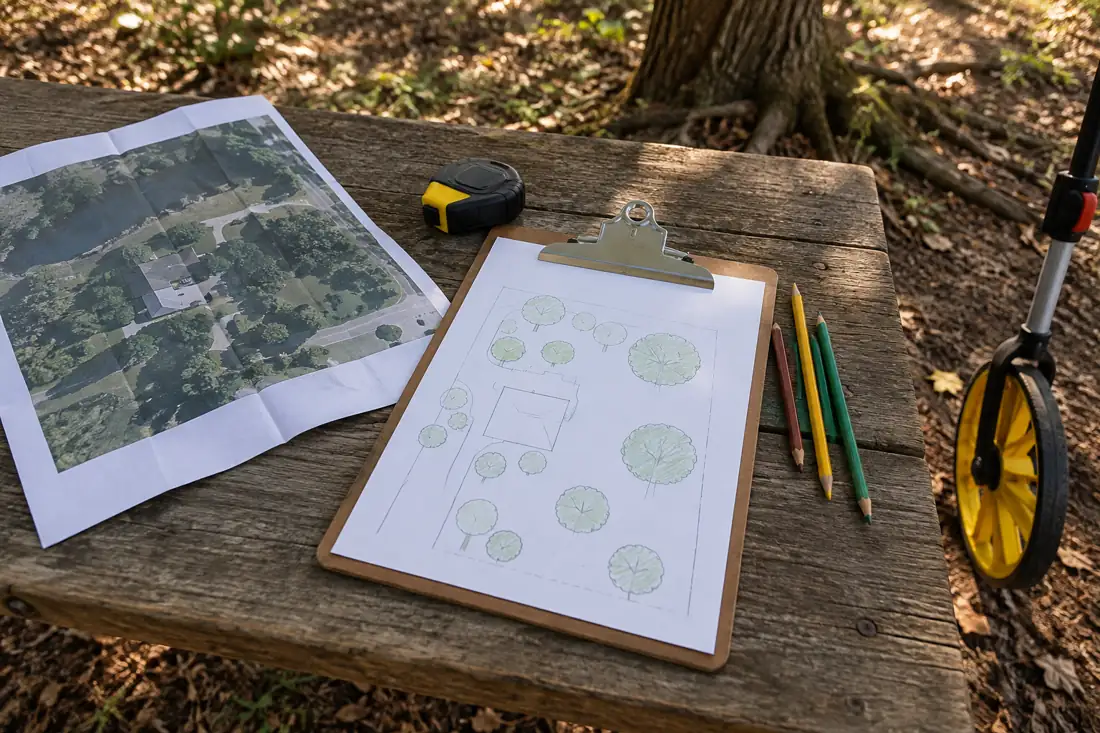
That separation matters when a site has multiple trees and limited emergency funds. Number the locations on a simple map and describe the affected target at each one. The buyer can prioritize a blocked ambulance approach differently from a limb over an unused rear lot. Ask Tree Huggers to identify what condition was observable and what remained concealed or inaccessible. A rapid field estimate is not the same thing as a formal tree-risk assessment, and neither guarantees future stability.
Plan crew access in the context of the emergency
A response may require more than a saw and a truck. Identify the width and condition of gates, hard surfaces able to support equipment, overhead obstacles, parked vehicles, buried systems, and available space for lowering and staging material. A public facility may have locked service yards or security checkpoints that change during an emergency. Provide the authorized escort contact and restrictions on operating near protected utilities, drainage structures, monuments, or retained landscaping. Contractors must evaluate their equipment and route for the particular site.
Equipment routes should not cut through the remaining public entrance simply because they look convenient on a map. Ask where a truck, loader, chipper, or grapple vehicle could be positioned without blocking an emergency egress or inaccessible curb ramp. Confirm whether work might need a separate traffic-control contractor or utility coordination. If an access route is uncertain, label it as a question for the site visit. A contractor's advertised reach does not establish safe setup or authorization to use adjacent property.

Handling urgent public-property tree authorization
A hanging limb or fallen tree can require prompt public access controls, but the need for speed does not identify who is legally able to approve removal. The first record should establish the affected public asset, the immediate restriction and the person or department authorized to direct the response. Site photographs should describe the condition without asking an unqualified observer to move under a suspended branch.
Separate temporary hazard isolation from the permanent work scope. Closing a footpath, asking the utility to assess a conductor or restricting vehicle access may be the first action while the buyer decides whether pruning, retrieval or removal is appropriate. Never treat a hazardous situation as permission for an unauthorized crew to enter energized or controlled areas.

Urgency does not erase the approval record
Before mobilization, verify which emergency procurement or change-order process actually applies to that buyer. Record the approved limits, the requested response sequence, expected public access needs and whether debris must be kept for inspection. If field conditions differ from the original photo or dispatch description, route the change back to the responsible public contact rather than assuming the initial direction covers everything.
During closeout, distinguish the hazard addressed from any additional maintenance recommendation. Photograph the restored route and remaining tree condition only from safe positions. A separate follow-up review may be appropriate when roots, other branches or nearby infrastructure still raise questions. Public agencies benefit from this separation because an urgent removal invoice should not masquerade as a complete long-term tree-risk evaluation.
Record what changes when the work begins
A crew may expose a second cracked union after moving debris or find that the tree's base is inaccessible from the approved route. These discoveries should trigger a documented discussion, not an automatic expansion of the contract. The authorized buyer should know what changed, the immediate consequence of leaving the condition untouched, and any proposed adjustment to work, equipment, cost, or schedule. For urgent hazards, use the agency's established emergency change procedure and preserve the direction that was given.
Agree on how photographs, field notes, and changes are labeled so the final invoice can be understood by someone who never visited the scene. A simple tree-location number and task number are often more helpful than a series of unlabeled phone messages. Keep a distinction between a changed quantity within approved work and an entirely new location or service. Confirm that the person approving a change has that authority before the work is treated as part of the job.

Create an auditable closeout even when the response is fast
Emergency speed is not a reason to omit basic project evidence. Before-and-after views of each numbered tree or work location, an authorization reference, a description of completed work, disposal records when required, and a clear list of open issues create an understandable closeout. Match the invoice to those locations and authorized changes. Do not imply a formal inspection, credential, or certification occurred if the contract only purchased physical tree work. Record equipment or site damage as an unresolved matter rather than silently marking it finished.
For federally supported or reimbursement-sensitive responses, the buyer should determine the actual documentation rules applicable to that funding source and contract. A general invoice and some photographs may not satisfy them. Tree Huggers can discuss the operational records it can provide, but the contracting agency is responsible for defining its reimbursement and procurement requirements. A documented result also helps the next crew avoid repeating a completed task or overlooking a remaining restricted area.
When the site cannot be accessed safely, keep people outside the danger zone and escalate through the owner’s emergency procedure rather than improvising beneath a leaning tree. Separate the initial make-safe work from complete removal and site restoration. Record which limbs were stabilized, what debris remains, whether access reopened and which items require a later authorization.
Use before-and-after images with identifiable locations and keep the original files when possible. Avoid assuming that an insurer, public agency or contract administrator will accept a particular cost or method; the written authorization and actual completion evidence must be reconciled by the responsible parties.
Define debris handling and site reopening separately
Clearing a path does not necessarily mean the public site is restored. Specify whether brush is chipped, logs are moved to a designated staging area, material is hauled away, and sawdust or small debris is collected from walkways. If the agency supplies a disposal location, confirm permitted material types, access hours, tickets, and who pays unloading fees. Tree debris should not be left beside a drain, accessible entrance, or circulation route merely because removal was deferred. The contract should say what happens to it.

Three authorizations that should never be treated as the same approval
A municipal emergency can demand an immediate closure before a contractor has permission to perform the full removal. Keep those decisions separate so site staff and responders know who owns each step.
- Close the area: A facility supervisor may need to isolate a sidewalk or entrance before any cutting is approved. Record the closed zone, the person directing the closure and how visitors will be rerouted. This immediate protective action does not establish a purchase order or permission to remove the tree.
- Confirm the work: The buyer should identify the authorized representative, the exact tree or location and the immediate hazard to be reduced. Distinguish limited stabilization from complete removal, stump treatment and disposal. Document any conditions that require a new authorization rather than assuming urgency expands the original scope.
- Accept the result: Reopening is a separate decision from finishing the crew's assignment. Confirm safe access, outstanding hanging material, barriers, surface damage and unfinished follow-up items with the designated public-property decision maker. Save site references and actual approval records; do not invent tickets.
For the inquiry, include the asset or facility name, restricted area, a safe wide-angle photo, the authorized contact and the requested decision. Keep private visitor information out of the public form.
Reopening is a responsibility that must be agreed upon rather than assumed. Ask which agency representative inspects the area, whether remaining tree conditions require another review, and which temporary barriers or signs stay in place. A clean pavement surface is not evidence that every overhead concern has been resolved. If a remaining trunk or limb needs subsequent work, document the restriction and next decision. Contractors can report what they completed, while the public owner controls facility access through its own procedures.
Make the estimate request actionable
A public buyer can start with the facility address, safe approach photographs, the tree or site reference, immediate access problem, the agency's designated point of contact, and the deadline for a response decision. Include site hours and known restrictions on gates, power lines, drainage, and public movement. Specify whether the request is for hazard isolation, an assessment, emergency physical work, hauling, or a written scope for later approval. Each choice may involve a different site visit and level of documentation.
Use the estimate form to summarize facts that are appropriate to share, or contact Tree Huggers directly for urgent availability questions. Do not send personal visitor details, employee medical information, security codes, or confidential procurement records in a public form. An inquiry is not a confirmed dispatch, price, appointment, or promise that every emergency can be served. Ask what the company needs next and retain the buyer's approval process before any work begins.
Urgent hazard isolation comes before routine variation pricing
When a limb blocks a public entrance or a storm-damaged tree threatens an occupied area, first identify who can close access, notify the appropriate authority and approve emergency stabilization. Photograph only from a safe location. Do not wait for a routine change-order negotiation before placing necessary public protection in the hands of the responsible authority, and do not assume the contractor has independent emergency-dispatch authority.
Keep time, authorizing person, location and the immediate protective work distinct from later pruning, replacement or cleanup that can be planned. The companion change-order guide concerns revisions to an existing authorized scope; it does not replace the separate emergency-authority record or authorize unapproved work by implication.
- Record the person empowered to authorize urgent work and the exact limits granted.
- Document what remains unsafe or inaccessible after temporary stabilization.
- Create a separate deferred-work list once the immediate hazard is controlled.
Questions about this project
What should a government buyer send first?
Send the agency or prime contact, project reference, site, scope, deadline, access conditions and required documents or submission format. Identify the authorized contact for questions and the buyer's process for clarifications.
Does a capability page prove contract eligibility?
No. Request and verify current documentation relevant to the particular opportunity. Registration status, certifications, licensing, insurance and availability should not be inferred from a broad marketing statement.
Should I wait for a form reply about a dangerous tree?
For an urgent condition, call to discuss availability and the next step. A form does not confirm dispatch. Keep clear, and contact emergency services or the utility when there is immediate danger or an electrical hazard.
Does emergency work always include full cleanup?
The initial authorized work may focus on stabilization or restoring access. Ask what is included and what follow-up removal, hauling or repairs need a separate scope. Confirm the plan directly with the contractor.
How should extra work be approved?
Use the agreed approval process and identify the change, reason, scope, price or schedule effect as applicable. Confirm who has authority before treating an additional tree or task as part of the original job.
What completion records are useful?
Keep the agreed scope, tree or area identification, authorized changes, invoice and labeled photos where appropriate. Include unresolved items and a contact. Contract-specific records should follow the buyer's stated requirements.
How should several storm-damaged trees be described?
Use marked photos or a simple tree list showing locations, affected targets and access problems. Identify urgent routes or buildings separately from later cleanup. The contractor can then discuss assessment and a practical work sequence.
Can restoration be handled in phases?
Yes, when the parties agree on clear scopes. Initial hazard or access work, planned removal, hauling and building or landscape repairs may involve different stages and providers. Record the responsibilities and completion requirements for each.
Can the crew block a public sidewalk or road?
Required arrangements must be coordinated with the appropriate authority. Identify public routes and restrictions before scheduling. A private work agreement should not be treated as automatic permission to occupy or close public space.
When should parked vehicles be moved?
Set the timing and responsible contact before the work window. Vehicles may need to leave the tree zone, equipment route and loading area. Confirm where access must remain available during each phase.
What should I tell Tree Huggers about emergency tree work authorization for public property?
Explain the property address, the work you want and the specific concerns: authorized contact, immediate scope, response records. Send safe photos of the tree, surroundings and access route. The contractor can then discuss the assessment and scope needed for this situation.
How do I request an estimate for this work?
Call 504-458-8336, text photos or use the estimate form on this page. Include the address, desired outcome and any timing constraints. The company will need to review scope and availability; an online request does not confirm a price, appointment or emergency dispatch.
Get a scope for your property
Share the authorized public contact, location and safe wide-angle conditions; do not approach suspended limbs to obtain closer photographs.