A library property needs pedestrian access, parking and operating hours considered in the work window. Identify the affected trees and entrances and provide the buyer’s current requirements. The contractor should know how to stage and load without obstructing occupied routes. Completion should be checked against the agreed tree and cleanup scope.
Site-specific planning checkpoint: For a public library property, plan around pedestrian entries, book-drop lanes, accessible parking, deliveries and quiet spaces used by patrons. Cutting or hauling that blocks the only accessible route is not merely a scheduling inconvenience. Work with the facility contact to identify alternate access that actually meets the site’s needs, or choose a different work window. Photograph the tree and surrounding surfaces without recording identifiable patrons. Consider branches near roof drains, signage, windows and outdoor seating, then document which are in scope. The completion check should address debris, pathways and any affected landscape features; a neat-looking canopy alone does not establish that all safety or access questions were resolved.
Keep the library operating plan separate from the tree plan
Walk the actual route a patron would use from parking, transit or sidewalk to the library's usable entrance, including accessible parking and ramps. Record the book drop, returns cart route, staff deliveries, fire exits and any outdoor reading areas near the work. If tree operations affect one of these, ask library management which alternative route it can formally approve. Do not promise a route remains open until safe separation has been assessed.
Create two schedules: the library's public and staff activity windows, and the contractor's arrival, setup, work, hauling and cleanup windows. Compare them before choosing equipment placement. A loud work period may conflict with events that are not visible on the building's regular posted hours. Photos for an estimate should identify the real affected entrances and canopy without including identifiable patrons unnecessarily.

Choose work windows around how the library operates
Libraries often host children's programming, testing, community meetings and evening events in addition to regular reading hours. A quiet weekday morning can still involve concentrated pedestrian traffic or deliveries. Request the current program calendar and staff observations about busy periods before suggesting a work window. The exact sequence depends on site access, tree condition and equipment rather than an assumed number of hours per tree.
Discuss noise, chipping, truck backing, temporary closures and the notification period the library needs. Some work may be appropriate outside public hours, but those hours can carry separate staffing or lighting constraints. Do not promise a guaranteed reopening time before the site plan is established. Record which official approves schedule changes and who communicates them to patrons if conditions change.
The library's representative should inspect the completed area, including ramps, walkways and book-drop access, before removing temporary restrictions. This is an operations handoff, not a substitute for tree-condition evaluation or contract authorization.
Read the related tree work at a public recreation center guide · Review public-sector tree-work services
Plan around library access: A library often has several quiet but essential access paths: public doors, staff entrances, book returns, accessible parking, loading points and sidewalks to transit stops. A tree-work plan should map those uses before selecting a crane setup or drop zone. A limb over a book-return lane may be reachable from a street-side position, while a protected courtyard tree could require smaller equipment and longer setup.
Map every entrance before setting a work area
A public library serves patrons who may arrive on foot, by bus, by car or through an accessible entrance separate from its main doors. Tree work near a walkway, parking lot or book drop must account for all these routes. Obtain a current site plan and identify the actual trees, doors, outdoor seating areas and loading zones affected. A statement that the entrance will remain open is not credible until the contractor and facility have reviewed separation distances.
Include accessible parking spaces, curb ramps, bicycle racks and the route from the street or transit stop. Ask which route the library can officially redirect patrons to if a closure is required. Do not move signs or block a walkway without the library's authorized coordination. Emergency access and fire exits need their own review; the nearest door is not always the only operationally critical one.

Plan safe separation from visitors and staff
Active tree operations can involve falling limbs, rigging, machines, dust and vehicle movement. A pedestrian walking beneath a closed limb work zone cannot be made safe by a small caution cone alone. The contractor and library must coordinate a site-specific exclusion area, physical barriers and any authorized detours. Do not ask volunteers, patrons or untrained library staff to stand near suspended branches or direct equipment within the hazard zone.
Determine who monitors access points and how staff will receive status updates if a closure expands. Libraries may also have children and visitors unfamiliar with the property, so signs should be plain and routes unambiguous. Identify how emergency responders would reach the building if usual paths are restricted. Separation planning must match the actual removal or pruning method, not a generic drawing copied from another property.
Identify trees without confusing adjacent property
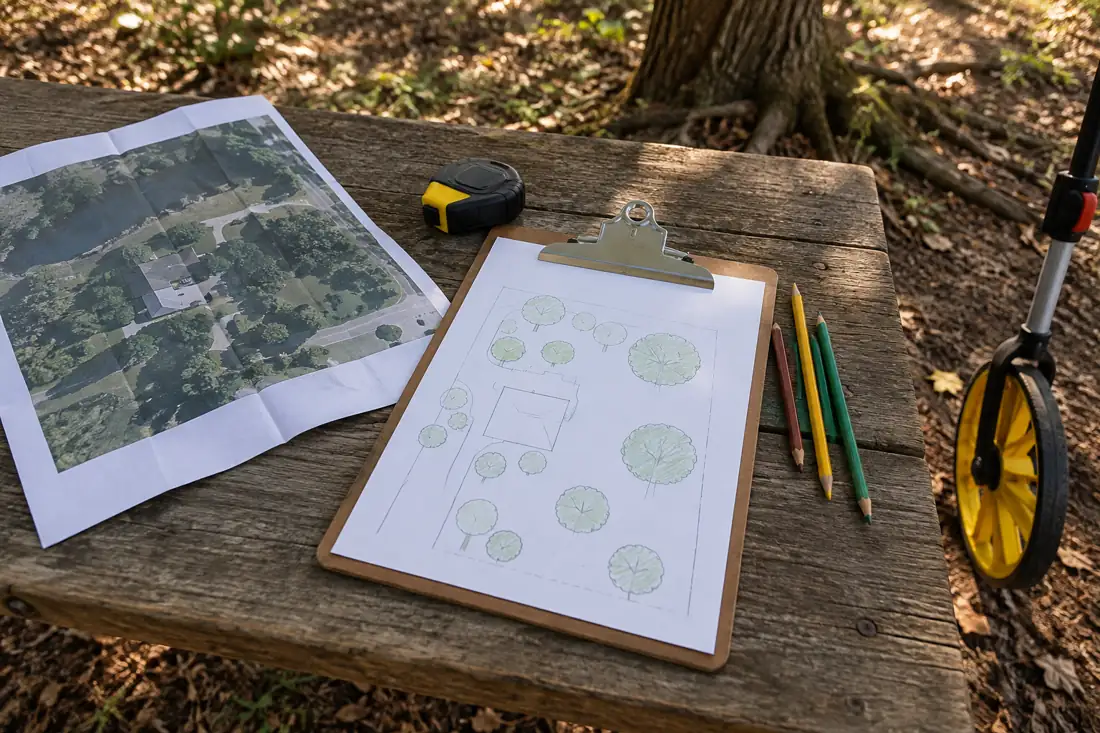
Urban library grounds may include street trees, trees on neighboring parcels or plantings maintained by a separate public agency. Assign identifiers on an annotated site photo or map and confirm ownership and approval authority. A mature tree shading a public sidewalk may not fall under the same work authorization as a tree inside the library's fenced garden. Record uncertain property boundaries rather than silently treating everything visible as library property.
Describe the requested outcome separately for each tree: remove a dead limb, improve clearance, evaluate visible damage, preserve roots during access improvements or remove a tree after qualified assessment. A request for safer access does not necessarily mean removal is justified. Identify trees that must be retained and establish a review path for unexpected defects. This protects mature public landscape assets while keeping the purchasing scope precise.
Check utilities, lighting and architectural features
Look for overhead service drops, exterior lights, signs, cameras, gutters and awnings near branches or equipment routes. Record who owns and can authorize work around each utility. A branch touching a line needs proper utility coordination, not a request for the tree crew to improvise contact. Ask about buried data, electrical, irrigation and drainage lines before planning machine pads or stump excavation on a landscaped parcel.
Historic library buildings may have masonry, special windows, delicate paving or protected landscape features that require additional care. Identify these elements and any site-specific preservation requirements in the scope. Photograph existing surfaces where permitted before moving heavy equipment. An aerial view cannot reveal every weak curb, shallow drain or root zone. Document uncertainty and obtain the necessary facility review rather than assuming a standard setup fits.

Tree work around a public library property
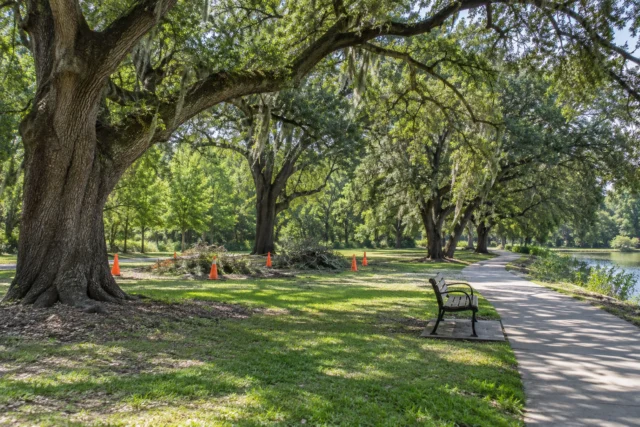
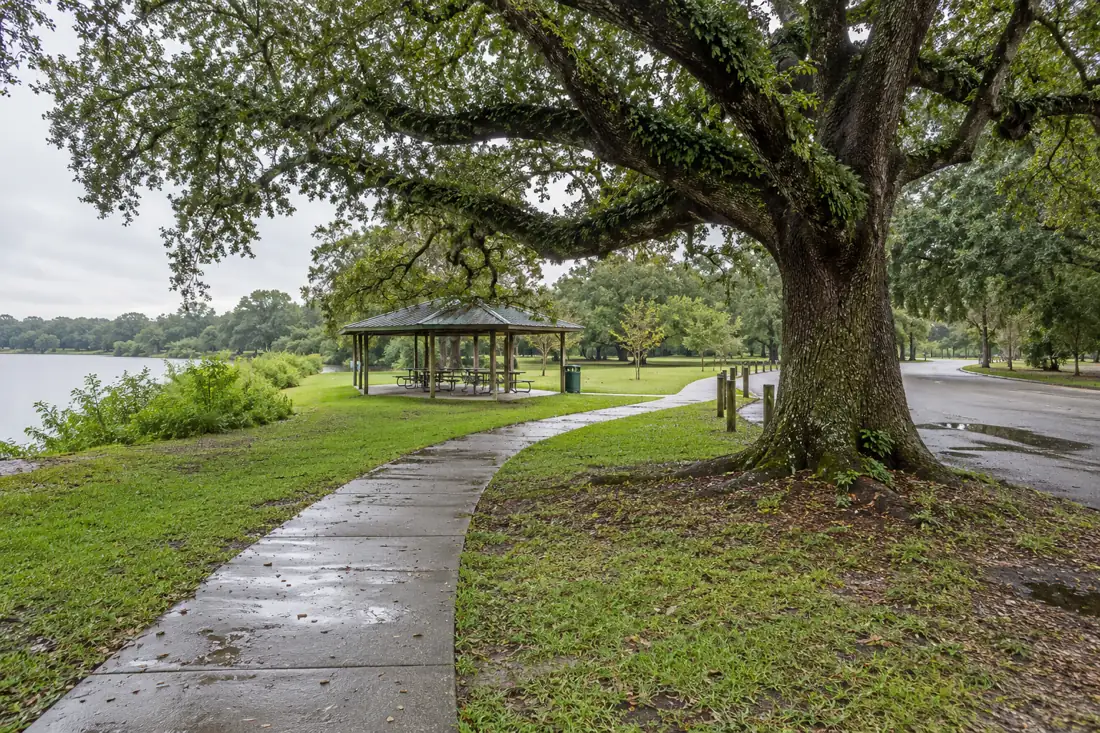
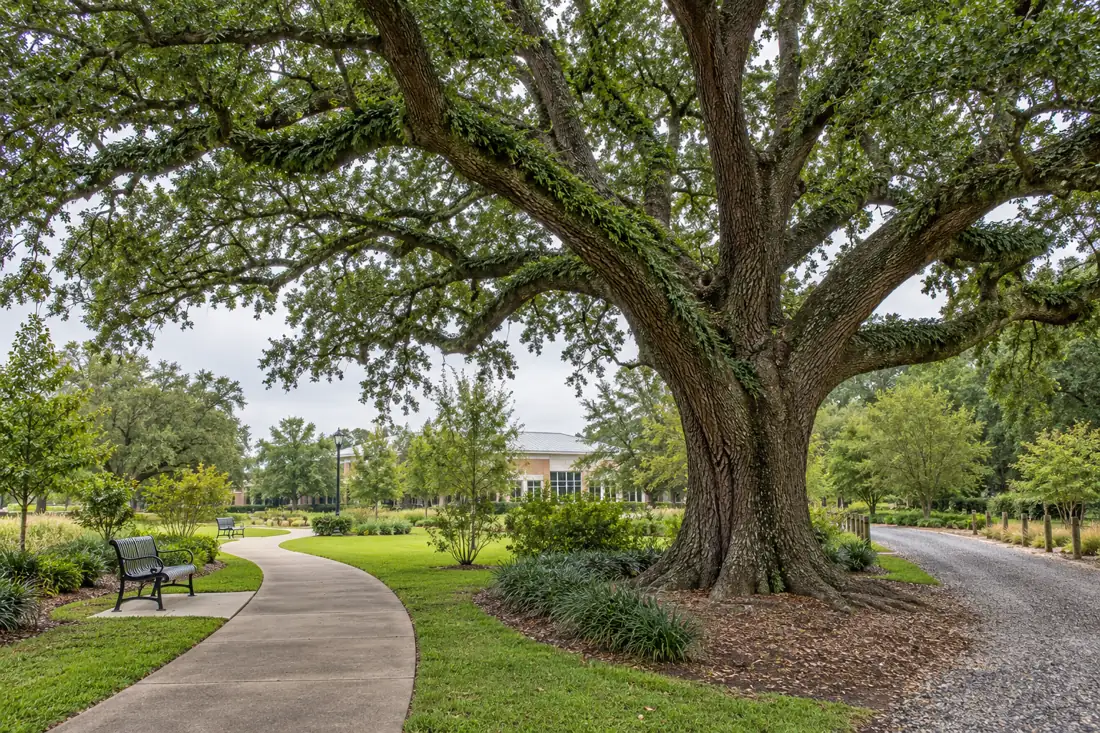
A library's tree-care needs are closely connected to quiet public access. Branches may overhang an entrance, exterior reading area, book-return lane or adjacent parking spaces. Start by showing the specific tree in relation to those facilities, then identify which route must remain available while equipment or debris occupies a portion of the grounds.
Public buildings can have narrow service drives and heavy pedestrian use at times that do not match ordinary contractor schedules. Ask the facility operator about book deliveries, accessible parking, emergency access and after-hours work restrictions. A tree removal technique appropriate for a vacant lot may be unsuitable beside glass, lighting, overhead utilities or an entrance canopy.

Consider readers, sidewalks and delivery access
Tree work should not be over-scoped simply because a low branch looks close to a roof in a photograph. Distinguish actual clearance, structural concern and routine maintenance, and ask for measurements or a site inspection where the image cannot resolve the issue. Protect retained shade whenever feasible because the trees may be an important part of the library's comfortable outdoor space.
Before the public buyer accepts the work, verify that walkways are clear of sawdust and branches, any temporary pedestrian restriction has been removed appropriately and the final condition matches the written scope. Record unresolved root and paving issues separately. Completion photography should document the real entrance and remaining canopy rather than suggesting a customer review or an unverified completed project.
Preserve the reading garden and mature root zones
Outdoor reading areas, planted beds and shade trees may be among a library's most valued amenities. Identify which plantings are to be retained and how the work affects their root zones. Heavy vehicles can compact soil even without visibly scraping a trunk. Ask the contractor to evaluate alternative access routes and appropriate ground protection where equipment must cross landscape. Preservation measures should be designed for actual site and loads.
If a tree must be removed, record which garden elements should be saved, temporarily relocated or restored by a designated party. Do not promise that stump grinding removes all roots or makes the area immediately ready for new construction. Root remnants, settling and buried features may affect later landscaping. An honest transition plan avoids calling a rough work area fully restored when a second phase is still required.

Specify removal, pruning and site-finish boundaries
Write down whether each tree needs an assessment, a pruning objective or an approved removal, and distinguish those from general cleanup. For removals, identify the stump and haul-away expectations. For pruning, describe the purpose and retained-tree considerations rather than a fixed indiscriminate percentage of canopy. Qualified tree professionals should determine the appropriate method after reviewing the actual tree and site conditions.
Discuss chips, logs, grinding debris, backfill, irrigation repair and replanting as separate deliverables where appropriate. A public buyer should not compare one quote including stump restoration with another that leaves grinding material in place without recognizing the difference. Define measurable acceptance conditions, including which walking surfaces reopen and which items belong to a later landscape contract.
Ask the building operator about reading-room windows, noise-sensitive hours and scheduled programs, but do not promise uninterrupted operations without knowing the actual work. Do not block a ramp or force visitors into traffic as an informal detour. For the estimate, identify the tree, access route, overhead conductors, parked-vehicle exposure and any landscaping or lighting likely to constrain the operation.
The library or public owner should determine who may approve closures and how notice will reach patrons. Closeout can document whether the designated paths were swept, barricades removed, debris cleared and the agreed ground condition restored. The site’s public purpose is why access planning belongs in the scope, not an afterthought.
Keep book drops, deliveries and service traffic working
A book return, mobile-library stop, loading dock or facilities gate may be operational even when the main building is closed. Walk the route with the manager and confirm which vehicle movements are essential. Equipment trucks, chip trailers and log hauling may need the same space. Schedule deliveries and site access deliberately rather than allowing workers to assume a parking area is available because it appears empty at the estimate visit.
Ask where debris can be temporarily staged without blocking fire lanes, accessible spaces or visitor circulation. Some locations may require daily removal rather than a multi-day pile. The scope should identify any separate traffic-control requirements and the authority responsible for them. A clear loading plan is as important as the cutting method for keeping a public library usable.

Reopen the property through a real acceptance check
Before removing barriers, the contractor and authorized library representative should confirm that the agreed hazard zone is clear of active work, debris is handled as specified and accessible routes are in their required condition. A site may look tidy while a stump hole, damaged curb or unsecured equipment remains. The reopening decision belongs to the responsible people who can evaluate actual conditions and operational needs.
Prepare the final scope summary, any approved changes, photographs and invoice references according to the buyer's requirements. Identify recommendations for future tree care as recommendations, not completed paid work. Do not promise a fixed response time or treat a website form as an emergency dispatch. Clear expectations and honest records support both a safer patron experience and responsible management of public trees.
Document changes and maintain an honest evidence trail
Use tree identifiers and authorized work-order references in communications, photographs and field notes. If storm damage or a hidden defect changes the plan, document the condition, who must evaluate it and how added work would be approved. Do not have a patron or an available staff member authorize a new removal on behalf of the purchasing office. Safety controls can be adjusted promptly while contractual authority is handled through the correct channel.
Take after photographs from safe positions when the equipment and hazards have cleared. Explain any deferred work, temporary closures or areas awaiting restoration. Illustrative educational photos on a website are not documentation of the library job. Keep visitor images and sensitive facility information within approved channels. A concise completion record helps both maintenance staff and the public buyer understand what was actually done.
Library access has its own service obligations
A library property can have accessible entrances, exterior book returns, staff deliveries, pedestrian drop-off and patrons arriving without appointments. Trimming above one side of the building may still affect another route used by visitors. Do not assume that closing the main door is acceptable just because another entrance exists; the operator must confirm which alternative meets its actual access needs.
Create a simple entry-by-entry plan covering notices, barriers, falling-material zones and how the property will reopen. When the property is a government office with security checkpoints, interagency access and different continuity requirements, the companion office-site guide addresses those additional controls. Neither guide replaces the building operator's authorization.
- Show book return, deliveries, drop-off and accessible routes on the work map.
- Coordinate notices through authorized library staff, not through guesswork.
- Keep any structural or electrical conflict referred to the responsible specialist.
Keep the library's critical routes identified
Mark the public entrance, accessible route, book returns, deliveries and outdoor seating on a work-area plan. An alternate gate is an option only after the library operator confirms that it can be used safely and lawfully.
Choose work windows against the real program schedule rather than assuming every weekday is quiet. Before reopening, check the permitted routes for debris, loose wood and damaged surfaces; the operator, not a marketing illustration, determines acceptance.
Questions about this project
What should a government buyer send first?
Send the agency or prime contact, project reference, site, scope, deadline, access conditions and required documents or submission format. Identify the authorized contact for questions and the buyer's process for clarifications.
Does a capability page prove contract eligibility?
No. Request and verify current documentation relevant to the particular opportunity. Registration status, certifications, licensing, insurance and availability should not be inferred from a broad marketing statement.
Can a business stay open during tree work?
That depends on the site and scope. Discuss occupied routes, exclusion areas, loading and work windows with the contractor and property representative. Do not assume normal access can continue through the active work zone.
Who should communicate with tenants or visitors?
Agree on that responsibility with the property representative. The contractor needs a clear site contact, while the owner or manager should use the property's established process to communicate access changes and work windows.
Can the crew block a public sidewalk or road?
Required arrangements must be coordinated with the appropriate authority. Identify public routes and restrictions before scheduling. A private work agreement should not be treated as automatic permission to occupy or close public space.
When should parked vehicles be moved?
Set the timing and responsible contact before the work window. Vehicles may need to leave the tree zone, equipment route and loading area. Confirm where access must remain available during each phase.
Does cleanup include every root and wood chip?
That depends on the written scope. Tree removal, stump grinding, chip hauling and root excavation are different tasks. Ask what material is removed, what remains and whether soil or landscape restoration is separately included.
What should a final walk-through check?
Compare the identified trees and tasks with the agreement. Check agreed debris handling, stump treatment, access openings and any listed restoration. Record unresolved items clearly instead of relying on a general impression that the property looks finished.
How should extra work be approved?
Use the agreed approval process and identify the change, reason, scope, price or schedule effect as applicable. Confirm who has authority before treating an additional tree or task as part of the original job.
What completion records are useful?
Keep the agreed scope, tree or area identification, authorized changes, invoice and labeled photos where appropriate. Include unresolved items and a contact. Contract-specific records should follow the buyer's stated requirements.
What should I tell Tree Huggers about tree work for a public library property?
Explain the property address, the work you want and the specific concerns: public entrances, work window, completion scope. Send safe photos of the tree, surroundings and access route. The contractor can then discuss the assessment and scope needed for this situation.
How do I request an estimate for this work?
Call 504-458-8336, text photos or use the estimate form on this page. Include the address, desired outcome and any timing constraints. The company will need to review scope and availability; an online request does not confirm a price, appointment or emergency dispatch.
Get a scope for your property
Send a wide library approach photo and the specific entrance, roof or walkway concern to begin a site-specific scope discussion.