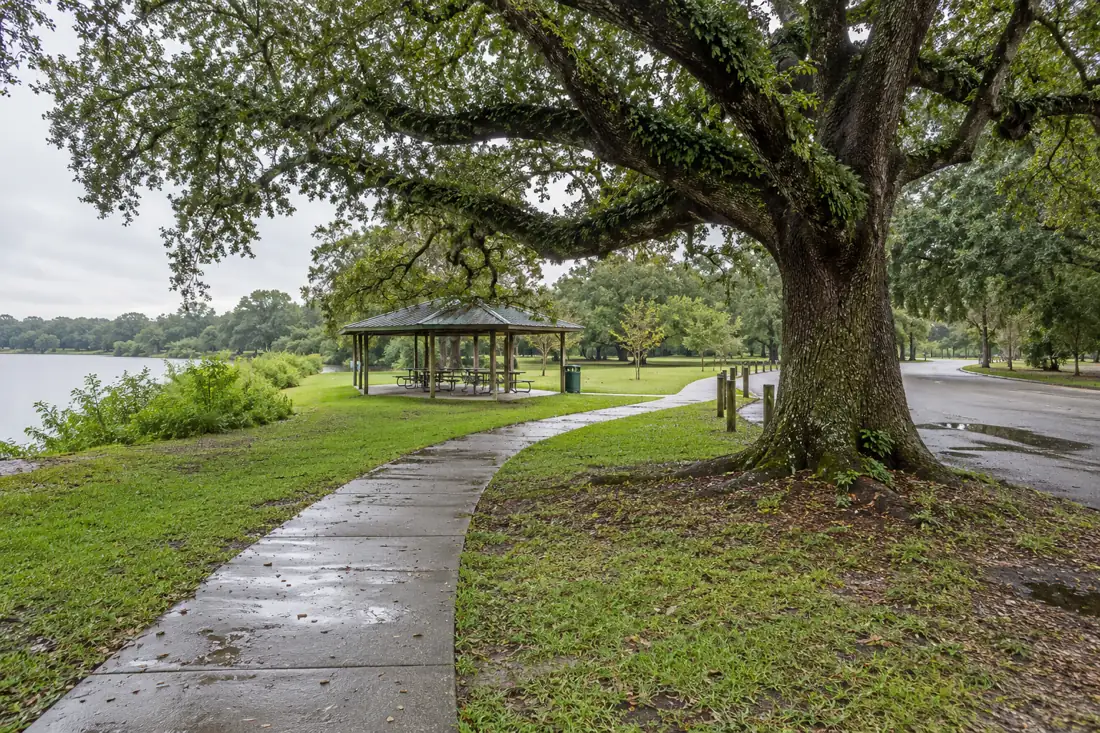
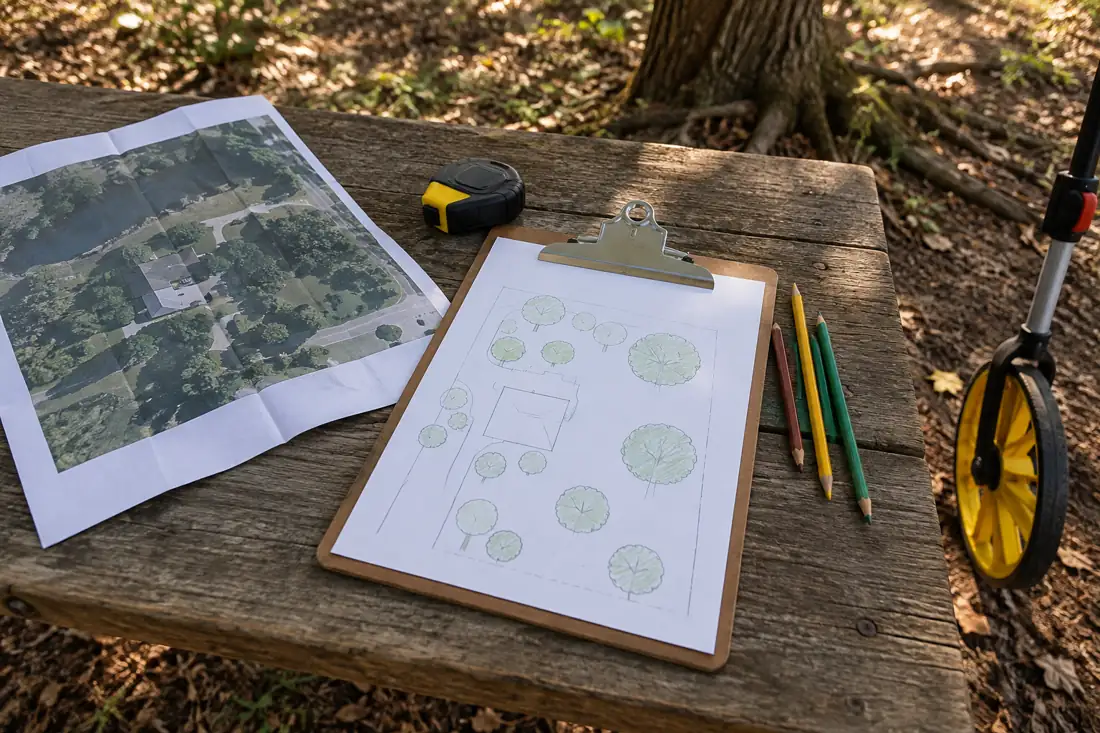
Right-of-way clearing should begin with two explicit lists: vegetation authorized for removal and vegetation expected to remain. Without both, an apparently simple corridor job can become a preventable property or landscape dispute.
Site-specific planning checkpoint: A right-of-way clearing plan should mark the precise work limits and distinguish trees to remove, trees to retain and limbs needing clearance pruning. Record sight triangles, existing drainage, pavement, property lines, overhead lines and underground utility corridors before selecting equipment. A field sketch keyed to dated overview photographs is more useful than an instruction to clear every stem. When grading or excavation approaches the roots of a retained tree, ask the designer and a qualified tree professional to resolve the conflict before disturbing the root zone. Separate stump work, brush haul-off, log disposal, traffic control and final surface restoration into explicit scope lines. Confirm which authority approves unmarked removals and who communicates changes to adjacent owners. At closeout, compare the marked plan with the actual cleared corridor and inspect retained vegetation for avoidable impacts.
Protect retained trees with a separate, visible marking system
Before clearing, make two lists on the same dated plan: vegetation specifically approved for removal and trees or areas explicitly protected. If paint, tags or flagging are used in the field, document the legend and who is authorized to apply or revise it. Marking must not override surveyed property limits or utility requirements. A contractor should be able to show the buyer which tree is which without guessing from trunk size.
Consider the work that follows clearing. A drainage crew may require access without stripping every tree along a canal; a utility project may require a specialist's clearance review rather than an ordinary vegetation decision. Preserve root-zone areas where feasible and identify erosion, wet soil, gates or culverts that affect equipment movement. Distinguish selective pruning, brush removal, full tree removal and stump work as separate instructions.
Before leaving, walk the retained-tree line and the agreed clearing edge with the authorized representative. Record discrepancies and changes against the same map so protection does not depend on an undocumented conversation.
Read the related planning tree work for a utility easement on private property guide · Review public-sector tree-work services
Mark the trees to keep as carefully as those to cut: A right-of-way clearing plan should make the distinction between removal and preservation visible in the field. Use an approved plan and consistent marks for remove, retain and review; confirm the mark key with the public owner and prime before mobilization. A tree’s canopy may cross the work boundary even when its trunk does not, so the team must not infer authority from branches hanging over a corridor.
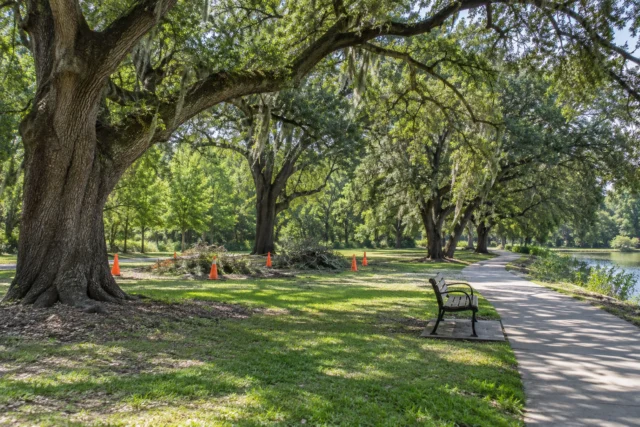
Make removal and retention unmistakable on the map
Use the owner's existing survey, right-of-way exhibit or construction drawing as the primary boundary reference. Mark individual trees for removal, trees for pruning, and trees to be protected; identify brush-only areas separately. Do not use a single paint color without a written legend that everyone understands. A numbered photo schedule can supplement the map, but photos alone are not reliable legal boundary evidence. Confirm who is permitted to mark trees and who approves changes when a trunk straddles the indicated limit.
Retained vegetation should receive as much attention as the removal list. Identify significant oaks, landscape screens, young replacement trees and vegetated buffers that serve a purpose for adjoining property. Label protected zones and prohibited staging areas so a crew does not accidentally turn an access route into an additional clearing strip. If the owner has not resolved which trees to save, mark them pending and avoid assuming an estimator's suggestion is approval to cut. The owner must settle the decision before destructive work.
Explain why the corridor needs clearing
The purpose might be restoring access to a drainage asset, preparing a utility installation, exposing a survey line, improving sight distance, or opening an equipment approach. Each objective suggests a different extent of work. A contractor cannot infer the proper clearing boundary from the fact that a parcel is described as a right-of-way. Ask the public buyer or prime contractor to state the intended use, the physical limits and whether the outcome is complete removal, selective pruning, brush reduction or temporary access.
Where the corridor follows a road, canal, power alignment or fence, note which features must remain operable during the project. A drainage maintenance path may require equipment clearance without removal of every healthy shade tree beside it. A utility corridor may require special coordination that cannot be decided by a general vegetation crew. Describe the activity that will follow clearing so Tree Huggers can ask about remaining stumps, root systems, surface condition and work sequencing before a price is established.
Respect boundaries and neighboring interests
An easement or maintenance right may allow certain work while leaving property ownership or additional permissions unresolved. Ask the buyer to identify the source of authority and any notice process for adjoining owners. A contractor should not be required to interpret a recorded instrument or negotiate property rights in the field. Fences, landscaping, gates, pets and private driveways can occupy the practical approach to the corridor even when the legal work strip looks clear on paper.
If access depends on a neighboring parcel, document who secures permission, which gate may be used and how the area is returned afterward. Do not promise to remove trees just outside the marked limits because their crowns overlap the corridor. Overhang management and whole-tree removal may involve different permissions. When a survey discrepancy or unmarked tree is discovered, pause that location for buyer direction instead of expanding the work to match an assumed line on a mobile map.

Assess ground support before selecting equipment
A straight corridor on an aerial photograph may cross soft soil, a concealed drainage ditch, exposed roots, culverts or pavement not designed for heavy equipment. Identify the narrowest point, likely turning space, low branches and crossing structures before scheduling a chipper, skid steer or larger vehicle. Equipment operators need to evaluate the site rather than relying on generic machine specifications. The minimum width is not the only constraint; weight, grade, stability and the route to remove logs can be decisive.
Ground protection can matter where the buyer wants vegetation retained or a surface restored. Ask whether mats, alternate approaches or seasonal scheduling would help minimize rutting and compaction. In wet Louisiana conditions, a corridor may be accessible on foot but unsuitable for loaded trucks. Record weather contingencies and which areas cannot be used for storing material. If an overhead power line or buried utility is present, the relevant owner or operator must be involved before work near that facility is planned.
The marking plan, not the equipment, is the point of this guide
A right-of-way project can include trees to remove, branches to trim and mature trees expressly designated to remain. This guide focuses on documenting those different categories before anyone clears the corridor. The authorized work limit may not follow a visible fence, and an easement does not automatically authorize every tree operation nearby. Use a plan or field map with separate symbols, identifiers and a clear approving party. A survey, utility locate or legal determination may need to come from another responsible professional or organization.
A removal-and-retention schedule should identify protected root zones, ground and vehicle routes, adjoining occupants, overhead lines, drainage and disposal obligations. Work near retained trees calls for a different protection plan from wholesale vegetation clearance. This document is useful for property owners, agencies and prime contractors defining approval boundaries; the main right-of-way tree-clearing service page is for the actual work capability and proposal. Keep requested change orders explicit when field conditions differ from the approved map.
Separate pruning from cutting trees to the ground
Retained trees sometimes require selective canopy clearance for access, but that is not equivalent to removing every limb across an arbitrary vertical plane. Identify the actual objective and ask how cuts can respect structure, species and condition. A limb crossing the corridor may be shortened at an appropriate union, while an entire tree may need assessment if a proposed cut would leave a poor crown. The estimator should explain what result is achievable, not guarantee an aesthetically perfect straight canopy edge.
For trees marked for removal, specify whether the stump is cut near grade, ground to a defined depth or left for another contractor. Root extraction is not the same as grinding and can damage utilities or retained vegetation. The construction sequence matters: a later excavation may expose roots, while a planned road or pipe installation may require different stump treatment. The scope should state precisely which of these operations is included and which belongs to the next trade.
Identify protected root zones next to machinery travel paths, stockpile areas and temporary access points. When retaining trees, describe safeguards for trunks, roots and branches rather than treating them as scenery outside the work area. Reconcile changes in a documented tree schedule. A numbered tree found on the wrong side of a fence, a removed tag or a hidden utility may require revised instruction; it is not permission for a crew to choose a substitute tree.
Record actual removal locations, debris destinations and any stump or grade treatment by line item. A useful final walk checks that retained-tree protection was removed at the right time and that temporary ground damage is documented for restoration.

Marking retention trees during right-of-way clearing
A right-of-way clearing plan should distinguish trees designated for removal from trees that the owner intends to retain. Marking only the removals may leave uncertainty near the edge of a work zone; marking retention areas and equipment exclusion zones creates a clearer field instruction. Use the buyer's drawings and verified boundary information so work does not extend into adjacent private areas.
Vegetation can provide shade, screening, erosion resistance and habitat while also interfering with access or infrastructure. The scope should name the specific operational conflict, such as clearance for an approved maintenance route, rather than assuming everything within sight should be removed. Where a retained trunk has roots in the proposed access lane, the team should evaluate an alternative approach instead of treating the root zone as disposable.

Give removals and protected vegetation separate identities
Set separate handling rules for cut brush, whole stems, stumps and loose debris. The method and disposal destination may vary across a corridor, especially where drainage or wet ground affects loading. If herbicide, excavation or soil disturbance is contemplated, those activities need their own explicit authorization and safety review; they are not implied by an ordinary tree-removal estimate.
After clearing, photograph both the open maintenance access and the retained tree line from repeatable safe positions. Report any tree whose condition changed during work and any segment that could not be reached under the approved limits. This produces a more meaningful acceptance record than a single photograph of an apparently empty corridor.
Preserve drainage and erosion-control measures
A corridor near a canal, bayou, outfall or roadside ditch can be affected by material dropped during clearing. Identify the drainage structures, bank edges and vegetated stabilizing areas that must remain functional. Ask the buyer about environmental or erosion-control requirements applicable to the specific site before deciding where brush, chips or logs can sit. Do not treat the ditch as a disposal location. Even temporary stockpiles can obstruct flow during a heavy rain.
Cutting vegetation may expose bare soil that another contractor is expected to stabilize. Specify whether the tree-work scope includes only vegetation removal or also temporary ground protection, final grading, seed, mulch or other restoration. If the agency requires sediment controls or special work windows, it should provide those requirements with the bid. A tree crew should not claim expertise or compliance for an environmental activity that has not been included and evaluated. Clear interfaces reduce both environmental risk and billing disputes.
Track material by type and destination
Brush, chips, trunks and stumps may be handled differently. Some can be chipped on site and hauled; large logs may require separate loading; buried root material is often excluded from routine tree clearing. Ask whether the buyer needs segregated vegetative loads, volume records, scale tickets or receipts from an authorized receiving facility. Agree on where the material becomes the responsibility of a hauling contractor if tree work and transportation are awarded separately.
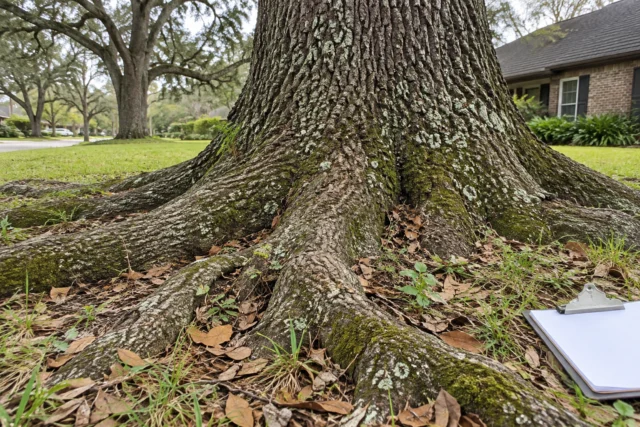
Verify quantities, changes and protection
Before mobilization, walk the marked locations with the authorized buyer or compare the final tree schedule against the site map. Record approximate quantities and where conditions cannot be observed safely. As work progresses, keep the tree numbers and work limits visible to the field team. A new request to remove an unmarked tree should be documented and approved through the agency's process. An adjacent owner's informal suggestion does not amend a public contract.
At completion, compare the authorized removal and retention lists with actual outcomes. Photograph representative protected trees and any damage or unresolved condition, without claiming every root was examined. A final map can show removed trees, completed pruning, retained trunks and pending work. Record fences, drainage structures and surfaces that were affected by equipment. Acceptance should be based on the signed scope and buyer requirements, not merely the visual impression that a corridor has been “cleared.”
Staging should be mapped just like cutting areas. A stack that blocks a drainage entrance, school access or private service gate can defeat the purpose of the work. Specify maximum pile locations, how long material can remain, and who removes residual chips and small branches. When access is constrained, the haul route may dictate the cutting sequence. Avoid a quote that describes only the number of trees while leaving disposal responsibilities to be argued about at closeout.
Send a scope Tree Huggers can evaluate
Useful starting materials include the corridor map, authorized boundary source, purpose of clearing, removal and retention lists, access route, utility and drainage information, material-handling requirement and buyer approval contact. Provide safe photographs of key restrictions, with a legend identifying each location. State whether the project is municipal maintenance, a utility subcontract, a development phase or another buyer arrangement. These details allow a more grounded equipment and work-sequence discussion.
Tree Huggers can evaluate potential tree-work tasks and request the site information needed for an estimate, but a website inquiry does not resolve legal boundaries, permits, procurement eligibility, price or availability. Keep private utility plans and security access details within the buyer's approved communication process. If the map is incomplete, ask what must be clarified before cutting begins. A sound right-of-way plan protects valuable trees as intentionally as it identifies vegetation that may be removed.
Retained-tree marking is a different deliverable from roadside clearance
A right-of-way project should have a map or field marking scheme that unambiguously distinguishes trees to remove, trees to prune and trees to retain. Use stable identifiers and protect the roots, trunks and soil of retained trees from machine staging and debris movement. Do not infer ownership or cutting permission merely from a line shown on a small-scale plan.
Any discrepancy between field markings and the approved work limits needs a recorded owner decision. A roadside maintenance job can involve isolated clearance and traffic control along a street rather than broad corridor vegetation management; the companion work-limits guide explains how to separate segments and authority before crews mobilize.
- Use distinct tags or symbols for remove, prune and retain decisions.
- Document unresolved boundary questions instead of guessing.
- Specify how restoration and protection will be inspected at handoff.
Questions about this project
Is a total tree count enough for a large quote?
Usually the parties also need locations and tasks. Use consistent tree numbers, marked photos or a site plan so the estimate and crew instructions refer to the same trees and retained areas.
Does a work inventory include a condition assessment?
Only if that service is expressly part of the scope. A list used to identify and price tasks should not be mistaken for a documented assessment of every tree's condition or risk.
What should a government buyer send first?
Send the agency or prime contact, project reference, site, scope, deadline, access conditions and required documents or submission format. Identify the authorized contact for questions and the buyer's process for clarifications.
Does a capability page prove contract eligibility?
No. Request and verify current documentation relevant to the particular opportunity. Registration status, certifications, licensing, insurance and availability should not be inferred from a broad marketing statement.
Can I identify a safe wire by looking at it?
No. Do not approach or touch wires, a tree contacting them or connected objects to investigate. Keep clear and contact the utility or emergency services when there is an immediate electrical hazard.
Does a tree estimate include utility disconnection?
Only if the appropriate coordination and responsibilities are explicitly arranged. Utility work may require the service provider or another qualified party. Confirm those arrangements before assuming the tree crew can proceed near affected services.
Is leaving the trunk untouched enough to protect a tree?
No. Roots, soil conditions and nearby work can matter even when the trunk is not cut. Identify retained trees before planning access, excavation and storage, and ask what site-specific protection is appropriate.
Can pruning undo construction-related root damage?
Do not assume it can. Share the work history and ask for an assessment of the current tree and site. Pruning, monitoring or other recommendations should address an identified need rather than substitute for protection planning.
Does cleanup include every root and wood chip?
That depends on the written scope. Tree removal, stump grinding, chip hauling and root excavation are different tasks. Ask what material is removed, what remains and whether soil or landscape restoration is separately included.
What should a final walk-through check?
Compare the identified trees and tasks with the agreement. Check agreed debris handling, stump treatment, access openings and any listed restoration. Record unresolved items clearly instead of relying on a general impression that the property looks finished.
What should I tell Tree Huggers about right-of-way clearing: trees to remove and retain?
Explain the property address, the work you want and the specific concerns: corridor limits, retained vegetation, markings. Send safe photos of the tree, surroundings and access route. The contractor can then discuss the assessment and scope needed for this situation.
How do I request an estimate for this work?
Call 504-458-8336, text photos or use the estimate form on this page. Include the address, desired outcome and any timing constraints. The company will need to review scope and availability; an online request does not confirm a price, appointment or emergency dispatch.
Get a scope for your property
Share the verified corridor map and tree-retention markings to review selective clearing without assuming broad removal authority.