A field change can involve another tree, a different condition, access restrictions or additional cleanup. Record the reason and the proposed change through the contract’s approved process before assuming it is authorized. Identify who can approve scope, cost and schedule changes. The original and revised work should remain distinguishable in the records.
Site planning detail: Tree-work change orders should identify the changed condition and the decision that follows. A new hazard, inaccessible work area, added tree or revised disposal requirement is not adequately documented by a vague line labeled ‘extra labor.’ Capture safe photographs, tie them to the original tree or work-zone identifier and record when the issue was discovered. State what the original scope assumed, what differs now, what alternatives were considered and which authority can approve revised work.
Separate quantities, equipment, disposal, schedule effects and site protection so a buyer can understand the pricing basis. For public or subcontracted work, follow the controlling contract’s notice, authorization and documentation rules before proceeding; a field conversation is not necessarily a valid change authorization. Retain the signed revision alongside the original proposal and completion record. Avoid backdating the decision or presenting an estimate of hidden conditions as a verified measurement.
Site-specific planning checkpoint: A change-order file should link an actual changed condition to the original authorized scope. Identify the exact tree, work zone or access restriction, the date it was discovered, and who inspected it. Supporting photographs should show context as well as detail; keep original records and distinguish observations from conclusions. Itemize changes to machinery, crew time, traffic management, haul distance, disposal and restoration rather than presenting a general cost increase. Confirm the public owner’s written authorization process before performing discretionary extra work; a field discussion may not bind the contracting authority. Determine whether the proposed charge is new work, a changed quantity under an existing unit price or a correction to included work. At completion, reconcile approvals, work performed and signed measurement records to preserve a usable audit trail.
Document the reason for a change before discussing its price
A defensible tree-work change record starts with the original scope, the exact tree or location ID, and the condition that was not covered by that scope. Distinguish a newly visible defect, a change requested by the owner, a difference in measured quantities, and a contractor's preferred method. These can have very different contractual implications. Record the date the issue was observed and the people authorized to make a decision, but do not imply the field crew can amend a public contract during a conversation.
Provide a side-by-side comparison of what the existing work order includes and what the proposed instruction adds or removes. Show any consequences for public access, utility coordination, disposal, surface repair, and sequencing. Attach real, time-labeled site evidence rather than a generic illustration as proof. If a threatened condition needs an immediate safety response, record the protective measure and then follow the buyer's required emergency authorization and procurement process instead of retrospectively treating every action as approved.
Keep three statuses separate in the project log: requested, authorized, and completed/accepted. Pricing discussions and a signed authorization should not be mistaken for proof that work occurred; likewise, a completed task does not automatically establish eligibility for payment. Cross-reference the eventual inspection, as-built location, tickets where appropriate, and punch-list closure. The final record should let an independent reviewer understand why the scope changed and what happened without relying on anyone's memory.
Read the related tree work completion checklist for a public buyer guide · Review public-sector tree-work services
Identify the event that actually changed the scope
A change request should begin with a factual description of the new condition. Examples include an additional damaged tree, a restricted gate discovered during site review, material beyond the approved debris boundary or a utility coordination requirement. Identify the original contract line and explain why the existing scope does not already cover the proposed work. A general statement that the job was harder is not enough to identify the contractual difference.
Capture the date, location, person who noticed the issue and any immediate safety measures. If there is an active hazard, the crew should secure or withdraw from the affected area as appropriate rather than proceeding with unapproved extra work. The documentation should not imply that a photograph settles technical questions. The purpose is to tell the decision maker what changed before another operation creates additional cost or irreversible consequences.

Separate a safety pause from an authorization
Stopping work because conditions changed is not the same as receiving approval to enlarge the contract. The contractor may need to protect the site, maintain exclusion zones or notify an emergency contact while the buyer considers options. Distinguish temporary protective actions from removal, repair, disposal or restoration that require approval. Include those boundaries in a field communication plan before the crew mobilizes.
An owner, property manager, inspector and procurement officer may have different authority. Do not assume that someone present on site can sign a financial change. Keep the name and role of the approving person in the record and use the contract's stated process. When immediate life safety is involved, direct urgent hazards to appropriate emergency or utility responders; do not create an informal purchasing exception through a marketing page.
Describe the revised work in measurable terms
Write the proposed revision as an operational scope, not an open-ended promise to make the area safe. Identify the tree or pile, exact task, access route, handling method assumptions and cleanup boundary. State what will be retained, hauled away, ground or restored, and identify work excluded. Where quantities are uncertain, provide a defined method for verification instead of presenting an unsupported fixed measurement.
If a second tree is added, it needs its own identifier and location. If the change concerns a different equipment method, state why the original assumption is no longer viable and what site constraints must be checked. The buyer should be able to compare baseline and proposed scope line by line. Clear descriptions also prevent additional requests from being interpreted as included in the first change without an authorized price and schedule.

Price only the difference and show assumptions
A useful change proposal connects added or deducted work to the price and explains the estimate basis. Show any relevant labor, equipment, mobilization, disposal or protection implications according to the contract's permitted format. If access requires an extra setup or a separate trip, distinguish that cost from production already included. Do not create fictional unit rates, guaranteed prices or unsupported claims about availability.
Ask whether the change affects other line items and whether any credit is due for omitted work. Pricing can depend on actual work windows, ground conditions and equipment availability, so note assumptions that require confirmation. Public contracts may impose specific pricing schedules and documentation requirements; those govern. A tidy comparison is easier to review than a single figure accompanied by an explanation that everything on site was unexpected.
Show schedule and operational impacts
An added task may change more than the final price. It could extend an exclusion zone, alter a delivery route, require coordination with a utility or displace another contractor's work window. Identify tasks that can continue under the original authorization and tasks that must wait. Explain whether site security, traffic control, public access or weather conditions affect the proposed sequence.
Never treat a requested date as a promised mobilization. If the buyer requires a revised schedule or notice to occupants, establish who prepares and distributes it. The most useful schedule note states the dependency: for example, crew access begins only after a gate is cleared and the approving authority confirms the changed work zone. That allows managers to coordinate without pretending the contractor controls every external condition.

Documenting Changes to Public Tree Work
A change can start with an additional limb, a newly obstructed gate or a buyer request to leave wood on site. Those may sound minor, but each changes a contractual promise. Write down the original line item, the condition observed and the proposed adjustment before discussing a price. The record should make sense to someone who was not present at the tree. A photograph supports the explanation only when it is tied to the correct location and tree identifier.
Distinguish an immediate safety pause from permission to carry out more work. A crew may need to make an area safe and suspend access while an unexpected hazard is reviewed, but that does not establish financial authorization for every possible remedy. Name the person permitted to approve an adjustment and the communication method required by the public contract. Do not assume that a verbal preference from a passerby, tenant or unassigned site employee changes the written scope.

Keep the original scope readable after a change
A useful change description lists new tasks, access impacts, debris treatment and any impact on the agreed work window. If the change removes work instead of adding it, say so. Preserve a marked original version and an approved revised version so the field team does not work from an outdated document. This prevents disputes over whether a stump was included in the first purchase or added after the estimator visited.
Close the change on its own terms. Collect evidence for the amended work and note when the authorized representative accepted it. A general final photo cannot prove that a specific requested limb was handled, a new access route protected or an added load hauled. Keep deferred and rejected proposals in a separate record rather than erasing them from the history. That distinction helps both the buyer and contractor understand what remains to be addressed.
Use consistent photographs and field notes
Before photos should include a wide scene tying the issue to its location and closer views taken only from safe positions. A dated field note should explain what is visible, what cannot be determined from the image and the original task affected. Photographing a split branch, buried obstruction or added debris pile is useful, but do not move hazardous material or enter a live work zone just to create better evidence.
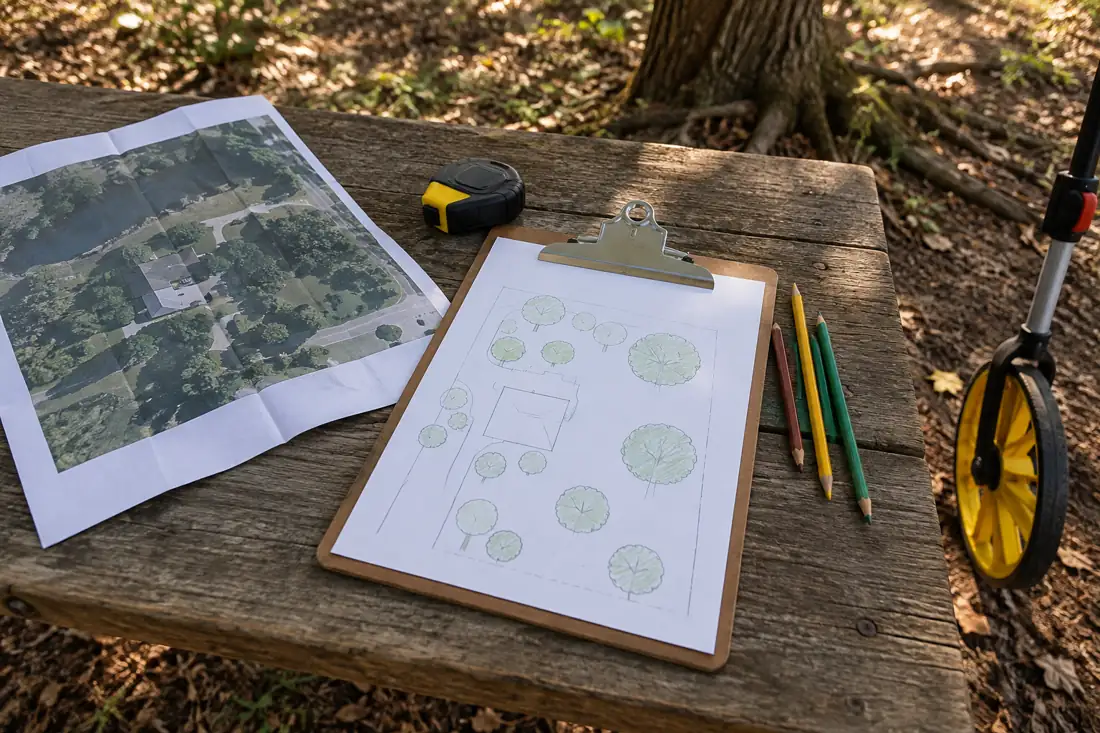
Give files a neutral naming scheme with site, tree identifier and work phase. Keep the original images when possible instead of replacing the only record with an annotated crop. If a sketch clarifies the scope, label it as a sketch rather than a surveyed boundary. This evidence helps reviewers understand the proposal without treating photo metadata as proof of a condition outside the frame.
Preserve version control and approval records
The change log should connect the request, proposal, authorization and installed result. Give the revision a distinct number, date and status, such as proposed, awaiting clarification, approved or rejected. Keep the signed or otherwise contractually valid approval with the supporting scope. A text exchange or site conversation may be useful context but is not automatically the required approval instrument.
Once approved, distribute the current version to the people scheduling and supervising the work. Keep the superseded version available for audit so no one has to guess why a particular tree or cleanup task changed. If the buyer rejects a proposal, record what work remains authorized. The record should never silently rewrite the original contract or erase the sequence of decisions.

Close out the change separately from the base contract
At completion, tie each changed item to the final location, action and visible condition. Verify whether the added work actually occurred and whether any related cleanup or restoration remains outstanding. The same crew may complete base and changed scope together, but the supporting record should keep them identifiable for acceptance and invoice review.
If a second adjustment is discovered during closeout, it should follow the same authorization process rather than being folded into an old change. Retain the revised quantity register, photographs, disposal evidence if required and any buyer acceptance note. This protects both sides from treating a partially completed addition as a finished obligation and makes subsequent maintenance planning more reliable.
Communicate the decision to every affected field team
Once the authorized party has approved a change, the updated instructions must reach the supervisor, equipment operator, prime contractor and any facility contact responsible for access. A signature in an office does not guarantee that the crew has the new tree identifiers or staging limits. Use a controlled revision with a concise summary of what changed and which earlier instructions are superseded.
If the change affects a public route or another contractor, coordinate the revised exclusion zone and sequence before restarting. Do not let a field crew interpret an approved extra removal as authority to move into an unrelated property area. Good distribution is part of executing the change, not an administrative task to postpone until invoicing.

Handle rejected and deferred requests visibly
Not every requested addition will be approved. The record should distinguish rejected work from a change deferred for funding, weather, technical review or access. If a tree remains an unresolved concern, do not label it completed merely because the rest of the contract passed inspection. Communicate what was not performed and who owns the next decision.
This separation helps maintenance planners revisit the issue without falsely assigning it to the completed contractor. It also protects the customer against invoices that incorporate unauthorized tasks. A short open-item log with a location, reason and next responsible contact is more useful than silently deleting the line from the project worksheet.
Separate discoveries, instructions and authorized additions
When a crew encounters an unlisted hanging limb, hidden obstruction or failed access assumption, document the condition before treating it as authorized extra work. Identify the exact location, what changed from the accepted scope, the safety implications and the alternatives that remain available. Ask the party with contractual authority for a written direction and the required pricing or schedule treatment. A site conversation or a photo alone may explain a condition but is not necessarily permission to expand the contracted work.
Maintain one linked record from the original bid item through the field request, approval and completion evidence. Label pending changes so crews and billing personnel do not mistake them for approved tasks. Where immediate protective action is needed, follow the contract's emergency procedure and document that limited action separately from permanent removal or cleanup. Clear records protect the buyer and contractor from disagreement over duplicated quantities, omitted hauling, changed access and work performed outside the agreed boundary.

Separate a field discovery from an approved contract change
The discovery of an unexpected condition is a fact; approval of additional work is a separate decision. Use the same location identifier in both records.
- Record what was found: A previously concealed stump, blocked access or unlisted unstable limb may require a pause. Photograph or describe the condition from a safe position, reference the original scope and record why it affects the intended method.
- Request a decision: Describe the proposed new operation, why the original item cannot cover it, the affected quantity and any schedule impact. The crew should know exactly who can authorize a revision. A field conversation alone may not satisfy the buyer's change procedure.
- Confirm the disposition: Link an approved change to its recorded scope, price basis, site location and completion evidence. Keep a rejected, deferred or unresolved request visibly separate from completed billable work. Save the actual decision, not just a revised invoice.
For a clear estimate discussion, send the original work item and the changed condition together. Do not label extra work as approved until the proper authority has recorded that approval.
A change order must explain the changed condition
A defensible public tree-work change begins with a difference between the approved work and verified field conditions: an omitted tree, a newly discovered access constraint, a revised disposal destination or a changed restoration requirement. Capture the source of the difference and its measurable effect on quantity, method, time or cost. Avoid using an after-the-fact photo alone as proof that a contractor had authority to proceed.
Use a hold-point when approval is required before the changed work. An emergency hazard has its own protective decision path and designated approving authority, explained in the companion guide. Do not call an urgent closure or public-safety action a fully approved contract variation unless the controlling documents actually establish that.
- Identify the original line item and proposed replacement or addition.
- State whether the change is requested, approved, performed or accepted.
- Keep the safety action, cost authorization and final acceptance as separate timestamps.
Questions about this project
What should a government buyer send first?
Send the agency or prime contact, project reference, site, scope, deadline, access conditions and required documents or submission format. Identify the authorized contact for questions and the buyer's process for clarifications.
Does a capability page prove contract eligibility?
No. Request and verify current documentation relevant to the particular opportunity. Registration status, certifications, licensing, insurance and availability should not be inferred from a broad marketing statement.
How should extra work be approved?
Use the agreed approval process and identify the change, reason, scope, price or schedule effect as applicable. Confirm who has authority before treating an additional tree or task as part of the original job.
What completion records are useful?
Keep the agreed scope, tree or area identification, authorized changes, invoice and labeled photos where appropriate. Include unresolved items and a contact. Contract-specific records should follow the buyer's stated requirements.
What should I compare besides the price?
Compare tree identification, work objectives, access assumptions, hauling, stump treatment, site finish and exclusions. Ask whether permits or other coordination are part of the scope and who can approve changes if conditions differ.
Does an online request book the crew?
No. A request starts the estimate conversation. The company still needs to discuss scope, availability and any site assessment. For a dangerous or urgent condition, call 504-458-8336 rather than relying on a form response.
Is a total tree count enough for a large quote?
Usually the parties also need locations and tasks. Use consistent tree numbers, marked photos or a site plan so the estimate and crew instructions refer to the same trees and retained areas.
Does a work inventory include a condition assessment?
Only if that service is expressly part of the scope. A list used to identify and price tasks should not be mistaken for a documented assessment of every tree's condition or risk.
Does cleanup include every root and wood chip?
That depends on the written scope. Tree removal, stump grinding, chip hauling and root excavation are different tasks. Ask what material is removed, what remains and whether soil or landscape restoration is separately included.
What should a final walk-through check?
Compare the identified trees and tasks with the agreement. Check agreed debris handling, stump treatment, access openings and any listed restoration. Record unresolved items clearly instead of relying on a general impression that the property looks finished.
What should I tell Tree Huggers about tree work change orders: what to document?
Explain the property address, the work you want and the specific concerns: change reason, approval authority, scope record. Send safe photos of the tree, surroundings and access route. The contractor can then discuss the assessment and scope needed for this situation.
How do I request an estimate for this work?
Call 504-458-8336, text photos or use the estimate form on this page. Include the address, desired outcome and any timing constraints. The company will need to review scope and availability; an online request does not confirm a price, appointment or emergency dispatch.
Get a scope for your property
For a proposed change, provide the existing scope line, a safe location photo and the authorized public-buyer contact.