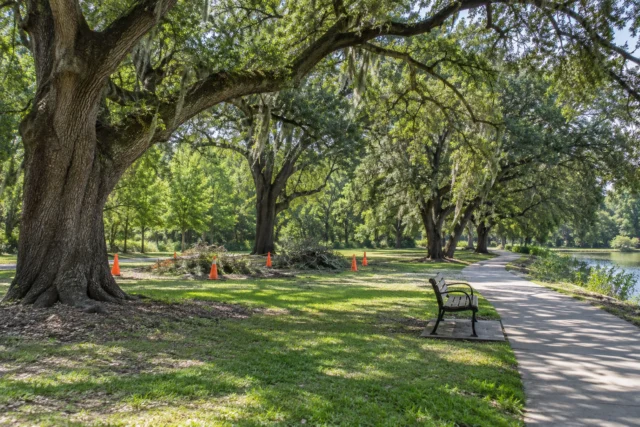
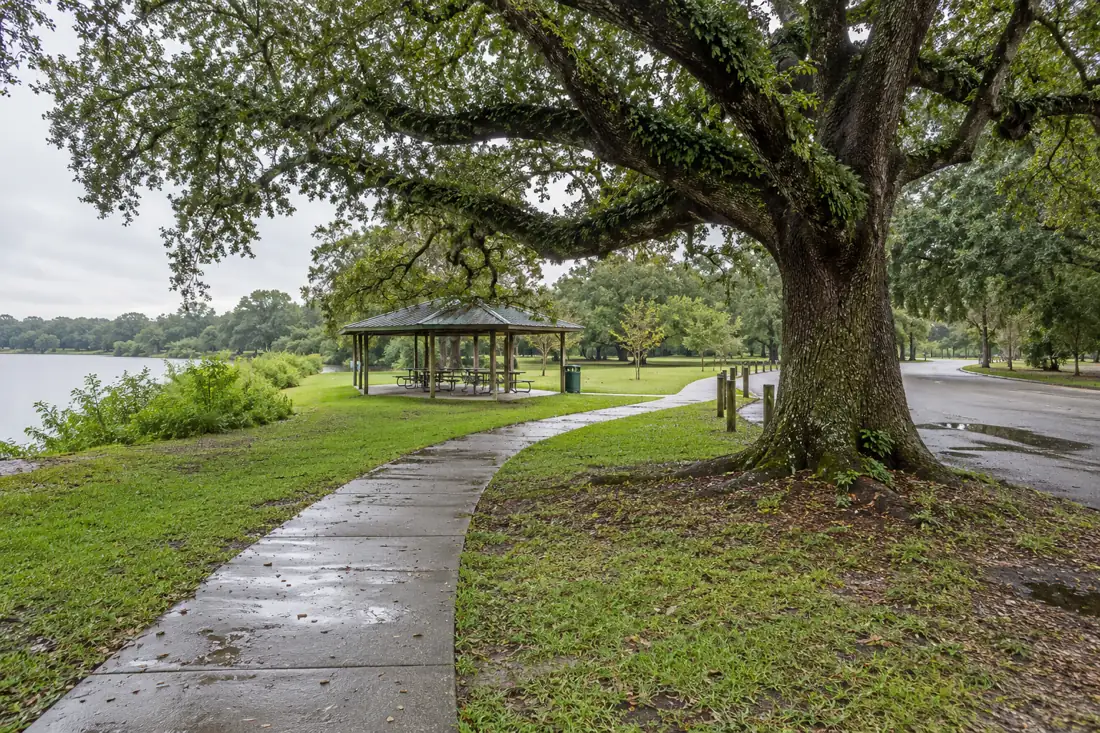
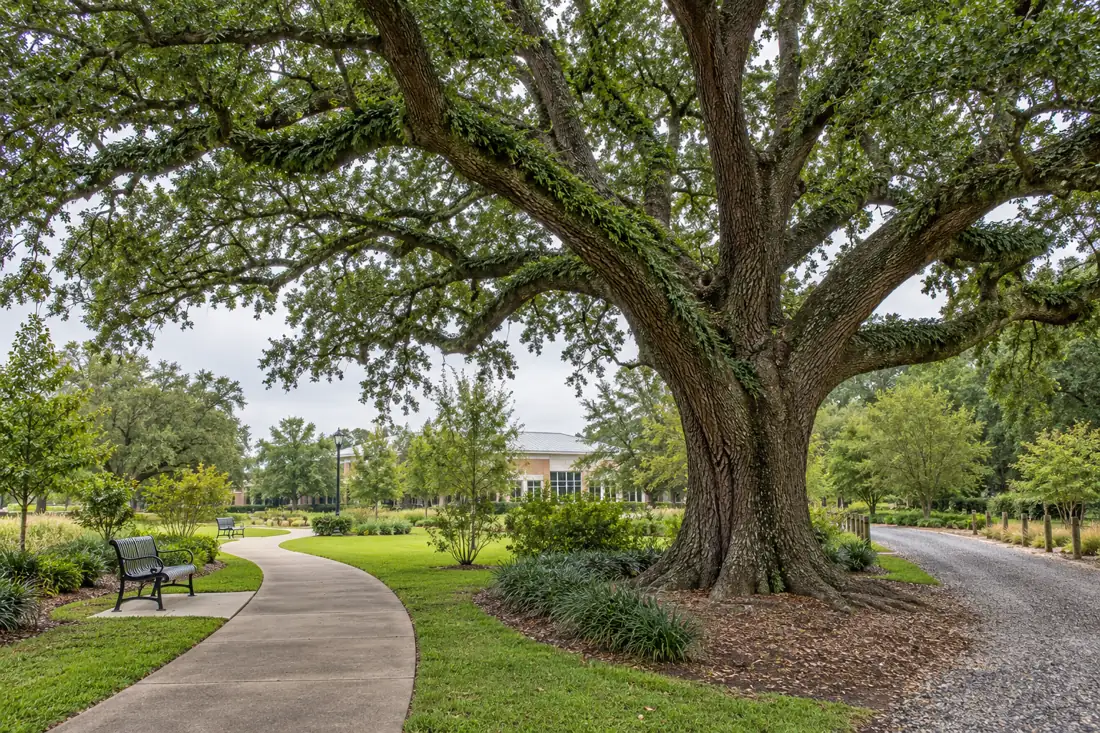
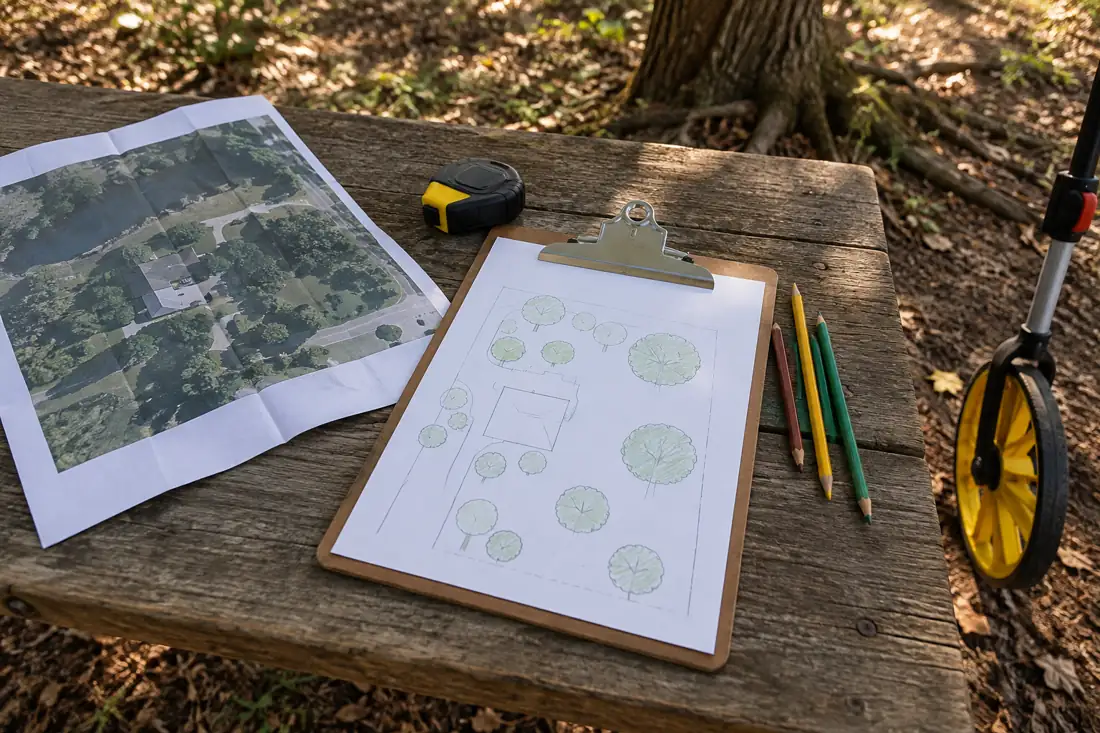
Government offices may have controlled access, public entrances and operational restrictions. Provide those requirements before the contractor prices mobilization. Identify the tree locations, staging area and authorized site contact. Work windows, exclusions and completion records should follow the buyer’s project requirements rather than a generic assumption about public-property access.
Site-specific planning checkpoint: At an occupied government office, identify staff entrances, accessible paths, emergency exits, visitor parking and delivery windows before moving equipment into place. Use a site map to mark intended tree work, secure staging and temporary closures. Coordinate notices with the public agency and avoid promising uninterrupted access if the scope requires an exclusion zone. Trees near windows, public footpaths and vehicle routes may need additional protective planning that cannot be inferred from photographs. Clarify who authorizes a temporary route change and who restores signage and barriers when the operation ends. Keep dated before-work images of curbs, planting beds and service lanes so the closeout inspection has a baseline. The final walk should check for loose wood chips, limbs and obstructions on routes that are reopening to the public.
Plan office-site tree work around the people using the building
Government office sites often have competing entry demands: staff arrival, visitors, deliveries, accessible routes, security checkpoints, and emergency access. Before placing equipment, identify the official who controls the premises and the hours when each route must remain available. A tree may be outside the front door while the safest equipment approach comes from a restricted service drive. Map the route with the facility representative rather than assuming an empty parking space authorizes heavy equipment.
Separate the visible tree scope from surrounding operational protections. Confirm how temporary pedestrian diversions will be communicated, where barriers can be placed without blocking accessible routes, and who will coordinate any lift or traffic control. Photograph the real pre-work condition from an authorized viewpoint. The site plan should account for root protection, drains, curbs, signs, overhead infrastructure, and the surface condition where outriggers or tracked equipment might bear load.

Clarify approvals and site access credentials
Public property access often requires coordination with facilities personnel, security and a contracting representative. Determine who can approve the tree scope, who can issue access instructions and who should receive crew arrival information. These roles may be held by different people. Provide the site address, named work zone and any check-in process rather than assuming the contractor can enter through the nearest gate.
If identification, escorting or vehicle screening is required, it must be described before mobilization and verified for the actual project. Do not assert that a contractor holds a clearance or registration without current evidence. A delay at a locked entrance can affect the entire work window and nearby public circulation. Record a practical contact method for the morning of work without putting private contact details into public analytics.
For the completion review, compare the approved scope to actual results, not merely a clean-looking landscape. Walk the agreed area with the facility representative when possible, note retained hazards that were outside the work order, and record any restoration or debris issues needing follow-up. Keep public-facing notices factual and limited to verified dates and impacts. Requests for a quote can include site hours and access limits without collecting sensitive visitor or security information.
Read the related tree work for a public library property guide · Review public-sector tree-work services
Separate public paths and restricted entrances: Government office grounds can involve public walkways, secure employee entrances, delivery docks, service vehicles and sensitive site boundaries. Identify which areas are publicly accessible and which require escort or advance authorization. A tree over a visitor path may call for a temporary closure and an accessible alternate route, while tree work beside a fenced service yard may need coordinated equipment entry. Do not depict a security checkpoint or claim specific clearance procedures without the actual facility’s instructions.
Coordinate tree work around an occupied public building
A government office cannot always shut down for equipment movement. Identify public opening hours, employee entrance routes, deliveries, accessible parking and emergency access before deciding when a crew may arrive. A tree beside a service driveway presents different exposure from one over a public entrance. The site contact should specify which routes must remain in service and who is authorized to temporarily close others.
Ask for a simple drawing that labels the target trees, equipment route, loading area and barriers. Confirm the work window against public meetings, scheduled maintenance and other contractors. Work near a civic facility should not proceed on an assumption that every employee knows about the closure. The operational plan must make the restricted area clear to people arriving who have never seen the contract documents.

Keep accessibility and emergency routes workable
An occupied public office may serve visitors who depend on ramps, level entrances and designated parking. Barriers that protect a tree-work zone can inadvertently block those routes. Identify an approved alternative before closing access, and ensure signage is coordinated through the facility rather than improvised by a crew. Emergency response lanes and fire-service access have their own operational importance.
Work sequencing should separate equipment arrival, actual cutting, debris loading and reopening. A route might need a complete closure for one phase but remain usable during another. The site manager should decide how visitors will be informed and when the area is safe to release. Neither a completed cut nor an empty truck by itself proves a walkway is ready to reopen.
Assess the building and adjacent targets
Tree crowns can extend over roofs, public walkways, signage, lighting, windows and parked vehicles. A safe method depends on the tree's condition and the surrounding objects, not merely its height. The estimator should identify the drop zone, likely rigging needs and any areas where people cannot be present. Tree work next to overhead utilities requires coordination with the appropriate qualified provider.
Photographs should show the tree and its relationship to the building without prompting staff to enter a hazardous area. Ask which parts of the property can be cordoned off and whether sensitive surfaces need protection. Avoid promising that every branch can be lowered in a particular way until a qualified crew has inspected the site. Document the limits of the initial assessment and any remaining uncertainty.
Plan ground protection and equipment positioning
Courtyard pavers, landscaping, underground irrigation and older sidewalks may have limits that are not visible from an aerial image. Review the proposed machine route and setup points with facilities personnel. Ask about known buried systems, recent excavation, soft ground and surfaces that cannot tolerate heavy loading. Site protection measures should be selected after evaluation rather than used as a blanket guarantee against damage.
Log where the facility expects equipment to park, turn and load, including clearance from entrances. If recent rain changes ground bearing or access, reassess the operation instead of following an outdated drawing. Photograph existing visible conditions where appropriate and agree on the distinction between ordinary cleanup and repairs that are separately contracted. That information helps avoid disputes when several trades share the same property.

Protecting Access During Government Office Tree Work
A government office site often has several types of circulation competing for space: visitors, employees, deliveries, emergency access and contractor equipment. Identify which entrance must stay open, what hours require uninterrupted passage and where a temporary closure is permissible. A tree directly above a visitor route presents a different planning problem from one behind a controlled maintenance gate. An approved traffic or pedestrian control plan belongs with the work scope.
Controlled buildings may require credentials or escorts for particular areas. Ask the assigned facility contact about access rules early, without requesting or publishing passwords, codes or unnecessary personal details. Distinguish permission to enter from permission to operate equipment or close a public walkway. Mark the agreed staging area on the plan and ensure it does not occupy accessible parking or a designated emergency route.

Treat public services as active constraints
Preserving the building exterior may require more than avoiding direct contact with the wall. Look for glazing, roof drainage, buried landscape irrigation, utility cabinets and fixed benches within reach of falling or hauled material. The buyer should describe any surfaces that need protection and who can authorize a changed method. Avoid promising that every route will remain open during hazardous operations; temporary restrictions may be necessary for safety.
Once work is finished, inspect the route from the perspective of a visitor unfamiliar with the project. Debris, equipment pads and misplaced barriers can make an otherwise complete tree task unsuitable for handover. Note any remaining landscape work separately from tree cutting. Preserve a record of the area reopened and the time the facility representative accepted it, without implying a guaranteed work duration or formal clearance that was never issued.
Define material handling away from public circulation
Fresh branches and logs should not be staged where visitors walk, wheelchairs travel or vehicles queue. Identify a controlled area for temporary material storage and a hauling route that does not cross an active entrance without coordination. Confirm whether wood will be chipped, removed, retained or processed later. A public office may have restricted disposal areas and facility-specific waste rules.
Separate tree-generated vegetative debris from litter, construction waste and materials belonging to other contractors. If a branch must remain temporarily because of weather or transport limits, the area needs appropriate control and notification. At closeout, check for sharp stubs, loose chips on hard surfaces and blocked drains where within scope. The final appearance should be compared against the agreed cleanup requirements.

Close out safely and communicate reopening
At the end of the work window, the facility should know which areas are ready for use, which are still restricted and who has responsibility for remaining items. Check agreed tree tasks, debris removal, access routes and visible ground conditions. If the work includes stump treatment or restoration, distinguish that from tree removal completed earlier. Do not describe a site as universally safe based on one visual inspection.
Provide the final work summary and any required photographs to the authorized contact. Note items requiring another trade, utility or facility decision instead of hiding them in an informal conversation. A clear reopening notice and outstanding-item list lets the building operate normally while preserving a truthful record of what the tree contractor actually completed.
Photograph trees and constraints from permitted vantage points, not restricted operations. The owner’s representative should confirm approved work hours, noise limits, loading zones, emergency access and who communicates changes to occupants. Scope notes should describe the exact tree and work type without implying that general grounds maintenance authorizes a removal.
At completion, record debris clearance, reopening of routes and any turf or pavement damage left for restoration. Keep building-sensitive details out of public marketing photographs and preserve actual work records in the designated project file.
Capture an auditable public-work record
Create a concise work log with the solicitation or work-order reference, tree identifiers, authorized tasks and dates of activity. Photographs should link the same identifiers to visible before and after conditions. Do not use a close crop as proof of overall tree health or a GPS tag as proof of an actual crew visit. Record any inspections or buyer-provided approvals separately from the contractor's field notes.
If work differs from the signed scope, use the designated change process before treating it as authorized. Public-sector records may have retention, accessibility or submission rules; follow the buyer's actual instructions rather than assuming a standard format. The reviewer should be able to find the applicable agreement and evidence without searching personal messages between field staff.
Address landscaping and irrigation around civic entrances
Formal entrance landscaping may contain buried lighting, irrigation, commemorative fixtures and protected planting beds. Ask facilities staff to identify these features before machinery is positioned or branches are moved. Photographs of visible conditions help but do not provide a complete map of underground installations. A tree operation that protects pedestrians while damaging critical irrigation is not a successful handover.

Coordinate public notices without overpromising timing
A facility may choose to issue a website notice, door sign, internal staff message or visitor route map before tree operations begin. The contractor can provide the planned restriction area and work sequence, but the agency should approve messages affecting public operations. Avoid advertising a guaranteed reopening hour until the site conditions and work method have been confirmed.
If the work window shifts because of weather or utility coordination, notify the designated contact so affected departments can update instructions. Once cutting and loading finish, communicate what remains closed for inspection or restoration. A timely and factual status update prevents visitors from interpreting quiet equipment as proof that all barriers may be removed.
The scope should describe where mulch, chips or logs may be placed and whether replacement planting or turf work is included. If access requires temporarily removing a portable planter or sign, identify who can do so. Return movable items only after the affected work zone has been released and the facility approves reopening.
Maintain a safe path for public services during tree work
A government office is a working facility rather than an empty jobsite. Its entrances may serve residents attending appointments, public hearings, permit counters or other time-sensitive services. Before equipment arrives, identify the public arrival route, accessible entrance, emergency exit, delivery door and any secure employee-only zones. Coordinate temporary closures with the facility manager and confirm what signs or barriers are permitted. Never assume that a visitor can simply use a locked side gate or cross an active equipment route.
The field plan should account for noise-sensitive functions, overhead branches near pedestrian areas, vehicle queues, and the placement of chips, logs or trucks outside accessible routes. Establish how office staff will receive a change notice if weather, tree stability or an unexpected utility condition alters the sequence. At completion, check the walkways, drainage inlets, parking edges and any disturbed landscape areas against the written scope, rather than judging the work only from the final appearance of the canopy.
Government-office work needs an operating and access plan
At an occupied government office, grounds work can intersect with visitor screening, restricted entrances, staff parking, utility rooms and formal security procedures. A tree crew should not improvise access to controlled areas. Ask the facility authority which escorts, permits, public notices and work windows are required, and mark the approved route before equipment arrives.
Record any conflict between tree access and critical public services. A scope may need separate stages for protective pruning and later removal or cleanup if a secure entrance must remain operating. A public library often shares accessibility and visitor-routing concerns, but its drop-off, book returns and open patron movement warrant the different checklist in the companion guide.
- Keep public-entry and staff-only access plans distinct.
- Identify who can authorize an interruption or change to the secure work area.
- Do not place sensitive building/security details in public-facing image captions.
Confirm the office operator's circulation plan
Office buildings may have separate public, staff, service and emergency entrances. Identify which are affected by nearby trees and which routes must remain available. Security restrictions and any alternate access need approval from the building operator.
Record who gives public notices, approves a changed barrier and authorizes reopening. A clear walkway in a photograph is not proof of an accessible route in the field. Inspect the final entrance, landscape and service path conditions independently of the tree-removal result.
Questions about this project
What should a government buyer send first?
Send the agency or prime contact, project reference, site, scope, deadline, access conditions and required documents or submission format. Identify the authorized contact for questions and the buyer's process for clarifications.
Does a capability page prove contract eligibility?
No. Request and verify current documentation relevant to the particular opportunity. Registration status, certifications, licensing, insurance and availability should not be inferred from a broad marketing statement.
Can a business stay open during tree work?
That depends on the site and scope. Discuss occupied routes, exclusion areas, loading and work windows with the contractor and property representative. Do not assume normal access can continue through the active work zone.
Who should communicate with tenants or visitors?
Agree on that responsibility with the property representative. The contractor needs a clear site contact, while the owner or manager should use the property's established process to communicate access changes and work windows.
Can the crew block a public sidewalk or road?
Required arrangements must be coordinated with the appropriate authority. Identify public routes and restrictions before scheduling. A private work agreement should not be treated as automatic permission to occupy or close public space.
When should parked vehicles be moved?
Set the timing and responsible contact before the work window. Vehicles may need to leave the tree zone, equipment route and loading area. Confirm where access must remain available during each phase.
How should extra work be approved?
Use the agreed approval process and identify the change, reason, scope, price or schedule effect as applicable. Confirm who has authority before treating an additional tree or task as part of the original job.
What completion records are useful?
Keep the agreed scope, tree or area identification, authorized changes, invoice and labeled photos where appropriate. Include unresolved items and a contact. Contract-specific records should follow the buyer's stated requirements.
Is a total tree count enough for a large quote?
Usually the parties also need locations and tasks. Use consistent tree numbers, marked photos or a site plan so the estimate and crew instructions refer to the same trees and retained areas.
Does a work inventory include a condition assessment?
Only if that service is expressly part of the scope. A list used to identify and price tasks should not be mistaken for a documented assessment of every tree's condition or risk.
What should I tell Tree Huggers about tree work at a government office site?
Explain the property address, the work you want and the specific concerns: controlled entry, public routes, site requirements. Send safe photos of the tree, surroundings and access route. The contractor can then discuss the assessment and scope needed for this situation.
How do I request an estimate for this work?
Call 504-458-8336, text photos or use the estimate form on this page. Include the address, desired outcome and any timing constraints. The company will need to review scope and availability; an online request does not confirm a price, appointment or emergency dispatch.
Get a scope for your property
For an occupied office property, send the tree locations, public access requirements and the facility contact authorized to approve closures.