Properties associated with drainage or flood-control infrastructure may have restrictions on access, roots, equipment and material placement. The responsible authority should define the work limits and any technical requirements. A tree contractor must assess the specified work within those limits. Do not assume routine clearing practices apply beside infrastructure without coordination.
Site-specific planning checkpoint: On flood-control land, a tree-work plan should begin with the function of channels, pumps, maintenance roads and related public infrastructure. Confirm who manages the facility and the desired vegetation limits before assuming every tree is an obstruction. Assess ground bearing conditions, drainage structures, access grades and restrictions on operating near water or erodible soil. Aerial pictures may miss buried pipelines and sensitive monitoring hardware. If the work affects wetlands, levees or protected drainage features, identify which public authority determines applicable approvals. Separate selective trimming, invasive brush removal, woody debris hauling and larger removals because their environmental and equipment impacts differ. Keep culverts and drainage paths free of cut material during work. Completion should be recorded against the mapped maintenance access and operational purpose, not just the appearance of the landscape.
Respect flood-control operation before setting a work zone
Trees on levee-adjacent, canal-side, drainage or pump-related property can intersect facilities whose access and maintenance priorities are set by a separate authority. An apparently open strip of ground may be a maintenance corridor, bank slope, easement, or route for emergency vehicles. Identify the controlling agency and obtain the required written access terms before treating the space as available for trucks, rigging, debris staging, or stockpiles.
Describe the work without implying that vegetation removal automatically improves drainage or slope stability. Distinguish the tree hazard being addressed from questions that require civil, geotechnical, hydraulic, or environmental review. A site-specific plan should record grade changes, erosion protections, culverts, buried utilities, restricted load areas, and where material can be removed without blocking flows. If weather or water levels change the conditions, establish who can suspend the work and revise the sequence.
At handoff, capture the approved limits and any visible impacts to banks, gates, fences, access roads, or drainage structures. Assign photographs to station markers or tree identifiers, and note what was not assessed. Protecting the facility includes leaving maintenance access open as agreed and routing new concerns to the owner, rather than silently expanding tree work into earthwork or drainage repairs. This documentation helps the owner distinguish tree-service completion from infrastructure certification.

Coordinate with the responsible infrastructure authority
The owner or agency responsible for the drainage facility needs to define technical restrictions before a method is chosen. These may involve embankment integrity, root removal, excavation, load limits, water flow or access during storm preparation. A tree company can evaluate the proposed vegetation task, but it should not independently authorize work that may alter a levee, canal bank or engineered drainage feature.
Ask for a named technical contact, permitted work window and the process for resolving questions in the field. Where another engineer, utility or maintenance contractor has responsibility, obtain the required review through the authority. Do not treat a sales estimate as an engineering clearance. The quotation should identify assumptions and hold points so the project can pause for the correct decision without creating new erosion or access problems.
Read the related vegetative debris hauling for a public contract guide · Review public-sector tree-work services
Protect banks, drains and maintenance access: Flood-control properties present tree-work constraints that ordinary lawns do not. Identify canal banks, drainage ditches, levee toes, spillways, culverts, access roads and maintenance easements before selecting a removal path. Tree roots may interact with banks and soil stability; do not propose broad root excavation or heavy machine travel on a wet embankment without the responsible engineer or owner’s approval. A tree within sight of water-control infrastructure is not automatically within a contractor’s authorization to cut.
Map the controlled area before approaching the trees
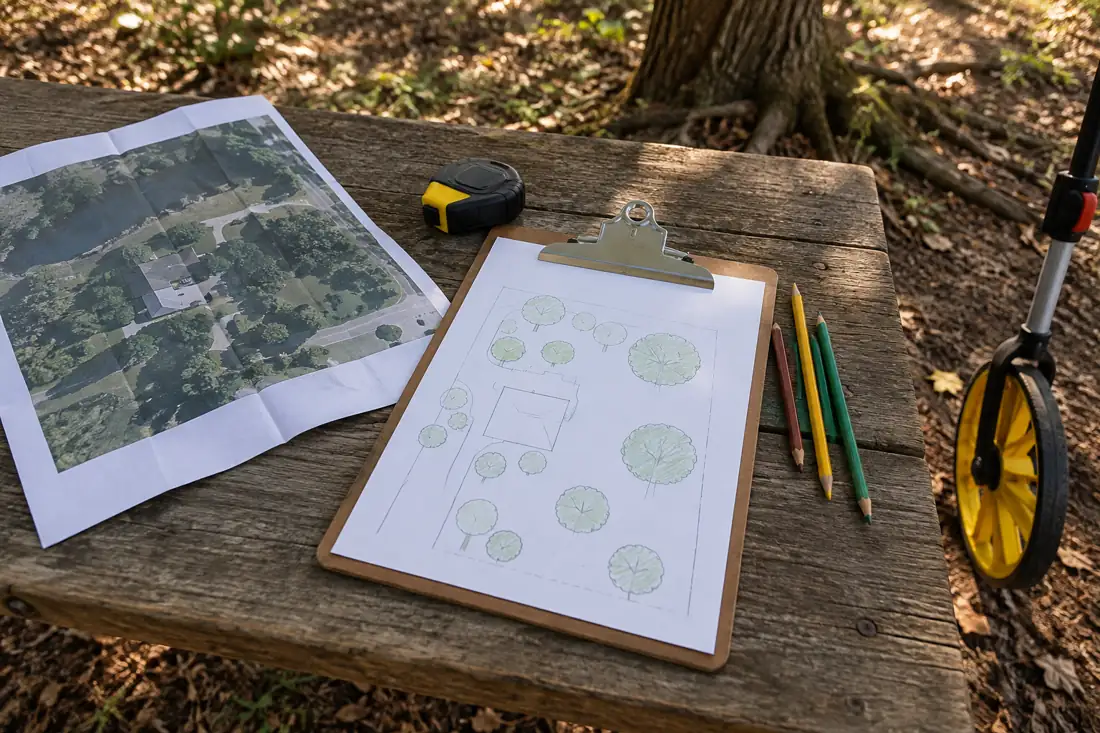
Flood-control properties often include levees, canals, pump stations, retention areas and drainage easements with specific operating restrictions. The facility operator should identify the authorized limits of tree work on a current map. Mark the proposed trees and distinguish them from vegetation outside the work area. A contractor should not infer permission from an open gate, an unfenced ditch or a nearby property owner's request.
Include maintenance access roads, culverts, gates and known underground features. If the work crosses a jurisdictional boundary or an area with separate ownership, identify who can authorize each portion. Record whether the drawing is approximate and which boundaries require field confirmation. An accurate map is not just for estimating; it prevents a crew from moving equipment or debris into a location where flood-control operations could be affected.
Protect slopes, banks and soil stability
Roots can interact with soil structure, but the consequences of cutting or extracting them near a water-control feature must be assessed for that specific structure. A routine stump-grinding depth or full root excavation may be inappropriate on a maintained embankment. Note visible cracking, slumping, exposed roots and soft ground from a safe position and report them to the facility operator before disturbing the area.

Keep channels, culverts and drains unobstructed
Cut branches and logs can quickly block a small drainage opening, particularly if rainfall arrives before pickup. The scope should define how vegetation will be restrained, staged and removed without entering the waterway or obstructing a culvert. Identify material that must be removed immediately and any debris already present that is not part of the approved tree-work package.
A useful staging plan shows the loading position, haul direction and a route for facility operators to reach pumps, gates and controls. Do not pile chips or logs on a canal bank simply because it is the nearest open ground. If material moves during high water, the facility may face downstream consequences. Separate safe temporary storage from the final disposal plan, including any required tickets or reporting.
Equipment selection also depends on slope, bearing capacity and proximity to an edge. Mats or tracked machines do not automatically solve an unstable bank. Ask how the route and setup will be evaluated and whether a low-impact technique is suitable. If conditions change after rainfall or rising water, the original access plan may no longer apply. The contractor should never substitute a more aggressive method merely to keep a planned production date.
Evaluate utilities and mechanical structures
Flood-control sites may contain electrical feeds, control cables, lighting, telemetry, water pipelines and underground equipment that are not obvious from aerial imagery. Request the facility's known utility information and identify systems that need qualified locating. Even a tree outside the fence can have roots or limbs near protected infrastructure. The standard public utility marking process may not identify private facility-owned systems.
Do not dig, grind, rig or position equipment on an assumed clear route. Any work near energized components requires the appropriate utility or qualified provider. Mark uncertainty rather than inventing a buried line location. The site plan should define what tree work can proceed without touching infrastructure and which tasks are awaiting a separate permission or technical inspection.
Map the work limits and define where branches, logs and chips can be staged without entering conveyance areas. After the work, inspect for loose brush that could block inlets, displaced bank protection, rutting, disturbed erosion controls and debris left near water. Record the actual conditions and refer drainage-structure concerns to the responsible operator rather than representing tree contractors as drainage engineers.
Where restoration is required, specify who selects materials and confirms completion. Site-specific questions about access and slope often deserve a pre-bid walk because aerial imagery cannot reliably show ground strength.

Tree Planning Around Flood-Control Infrastructure
Flood-control property can include a channel, a maintained slope, a pump station and an easement that does not align with a visible fence. Confirm the operator responsible for each segment before proposing any tree removal. A property owner standing nearby may not have authority to direct work on the embankment. Start with a marked map that identifies access rights, protected areas and the specific vegetation for review.
Heavy equipment can affect compaction, drainage and the stability of surfaces that appear firm in dry weather. The controlling agency should specify any prohibited routes, loading limits and restoration expectations. Do not improvise a path down a slope simply because it is shorter. Any proposal should address where wood, chips and equipment can remain without blocking a culvert, grate, spillway or maintenance vehicle.

Protect the facility's function before selecting methods
Root systems may help stabilize soil, while roots in conflict with structures may call for specialist review. Neither situation supports a blanket recommendation to remove everything beside the canal. Record tree condition, observed targets and the stated facility objective. Where engineering, regulatory or ecological requirements apply, identify the competent authority rather than presenting a tree service estimate as a substitute for those decisions.
At completion, the review should confirm that debris and temporary materials have not entered the drainage flow path and that access needed for maintenance is restored. Document any areas not accessed and any unexpected exposed soil. A clean photograph from the roadway is insufficient if the downstream inlet remains obstructed. Require the facility representative to determine what evidence is needed for acceptance of the contracted work.
Schedule around operational weather needs
Drainage assets are most important when severe weather threatens. The owner should identify shutdown triggers, emergency access requirements and periods when maintenance vehicles may need the full route. A routine tree-work window may be canceled or shortened if storm operations take priority. Include how the crew will secure loose material and remove equipment if the site has to return to operational use quickly.
Do not promise an emergency response time or claim the contractor can continue through unsafe weather. A contingency plan can specify who receives an updated status, which branches or equipment remain on site, and how access is handed back. Treat changing water levels, saturated ground and weather warnings as reasons to reassess, not inconveniences to be hidden from the schedule.
Define quantities and ecological constraints carefully
A vegetation list should say whether the work involves selective pruning, full removal, trimming for inspection or clearance along a defined line. Count trees against site markers and describe the targeted outcome rather than asking for general cleaning. Note any protected habitat, seasonal restriction or permitting requirement supplied by the owner. A contractor should not claim legal permission simply because vegetation blocks maintenance access.

Hand back a facility-ready site with clear records
Completion should be checked against marked trees, vegetation limits and facility access, not just a report that cutting has ended. Walk the approved review route with the appropriate representative when conditions allow. Document visible debris removal, unobstructed gates and any disturbed ground that falls within the contracted restoration scope. A tree contractor should not certify engineering performance or water-control capacity from photos.
Provide location-labeled before and after images, dates, scope changes and outstanding items in the buyer's required format. If the facility needs a separate engineer or operator to inspect an affected area, flag that hold point. Closeout should distinguish tree operations completed from infrastructure questions still open. That allows the responsible authority to resume operations based on its own acceptance process.
Material handling may have environmental conditions different from ordinary residential debris pickup. Ask the authority to specify what can be chipped, hauled or retained and where equipment may refuel or stage. If biological or environmental advice is required, involve an appropriate specialist through the buyer. The scope should make conservation, facility function and safety requirements visible before the work is priced.
Provide a practical inspection route after tree work
The facility's own operator should determine which maintenance areas and access paths require inspection following vegetation work. Identify the route in advance so the crew does not store equipment across it. If a canal bank or embankment must remain off limits, the inspection may need remote observation or a different qualified specialist rather than an unsafe walk onto soft ground.
At handover, describe the visible condition and any areas the tree crew could not inspect. Do not assert that drainage capacity, erosion resistance or flood protection has been certified by removing branches. Those operational judgments belong to the responsible authority and its technical reviewers, using the tests and observations required for the facility.
Protect drainage function while assessing tree risk
Flood-control sites have operational requirements that can be invisible in an ordinary landscape photograph. A canal edge, pump-station approach, servitude, levee access track or drainage outfall may need clearance for inspection and maintenance. Before tree work, confirm who manages the feature and what permission is needed for equipment, vegetation removal and disposal.
Note saturated ground, unstable banks, buried structures and access restrictions. A tree close to a canal is not automatically suitable for removal, and roots can affect soil stability in ways that warrant expert review.

Track weather-related delays without obscuring scope
A scheduled removal near drainage infrastructure can be interrupted by unexpected rainfall, elevated water levels or a changed operational alert. Record which trees were addressed, what material remains and which access route is still controlled. The crew should make a safe shutdown decision according to actual conditions rather than rushing to match an estimate calendar.
If the owner authorizes remobilization later, confirm whether soil bearing, access and tree condition still support the planned method. Documentation should separate delay cost questions from safety and technical decisions. The buyer's contract governs any schedule or price adjustment, while site conditions determine whether work can safely resume.
Separate the immediate objective, such as opening a maintenance gate or removing a failed limb, from broader vegetation-management decisions. Keep cut material out of flow paths and do not place machinery where it could damage embankments or drainage structures. The completion checklist should identify the precise cleared limits, access restored, debris removed and any disturbance requiring follow-up by the responsible owner. Avoid representing ordinary tree-service work as a replacement for hydraulic engineering or flood-control agency approval.
Rain-Event Readiness and Flood-Control Work Handover
On a flood-control property, the immediate tree task and the operating readiness of the facility are different deliverables. Before work begins, confirm with the responsible operator how a rain warning, pump call-out or canal inspection changes access. A crew may be able to finish pruning while a separate authority must confirm that a gate, access lane or hydraulic structure remains usable.
The tree-service scope should identify who can stop work, how equipment leaves the corridor and where brush must go if hauling cannot proceed during a weather interruption.
Plan a handover that distinguishes observed tree work from engineering acceptance. Photograph the agreed limits and any preexisting bank or surface defects from safe, repeatable viewpoints. At completion, record what vegetation was removed, which trees remain, whether any protective matting was lifted, and where disturbed soil or debris needs further attention. Never claim an embankment is structurally sound merely because it looks undisturbed; questions about slope, levee integrity, erosion and drainage performance belong to the facility's qualified technical authority.
- Confirm the operator's emergency access and weather shut-down procedure before staging machinery.
- Keep cut material, chips and logs away from inlets, culverts, gate travel and access roads.
- Record the exact work-limit markers and any restricted areas on the scope map.
- Have the responsible owner accept the operational handover separately from the tree-service completion.
Distinguish the infrastructure prime's responsibilities from the tree crew's scope
Check flood-control operation before entering the site
The responsible agency must specify permitted vegetation work, controlled drainage areas, access routes and soil or slope restrictions. A gate that looks open or a shoulder that looks firm cannot establish load capacity for equipment.
Plan staging, weather interruption and material containment with the operator. No debris should be assumed acceptable near channels or controls. At handover, identify work finished by the tree contractor separately from any facility inspection or approval retained by the agency.
Questions about this project
What should a government buyer send first?
Send the agency or prime contact, project reference, site, scope, deadline, access conditions and required documents or submission format. Identify the authorized contact for questions and the buyer's process for clarifications.
Does a capability page prove contract eligibility?
No. Request and verify current documentation relevant to the particular opportunity. Registration status, certifications, licensing, insurance and availability should not be inferred from a broad marketing statement.
Can tree equipment use any driveway?
No general assumption should be made. Pavement condition, edges, support, buried infrastructure and the proposed equipment all matter. Ask the contractor to assess the intended setup and route for the particular property.
Do mats guarantee there will be no ground damage?
Ground protection is one part of a site-specific plan. It does not remove every load, soil or access limitation. Discuss the proposed measures and any restoration responsibilities in the written scope.
Will a utility locate show every private line?
Do not assume it will identify all irrigation, pet-fence, drainage or other customer-owned systems. Provide available plans and ask what additional locating or coordination is needed for the actual work and access area.
Who should arrange utility-related preparation?
Set that responsibility before scheduling. The property contact, contractor and relevant providers need to identify who handles locating, disconnection, relocation or separate repair work. Uncertain utility information should be resolved rather than guessed.
How should extra work be approved?
Use the agreed approval process and identify the change, reason, scope, price or schedule effect as applicable. Confirm who has authority before treating an additional tree or task as part of the original job.
What completion records are useful?
Keep the agreed scope, tree or area identification, authorized changes, invoice and labeled photos where appropriate. Include unresolved items and a contact. Contract-specific records should follow the buyer's stated requirements.
Does cleanup include every root and wood chip?
That depends on the written scope. Tree removal, stump grinding, chip hauling and root excavation are different tasks. Ask what material is removed, what remains and whether soil or landscape restoration is separately included.
What should a final walk-through check?
Compare the identified trees and tasks with the agreement. Check agreed debris handling, stump treatment, access openings and any listed restoration. Record unresolved items clearly instead of relying on a general impression that the property looks finished.
What should I tell Tree Huggers about tree work for a flood-control property?
Explain the property address, the work you want and the specific concerns: infrastructure limits, authority requirements, material placement. Send safe photos of the tree, surroundings and access route. The contractor can then discuss the assessment and scope needed for this situation.
How do I request an estimate for this work?
Call 504-458-8336, text photos or use the estimate form on this page. Include the address, desired outcome and any timing constraints. The company will need to review scope and availability; an online request does not confirm a price, appointment or emergency dispatch.
Get a scope for your property
An infrastructure tree inquiry should include authority-approved boundaries, safe access photographs and the facility's technical restrictions.