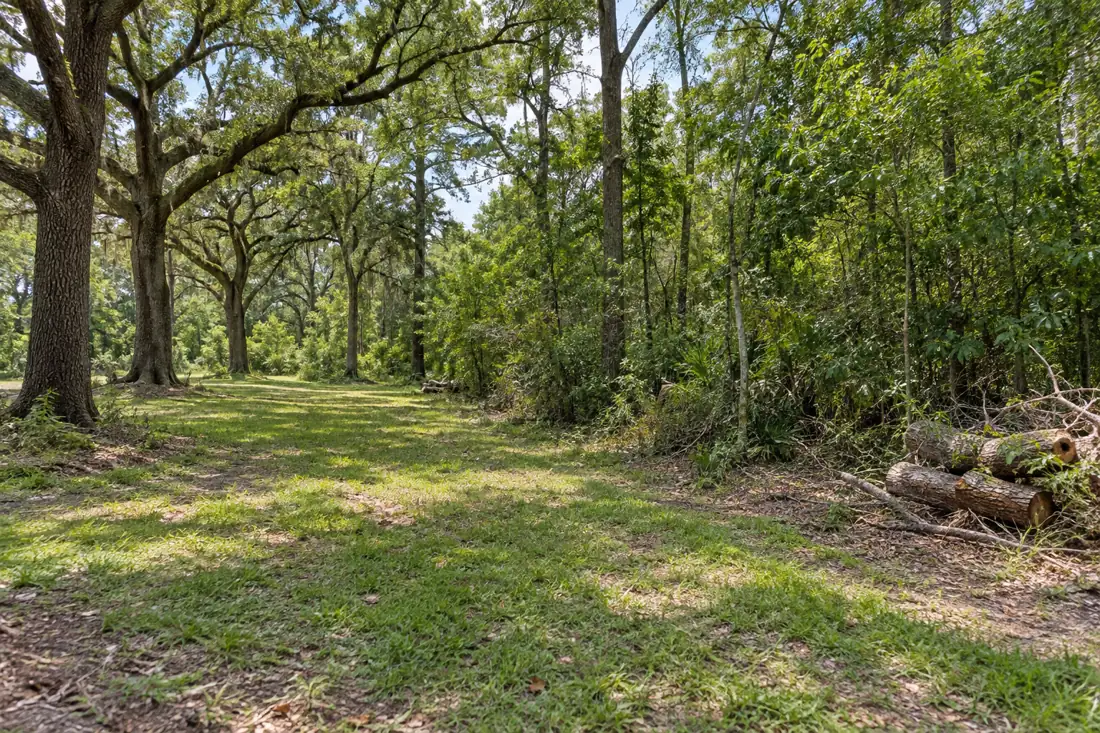
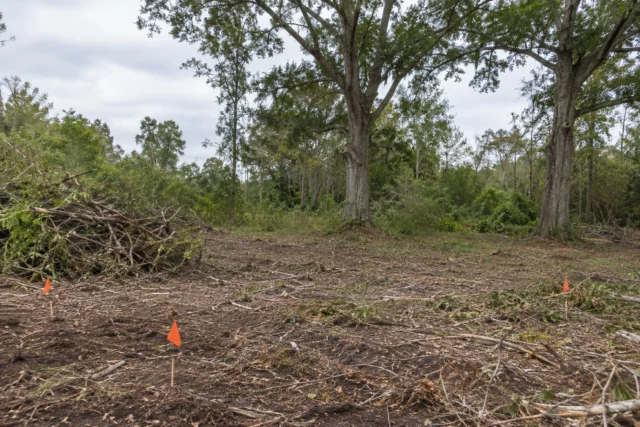
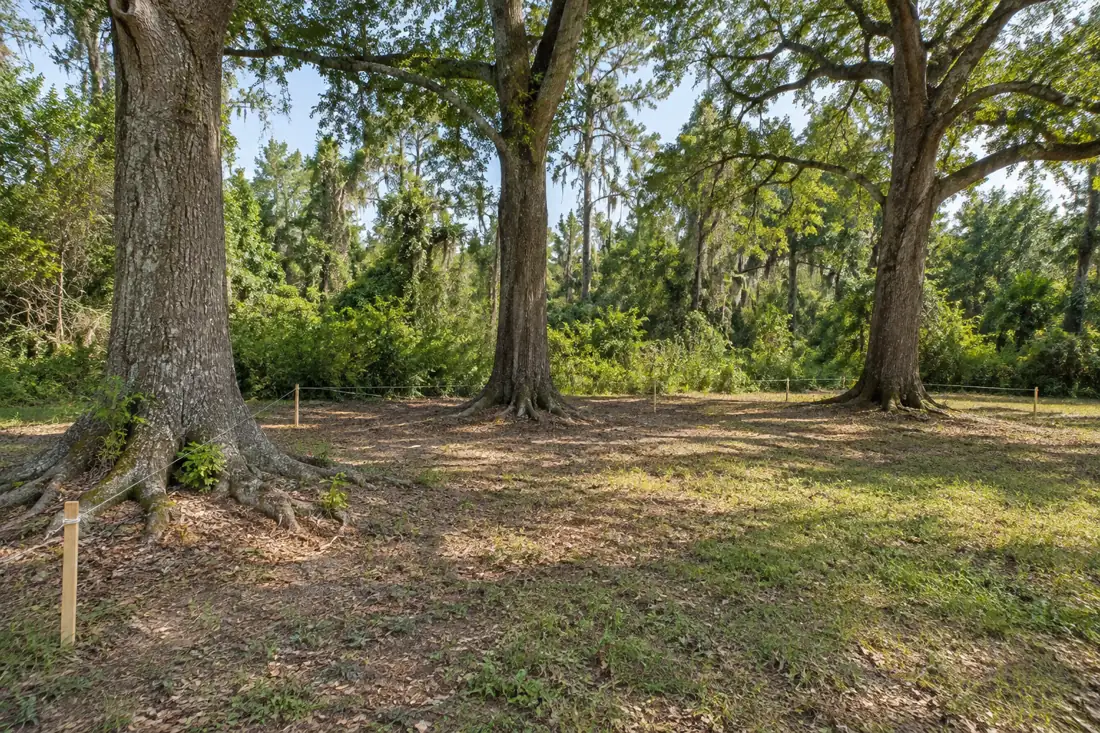
A vacant lot may contain trees to remove, trees to retain and hidden material left by prior use. Mark the intended work boundary and identify future plans before clearing is priced. Ask how access, debris and stumps will be handled. An instruction to clear the lot should not leave retained trees or disposal assumptions undefined.
Site-specific planning checkpoint: On a vacant parcel, the first clearing decision is not which machine to use but which trees must remain. Mark retained trunks and root-protection areas in a plan visible to every contractor; identify any future building, driveway or drainage work that could conflict with preservation. Walk the boundary carefully for wells, ditches, buried debris, old fencing or hidden obstructions before opening access. Clearing saplings and brush can reveal hazards that were not visible when quoted, so define how changes will be reviewed. Keep vehicles and stockpiles outside designated protection areas, and avoid treating mulch piles as proof roots are safe. Distinguish brush cutting, tree removal, stumps, hauling and prohibited dumping. Ask what the parcel should look like when the crew leaves, including retained vegetation and access for the next trade. Document exclusions without padding the estimate with generic assumptions.
A vacant or overgrown lot may hide old utility connections, debris, low ground and disputed fence lines.
Draw a retained-tree map before clearing a vacant parcel
A vacant lot often looks easier to clear than an occupied property, but hidden grade changes and desirable established trees make it more complicated. Begin with a parcel sketch marking trees intended for retention, possible removal candidates, property corners, access points and existing ditches. Give each retained tree a unique label so the contractor and owner mean the same specimen when discussing setbacks or protective boundaries.
Check the map against current survey information rather than assuming old fence remnants mark the legal boundary. Photograph the trunk and canopy of every retained tree, including where branches extend over neighboring improvements. If the future use of the parcel is undecided, preserve options by assessing trees before broad brush removal removes the visual clues that make good planning possible.
Separate clearing from the trees meant to stay
A vacant parcel is not an empty worksite when mature trees are designated for retention. Mark those trees on a current site plan and walk the boundaries before brush cutting begins. Confirm whether the task involves only low vegetation, selective saplings, deadwood, fallen material, full removals or preparation for later construction.
An unmarked tree at the edge of a clearing path can be damaged before anyone realizes it was meant to remain. Use visible field markings that the equipment operator understands, with the owner or authorized representative available to resolve conflicts. Pictures and boundaries should be tied to actual trees, not generic shapes on a marketing image.

Understand the future use without guessing a final layout
A lot prepared for a future home, garden or sale may need different clearing than land intended for a storage yard. Ask which use is reasonably foreseeable, where an entry could fit and which zones should remain untouched. A preliminary sketch is a planning aid, not a substitute for an approved site plan or a promise that construction will be permitted there.
Keep tree-removal recommendations conditional when foundation, driveway and utility routes have not been designed. Cutting a healthy mature tree just because it lies near an imagined building footprint can sacrifice shade and site character without creating useful access. A selective first pass can expose ground features and make a later layout decision more informed.
Mark trees to retain before clearing. Map trees slated for removal, trees to protect, property limits and equipment access. Keep stockpiles, repeated vehicle traffic and grading outside designated root protection areas. Confirm who may authorize work and whether local protections apply. The finished scope should describe both debris removal and what remains undisturbed.
Limit machine traffic in sensitive areas
Repeated crossings can compact soil around trees that will remain, particularly where the ground stays wet. Plan one or more defined machine routes and staging zones away from visible root flares and low limbs when feasible. Ask whether temporary ground protection is appropriate, but do not treat a mat as permission to drive over every root.
If brush must be carried through a narrow corridor, evaluate the tradeoff between smaller equipment, manual handling and additional site time. Locate utilities and drainage structures before digging or stump operations. A clearing plan should identify the areas where no excavation, burning, fill placement or debris stockpiling is permitted.
Choose retained trees before opening a vacant lot
A vacant or overgrown lot may hide old utility connections, debris, low ground and disputed fence lines. Walk only accessible, authorized areas and mark known utilities and visible hazards for follow-up. Vegetation boundaries are not reliable property boundaries. A basic inventory should record the trees proposed for retention, not merely the vegetation proposed for removal.
Ask the contractor to distinguish brush clearing, selective tree removal, stump grinding, grubbing and final grading. Equipment and stockpiles can damage roots even when retained trunks are left standing. Put protection and access boundaries on the plan before large clearing equipment enters. Where future construction is uncertain, avoid removing healthy retained trees on the assumption of an imaginary future driveway.
Agree on the removal list, how changes will be approved when concealed conditions are revealed and what cleanup leaves the site in a usable condition. Keep any future landscape or construction design as a separate, identified phase. This preserves options without misrepresenting a clearing quote as a full site-development contract.
Inspect ditches, low points and concealed obstacles
Brush can conceal drainage channels, concrete fragments, old fencing, tires and abandoned piping. Walk only safe areas at the perimeter before sending equipment through thick vegetation. Identify culverts, slope changes and soft ground, especially after recent rain. A machine that can cross a dry lawn may not travel safely along an undisturbed ditch edge.
Do not treat the clearing contract as permission to fill a low area or bury debris. If the lot has standing water, investigate whether it is a temporary rain effect, a drainage feature or a problem requiring another trade. Document obstacles and decide whether hand clearing, selective cutting or additional site assessment is necessary before heavy equipment can be used.

Establish meaningful tree-protection boundaries
A retained oak needs more than an orange ribbon tied to its trunk. Discuss a practical protection area around the root zone, considering canopy spread, root location, soil conditions and anticipated equipment access. A qualified arborist can help identify limits where construction pressure is high. The boundary should be visible to everyone working on the parcel and shown on the job sketch.
Prevent equipment parking, spoil piles, chemical storage and repeated hauling inside the designated zone unless an approved protection plan specifically allows it. Soil compaction may affect tree health without leaving an obvious scar. Reinspect the protection line during the project, because a temporary pile often becomes a permanent obstruction once crews begin using the easiest open space.
Protect retained trees while opening a vacant lot
A vacant lot is not an empty work surface when retained trees have roots under the intended equipment route. Begin by identifying the eventual use of the parcel and tagging every tree proposed for retention or removal. Where brush conceals grade changes, old foundations, rubble or buried utilities, treat those areas as unverified; a machine should not enter simply because the canopy appears clear.
Request a measured boundary or parcel survey when ownership is uncertain and decide whether separate specialist input is needed for significant mature trees.
Create a retained-tree inventory before treating a vacant lot as empty
A vacant parcel may hold trees that provide shade to future occupants, stabilize soil or simply need to remain outside construction limits. Photograph the whole lot from existing safe access, then identify each tree that the owner hopes to retain by a simple field label rather than using an unverified species guess.
Record trunk locations, broad canopy extents, obvious low limbs, neighboring structures, drainage ditches and planned drive or utility routes. A clearing quote that says only remove brush can miss unwanted root disturbance from grading, stockpiles or repeated vehicle traffic near retained trunks.
Ask the design or construction team for its current layout before marking cut limits. Trees on or near the boundary may need permission review; a fence line is not proof of ownership. Define separate work areas for undergrowth removal, selective removals, pruning for access and any protection around preserved root zones.
Avoid specifying a universal buffer dimension from photographs, because species, tree condition and site constraints matter. If plans change after the estimate, recheck the preservation and access plan instead of treating the original clearing limit as permanent. Leave civil grading, soil testing and utility locating to qualified responsible parties.
Separate hazardous trees from merely inconvenient ones
Visible dead tops, split unions, major decay and significant lean can justify further evaluation, but not every tree with vines or a crooked trunk is unsafe. First remove enough surrounding brush to view the trunk and canopy from safe ground. If stability is uncertain, do not pull vines or climb the tree to obtain a better photograph.
Ask for a clear explanation of any removal recommendation and the alternatives considered. The owner may choose targeted pruning, risk monitoring or a professional assessment for a retained specimen. A vacant lot should not become an excuse to remove everything simply because it is cheaper to mobilize one large machine than to plan around valuable trees.

Preserve Selected Trees While Clearing a Vacant Lot
A vacant lot is not an empty work area when mature trees are being retained. Start with a simple parcel sketch and label every tree to remain, along with the vegetation proposed for removal. Include known utility easements, ditches, neighboring fences and potential driveway access. If the eventual building layout has not been established, say so. Prematurely clearing near the healthiest trees to create an imaginary future footprint can damage roots and reduce options for the property's later use.
Walk the visible perimeter from safe accessible ground and document hidden-lot risks such as abandoned wire, dumped debris, broken concrete and uneven fill. Do not encourage a crew to push machinery through dense vegetation before those conditions are evaluated. Distinguish brush cutting from stump excavation and tree removal; these operations disturb the soil at very different depths. If a survey or construction plan exists, give the tree contractor the current version rather than relying on rough stakes that may move.

Mark what stays before deciding what gets removed
Retained trees need a defined no-traffic area, not just a ribbon around the trunk. Discuss where protective barriers should stand, how equipment can pass without striking the canopy and how cut material will be carried away without piling on roots. Soil compaction and grading can harm a tree that appears untouched above ground. In a narrow parcel, selective manual removal or a phased approach may provide better protection than trying to clear everything in one machine pass.
Specify the desired final state: which stumps remain, whether chips are spread or hauled, which brush is removed, and whether drainage swales must stay open. Add a postwork walk-through that matches each labeled retained tree to the original map. For any later construction, share the preservation assumptions with the designers and trades. A clean-looking vacant lot is not a successful preservation project if the intended canopy was compromised during clearing.
Plan equipment entry without damaging neighboring land
Vacant parcels frequently lack a finished driveway. A contractor must assess whether access crosses a curb, sidewalk, shared drive or neighboring parcel and identify who can authorize that route. Check turning radius, overhead lines, gate openings and where a chip truck would safely load. Do not promise curbside staging or right-of-way occupation without checking applicable restrictions.
Where a track machine is considered, the operator should evaluate ground bearing and slopes rather than relying on its compact size. If access is limited, a smaller equipment approach may require more trips or manual handling. Make those tradeoffs part of the quote so the owner understands why two seemingly similar vacant lots can have different scope requirements.
Protect neighboring fences, sheds and overhead lines
Unoccupied land can still affect occupied neighbors. Limbs may extend across a fence, and falling pieces can reach a roof or vehicle on the next parcel. Walk the perimeter to identify adjacent structures, lines and gardens that may influence cutting direction. Do not cross a boundary or move another person's belongings without appropriate authorization.
If a tree requires rigging above a neighboring improvement, the crew should evaluate a controlled dismantling method and access requirements. Inform affected neighbors of legitimate temporary restrictions once the plan is set, but do not make them responsible for tree-work safety. Any unresolved legal or ownership issue should be clarified before cutting.

Specify vegetation disposal and material retention
A clearing estimate should say whether it includes brush, vines, saplings, larger logs, root balls and stumps. These are different tasks with different equipment and disposal paths. Identify any timber or wood the owner wants retained, and show a safe place to stack it away from ditch lines, access routes and retained-tree roots.
Do not assume green waste may be burned or dumped on the lot. Applicable disposal requirements and conditions must be checked, and mixed rubbish may require a separate handling process. Distinguish vegetative debris from construction trash discovered beneath the brush; unexpected hazardous material calls for stopping and using an appropriate specialist rather than blending it into ordinary tree debris.
Keep the vacant-lot clearing map usable in the field
An empty-looking lot can still contain buried services, concealed debris, ditches and trees with roots extending across proposed access routes. Before work, identify the trees to retain with a site sketch and unambiguous field markings that can be checked from the equipment approach. State whether only low vegetation is being removed or whether particular standing trees and stumps are included.
Avoid using the future building footprint as a substitute for a current property-line or utility check. Document who will confirm boundaries, permit questions and disposal responsibilities. A vacant lot with retained shade requires more selective planning than complete clearing, especially when later construction may disturb the protected ground.
Stage clearing before surveying or construction
A useful sequence begins by marking retain/remove decisions, confirming access and drainage, then clearing enough to expose critical ground features. If survey stakes or erosion controls are already present, protect them before equipment enters. A broad first pass through the parcel can destroy benchmarks needed by designers or create extra sediment that moves off site.
After selective clearing, update the layout discussion with the property owner. The actual spread of retained canopies and location of old stumps may change where future work fits. Build a pause point into the project if the owner must reconsider a tree designation rather than allowing the machine operator to choose a removal when the tree is already in the way.

Leave the lot readable and responsibly maintained
Closeout should show the lot boundaries, retained trees, cleared access and remaining brush or stumps. Walk safe areas for exposed wire, sharp debris, blocked culverts and equipment ruts. Confirm that the contractor removed what the estimate promised, while documenting features that were outside the scope. An apparently neat parcel is not necessarily ready for construction.
Keep the tree map and completion photographs with the property records for future designers or owners. If the site will remain vacant, establish who will monitor invasive regrowth, drainage and any retained trees with unresolved concerns. A small maintenance plan protects the value of thoughtful selective clearing better than repeating an uncontrolled full clearing every season.
Check drainage, habitat and boundary issues first
Low spots and ditches may control stormwater for surrounding properties, and pushing branches into them creates a problem even when the parcel looks unused. Identify easements, fences, neighboring trees and any local rules that may affect removal or disposal before the work is authorized. Where wildlife or active nests are observed, pause the affected activity and seek appropriate guidance; do not infer a universal rule from the season alone.
If the lot contains an old stump, buried debris or abandoned structure, identify it separately from ordinary vegetation. The clearing estimate should state how unexpected materials are handled rather than quietly assuming everything on the ground qualifies as vegetation.
Leave a clear record for the next phase
At completion, compare the cleared limits with the original markings, inspect retained trunks and accessible root zones for new damage, and note where brush or chips remain. If the next step is surveying, grading, utilities or building, give that contractor the retained-tree boundaries and access restrictions instead of starting planning from scratch.
An estimate should distinguish vegetation clearing from grading, erosion control, stump grinding, hauling and final lawn restoration. Request a change approval process for any tree not listed in the scope. This protects both the owner and crew from a misunderstanding about whether a tree's presence on a vacant lot automatically means it is available for removal.
Write separate clearing and retained-tree protection limits
An apparently empty lot can still contain valuable mature trees that need protection from machine traffic, stockpiles or grading. Draw the proposed clearing boundary and the retained-tree protection area separately. Ask an appropriate tree professional to establish site-specific root protection rather than relying only on a canopy sketch. Define whether vines, brush, small stems, stumps and debris are included, and keep future utility installation or construction traffic outside the scope until reviewed. At handover, preserve the protection markers for later contractors.
- Number retained trunks and prohibit storage in their marked protection zones.
- Distinguish brush reduction from excavation and root severing.
- Record the intended disposition of vines and stump materials.
- Give later trades the retained-tree map, not only the clearing invoice.
Questions about this project
What should be marked before selective clearing?
Identify the authorized boundary, trees or landscape to retain, vegetation to remove and any restricted access. Make sure the site markings, map and written scope describe the same work before equipment enters.
Does clearing include grading and construction preparation?
Only where those tasks are specifically included and appropriately assigned. Tree and brush removal, stump work, excavation, grading and base preparation are different responsibilities with potentially different completion requirements.
Is a total tree count enough for a large quote?
Usually the parties also need locations and tasks. Use consistent tree numbers, marked photos or a site plan so the estimate and crew instructions refer to the same trees and retained areas.
Does a work inventory include a condition assessment?
Only if that service is expressly part of the scope. A list used to identify and price tasks should not be mistaken for a documented assessment of every tree's condition or risk.
Is leaving the trunk untouched enough to protect a tree?
No. Roots, soil conditions and nearby work can matter even when the trunk is not cut. Identify retained trees before planning access, excavation and storage, and ask what site-specific protection is appropriate.
Can pruning undo construction-related root damage?
Do not assume it can. Share the work history and ask for an assessment of the current tree and site. Pruning, monitoring or other recommendations should address an identified need rather than substitute for protection planning.
Does vegetative-debris hauling include building waste?
Do not assume it does. Describe mixed roofing, fencing, soil or other material before pricing. Ask what is accepted in the scope and what needs a separate provider or handling arrangement.
Why does access affect a debris-removal price?
The route, loading position, carrying distance and obstacles affect how material can be handled. Send photos of both the pile and the access, and identify any remaining tree or utility hazards.
What should I compare besides the price?
Compare tree identification, work objectives, access assumptions, hauling, stump treatment, site finish and exclusions. Ask whether permits or other coordination are part of the scope and who can approve changes if conditions differ.
Does an online request book the crew?
No. A request starts the estimate conversation. The company still needs to discuss scope, availability and any site assessment. For a dangerous or urgent condition, call 504-458-8336 rather than relying on a form response.
What should I tell Tree Huggers about tree work for a vacant lot with retained trees?
Explain the property address, the work you want and the specific concerns: clearing boundary, retained trees, hidden debris. Send safe photos of the tree, surroundings and access route. The contractor can then discuss the assessment and scope needed for this situation.
How do I request an estimate for this work?
Call 504-458-8336, text photos or use the estimate form on this page. Include the address, desired outcome and any timing constraints. The company will need to review scope and availability; an online request does not confirm a price, appointment or emergency dispatch.
Get a scope for your property
Send a parcel sketch showing trees to retain, safe wide photos, visible obstacles and any survey or current construction footprint.