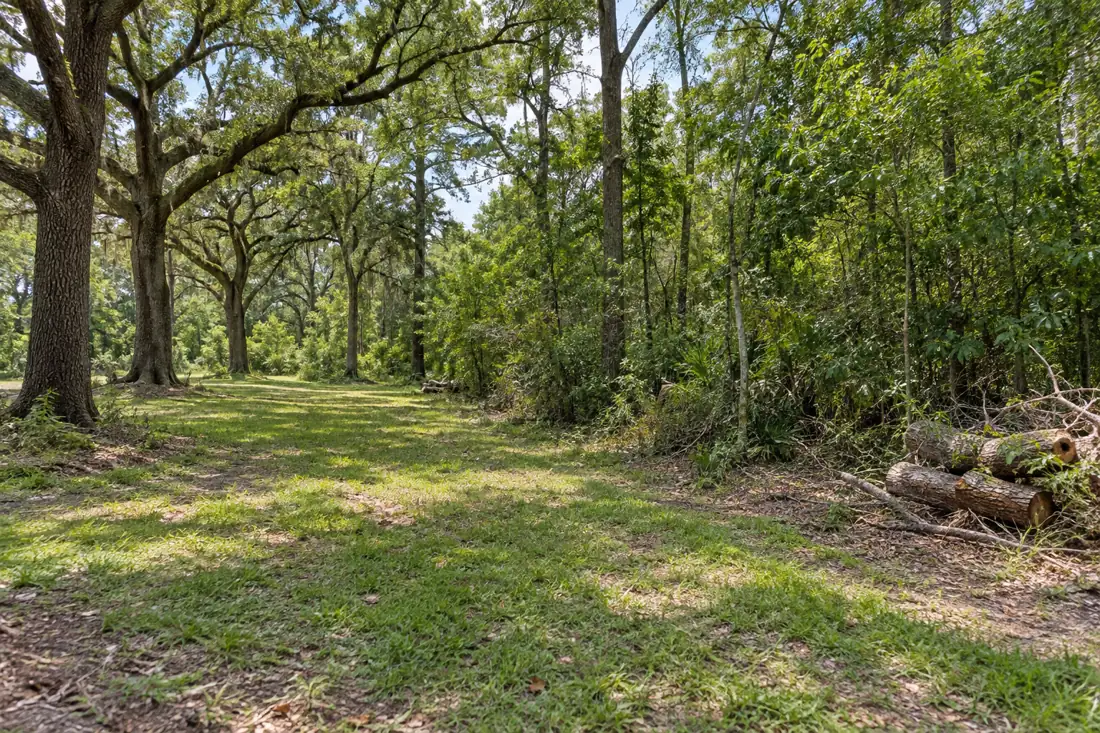
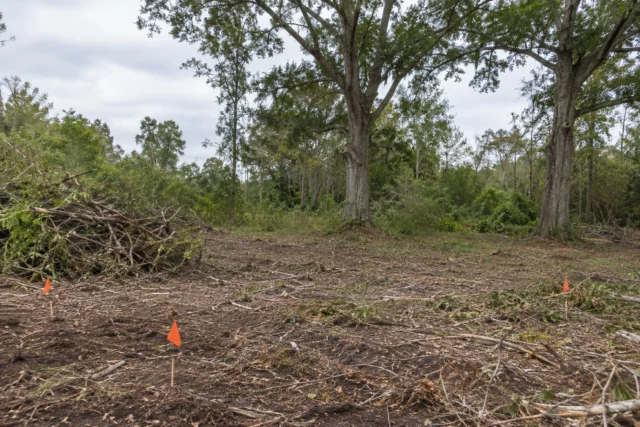
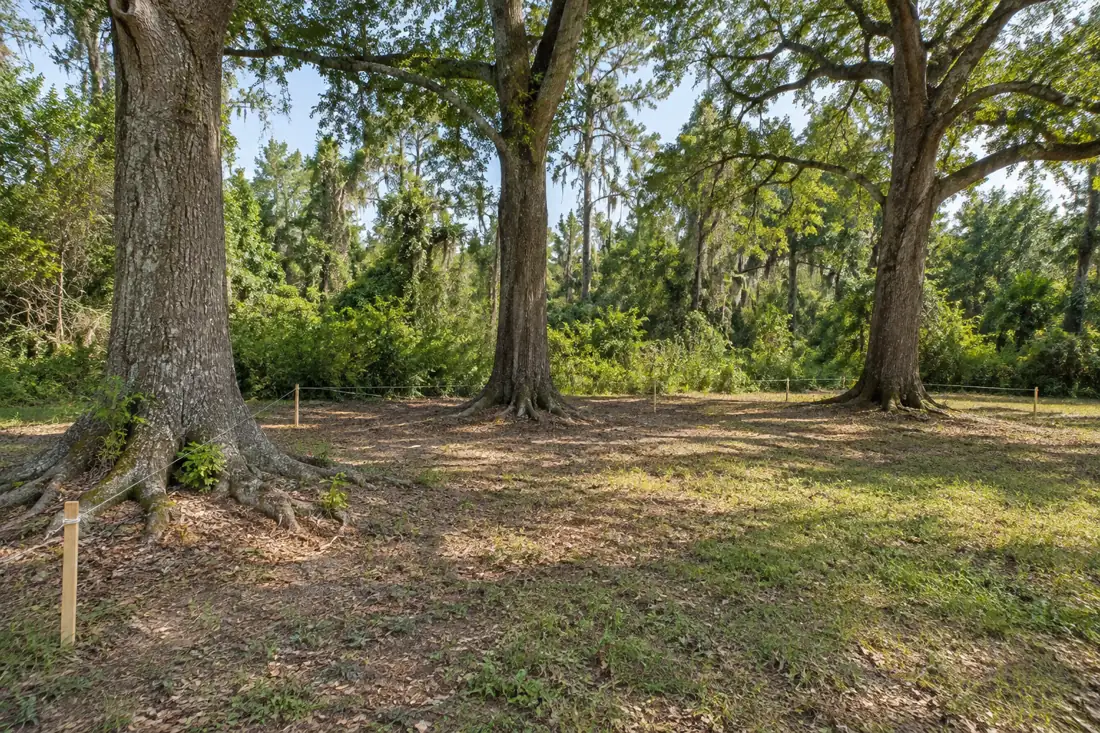
A new driveway can require tree removal and expose roots of trees that remain. Share the route, intended width and the paving contractor’s requirements. Discuss the tree work before excavation begins. The scope should define clearing, stump handling and responsibilities for base preparation or restoration.
Site-specific planning checkpoint: A driveway alignment should be reviewed while there is still a choice between preserving a tree, shifting the route or removing vegetation. Share a dimensioned sketch with anticipated vehicle width, turning needs, drainage crossings and the paving contractor’s grade requirements. Show the location of existing roots, utilities, fences and tree trunks along the corridor. Removal alone does not prepare a stable driveway base, and grinding a stump does not guarantee all supporting roots disappear. Ask the tree estimator to define which trees, branches and stumps are in scope, how chips will be handled and which trade owns excavation or compaction. Protect any retained tree from rutting and soil stockpiles near its root zone. Confirm the final clearing width before work begins so the tree crew does not cut more than necessary or obstruct the drainage route.
The new driveway may require a construction corridor wider than the finished paved surface.
Survey the proposed driveway route before removing trees
A new driveway needs a defined centerline, width and connection to the street before tree clearing can be priced intelligently. Walk the proposed route with the owner and mark trunks, low limbs, existing fences, roadside ditches and utility features. A line drawn across an aerial photo may cross a steep bank or a major root system that is not visible from above.
Ask whether the driveway alignment is preliminary or approved by the responsible designer and authority. If the entrance location can still move, compare routes around mature trees before making removal decisions. A few feet of alignment change may preserve shade or reduce stump work, but those options must be checked against turning space, drainage and access requirements.
Measure the width needed for the actual vehicles, including mirrors, turning room and any delivery equipment expected during construction. A proposed driveway line that appears clear on an overhead image may still pinch between roots, fences or overhead branches. Mark those conflicts before approving any removal.
Draw the real driveway corridor before making a removal list
The new driveway may require a construction corridor wider than the finished paved surface. Map the intended entrance, turning movements, drainage crossings, temporary equipment access and the trees or roots near each part of that route. Ask for a marked plan or verified measurements; guessing from an aerial image can lead to unnecessary removal or a quote that excludes the true work area.
Distinguish cutting a tree from preparing stable pavement. Stump grinding does not automatically remove every root, compact a base or resolve drainage. Where excavation threatens retained roots or grade changes are proposed, arrange appropriate assessment before promising that the tree can remain without impact. Utility checks and driveway design belong to their responsible trades.
Make separate decisions about tree removal, retained-tree protection, debris disposal, stump work and subsequent earthwork. A clear job handoff identifies what surface condition the tree crew will leave for the driveway contractor. Document the authorized work limits and do not cross public or neighboring property on the assumption that a route seems convenient.

Consider vehicle turning movements and overhead clearance
Driveway clearing should account for the vehicles actually expected to use it, including deliveries or emergency access where applicable. A narrow passage that works for a sedan may not work for a moving truck or service vehicle. Mark where turning requires additional side clearance and whether a low branch could contact a loaded vehicle.
Do not prescribe large canopy cuts solely from an estimated vehicle height. A qualified tree professional should assess targeted pruning and its effect on the tree's structure. Where repeated tall-vehicle clearance would require harmful pruning, rerouting the drive or selecting a different design may be more sustainable than continual cutting.
Decide whether the alignment or the tree can change
A new driveway corridor intersects tree crowns, surface roots, drainage and potentially buried utilities. Compare the proposed driveway alignment to retained-tree locations before selecting trees for removal. Include a turning path for vehicles and equipment rather than marking only the final paved width. Ask the designer or paving contractor to confirm grade, drainage and root-related constraints; a tree-service plan should not silently substitute for engineered pavement or utility decisions.
Document the disposal endpoint for removed trees and whether stump work leaves an area ready for another trade. The useful decision is whether route adjustments can preserve a tree safely, or whether a specific removal must be included in the approved project scope.
Protect existing drainage ditches and crossings
Many Louisiana driveways cross roadside drainage features. Identify the ditch, culvert location and planned grades before using tree equipment along the frontage. Stockpiled logs, chipped material and soil can obstruct the low point during rain. A tree contractor should not move a culvert or reshape a bank just to create a temporary truck route.
Coordinate with the driveway designer or drainage contractor about the intended crossing and permissible temporary access. After cutting, inspect for debris in safe visible portions of the ditch. If a pipe or bank needs repair, record it for the appropriate trade rather than including an unsupported promise that ordinary tree cleanup will make the drainage system construction-ready.
A culvert opening or shallow roadside swale may carry runoff from several properties, not just the driveway owner. Keep cut material and tracked soil out of that flow route, and coordinate crossing construction separately. Tree work should not quietly establish the drainage elevation or promise civil-engineering approval.

Assess roots before deciding which trees stay
A driveway can alter soil compaction and drainage over a broad strip, not just where the pavement touches roots. Map retained trees near the planned pavement and ask an arborist to evaluate whether the proposed grading and traffic are compatible with their long-term health and stability. Visible surface roots may signal constraints that warrant design changes.
Cutting major roots to achieve a straight pavement edge can compromise a tree and create future maintenance problems. Do not perform exploratory root cuts without a responsible plan. When a tree must be removed, explain the site reason separately from any structural risk claim so the owner understands whether the decision is driven by layout, health or safety.
A new driveway alignment is a root-protection and access decision
Before cutting trees for a new driveway, mark the proposed lane, turning radius, entrance apron, drainage direction and any retained tree crowns. A survey or site plan may show a driveway centerline but not the root impacts of excavation, compaction and repeated truck loading. Compare a route adjustment with tree removal where practical; even small changes in alignment can affect which root zones or low branches are crossed.
Avoid promising that roots can be shaved or cut safely just because they currently lift an old surface.
Measure the future driveway's true route before cutting trees for vehicle access
A new driveway needs more than a clear line between the street and a parking pad. Confirm the proposed entrance, turning radius, finished width, grade, drainage crossing, sightlines and vehicle types with the project designer. A tree may conflict with a proposed alignment but be retainable if the route shifts, while low branches can obstruct tall vehicles without the trunk standing in the paved footprint.
Show the whole approach in photographs and note sidewalk, curb, utilities and retained landscaping. Do not use an informal spray-painted line as proof that a public entrance or tree removal is authorized.
Separate clearing or pruning needed before construction from excavation, root handling, driveway paving and final drainage. Grinding a removed stump is not the same as excavating all roots to construction depth; the civil contractor must define the actual subgrade requirement and how it will be verified.
If a protected mature tree remains beside the driveway, discuss soil loading, fill and paving limits before bringing heavy equipment through its root zone. Ask which work will happen first, how trucks will enter until paving is complete, and who restores temporary access. An addition project has different foundation and staging constraints, so avoid copying its scope without reviewing the route.
Identify fences, gates and neighboring boundaries
A new drive often requires opening an existing fence or passing near a neighbor's shed, retaining wall or garden. Confirm the legal entry route and get needed permissions before clearing a branch across a boundary. Walk both sides of the proposed access where authorized, noting poles, meters, low cables and other obstacles not shown on property photographs.
Make it explicit whether fence removal and replacement are included in the tree service scope. A machine operator should not dismantle a gate or change a neighbor's property based on a casual comment. Document conditions before moving permitted panels and agree on safe temporary closure of the parcel when work is finished for the day.
A hedge, fence or line of old trees may not follow the surveyed boundary. When the route nears neighboring land, mark the measured corridor and verify permissions before access or cutting. Record who will move gates or temporary fencing, and who is responsible for restoring them.

Plan Tree Clearing for a New Driveway
The first question for a new driveway is where the route actually goes. Establish the proposed alignment and turning needs with the designer before asking for tree removal. Take wide photographs that include the road connection, ditch or curb, tree bases and garage or parking destination. A trunk close to the path does not always mean it must be removed, while a tree farther away may have roots affected by excavation or compacted base material. Keep those decisions separate from assumptions about convenience.
Check for roadside drainage crossings, existing culverts, utility markers and the actual property boundary. Clearing a path through vegetation does not grant permission to change the public roadway or ditch. Where a culvert or public connection is involved, the responsible specialist or authority should confirm requirements. Ask the tree contractor to describe vegetation and stump scope without representing that work as driveway grading, drainage design or paving approval.

Resolve alignment, roots and drainage before selecting removals
Discuss how excavation depth and future vehicle weight might affect trees proposed for retention. Avoid making an on-the-spot decision to sever large roots to fit the driveway; that can compromise tree stability and health. A revised alignment, alternative construction detail or tree evaluation may be appropriate. Plan equipment and debris routes so the ground that will carry the future drive is not unnecessarily damaged before the contractor responsible for its construction arrives.
Define the finished tree-work surface in writing. Does the request include full removal of specified trees, grinding stumps to an agreed depth, hauling roots and chips, or merely clearing above-ground brush? These results are not interchangeable for a paving contractor. Before work ends, check the proposed entrance width, protected trees, drainage route and the remaining surface condition against the latest marked alignment. Clear scope boundaries reduce duplicate excavation and avoid promising a driveway-ready subgrade when only tree work was purchased.
Choose a sensible method for trees in a narrow corridor
On a wide open lot, a smaller tree may be felled into a clear zone. Along a planned driveway close to buildings or retained trees, controlled sectional cutting can be necessary. The crew must evaluate lean, defects, overhead conductors and actual landing space before choosing. The customer's desire for a straight driveway does not override the need for a safe work method.
Discuss the location of chippers, loaders and log trucks before mobilizing. Even if the tree lies along a future drive, heavy equipment may not be able to use the unfinished ground without damaging it. Separate the cutting method from the haul route and identify conditions that would require a different approach.
Decide what happens to stumps and buried roots
Driveway construction needs a known subgrade condition, while tree removal alone often leaves a stump and extensive roots. Specify whether stump grinding is included, the desired treatment area and any limitations around utilities or retained trees. Grinding to an agreed depth is not equivalent to excavating all roots or certifying a pavement foundation.
The driveway contractor should determine excavation, compaction and base requirements. If underground wood remains in a proposed pavement zone, the two trades need a clear handoff. Do not promise a finished buildable surface from a stump service unless that work and the necessary testing are actually included.
Distinguish the visible stump height from roots that might later interfere with excavation or pavement sections. Tree removal, grinding and subgrade preparation are different operations with different limits. State the expected finish, access depth and who decides if roots are uncovered during driveway construction.

Keep material staging outside the future entrance
Logs and brush should be staged where they will not block public access, driveways or drainage, and where a truck can load safely. If the new route is the only feasible haul path, sequence loading so machinery does not trap itself behind a pile. Mark the road edge and any permit-dependent curb use before the job begins.
Agree whether chips remain for beneficial use or leave with the crew. A customer may want some firewood, but cut pieces must not be left where they interfere with the driveway builder or create a hazard. The quote should describe the final condition rather than the ambiguous phrase 'debris handled.'
Budget tree clearing apart from driveway construction
A clear quote can list each tree, pruning requirement, stump treatment, hauling and any special access. The owner can then compare the tree portion independently from excavation, culvert work, paving and gate installation. Avoid treating a preliminary driveway sketch as assurance that no additional clearing will be needed after engineering or permitting review.
If the route changes later, require a new assessment of affected trees and access. The cost of moving a construction alignment can be substantial, but the cost of unnecessarily removing a healthy mature tree is also real. A structured decision process lets the owner choose with both site and landscape consequences visible.
Ask for separate descriptions of tree work, debris removal, stump work and any protective ground measures, then compare that scope with the driveway contractor's plan. This prevents a gap where each trade believes the other will remove wood, restore a ditch or protect a surviving tree.

Inspect the corridor before handing it to the paving crew
After clearing, walk the proposed driveway centerline, drainage crossing and retained-tree edges. Check for stumps, exposed debris, sharp branches and ruts that might affect the next contractor. Confirm which wood was removed and whether any trees still require assessment or protective barriers. Completion photographs should match the stated clearing scope, not imply the drive is ready for paving.
Provide the designer or builder with notes on retained root zones, buried stump limitations and access conditions. The paving crew remains responsible for its own subgrade evaluation and construction. A good handoff prevents a successful tree job from being mistaken for approval to excavate or compact wherever the ground looks open.
Price tree treatment against the actual driveway geometry
A proposed driveway affects more than the visible strip of new pavement. The work area can include turning clearance, drainage, utilities, sidewalk tie-ins and construction access. Ask for a dimensioned site plan and map affected trunks and likely root areas before committing to removal or root cutting. A contractor should not assume that pavement can safely cover major roots, or that a different alignment is impossible. Distinguish the tree professional's evaluation from the designer's permit and drainage responsibilities.
- Show the driveway layout and existing tree locations together.
- Flag substantial root cutting and grade changes for specialist review.
- Mark existing drainage inlets and sidewalk approaches.
- Recheck tree preservation options after design approval.
Questions about this project
What should be marked before selective clearing?
Identify the authorized boundary, trees or landscape to retain, vegetation to remove and any restricted access. Make sure the site markings, map and written scope describe the same work before equipment enters.
Does clearing include grading and construction preparation?
Only where those tasks are specifically included and appropriately assigned. Tree and brush removal, stump work, excavation, grading and base preparation are different responsibilities with potentially different completion requirements.
When should tree work be discussed on a building project?
As early as practical, while the footprint, access, excavation and staging can still be coordinated. Identify retained trees and share drawings before clearing or other site activity creates avoidable conflicts.
Does stump grinding complete construction site preparation?
Not necessarily. Excavation, root removal, base preparation, compaction and grading may require separate work and acceptance criteria. Coordinate the tree scope with the contractor responsible for the next construction phase.
Can I cut a surface root to flatten the lawn?
Do not assume that is harmless. The root may matter to tree condition or stability. Describe the conflict and ask for an assessment and appropriate options before cutting or excavating near the tree.
Does a nearby tree prove it caused a plumbing problem?
No. Use the plumbing provider's findings and identify the affected system. Coordinate any tree or root work with that information rather than assuming location alone establishes the cause or the right remedy.
Does stump grinding remove the entire root system?
Grinding normally addresses an agreed stump area and depth. It should not be assumed to extract every underground root. Describe your future use of the site and ask what additional work or coordination is needed.
Can the area be paved or planted immediately afterward?
That depends on the intended project and the agreed finish. Chips, remaining roots, excavation and soil preparation may need separate attention. Coordinate the grinding scope with the installer who is responsible for the next phase.
What should I compare besides the price?
Compare tree identification, work objectives, access assumptions, hauling, stump treatment, site finish and exclusions. Ask whether permits or other coordination are part of the scope and who can approve changes if conditions differ.
Does an online request book the crew?
No. A request starts the estimate conversation. The company still needs to discuss scope, availability and any site assessment. For a dangerous or urgent condition, call 504-458-8336 rather than relying on a form response.
What should I tell Tree Huggers about tree clearing for a new driveway?
Explain the property address, the work you want and the specific concerns: driveway alignment, retained roots, paving responsibilities. Send safe photos of the tree, surroundings and access route. The contractor can then discuss the assessment and scope needed for this situation.
How do I request an estimate for this work?
Call 504-458-8336, text photos or use the estimate form on this page. Include the address, desired outcome and any timing constraints. The company will need to review scope and availability; an online request does not confirm a price, appointment or emergency dispatch.
Get a scope for your property
Share the latest driveway alignment, intended turning space, visible culverts and trees marked for retention or removal.