Redevelopment tree work needs the current site plan, retained-tree requirements and construction sequence. Identify utilities, occupied areas and access limitations before pricing. Clearing, stumps, hauling and restoration should have clear responsibilities. Changes to drawings or field conditions need an approved process so the tree scope stays aligned with the project.
Site planning detail: Commercial redevelopment puts tree removal, grading, demolition and new construction on overlapping schedules, but those scopes should remain distinguishable. Confirm the development footprint, property boundaries, retained-tree schedule, utility disconnects and where trucks can load without blocking public routes. A tree slated for preservation may need root-zone fencing long before excavation begins. Ask who verifies marked trees, who stops work when a conflict appears and how approved changes are documented.
Separate tree cutting and vegetative hauling from disposal of construction rubble, contaminated materials or other regulated waste. Provide contractors with approved plans and current access information rather than asking them to infer limits from old drawings. A complete handoff identifies the finished condition, stump or root treatment requirements and restoration responsibilities, without claiming that every tree or access route is automatically authorized.
Identify the exact plan issue, revision date and area of work used to price the clearing.
Translate redevelopment plans into a tree inventory
Commercial redevelopment begins with a clear map of the existing site, proposed uses and trees. Number significant trees, show canopy reach and mark which specimens are candidates for retention, assessment or removal. A preliminary concept plan is not the same as an approved grading or building package, so tree decisions should identify what remains uncertain.
Collect current survey, site design and utility information from the authorized project team. A dated aerial image may omit recent drainage or demolition work. The tree contractor needs the intended footprints and access zones but should not invent building approvals or assume that every tree inside a proposed area may legally be removed.
Match the inventory numbers to the current redevelopment drawing, not a generic site map. Show trees intended to remain, possible removals, uncertain ownership and areas where roots may conflict with proposed utilities. Include drawing revision dates so a later design change does not silently convert a retained tree into an approved removal.

Separate demolition, tree service and grading responsibilities
Redevelopment often brings demolition, utility work, paving and clearing into close sequence. Define which party handles standing trees, root balls, brush, stumps, building debris and soil excavation. These are distinct operations with different safety, waste and equipment requirements. A broad 'clear the site' instruction can lead to duplicated work or material left behind.
Agree on handoff conditions between trades: which route must remain open, what debris must leave before grading and which retained trees need barriers. Changes should be documented rather than interpreted by whichever operator arrives first. A reliable schedule depends on realistic dependencies, not merely assigning every contractor the same start date.
Coordinate clearing with the next construction trade
A redevelopment schedule can change after surveying, grading or utility work begins. Before tree clearing, identify the approved building footprint, retention areas, temporary construction entrance and where excavated material will be stored. Ask the project manager to distinguish trees approved for removal from those requiring protection through later phases.
Document who has authority to revise the clearing boundary if utilities or drainage plans shift. The estimate should clarify whether it covers cutting only, stump treatment, hauling, disposal and final access preparation, and should not promise a site ready for grading when those items are outside the agreed scope.
Three redevelopment hold points that prevent a tree scope from drifting
Illustrative planning situations, not photographs or claims of completed customer jobs.
Concept plan changes before tree work starts
A preliminary layout may show a parking aisle in one position while later civil drawings move it around retained trees or a drainage feature. Before mobilization, compare the actual drawing revision on the estimate with the owner-approved work limits and inventory numbers. Trees added or removed by a revision need fresh authorization; the contractor should not infer that an earlier allowance automatically approves the new layout.
Retail site remains open during early construction
A redevelopment may begin while nearby tenants, delivery vehicles and pedestrians still use part of the property. The tree-work sequence should name which lanes can close, how deliveries are coordinated and who can release the area to the crew. A map showing the entire future construction zone as available is not a valid current access plan. The construction manager needs a defined handoff between tree activity, temporary barricades and the operating business.
Utility trench changes equipment access mid-project
A tree or stump may have been priced assuming a clear level approach. Once excavation opens a trench or a soil stockpile occupies the route, that method may no longer be practical. Document the changed site condition, stop the affected work where necessary, and have the authorized project team assess an alternative. The tree contractor's record should show the revised access and scope, not claim that a new plan is covered simply because the tree count did not change.
Record these three decisions
- Approved drawing issue and tree inventory
- Live-business access release
- Change order for blocked or revised equipment paths
Align commercial clearing with the current redevelopment drawings
Identify the exact plan issue, revision date and area of work used to price the clearing. A superseded drawing can move an access road, stormwater feature or retained-tree line without anyone noticing in the field. Keep the tree-removal schedule, site logistics plan and relevant owner approvals together rather than assuming a general demolition scope covers vegetation.

Use a hold-point sheet when redevelopment drawings change
List each tree by a stable field label that also appears on the current site drawing. Next to that label record retain, assess, prune or remove, the person authorized to change the instruction, and whether utility coordination or permission is pending. When an architect moves a walkway or a grading line, the crew should not be forced to interpret a superseded clearing plan. Use a stop-and-confirm hold point before cutting near any changed limit.
An occupied business needs a separate operations plan: delivery times, accessible entrances, public exclusion areas and where debris trucks can stage without blocking emergency access. Keep demolition, excavation, tree removal and final grading as distinct subcontractor handoffs. A completion photograph should show both the treated tree location and the usable route that the next trade will inherit.
Ask the general contractor to sequence tree work against utility locating, survey control, erosion measures, demolition, grading and later landscape installation. Distinguish clearing needed to open access from clearing permanently authorized by the design. Existing trees marked to remain need clear field protection before heavy traffic begins.
Break the requested work into reviewable quantities or locations: tree IDs, clearing limits, stump treatment, onsite processing, export and final stabilization. These are planning categories, not invented quantities. A proposal should state how changes are measured and approved if buried debris, hidden roots or plan revisions alter the work.
During execution, use a dated change log that records who identified a condition, which plan reference it affects, who has approval authority and what changed in the scope. Site photographs should show context without claiming work was performed where it was not. Closeout should reconcile retained-tree protection, haul responsibilities and unfinished work before the next trade mobilizes.
Before accepting the work plan
- Price the correct drawing revision and marked work limits.
- Sequence access, utility coordination, clearing and restoration.
- Require explicit approval before changing quantities or retained-tree limits.
Review permits, protected trees and site constraints
Before cutting, the developer or authorized representative should verify applicable tree and land-disturbance approvals for the particular jurisdiction and parcel. Requirements vary with location, tree classification and the nature of redevelopment. Do not assume that a vacant commercial property is exempt from review or that an old permit authorizes a changed plan.
Keep documentation with the project file and tell the tree contractor exactly which work is approved. If a protected-tree determination is uncertain, obtain a qualified evaluation and regulatory guidance first. A planning visit can identify options without turning an unresolved approval question into an unauthorized removal.

Protect retained canopy during the entire project
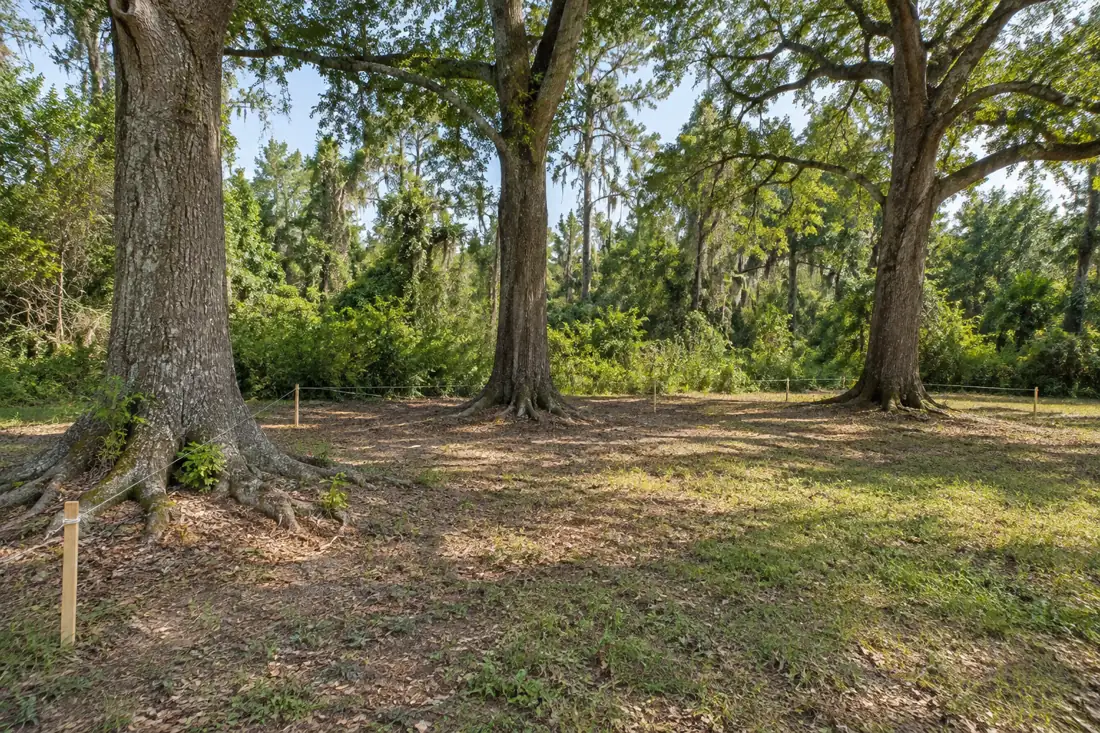
A retained shade tree can become a valuable part of a redeveloped parking court or public space, but it needs protection through demolition, grading and paving. Have appropriate professionals define root protection zones and mark them on contractor drawings. Put physical barriers in place before equipment traffic begins, and keep spoil, pallets and vehicles outside them.
One successful tree-service day does not protect the tree from later trenching or fill. Make protection expectations visible to every trade and specify who monitors the barriers. A request for temporary access inside a zone should trigger review, not a decision to move the fence because the loader needs a shorter route.
Protection is not finished when fencing first goes up. Assign responsibility for checking it after deliveries, grading and weather events, and identify a decision-maker for proposed entry into the protected area. Soil stockpiles, parking and temporary utility routes can affect roots even when trunks remain untouched.
Coordinate redevelopment clearing with the actual construction sequence
A commercial redevelopment may involve demolition, utilities, a new parking layout, protected trees and operations that continue on part of the site. Begin with the latest site drawing, a tree inventory and the planned order of work rather than a blanket clear-the-lot direction. Trees that interfere with a future drive or building corner may be retained if the plan changes, while retained canopy can be damaged by later excavation or material storage.
Identify adjoining businesses, public access, fire lanes, easements, overhead lines and any occupied building sections before discussing machinery positions. A tree contractor should not infer public permits or environmental clearance from an owner's instruction.
Ask which party controls the construction schedule, the clearing boundaries and approvals for newly discovered conflicts. Write a phased scope: hazardous-tree work if needed, selective removal, protected-tree pruning, debris transport, stump treatment and a formal release of the site to the civil contractor. Keeping vegetation onsite may be suitable for one phase but obstruct the next; disposal requirements should be explicit.
Coordinate safety boundaries without claiming that a tree crew can certify pavement strength, underground structures or demolition stability. A separate occupied-building guide is relevant when the project continues using some entrances while work progresses.
Tie each clearing decision to the current construction drawing
A redevelopment site may change after demolition discoveries, permit review or revisions to grading and utilities. A crew should not be expected to guess whether a tagged tree from last month is still scheduled for removal. Keep a dated tree inventory and a revision column linking each proposed action to the latest approved drawing.
The redevelopment manager should confirm permissions and site control before the tree contractor treats revised plans as authority.
Assess heavy-equipment logistics early
Commercial sites may have room for a large machine but limited legal street access, poor bearing ground or overhead conductors. Inspect gates, curb cuts, slopes, underground structures and working distances. A crane or loader choice must be determined by competent operators using actual loads and site data, not by a marketing photograph or a rough tree-height estimate.
Plan where trucks enter, turn and leave without crossing occupied neighboring property. Coordinate any necessary lane or sidewalk restrictions with the appropriate authority. The safest method may use staged sections and additional hauling instead of assuming a whole-tree drop simply because part of the parcel looks open.

Address neighboring businesses and pedestrian routes
Redevelopment tree work can affect adjacent stores, sidewalks, service drives and occupied buildings. Map the exclusion zone against regular business deliveries and emergency access. Provide useful advance information about temporary restrictions, while leaving control of hazardous work areas with the qualified crew.
Do not offer guarantees that customer entrances will remain open during every cut. If safe alternatives cannot be maintained, revise timing or obtain necessary closures and approvals. Communicate through authorized property representatives and keep private tenant or customer information out of public project documentation. Identify customer entrances, delivery lanes, transit stops and public sidewalks that may be affected by staging.
Coordinate any legitimate closures with the appropriate authorities and building representatives rather than promising continuous access without a traffic plan. Communicate timing using confirmed work windows, not an invented completion guarantee.
Coordinate utilities and underground infrastructure
Abandoned-looking commercial properties may still contain live electric services, communications, gas, water, drainage or private irrigation. Obtain current plans and use appropriate locating resources before placing stabilizers, grinding stumps or excavating. Utility-location markings do not necessarily cover every private facility, so gaps must be resolved rather than ignored.
Work near energized conductors requires properly qualified personnel and relevant utility coordination. If a line or structure is discovered unexpectedly, stop the affected operation and have the responsible specialist assess it. A tree crew should not modify a utility to make clearing faster.

Define debris streams and proof of disposal
Commercial vegetation may include clean woody material, storm-damaged logs, stump grindings and mixed construction debris. Separate them in the estimate and establish appropriate handling and disposal methods. Do not assume everything can go through a chipper or that a recycling claim is valid without a documented recipient.
If the developer requires tickets or closeout photographs, discuss what records the hauling provider can actually supply. A truthful job log may be more useful than a generic 'certified' label. Specify where retained timber or mulch may be stored without blocking future grading or drainage routes.
A commercial clearing scope should distinguish brush, trunks, grindings, construction debris and materials requiring specialist evaluation. Document which contractor is responsible for each stream and what proof of hauling is actually available. Retained logs or mulch must have an approved location away from stormwater routes and upcoming excavation.
Document changes as drawings and schedules evolve
Commercial plans often change as engineers resolve drainage, access or tenant requirements. Establish a revision process using the numbered tree inventory so a change affects specific specimens and tasks. A verbal statement to clear a little more is not enough when it could remove a retained tree or alter a protected area.
Review method, price, permission and access whenever the scope changes. Distinguish a newly discovered hazard from a design preference. Written approvals and an updated site sketch protect the owner and contractor and give future trades reliable information about what was actually authorized.

Deliver a useful clearing-to-construction handoff
At closeout, compare completed tree work against the approved tree schedule, hauling scope and access plan. Photograph remaining specimens, stumps, ground disturbances and drainage routes without implying they are verified customer testimonials. Record any limitation where roots, utilities or unsafe access prevented full treatment.
Provide the project manager with retained-tree protection notes, outstanding specialist evaluations and the expected condition of the site for the next trade. The grading contractor remains responsible for its own engineering and subgrade checks. A clear handoff makes commercial redevelopment safer and more predictable than a bare statement that all trees are gone.
The handoff should identify completed removals, protected trees, remaining stumps, changed access routes and any unresolved utility or soil issues. Attach accurate dated site photos and the approved plan revision without claiming a professional certification that was not performed. Future trades need usable facts, not simply a cleared-site photograph.
Questions about this project
When should tree work be discussed on a building project?
As early as practical, while the footprint, access, excavation and staging can still be coordinated. Identify retained trees and share drawings before clearing or other site activity creates avoidable conflicts.
Does stump grinding complete construction site preparation?
Not necessarily. Excavation, root removal, base preparation, compaction and grading may require separate work and acceptance criteria. Coordinate the tree scope with the contractor responsible for the next construction phase.
What should be marked before selective clearing?
Identify the authorized boundary, trees or landscape to retain, vegetation to remove and any restricted access. Make sure the site markings, map and written scope describe the same work before equipment enters.
Does clearing include grading and construction preparation?
Only where those tasks are specifically included and appropriately assigned. Tree and brush removal, stump work, excavation, grading and base preparation are different responsibilities with potentially different completion requirements.
Is a total tree count enough for a large quote?
Usually the parties also need locations and tasks. Use consistent tree numbers, marked photos or a site plan so the estimate and crew instructions refer to the same trees and retained areas.
Does a work inventory include a condition assessment?
Only if that service is expressly part of the scope. A list used to identify and price tasks should not be mistaken for a documented assessment of every tree's condition or risk.
How should extra work be approved?
Use the agreed approval process and identify the change, reason, scope, price or schedule effect as applicable. Confirm who has authority before treating an additional tree or task as part of the original job.
What completion records are useful?
Keep the agreed scope, tree or area identification, authorized changes, invoice and labeled photos where appropriate. Include unresolved items and a contact. Contract-specific records should follow the buyer's stated requirements.
What should I compare besides the price?
Compare tree identification, work objectives, access assumptions, hauling, stump treatment, site finish and exclusions. Ask whether permits or other coordination are part of the scope and who can approve changes if conditions differ.
Does an online request book the crew?
No. A request starts the estimate conversation. The company still needs to discuss scope, availability and any site assessment. For a dangerous or urgent condition, call 504-458-8336 rather than relying on a form response.
What should I tell Tree Huggers about tree clearing for a commercial redevelopment?
Explain the property address, the work you want and the specific concerns: site plan, retained trees, trade sequence. Send safe photos of the tree, surroundings and access route. The contractor can then discuss the assessment and scope needed for this situation.
How do I request an estimate for this work?
Call 504-458-8336, text photos or use the estimate form on this page. Include the address, desired outcome and any timing constraints. The company will need to review scope and availability; an online request does not confirm a price, appointment or emergency dispatch.
Get a scope for your property
Commercial redevelopment tree work should follow an approved project scope rather than an assumed blank-slate clearing instruction. Start with the current site plan, surveyed limits, retained-tree schedule, utility information and the sequence of demolition, grading and construction. Determine which trees or vegetation may be restricted by permit, easement or other approvals; the clearing contractor should not be asked to decide land-use authority from a site photo. Identify pedestrian, tenant, delivery and emergency access that may have to remain open during work.
A workable procurement package distinguishes selective tree removal, brush clearing, stump treatment, loading, disposal and protection of retained root zones. It identifies staging constraints, traffic or utility coordination, material documentation and the handoff condition for the grading contractor. Confirm what happens if unexpected buried debris, protected vegetation or changed design limits are encountered. A written change process prevents site clearing from silently expanding beyond authorized boundaries and gives the next trade a more reliable starting condition.