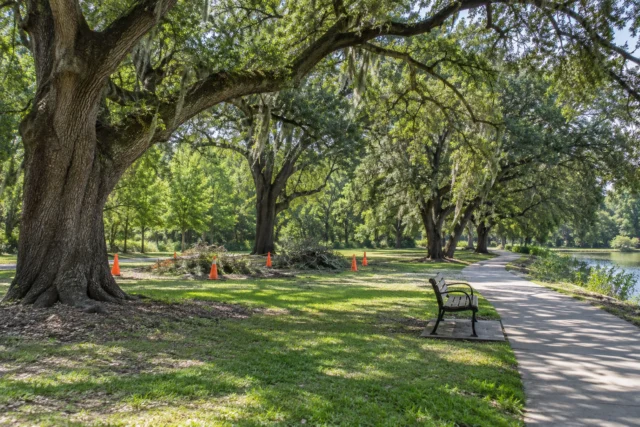
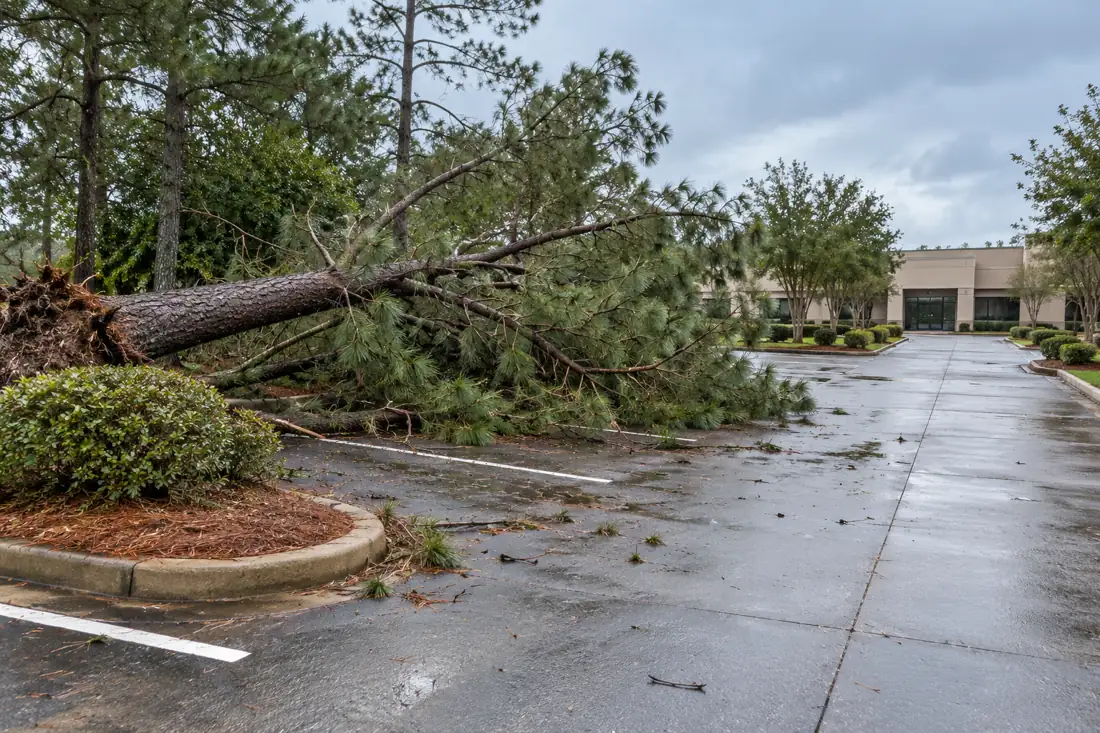
Cemetery work needs careful identification of trees, grave markers, access lanes and areas that must be protected. Discuss equipment routes and any restrictions with the property representative. A clear scope and pre-work photos help document the condition and the agreed work. Public access and scheduled services should be included in the timing plan.
Practical scope and safety guidance: Cemetery tree work requires more precise site protection than general lawn cleanup. Mark headstones, monuments, fragile paving, burial sections, service drives, irrigation and paths near each target tree. The cemetery operator should approve the calendar around services and visitation, as well as any necessary notices. A narrow strip of grass between markers may be unsuitable for equipment even if a vehicle could physically fit. Mats help in some circumstances but do not establish adequate soil support or protect a historic feature from every risk.
The estimate should identify how sections are controlled, where logs and chips are handled and how visitor access stays outside the work area. When protected or significant trees are involved, clarify who will check preservation obligations. Keep an authorized before-condition record and specify cleanup and restoration. The manager should inspect the real site rather than rely on illustrative planning imagery as completion evidence.
Site-specific planning checkpoint: Walk the cemetery with the caretaker before choosing a route for trucks or ground equipment. Headstones, low markers, memorial plantings, irrigation lines and unmarked subsurface features may be close to the trees even when the turf appears clear. Identify sections that must remain accessible for services and visitors, and make a plan for privacy and temporary access notices. Use existing paths only after checking their load restrictions; protective mats do not guarantee that soft soil or buried features can carry a vehicle. In the proposal, distinguish pruning from removal, hauling from turf repair, and any monument protection from ordinary cleanup. Record the condition of sensitive surfaces before and after work.
Start with the cemetery manager's authorized tree map and identify headstones, monuments, burial areas, pathways, irrigation, decorative plantings and planned services near each tree. Photograph fragile features from permitted access routes before equipment arrives. A vacant-looking plot is not automatically a safe place to place outriggers or wood piles; soil disturbance and vehicle loads may be unacceptable even where no markers stand.
Schedule any closure around funerals, visitation and religious or family observances as directed by the property manager. Ask the contractor to specify the route for moving limbs and wood without crossing protected areas.
The written scope should clearly state which memorials and areas are excluded from machine travel, how an approved work zone will be isolated and who authorizes changes. Separate structural tree-risk evaluation from cosmetic pruning and routine grounds care. For every location, define stump treatment, debris removal, cleanup and any allowed ground restoration.
If wet weather makes the planned route unsuitable, reschedule or obtain an approved alternative instead of shifting equipment across sensitive ground. Close out with a respectful walk alongside the cemetery representative, recording marker condition, grass or soil disturbance, the condition of access paths and any remaining maintenance recommendations.
Map trees, memorials and cemetery access with care
A cemetery tree project should begin with a precise map, not an instruction to cut near the old section. Mark trees by a stable identifier and record nearby burial plots, monuments, mausoleums, benches, fences and maintenance lanes. The same tree may overhang several sensitive features and require a different method from a tree near an open turf area. Ask the cemetery representative to clarify property boundaries and any areas where equipment or personnel must not enter.
Photograph the full canopy, trunk and working approach without recording visitors or disturbing memorial objects. Confirm which maps are current and whether graves or underground structures extend beyond obvious surface markers. A contractor needs to understand these conditions before evaluating a lift, rigging method or hauling route. Keep sensitive plot and personal information within appropriate authorized records instead of putting it on a public inquiry form.

Arrange work around services, visitation and cultural needs
Funerals, graveside services and family visitation deserve an operating plan that is more specific than working on a slow weekday. The cemetery should identify scheduled events, typical busy areas and any restrictions on noise or access. A tree crew may need a firm pause or a complete reschedule when a service overlaps the work zone. Do not presume that equipment can be hidden from view or that noise will be inaudible beyond a certain distance.
Assign a cemetery contact who can coordinate with staff and families while maintaining the tree contractor's work boundary. Visitors should not be directed through suspended loads or machinery simply because a service is running late. If a phased approach is possible, the work can move between sections based on approved access windows. Record those phases and hold points in writing, including how the site will be left between work days.
Protect headstones, monuments and ornamental features
Grave markers and statues can be fragile, uneven or difficult to replace. Identify all memorial features near the canopy, proposed equipment path and debris-handling area. The tree crew should not assume that a monument can serve as an anchor, barrier or staging surface. Ask how controlled lowering, ground protection and exclusion areas will be managed. Special protection may be appropriate, but no covering or mat should be treated as a guarantee against impact.
Before work, document the visible condition of nearby features with authorized photographs, including preexisting cracks or movement where relevant. If a marker is unstable or a vault cover is suspect, involve the cemetery representative and suitable specialists rather than adjusting it as part of tree work. The scope should distinguish tree services from monument restoration and cemetery infrastructure repair. Unexpected contact or damage must be reported immediately through the agreed process.

Assess roots and soil without disturbing burial areas
Tree roots can extend beneath paths and plots, and a trunk may be close to subsurface structures that are not visible on a walk-through. Ask the cemetery to identify known vault locations, irrigation and drainage corridors, and restrictions on ground disturbance. Removing a tree does not automatically make stump grinding suitable at the original planting location. Root cutting or excavation can also affect stability of a retained tree and nearby soil.
A qualified tree assessor should discuss the practical consequences of proposed treatment, while the cemetery and relevant specialists determine whether digging or grinding is permitted. Coordinate applicable utility locating and any site-specific approvals first. Do not place outriggers, trucks or a stockpile on an area whose subsurface support is unknown. A conservative access plan may require smaller equipment or more controlled material handling rather than a direct route across open-looking turf.
Protect monuments and access routes during cemetery tree work
A cemetery has sensitive surfaces and structures that may not be visible from a street view. Trees may hang over monuments, burial areas, visitor paths, utilities and service routes. A work request should identify the responsible cemetery administrator, affected sections and any restrictions during services or visiting hours. Do not assume a crane or truck can operate over fill, vaults or landscaped ground. The machinery choice depends on careful access and support evaluation, not solely on the height of the tree.
Mark the trees and protected features on a clear diagram, then establish how material could be controlled and removed without crossing occupied spaces. Confirm where visitors will be separated, who authorizes temporary access restrictions and which areas require a separate restoration plan. Cleanup of sawdust and branches is not equivalent to repair of a monument or pathway.
Record the accepted scope and condition of designated routes before work, avoiding identifiable visitors in photographs. Keep pruning, tree removal, debris, stump work and specialized repair as distinct tasks.
Respect Memorial Areas While Planning Cemetery Tree Work
Cemetery tree work requires more than an estimate based on trunk size. Walk the site with the authorized grounds representative and identify grave markers, mausoleum edges, historic features, irrigation and narrow access lanes that cannot carry unrestricted equipment. Mark the intended tree and treatment without adding sensitive identifying details to a public map. A branch above a memorial area may call for controlled handling even when the tree stands next to a drivable road.
Plan the schedule around visitation, services and grounds maintenance rather than imposing a standard commercial work window. The cemetery decides which paths may close and how visitors will be redirected respectfully. Clarify who can authorize temporary protection or movement of lightweight site furnishings, and never assume that monuments or fixtures can be shifted. If an unforeseen obstruction changes access, stop for a revised plan rather than improvising around memorials.

Document protected markers, routes and authorized decisions
Compare methods by the smallest practical disturbance to protected areas. Crane support, climbing, rigging and small equipment have different ground and overhead needs. Soft soil, historic masonry and concealed drainage can limit the apparent staging area. Require the contractor to identify how cut wood will travel, where it may be placed, and who is responsible for repairing any surface disturbance under an agreed scope.
Document the completed trees, debris removal and reopening of access lanes with respectful photographs that avoid legible names and private gatherings. A simple list of deferred concerns is useful to grounds staff, especially after future storms. Do not treat an estimate for one tree as a comprehensive arborist assessment of the grounds, and do not label routine pruning as permanent protection for nearby memorial structures.
Choose removal or pruning based on individual risk
A mature tree may provide essential shade and landscape character while containing branches that need selective attention. Describe the actual issue: a hanging limb near a walkway, a cracked union, a diseased branch or an objective to improve clearance. A recommendation should be grounded in a professional assessment of the tree and what is beneath it, not in fear of its age alone. Tree removal may be appropriate for some conditions, but it should not be assumed for every large specimen.
Ask the professional to explain pruning objectives, potential effects on structure and any monitoring recommendation. If a fresh break is above a frequently visited plot, the cemetery may restrict that section pending inspection. Staff should not stand beneath the limb to obtain a close-up image. Do not promise that treatment makes the entire grounds storm-proof; the condition of different trees and use of the site can change.

Use authorized lanes for equipment and material transport
Cemetery lanes can be narrow, sharply curved or built over older infrastructure. Walk the proposed entry, turning point, working area and exit before selecting equipment. Record gate openings, slopes, soft ground, drainage covers and overhanging branches along the route. Even if a vehicle fits through a gate, it may not have enough room to turn or set stabilizers at the tree. The contractor should justify the chosen approach rather than assuming the shortest path is safe.
Avoid routing chips or logs over grave markers, occupied paths or maintenance areas that must remain available. If the only viable route requires temporary access to another parcel or a restricted section, obtain permission in advance. Discuss whether protective mats are appropriate and how their removal will be inspected. A cemetery's regular mower route is not proof that the same surface can support a heavy tree-removal machine.
Plan weather, drainage and ground recovery
South Louisiana rainfall can turn cemetery turf into vulnerable ground, particularly beside trees with exposed roots or along low sections. Record ponding and erosion that may affect the working approach. A storm can alter the condition of a tree between estimate and work, and a saturated lawn may require postponing machinery access. Treat the work plan as conditional on the actual site conditions rather than promising the same equipment approach regardless of weather.
If surface depressions, ruts or soil displacement occur, document them and determine whether restoration is part of the agreed scope. Ground recovery around memorials deserves careful coordination with cemetery staff and should not involve unapproved grading. Identify drainage inlets that must remain clear of wood chips and leaves. The final inspection should consider both the visible tree treatment and the grounds that visitors will use after equipment leaves.

Write a precise scope with sensitive-area exclusions
A useful estimate identifies each tree by map reference, the recommended work, debris handling and any stump treatment. It should describe the protection plan for markers and the limits of equipment travel. If the cemetery has restricted sections, include them as explicit exclusions or required escort locations. Separate urgent safety work from optional aesthetic pruning so decision-makers can approve priorities without losing track of costs or access effects.
Identify who may sign the contract and authorize a change if conditions differ from the estimate. Verify contractor credentials and relevant coverage from current documentation; do not substitute an unverified claim or customer rating. The cemetery may have additional site policies that need to be incorporated, but they should be provided by the cemetery rather than invented by the contractor. A signed scope should make responsibilities understandable to the crew and to grounds management.
Manage debris and cleanup respectfully
Branches and chips should be removed or retained according to a plan that respects memorial spaces and visitor routes. Do not leave cut wood against markers, cover inscriptions with sawdust or block access to graves. If logs need temporary staging, choose an area approved by the cemetery that does not interrupt services, maintenance vehicles or pedestrian travel. Clarify whether stump chips, fine debris and any existing piles are included in the contracted cleanup.
After cutting, inspect the work area for loose wood, mat impressions and displaced landscape materials. Report any discovered monument issue rather than attempting a concealed repair. The property contact should confirm that affected lanes and paths are fit for their intended use before barriers are removed. Use photographs of the tree and cleared area for documentation without turning memorials or mourners into marketing material.

Keep a location-based record for future grounds care
At completion, the cemetery should receive a list of treated trees, the actual work performed and any recommendations for separate follow-up. Mark the map with dates and areas that remain excluded or require another inspection. This helps staff answer future questions without confusing one mature tree with another. Documented decisions are particularly useful when caretakers change or a later storm creates new damage in a different section.
A completed work order should not be described as a certification that every tree on the cemetery grounds is safe. Retained trees continue to grow, storms can create fresh defects, and site use changes. Reassess noticeable changes and prioritize work according to observed condition and exposure. Thoughtful documentation supports respectful long-term stewardship of the grounds and the people who visit them.
Questions about this project
Which property features should I point out?
Identify buildings, vehicles, fences, fixed fixtures, landscape features, utilities and occupied routes. Explain what can move and what must remain. Include existing damage and any buried features you know about along the access route.
Should people remain inside the work area?
The contractor and site contact should establish an exclusion area and access arrangements appropriate to the work. Keep children, pets, visitors and other workers outside the active zone until the responsible parties say it can reopen.
Can tree equipment use any driveway?
No general assumption should be made. Pavement condition, edges, support, buried infrastructure and the proposed equipment all matter. Ask the contractor to assess the intended setup and route for the particular property.
Do mats guarantee there will be no ground damage?
Ground protection is one part of a site-specific plan. It does not remove every load, soil or access limitation. Discuss the proposed measures and any restoration responsibilities in the written scope.
Can a business stay open during tree work?
That depends on the site and scope. Discuss occupied routes, exclusion areas, loading and work windows with the contractor and property representative. Do not assume normal access can continue through the active work zone.
Who should communicate with tenants or visitors?
Agree on that responsibility with the property representative. The contractor needs a clear site contact, while the owner or manager should use the property's established process to communicate access changes and work windows.
How should extra work be approved?
Use the agreed approval process and identify the change, reason, scope, price or schedule effect as applicable. Confirm who has authority before treating an additional tree or task as part of the original job.
What completion records are useful?
Keep the agreed scope, tree or area identification, authorized changes, invoice and labeled photos where appropriate. Include unresolved items and a contact. Contract-specific records should follow the buyer's stated requirements.
What should I compare besides the price?
Compare tree identification, work objectives, access assumptions, hauling, stump treatment, site finish and exclusions. Ask whether permits or other coordination are part of the scope and who can approve changes if conditions differ.
Does an online request book the crew?
No. A request starts the estimate conversation. The company still needs to discuss scope, availability and any site assessment. For a dangerous or urgent condition, call 504-458-8336 rather than relying on a form response.
What should I tell Tree Huggers about planning tree work for a cemetery property?
Explain the property address, the work you want and the specific concerns: markers, restricted routes, scheduled services. Send safe photos of the tree, surroundings and access route. The contractor can then discuss the assessment and scope needed for this situation.
How do I request an estimate for this work?
Call 504-458-8336, text photos or use the estimate form on this page. Include the address, desired outcome and any timing constraints. The company will need to review scope and availability; an online request does not confirm a price, appointment or emergency dispatch.
Get a scope for your property
A cemetery tree-work plan must protect markers, historic features, graveside services, mature landscape and designated paths. Provide the authorized grounds contact with a marked map, safe tree photos and any scheduled service or visitor restrictions. Ask for an approach that prevents material from being dropped onto sensitive areas and clearly describes where equipment may travel or place outriggers.
Require a written list of tree-by-tree work, temporary closures, debris removal and any surface or marker protection the contractor will provide. Coordinate before work begins; never rely on an informal promise that nearby markers can simply be moved.