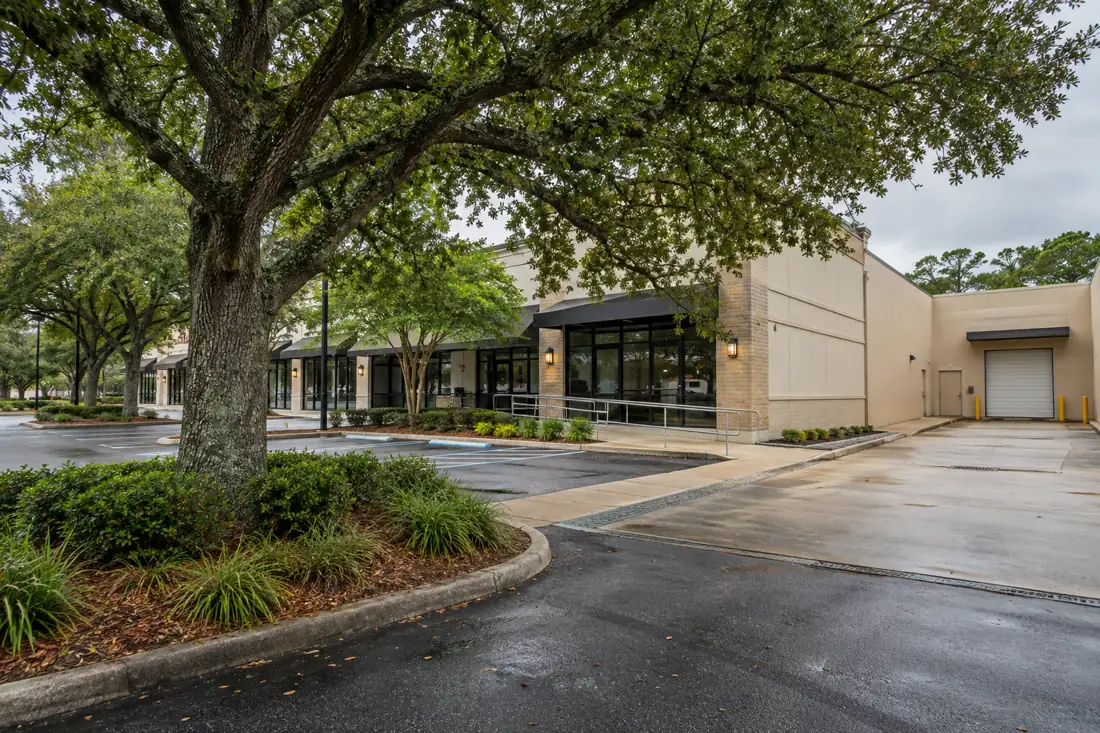
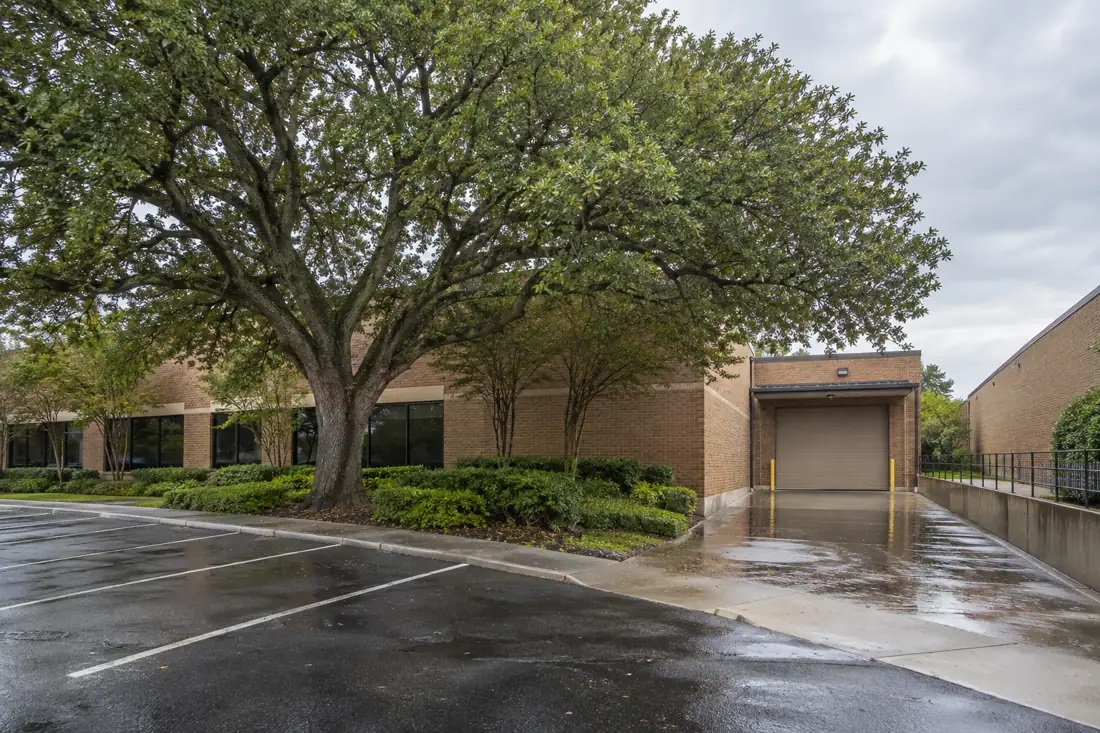
Storage sites may have narrow aisles, controlled gates and customers accessing units throughout the day. Identify clearance concerns and trees near buildings or fencing. Work windows and temporary closures need to be coordinated with management. The quote should explain how material leaves the site and what cleanup is expected before access resumes.
Practical scope and safety guidance: Self-storage tree work needs a unit-access plan, not just a list of trees. Mark aisles, gates, keypad posts, cameras, overhead lines, roll-up doors and the spaces where customers turn their vehicles. Never put customer access codes or private unit information into public job notes. Ask the operator which aisles can close and who handles customer notifications or vehicle relocation. The contractor should not presume authority to move belongings or block a rented unit.
Show the safe fall and material-handling zone as well as any non-rented place available for debris. A narrow aisle may require direct load-out rather than temporary piles. Distinguish pruning to regain vehicle clearance from a removal prompted by pavement or fence damage; root-related concerns may require separate assessment. Describe stump work and underground utility-locating responsibilities before assuming a grinding path. Closeout should verify gates, fences, units and driving surfaces.
Start with the unit and aisle map, highlighting the trees, exterior doors, roll-up clearance, gates, camera poles, utility runs and drainage swales. Note which units are routinely visited and where customers may park or push carts. A rental aisle cannot become a temporary log yard without affecting access, and a machine that enters one end may not have room to turn around.
Ask the facility manager which rows may close, what notification policy applies and how customer belongings or parked vehicles will be protected without handling them unnecessarily. Separate trimming clearance from a request to evaluate potentially unstable trees.
The contractor should propose an aisle-by-aisle sequence with barriers, work hours, equipment route, safe debris movement and final sweeping. Establish who controls gate settings and who communicates a changed schedule; avoid claiming a guaranteed reopening time. Include security sensors, gutters, roof edges, unit doors and fences in before-work photos.
Compare proposals for removal of limbs or whole trees, stump work, disposal and damage repair rather than accepting one broad lot figure. Before reopening a row, check unit access, door travel, surface debris and any blocked drains with the authorized manager, and document outstanding items separately.
Inventory the storage aisles and identify every affected tree
Begin with a current site map that shows buildings, individual storage rows, access lanes, office entrances, fencing and each tree proposed for inspection or work. Mark trees by aisle number or another reference that a contractor can find without guessing. Distinguish a low limb touching a roof edge from a dead branch over a vehicle lane, a leaning tree beside the perimeter fence or roots displacing pavement. Those situations require different observations, equipment and approval decisions.
Walk the property at a normal operating time and note where customers stop, unload and turn around. A narrow lane that appears accessible on a vacant Sunday may be blocked by moving trucks during weekday rentals. Share photos looking along the full lane rather than only upward at the canopy, and record any unusually tall vehicles that must pass. Avoid photographing customer unit contents, access codes or identifying vehicle information in an estimate request.

Set access windows without stranding rented units
A storage facility cannot simply close every aisle while a crew works. Identify the exact doors and turns affected by each tree, then discuss a phased sequence with the manager so customers retain a usable route where practical. Compare short morning work windows, low-traffic periods and staged work areas, recognizing that equipment setup and cleanup may last longer than the cutting itself. The proposed sequence should be workable without promising a completion time that has not been confirmed.
When closure is necessary, the facility should handle customer notices and any access commitments under its own policies. A tree contractor should be told which gates are operated by staff, how an escort enters after hours and where the crew must leave the lane at departure. Never publish gate credentials on a form or attach a photograph showing a keypad code. Document a responsible contact who can make an on-site decision if a parked vehicle prevents safe work.
Service Trees Without Blocking Storage Customers or Units
Self-storage properties are unusual because a narrow interior lane is both an emergency route and a customer's only way to a unit. Identify the precise building rows affected by a tree, gate movements and the distance from branches to roll-up doors. Plan work by aisle rather than treating the entire property as one unrestricted work zone. Before quoting, clarify whether the contractor may use the main entrance and whether a second emergency access route exists.
Never assume a tree can be worked above occupied customer vehicles or open unit doors. The facility manager needs to arrange suitable vehicle relocation or temporary restricted access under its own customer policy. Keep customer names, unit numbers and gate credentials out of public-facing photographs and project notes. Contractors should receive only the operational details needed to reach the agreed work zone; they should not be asked to handle stored belongings.

Control access to aisles, doors and security boundaries
Look at material handling before selecting an approach. A small saw team may fit through a gate but still need somewhere to stack branches, and a large truck may enter only when certain aisle corners are unobstructed. Discuss root-zone surfaces, drainage grates, fence sections and any equipment that might need to remain outside the secured perimeter. If no safe approach exists during normal hours, request an alternative phased schedule instead of forcing access.
Ask for a line-item result covering specific trees, pruning versus removal, debris extraction, stump finish, protection of doors and barriers, and a closure-reopening sequence. At the final walkthrough, inspect gate clearance, unit access and loose debris along the aisle. Record future reinspection recommendations for retained trees, but do not confuse routine pruning with a property-wide risk certification. A useful handoff allows the manager to answer what changed without exposing private tenant information.
Check roof edges, cameras, gutters and perimeter systems
Storage buildings often have long metal roof edges, roll-up doors, shallow gutters and exposed exterior conduits close to tree branches. Ask the assessor to examine the relationship between the canopy and these features, including branches that rub during wind rather than only when the weather is calm. A small branch can be a recurring maintenance problem without warranting removal of a whole tree. Locate cameras, signs, lights and alarm equipment that may need temporary protection or access.
Perimeter fencing and secure gates create special work boundaries. If a limb projects outside the fence, confirm ownership and permission for any neighboring access rather than assuming the contractor can reach from the far side. Discuss how debris will be kept away from wire, sensors and sliding-gate tracks. The work order should say who handles any preexisting fence defect and require reporting newly discovered damage before the work advances into a different area.
Choose equipment by turning space and surface loading
The biggest tree may not be the most difficult one to reach. A lift, compact loader, chipper and hauling truck all need enough room for safe turns, stabilizers and material movement. Note pavement slope, drainage grates, soft shoulders, gate heights and roof overhangs on the equipment approach. A contractor can then evaluate whether climbing, sectional removal or a different access method is appropriate rather than selecting equipment from tree height alone.
Request a planned path from the road to the working tree and back out again. Ask where protective mats might be needed and whether concrete, asphalt or pavers have known weak spots. Some access solutions require extra setup or separate permission, so record those as scope decisions, not assumptions. Do not attempt to move an unstable tree or enter beneath suspended branches merely to create a better photo for the estimate.
Separate branch clearance from structural risk decisions
A branch brushing an awning and a cracked trunk near an occupied building are different categories of concern. For each tree, explain the observable problem, location, urgency and desired result. Pruning can address selected clearance needs when consistent with the tree's health and structure; a qualified assessment may recommend another approach if decay, failure history or root instability changes the risk. Avoid choosing a large cut purely to create empty space above a storage roof.
Ask the tree professional to explain the objective of proposed cuts and whether follow-up evaluation is warranted. The request should identify branches or trees by map reference, not a vague instruction to trim everything along a row. If wind damage is recent, mention what changed and whether access has already been restricted. The facility manager should secure an obviously hazardous area and seek appropriate emergency assistance rather than letting customers pass under an uncertain defect.

Protect customer vehicles, unit entrances and door operation
A work zone should account for vehicles that customers can move and belongings or equipment that cannot be safely relocated. Identify parking bays to clear before arrival, and keep loading zones free of branches, sawdust and equipment. Roll-up doors must remain operable when lanes reopen. Where storage units have exterior access, the site representative should consider how to prevent customers from inadvertently entering a temporary exclusion area while the crew is handling material overhead.
Ask the contractor and manager to walk the planned work boundary together before cutting begins. Record existing cracked pavement, dented metal panels or other visible concerns where that helps prevent later confusion. The assessment should distinguish protection measures included in the contractor's work from tenant notifications and site-security procedures controlled by management. Do not promise that tarps or mats eliminate every risk; they are planning measures whose suitability depends on the actual work.
Plan safe debris movement without blocking drainage
Long storage aisles can make the debris path as important as the saw location. Trace where brush, logs and chips will travel to the truck, and identify a temporary staging area that does not block fire access, customer turning lanes or drainage inlets. Discuss whether material is chipped, loaded whole, stacked for owner retention or hauled away. A vague cleanup allowance can conceal significant differences in effort and final appearance.
After branch removal, sweep and inspect the route with attention to sharp wood fragments, sawdust at door thresholds and loose debris inside gate tracks. Avoid directing chips or leaves into catch basins. If a large trunk section must be moved along asphalt, confirm how loading weight and equipment movement will be managed. The final scope should say whether stump work, surface repair or removal of existing vegetation debris is included or excluded.

Review storm conditions and water-related ground changes
South Louisiana's heavy rainfall can change the feasibility of a storage-site tree project from one week to the next. Saturated ground beside a paved lane may not support the same equipment position as dry ground. Note ponding, eroded shoulders, newly exposed roots and leaning after high winds, and ask the assessor to reevaluate conditions when a storm occurs between the estimate and planned work. A photograph taken before the event may no longer represent the site.
Treat concerns about broken hanging limbs or tree movement as a safety issue first. Restrict access where appropriate and arrange a professional evaluation instead of conducting a customer-facing inspection from beneath the canopy. Do not infer a particular tree is safe because it survived an earlier hurricane, or unsafe simply because a species has a reputation for storm damage. The proposed response should depend on the observed condition, targets and exposure.
Get one written scope per aisle or work phase
A usable proposal should list the trees by their map IDs and state the action for each: inspection, selective pruning, removal, stump grinding or another agreed treatment. Request separate notes for access restrictions, debris handling, protection, customer-lane closures and excluded repairs. A phase-based price structure can help the owner decide which work to approve without confusing essential safety work with optional appearance improvements. Do not assume all phases are included merely because they were discussed during the visit.
Confirm who approves changes when concealed decay, inaccessible equipment routes or unexpected obstructions are found. State whether work may stop pending written approval, and maintain a change log tied to the original tree IDs. The property manager should review the contractor's insurance information and relevant qualifications using current documentation, rather than relying on a generic claim or an unverified online rating. Keep contract terms and payment milestones aligned with the actual work plan.

Reopen aisles with a documented final walk
Completion is not simply the final branch hitting the ground. Walk the affected aisles with the site representative, checking driving clearance, gates, unit-door approaches, drainage grates and material staging areas. Compare the completed tree-by-tree actions against the written scope and note any items intentionally left for a separate phase. Take ordinary record photographs from safe public or authorized positions; exclude tenants, unit interiors and license plates wherever possible.
The owner may wish to retain a simple site map showing the tree IDs, work date, observations and any recommended future review. That record helps the next manager avoid confusing treated trees with untreated ones after staffing changes. Do not translate this into an unsupported guarantee of tree safety or a fixed return interval. If a new defect is observed after the job, request a separate professional assessment instead of assuming the prior work addressed it.
Questions about this project
Can a business stay open during tree work?
That depends on the site and scope. Discuss occupied routes, exclusion areas, loading and work windows with the contractor and property representative. Do not assume normal access can continue through the active work zone.
Who should communicate with tenants or visitors?
Agree on that responsibility with the property representative. The contractor needs a clear site contact, while the owner or manager should use the property's established process to communicate access changes and work windows.
What access information helps an estimator?
Send the narrowest opening, overhead obstacles, turns and the distance between the tree and the loading area. Include photos of the entire route and identify steps, soft ground or features that must remain protected.
Should I remove a fence before the visit?
First ask the contractor to assess access and agree on any temporary opening. Identify who owns the fence, who can authorize the change and who will reinstall it. Do not assume the opening is necessary or included.
Which property features should I point out?
Identify buildings, vehicles, fences, fixed fixtures, landscape features, utilities and occupied routes. Explain what can move and what must remain. Include existing damage and any buried features you know about along the access route.
Should people remain inside the work area?
The contractor and site contact should establish an exclusion area and access arrangements appropriate to the work. Keep children, pets, visitors and other workers outside the active zone until the responsible parties say it can reopen.
Does cleanup include every root and wood chip?
That depends on the written scope. Tree removal, stump grinding, chip hauling and root excavation are different tasks. Ask what material is removed, what remains and whether soil or landscape restoration is separately included.
What should a final walk-through check?
Compare the identified trees and tasks with the agreement. Check agreed debris handling, stump treatment, access openings and any listed restoration. Record unresolved items clearly instead of relying on a general impression that the property looks finished.
How should extra work be approved?
Use the agreed approval process and identify the change, reason, scope, price or schedule effect as applicable. Confirm who has authority before treating an additional tree or task as part of the original job.
What completion records are useful?
Keep the agreed scope, tree or area identification, authorized changes, invoice and labeled photos where appropriate. Include unresolved items and a contact. Contract-specific records should follow the buyer's stated requirements.
What should I tell Tree Huggers about planning tree work for a self-storage facility?
Explain the property address, the work you want and the specific concerns: gate access, customer aisles, building clearance. Send safe photos of the tree, surroundings and access route. The contractor can then discuss the assessment and scope needed for this situation.
How do I request an estimate for this work?
Call 504-458-8336, text photos or use the estimate form on this page. Include the address, desired outcome and any timing constraints. The company will need to review scope and availability; an online request does not confirm a price, appointment or emergency dispatch.
Get a scope for your property
For self-storage properties, list affected buildings, unit doors, gate codes handled through approved channels, overhead lighting and customer travel lanes. Photograph tree overhang and potential equipment positions without entering rented spaces. Ask how occupied units, drainage, fences and roofs will remain protected and whether any aisle must be temporarily closed.
Require an authorized site representative to approve a work window and communicate access changes to renters. A written scope should separate limited pruning, damaged-limb removal, hauling and any follow-up evaluation, with cleanup criteria that leave unit doors, emergency routes and gates usable.