Driveway clearance should be defined by the vehicles that actually use the route. A passenger car, delivery truck and service vehicle need different space. Mark the clearance concern and discuss a pruning approach that respects tree structure. Avoid asking for arbitrary removal of large limbs without considering the effect on the tree.
Specify driveway clearance against the actual vehicle and route
Record the highest and widest vehicles that regularly use the driveway and the point where branches appear to interfere, using photos from safe ground. Include a typical delivery path, garage or gate opening, overhead service drop and any tight turn where the vehicle shifts sideways. A general request for ‘more clearance’ can lead to unnecessary crown removal or leave the original conflict unsolved.
Ask a qualified tree professional to determine whether targeted pruning can meet the functional objective without unacceptable effects on the tree. Keep the opening and route measurement separate from branch-cut selection. For closeout, confirm the agreed accessible route and whether overhead electrical or roadway restrictions require another responsible party; the work should not be described as a universal clearance guarantee for every truck.
For this project, separate vehicle envelope, branch structure and access clearance. These details help the contractor understand what must be protected, what information needs confirmation and what result you want from the work. A clear request is more useful than an assumed method or a price based only on tree size.
Driveway branches can obstruct vehicles, mirrors or service trucks, but a generic instruction to raise the canopy may remove too much living material. Observe the routes actually used, the largest regular vehicle and which side of the drive needs clearance. Mark the desired usable space and note branches that scrape roofs, touch vehicles or block a safe sightline. Avoid choosing a height from guesswork alone; a pruning professional should evaluate branch structure, attachment and the tree's response to proposed cuts.
Tell the estimator whether the property also has pedestrian access, an overhead entry or a neighboring canopy. Ask for selective branch identification and an explanation of why each cut is justified. Check whether vehicles must be moved, a driveway closed and nearby wires or fixtures protected. The written proposal should identify debris removal, clearance objectives and any limitations where a proper pruning cut cannot achieve the requested space safely. Periodic monitoring may be better than forcing a mature tree into an unsuitable shape.
Observe how the driveway is actually used
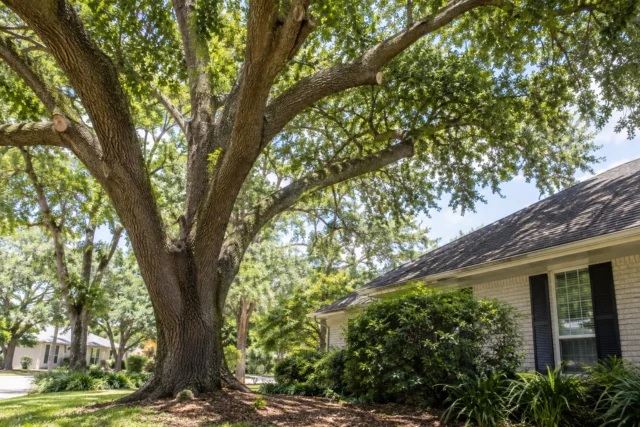
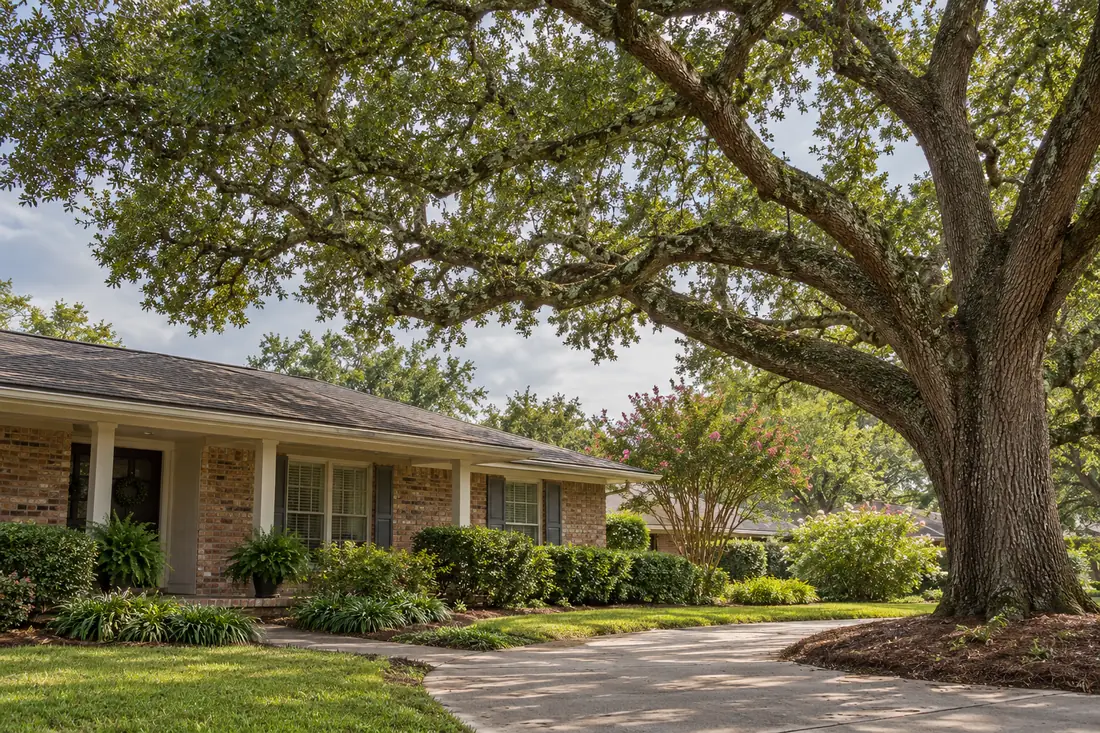
A driveway can carry passenger vehicles, moving trucks, service deliveries and pedestrians, often within a narrow space beside a mature tree. Before pruning, identify which route is used, where drivers turn and whether branches contact vehicles or simply overhang them. Take ground-level photographs that show the entire tree and the relevant entry, curve or parking position. An overhead limb is not necessarily defective, and the correct response depends on its condition and the site's real clearance needs.
Consider separate use patterns for children walking to a car, people using mobility devices and large deliveries. A branch that blocks an exterior light may need a different solution from one that scrapes a truck. Do not recreate suspected contact by driving under a low limb to test it. A marked sketch of the driveway and any gates or roof projections helps the estimator choose targeted pruning instead of removing healthy branches across the entire frontage.
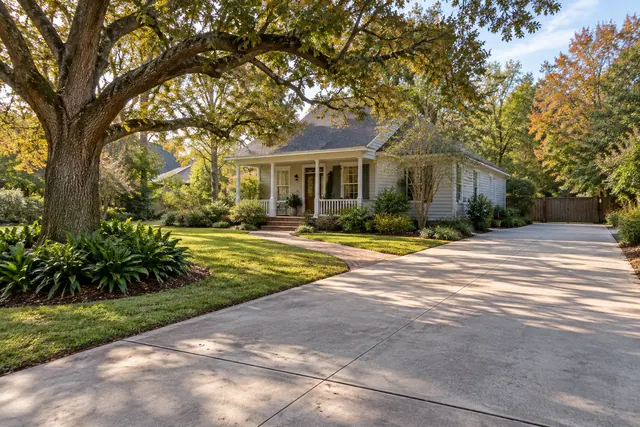
Inspect the branch and its attachment
A qualified professional should assess branch condition, attachment strength, existing cuts, decay indicators and the tree's overall crown. A low but healthy branch may be reducible to an appropriate lateral, while a dead or damaged limb may warrant removal for a different reason. A large scaffold cannot be judged solely by how inconvenient it is to a driver. The estimator should explain which cuts are structurally reasonable and what foliage would remain afterward.
Look for signs of sudden change such as a new crack, hanging limb or newly lifted roots, but do not stand beneath a suspect branch to get close photos. An uneven crown or one exposed root does not independently prove dangerous instability. If a serious defect is suspected, restrict access to the affected area from a safe position and seek prompt qualified advice. Routine driveway clearance should not obscure a separate tree-risk issue or lead to unnecessary large cuts.
Measure the actual driveway clearance problem
A driveway used only by cars has a different clearance objective from one also used by garbage trucks, delivery vehicles or an RV. Note the direction of travel, the vehicle height supplied by its operator and the point where the branch creates interference. Photograph the general approach from a safe distance; do not park underneath visibly damaged wood or climb onto the vehicle to take measurements.
Clearance is not a reason to remove every lower limb. Ask the tree professional to explain which cuts address the identified conflict, how the cuts affect branch structure and whether a different vehicle route would avoid a large wound. A mature tree with significant limbs above the drive may warrant a structural assessment before a pruning scope is approved.
Determine the needed vehicle envelope
Different vehicles have different heights, turning arcs and mirror positions. Ask the homeowner what normally enters the drive and whether occasional moving or delivery trucks must be accommodated. Do not select an arbitrary clearance height based solely on a passenger car parked under the branch. A high canopy may still interfere with a truck cornering sharply near a gate. The work should address the actual swept path, including any sloping surface that changes the relationship to the crown.
If a rare oversized vehicle is the problem, a temporary alternate unloading location may be more reasonable than permanently raising a mature tree. Consider the future use of the driveway as well, especially if a new garage, fence or building extension is planned. A good pruning request describes intended vehicle access while allowing the arborist to determine whether a selective cut is feasible without leaving an unsound structure.

A driveway-clearance decision that can be checked on the ground
The important measurement is not simply the gap beneath the lowest leaf. Look at where a car enters, turns, reverses, and waits while a garage door opens. The same driveway may occasionally carry a moving van, a service vehicle, or a trailer that follows a different path from the family car. A tree branch can be outside the normal passenger-car envelope yet directly over a turn taken by a taller vehicle. Make a rough route sketch and photograph the tree in relation to the gate, driveway edge, roof overhang and parked vehicle. Do not drive an unusually tall vehicle beneath a suspect limb merely to test the distance.
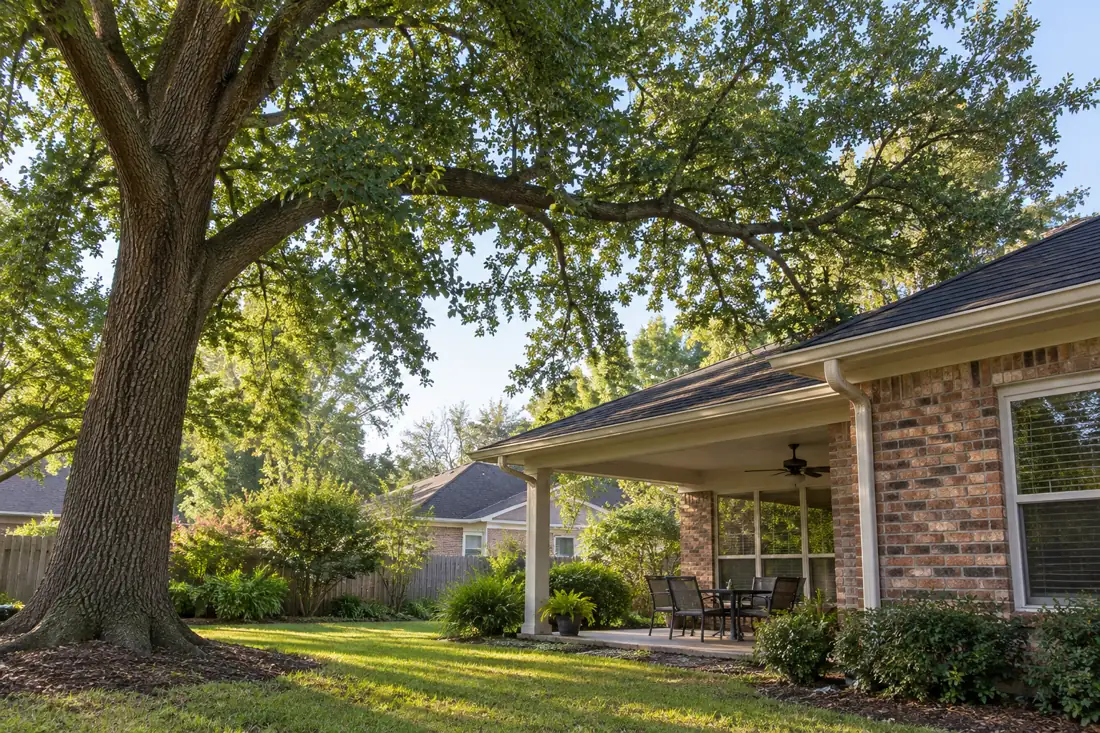
Ask the estimator to distinguish branches that are merely inconvenient from dead, broken, or poorly attached branches that justify a separate condition assessment. Crown reduction to a suitable lateral may be possible for one conflict, while removing a large structural limb can have far-reaching consequences for a mature oak.
The location of the tree's root flare, driveway pavement and nearby buried services also matters when equipment will enter the site. If trucks must use a secondary entrance during work, clarify who can approve that route and whether public access must remain open.
A photo of the entire trunk-to-crown connection is more informative than a close-up of leaves.
The final scope should identify the drive segment to be served, the selected limbs or pruning objective, the intended handling of cut material, and any limits of what can be achieved without compromising the tree. A fixed clearance promise should not be made without a site-specific evaluation and a known vehicle.
Confirm how lawn edges, driveway slabs, irrigation and neighboring property will be protected. After work, review the approach from safe positions at the entrance and turning area and keep dated reference photographs for future growth. That creates a practical maintenance record instead of repeating aggressive cuts every time the canopy grows.
One useful distinction for the homeowner is temporary clearance versus an ongoing delivery need. If the tall vehicle comes only once, the route may be managed through a different entry or scheduled access rather than permanent changes to the tree. If it is the only emergency or service route, that affects the importance of a reliable solution.
Discuss these facts before the estimator selects cuts, and remember that the tree continues growing after any visit. Keep the decision tied to safe access, not to an arbitrary target shape.

Protect the trunk and roots beside pavement
Driveway trees often grow with restricted rooting space beneath compacted soil, curbs and pavement. Note any existing cracks, lifted slabs, exposed roots or past trenching in the area. Those observations belong in the tree assessment but do not automatically mean the tree caused every pavement defect. Pruning branches will not reverse a raised driveway or repair severed roots. A paving or drainage specialist may be needed for separate infrastructure work.
Discuss where equipment could stand and whether its weight is compatible with the surface below. Ordinary vehicle parking does not prove that heavy lifting machinery is suitable at the same spot. Ask the crew how it will protect retained roots, planting beds and curbs while cutting or moving debris. Avoid piling material against the trunk or blocking drainage outlets with chips. A driveway clearance project should not harm the growing conditions that support the tree.
Driveway pruning: define clearance from the vehicle's actual route
Driveway clearance starts with an accurate description of who uses the route. A pickup, delivery truck, school transport vehicle, trailer or emergency vehicle may follow a different turning path or need different overhead space. Mark where a limb interferes today, and photograph the tree in relation to the drive from a safe standing position.
The fact that a branch is low does not necessarily mean it should be removed at its attachment; a qualified arborist should consider branch structure, cut size and tree response. Arbitrary flat-bottom canopy cuts can create avoidable wounds and a poor future shape.
Ask for the desired practical outcome—unobstructed approach to a garage, delivery point or service gate—rather than specifying indiscriminate pruning. Identify overhead utility conflicts, roof edges, fences, traffic and neighboring vegetation before crews begin. Where the route serves multiple users or borders public rights-of-way, clarify permissions and who can close or divert traffic.
Agree on how branches will be handled and which surfaces should be protected. A careful scope distinguishes the immediate clearance from whole-tree health assessment and future growth management, and documents remaining limitations.
Specify protection and completion checks
Driveway protection includes more than avoiding a visible crack. Discuss where outriggers, lifts or debris piles could be placed, what surface protection is appropriate and how workers will avoid blocking household access. An equipment route with a tight turn may matter as much as the branch overhead. Agree whether vehicles must be moved for the full work period.
At completion, compare the actual pruning with the written tree and limb identification. Confirm that debris has been removed from the drive and drainage edges, and that any agreed protection or cleanup has been performed. Record any remaining branch conflicts; they may reflect work outside the agreed scope rather than an automatic promise of additional cutting.
See the related Tree Huggers service and request an appropriate assessment
Make selective cuts instead of topping
The temptation to create a flat horizontal line above the driveway can lead to arbitrary heading cuts and repeated regrowth. A professional should choose removal or reduction cuts that respect branch attachment and retain enough living foliage. A single appropriately selected branch may solve the conflict without opening the entire crown. Do not strip interior growth or raise every nearby scaffold merely to make the tree look symmetrical from the street.
Ask how the proposed work will affect shade over vehicles and the home's appearance. Some large limbs may be poor candidates for removal because of wound size or crown balance. Where the desired clearance cannot be achieved responsibly, a change in parking arrangement may be better than forcing aggressive cuts. The estimate should make these limits clear, along with any suggestion for phased training or future inspection rather than promising permanent clearance.

Plan the work zone and alternative access
Branches above a driveway frequently overhang the main pedestrian entrance to a home. The crew needs an exclusion zone for cutting, ropes, equipment and debris movement; residents should not pass through it even for a short trip to their cars. Plan where vehicles will be parked before work starts and where people can enter safely. Do not move a vehicle after the active zone is established without the crew's direction and a safe procedure.
Identify adjacent roads, neighbor driveways, overhead wires and delicate structures. Some access methods may require permission or a temporary closure beyond the property line. Keep children and pets away from the work area, and coordinate deliveries for another time. Weather or unexpected branch conditions may require a revised schedule. Reopen the driveway only after debris, equipment and any temporary protective materials have been removed and the operator has checked the route.
Consider garages, gates and service drops
A branch near a driveway might also extend toward a garage roof, security gate, light fixture or overhead service line. These features affect rigging and may change the scope. Photograph them from a safe position and inform the estimator about wires without trying to assess voltage or clearance. Work near energized infrastructure requires the right qualified response and utility coordination when necessary; a homeowner should not pull wires aside or attempt cutting near them.
Different trades may be needed if a gate is damaged, roofing requires inspection or an electrical fixture must be relocated. Tree Huggers should not be presented as repairing unrelated structures unless that specific service is authorized and scoped. A clear estimate distinguishes tree cutting and hauling from access improvements or utility work. Addressing the true conflict may require a small physical adjustment elsewhere rather than a large permanent loss of canopy.

Include drainage and cleanup in the scope
The finished driveway needs to be usable, not merely free of large logs. Discuss removal of wood chips, small branches, bark and sawdust from the travel surface, walkways and drainage grates. If the owner wants to keep some firewood or mulch, designate a safe location away from exits and root zones. Material left beside a curb can wash into a catch basin after rain, creating a new problem unrelated to tree clearance.
Before the job, note existing driveway stains, cracks and landscape features without claiming they were caused by the tree. The crew should describe how material will be lowered and how equipment will be moved to avoid avoidable surface damage. After work, the property operator should inspect the travel path and any temporarily closed entrances. If structural pavement issues remain, those require separate evaluation rather than assuming pruning will stop movement or drainage problems.
Prepare photos for a useful estimate
Include a wide image from the street showing the tree and drive, a second from the parking position and a safe view of the specific interfering branch. Describe ordinary vehicle types, the location of contact if observed and any constraints such as tight gates or overhead wires. Avoid climbing or standing beneath suspect branches. The estimate should identify which limb is under discussion and what the owner wants to accomplish, not simply ask for the whole tree to be 'cut back.'
If a branch has broken and is suspended over the driveway, prevent access and seek qualified help rather than treating it as a routine cosmetic job. Do not use a web inquiry as a promise of emergency arrival. For normal planning, optional photographs and a brief description can support the site discussion without exposing unnecessary personal or security details. A responsible quote may require inspection to confirm branch structure, access and the selected method.

Review the result and monitor future growth
Once the crew finishes, compare the driveway and branch position against the original agreed objective from a safe location. Confirm that no loose limbs or debris remain and that gates, gutters and access routes are usable. Ask which branches were deliberately retained, whether any separate tree condition needs evaluation and how new growth may change clearance. A newly opened route is not a permanent guarantee for all future vehicles or all weather conditions.
Keep genuine before-and-after photographs and the actual scope in the property record. A seasonal review can catch new contact points before a large branch becomes a recurring complaint. If a different vehicle begins using the drive, reassess the geometry rather than repeating an earlier pruning instruction automatically. Tree Huggers can use the documented concern and site conditions to discuss targeted service, balancing practical access with the value and long-term health of the tree.
Questions about this project
How should I describe the pruning I want?
Explain the objective: clearance for a route or building, deadwood, a damaged branch or structural development. Ask for suitable tree-specific work rather than requiring an arbitrary shape or amount of canopy to be removed.
Will pruning resolve every tree concern?
No. Root, trunk and major structural problems may need a different assessment or response. State the full concern so pruning is not used as a substitute for evaluating the condition that prompted the call.
Does healthy-looking foliage mean a tree is structurally safe?
No. Leaves do not establish the condition of roots, trunk or branch connections. Explain visible defects and recent changes, and ask for an assessment appropriate to the tree and nearby targets.
Should I test a cracked branch or trunk?
Do not pull, shake, climb or cut damaged material to test it. Keep clear of the affected area and describe the condition from a safe location. Qualified assessment and an appropriate work plan are needed.
Can the crew block a public sidewalk or road?
Required arrangements must be coordinated with the appropriate authority. Identify public routes and restrictions before scheduling. A private work agreement should not be treated as automatic permission to occupy or close public space.
When should parked vehicles be moved?
Set the timing and responsible contact before the work window. Vehicles may need to leave the tree zone, equipment route and loading area. Confirm where access must remain available during each phase.
Is leaving the trunk untouched enough to protect a tree?
No. Roots, soil conditions and nearby work can matter even when the trunk is not cut. Identify retained trees before planning access, excavation and storage, and ask what site-specific protection is appropriate.
Can pruning undo construction-related root damage?
Do not assume it can. Share the work history and ask for an assessment of the current tree and site. Pruning, monitoring or other recommendations should address an identified need rather than substitute for protection planning.
What should I compare besides the price?
Compare tree identification, work objectives, access assumptions, hauling, stump treatment, site finish and exclusions. Ask whether permits or other coordination are part of the scope and who can approve changes if conditions differ.
Does an online request book the crew?
No. A request starts the estimate conversation. The company still needs to discuss scope, availability and any site assessment. For a dangerous or urgent condition, call 504-458-8336 rather than relying on a form response.
What should I tell Tree Huggers about tree pruning over a driveway?
Explain the property address, the work you want and the specific concerns: vehicle envelope, branch structure, access clearance. Send safe photos of the tree, surroundings and access route. The contractor can then discuss the assessment and scope needed for this situation.
How do I request an estimate for this work?
Call 504-458-8336, text photos or use the estimate form on this page. Include the address, desired outcome and any timing constraints. The company will need to review scope and availability; an online request does not confirm a price, appointment or emergency dispatch.
Get a scope for your property
For driveway pruning, show the route from the street to the garage and identify what must pass underneath: passenger vehicles, delivery trucks, trailers or emergency equipment where applicable. Take safe views of the canopy, branch connections and roof or gate clearance rather than giving only a height guess.
The written scope should identify selected branches and a sensible clearance goal without assuming every low limb must be removed. Ask whether temporary driveway closure, vehicle relocation, debris hauling and protection for pavement or nearby plantings are included. Retaining appropriate live foliage and branch structure matters as much as opening the route.