A prime contractor should compare the project’s needs with the tree contractor’s current personnel, equipment, documentation and proposed method. Ask direct questions about the actual scope rather than relying on broad marketing claims. Identify interfaces with other trades and the process for approvals. Eligibility and availability must be checked for the opportunity.
Site-specific planning checkpoint: A prime contractor evaluating tree-work capability should ask how the proposed crew plans for this specific project rather than accept a generic equipment photo. Review the tree inventory, roof and vehicle exposure, utility interfaces, gate widths, traffic flow, access surface and any retained root zones. Determine which specialist coordinates overhead conductor work, traffic controls, permits and neighboring access. Clarify whether debris trucking, stump removal, brush chipping and repair of damaged surfaces are included or excluded. Obtain required credentials and insurance through verifiable documentation, not promotional claims or assumed ratings. Establish a single owner for field change approvals and a daily record of completed locations. A responsibilities matrix for prime, tree subcontractor, utility and owner makes it easier to prevent work from falling through a gap between trades.
Check trade capacity against the actual prime-contract constraints
A prime contractor evaluating a tree-work subcontractor should first define the portion of the project it expects to delegate. A single hazardous tree near a utility corridor is not the same as a planned sequence of clearance work across several occupied sites. Request experience that matches the equipment access, tree conditions, protective measures, and reporting requirements, while recognizing that promotional portfolios are not evidence of availability for a particular start date.
Confirm which party will arrange permits, right-of-way access, utility clearances, traffic provisions, debris destinations, and communications with the public. Keep certificate and licensing requirements tied to the actual solicitation and verify current documents through appropriate sources rather than relying on an old website badge. Ask who can stop work for an unsafe condition, who receives field changes, and who has authority to accept completed activities.

Verify current capacity for the requested window
Equipment lists and photographs show possible methods, not guaranteed availability on an assigned date. Ask the tree contractor to confirm the personnel, crew configuration and equipment proposed for the actual locations. Consider how access, haul distance, weather and simultaneous commitments could affect production. A small pruning crew and a crew managing heavy rigging should not be treated as interchangeable resources.
The review should ask what happens if the planned method is unavailable or site conditions make it unsuitable. The answer may involve rescheduling, another authorized method or a separate qualified provider; it should not be an automatic substitute without approval. Record who makes the field safety decision and how the prime receives updated sequence information. Capacity is meaningful when tied to this project, not to an unverified company-wide claim.
Use a practical handoff meeting before mobilization. Review the tree IDs, limits of disturbance, nearby property, preservation trees, restoration expectations, and documentation format. Agree on how the tree crew will flag a condition that requires the prime's engineering or owner approval. The goal is not to promise that every unexpected condition can be avoided; it is to ensure a question reaches the right decision-maker before it becomes a costly field dispute.
Read the related tree work for a utility or infrastructure prime guide · Review public-sector tree-work services
Test subcontractor capability against access: A prime contractor’s capability review should connect the tree subcontractor’s equipment and crew experience to actual site limits. A crane, lift or compact machine may solve one access problem and create another when overhead conductors, soft ground, fences or public walkways are present. Ask how the subcontractor handles tree inventories, line-clearance referrals, exclusion areas, ground protection and debris tracking. Review the project’s insurance and credential requirements against documents supplied through the authorized procurement process rather than making an unsupported statement about current coverage or certification.
Match the prime's contract to an actual tree-work package
A capability review begins with the prime contractor's specific deliverables. Tree removal, pruning, storm response, right-of-way clearance and debris handling require different equipment and site controls. List the tree tasks, expected quantities, work windows and acceptance evidence. Avoid substituting a general marketing description for a review of the actual solicitation or project drawings.

Review documentation without assuming certification
Current insurance, licenses, registrations, training records and required certifications should be requested and evaluated against the particular contract. A general website cannot establish that every jurisdictional credential, bonding condition or federal registration is active. Ask for the document type, effective dates, named entity and any project-specific endorsement required by the prime or buyer.
Do not infer past-performance qualifications from equipment photographs or a list of services. If the prime needs relevant project references, request verifiable details with appropriate permission. The reviewer should distinguish what was supplied, what was checked and what remains pending. A straightforward compliance checklist is better than passing along unsupported statements that could affect bid eligibility or post-award performance.
Ask which responsibilities remain with the prime, including traffic management, utility coordination, fencing, permits and hauling by other trades. Identify the interfaces in writing so crews do not arrive assuming someone else has handled a prerequisite. The goal is a definable specialty subcontract that can be priced, coordinated and verified, not a vague promise to assist with whatever vegetation issues appear.
Confirm safety responsibilities at trade boundaries
Tree work may overlap with occupied sidewalks, traffic lanes, utility facilities, roofs and construction access. Identify the exclusion area and who can restrict entry, communicate with other contractors and reopen routes. The prime should understand how falling material, equipment swing and hauling movements affect nearby tasks. A schedule alone does not protect workers who enter a hazardous work zone.
Request project-specific safety and site-control information through the prime's approved process. Any utility clearance, energized-line decision or required electrical work belongs to the appropriate qualified authority. Where public access cannot be closed as assumed, the operation must be reassessed. The capability assessment should reveal these interfaces early enough for the project manager to coordinate them rather than discovering them during mobilization.
Walk the site and test access assumptions
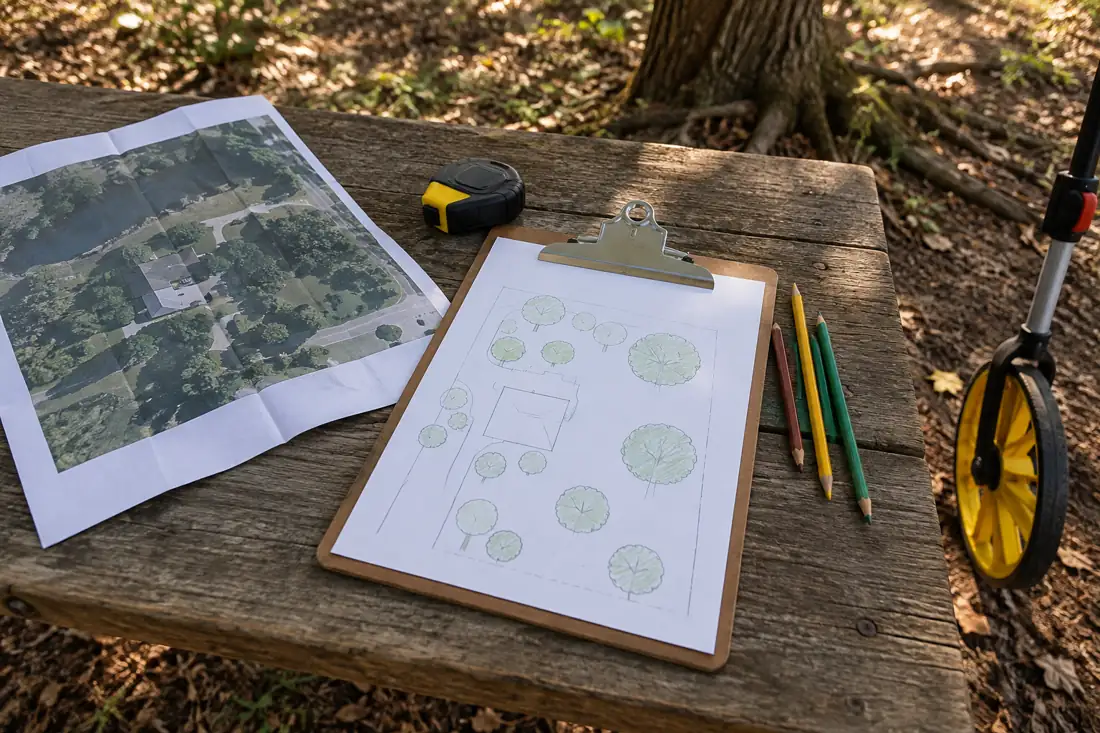
Two sites with the same tree count can demand completely different methods. Review gate dimensions, pavement strength, buried services, soft ground, overhead restrictions and loading routes. Identify trees to retain as well as those within the planned work limits. A marked map is useful, but it should be reconciled with what a qualified estimator can actually observe from permitted locations.
When the prime controls the property only during certain hours, site access must be coordinated before selecting equipment. Discuss where material will be staged and how nearby crews will reach their work areas. Do not promise that mats or a smaller machine make every sensitive surface safe. Conditions such as recent flooding or construction excavation may require a new evaluation just before work.

Screening Tree Subcontractors for a Prime Contract
A prime contractor should evaluate the tree package against the actual work area, not a broad list of tree-related capabilities. Compare the requested pruning, removal, brush or stump tasks to the equipment that can safely reach each position. The schedule should account for other trades already occupying the route. Ask which party controls the gate, stages heavy materials and approves a temporary closure before accepting a proposed sequence.
Documentation must be current and applicable to the job. Request relevant insurance evidence, any project-specific training or site requirements, and the names of people responsible for direction and escalation. Do not publish invented certifications or infer that a contractor is approved because it previously worked on unrelated sites. A capability review becomes useful when missing requirements have an owner and a decision date.

Make the trade boundary explicit
The quote should separate tree handling from excavation, utility work, traffic management and landscape restoration if those are allocated to different trades. Confirm who controls electrical clearances, buried utility information and disposal permissions. A subcontract that vaguely promises to clear everything can invite disputes when a retaining wall, irrigation line or adjacent tenant route is encountered. Specify the accepted finish at each interface in writing.
Before award, test the plan against the hardest tree rather than the easiest one in the schedule. Walk the narrowest route, the most sensitive retained canopy and the site with the shortest work window. Record unanswered questions and determine whether they require an addendum. The prime can then make a documented go-or-no-go judgment based on current facts, rather than assuming availability and eligibility from marketing material.
Define measurement, disposal and acceptance
The subcontract should say how production is measured: by marked tree, pruning objective, area, load or another agreed unit. Describe chip handling, logs, stump treatment, transport and any material retained on site. Waste streams from other trades should not become tree debris by assumption. If a public buyer requires tickets or environmental handling documentation, confirm the specified format before hauling begins.
Acceptance should be based on the actual contracted result, not simply the absence of visible branches. Identify the inspector, photo requirements, quantity verification, surface restoration limits and unresolved-item procedure. The prime needs a record that can be connected to its own payment request. Clear closeout documentation also helps distinguish a genuine omission from new work discovered after the tree subcontract has finished.

Compare bids against the same scope
A low price is not meaningful if one subcontractor includes hauling, traffic controls and stump grinding while another excludes them. Ask each candidate to identify assumptions, exceptions and the same quantity baseline. Compare equipment methods only where site conditions support them. A proposal that describes protection and coordination clearly may be easier to manage than an unexplained lump sum.
Before award, resolve gaps in written scope, responsibility for permits, buyer reporting and completion evidence. Record the prime's chosen method for accepting changes and communicating with the end client. The result should be a workable package that protects retained trees and public access while giving each party a clear way to recognize completed work.
Discuss field communication as specifically as equipment. The prime needs to know who receives changes to tree limits, who approves extra work, how damage or near misses are reported and who signs off on reopening a shared corridor. Describe the expected photo, daily-log, load-ticket and closeout files by project identifier. A useful review ends with scope clarifications and open questions, not an invented claim that a company has completed a government contract it never documented.
Plan communication when conditions change
Provide one operational contact for the prime and one authorized channel for contract changes. Daily coordination can address crew arrival, temporary access restrictions and site safety, while scope additions and price changes must follow the governing approval process. Record the tree identifier, condition discovered and effect on the work window. Avoid having a site employee informally authorize a second removal.
If a damaged limb, unknown utility conflict or unexpected access barrier changes the method, stop the affected activity and reassess through the proper team. The prime should know what work can continue safely and what remains on hold. This reporting discipline supports schedule recovery without turning a field observation into a misleading promise about cost or emergency response.
Test proposed methods against the toughest location
A capability claim should be examined at the highest-constraint tree, not only the easiest roadside removal. Ask how the contractor would address a tree beside an occupied entrance, a sensitive roof, unstable soil or a utility corridor. Review the method's assumptions without directing unqualified people to choose rigging or machine configurations. The professional crew must make its own site-specific safety assessment.
If the challenging location requires a different provider, special clearance or extra mobilization, the bid should make that dependency clear. The prime can then assess whether the proposed team truly covers the scope. A good qualification review discovers limitations before award rather than hiding them behind a photograph of impressive equipment.

Record an actionable go-or-no-go decision
A review should conclude with more than a stack of documents. State which parts of the proposed tree package are supported by current evidence, which depend on verification, and which need a different plan. Name the person responsible for resolving each open issue and the date by which the prime needs the answer for scheduling.
Do not replace uncertainty with unsupported assurances about insurance, skill or immediate availability. A conditional decision can still be useful if its conditions are explicit. It allows the prime to compare alternatives while preserving a defensible record of why a specialty contractor was selected for the actual project.
Match capability evidence to the prime contractor's real constraints
A capabilities brochure cannot substitute for a site-specific review of whether the subcontractor can perform the intended tree scope. Compare the work limits with equipment access, ground conditions, protected areas, available laydown space, overhead utilities and the prime contractor's schedule. Identify whether crane support, traffic control, a lift plan or a separate hauling vendor is contemplated, and which party will provide it. Do not represent general equipment familiarity as evidence that a particular high-risk operation has already been engineered.
The prime should also know what documentation will be available and when: a current certificate of insurance when requested, safety-plan interfaces, required personnel qualifications where applicable, daily progress records and a definition of acceptance. State subcontract exclusions in plain language, especially disposal, stump work, permit coordination and restoration. Before agreeing to a price or mobilization date, resolve who controls public access, who has authority to stop work and who approves a changed field condition.
Evaluate capacity without implying a subcontract has been awarded
A prime contractor's capability review asks whether a tree crew has the equipment, staffing, work practices and documentation appropriate for a defined package. A company may be experienced in residential pruning but still need a different setup for lane closures, public access, large debris or restricted infrastructure work. Review actual availability for the intended work window and the site's restrictions.
Do not treat a marketing capability sheet as proof of insurance compliance, a submitted bid or authorization to begin. Record what still needs verification by the prime. Once the team is selected, the companion subcontract guide identifies which parts of the overall project must be assigned explicitly between the prime, tree specialist and other trades.
- Match evidence of capability to actual site constraints rather than broad service claims.
- Separate preliminary discussion from formal qualification and contract documents.
- Ask who will handle changes when access or scope differs from the pre-bid information.
Compare capability against identical trade boundaries
Provide the same tree locations, expected method constraints, access, schedule and finished condition to every prospective subcontractor. Ask which protections are provided by the prime and which stump, disposal and restoration tasks are included.
Verify contract-required current credentials and insurance instead of assuming them from promotional copy. A useful comparison matrix records exclusions, equipment assumptions, dependencies and who will document acceptance, so the decision concerns the actual package of work.
Questions about this project
What should a government buyer send first?
Send the agency or prime contact, project reference, site, scope, deadline, access conditions and required documents or submission format. Identify the authorized contact for questions and the buyer's process for clarifications.
Does a capability page prove contract eligibility?
No. Request and verify current documentation relevant to the particular opportunity. Registration status, certifications, licensing, insurance and availability should not be inferred from a broad marketing statement.
Does a machine's maximum reach prove it can do my job?
No. Loaded reach, configuration, section handling, obstacles and setup conditions all affect suitability. A contractor needs to evaluate the particular tree and property before confirming an equipment plan.
Can specialized equipment replace a site assessment?
It does not remove the need to assess tree condition, targets, access and support conditions. Ask how the contractor will confirm that the proposed machine and method fit the actual scope.
When should tree work be discussed on a building project?
As early as practical, while the footprint, access, excavation and staging can still be coordinated. Identify retained trees and share drawings before clearing or other site activity creates avoidable conflicts.
Does stump grinding complete construction site preparation?
Not necessarily. Excavation, root removal, base preparation, compaction and grading may require separate work and acceptance criteria. Coordinate the tree scope with the contractor responsible for the next construction phase.
How should extra work be approved?
Use the agreed approval process and identify the change, reason, scope, price or schedule effect as applicable. Confirm who has authority before treating an additional tree or task as part of the original job.
What completion records are useful?
Keep the agreed scope, tree or area identification, authorized changes, invoice and labeled photos where appropriate. Include unresolved items and a contact. Contract-specific records should follow the buyer's stated requirements.
What should I compare besides the price?
Compare tree identification, work objectives, access assumptions, hauling, stump treatment, site finish and exclusions. Ask whether permits or other coordination are part of the scope and who can approve changes if conditions differ.
Does an online request book the crew?
No. A request starts the estimate conversation. The company still needs to discuss scope, availability and any site assessment. For a dangerous or urgent condition, call 504-458-8336 rather than relying on a form response.
What should I tell Tree Huggers about tree work capability review for a prime contractor?
Explain the property address, the work you want and the specific concerns: project fit, current documentation, trade interfaces. Send safe photos of the tree, surroundings and access route. The contractor can then discuss the assessment and scope needed for this situation.
How do I request an estimate for this work?
Call 504-458-8336, text photos or use the estimate form on this page. Include the address, desired outcome and any timing constraints. The company will need to review scope and availability; an online request does not confirm a price, appointment or emergency dispatch.
Get a scope for your property
Prime contractors can share the relevant scope, anticipated sequence, site constraints and purchasing contact to request a capability review.