Controlled work for tight Gretna properties
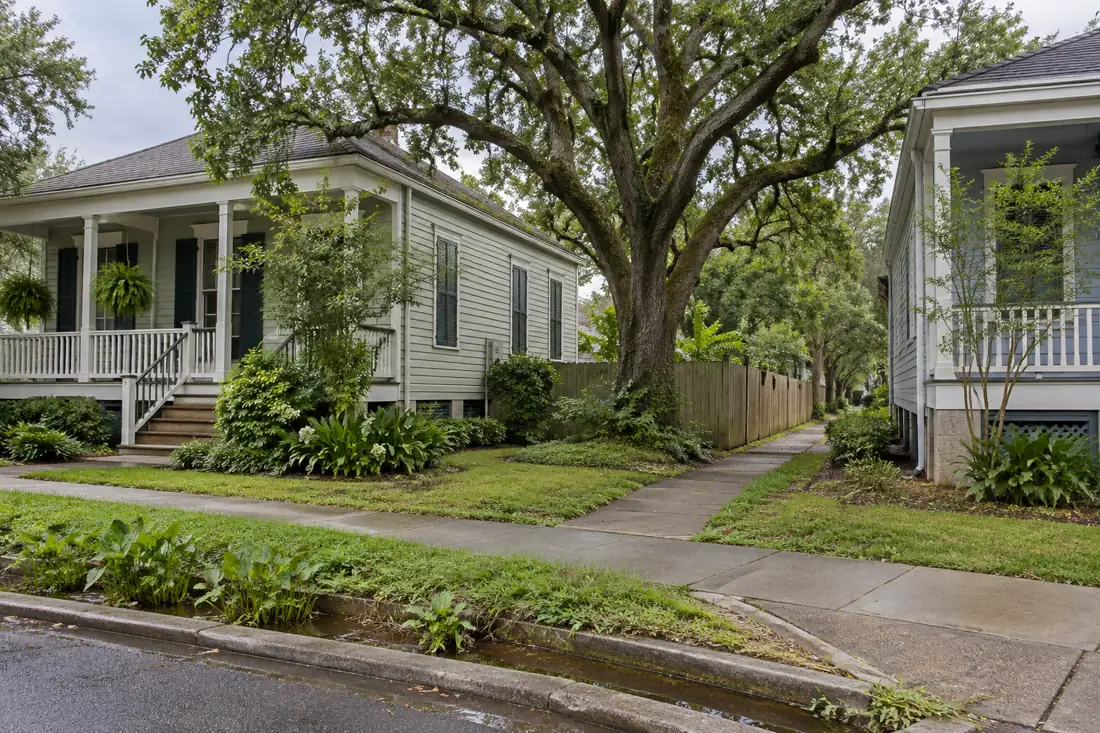
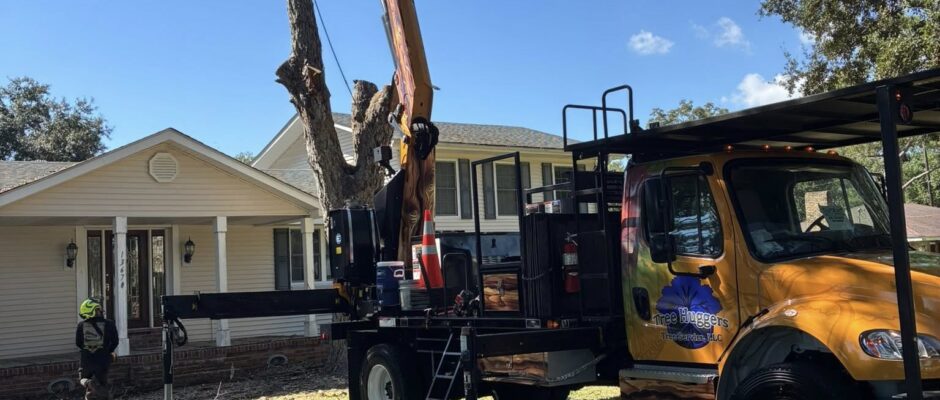
Gretna properties can combine mature trees with narrow access, historic structures, fences and busy streets. The safest method depends on what sits under and around the canopy. Controlled rigging, aerial access or crane support may be appropriate where limbs cannot simply be dropped.
Gretna streetscape, roots and property protection
In Gretna, tree decisions can involve a sidewalk, older paving, fencing, and closely spaced buildings. Before requesting pruning or removal, photograph the street-facing side of the tree, the root flare where visible, and the nearby walking route without excavating or cutting roots. Explain whether the concern is a limb over a roof, obstructed visibility, a lifted slab, or a tree-health symptom. Those are different questions and should not be treated as interchangeable reasons for removal.
If roots appear to affect a sidewalk or drainage feature, record the location and any existing movement, then request an appropriate assessment before cutting. Root severance can destabilize a tree or harm its health, and replacing concrete alone may not address the underlying conflict. For a public right-of-way or protected tree, confirm any required permissions with the authority responsible for that property before authorizing physical work.
An estimate should define the work limit, access, debris disposition and surface-protection expectations. Mention narrow streets, parking restrictions and neighboring structures so a safe work zone can be developed. Do not describe a treatment as guaranteed to correct an issue that has not been diagnosed on site.
A clear scope should address tree work, debris handling, stump work, access and any equipment required.
Tree care with the house and street in view
An established tree can be part of what makes a Gretna home feel like home. It can also extend over the porch, shade a narrow driveway and reach across the boundary next door. When you ask for tree service, explain which benefits you want to keep and which problem you need resolved. That makes it easier to discuss a specific care objective instead of assuming every overhanging branch requires removal of the whole tree.
Tree Huggers serves Gretna from its Marrero base. Requests can involve pruning, large or difficult removals, stump grinding and storm-related work. Send a view that shows the tree from the street as well as from the yard. A close-up may show a crack, but it will not show the front steps beneath the canopy or the limited space for handling material. Both scales matter when the work is being planned.
Name the branch, tree or clearance you mean
A request to trim the tree can mean several things: remove deadwood, stop a limb rubbing the roof, make room over a drive or assess a concern in the crown. Identify the objective using a photograph and a fixed landmark. If two trees overlap, point out which trunk the branch belongs to if you can do so from the ground. The contractor can then review the task without relying on a vague description of the front tree.
For pruning, ask what the proposed cuts are intended to accomplish and what canopy is expected to remain. For removal, identify why the tree is being considered and which features constrain the work. The two services should not be interchangeable labels on a quote. If the concern needs a condition evaluation before either is chosen, make that the first decision rather than authorizing work whose objective is still uncertain.

Plan for porches, steps and shallow setbacks
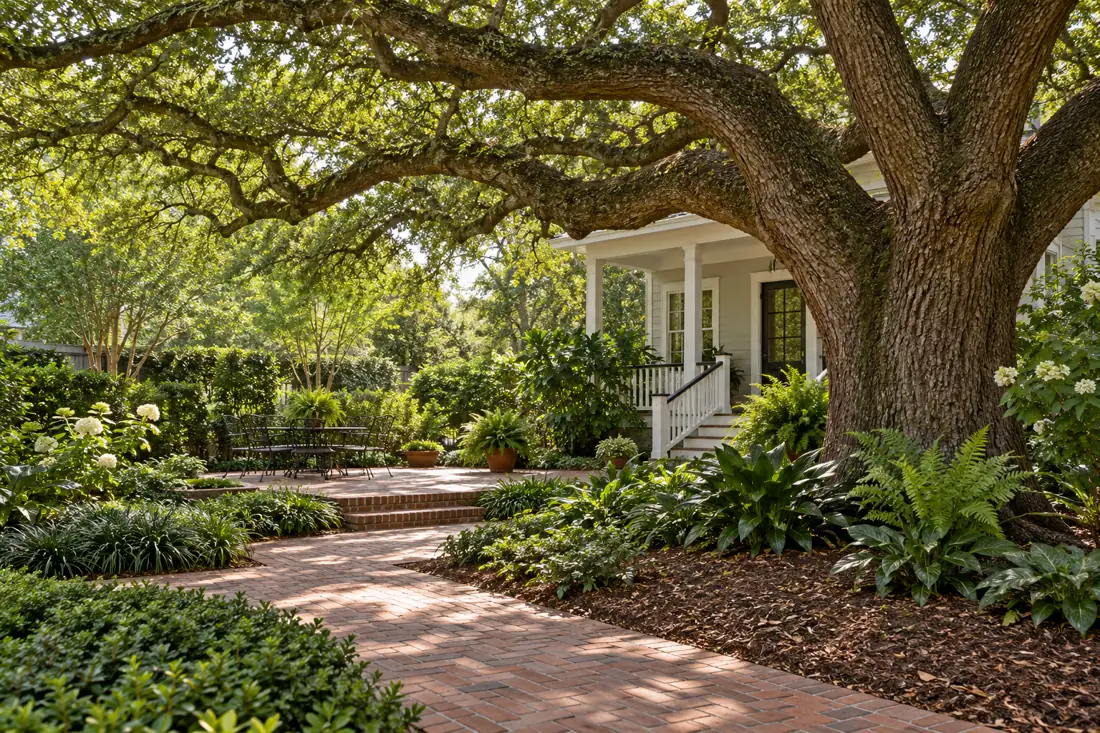
On a compact property, a porch roof or railing can sit directly below the area needing attention. Show the entire structure, including awnings, gutters, front steps, handrails and decorative details. Mention anything fragile or recently repaired. A wide photograph taken from an unobstructed safe location helps the estimator see the relationship between branches and the building, rather than only the distance from the trunk to the wall.
The same attention belongs at ground level. A paved walk may be the household’s only practical entrance, and raised steps can prevent a direct equipment route. Explain how people normally enter and whether an alternative exists. Ask how the work area and material movement will be separated from that route.
The agreed plan should account for handling and loading, not just the time a limb is being cut. Keep the porch and adjacent yard out of normal use until the responsible crew contact says they can reopen.
A narrow drive is a route, not just an opening
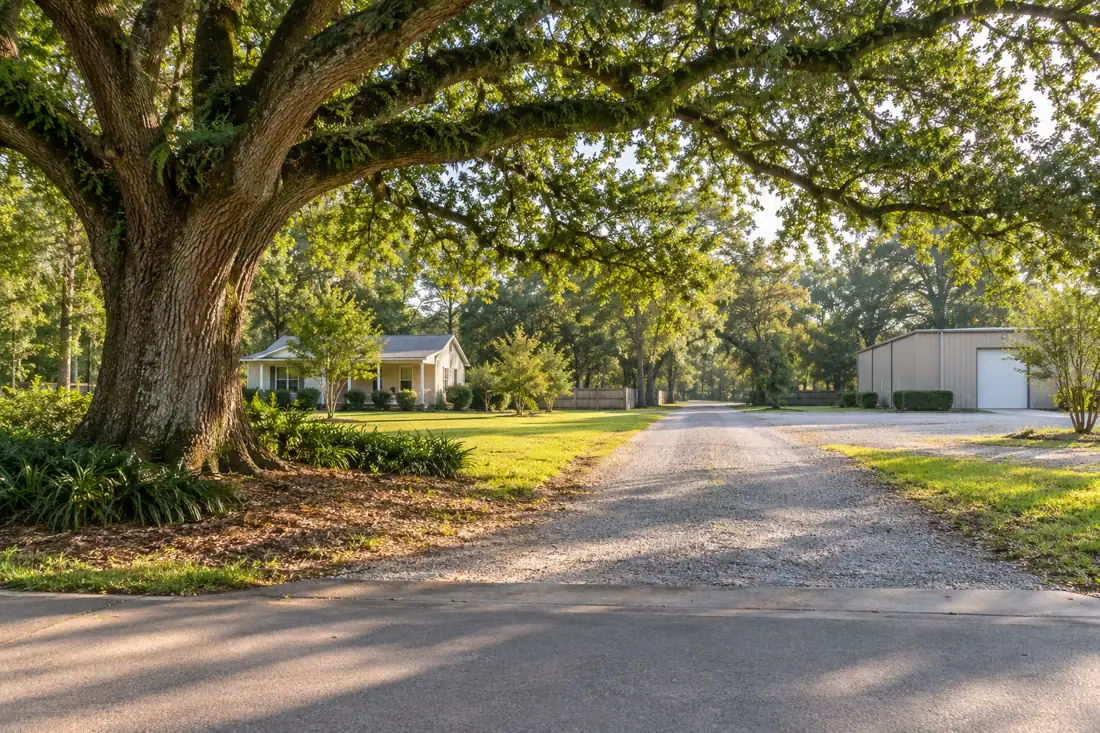
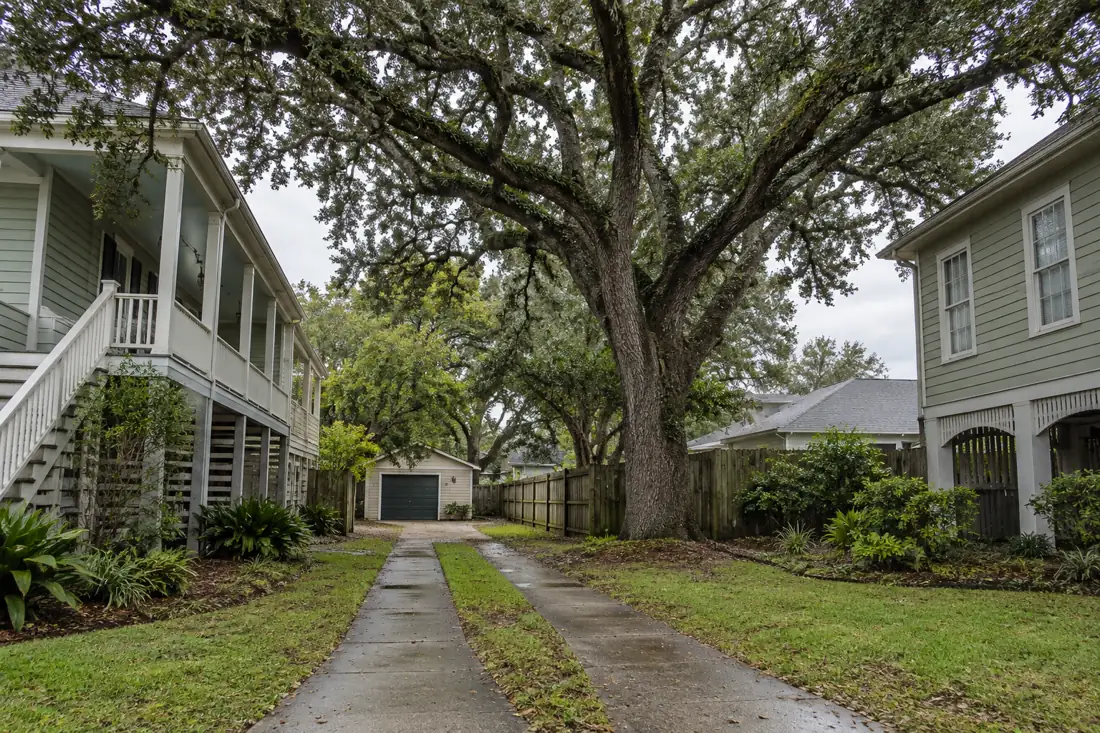
Photograph the approach from the street, the space beside the house and the final turn into the yard. Include low eaves, gate posts, service drops and a carport if present. A gate measurement by itself does not describe whether equipment can turn, clear overhead features or reach a useful setup area. Let the estimator know if the driveway is shared or if it must stay accessible to another household.
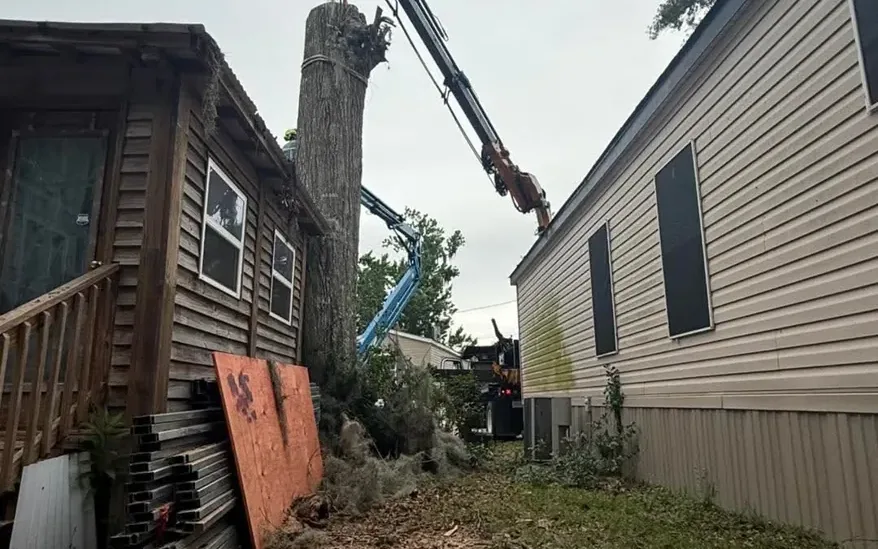
If a rear tree cannot be reached by the obvious route, the company can discuss other handling approaches after review. Do not assume that crane assistance is always required or that a small machine automatically solves access. The crane and equipment information explains the wider options. The site still determines what is practical. Any temporary opening, neighboring access or surface protection should be agreed before the crew arrives rather than improvised around an unexpected obstruction.
Gretna Tree Work in Close-Knit Streets and Small Lots
Gretna properties can place mature trees surprisingly close to an older house, sidewalk and neighboring roof. Begin with a clear description of the specific concern, not only the tree's size. Is a limb dead above a path, does canopy clearance affect a roof, has a large branch recently broken, or is a homeowner considering removal to make room for construction?
Those situations deserve different evaluations. Observe from the street or yard where it is safe and photograph the overall context. Avoid treating a leaning trunk or a low branch in isolation as a complete risk diagnosis. A tree professional should consider structure, condition, exposure and the limits of what can be determined without additional assessment.

A narrow residential street may restrict truck parking and staging, even when the tree is easy to see from the curb. Discuss pedestrian access, neighboring vehicles, delivery needs and the path for removing chips or wood. Where the work zone extends toward a public sidewalk or street, any necessary traffic controls or permissions should be evaluated for the actual address. Do not infer those rules from another city, and do not promise that every job can be completed with the same equipment. Some work may be possible with climbing and rigging where a lift cannot enter; other projects need a different method or a more carefully planned schedule.
How to plan for roofs, sidewalks and neighbor coordination
Neighbor coordination can prevent misunderstandings before a branch is cut. Identify who owns the trunk, whether material crosses a property line and whether the crew would need to enter a neighboring yard. An overhanging branch alone does not grant permission for unrestricted entry or removal of an entire tree.
If fencing, a porch or a narrow shared drive might be affected, clarify the protection and cleanup expectations in writing. Photos showing the relationship to those structures help an estimator plan safely, provided they are taken from accessible ground. Do not approach downed wires, enter storm-damaged areas or climb to show a close detail; emergency hazards call for suitable immediate assistance.
When comparing proposals, look beyond the phrase 'tree trimming.' Ask which limbs are included, whether the work targets clearance or tree structure, how the crew will handle heavy sections, and whether hauling, stump grinding and cleanup are separate items. Mature trees can often be managed through a defined plan, but a website cannot guarantee a particular tree's condition or lifespan.
A clear Gretna service inquiry should explain the property's access, the observed issue and the desired outcome without providing unnecessary private information. At completion, verify what was actually performed and what concerns, if any, were left for a future inspection rather than assuming the entire property has been certified free of tree risk.

Keep neighboring features in the photograph
A tree on your side of a fence may overhang a neighbor’s shed or sit close to a roof you cannot see from your yard. Tell the contractor about those relationships. Photograph only from places you are authorized to use, and identify any separate permission needed for work access. The estimate should not quietly assume another owner’s land is available because it offers the easiest path to the tree.
Where ownership or the boundary is uncertain, resolve that question through the appropriate property information before authorizing a disputed task. The contractor needs a clear work area and a named contact for coordination. Even with friendly neighbors, put practical arrangements into the notes: where material travels, which vehicles move and whether a gate or fence panel is affected. This keeps the field discussion focused on carrying out the authorized work and protecting both properties.
Show the sidewalk, curb and loading space
A front-yard job can interact with people who are simply passing the property. Show the public sidewalk and street frontage during the estimate, especially if material must be carried or loaded across the walking route. Do not promise use of a curb space or a closure you do not control. The parties need to identify what coordination is required before a work date and setup are treated as final.
For private parking, explain which vehicles you can relocate and when. If a nearby business, school activity or scheduled delivery changes normal traffic, share that information early. A quiet photo taken on a weekend may not represent the conditions on the proposed workday. The loading plan should leave a clear understanding of who coordinates the surrounding activity and how pedestrians are kept away from the active area. Last-minute assumptions about an empty street can otherwise change an apparently straightforward job.
Specify what happens to the stump and beds
If a removed tree stands beside a walk or fence, show the next use of that space before requesting stump work. A homeowner wanting a manageable lawn finish may have a different objective from someone rebuilding steps or planting a replacement tree. Known irrigation and landscape lighting also need to be identified near the stump and machine route. Grinding should not be described as complete removal of every root beneath nearby paving.
Ask what happens to chips, wood and disturbed surface material. Tree debris hauling is different from installing soil, repairing a bed edge or replacing plants. A quote that makes those distinctions visible is easier to compare and easier to check at completion. If the future work belongs to a separate contractor, share that contractor’s relevant layout or requirements before the stump task is agreed. This can prevent doing a small finish today that has to be redone when the larger project starts.
Prepare without trying to solve the tree hazard
For routine work, move the items the company has asked you to relocate and make sure the agreed gate can be opened. Keep pets secure and tell household members which entrances are changing during the work window. Give the crew the contact who can answer questions if the person who requested the estimate will be away. If site conditions change after acceptance, send updated photos before arrival.
A storm-damaged tree is a different preparation situation. Do not remove a hanging limb, climb onto a roof or cut a branch under pressure to help the crew. Call with the address and describe the condition from a safe location. Wires and immediate threats require appropriate emergency or utility coordination. The storm response page helps distinguish an urgent call from a routine estimate request. An online form starts communication and does not itself confirm emergency dispatch.
Make the finished result easy to recognize
A good Gretna tree-work scope can be read back against the property: this tree, these objectives, this debris arrangement and this stump decision. Use marked photos for several trees and ask for clarification when a phrase such as general cleanup leaves room for different expectations. If a new task comes up during the visit, make sure the authorized customer understands any scope and price change before it becomes part of the work.
When requesting an estimate, text safe wide photos, the Gretna address and the result you want. Include the driveway or front approach and any fixed feature beneath the canopy. If preserving the tree is your priority, say that in the first message. The next step is a discussion of the property and assessment needs, followed by a clear agreed scope. You should be able to understand the proposed result without needing to interpret equipment jargon or assume that every visible tree is included.
Tree Service Gretna questions
Can you plan tree work beside a raised porch?
Show the porch roof, steps, railings and branches together. The proposed method should account for those features and the household’s access route.
Does an overhanging limb always mean removal?
No. The tree’s condition and the clearance objective need review. Appropriate pruning may be an option, but a photo alone cannot settle every concern.
What access photos help on a tight Gretna lot?
Show the street approach, driveway beside the house, gates, overhead obstacles and the final turn to the tree. Include fixed equipment or structures.
Can the crew use a shared driveway?
The access arrangement must be clear with the people who control the drive. Explain shared use and restrictions before a method or work window is agreed.
Should I arrange a neighbor’s yard for equipment?
First have the contractor assess the proposed approach. Any use of another owner’s property needs an authorized agreement rather than an assumption.
Can I promise the street will be empty?
Only describe parking you actually control. Street and pedestrian arrangements need review; normal curb availability can differ on the workday.
Will stump grinding prepare my new steps?
Not automatically. Share the step project and coordinate with its contractor. Grinding, root work and structural preparation are different scopes.
How do I identify which front tree needs work?
Use a marked wide photo and a fixed landmark, such as the driveway or porch corner. Match that identification to the quote.
Should I prune branches myself before the visit?
Do not attempt hazardous cuts to prepare the site. Discuss the concern and access with the contractor, and keep clear of damaged limbs.
Can tree debris stay for firewood?
Ask in advance about suitable material, manageable handling and a designated location. The agreed finish should state what remains and what is hauled away.
What if a branch is touching a service wire?
Keep clear and contact the appropriate utility or emergency service. Describe the wire conflict when discussing tree work; do not move the branch.
How do I request Gretna tree service?
Send the address, tree objective and safe photos of canopy, structures and access. Call for a recent dangerous condition or urgent response availability.
Let’s plan your tree work.
Send the property address, safe tree photos and the result you need. Include access restrictions and the person who can approve the work.