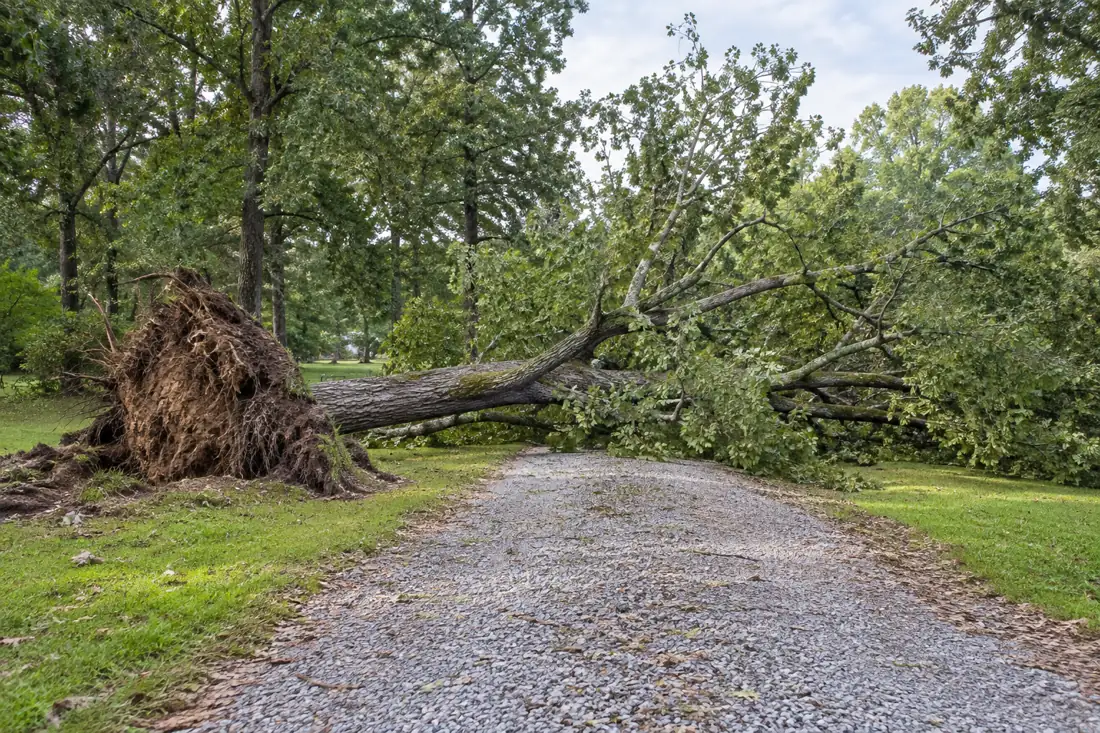
Emergency tree pricing can be higher than scheduled work because crews may be responding after hours, during severe weather, with limited disposal options or under conditions that require additional equipment and caution.
Compare emergency scopes before comparing totals
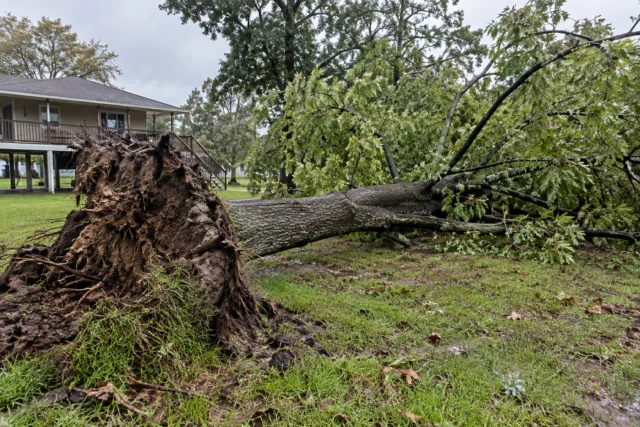
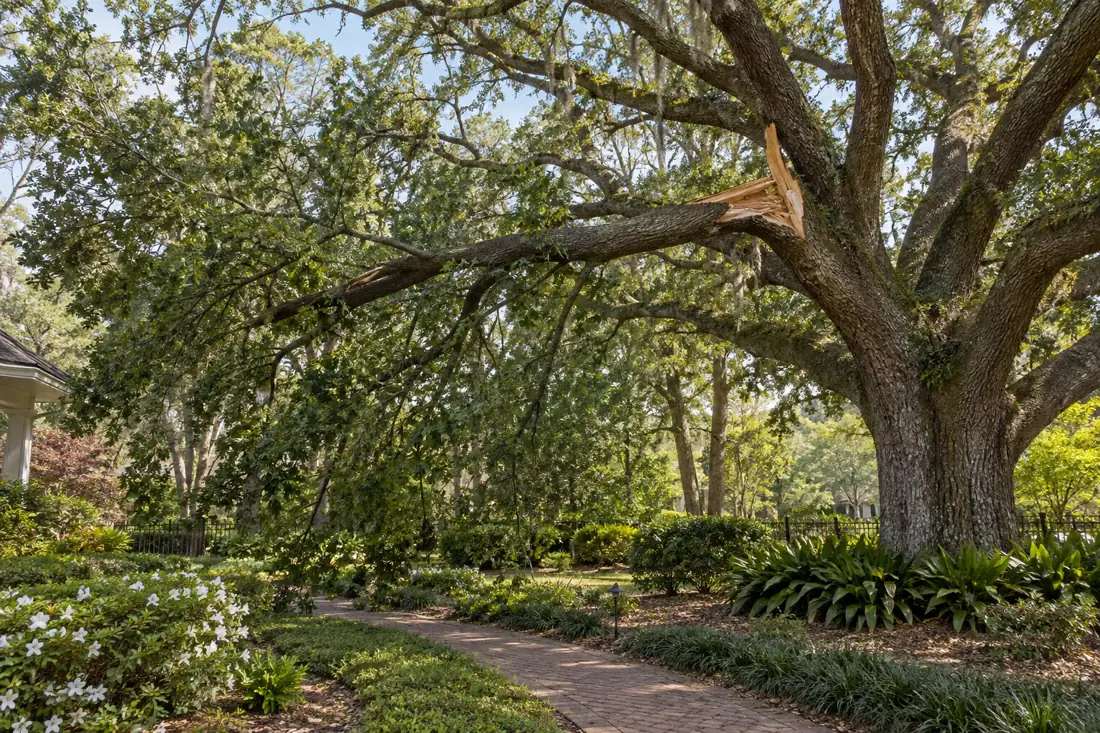
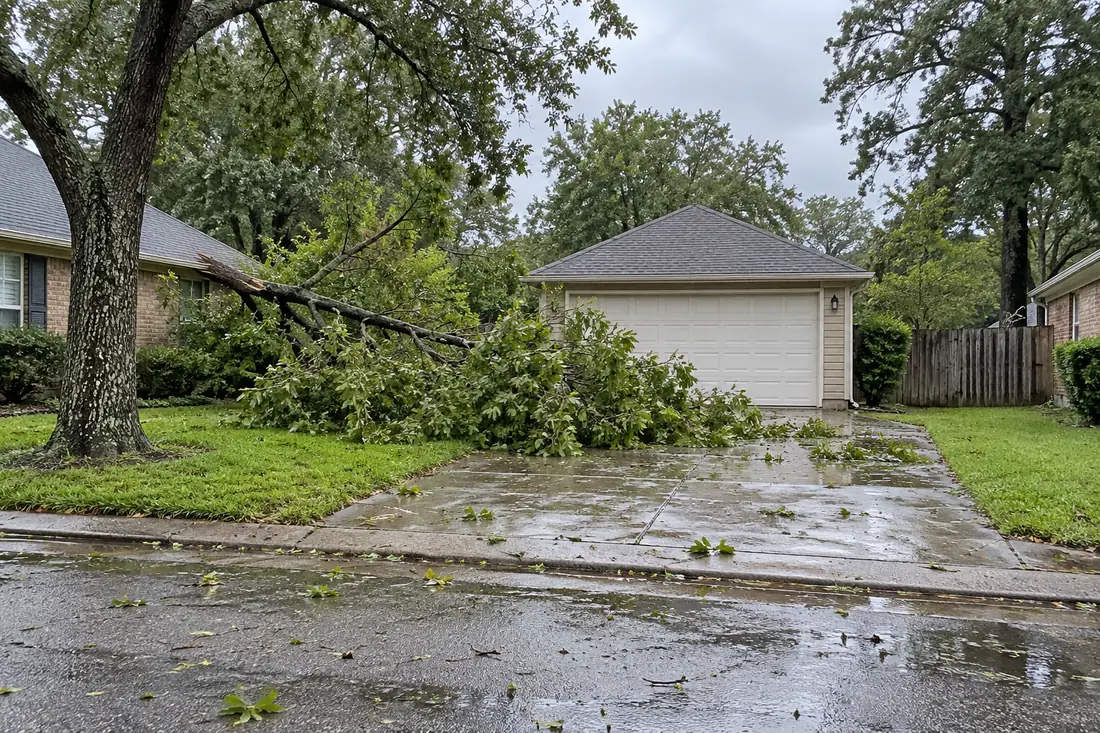
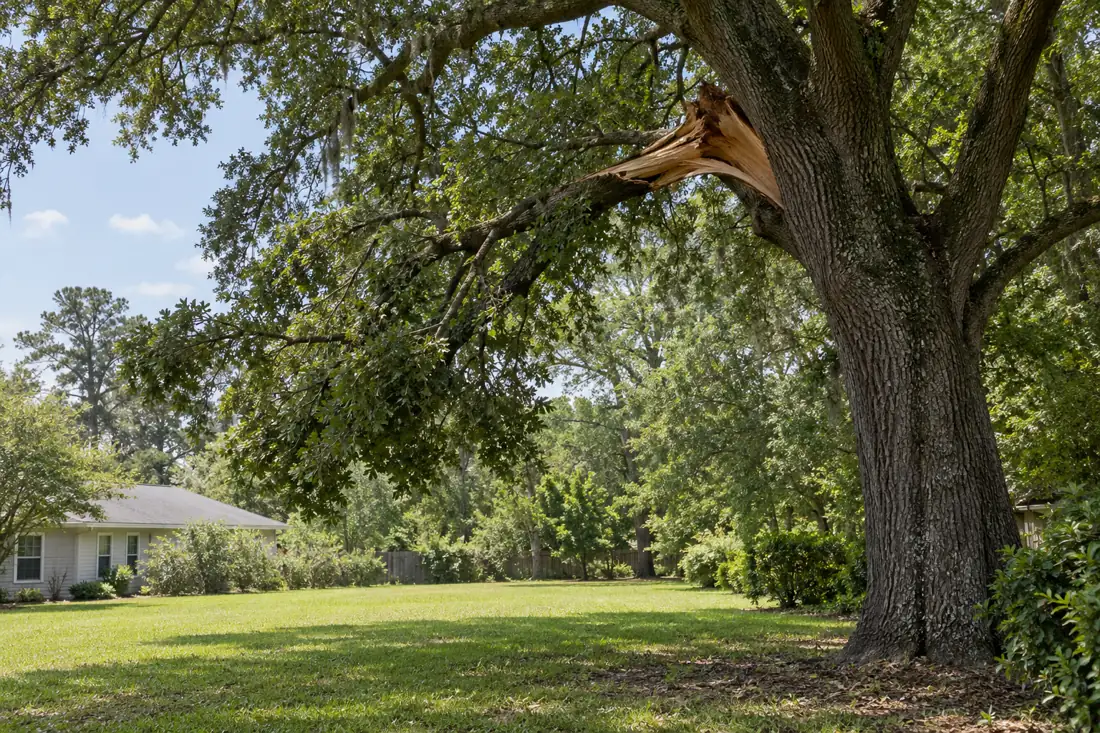
A blocked driveway, a suspended limb over a living area and a tree resting on utility conductors call for very different response sequences. Identify whether the immediate need is access control, safe removal of overhead material or full tree and debris removal. Photos taken from a safe location should show the supporting objects and where workers could enter, not just the broken branch.
A written quote should say what is included now and what would be addressed in a separate return visit. Storm volume, equipment, debris handling and access restrictions may change cost, but a higher urgency label alone does not identify the actual work required.
Complexity matters
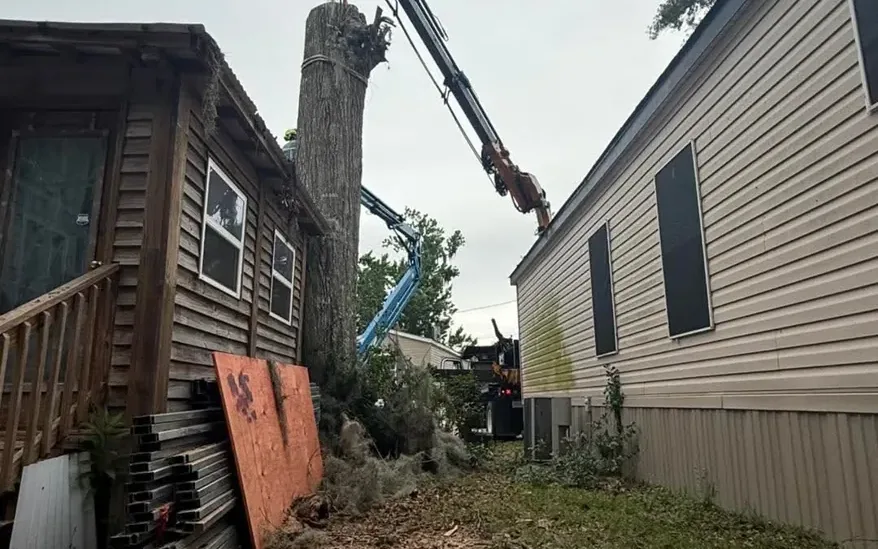
A tree in an open yard is different from a broken tree on a roof with suspended limbs and blocked access. Equipment setup, urgency and debris volume influence price.
See our emergency tree service page.
Define the immediate problem before the complete cleanup
An emergency inquiry should explain what currently threatens people or property. A suspended limb over an entrance, a tree on a roof and ordinary branches scattered across an open lawn are different requests. State the actual condition rather than using emergency as a general description of all storm debris. The contractor needs to know which task is urgent and which parts of the property can be reviewed later for scheduled cleanup or maintenance.
If someone is injured, trapped or facing immediate danger, use the appropriate emergency services. Contact the utility when lines are involved and keep clear. A tree-service quote does not replace those responses. From a safe location, tell the company whether the building is occupied, whether access is blocked and whether the condition is changing. Accurate initial information helps the provider discuss current availability and the next assessment without making a price or dispatch promise before the work is understood.
Explain why the work cannot wait for ordinary scheduling
Describe the practical urgency: an occupied building, a blocked essential route, unstable material above a used space or another current concern. Avoid assuming every fallen tree requires the same response speed. Ask the provider how the condition should be evaluated and what can be confirmed now. The available response may depend on weather, utility conditions, access and the resources suited to the job, rather than the owner’s preferred arrival time alone.
Ask about any scheduling or mobilization component in the proposed price instead of applying an invented after-hours multiplier. Emergency pricing should still describe the actual work and arrangements. If a contractor needs a site visit before fixing the total, ask what that review includes and how work will be authorized afterward. Confirm who can approve the immediate scope. A form message, text exchange or request for pricing is not itself a confirmed crew booking unless the company has explicitly agreed to the arrangements.

Describe what the tree is resting on
A damaged tree may be contacting the ground, roof, fence, another tree or several features together. Tell the provider what can be observed safely and what remains hidden. Do not cut a small piece or pull a branch away to make the condition easier to explain. The position and current structure can affect handling, equipment and the work area independently of the tree’s original size.
Share safe wide photographs before close-ups. Include the property layout and affected entrance when available. If an area cannot be reached safely, state that limitation. The provider must assess the actual condition rather than assuming that a photograph contains every important detail. The scope may need to change if further instability or damage is found.
A clear approval process is useful precisely because emergency information can be incomplete; it allows the owner and contractor to distinguish the initial understanding from additional work that later needs review.
Include the access and working-space constraints
Explain the street approach, gates, parking, soft ground and nearby fixed features. Storm conditions can change an access route that was previously usable. Tell the company about flooded or obstructed areas without entering them to measure. If a tenant, neighbor or property manager controls access, identify that person and their authority. An available tree crew still needs a practical and authorized way to reach and handle the work.
Ask whether vehicles or movable items need to be relocated and who should handle that preparation. Do not dismantle a fence or promise use of public or neighboring property without confirmed arrangements. Where a utility, road authority or another trade must act first, ask how that affects the sequence. These constraints can influence the estimate and appointment more than the visible debris pile. A dependable urgent-work agreement should reflect the route and site as they actually exist, with unresolved access items made explicit.
Separate necessary handling from optional additions
Ask which immediate tasks the proposed agreement covers and which can be priced separately. Removing a tree from a structure, hauling material already on the ground, grinding the stump and restoring landscaping are distinct activities. Some may belong in the accepted urgent scope; others may be scheduled later. The owner should understand the finished condition of each stage instead of assuming the word emergency means everything on the property is included.

Separate urgent hazard work from the optional finish
Emergency estimates differ partly because they may describe different immediate outcomes. One proposal may focus on making a blocked entry usable; another may include complete tree removal, chipping, hauling and a later stump visit. Ask each provider to identify the minimum urgent task and the remaining work so prices can be compared against the same description.
Access constraints matter alongside the tree itself. A hanging section, utility involvement, saturated ground or a restricted route can change what can be done safely. Do not move unstable material to make the estimate look simpler. Explain the condition from a safe position and ask how the proposed working area will be protected.
Confirm who can approve additional work if crews discover a changed condition. Written scope adjustments and factual invoices support later records, but they do not establish insurance coverage or a guaranteed response time. Leave nonurgent restoration in a separate phase when the actual site conditions require it.
If an owner adds an unrelated standing tree while the crew is present, that is a change to discuss rather than an automatic part of the first authorization. Ask how additional work, changed quantities and newly exposed conditions will be approved. Keep the accepted scope and revisions together. This makes the final amount easier to understand and helps an absent owner see why the actual work differed from the first message, without turning normal yard improvements into unsupported emergency charges.
Separate urgent hazard control from the full cleanup
An urgent quote should first answer what must be made safe or accessible, not automatically include every future landscape repair. A heavy limb that blocks a driveway, a suspended branch over a walkway and a fallen tree resting against a building create different operating conditions. Describe the current contact points and whether people can avoid the affected area. Do not enter beneath a damaged canopy to obtain a close photograph or attempt to move wood still under tension.
Provide the address, safe wide images, observed access obstruction and the reason the request cannot follow an ordinary schedule. If a tree touches electrical conductors, keep clear and contact the appropriate utility or emergency authority rather than assuming a tree-service crew can begin immediately. A dispatcher still needs to confirm availability, actual conditions and the scope; submitting a request does not guarantee a response time.

Why two contractors can quote different emergency scopes
Ask whether the quote includes initial stabilization or removal of a specific hazard, complete cutting, chipping, hauling, stump grinding and final site restoration. Each item can be priced or scheduled differently. After severe weather, roads, disposal facilities, crew access and equipment availability can change. A single tree's dimensions cannot reliably predict the final cost without the site constraints and requested finish.
If an insurer or property manager is involved, keep photographs, scope revisions and receipts tied to the actual event, without claiming that a service is automatically covered. Avoid describing a fictional damage scene as customer evidence. Once immediate risks are addressed, review the remaining tree and debris needs as a separate plan. That keeps the urgent authorization focused while giving the owner a clear choice about nonemergency cleanup.
For urgent tree work, send safe distance photographs, the exact obstruction and contact with any structures or lines. Ask what hazard-control scope can be assessed, what follow-on cleanup is optional and when availability can be confirmed.
Coordinate other providers without blending their invoices
A roof, damaged structure, utility or blocked public route may require another provider. Identify who is coordinating each responsibility and how the handoff will occur. A tree crew should not be presumed to include structural assessment, roof repair or utility clearance simply because those issues arose in the same event. Ask what work must be completed before another trade can safely enter and who communicates that status to the owner.
If an insurer is involved, contact it about the policy and documentation process. Tree-work pricing and coverage are separate decisions. See insurance coverage questions before assuming every urgent expense will be reimbursed. Retain truthful invoices and actual photographs, with separate providers’ records labeled clearly. A coordinated response should make the work sequence and charges easier to follow, not obscure responsibility in one broad recovery total that nobody can connect to the services actually performed.
Compare a price with its assumptions and finish
When circumstances allow more than one estimate, give each provider the same known condition, access information and requested result. Ask whether the quote covers the immediate tree handling only or also the agreed hauling and stump work. Clarify whether the total is fixed for a defined scope or depends on stated variables. Do not compare a brief emergency-response price with a comprehensive recovery proposal as though they describe the same purchase.
Ask what happens if availability changes or weather prevents the planned work. Keep current contact details and report further tree movement or another failure before arrival. After the job, compare the agreed tasks with the actual result from a permitted safe location. Record remaining material or follow-up work and the responsible contact. The value of an urgent service lies in a suitable, controlled response and a clear completed scope, rather than a number detached from the condition, timing and finished property.
Make the first request concise and complete
Give Tree Huggers the address, best callback number, the current hazard and whether utilities or an occupied building are involved. Say what route is blocked and which person can authorize work. Send safe wide photos if available. Ask about current availability and what review is needed before a scope and price can be confirmed. Do not rely on an unanswered form as confirmation that the situation is being handled.
Use emergency tree service for an urgent inquiry and storm cleanup for the broader recovery discussion. If the initial issue is a tree on a building, describe that directly. The useful outcome is an understood immediate scope, an appropriate response arrangement and a separate plan for the rest of the property. That gives you a price tied to real work and a clear next step, with no invented rate, unconfirmed dispatch or insurance-payment promise.
What Does Emergency Tree Service Cost? questions
Is there one standard emergency tree price?
No. The actual condition, response arrangement, access, handling and agreed finish need to be defined before a dependable quote.
Does after-hours work use a universal multiplier?
Do not assume one. Ask the provider to explain the actual scheduling or mobilization component of its proposal.
Does an emergency inquiry book a crew?
No. Obtain explicit confirmation of availability, scope and arrangements after the company reviews the request.
What should I report first?
State the address, current threat, occupancy, utility involvement, blocked access and the person authorized to decide.
Should I move branches to improve the photos?
No. Take photos only from safe positions and describe any part you cannot observe safely.
Is grinding automatically included?
No. Clarify stump treatment, hauling, grindings and restoration separately from immediate tree handling.
What if I add another tree during the job?
Use the agreed change process and confirm the added scope and price or schedule effect before treating it as included.
Does tree removal include structural or roof repair?
Only expressly arranged services are included. Coordinate the appropriate providers and their responsibilities.
Will insurance always reimburse urgent work?
No guarantee applies. Ask the insurer about the policy while keeping a truthful tree-work agreement and record.
How should two emergency quotes be compared?
Use the same known condition, access and requested finish, and clarify assumptions or variable charges.
What if the tree changes before arrival?
Report the new condition promptly so the provider can review the plan; use emergency or utility services when required.
What should I retain afterward?
Keep the accepted scope, authorized changes, actual photos, invoice and notes identifying any remaining work.
Let’s plan your tree work.
Send the property address, safe tree photos and the result you need. Include access restrictions and the person who can approve the work.