Prepare useful information for urgent tree hazards, access restoration and storm cleanup.
Use planning guidance before selecting a response service
Turn observations into a usable first call
An owner may know that a tree was damaged but still be unsure which service category applies. Start with a safe wide view of the condition, the nearest occupied space or access route, and whether the tree is standing, suspended or already down. If electrical conductors are involved, stay clear and contact the utility; do not try to inspect them from beneath the canopy.
Do not climb debris or enter a taped-off area for a better photo. State whether the decision is immediate hazard isolation, condition evaluation or removal of material that is already safe to handle.
Use the category that matches the actual task
A current hazard needing urgent attention is different from evaluating a standing damaged tree or hauling widespread branches. Before requesting an estimate, identify access limitations, other contractors on site, desired cleanup finish and the person authorized to approve tree work. Keep dates and location descriptions factual; do not infer that an insurer, parish or contractor has accepted responsibility. This guide is a decision aid, not an emergency dispatch channel, and it does not promise a callback deadline or a guaranteed arrival time.
A workable storm-response sequence for a damaged property
After severe weather, first separate immediate life-safety hazards from tasks that can safely be evaluated during daylight. Treat downed or entangled utility lines as energized and keep people out of the affected area; contact the utility provider or emergency services rather than attempting to move vegetation yourself.
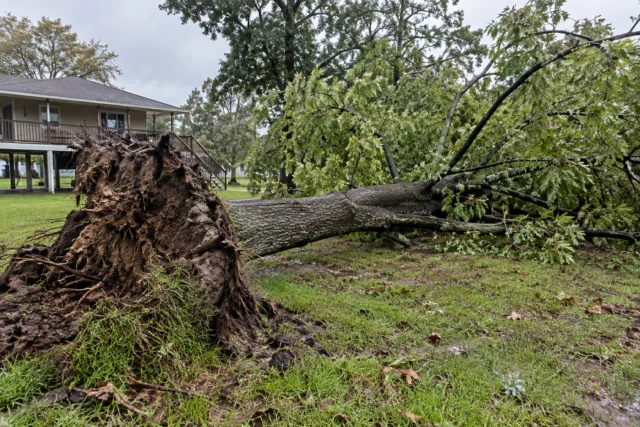
Photograph damage from a safe distance before cleanup when conditions permit. Note whether limbs are suspended, a trunk is newly leaning, soil is lifting around roots or a tree is bearing on a structure. These distinctions change the equipment and isolation plan.
An effective request for storm work identifies the damaged location, the safest entrance, overhead and underground obstructions, and whether crews need to preserve debris for an insurance inspection. Ask for a clearly separated scope covering hazard stabilization, removal, hauling, stump treatment and final site condition. Work near a roof, occupied building or neighboring property requires its own access and protection decisions; the presence of fallen wood alone does not establish the safest removal sequence. Do not enter exclusion zones or cut tensioned limbs.
Separate active hazards from later cleanup
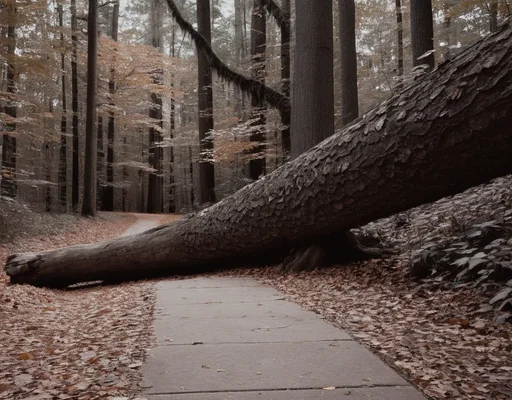
First describe whether a tree or limb is still suspended, whether people can safely avoid the area, and which route must reopen. Photograph from outside the hazard zone. If conductors may be involved, stay away and contact the utility rather than using the tree-service form as an emergency alert.
Storm planning: distinguish observations from work orders
A storm-preparation note is useful when it captures exactly what changed: a newly leaning trunk, lifted soil, hanging limb, blocked gate or debris on a structure. Photograph from a safe position and record when the issue was first noticed. Avoid moving trees, opening electrical cabinets or assuming that a photograph can establish the stability of the remaining canopy.
This guide is for organizing observations, emergency contacts and next decisions, not issuing an automatic dispatch. A commercial manager handling several buildings or maintaining public entry needs an additional access-control plan, tenant communication and controlled handoff to appropriate responders. Those operational questions belong on the linked commercial-storm-response page. The two pages serve different stages even when one storm creates both needs. Commercial Storm Response.
Separate immediate danger from a cleanup request
After a storm, one property can contain several different conditions: a branch on the lawn, a tree leaning toward the house and a blocked driveway. Describe them separately. An urgent threat to people or an electrical hazard needs the appropriate emergency or utility contact. Keep people and pets away from unstable wood, suspended limbs and damaged structures. Do not enter the affected area just to decide which service category best describes it.
For tree-work response, call Tree Huggers with the address and a plain description of what happened. Say whether the tree is on a structure, blocks an essential route or remains standing with visible damage. Ask about current availability and the next step. A web form can hold useful follow-up details, but it does not establish dispatch or an arrival time. The request should help the company understand the situation without requiring you to approach a hazard.
Describe the obstruction in practical terms
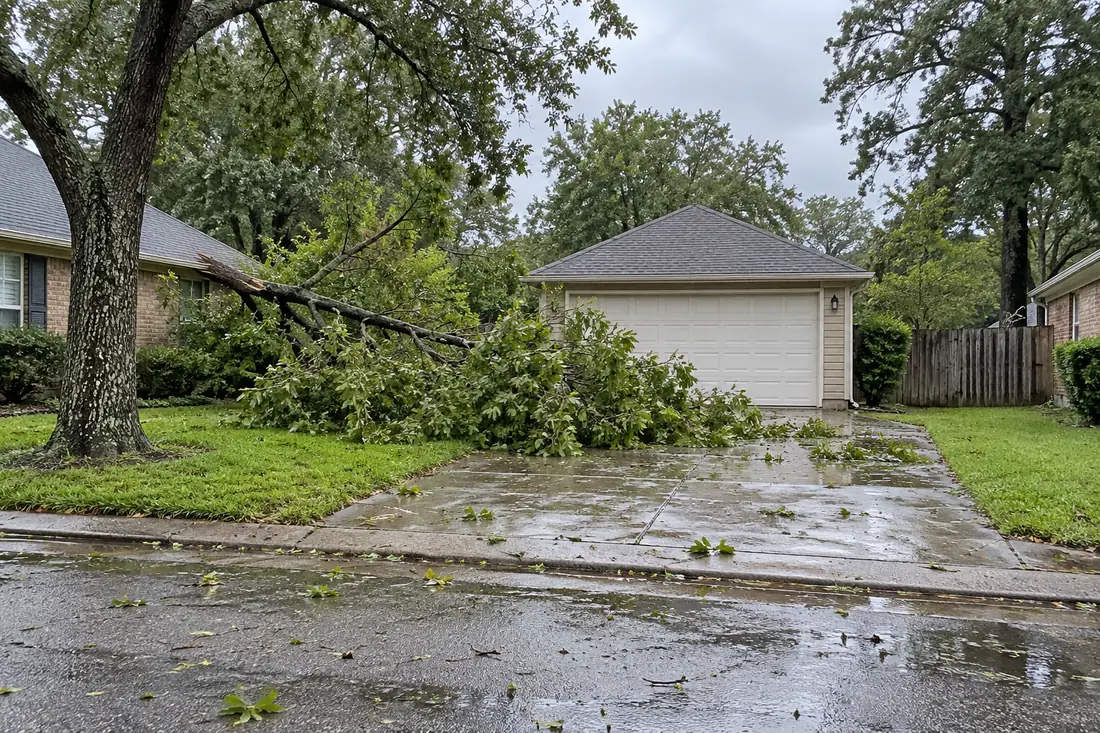
A tree across an unused rear path is different from one across the only driveway. A limb on a detached shed differs from a tree resting on occupied living space. Identify the affected route or structure and how the property is being used. Include the number of people or sites needing coordination where relevant, without exposing private information in public posts or photographs.
For a business or managed property, name one contact who can provide current conditions and authorize the agreed scope. If several entrances exist, explain which remain usable. Avoid describing the entire property as inaccessible when there is a safe alternate route, or minimizing a damaged entrance because the trunk is not large. The response discussion needs the actual access problem and visible hazards. The fallen-tree guide provides related context for material already on the ground.

Treat wires and loaded wood as reasons to keep clear
A fallen tree can contact a conductor, fence or another connected object. A wire’s appearance does not tell a homeowner whether it is safe to approach. Stay away and involve the utility or emergency services when appropriate. Do not move a branch, touch a fence or attempt to clear a line so a tree contractor can reach the property. Describe the conflict from an already safe location instead.
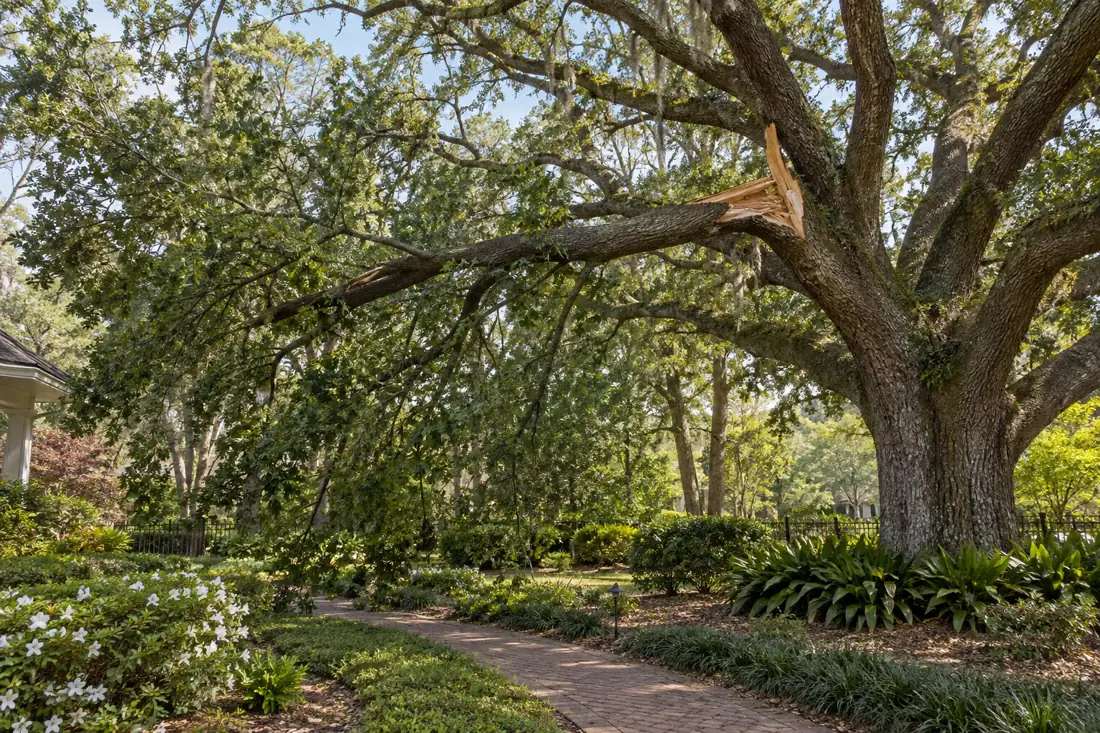
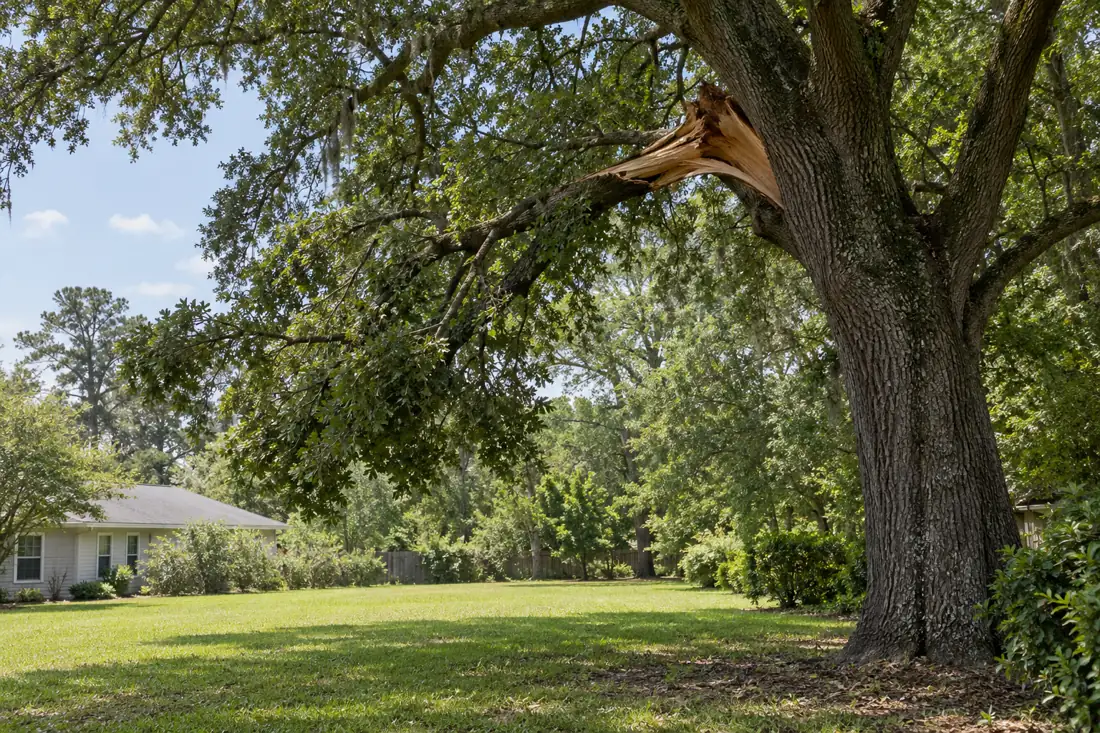
Wood on the ground can also be under pressure, supported by another limb or attached to an unstable root plate. Do not cut or pull material to test whether it will move. A damaged crown may remain above an apparently clear section of yard. Keep that whole affected area out of normal use until it can be evaluated. The hanging-limb page explains a related request where a visible branch remains suspended rather than resting safely on the ground.

Separate the urgent obstruction from later restoration
Storm damage can create several different tasks at the same property: a suspended limb, a blocked access route, loose brush, and a standing tree that requires evaluation. Photograph hazards from a safe distance and avoid approaching leaning or hung-up wood. Describe what access is essential instead of treating every broken branch as an emergency.
For an immediate hazard, call directly; an estimate form does not guarantee dispatch. Once the scene can be assessed, confirm whether the scope covers removal of an obstruction, hauling, stump work, follow-up inspection or landscape restoration. Those tasks may occur in different stages and should not be silently combined.
Use this guide to decide what response you need before requesting a crew
Storm planning begins by separating urgent exposure from routine cleanup and future preventive care. A suspended limb above an occupied entry, a fallen tree blocking the only access route, a damaged tree contacting conductors and branches scattered across an unused lawn are not interchangeable tasks.
From a safe position, describe where people could be exposed and whether access is blocked. A web form cannot confirm current dispatch or diagnose instability. If there is immediate danger or a utility hazard, involve the appropriate responder rather than approaching the tree for images.
This planning page helps a homeowner or property contact build a first-call summary. It does not promise commercial mobilization, a response time or a fixed price. For a campus, apartment portfolio or multi-site business, use the dedicated commercial storm-response service because authorization contacts, site priorities, closures, access routes and work-order changes require more formal coordination. Keep emergency protection, cutting, hauling and later structural or landscape repairs in separate stages so the appropriate provider can give a defined proposal.
Use safe photographs as context, not proof
If you can take pictures without approaching danger, begin with a wide view showing the tree, structure and access. Add the address and explain when the change occurred. A distant image with an honest description is more useful than a close-up obtained by standing beneath a damaged limb. If an important view is unavailable safely, say that instead of trying to fill every gap in the photo set.
Keep the images representative of the current condition. Do not crop away nearby wires or heavily edit out debris just to make the scene easier to read. Mark tree or area identifiers on copies if several locations are involved. Original files can remain useful for accurate context and your property records. Photos prepare the response conversation; they do not replace every on-site observation or establish that a route, building or tree is safe to enter.
Separate immediate danger from cleanup planning
After a storm, the first question is whether the area can be approached safely, not which tool will remove the limb fastest. Stay clear of suspended branches, unstable trunks and any material near utility lines. From a safe location, record which driveway, entrance or path is blocked and whether people can use an alternative route.
Tell the estimator about roof contact or damage already observed; do not move heavy material to get a better photograph. When a visit is arranged, clarify whether the request is for immediate hazard control, debris hauling, remaining-tree assessment or all three. Those are separate tasks with different access and disposal considerations.
Keep urgent safety arrangements distinct from later routine trimming so the proposed scope reflects the actual condition.

Planning example: access now, landscape work later
Suppose a tree falls across a private drive while several broken branches remain in the rear yard. The immediate concern is the blocked entrance; the owner also wants the property restored eventually. The first call should describe the obstruction, nearby structures and visible hazards from a safe location. It should not require the owner to climb over the trunk, cut a branch or approach wires to improve the photographs. Current response availability and the next step need direct discussion.
The initial authorized task might concern the drive, while complete removal, hauling, stump treatment and landscape work need further definition. Record those stages so opening the route is not mistaken for approval of every later task. Keep the damaged rear area out of normal use until appropriately reviewed.
Once the broader condition is understood, agree on material handling and the finish for each area. This is a hypothetical planning example, not a company job or a promised response sequence. It illustrates how one property can need several connected decisions without turning the first urgent request into an undefined cleanup contract.
Understand the first authorized task
The first tree-work objective may be opening a route or handling a particular damaged section. That is not always the same as removing every tree, hauling all material and restoring the landscape. Ask what is being proposed now and what still requires assessment. The scope should identify the location, task, access arrangement and practical completion point for that stage.
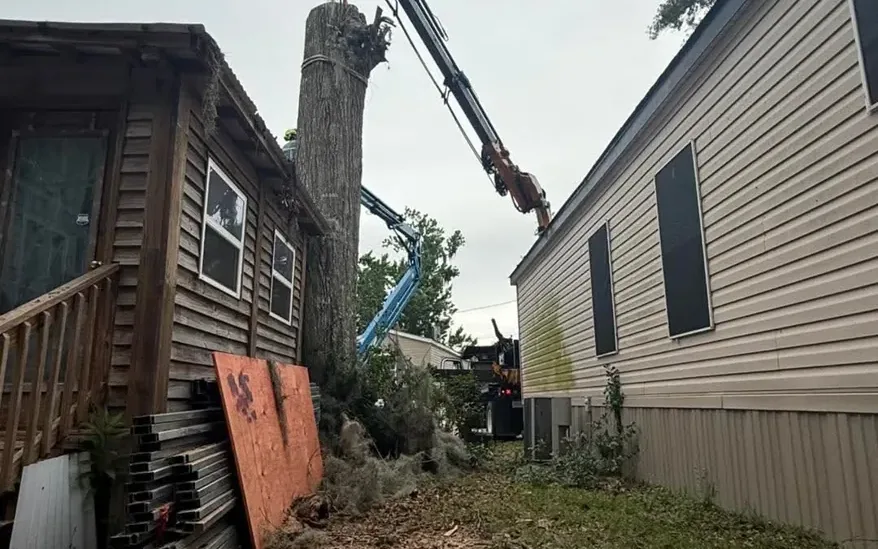
For a tree on a building, coordination can involve tree work and separate building, utility or repair professionals. The tree-on-house service page addresses the tree-work discussion without promising that removal includes structural repair. Keep responsibilities distinct. If conditions change or another provider needs an earlier step, review the sequence with the authorized contacts. A clear first task helps avoid a confusing handoff where everyone assumes that someone else is managing the remaining condition.
Plan the larger cleanup after priorities are understood
Once immediate work is defined, list the remaining trees, brush, wood and stump decisions. Identify material touching damaged fences or building components and explain any mixed waste. Storm cleanup should not be described as ordinary vegetative hauling if the piles also contain roofing, household debris or unknown material. The company needs to know what is present and what may require another handling arrangement.
Loading routes can differ from the route used for an initial response. Note soft ground, blocked gates, damaged paving and the space available for trucks. Ask whether wood is hauled, retained or staged and what small debris cleanup includes. Later grading, sod, landscape replacement and repairs should be identified separately. A phased project can work well when each phase has an understandable scope and finish instead of treating a broad instruction to clean up as unlimited authorization.
Keep the property record factual
Document the location, visible condition, request, accepted scope and authorized changes. Take photos only when safe and label them honestly. If work is urgent, ask what records can practically be provided without interfering with the response. Keep invoices and any relevant communications together so an owner or other reviewer can understand what was requested and performed.
Insurance coverage and claim decisions are separate from the tree contractor’s work description. Do not assume a removal recommendation or invoice guarantees reimbursement. The documentation page explains the information conversation; policy and claim questions belong with the appropriate insurance contact. The useful tree record states what was visible and done, without inventing cause, promising coverage or describing a future outcome that has not occurred.
Coordinate several properties through one clear list
For a portfolio, public facility group or association, organize reports by address and location identifier. Distinguish blocked access, trees on structures, standing concerns and later hauling. Keep one coordination contact current so the company does not receive conflicting priorities from different callers. Tell the contractor which person can authorize each proposed stage and any site-entry requirements.
The commercial response and mobilization pages provide related planning context for larger requests. Availability and field sequence still depend on the actual event, resources and site conditions. An organized list does not make a dispatch promise; it gives the response discussion useful facts. For a single home, the same principle is simple: call with the address, explain the immediate obstruction and keep the follow-up cleanup decisions clear.
Storm Tree Response Planning questions
Should I wait for an online reply about immediate danger?
Use the appropriate emergency or utility service for an immediate threat or electrical hazard. Call the tree company about current response availability rather than assuming a form dispatches help.
What should the first storm call explain?
Give the address, what changed, what the tree touches and which route or structure is affected. Describe visible hazards from a safe position.
Can a fallen tree still move unexpectedly?
Yes. Loaded branches and unstable root plates can create hazards. Do not cut, pull or climb over material to test or clear it.
Can I judge a wire by its appearance?
No. Keep clear of wires, contacting trees and connected objects. Involve the utility or emergency services where appropriate.
Do I need close photos to request help?
No. Safe wide views and a clear description are useful. Explain any view you cannot obtain safely rather than approaching unstable material.
Does the first response include all cleanup?
Only if that scope is agreed. Urgent access or specific tree work may be separate from complete removal, hauling, stumps and restoration.
Does tree-on-house removal include roof repair?
Not automatically. Tree work, building evaluation, utilities and repair tasks need clear responsibilities and appropriate coordination.
Should mixed debris be described before hauling?
Yes. Identify roofing, fencing, household waste or unknown material mixed with branches. Handling requirements can differ from ordinary vegetative debris.
Does a tree invoice guarantee insurance payment?
No. Coverage and claim decisions belong with the appropriate insurance contact. Keep factual scope records without assuming reimbursement.
How should several storm sites be organized?
Use addresses, location identifiers, visible obstructions and priorities, with one current coordination contact and clear approval arrangements.
Can work be divided into response and restoration?
Yes, when the parties define the stages clearly. Record what is authorized now, what remains and the completion point for each stage.
What if conditions change during the wait?
Report new damage, a changed lean, blocked access or utility involvement promptly. Keep clear while availability and the next step are reviewed.
Report storm tree concerns without approaching danger
From a safe place, describe any fallen trunk, hanging branch, new lean, blocked access or proximity to buildings and electrical lines. Stay away from downed wires and unstable trees; contact emergency services or the utility provider when appropriate. Tell us whether access is restricted and who can approve work. Submitting an online request does not confirm dispatch, arrival time or emergency-service availability; urgent coordination requires direct confirmation.