Suspended branches are not ordinary pruning
The attachment matters more than the branch size
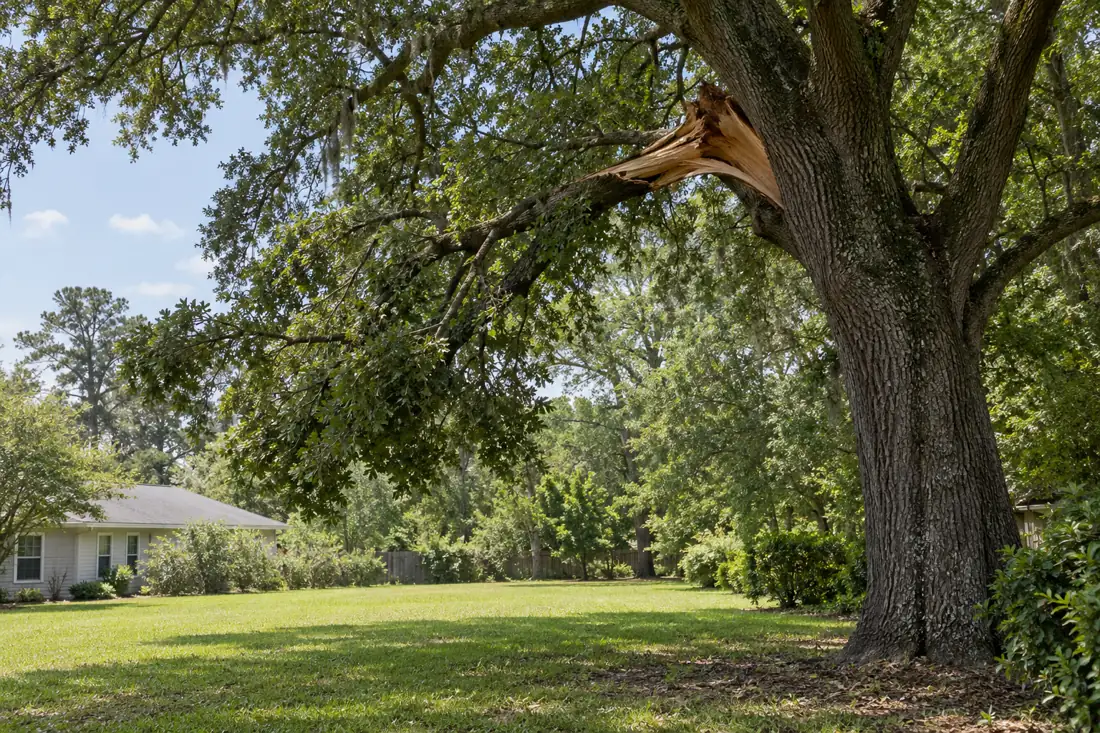
A broken limb caught high in another branch may be held by thin fibers, lodged bark or an unseen fork. Wind, vibration or a small adjustment can release it unexpectedly. From a safe distance, describe whether the limb is fully detached, still hinged at the trunk or draped over a roof, drive or walkway.
Never stand beneath it with a pole saw or ladder to test whether it is loose, and do not use a drone beneath power lines. Keep people and pets away from the potential fall area until the hazard is professionally addressed.
Ask for the hazardous piece and the remaining canopy
The immediate task may be removing a suspended piece without unnecessarily disturbing sound branches. That does not automatically mean the entire tree should be removed. Ask what will be evaluated after the hanging limb is dealt with, whether an adjacent cracked union needs a closer assessment, and whether chipping or haul-off is included. For ordinary routine canopy work, tree trimming has a different scope. For a broader damaged-tree decision, storm-damage tree service considers the rest of the tree and its targets. No photograph alone establishes long-term tree safety.
Suspended limbs can be unpredictable
A partially attached limb may be supported by bark, fibers, neighboring branches or another part of the canopy. Wind and vibration can change that support. The work should be approached from outside the fall zone whenever possible and with a clear plan for how the limb will be controlled.
Practical scope and safety guidance: A hanging limb is different from an ordinary branch-pruning job because its remaining support can fail without warning. It may be caught in another limb, suspended in a canopy, attached by torn fibers or loaded against a roof. Keep children, pets, vehicles and visitors out of the potential drop area; do not stand below it to measure or photograph it. From a safe location, take a wide view that shows the tree and any buildings or wires, then explain whether the limb changed after wind or rain.
An estimator may need to assess access for a climber, lift or other controlled-lowering method rather than assuming a pole saw is suitable. Identify fenced yards, soft ground, utilities, access through neighboring property and any required pedestrian restrictions. The estimate should specify whether only the immediate hazard is addressed or whether related deadwood, pruning and debris disposal are separately included.
Keep the drop zone empty
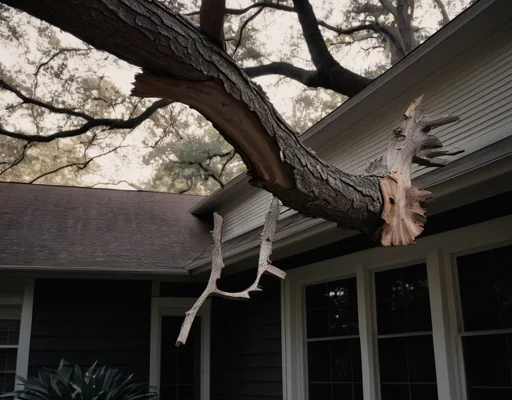
A hanging branch can shift without warning. Describe what the limb is resting on, what is below it, and whether the public can be routed elsewhere. Avoid standing underneath for close photographs or trying to pull it free. Work sequencing belongs to a qualified tree professional after an appropriate site check.
Keep people, vehicles and pets out from under the limb.
Identify where the limb is broken and what is still supporting it.
Use the appropriate access and rigging or equipment to bring material down safely.
Storm damage may extend beyond the obvious limb
When one large branch fails, nearby unions and remaining canopy should be checked for fresh cracks or loading changes. Emergency limb removal may be followed by additional pruning or tree-risk assessment if the rest of the tree has also been compromised.
Related services
Describe the branch and the space beneath it
Tell Tree Huggers whether the limb is above a roof, driveway, entrance, walkway or unused portion of the yard. Include the full address and an ordinary location description, such as the oak beside the rear garage. The immediate conversation needs to connect the visible damage to the people and property below it. A close-up of broken wood alone may hide the entrance that is affected.
Call 504-458-8336 to discuss current availability for the concern. Keep people and pets away while the next step is arranged. An online request can support the conversation but does not confirm dispatch. For immediate danger to people or electrical involvement, contact the appropriate emergency or utility service. The emergency tree service page provides related contact context without promising a universal response time or remote determination that a damaged area is safe.
Keep the exclusion area practical
Avoid walking or parking beneath the damaged limb, including to take a clearer photograph. Tell household members or the person responsible for the site which route is affected. At an occupied business, explain whether another entrance can be used and who can coordinate visitors or deliveries. The goal is to keep routine activity from carrying people back under the concern while an appropriate response is being discussed.
Do not pull the branch with a rope, shake the tree, climb toward it or try a small cut to see whether it will release. Support can involve other branches or concealed attachments. A limb that has remained still for several hours has not thereby been shown to be stable. Give the company an accurate observation of what changed rather than attempting to test the damage or prepare the branch for the crew.

Use photographs that preserve the attachment context
If safe, show the whole crown and the broken limb’s relationship to the trunk, surrounding branches and objects below. Add detail only from positions that do not require entering the affected area. Mention whether the damage followed weather, a recent failure or another observed event. If you do not know when it happened, say so rather than assigning a cause from the appearance of the break.
Send the work address with the photos, particularly when several people are helping coordinate a property. Explain an obstructed view instead of climbing or moving the limb to expose it. The storm photo guide helps organize safe context. Images can introduce the concern and support planning, but they cannot establish every attachment, internal condition or access requirement that affects the actual work.
Let the condition determine the handling approach
Height alone does not define how a broken branch should be removed. Its support, attachment, weight distribution, surrounding crown and nearby targets all matter to the review. Access from the ground, climbing, a lift or other equipment must fit the property and condition. Customers do not need to prescribe a particular technique before contacting the company; the important starting point is an accurate description and access information.
Show the complete route into the work area and any place where setup may be constrained. Gates, turns, overhead features and ground conditions can affect the available approach. The equipment planning hub provides useful questions without treating a machine as a guaranteed solution. Confirm the branch or work area being addressed, and keep a separate discussion for any additional tree work that the review identifies.
Distinguish removal of the limb from review of the tree
The visible broken branch is one concern; the remaining tree may raise other questions. Ask whether the proposed work includes only the identified limb, related pruning or a separate tree-condition assessment. A customer should understand what was reviewed and what remains outside the scope. Removing one hanging piece does not by itself establish a permanent condition rating for the rest of the tree.
The tree risk assessment page and tree trimming service explain related requests. Share known changes such as another recent failure, a newly visible crack or construction close to the tree. Do not assume a particular diagnosis from one photo. If ongoing observation or a further assessment is recommended, clarify who is responsible, what concerns need follow-up and how that next discussion will be arranged.

Document the suspended limb without entering its fall zone
A hanging limb can appear motionless while resting on another branch or bearing stored tension. Do not stand beneath it to take a better photograph, shake supporting branches or attempt to free it with a rope from the ground. Use a distant view showing the whole tree and a closer zoom from a safe location if available. Identify what lies below the limb and when the damage was first noticed.
Describe whether the piece is attached, wedged in neighboring branches or suspended over a roof, walk, vehicle route or outdoor play area. These are field observations rather than a remote diagnosis of weight or stability. Where people could enter the affected area, keep them out through the property’s established access controls until a qualified crew determines the next step. Utility contacts require separate utility coordination.
When requesting removal, include the desired end state: just the lodged section, related visibly damaged branches, or an assessment of broader crown condition. Ask how the work area will be protected and what debris handling is included. Afterward, retain a photo from the original viewing angle, the actual work performed and any recommended follow-up so the record does not confuse a resolved limb with a certified risk-free tree.
Coordinate roof and utility involvement separately
A broken limb above or against a roof needs to be described at first contact. Do not climb onto the roof to inspect the branch or pull it away from the building. If material is already resting on a structure, the tree-on-house page may be relevant. Tree handling, roof repair and building assessment are separate responsibilities and should be assigned clearly among the people arranging the response.
Where wires are present, avoid contact with the tree, conductor and connected objects. The appropriate utility or emergency service must be involved as needed. Tell the tree company about the conflict without trying to verify it yourself. A tree-work scope should not silently include utility repair or establish that electrical conditions have been cleared. Accurate coordination protects the handoff and keeps each provider’s task understandable to the property owner or manager.
Agree on the material and finish below
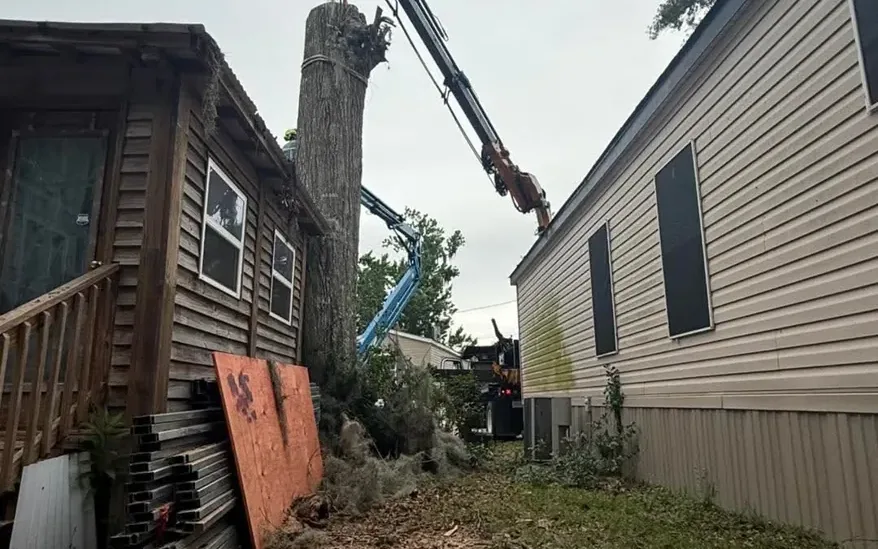
The quote should explain what happens to the removed branch and resulting debris. Specify hauling, retained wood and the area being cleaned. If the property already has a separate brush pile or earlier storm material, identify that as a different item rather than assuming it is included. Large pieces, leafy material and small debris can require different handling, especially when the route crosses a maintained garden or enclosed courtyard.
Ask about the practical finish for lawns, beds and access surfaces. Tree work should not be confused with unrelated landscape restoration or building repair. The debris removal service can help frame the hauling discussion. If another contractor follows, define the condition they need and the items they will handle. A clear end point is easier to verify than a general expectation that every part of the property will look newly restored.
Make the next contact concise and useful
Send the address, branch location, what is underneath, safe photos and the person who can arrange access. Include any known change since the photos were taken. For a managed site, identify who can approve the work and communicate access arrangements. Keep private gate codes in the agreed direct channel and do not place them in broadly shared property photographs or public notes.
A planning example is a broken limb above one entrance while another remains available. The immediate request should explain that access relationship, with later tree assessment or pruning described separately if needed. Ask what the proposed visit addresses, what information is still needed and what remains outside the accepted scope. Those answers turn a vague report of a dangerous branch into a usable conversation about the actual property.
Keep everyone out from beneath a hanging limb
A broken limb can remain held by torn fibers, nearby limbs or bark even when it looks settled. Wind or vibration can change that support without warning. Do not stand underneath for a closer photograph, dislodge it with a pole or send someone up a ladder. Keep a reasonable area below and around the possible fall path clear, and involve emergency or utility services when immediate public danger or electric lines are involved.
From safe ground, describe which side of the tree holds the limb, its approximate size, what lies below and when the damage was first noticed. Wide images showing the full canopy and nearby roof or walkway provide context that a bark close-up may miss. If the affected branch extends over a public path or neighboring land, identify who must be contacted about access. Do not place gate credentials or other private details in public photographs.

Use safe observations to support prompt professional review
Ask whether the proposed work addresses only the suspended piece or includes consideration of adjacent damaged branches. Removing one limb does not certify every remaining branch. Discuss equipment approach, property protection, material disposition and any separate roofer, traffic or utility coordination. The safe rigging method depends on the actual condition and cannot responsibly be selected from a generic website illustration.
After the area has been released, record which limb was removed and whether later assessment or pruning was recommended. A clear finish and follow-up note prevents a narrow urgent job from being mistaken for a whole-tree risk review. If a new crack or branch movement occurs before the appointment, report that change and keep the exclusion area in place.
Dangerous Hanging Limb Removal questions
Should I stand beneath the limb to photograph the break?
No. Use safe distant views and explain any angle you cannot obtain without entering the affected area.
Can a branch remain dangerous when it has stopped moving?
Yes. Stillness does not establish the condition of its supports or attachment. Keep clear and seek appropriate review.
What information should accompany the first call?
Provide the address, branch location, what is beneath it, visible utility involvement and safe current photos if available.
Should I pull a hanging limb down with a rope?
Do not pull, shake, climb or test-cut damaged material. Its support and surrounding conditions need appropriate evaluation.
Does hanging-limb removal mean the whole tree is assessed?
Clarify the scope. Addressing one branch and conducting a broader tree-condition assessment are different tasks.
Can the work include additional pruning?
Discuss the objective and identified work separately. Do not assume unrelated pruning is included in the initial branch-removal scope.
What if the branch is above the only entrance?
Explain the access problem when you call and keep people away. Discuss current availability; a form alone is not confirmed dispatch.
Will a lift or crane be required?
That depends on the tree, damaged limb, route, setup area and site conditions. Do not select equipment from height alone.
Who handles electrical lines near the branch?
Involve the appropriate utility or emergency service. Do not touch the tree, wire or connected objects to investigate.
Does the quote include roof repair?
Tree handling and roof or structural repairs are separate responsibilities unless expressly arranged with the relevant providers.
Will the removed branch be hauled away?
Confirm logs, brush, retained wood and the cleanup area in the accepted scope. An existing separate pile is not automatically included.
What should I ask after the immediate limb is removed?
Ask what was addressed, whether any further tree review is advised and which follow-up or property-repair items remain outside the work.
Let’s plan your tree work.
Send the property address, safe tree photos and the result you need. Include access restrictions and the person who can approve the work.