More useful than a generic photo gallery
Project pages are being structured as case studies, not random image dumps. Each completed feature can describe the problem, tree type, site constraints, equipment used, work sequence and result. That helps future customers understand what Tree Huggers is capable of and helps you evaluate the equipment, access conditions and cleanup details.
Site planning detail: A project gallery should let a visitor understand the actual work rather than infer outcomes from an attractive image. For each genuine Tree Huggers job that has permission to appear, separate the starting condition, the approved scope, the work performed and the finished condition. Describe the property constraints that determined the approach, such as nearby fencing, access width or roof clearance. Keep any general planning scenes clearly distinct from verified customer photos and never assign a generated picture a real location.
When before-and-after material is unavailable, offer practical project questions instead: what needs protecting, where equipment could stand, which debris is included and what the desired end condition looks like. Visitors seeking a comparable project should be directed to an estimate request with optional safely captured photos, without promises about a specific solution.
Remote-Controlled Tree Work
Projects using the boom-mounted saw and grapple system for difficult cuts and controlled handling.
Storm & Emergency
Hurricane, thunderstorm and emergency work involving damaged trees and urgent access.
New Orleans Large Trees
Mature urban trees around homes, historic properties and tight streets.
Commercial Projects
Work for businesses, property managers, institutions and contractors.
Before & After
Clear visual documentation showing conditions before work and the finished site.
Out-of-Town Mobilization
Future Gulf South and nationwide project documentation when crews deploy.
Why case studies matter
Tree service is visual. A customer with a huge oak leaning over a house wants to know whether a company has handled something similar. A property manager wants to see organized work on commercial sites. A prime contractor wants evidence that a subcontractor has the equipment and operational discipline to support a larger scope. Good project documentation answers those questions faster than marketing claims.
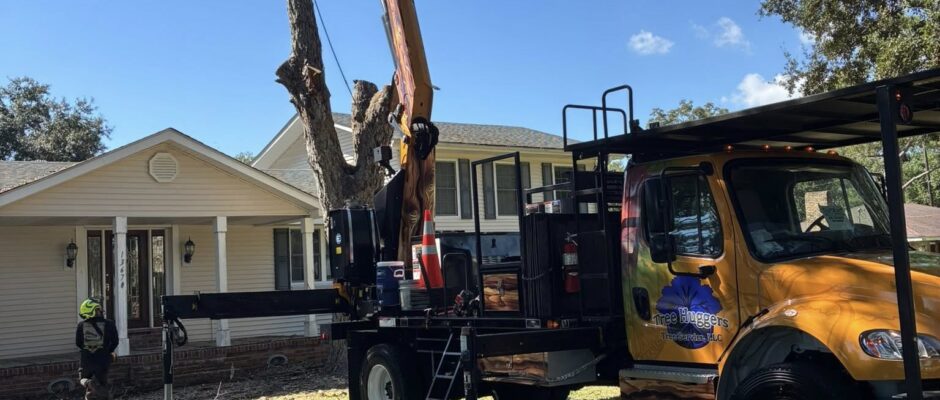
Original company field photographs
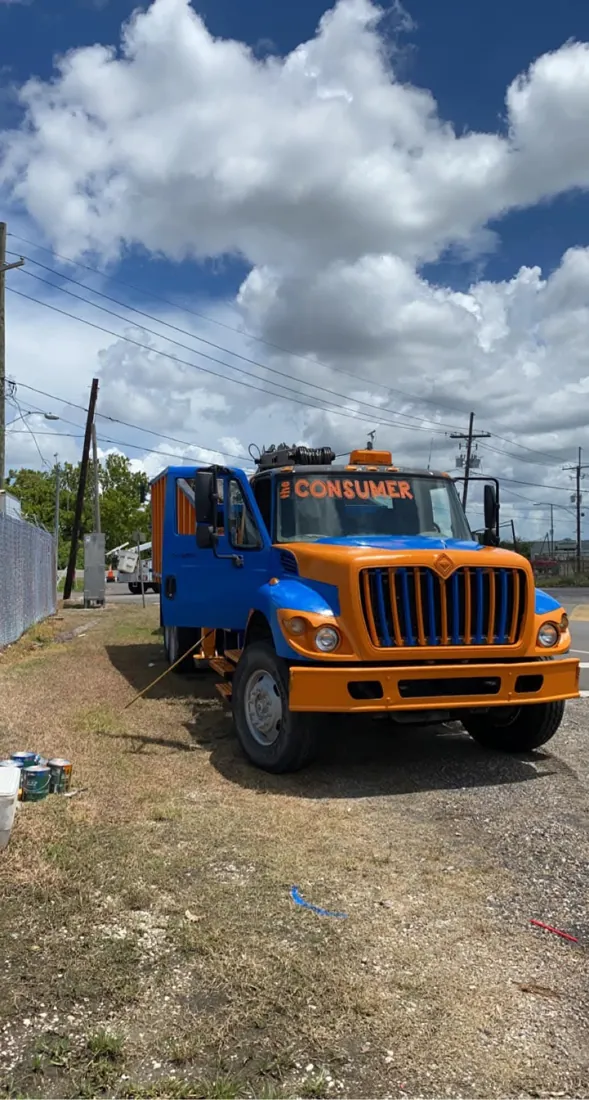
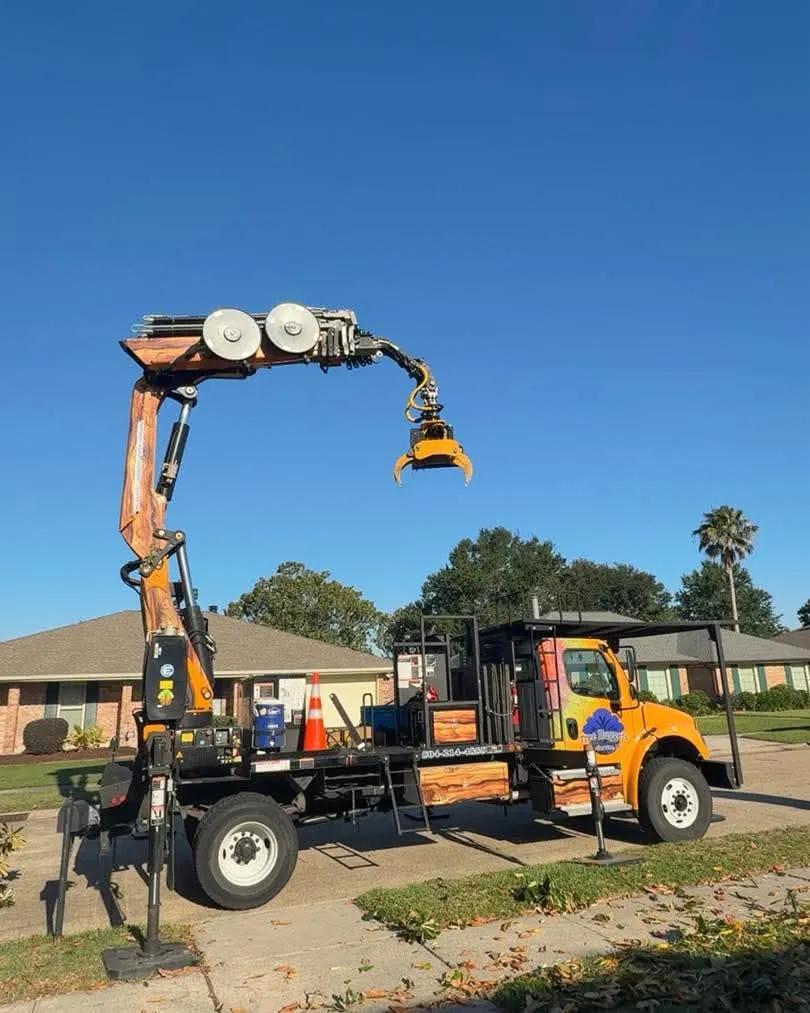
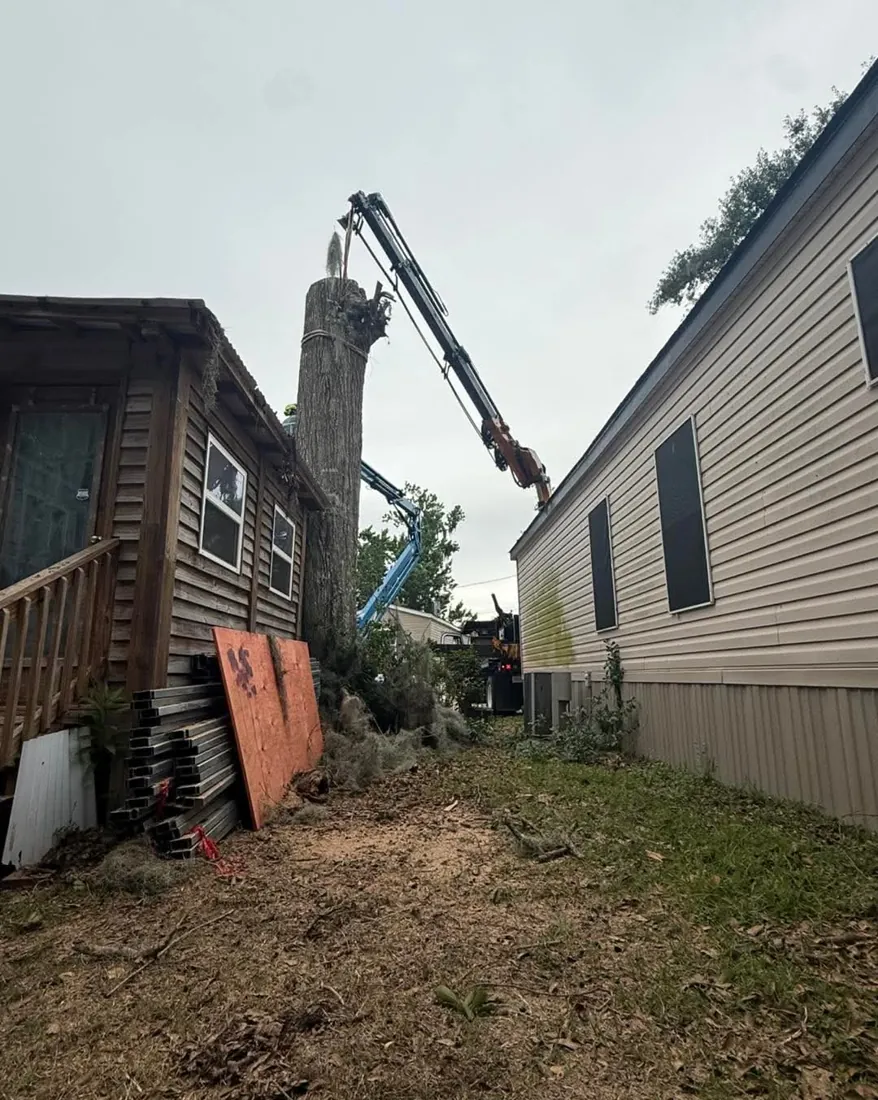
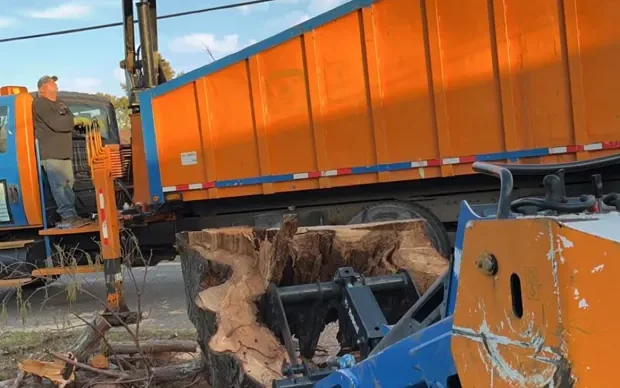
These photographs come from the owner-supplied Tree Huggers collection. They show equipment and work conditions; they are not presented as named public-contract case studies or as proof of a particular project location.

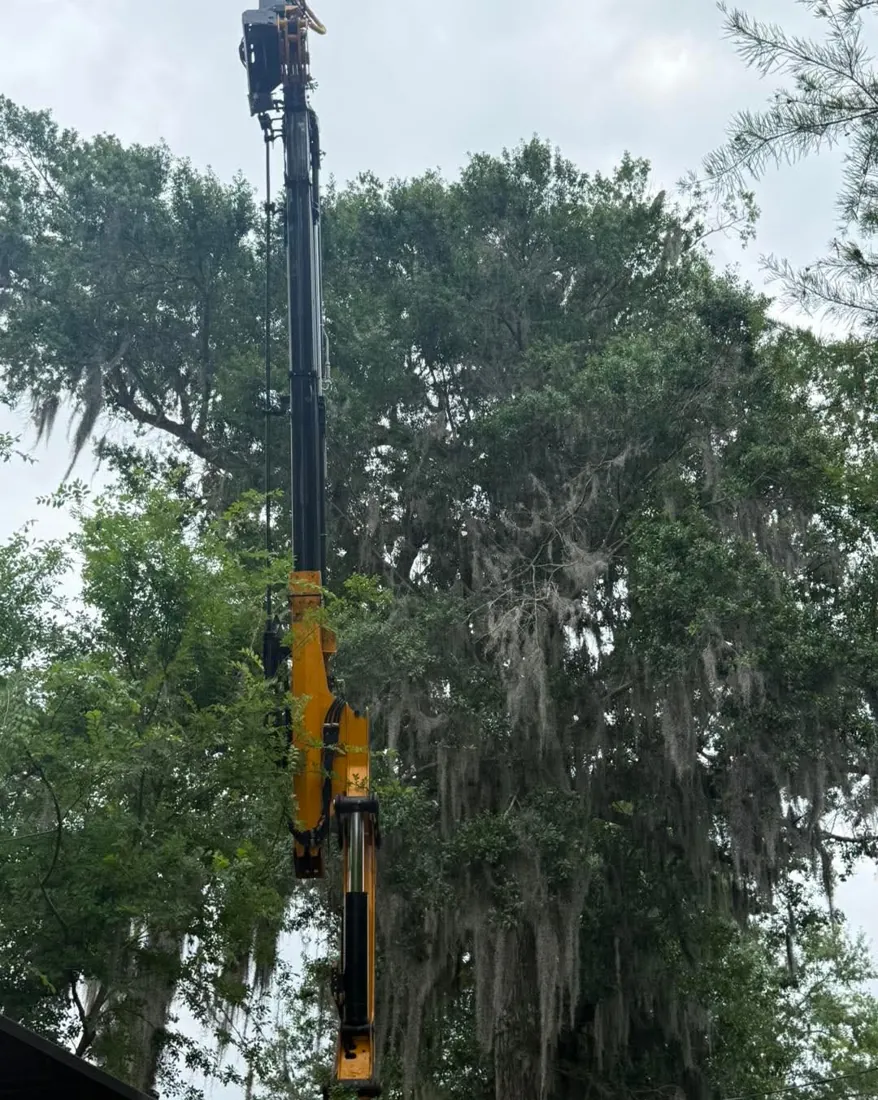
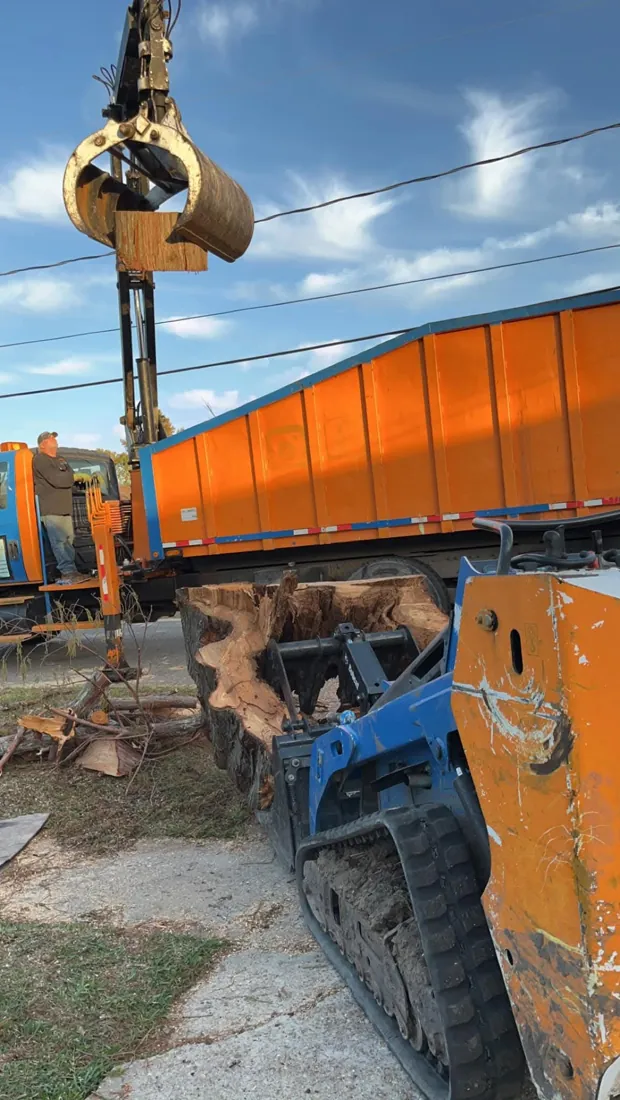
Read a Tree-Service Project Page as a Scope Example
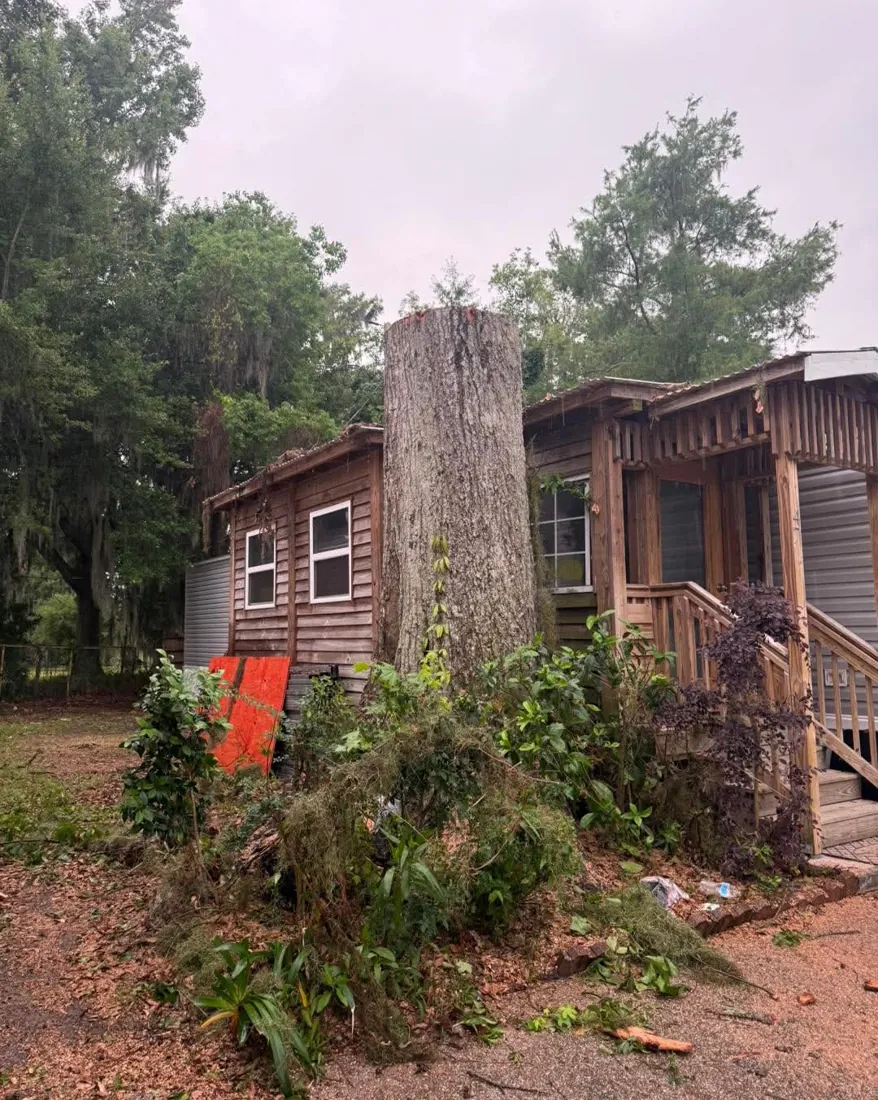
A useful project gallery needs to explain the problem being solved, the access limitations and the actual work authorized. A picture of a mature oak beside a roof may demonstrate a possible site condition, but it does not prove Tree Huggers removed that tree or worked at that address.
Educational imagery should therefore be labeled as an illustration, and genuine job photographs should only be presented as completed work when the business can substantiate their origin and has appropriate permission. Before-and-after pairs should show the same tree or work area from comparable views, not two unrelated scenes that happen to look convincing.
Images from a different job should not be presented as the result of another project.
When considering examples, focus on the difference between tree pruning, complete removal, stump grinding and debris hauling. The work changes the final site condition in very different ways. Pruning should describe which branches or objectives were addressed rather than implying that all future hazards disappeared.
Removal may leave a stump unless grinding is part of the agreement. Hauling may cover brush and timber but not disposal of unrelated yard waste. A clearly captioned project record can state what was included and what was outside the scope without publishing a customer’s identity, address, insurance information or other sensitive details.

Real project evidence should be clearly distinguishable from planning imagery
Site access often explains why two similar-looking trees require different approaches. An open front yard may provide room for a planned lift or chipper, while a fenced courtyard, narrow driveway, raised home or occupied business entrance can change the work sequence. Where a gallery illustrates confined access, the important details are the route for equipment, the place where material can be safely lowered and how surfaces are protected or restored. Trees near utility lines demand qualified handling and separate coordination; a striking photo should never become an invitation to imitate rigging or cutting methods. For a prospective estimate, wide photographs showing the full area and obstacles are more useful than images taken dangerously close to a damaged limb.
At the end of a genuine job, document what can actually be checked: the agreed tree or limbs, visible debris disposition, final stump condition if relevant and any unresolved items communicated to the property owner. Do not advertise a project as insured, permitted, engineered or certified without supporting records for that specific claim.
If the available gallery has mostly illustrative photos, use the page to help visitors identify their own conditions and then guide them toward a service-specific inquiry, rather than inventing case studies. The best conversion path is a clear question: what work are you considering, where is the tree relative to structures, and how should the business reach you to discuss the next step?
What Makes a Project Record Useful
An informative tree-work project record explains the problem, the property’s surrounding conditions and the result the owner sought. A dramatic picture of machinery alone cannot show the position of a roof, nearby lines, access restrictions or the area that needed protection. A wide view can establish context; detail images can clarify why ordinary access or cutting methods might not fit. Visitors should be able to recognize a comparable problem without assuming that the same method will work at their property.
Tree Huggers has company-supplied field photographs illustrating equipment and tree-work conditions. These should not become invented named case studies with fabricated dates, addresses or outcomes. When a specific job’s history has not been independently verified, an image should be identified as equipment or site-context photography, not proof of an individual customer result. Honest provenance makes a gallery more useful to both property owners and buyers evaluating qualifications.
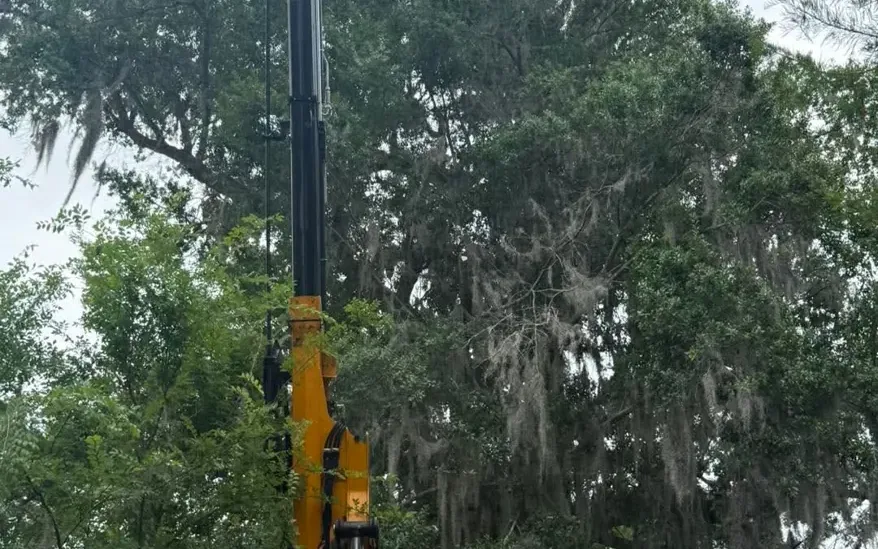
Start With a Tree Problem, Not a Machine
Most people visit this page because a tree is declining, leaning over a building, obstructing access or leaving debris after a storm. The useful first question is what needs to change. Is removal necessary, or should a qualified tree professional assess pruning or preservation? Is the desired result a clear driveway, reduced contact with a structure, a ground stump or a safer work area? Those objectives determine which project references matter.
Equipment shown in a gallery can help explain options such as lifting or controlled handling, but a photograph cannot select the method. Tree structure, branch arrangement, nearby utilities, ground support, work-zone location and available access affect the plan. A responsible discussion starts with condition and constraints before assigning machinery, a schedule or a price. Site-specific advice still requires assessment.
Look Beyond the Tree to the Access Route
New Orleans-area properties can have narrow side yards, fences, turning restrictions, low branches and tightly spaced structures. A machine’s advertised width does not account for the entire route. For a helpful project comparison, inspect the narrowest opening, the route from street to work area, where loading might occur and what would need to be moved or protected. A rear-yard photograph without a route view tells only half the story.
When contacting a contractor, send safe views of gates, corners, driveways and overhead obstructions along with a view of the tree. Identify soft soil, raised paving, shallow drainage features and features that cannot be disturbed. A crew may need an entirely different setup if the equipment cannot reach the suggested location. Never take down a neighbor’s fence or enter their property without a separate agreement.
Compare Difficult Trees by Targets and Condition
Two trees of similar height may present very different risks. One might be in an open clearing; another may have a broad canopy over a roof, a damaged union, poor access and few places where material can land. A useful project record names the visible constraints and the type of assessment needed, rather than treating all large removals as one interchangeable service. Tree health and defects matter as much as height.

Keep proposed work, educational examples and documented jobs separate
A project gallery should help visitors understand the kinds of conditions that influence planning without making an illustrative photograph look like a completed assignment. An image of a mature tree beside a fence can demonstrate access challenges, but it does not establish that a particular business worked on that tree. Preserve this distinction when reviewing site photos, schematic examples and any authentic job evidence that is available with permission.
For an actual tree-service inquiry, a simple evidence sequence is useful: one wide scene of the property, one image of the tree from another angle, a view of the trunk base and a photograph of the access route. Avoid standing beneath suspended limbs or entering unstable areas to obtain photos. For shared fences, historic buildings or limited vehicle access, note the constraints rather than assuming a familiar removal method would fit the property.
If a project is later documented, date and describe the scope accurately, record the customer’s publication consent and distinguish finished work from proposed work. A helpful closeout record lists any remaining stump, accepted debris arrangement and agreed surface condition. Until such records exist, this site can use disclosed educational planning scenes but should not attach fake customers, neighborhoods or before-and-after claims to them.
Photos may illustrate a grapple, crane or sectional removal setup without proving how a different tree should be handled. The presence of one piece of equipment does not eliminate the need to inspect the work area and establish controlled zones. Ask how a proposal addresses nearby buildings, paving, utilities, landscaping and pedestrian access. Those questions are more revealing than whether a contractor owns a particular machine.
[/fusion_text][/fusion_builder_column_inner]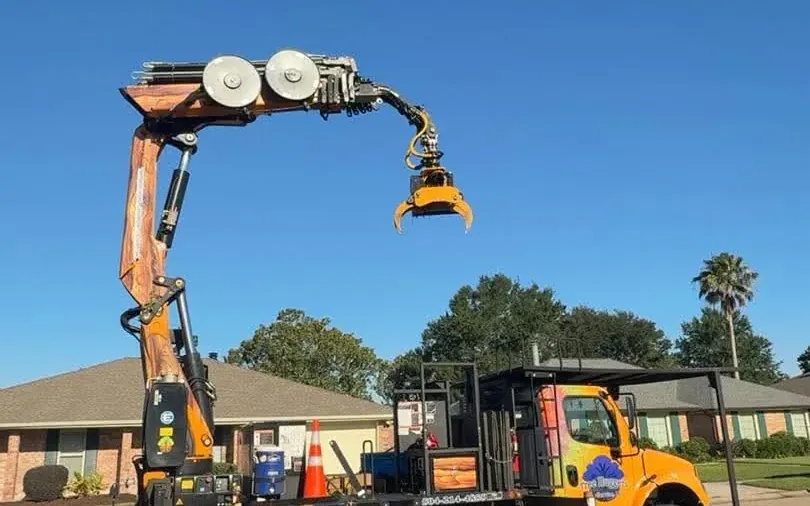
Interpret Storm Work Conservatively
A fallen tree can look simple in a photograph while remaining under tension, resting on a damaged structure or close to an energized conductor. A project gallery should never encourage a homeowner to approach unstable material for a sharper image. The safest first record may be a distant wide photograph and a written description of blocked access, contacts or visible changes. For electrical hazards or immediate danger, the relevant utility or emergency authority takes priority.
Emergency removals also differ from routine work in authorization, access and sequence. The first goal may be securing the scene or recovering an entrance rather than restoring the landscape. A contractor still needs to identify what is included in debris clearing, structural coordination and later work. An illustrative emergency image is not proof of an insurance decision, rapid arrival time or completed response at a named address.
Use Before-and-After Comparisons Correctly
Matched viewpoints are essential to meaningful before-and-after evidence. A wide image taken before work should include the relevant tree, surroundings and targets; the matching final image should show the same area and the agreed level of cleanup. A close-up of a saw cut cannot demonstrate that a driveway, garden bed or access panel was restored. Captions should describe visible conditions and avoid conclusions the image cannot support.
Crops, responsive sizes and color-adjusted variants of one frame are not independent photographs, projects or customer outcomes. If the link between two images is uncertain, present them separately rather than manufacturing a transformation. This same rule protects accurate media inventories and prevents misleading case studies. Verified project documentation can be more detailed later, but it should never be reverse-engineered from a gallery layout.
Clarify Logs, Chips and Stump Materials
Tree work produces different materials that may be managed separately: limb brush, large wood, chipped material, stump grindings and soil mixed with roots. A photograph of a haul truck or grapple is evidence of equipment, not proof that a particular estimate includes complete disposal. Customers benefit from seeing what material handling looks like and from asking which items are included in their own scope.
Before approving work, clarify whether larger logs stay, whether branches are chipped or hauled, whether grindings remain and what final raking or sweeping will cover. Lawn restoration, imported soil, sod and fence repairs are not automatic parts of every tree-removal job. Documenting these distinctions allows a proper comparison of proposals and prevents the finished site’s appearance from becoming a surprise.
Read Commercial Examples as Planning References
Commercial work may involve tenants, delivery zones, parking, pedestrians, business hours and multiple people with approval authority. Equipment photos can show potential capabilities, but an actual project comparison needs information about work windows, access control, protected areas and how activity was coordinated. A retail property and a government facility can both have trees yet impose very different procurement and operational requirements.
When a buyer needs proof of completed contract experience, photographs alone are insufficient. Request the particular references, scope documents, permitted work information or completion evidence that can legitimately be supplied. Do not infer a municipal award or a public contract because a machine is pictured in a street. Planning examples and verified past performance should remain clearly distinguishable.
Capture Helpful Photos Without Taking Risks
A useful inquiry photo set includes the whole tree from a safe location, a view of the base if accessible, nearby targets and the complete equipment approach. A label or short note can identify which of several trees needs attention. If a defect is difficult to photograph without entering a risky area, describe it instead. The visitor should not climb debris, approach suspended limbs, step under a damaged canopy or move lines for the sake of a picture.
The property address, access limitations, recent changes and desired outcome give context beyond the images. This information helps the crew determine whether another photo, a site visit or another qualified party is needed. It does not establish an exact cost, method or scheduled date. A safety-conscious gallery teaches customers what is useful to share and when to stop taking pictures.
Turn the Gallery Into a Specific Estimate
Select the most relevant project theme, then describe the actual concern in plain language: the tree, the obstacle, the property at risk and the outcome you want. If multiple trees are involved, label them. Say whether the goal is clearance, health management, removal, stump work or debris handling. Add safe photographs and note any shared access or permission questions before assuming how equipment will reach the work.
Ask the estimator to identify included trees, removal or pruning methods only after assessment, work-area protections, material handling, exclusions and the approval process for unexpected conditions. Keep that written scope and authorized changes through the final walk-through. Tree Huggers can review an inquiry and discuss next steps; a gallery resemblance or a submitted form cannot promise a method, appointment, price or response time.
Discuss the next step for your property
A useful tree-work project record separates the initial condition, approved scope, work stages, and final surface or debris disposition. Check that any image offered as completed-work evidence can be tied to a genuine project and its context. Educational planning scenes on this site are not customer job photographs.
Frequently Asked Questions
Does every image show a verified Tree Huggers customer job?
No. Company-supplied photographs illustrate equipment and tree-work conditions. A named location, customer, date or outcome is not asserted unless independently supported.
How do I compare projects of similar tree size?
Consider condition, surroundings, utilities, available access, work zones and cleanup as well as height. Two similar trees can require very different methods.
Can I choose a crane or grapple from a gallery photograph?
No. Safe equipment choices require assessment of the actual tree, surroundings, ground and work position.
What access photos are useful?
Provide safe views of the whole route from street to tree, narrow gates, turns, overhead obstructions and surfaces needing protection.
Are different crops separate original project photos?
No. Crops and resized derivatives remain versions of one photographic scene and should not be counted as independent jobs.
What makes a before-and-after comparison reliable?
Matched wide viewpoints, a known subject and verified provenance help establish what changed. Unrelated images should not be paired as evidence.
What if storm debris is unsafe to approach?
Stay outside the hazardous area. Describe what you can see safely and contact appropriate utility or emergency services for immediate danger.
Does a truck photo mean hauling is included?
No. Debris hauling, chips, logs, grindings and restoration should be explicitly stated in the written scope.
Can equipment images verify a government contract?
No. Public contract experience needs separate supporting records; general equipment photography alone is not evidence of an award.
What should property managers ask about?
Ask about tenant access, work windows, pedestrians, approval authority, site protections and contract-specific documentation.
How can I submit a comparable tree problem?
Send the address, desired result, safe wide photographs and specific access or safety concerns through the estimate process.
Does submitting project photos confirm scheduling?
No. Photos start the assessment conversation. Scope, method, price and availability require separate confirmation.
Get a scope for your property
A project page is useful only when visitors can tell what represents completed work and what is an educational planning illustration. Compare prospective work by the problem addressed: clearance around a structure, a blocked access route, removal in a constrained yard, retained-tree protection or cleanup of woody debris.
Photographs, where available and authorized, should be labeled to distinguish real company work from generated examples, generic reference images and diagrams. Do not treat an illustration as a customer job or a before-and-after pair as evidence without verified provenance.
For your own project, share the property location and safe overview images rather than a cropped close-up alone. State the desired outcome and any limits, such as keeping a neighboring tree, saving logs, avoiding landscape beds or maintaining parking access. The estimate should identify work boundaries, material handling, protection measures and a realistic completion standard. When comparing proposals, ask what happens if hidden damage, buried utilities or restricted access changes the planned method. Documented scope matters more than a dramatic photograph.
Related planning guides

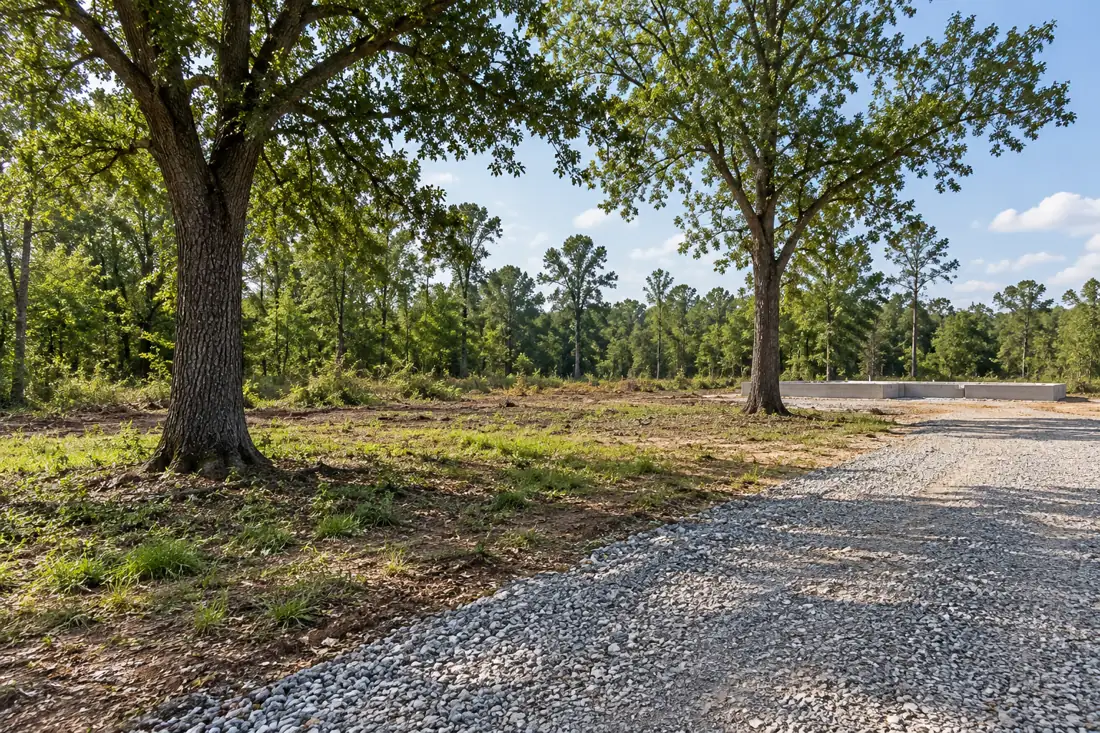
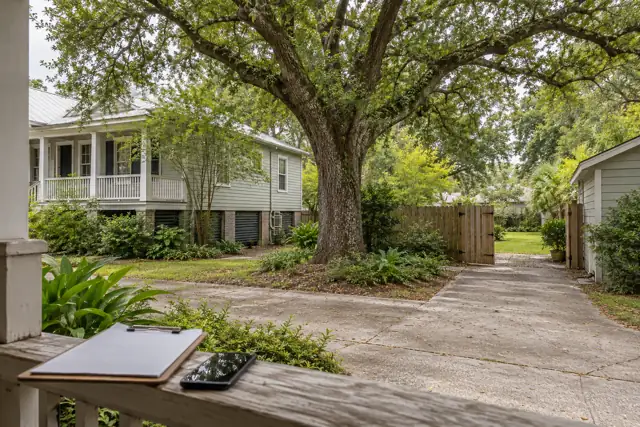
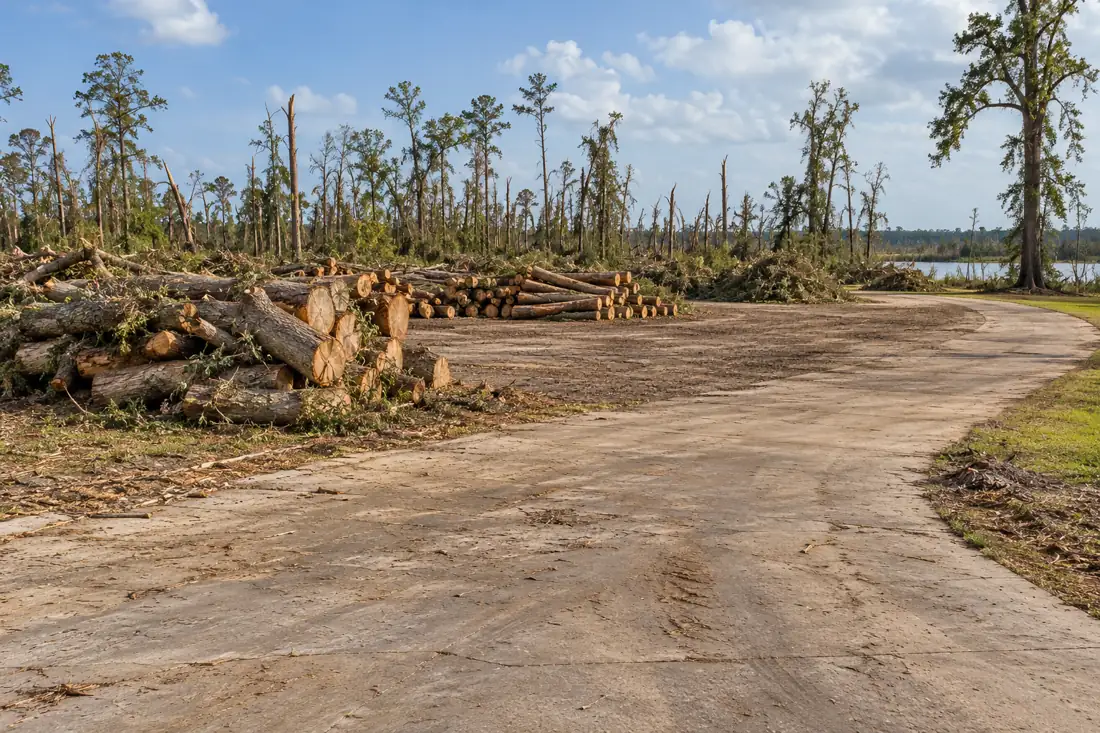
Explore 12 before-and-after illustrations
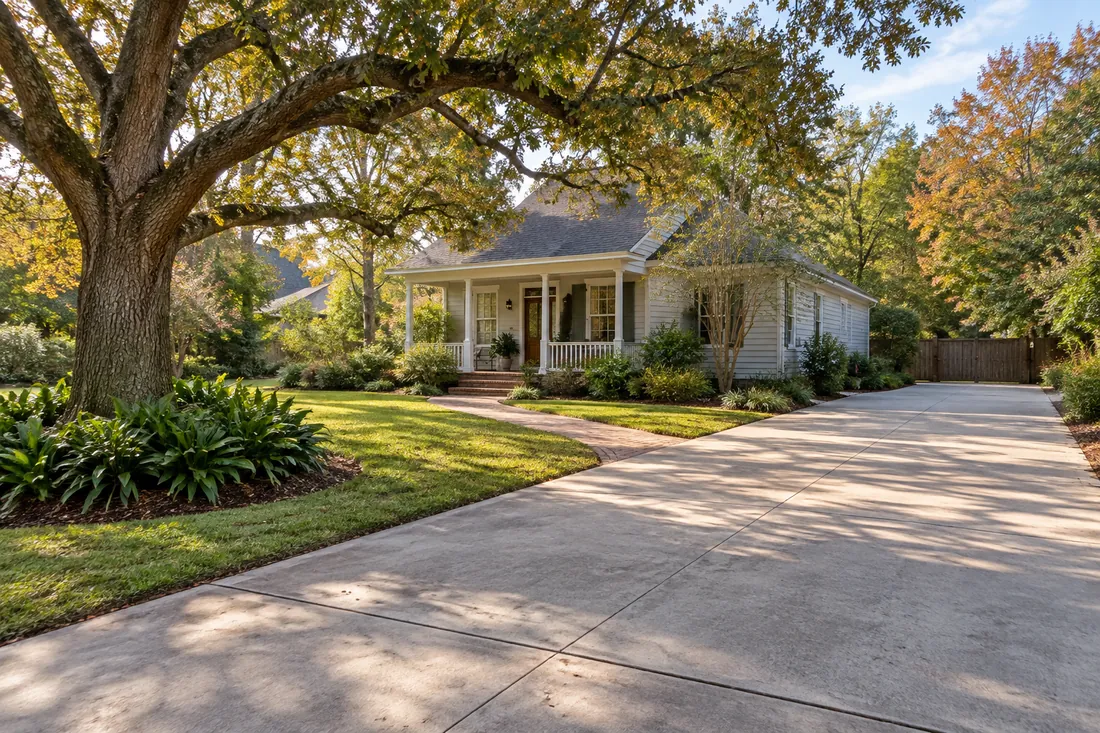
Move each handle to compare a possible tree-work result. These generated examples explain scopes and finishes; they are separate from the genuine company field photos.


Example: Large oak removal
The same home with the large oak removed. Stump finish, hauling and restoration should be specified in the estimate.


Example: Storm-fallen tree clearance
The fallen tree is cleared from the driveway. Root-ball treatment and the final site finish remain separate scope decisions.


Example: Stump grinding finish
The upright stump is gone and wood chips remain. Chip removal, fill and new grass are separate finish items.


Example: Tree removal beside damaged paving
The tree and visible roots are removed while the damaged sidewalk remains. Tree work does not automatically include pavement repair.


Example: Logs and brush hauled away
Staged wood, branches and the trailer are removed, leaving minor sawdust and normal ground disturbance.


Example: Hazard removal at a public park
The broken tree and debris are cleared while healthy shade trees remain. A remaining stump needs its own finish specification.


Example: Selective pruning and cleanup
A natural leafy crown remains after modest clearance pruning, with the branch pile removed from the driveway.


Example: Tree removal in a narrow side yard
The tree and compact equipment are removed while both houses and the fence remain. Ground restoration should be agreed separately.


Example: Selective clearing with retained trees
Brush and equipment are cleared while the standing mature trees and root-protection barriers remain.


Example: Limb removed from a garage roof
The limb is removed and the roof damage remains visible. Roof repair belongs in a separate repair scope.


Example: Dead-frond palm cleanup
Dead brown fronds are removed while the living green crown and the palm height remain.


Example: Roadside debris clearance
Logs, brush and equipment are cleared from the shoulder without changing the road, drainage ditch or retained oaks.