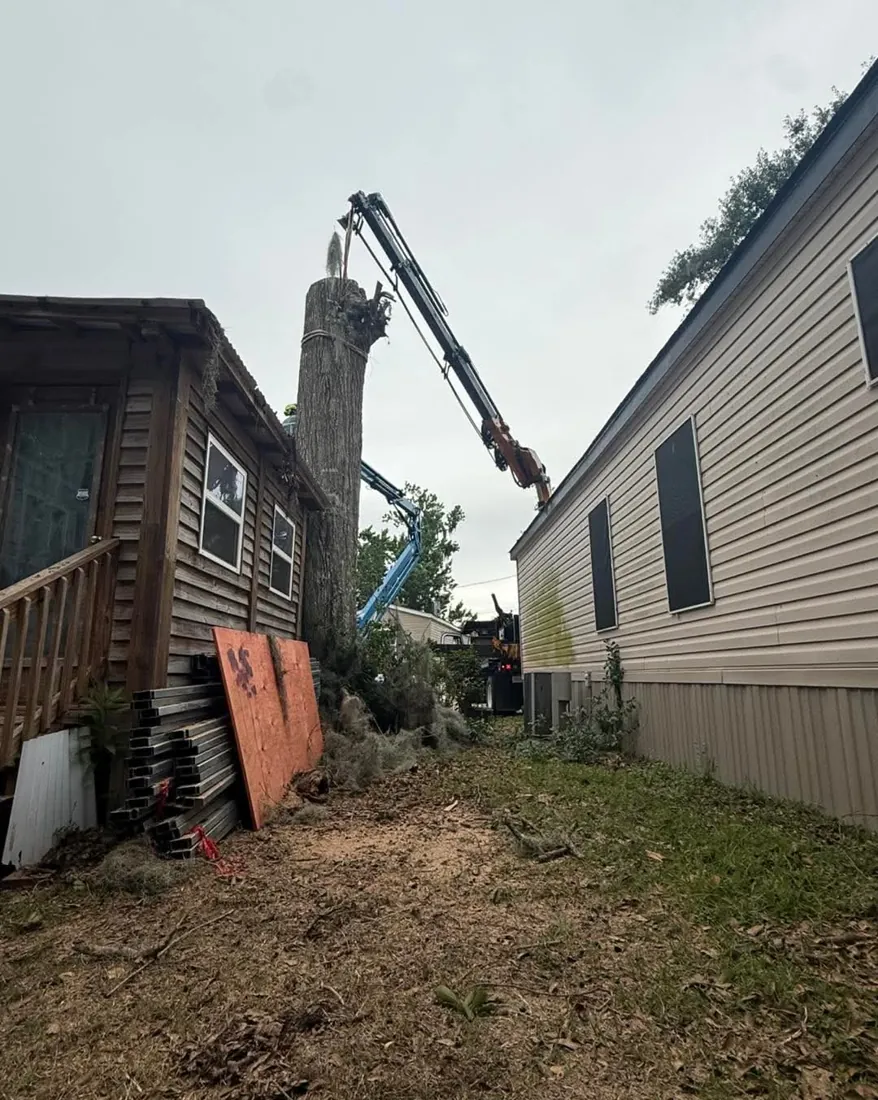
Prepare photos, compare estimates, confirm access and keep work authorization clear.
Before hiring, verify the exact work and who controls the site
An estimate should describe which tree or stump is included, the specific work objective, the location of cuts or debris, and access assumptions. Ask whether the price includes haul-off, stump grinding, site protection, permits or traffic control where relevant. A request that says trim the big tree leaves too much to interpretation, especially when several trees stand on one property.
Discuss how the crew will reach the work without damaging gates, irrigation, buried services, roof edges, lawns or neighboring property. Clarify the roles of the owner, tenant, HOA or property manager and who can authorize unexpected work. Insurance information and professional qualifications should be checked directly when they matter to the project; badges on a website are not a substitute for current evidence.
On the scheduled workday, identify pets, parking restrictions, locked areas, occupied rooms and people who need alternate access. Request a concise completion walkthrough and a written note for anything deferred. A careful hiring process does not guarantee that damage or delays cannot occur, but it makes responsibilities and expectations visible before equipment arrives.
Start with one clear result
You do not need tree-industry vocabulary to make a useful request. Say what you want changed: clear the branch from the roof, remove the dead tree, keep the patio shaded or grind a stump for a garden project. Add the address and what has changed recently. The estimator can help connect that objective to the right assessment and service instead of relying on a general instruction to take care of the tree.
If you are undecided about removal, say so before requesting a firm removal price. If retaining the tree matters, include that goal. The service overview can help identify a starting point, but it should not require you to diagnose a hidden defect or select equipment. A clear question is enough to begin a conversation that considers the tree, property and proposed result together.
Send a small photo set with useful context
Begin with a wide view of the whole tree and nearby features. Add the base and a specific concern if those views are safe to obtain. Show the approach from the street or loading point and the narrowest gate or turn. A handful of well-chosen images usually explains the site better than many close-ups with no indication of which tree or address they show.
Do not stand beneath damaged branches, climb onto a roof or enter another owner’s property to complete a photo set. Explain any missing view instead. Keep images current and representative; avoid cropping away obstacles or editing out material the contractor needs to see. The text-information page provides the contact route. Safe photos prepare the estimate discussion without establishing that a tree, route or structure is safe to approach.

Ask what the visit is intended to provide
A contractor may be discussing a price for a known task, a condition concern, a documented assessment or several needs. Clarify what is included before assuming the visit answers every question about the tree. If an owner or manager needs written findings, mention that early. Ask who performs the evaluation and what scope and limitations apply to the information supplied.
For choosing a contractor, request current documentation relevant to the work and discuss the method and scope directly. Do not rely only on an equipment photo, broad marketing claim or the lowest total. The assessment page explains a related service conversation. The useful outcome is understanding what the company proposes to do and what remains to be evaluated, rather than interpreting a brief estimate as a universal guarantee about the tree.
Compare the same work across proposals
Use a marked photograph or simple numbered list when several trees are involved. Ask each proposal to identify the tasks, access assumptions, handling, hauling and stump decision. If a particular branch or retained feature matters, make it visible in the request. A price for a single removal cannot be compared fairly with a price that also includes grinding, chip hauling and a separate pruning task.
Read exclusions and ask for written clarification where needed. A broad phrase such as complete cleanup should connect to an actual finish. Keep optional items separate from the work you accept now. The removal and pruning hubs help organize their different scope questions. Clear comparisons let you evaluate an actual result instead of treating every quote containing the word tree as the same offer.
Prepare a first inquiry that yields a useful visit
Describe the actual tree problem instead of requesting a generic trim. Show the tree and affected feature together from a safe viewpoint: a branch near a roof, an obstructed driveway or a stump interfering with a planned surface. Provide the location, preferred contact method and any timing constraints. Do not climb for photos or approach damaged power lines. Tell the estimator when a backyard is locked or when neighbors must authorize an access route.
List property conditions likely to change the approach: pets, soft soil, buried irrigation, fragile paving, overhead conductors, shared driveways and other trades booked nearby. Decide who can approve the job if several owners or tenants are involved. A written estimate should specify the tree or stump, objective, material handling, included cleanup and exclusions. Do not compare two prices as equivalent if one includes haul-off and the other leaves logs or chips behind.

Prepare useful information without diagnosing the tree
Before requesting a tree estimate, identify the tree, the objective and any access limitations. A wide photograph can show the canopy, nearby buildings and ground route; a close-up alone often misses the planning problem. Note whether you want a condition conversation, pruning scope, removal price, stump finish or debris hauling.
If damage followed a storm, say when it occurred and avoid approaching unstable wood for photos. Collect questions about the proposed method, site protection and the expected condition at completion, then compare written scopes rather than just headline prices. The estimate should clarify assumptions and exclusions, including who handles gates, access permissions and any follow-on landscaping.
This preparation helps the homeowner and contractor discuss the same job without claiming an outcome before the site is assessed.

Planning example: three photos and one specific goal
Suppose an owner sends a close bark photo and asks for the cheapest price. The estimator still does not know the address, whole-tree condition, nearby roof or access. A more useful message states the goal, gives the location and includes a wide tree view, the affected feature and the route through the gate. If the owner is uncertain whether removal is necessary, that question belongs in the message instead of being hidden behind a request for a removal total.
During follow-up, clarify the visit and proposed scope, then compare tasks and finish before accepting. If another family member will meet the crew, provide that person with the same tree identifiers and approval arrangement. At completion, review the accepted items and record any follow-up. This hypothetical example shows how a concise request can still be informative; it does not require a large dossier for ordinary home work.
Safe context and a specific desired result help more than a stack of isolated images or an equipment choice made before the property has been discussed.
Arrange access without altering the plan yourself
Identify who controls gates, driveways and any neighboring approach. Give the company practical entry details through the agreed private channel. Do not remove fencing or clear another tree before the route has been reviewed. If temporary preparation is needed, agree on who performs it and who reinstates the affected feature. The person accepting the quote should understand those responsibilities even if someone else meets the crew.
Move vehicles, furniture or other items as requested under the accepted plan. Tell the company about fixed equipment, delicate paving, retained plants and known buried features. If a new delivery or construction task blocks the route, report it before arrival. The access guide explains why the complete approach matters. A changed route can affect method and timing, so it should not be treated as an interchangeable substitute without review.
Review the scope before and after work
Before work begins, confirm how vehicles, occupants and pets will be kept clear. During final review, compare the finish against the approved task rather than the volume of cutting or a marketing image. Record any added work through a fresh approval and save completion photographs. If further work is recommended, keep it separate from what was already authorized. Clear handoffs prevent a new property manager from having to reconstruct verbal promises.
Decisions to confirm
- Send safe wide photographs
- Disclose access and underground restrictions
- Compare included cleanup and finish
- Save approvals and completion evidence
Plan for people and daily routines
Tree work can affect the household entrance, pet route or place visitors normally park. Discuss those uses before the work window. Keep children, pets and other people outside the active zone until the responsible parties confirm it can reopen. Do not assume a pause in cutting means handling and cleanup have finished or that the property is back to normal use.
For a rental, business or managed site, name an operational contact and an approval contact. Tell occupants about the confirmed arrangements through the property’s normal communication process. If you will be away, make sure the person providing access has the accepted tree identifiers and knows how to reach the decision maker. A useful preparation plan connects ordinary property routines with the field work instead of leaving the crew to discover those conflicts on the day.
Define the handoff after the tree task
Explain what you intend to do with the space afterward. Removal may leave a stump; grinding may leave material that needs a separate finish. Soil, turf, planting, fence work and building repairs should not be assumed merely because the quote includes cleanup. If another contractor follows, share that project’s relevant requirements before accepting the tree-work finish.
The stump guide and cleanup guide explore those decisions. Ask what stays, what leaves and where any retained material will be placed. Save the accepted scope and clarifications. At completion, the same notes should let you compare the work with the promised result and identify anything awaiting another provider. The finish is easiest to agree when it is discussed before cutting rather than inferred afterward.
Keep changes and urgent requests clear
If you request an extra task during work, have the authorized person review the change and any price or schedule effect through the agreed process. A new recommendation is not automatically included in the original quote. Likewise, report new tree damage, changed lean or altered access before the appointment so the contractor can review the current conditions.
For a dangerous or urgent condition, call about availability rather than waiting for a routine form reply. Keep clear and use appropriate emergency or utility services for immediate threats or wires. An online request starts communication; it does not book a crew or confirm dispatch. To begin ordinary work, send the address, safe photos, desired result and constraints. The guides below help refine details, while the contact page connects the request to the company.
Hiring and Preparing for Tree Work questions
Do I need to know the tree species to ask for help?
No. Start with the address, safe photos, observed concern and desired result. The contractor can discuss what further identification or assessment is needed.
What is a useful first request?
Explain the specific outcome and any recent change. Include whole-tree and access photos rather than only asking for a price with no site context.
How many photos should I send?
Choose a small useful set showing the tree, base, concern and route. Clarity and safe context matter more than a large number of close-ups.
Should I approach damage for a better image?
No. Keep clear of unstable trees, hanging branches, roofs and wires. Explain any view you cannot obtain safely.
Is a free estimate a full written assessment?
Not automatically. Ask what the visit includes, who provides the evaluation and whether the documentation you need is part of the scope.
What should I compare beyond the total price?
Compare identified trees, objectives, access, handling, hauling, stumps, finish and exclusions. Clarify important items before accepting.
Should I dismantle a fence to help access?
Wait for the route review. Agree on authorization, preparation and reinstatement if a temporary opening is actually needed.
Can I be away during the work?
Discuss access and approval arrangements first. The site contact needs the accepted scope and a way to reach the authorized decision maker.
When can my pets use the yard again?
Keep them outside the active area until the responsible parties confirm reopening. Cutting pauses do not necessarily end handling or cleanup activity.
Does cleanup include soil and turf?
Only when expressly agreed. Separate debris, stumps and grindings from later grading, planting, surface or building work.
How should an extra task be approved?
Use the designated approval contact and agreed process. Clarify the new scope and any price or timing effect before treating it as included.
Does submitting the form reserve a date?
No. The company needs to discuss scope, site review and availability. A request does not confirm an appointment or emergency dispatch.
Prepare an estimate that can be compared fairly
Describe what you want changed, which trees are involved and whether brush, logs or stump material must leave the property. Note access, surrounding improvements and anyone who must approve the work. When comparing proposals, ask whether they include equivalent tasks, cleanup, equipment protection and finishing conditions rather than looking only at the final number. A short, clear request supports a better scope discussion without committing you to a service date.