Separate a subcontract package from a public solicitation
A prime contractor can hire a tree-work specialist under its own contract, but the resulting field authorization is not the same as an award from a public owner. Before a specialty crew mobilizes, identify whose instructions govern the work limits, who requests a change, who approves added scope and who receives the closeout record. A tree number on a drawing should match the tree in field photographs and the approved work order.
For a direct agency solicitation, the buyer may instead need a responsive proposal, vendor registration and procurement-specific documentation. Those responsibilities are covered in government procurement and vendor information. The distinction prevents routine field coordination from being mistaken for an authorized public change order.
A defined tree-work package inside a larger contract
Prime contractors often need a specialty tree operator without adding an entire second management layer. Tree Huggers can take responsibility for a clearly defined portion of the work: difficult removals, access clearing, hazardous limbs, crane-supported work, storm damage, lot clearing or woody vegetative debris. The scope can be coordinated around the prime’s schedule, traffic plan, site controls and documentation requirements.
Give the prime a tree-specific change-event record
Specialty tree subcontracting is easier to administer when the prime contract and tree scope use the same tree numbers, limits of work, drawings and access assumptions. Before mobilization, identify who can direct the tree crew, approve changes, coordinate utilities and sign for completed work. A superintendent’s verbal request to add another tree should be recorded and routed through the agreed change process before it becomes billable scope.
For each unexpected condition, document the affected tree or zone, observed condition, immediate safety control, schedule impact and requested direction. Keep an agreed distinction between tree cutting, timber handling, stump treatment, hauling, traffic control and surface restoration. This protects the prime, specialty contractor and property owner from treating one general service label as authorization for every adjacent task.
Defined Tree Scope
Clarify exactly which trees, limbs, clearing areas or debris items are included before mobilization.
Equipment Support
Match specialized tree equipment to access, tree size and the larger project’s production needs.
Schedule Coordination
Sequence tree work around civil, utility, roofing, restoration, sitework or emergency-response activities.
Documentation
Provide photos, completion notes and scope records when required by the prime or owner.
Where subcontract support makes sense
Tree Huggers is a strong fit when a project contains tree work that carries more risk, requires specialized equipment or would slow a general crew. That may include trees over structures, storm-failed trees, public rights-of-way, construction clearing or properties where access and occupied areas require careful sequencing.
Related capabilities
Contractor Tree Service

Capability Statement

Right-of-Way Clearing
Use this page to discuss tree service subcontractor for prime contractors with Tree Huggers. Start with the current condition, the property and the outcome you need. The sections below explain the information a contractor needs, the responsibilities to clarify and the way to compare the proposed work with the finished result. The right scope depends on the tree and site; a general service description does not confirm a method, price or arrival time.
When a prime contractor needs specialist tree work, the first step is to mark the exact trees, clearing limits, occupied routes and the interfaces with other trades. The tree subcontractor should know whether demolition, grading, utility isolation, traffic control, erosion protection or debris disposal are already assigned elsewhere.
Provide current plans, site photographs, a decision contact and the dates or work windows that actually constrain access. A scope that simply says ‘remove trees as needed’ invites disputed change orders and unsafe assumptions about who may move barriers or enter a live construction zone.

Review access and equipment constraints during bidding
Before a tree subcontract is priced, obtain current maps, site photos and known access restrictions. Gate widths, overhead conductors, pavement limits, soft ground and active traffic can all change the appropriate method. A proposed crane, lift or tracked machine should be evaluated against the real tree and its surroundings rather than offered as a universal capability. Mark assumptions that need a supervised site visit.
Construction sites evolve after bid day. Temporary fencing, stored pipe and excavations can close a route that was previously open. Require an updated access confirmation before mobilization and a process for resolving changes. A price based on an unobstructed staging area should not quietly become a promise to operate through another contractor’s materials. Clear conditions are valuable to both the prime’s schedule and the specialty crew’s safety.
Define interfaces between the prime contractor and tree crew. A tree-service subcontract should describe who secures access, locates underground utilities, directs traffic, protects adjoining work and signs off on removed debris. Schedule interactions with grading, roofing, utility or demolition trades before equipment is dispatched. Specify which party can approve a changed scope and how photographs and daily records will be exchanged. A clear handoff helps prevent the tree crew from being asked to enter an unsafe or unauthorized area simply because another trade is delayed.
Request a written trade-specific description of pruning, removal, stump depth if applicable, equipment access, chip and log handling, protection of trees retained and required closeout evidence. The subcontract should identify the party that coordinates overhead and buried utilities, permits, site safety boundaries, scheduling notices and any required owner approval.
A change in tree condition, a blocked gate or a discovered service line should trigger the documented decision process rather than improvised extra work. Compare bids using the same exclusions and cleanup obligations. Keep actual daily records and site-specific photos where permitted, without representing an estimate as an inspection report or a completed subcontract.
Translate the prime’s schedule into a specialty work package
A prime contractor may control a road job, utility project, school renovation or storm recovery contract while needing a tree crew for only part of it. Define the exact tree identifiers, vegetation limits, pruning objectives, removals and debris handling. Give the tree subcontract a work window based on actual dependencies rather than a broad promise to clear everything as construction proceeds.
Ask which tasks another trade must finish first and which routes the tree crew will share. Trees near active excavation, utilities and occupied property require coordination beyond a simple start date. The package should name the prime’s superintendent or coordination contact, the tree contractor’s field lead and the party authorized to approve changes. That makes communication practical without blurring contractual responsibilities.
Assign utilities and traffic control explicitly
Tree work near electrical distribution, communication lines or buried utilities requires the correct authority and qualified coordination. Identify who arranges line clearance, locating and any necessary shutdowns. A tree subcontractor should not claim the ability to work around energized equipment simply because the prime has a permit for unrelated construction. The decision must be specific to the utility and operation.
Similarly, identify who secures traffic lanes, public sidewalks, school entrances or occupied facilities when branches and equipment could affect them. Temporary barriers do not establish a lawful street closure by themselves. If the designated controls cannot be provided, the method and schedule must be reassessed. The preconstruction record should make these responsibilities visible before crews arrive.

Separate tree-specific material from other waste
Branches, logs, chips, stump grindings and vegetative brush need a defined disposition. A prime’s general cleanup line may also include excavation spoil, pallets, concrete and packaging, which should not automatically become part of the tree subcontract. State what will be chipped, hauled or retained, where temporary piles may sit and who handles final disposal records.
Confirm whether access to a disposal site is provided by the prime or arranged by the tree contractor. If a public owner needs load tickets, manifests or special environmental controls, specify the format and responsibility. Do not report guessed tonnage from photographs or blend material categories for convenience. A documented flow prevents later disputes over which subcontractor caused or should remove a mixed pile.
Give the prime contractor a work package it can manage
An effective tree subcontract begins with a marked work list that the prime can align with the construction schedule. Number the trees or zones and identify the operation requested for each. Confirm which areas are released for tree work and which remain controlled by excavation, paving, utilities or another trade. A broad instruction to clear the edge of a site can unintentionally include retained trees or unapproved land outside the project.
At the prestart handoff, verify whether gates, equipment routes, temporary power and spoil piles still match the bid assumptions. A route shown on an early site plan may be blocked after grading or material delivery. Ask which party controls traffic and utility coordination and which changes require formal approval. The tree crew should not improvise a new drop zone because a different contractor occupies its planned staging point.

A clear release-to-work checklist
Daily records need only enough detail to support coordination and payment: location identifiers, approved work performed, blocked activities, verified material disposition and outstanding approvals. Photographs should show actual identifiable conditions where permitted, not generic tree images reused as proof of performance. If a new tree, dangerous union or unexpectedly mixed debris pile is discovered, refer it through the prime’s authorized change procedure before proceeding.
At closeout, distinguish the tree-work area released to another trade from the final project acceptance that belongs to the prime or owner. A tree subcontractor cannot certify excavation, drainage, traffic controls or pavement performed by another contractor. Reconcile approved quantities and required documentation, noting exclusions and unfinished cleanup. This makes downstream scheduling clearer and reduces disputes caused by ambiguous handoff language.
Manage interface hazards during parallel work
Construction personnel may be accustomed to entering an active corridor, but tree cutting creates hazards beyond the trunk. Coordinate exclusion zones and equipment movement with the prime’s other trades. A worker going to inspect a trench should not cross beneath suspended wood. The tree crew also needs assurance that excavations, temporary power and material delivery movements will not change its setup unexpectedly.
Use brief coordination meetings before each major phase to confirm who controls access and which tasks must pause. If another trade opens a trench near the crane setup or equipment route, the original plan may no longer be valid. Escalate such changes to qualified personnel rather than relying on individual improvisation. The objective is safe sequencing, not an unrealistic promise that every trade can work at full speed simultaneously.

Make quantity and payment units comparable
Tree-subcontract prices may be based on marked trees, pruning units, an area, debris volume or an agreed lump sum. Define the measurement rule and baseline list before award. A total tree count alone does not explain differing diameters, branch objectives, stump depths or site constraints. The prime should be able to connect each paid item to an identifiable task.
If a hidden condition changes quantities, follow the subcontract’s approved adjustment method. Keep a dated record of the baseline, proposed revision, approval and finished units. Avoid round-number estimates described as certified measurements. Proper quantity control lets the prime support its own upstream billing while protecting the tree contractor from accidental additions hidden inside broad production language.
Prime-contractor field handoff
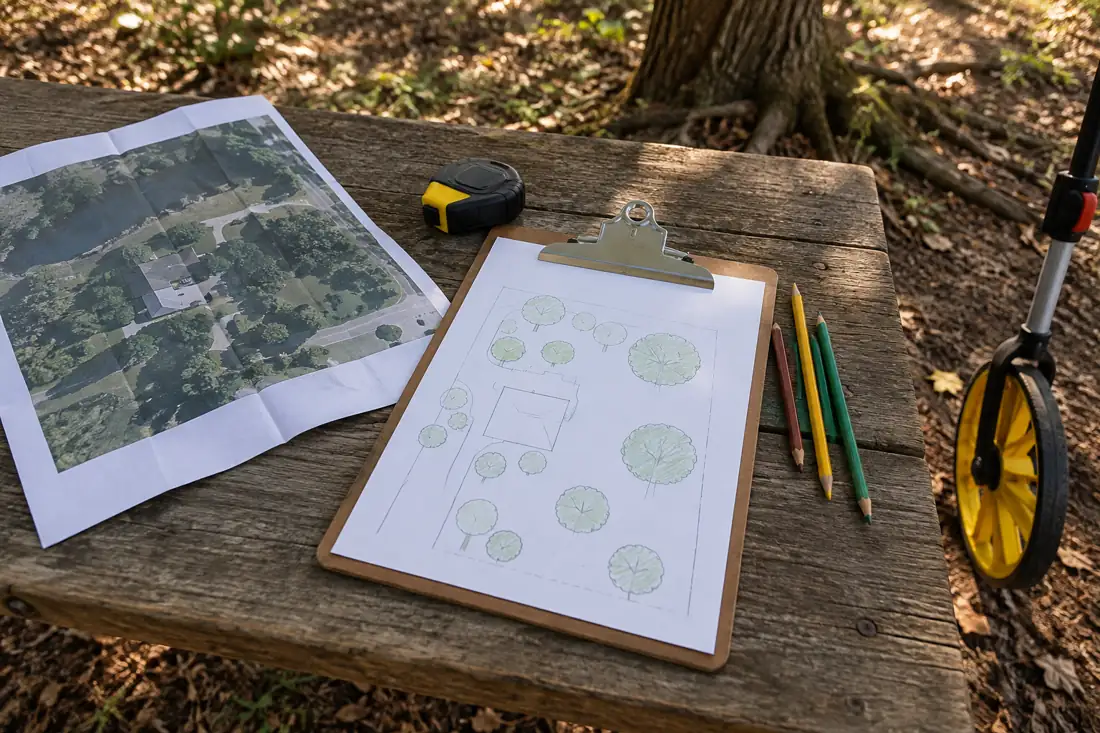
This educational planning scene shows two workers reviewing site drawings around a mature tree. Before a specialty tree subcontractor enters a larger job, the prime should identify who controls the access route, what portion of the tree scope is authorized, and which other trades will be present. Agree on utility coordination, traffic controls and a clear boundary around unrelated work before mobilization.
The written handoff should identify the purchase order or other approval, tree identifiers, debris disposition and the person who can accept changes. A planning image cannot verify qualifications, contract awards or the conditions at a customer property.

Provide traceable field and completion reports
Daily coordination should identify the work area, tree IDs addressed, access restrictions and significant issues. Photographs work best when they show location and phase rather than only a close-up of a finished cut. A caption should distinguish an observed condition from an engineering or arboricultural conclusion. The prime should know what remains open and what requires another trade or authority.
At closeout, reconcile authorized scope, completed tree work, material handling and any separately required restoration. Submit the evidence in the prime’s required format, including approved changes and unresolved items. A tree-service completion record does not certify the paving, drainage or electrical systems installed by others. Clear limits and a reliable file trail make the specialty work easier to accept.

Confirm procurement documentation for the actual award
A subcontractor may need current insurance certificates, license information, vendor forms, safety documentation and project-specific compliance records. Request the exact requirements and verify effective status rather than assuming a website statement applies to every buyer. Do not invent bonding capacity, federal registrations, certified classifications or past performance to satisfy a checkbox.
Contract documents may also govern site access, subcontract approval, payment applications, retention and change notices. The prime should identify which provisions apply to the tree package and provide the current version. A simple document checklist helps the crew start productive field work without discovering late that an administrative condition or authorization was overlooked.
Set up a practical weekly coordination cadence
For a multiweek construction project, a short recurring review can prevent tree work from being scheduled against inaccessible areas. Confirm the next set of tree identifiers, current site map, other trade movements and anticipated material handling. Record who will provide gate access, utility information and any road restrictions. The schedule should show prerequisites, not just an optimistic start date.
If the tree crew is delayed by another contractor or changed ground conditions, communicate the dependency promptly. Do not promise to make up time through unsafe concurrent operations. A shared status record with completed, ready and blocked items is often more useful than lengthy narrative emails. It helps the prime reposition work while leaving scope and safety decisions explicit.

Avoid subcontract scope creep through field favors
A crew may be asked informally to move a mixed debris pile, remove a different tree or clear an unmarked trench while already on site. These requests can appear minor but introduce new property, utility and disposal risks. Direct them to the approved change channel and identify the requesting person, location and desired result. Do not assume an on-site supervisor has financial authorization.
Protect the relationship with the prime by separating ordinary coordination from added tasks. The tree subcontract should record which work remains included, which is proposed and which needs another qualified trade. A clear boundary supports useful flexibility without turning every unexpected request into an undocumented liability or an inaccurate final invoice.
Define the prime-to-tree-subcontractor hold points
For a prime contractor, the important handoff is the point at which the tree crew may enter an area, what others must have completed first and who has authority to stop or change the assignment. Tree removal before excavation, selective pruning beside utilities and clearing in a live traffic corridor have different prerequisites. Put those dependencies beside the marked trees or work zones instead of relying on a general instruction to coordinate in the field.
The subcontract scope should describe tree IDs, accepted operations, material destinations, access responsibilities and how a newly exposed root, occupied work route or unmarked tree is handled. A daily record can show which zone was released to the next trade, but it is not a substitute for the prime’s formal acceptance or change process. These distinctions reduce disputes when the overall project schedule changes after the tree estimate.
Questions about this project
What should a government buyer send first?
Send the agency or prime contact, project reference, site, scope, deadline, access conditions and required documents or submission format. Identify the authorized contact for questions and the buyer’s process for clarifications.
Does a capability page prove contract eligibility?
No. Request and verify current documentation relevant to the particular opportunity. Registration status, certifications, licensing, insurance and availability should not be inferred from a broad marketing statement.
Is a total tree count enough for a large quote?
Usually the parties also need locations and tasks. Use consistent tree numbers, marked photos or a site plan so the estimate and crew instructions refer to the same trees and retained areas.
Does a work inventory include a condition assessment?
Only if that service is expressly part of the scope. A list used to identify and price tasks should not be mistaken for a documented assessment of every tree’s condition or risk.
How should extra work be approved?
Use the agreed approval process and identify the change, reason, scope, price or schedule effect as applicable. Confirm who has authority before treating an additional tree or task as part of the original job.
What completion records are useful?
Keep the agreed scope, tree or area identification, authorized changes, invoice and labeled photos where appropriate. Include unresolved items and a contact. Contract-specific records should follow the buyer’s stated requirements.
Can the crew block a public sidewalk or road?
Required arrangements must be coordinated with the appropriate authority. Identify public routes and restrictions before scheduling. A private work agreement should not be treated as automatic permission to occupy or close public space.
When should parked vehicles be moved?
Set the timing and responsible contact before the work window. Vehicles may need to leave the tree zone, equipment route and loading area. Confirm where access must remain available during each phase.
What should I compare besides the price?
Compare tree identification, work objectives, access assumptions, hauling, stump treatment, site finish and exclusions. Ask whether permits or other coordination are part of the scope and who can approve changes if conditions differ.
Does an online request book the crew?
No. A request starts the estimate conversation. The company still needs to discuss scope, availability and any site assessment. For a dangerous or urgent condition, call 504-458-8336 rather than relying on a form response.
What should I tell Tree Huggers about tree service subcontractor for prime contractors?
Explain the property address, the work you want and the specific concerns: project requirements,authorized scope,completion records. Send safe photos of the tree, surroundings and access route. The contractor can then discuss the assessment and scope needed for this situation.
How do I request an estimate for this work?
Call 504-458-8336, text photos or use the estimate form on this page. Include the address, desired outcome and any timing constraints. The company will need to review scope and availability; an online request does not confirm a price, appointment or emergency dispatch.
Get a scope for your property
Prime contractors can provide the marked tree schedule, current site plan, work release contact, traffic and utility responsibility matrix, disposal destination and change-order instructions for a scoped tree-work proposal.