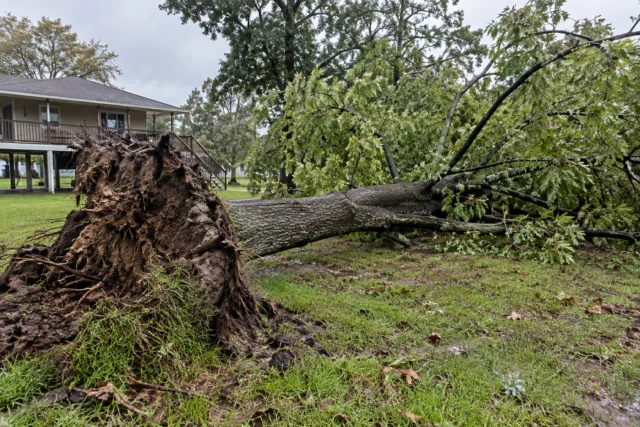
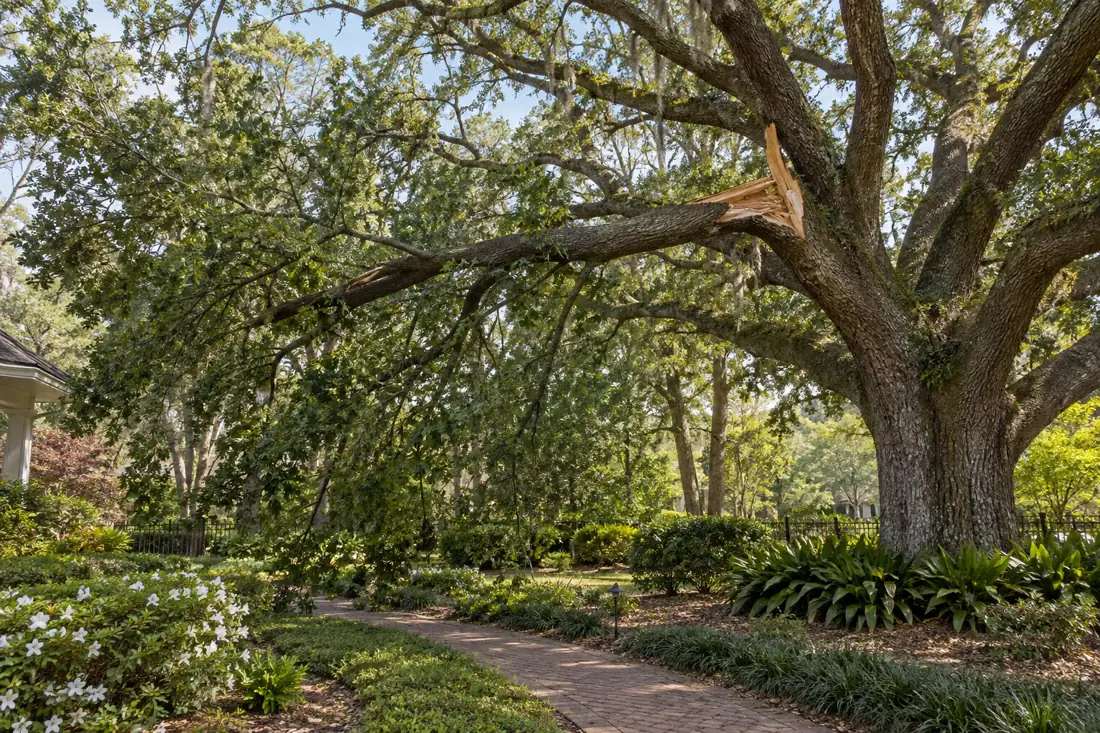
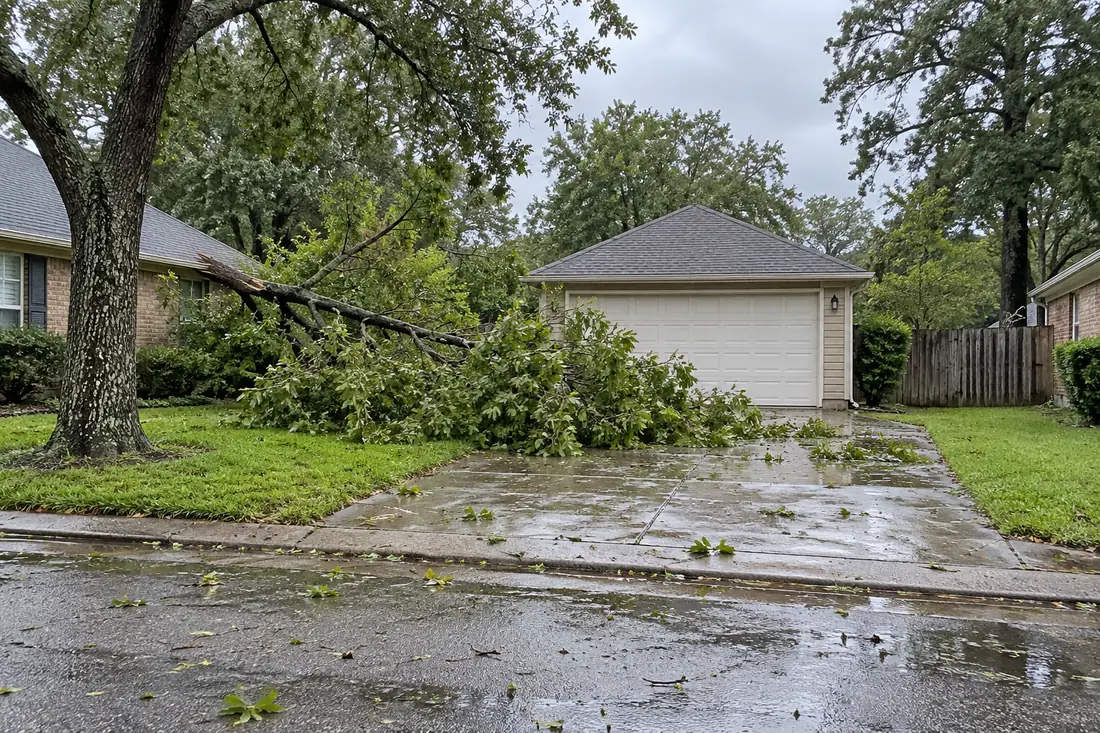
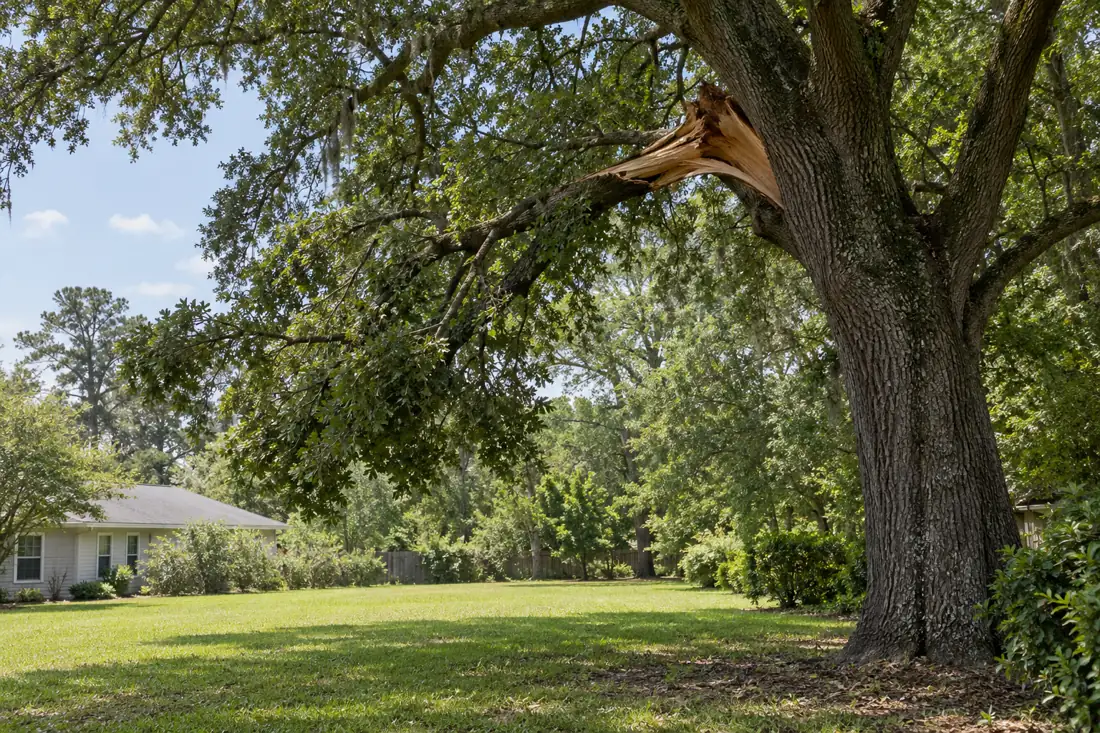
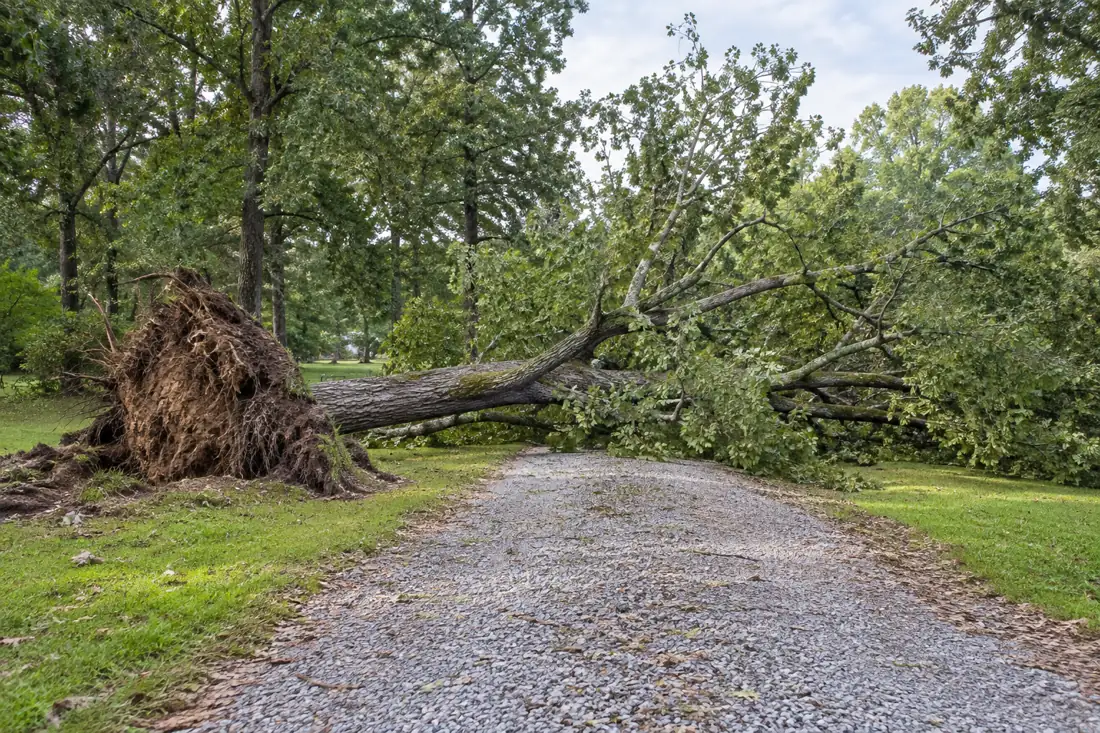
A business entrance carries pedestrian, delivery and accessibility needs. Close the affected area and identify an alternate entrance if the site can do so safely. The response discussion should cover current hazards, a site contact and the minimum access that must be restored first. Full cleanup may follow stabilization and removal.
Make the temporary business entrance usable, not merely visible
An alternate door helps only when customers, staff and deliveries can reach it without crossing a tree-work exclusion zone. Walk the route from ordinary parking or sidewalk arrival, noting grade changes, door hardware, accessible paths, lighting, wayfinding and space for a mobility device. Business management should decide whether the route meets its operational and accessibility obligations before announcing that entrance as open.
Keep the debris and equipment route distinct from the customer path throughout the work window. When a branch is removed, check for remaining overhead hazards, ground-level fragments, barriers and any damage requiring another trade before reopening. Record who authorized the reopening and which restrictions remain; a contractor’s completion of the tree scope does not itself authorize occupancy of an affected building entrance.
For this project, separate public exclusion, alternate entrance and phased reopening. These details help the contractor understand what must be protected, what information needs confirmation and what result you want from the work. A clear request is more useful than an assumed method or a price based only on tree size.
Mark customer doors, employee exits, accessible routes, delivery points and adjacent parking lanes affected by the tree. Keep visitors away from fallen material and any broken limbs above it, and establish a safe alternate entrance only when one truly exists. If power lines or structural elements are involved, contact the responsible utility or emergency service. A manager should log the restriction and inform staff rather than letting each visitor discover the obstacle independently.
Give the tree contractor a site sketch distinguishing immediate access work from later canopy evaluation and debris removal. Coordinate truck arrival around deliveries where practical and obtain any required public sidewalk or traffic permissions. Photograph signs, rails, paving and landscaping before equipment is staged. At handoff check for small branches, obstructed drains and remaining blocked exits. Communicate reopening only after the affected area has been assessed and released, without promising an unsupported completion time.
Fallen Tree Blocking a Business Entrance
A fallen tree at a retail entrance is more than an inconvenient obstruction. Customers may try to step around the trunk, staff may carry goods through a narrow gap, and a delivery driver may approach before anyone has secured the area. In southeast Louisiana, rain, saturated ground, wind, and crowded parking areas can complicate access and visibility.
Stop ordinary entry and exit through the affected area; do not ask people to duck beneath branches or walk over the tree. Keep customers, employees, and visitors away while the site is assessed.
Assign one manager to coordinate the response and make decisions, and another person, if available, to keep people clear and explain the closure. From a safe distance, note which entrance is blocked, whether the tree touches a building, vehicle, sign, or utility, and where customers are gathering.
Do not climb on the tree, move limbs, or attempt cutting. Contact a qualified tree-care provider to assess removal needs, and bring in the utility or other appropriate specialists if electrical or structural concerns are present. Decide how the business will communicate a temporary closure before reopening any route.

Set a Safe Perimeter Before Redirecting People
Establish a clear boundary around the tree and any debris before directing customers to another door. The visible trunk is not necessarily the full hazard: branches may be under tension, a root plate may shift, and limbs caught in a canopy or against a wall may fall without warning. Keep the public outside the area identified by qualified responders, using barriers that are stable, visible, and suited to the site. Do not rely on cones alone where people might mistake them for a path through the work zone.
Choose a perimeter that accounts for the tree, hanging or entangled limbs, equipment access, and the direction people are likely to approach from. Check sight lines from the parking lot, sidewalk, and neighboring storefronts; a barrier hidden behind parked vehicles may not prevent entry. Staff should give calm, consistent directions rather than improvise shortcuts through landscaping or loading areas.
Ask the tree contractor how the work boundary may change as the tree is stabilized or removed, and who will tell the manager when it is appropriate to adjust it.
Make a Customer and Staff Access Plan
Identify every entrance customers and staff might use, including side doors, shared corridors, and doors reached from a neighboring tenant's space. Confirm which are actually available, unlocked, signed, and safe to approach; do not assume an exit can serve as a customer entrance or that a landlord will allow a temporary route.
Consider whether people may arrive after a closure notice is posted or be unfamiliar with the site. A manager should decide whether the business can operate safely with a reduced entrance plan or should temporarily suspend customer access.
For any alternate route, walk its full length from the parking area or public sidewalk without crossing the tree work boundary. Check for steps, loose gravel, puddles, temporary cables, narrow turns, and conflicts with carts or vehicles. Tell staff where to direct customers and where not to send them, and update delivery instructions so drivers do not follow an outdated entrance plan.
If the alternate route passes through another business or common area, coordinate with the responsible property manager first. Make the operating decision based on the route's real conditions, not simply on whether a door opens.

Preserve Accessible Paths and Usable Entrances
A detour is not useful if a customer using a wheelchair, walker, cane, or stroller cannot follow it. Check the entire proposed path for a continuous, firm surface, adequate width and turning space, manageable slopes, door access, and obstructions. Louisiana rain can leave a seemingly open walkway muddy or ponded, while temporary barriers may narrow the route. Do not direct people with mobility needs to cross a curb, service yard, or vehicle lane as a substitute for an accessible entrance. If no practical accessible route is available, reconsider whether public access should remain open.
Ask the site manager or accessibility professional to evaluate the actual route and applicable obligations; do not describe a route as accessible based on a quick visual impression. Make temporary signs readable and place them where a person can choose the route before reaching a blocked doorway.
Staff should know how to offer assistance without touching a mobility device or pressuring someone to use an unsuitable detour. Record which paths were checked, what changed after rain or equipment movement, and who has authority to close the route if its condition deteriorates.
Design an entrance plan around actual users
An entrance blocked by a fallen tree affects customers, employees, delivery staff and people who depend on an accessible route. Close the affected area using the site's established safety procedures and communicate an alternate entrance only when that entrance is genuinely usable. Identify the building manager, the party responsible for emergency response, and any tenant whose operations are affected.
Photograph the obstruction from a protected position, including the door, sidewalk, adjacent façade and loading access. Do not place staff under suspended branches to direct traffic.
The first tree-removal objective may be to remove an immediate hazard rather than reopen the storefront the same hour. Discuss how the contractor can cordon the work zone, stage equipment and communicate changing access conditions. Keep building repair, damaged signs, broken glazing and vegetation disposal separate in the scope where they involve different providers.
For multi-tenant sites, document who can authorize the work and who must be informed of temporary closures. Do not promise customers a reopening time until the site manager and qualified responders have confirmed conditions.
Separate Pedestrian Routes from Heavy Equipment
Tree removal may require a loader, lift, truck, chipper, or other heavy equipment to enter areas customers normally use. Treat the operating space as a work zone, not as a shared walkway. Establish separate routes and boundaries for pedestrians and machinery, and keep customers away from reversing vehicles, suspended loads, falling wood, and material being fed into equipment.
Do not rely on a driver or ground worker to monitor every approaching customer while performing a task. If the site cannot maintain separation, pause public access during the affected work.
Before equipment arrives, agree with the contractor on the access gate, equipment travel path, staging area, overhead clearances, and a signal for stopping work if a person enters the boundary. Consider delivery trucks and staff vehicles as well as customers; a delivery route through an active work zone can create an unexpected conflict.
Ask who will control each crossing and whether a spotter is needed for particular movements. Revisit the plan if equipment position, weather, or debris changes the available space. A route that was separated at the start may become unsafe as the job progresses.

Treat Suspended and Entangled Branches as Active Hazards
A branch resting against a roof, sign, awning, vehicle, or another limb may be supported in a way that is difficult to judge from the ground. Wind or a change in load can make it move or fall, even when the trunk appears settled. Keep people out from beneath and beside suspended material, and do not pull, push, hook, or cut a limb to clear a path. Do not permit employees to retrieve merchandise, remove signage, or inspect damage under an unstable canopy while the tree remains unsecured.
Tell the tree-care provider what the limb is touching and whether it appears to be holding up another object, but report observations from a safe location rather than approaching to investigate. Ask the provider how the suspended material will be controlled, what surrounding areas must remain closed, and whether additional specialists need to inspect a roof, canopy, or sign afterward.
Keep the perimeter in place until the responsible professionals say the immediate hazard has been addressed. Removal of visible branches does not by itself establish that a structure or the remaining tree is safe for occupancy.
Coordinate Electrical Hazards and Utility Response
Treat every power line as energized, whether it is overhead, lying on a branch, touching the trunk, or apparently undamaged. Keep customers, staff, contractors, and vehicles well away; do not touch the tree, fence, standing water, or equipment that may be in contact with a line.
Never attempt to move a cable or decide by sight that a line is harmless. Contact the appropriate utility through its emergency reporting process and follow its instructions. If there is immediate danger to people, use emergency services rather than approaching the hazard.
Tell the tree contractor about any suspected line involvement before work begins and ask how utility coordination will be handled. Work near electrical conductors may require utility personnel and appropriately qualified specialists; a tree crew's presence does not replace that response. Keep the closure boundary in place until the responsible utility or specialist has addressed the electrical concern and communicated what area may be approached.
Record the time of reports, the contact or reference information provided, and any access restrictions. Do not promise customers a reopening time while a utility handoff is unresolved.

Arrange Structural and Property Handoffs
A tree that strikes a storefront can damage more than the visible window or roof surface. It may affect an awning, entrance frame, masonry, canopy supports, signs, gutters, or concealed utilities. Keep people out of any area where the building appears displaced, cracked, leaking, or otherwise changed, and avoid opening doors that bind or press against debris. Request an assessment from an appropriately qualified building or structural professional when impact, deformation, or uncertainty warrants it. Tree removal and building safety are related tasks, but they are not the same professional judgment.
Coordinate the sequence with the tree contractor, property owner or landlord, facilities staff, and any needed building specialist. Ask who will document existing damage, who can authorize work on shared property, and who will determine whether the affected entrance or interior area may be used after removal.
If roof access, electrical repairs, or sign work is needed, identify the qualified trade responsible for that separate scope. Keep a written record of observations and handoffs without presenting it as an inspection or safety certification. Restore public access only after the relevant decision-makers have addressed their areas of responsibility.
Plan a business reopening sequence around safe access
An obstruction at the front door affects more than the nearest tree. Customers can approach without knowing the hazard, delivery drivers may arrive on schedule, and staff may try to carry products around loaded branches. Keep the affected approach closed, direct people to a genuinely safe alternative where available and communicate the closure through normal business channels.
If the site cannot provide a safe accessible route, do not advertise the alternate entrance as accessible until it has been checked. Property management should document who has authority to approve the response.
Explain which entry doors, curb ramps, fire access paths, loading bays, entrances to neighboring tenants and emergency equipment are affected. The location of the tree can matter less than whether removing one limb would shift the rest onto a canopy, glass, awning or wall. Ask the contractor to assess the load and identify any need for utility, structural or site-safety coordination. Do not put staff in a cutting zone to move carts, displays or signs before professional clearance.

Keep customer routes and operational deadlines realistic
Separate the work plan into controlled exclusion, tree assessment, material removal, inspection of damaged surfaces and reopening authorization. There may be a safe way to restore one route before the whole tree and stump are dealt with, but this must be a professional decision based on conditions on the ground. Do not promise that normal operations can resume as soon as the driveway is clear; a damaged handrail, unstable roof edge or unsafe walkway may require another trade's approval.
For the estimate, provide photographs from public-safe positions, property contact information, operating hours, known delivery times and any tenant or insurer requirements. Ask for clear line items for emergency response, disposal, after-hours access and protection of adjacent storefronts. Keep the final record of what area was actually reopened and by whom. This creates useful evidence for facility management without inventing customer-loss calculations or promising reimbursement.
Plan Deliveries, Emergency Routes, and Site Operations
An entrance closure can interrupt more than retail traffic. Check whether the blocked area also serves as a loading point, fire department access, an emergency exit, a waste collection route, or a path to building controls. Confirm alternate delivery locations with carriers and vendors before trucks arrive, and do not route them across a pedestrian detour or active equipment path.
Keep emergency access and exits unobstructed; if the incident affects an emergency route, promptly notify the property manager and appropriate local responders or authorities as required for the site.
Assign a contact who can meet delivery drivers and direct them to the approved location without sending them to inspect the tree. Tell staff how to summon emergency help and which doors or areas are unavailable. Review the plan when a truck, barricade, or debris pile changes circulation, and make sure emergency responders can receive accurate directions if conditions evolve.
Ask the property manager who has authority to change loading or fire-lane arrangements. If a safe, workable plan for essential operations cannot be maintained, reduce or pause operations rather than improvising access through an unsafe area.

Use Clear Closure Signs and Reopen in Phases
Post signs before people reach the blocked entrance, at the parking or sidewalk approach, and at any point where they might otherwise turn into the work area. Use direct language such as “Entrance Closed—Use Side Entrance,” but name a side entrance only after confirming it is open and suitable. Include arrows only when they lead to an approved route. Have staff repeat the same directions and remove or cover obsolete notices when the plan changes. Signs help communicate a decision; they do not replace barriers, supervision, or a safe route.
Reopening should be a sequence of decisions, not an assumption that cutting and hauling are complete. First confirm that the tree work and any utility response are finished; then have the appropriate people address structural, electrical, surface, and access concerns relevant to the site. Inspect the proposed customer route for remaining limbs, debris, equipment, wet or damaged pavement, and barriers that could trip or constrain people.
Reopen only the areas that responsible decision-makers have cleared for their intended use, update staff and signs, and keep other affected areas closed. Conditions can change, so no schedule or inspection guarantees that every risk is absent.
Questions about this project
Should I wait for a form reply about a dangerous tree?
For an urgent condition, call to discuss availability and the next step. A form does not confirm dispatch. Keep clear, and contact emergency services or the utility when there is immediate danger or an electrical hazard.
Does emergency work always include full cleanup?
The initial authorized work may focus on stabilization or restoring access. Ask what is included and what follow-up removal, hauling or repairs need a separate scope. Confirm the plan directly with the contractor.
Can a business stay open during tree work?
That depends on the site and scope. Discuss occupied routes, exclusion areas, loading and work windows with the contractor and property representative. Do not assume normal access can continue through the active work zone.
Who should communicate with tenants or visitors?
Agree on that responsibility with the property representative. The contractor needs a clear site contact, while the owner or manager should use the property's established process to communicate access changes and work windows.
Can the crew block a public sidewalk or road?
Required arrangements must be coordinated with the appropriate authority. Identify public routes and restrictions before scheduling. A private work agreement should not be treated as automatic permission to occupy or close public space.
When should parked vehicles be moved?
Set the timing and responsible contact before the work window. Vehicles may need to leave the tree zone, equipment route and loading area. Confirm where access must remain available during each phase.
How should several storm-damaged trees be described?
Use marked photos or a simple tree list showing locations, affected targets and access problems. Identify urgent routes or buildings separately from later cleanup. The contractor can then discuss assessment and a practical work sequence.
Can restoration be handled in phases?
Yes, when the parties agree on clear scopes. Initial hazard or access work, planned removal, hauling and building or landscape repairs may involve different stages and providers. Record the responsibilities and completion requirements for each.
How should extra work be approved?
Use the agreed approval process and identify the change, reason, scope, price or schedule effect as applicable. Confirm who has authority before treating an additional tree or task as part of the original job.
What completion records are useful?
Keep the agreed scope, tree or area identification, authorized changes, invoice and labeled photos where appropriate. Include unresolved items and a contact. Contract-specific records should follow the buyer's stated requirements.
What should I tell Tree Huggers about fallen tree blocking a business entrance?
Explain the property address, the work you want and the specific concerns: public exclusion, alternate entrance, phased reopening. Send safe photos of the tree, surroundings and access route. The contractor can then discuss the assessment and scope needed for this situation.
How do I request an estimate for this work?
Call 504-458-8336, text photos or use the estimate form on this page. Include the address, desired outcome and any timing constraints. The company will need to review scope and availability; an online request does not confirm a price, appointment or emergency dispatch.
Get a scope for your property
When a fallen tree affects a business entrance, identify the blocked door, any usable alternate entrance, pedestrian route, loading access and responsible facility contact. Keep customers and employees out of the affected area; a temporary route must be assessed and authorized rather than improvised around the tree. Number the tree and affected work areas in photographs taken safely. A written scope should distinguish urgent access clearance from the subsequent hauling, stump work and site cleanup.