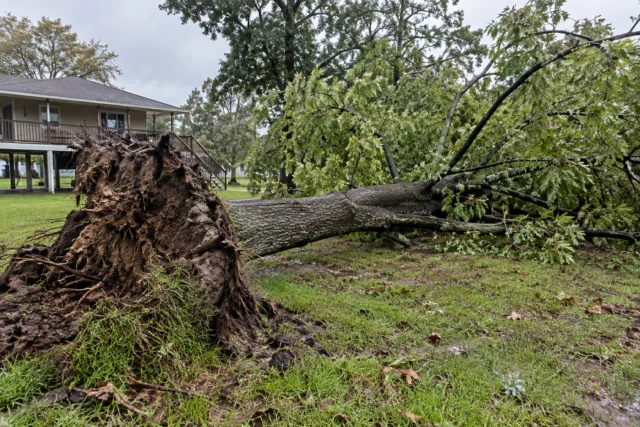
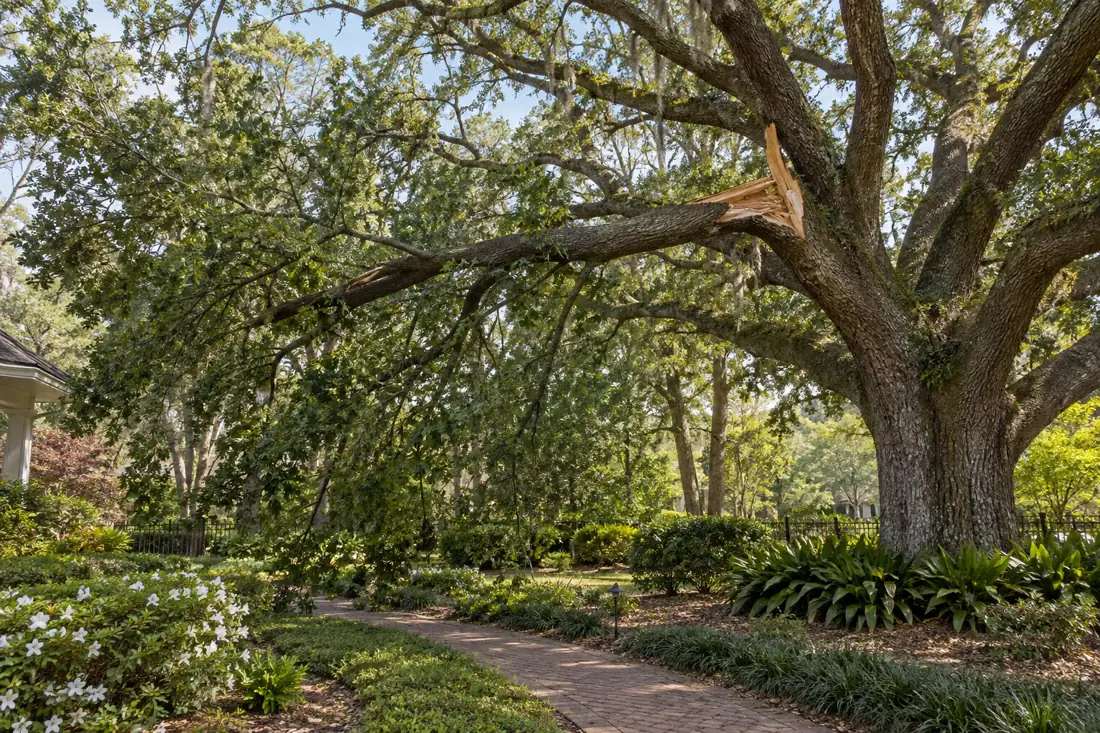
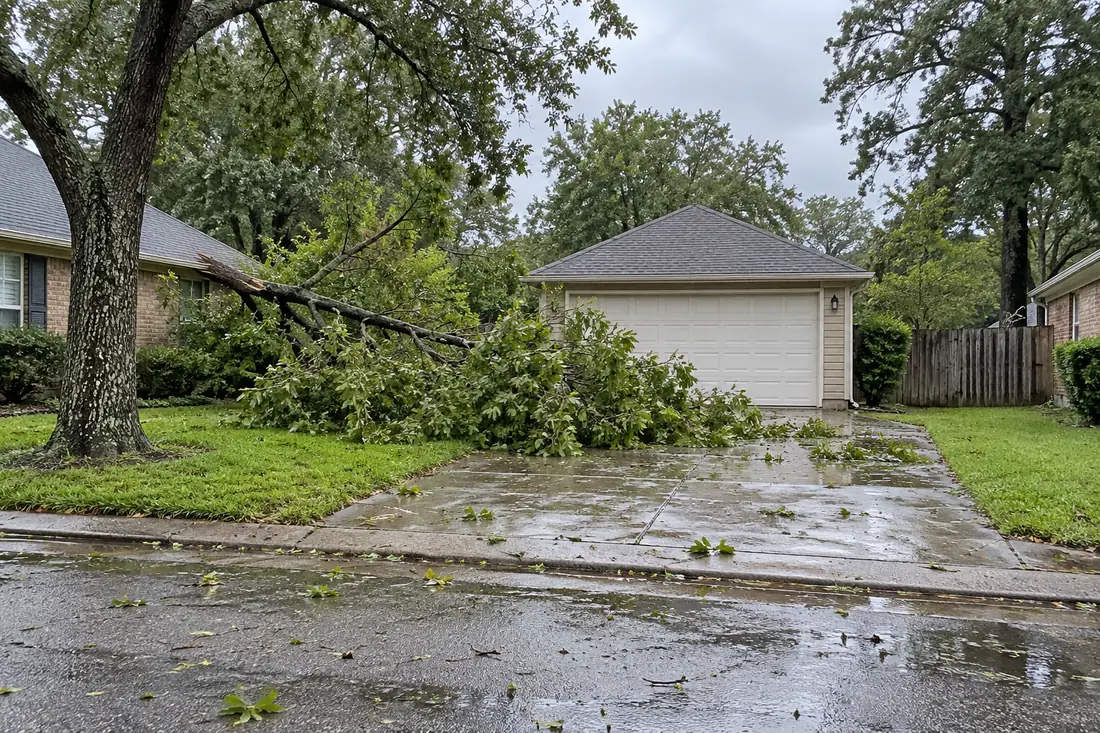
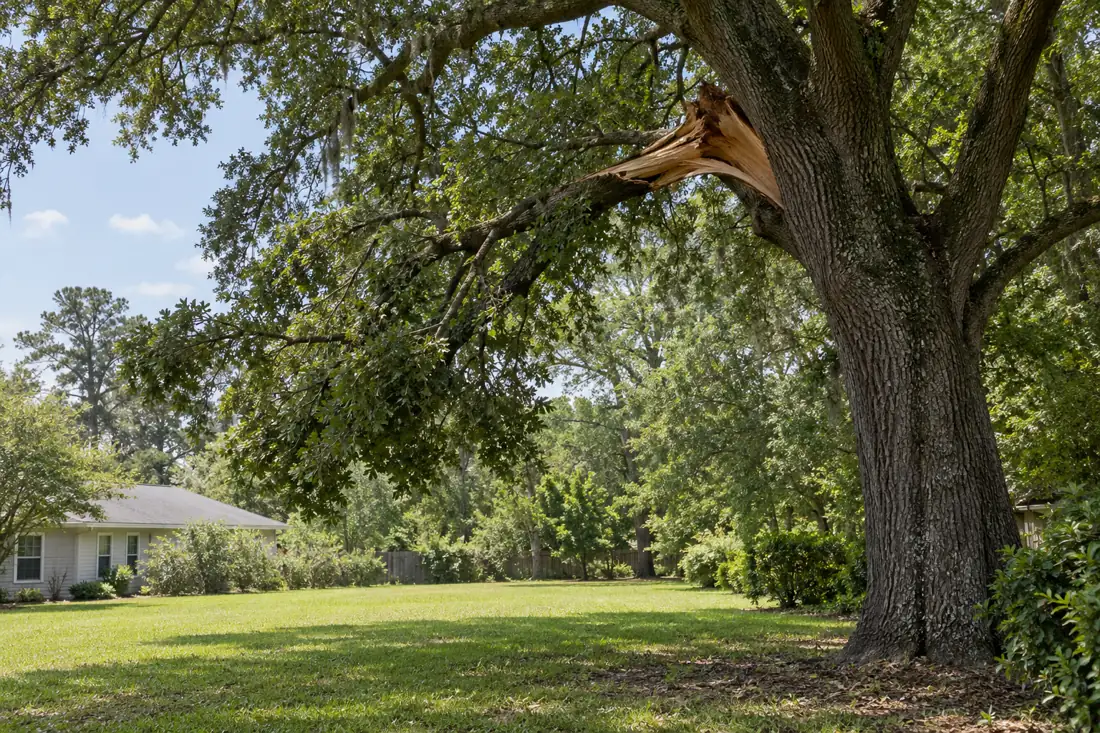
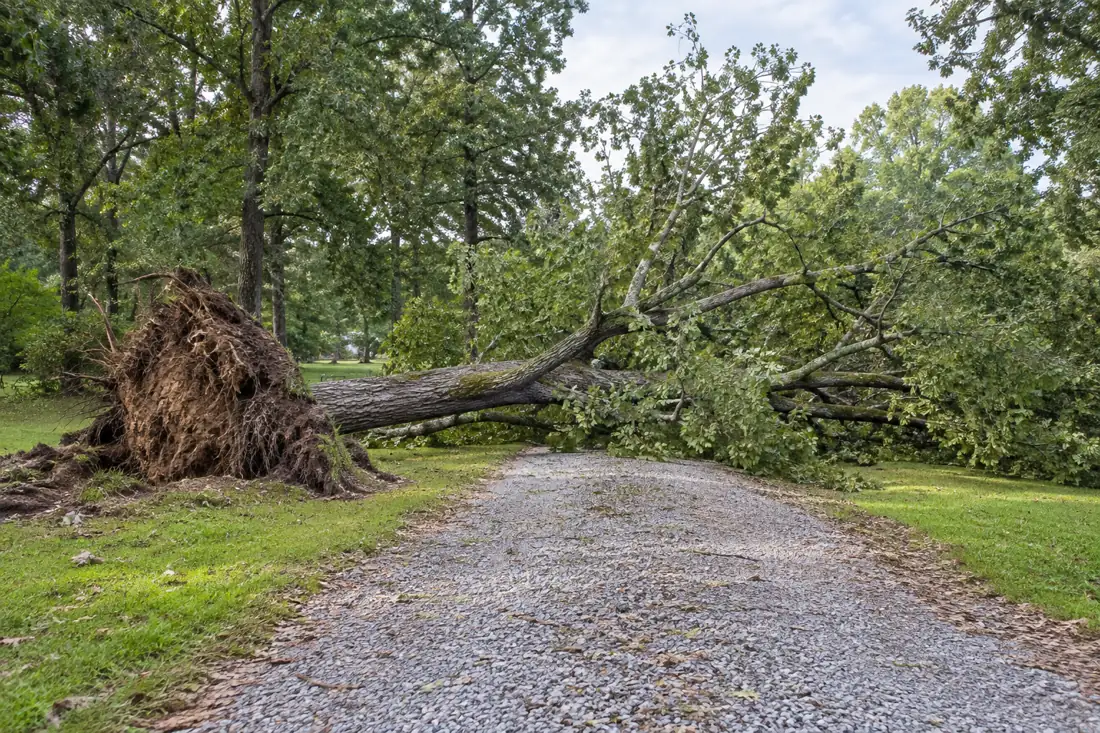
A suspended limb over a walkway may affect people who never enter the property. Keep the area clear and report an immediate public hazard to the appropriate authority. Do not pull, shake or stand underneath the branch. Explain who controls the walkway and what access arrangements the contractor will need.
For this project, separate pedestrian exposure, authority contact and exclusion area. These details help the contractor understand what must be protected, what information needs confirmation and what result you want from the work. A clear request is more useful than an assumed method or a price based only on tree size.
A branch that is still attached or lodged in the canopy can move after a gust or vibration. From a safe distance, note its position, possible contacts and any further broken limbs overhead. Do not stand directly beneath it for photographs or ask untrained staff to pull it free. Notify the property manager or responsible public authority about the affected footpath, and coordinate lawful barriers or detours rather than assuming caution tape alone authorizes a street closure.
Identify nearby doors, parked vehicles, wires and pedestrian crossings for the tree crew. Ask whether the proposal covers only removal of the suspended piece or also inspection of the remaining crown. The lowering and debris route should keep people outside the possible movement area. After the limb is removed, check for smaller material left overhead and confirm the responsible party has reopened the walkway. A cleared path is not a guarantee that every tree on the block was inspected.
Identify the precise place where a pedestrian could be exposed
A branch suspended above a sidewalk creates a different decision from a limb over a private lawn. People may walk underneath without knowing that the owner has noticed a problem. Begin by identifying the section of sidewalk affected, the point where the limb attaches to the tree, and whether the branch is cracked, detached, hung in another branch, or merely low.
A low healthy limb and a partially broken suspended limb call for different evaluations. Photographs from a safe location can show the tree, adjacent buildings, walkway, curb and nearest crosswalk without placing anyone beneath the suspected hazard.
Record the street-facing side of the property and the approximate limits of the concern in ordinary language. Include whether the path serves a residence, a school route, a storefront, a bus stop or a parking entrance. These observations help a tree professional understand who might enter the area while the work is arranged. Do not use a pole, rope or ladder to test the branch, and do not make the presence of leaves a substitute for an assessment of its attachment.
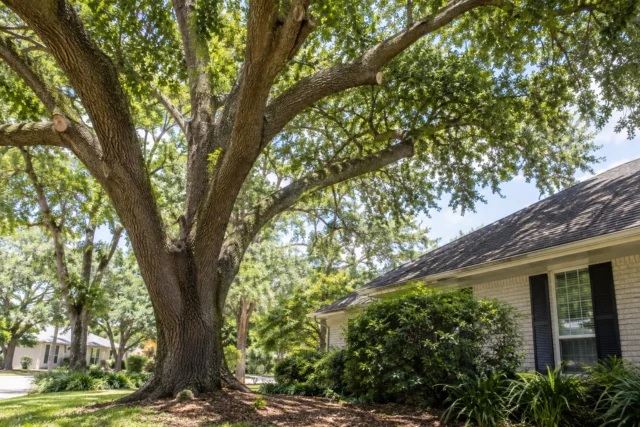
Protect the walkway without improvising a public closure
Keep people out of a suspected fall area and inform the appropriate property manager or public authority promptly when the sidewalk is public. Property owners can warn occupants and direct them away from an affected private route, but a private work order does not automatically authorize a sidewalk, road or parking-lane closure. Ask the responsible authority what temporary controls, pedestrian diversion and permissions are required. Cones or caution tape set casually in a public right-of-way may leave pedestrians with no accessible alternative or push them into moving traffic.
Where a hazard appears immediate, contact the appropriate emergency service or public authority rather than assuming that an online estimate request will result in a dispatch. Explain whether the limb is already falling, whether anybody is injured, and whether a road or entrance is affected. Avoid standing near the branch to redirect pedestrians yourself. The initial objective is to prevent exposure safely; permanent repair can be planned once qualified people can assess the situation and establish a controlled work area.
Handle sidewalk overhang as an access problem first
A limb above a sidewalk deserves more than a generic request to trim it back. Describe exactly where people pass, whether a branch is merely low or visibly broken, and whether the sidewalk is public, private, or within an area whose maintenance authority is uncertain. A narrow clearance concern is different from an unstable suspended limb. Do not walk under damaged overhead wood to measure its height.
Keep the public-facing path in view when requesting an assessment. Adjacent traffic lanes, wheelchair passage, nearby businesses, curb ramps and parked vehicles may all affect how a lawful work zone can be managed. Owners should not assume they can close a public sidewalk with improvised tape or cones. Appropriate property managers and public agencies may need to coordinate permissions, traffic control or alternate access.

The pedestrian route is part of the tree-work scope
The written scope should identify which branch or tree is being evaluated, why work is proposed, what surfaces and utilities are near it, and how debris will leave the site. A pruning recommendation must consider the health and remaining structure of the tree; removing too much canopy to achieve an arbitrary number can create other problems. If ownership or a utility conflict is unclear, resolve it before setting a date.
From a safe location, supply a wide picture of the sidewalk and a second view that shows the branch relative to the walking path. Note school arrivals, business hours or other predictable peak pedestrian periods. If the limb is actively falling, entangled with electricity or blocking safe passage, keep people away and contact the responsible emergency or utility service rather than treating a routine estimate form as dispatch.
Distinguish a low branch from a damaged or suspended one
A branch that hangs lower than expected may reflect normal growth, a heavy canopy, recent water loading or damage at a union. A branch severed during a storm can remain lodged overhead even when its smaller twigs look normal. These details matter because cutting an apparently supported section can suddenly release weight onto another branch or the ground. A tree professional will need to observe the attachment, direction of tension, surrounding limbs and available rigging space before selecting a method.
Look for observable changes without approaching the potential drop zone. You can report that the branch dropped after a specific storm, that fresh wood is visible at the union, or that pavement has been struck by debris. Avoid claiming the trunk is rotten or the branch is about to fall unless supported by a qualified assessment.
If the condition cannot be inspected from the ground, make that limitation part of the request. The contractor can determine whether an elevated inspection or different access arrangement is necessary.

Clarify ownership and who may authorize work
Trees along street edges sometimes grow close to property lines, utility corridors and public land. The trunk location, ownership records and applicable right-of-way arrangements help determine who should approve work; the position of a branch over the sidewalk alone may not settle that question. Tell the estimator what is known about the parcel and whether a neighboring property or public entity is involved. Do not authorize cutting on someone else's tree based solely on where its canopy reaches.
A practical inquiry identifies the property contact who can provide access, the person who can approve cost and any public agency already notified. If an association manages the common area, include that relationship as well. The contractor should not be asked to interpret an unresolved property dispute as part of a tree-work price. Keep the responsibility and permission questions separate from the technical assessment, so an urgent safety concern is reported promptly while ownership and authorization are resolved through the correct parties.
Treat a hanging limb over a walkway as a public exposure
A limb hanging above a sidewalk creates a potential hazard for people who may not know about the tree or belong to the property. Keep people out of the area and alert the responsible public authority when the walkway is publicly controlled. A homeowner's private tape or sign may not be sufficient authority to close a public route.
Explain to the responding contractor where pedestrians normally travel, whether the limb crosses a property line, and whether an accessible detour is available. Never shake the limb, pull it down with a rope or stand under it for a clearer photograph.
The removal plan must address where the suspended wood can move and where dropped pieces can be contained. Ask whether temporary pedestrian control, coordination with a municipality or a special access window is required. If the walkway borders a school, transit stop or commercial entrance, identify the periods of highest use.
After hazard work, the property contact should look for visible broken paving or obstructions only after the crew confirms the area is clear. A safe pedestrian route is a distinct outcome from complete tree trimming or debris removal.
Treat overhead wires and nearby fixtures as separate hazards
A sidewalk tree may be close to streetlights, service drops, communications lines, signal equipment or overhead electrical conductors. Do not assume a wire is harmless because it is thin or appears insulated. Keep away from conductors and any tree material that could be in contact with them. The appropriate utility must address electrical hazards, and work near energized equipment may require qualified utility personnel or a separately coordinated clearance.
During planning, describe nearby poles, lighting arms, signs, awnings and wires from a distance. The contractor may need to adjust the work zone or postpone cutting until coordination is complete. Note whether the limb passes above a public fixture or an accessible building entrance. The price and timing for limb work should not quietly include tasks belonging to a utility or other trade. Explicit boundaries help prevent an estimate from promising work that cannot be safely or lawfully performed by the proposed crew.
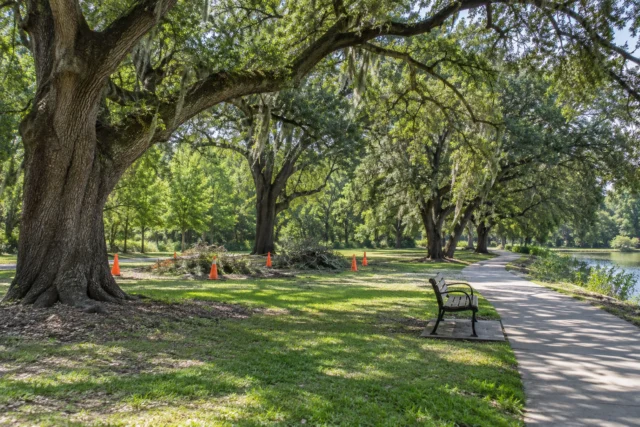
Plan equipment placement around pedestrian movement
Even a relatively small limb can require room for a truck, chipper, lift or rigging arrangement. A narrow street with cars against the curb may provide little working clearance. A contractor assessing the site needs to know where equipment could stop, whether the pavement is suitable and how brush will leave the property. If the sidewalk remains in use, there must be a planned separation from work activity; passing pedestrians beneath equipment or material handling is not an acceptable routine arrangement.
Describe local constraints that are easy to overlook in a close-up photograph: curb extensions, fire hydrants, driveways, drainage inlets, landscape beds and the location of a second pedestrian crossing. The chosen setup may affect the scope more than the branch diameter. Ask which party secures parking restrictions or public-space permits when necessary. A written access plan should cover arrival, cutting, loading and final cleanup, not simply a brief period while a saw is running.
Decide whether pruning is enough after the tree is examined
A hanging limb does not necessarily mean that the whole tree needs removal. If the branch is damaged but the remaining tree can reasonably be managed, the recommendation may involve targeted removal of the affected part and suitable pruning cuts. Other cases involve defects at a major union or a broader condition that merits qualified investigation. The decision should respond to the actual tree structure, target exposure and future use of the sidewalk, not an automatic upsell to full removal.
Ask the estimator to distinguish the immediate condition from additional maintenance suggestions. The scope can specify removal of a suspended branch, clearance of a passage or assessment of a larger structural issue. Cutting too much live canopy can create a new long-term problem, so avoid insisting on an arbitrary clearance height without discussing tree health and local requirements. Any recommendations for monitoring or further assessment should be written separately from the immediate task that the property owner authorizes.

Agree on debris handling and the state of the sidewalk afterward
A completed job is more than a branch no longer visible above the sidewalk. Brush, sawdust, rigging equipment and parked vehicles can create their own obstructions. Ask what will happen to the cut material and where the crew expects to load it. Clarify whether cleanup includes the public walkway, the property's planting strip and any driveway or entry used during the work. Do not assume that damaged paving, street furniture or landscape restoration is included unless those items are listed.
If equipment must cross a vulnerable surface, record its existing condition and discuss possible protection with the contractor. A surface that supports ordinary pedestrians is not automatically rated for a heavy machine. Identify any loose material or debris likely to enter storm drains and who will address it. When multiple parties control the area, define who has the authority to accept the tree-work completion and who determines when a public path can reopen.
Send a useful inquiry and preserve the decision record
A strong first request includes a safe wide photograph, a close view taken only from a safe vantage point, the cross street, the status of pedestrian access, and any public authority already contacted. Describe what changed and when you noticed it. Mention wires or structures nearby without approaching them. Use the Tree Huggers estimate form for nonemergency scheduling details, but use the appropriate emergency or authority channels when people face an immediate hazard. Submission does not guarantee a crew arrival or a response time.
Before work begins, request a written scope that names the limb or tree, identifies access assumptions and states what debris handling is included. Keep observations, professional recommendations and work authorization distinct. Save the final scope and any completion notes with the property's maintenance records, particularly if several owners or managers are involved. This disciplined record supports safer decisions and prevents a sidewalk concern from turning into an ambiguous agreement about every tree along the street.
Questions about this project
Should I wait for a form reply about a dangerous tree?
For an urgent condition, call to discuss availability and the next step. A form does not confirm dispatch. Keep clear, and contact emergency services or the utility when there is immediate danger or an electrical hazard.
Does emergency work always include full cleanup?
The initial authorized work may focus on stabilization or restoring access. Ask what is included and what follow-up removal, hauling or repairs need a separate scope. Confirm the plan directly with the contractor.
Can the crew block a public sidewalk or road?
Required arrangements must be coordinated with the appropriate authority. Identify public routes and restrictions before scheduling. A private work agreement should not be treated as automatic permission to occupy or close public space.
When should parked vehicles be moved?
Set the timing and responsible contact before the work window. Vehicles may need to leave the tree zone, equipment route and loading area. Confirm where access must remain available during each phase.
Can I identify a safe wire by looking at it?
No. Do not approach or touch wires, a tree contacting them or connected objects to investigate. Keep clear and contact the utility or emergency services when there is an immediate electrical hazard.
Does a tree estimate include utility disconnection?
Only if the appropriate coordination and responsibilities are explicitly arranged. Utility work may require the service provider or another qualified party. Confirm those arrangements before assuming the tree crew can proceed near affected services.
Does healthy-looking foliage mean a tree is structurally safe?
No. Leaves do not establish the condition of roots, trunk or branch connections. Explain visible defects and recent changes, and ask for an assessment appropriate to the tree and nearby targets.
Should I test a cracked branch or trunk?
Do not pull, shake, climb or cut damaged material to test it. Keep clear of the affected area and describe the condition from a safe location. Qualified assessment and an appropriate work plan are needed.
Which photos should I text first?
Send a wide tree view, the base if safely visible, nearby targets and the equipment route. Add the address, desired work and any recent change. Identify each tree clearly if the request involves several.
Can photos confirm that a damaged tree is stable?
No. Photographs may omit defects, support conditions and other important details. Use them to prepare for the contractor's assessment, and avoid entering hazardous areas to obtain a better view.
What should I tell Tree Huggers about tree limb hanging over a sidewalk?
Explain the property address, the work you want and the specific concerns: pedestrian exposure, authority contact, exclusion area. Send safe photos of the tree, surroundings and access route. The contractor can then discuss the assessment and scope needed for this situation.
How do I request an estimate for this work?
Call 504-458-8336, text photos or use the estimate form on this page. Include the address, desired outcome and any timing constraints. The company will need to review scope and availability; an online request does not confirm a price, appointment or emergency dispatch.
Get a scope for your property
For a hanging limb above a sidewalk, do not stand beneath it or attempt to pull it down. Record the location and exposure from a safe angle, including where pedestrians would approach and any nearby streetlight or service line. Public walkway restrictions and traffic control may require action from the responsible authority; a property owner should not assume permission to close the sidewalk. Ask the estimator to separate immediate hazard management from the final pruning or removal decision.