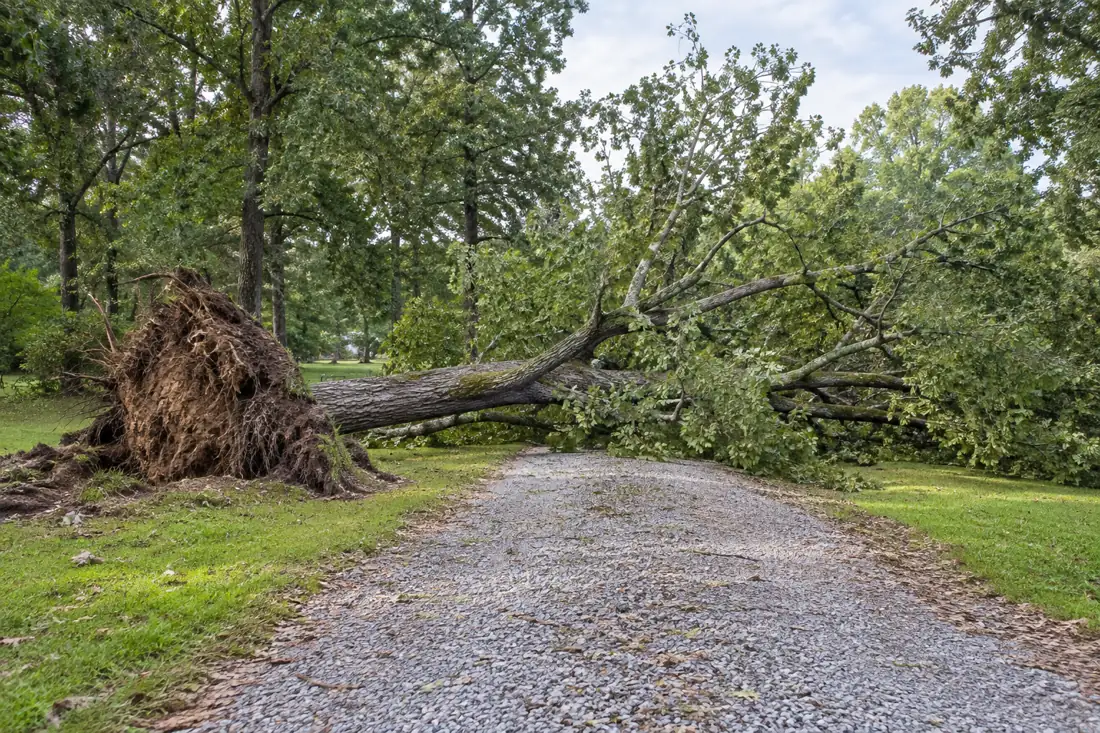
Tree removal and roof repair are related but separate tasks. The tree contractor needs information about the current contact points and site hazards; the repair provider needs the tree cleared without assumptions about building safety. Photograph damage from a safe location and keep a record of agreed scopes. Coverage decisions belong with the insurer.
Roof penetration: tree removal and repair are separate operations
A tree penetrating a roof creates simultaneous tree, structural and possibly electrical hazards. Do not go into a visibly compromised portion of the house, climb onto the roof or pull branches from the opening. Move occupants away from the affected space and seek appropriate emergency or structural guidance when safety is uncertain. Take photographs from a safe location and avoid touching wet or damaged electrical equipment.
The removal crew and roof-repair contractor need a coordinated sequence. Lifting a limb can change loads on walls, framing and roof coverings; cutting it without a plan can cause additional movement. Ask who will assess structural conditions, who controls temporary weather protection and what must remain in place until the tree weight is relieved. No remote tree estimate can guarantee that a particular cut will avoid further building damage.
Keep the proposal’s stages clear: emergency access and stabilization, controlled removal, debris disposal, remaining standing-tree assessment and any optional stump work. Record the visible condition before and after removal and retain a precise completion description. Insurance documentation may be helpful, but coverage and repair approval are determined separately.
For this project, separate structural contact, repair sequencing and documentation. These details help the contractor understand what must be protected, what information needs confirmation and what result you want from the work. A clear request is more useful than an assumed method or a price based only on tree size.
A tree penetrating a roof may transfer weight into already damaged framing. Keep occupants out of affected rooms, isolate the outdoor danger zone and contact emergency responders if there is a present life-safety concern. Do not pull a branch inward through a hole or allow people onto unstable roofing.
A qualified building specialist may need to plan temporary supports or weather protection while the tree crew develops the controlled extraction method. Neither party should rely on the tree staying motionless when a supporting piece is cut.
Set out who can approve safe entry, utility isolation, limb handling, removal staging and temporary roof covering. Document damage from safe locations, including water ingress, damaged ceiling areas and roof openings, without forcing close-up photos. Separate tree work, structural assessment, temporary stabilization, permanent roofing and debris haul-away on work orders. Preserve records for the owner and insurer but do not promise a coverage decision. Confirm the affected area is independently assessed before normal occupancy resumes.
Tree Through a Roof: Coordinating Removal and Repairs — Secure the Scene
A tree resting on a roof is not simply a roofing problem: the trunk, limbs, and damaged building may be sharing unstable loads. Keep occupants and visitors out of the affected rooms and away from the exterior drop zone. Do not walk beneath the tree, climb onto the roof, move fallen limbs, or enter an attic to inspect damage. In southeast Louisiana, rain, saturated soil, and gusty weather can shift a tree or weaken already damaged framing with little warning.
Set boundaries from a location that does not require approaching the tree, using doors or barriers only where safe to do so. Tell responders, neighbors, and arriving contractors that the structure may be compromised and identify any people who still need assistance. Do not promise that another part of the building is safe to occupy; a qualified professional must assess the conditions and the scope of the damage. If there is immediate danger to life, contact emergency services rather than attempting a rescue yourself.

Read the Load Before Anyone Plans a Cut
A tree can transfer substantial weight into roof sheathing, rafters, trusses, walls, and interior supports. The visible hole may be smaller than the area of hidden damage, and a roof surface that looks level can still conceal broken connections or a sagging frame. Note observations from a safe distance: which direction the tree came from, where the trunk appears supported, whether roof lines have changed, and whether walls or ceilings show fresh movement. These observations inform professionals; they are not a structural diagnosis.
Ask the structural engineer and tree-removal lead to explain how they will identify the tree’s bearing points and control its weight before cutting begins. Clarify whether any branches are carrying roof material, whether the tree could roll or pivot, and what signs would require stopping work.
A tree resting on a structure can behave differently from a tree lying on open ground. Make the removal plan account for both the tree and the building’s weakened condition, not just the order in which limbs appear easiest to remove.
Document structural contact without treating the roof as a work platform
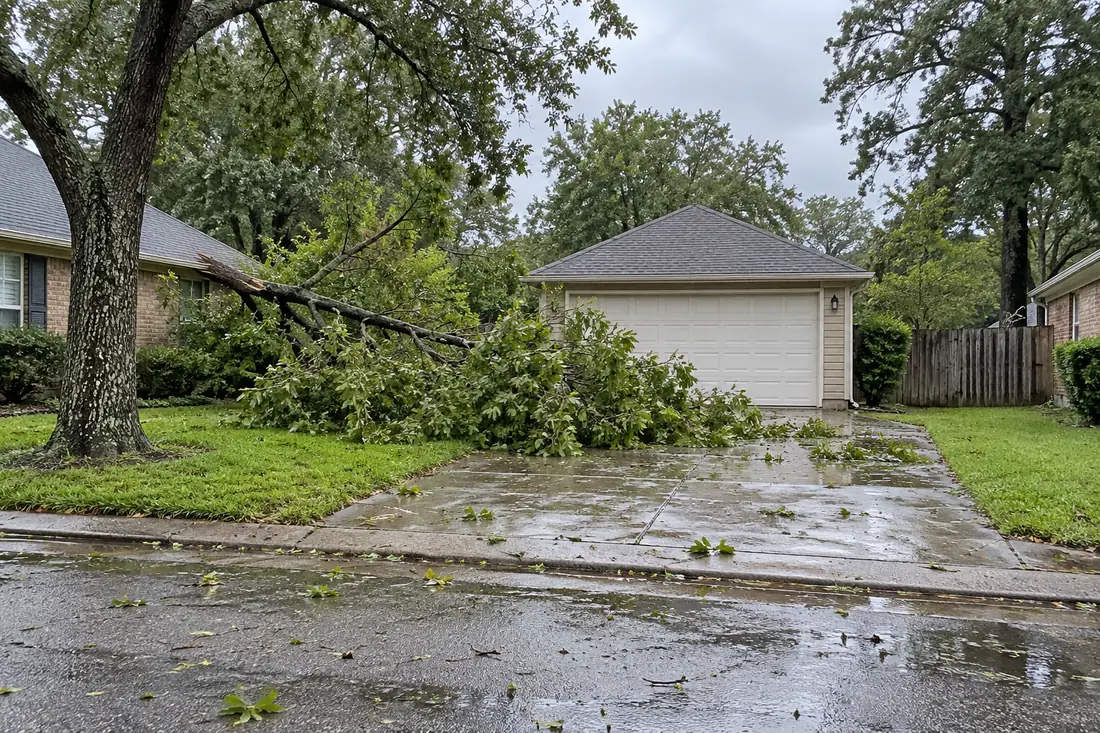
The planning scenes are illustrative; they do not establish whether a real limb has punctured shingles, damaged rafters or merely rested on the roof surface. From safe ground, note the occupied rooms below the impact area, whether the limb remains attached to a standing tree, visible water entry and any nearby service wiring. Do not walk on the roof or pull on the limb to check whether it can move. If occupants are threatened, prioritize their safety and seek appropriate emergency assistance.
A useful joint handoff keeps the tree-work sequence separate from temporary weatherproofing and structural repair. Removing a limb may reveal hidden roof damage, while repair crews cannot safely start until the supported wood is controlled. Ask for a scope that states who is responsible for rigging, roof-contact protection, landing space, debris handling and the point at which the building professional can reassess. Neither a photograph nor an estimate alone proves the roof is safe to occupy.
Clarify the handoff between tree removal and roof repair
Before work is assigned, identify whether the tree is resting on the roof, has penetrated the roof deck, or has displaced supporting framing. Those conditions can call for different structural precautions. Have the tree contractor explain what will be moved and what will remain until the roof contractor or structural professional can evaluate it.
Keep photographs, dates and an itemized scope for each provider, including temporary weather protection, interior water damage and final repairs if applicable. Avoid allowing anyone to climb onto unstable decking to get a better picture. Where a service line or solar equipment is involved, add the relevant utility or specialist to the handoff.
A tree-service completion photo should not be confused with certification that the building is structurally sound.
Treat Service Lines as Energized
A fallen tree may pull down, conceal, or press against electrical service lines, communications cables, or equipment attached to the building. Treat every line as energized, including a line that appears slack, damaged, or inactive. Keep people, vehicles, ladders, and tools well away; do not touch the tree, a fence, standing water, or other objects that may contact a line. Call the electric utility’s emergency contact to report the condition and request its direction before tree or building work approaches the service area.

Assign One Coordinator and Define the Handoffs
A workable response brings together people with different responsibilities: the property owner or site manager, a qualified tree-removal contractor, a structural engineer when building capacity is uncertain, a roofer, and the utility when lines or service equipment are involved. Name one coordinator to keep contact details, record decisions, and circulate schedule changes. That person should not replace the specialists’ judgment or direct hazardous cutting. In a multi-tenant or managed property, also identify who can authorize access, secure affected areas, and communicate restrictions to occupants.
Before work begins, ask each lead to state what must be true before their task starts and who confirms that condition. For example, the tree crew needs a coordinated plan for load control; the engineer may need access after exposure; and the roofer needs to know whether temporary protection can be installed without disturbing unstable framing.
Document the handoffs, contact method, and stop-work triggers in a short site note. If weather, line conditions, or new damage changes the situation, pause and have the responsible professionals revise the sequence.
Separate roof stability, tree lifting and weatherproofing responsibilities. When a tree has penetrated or is resting against a roof, the visible branches do not reveal how much of the trunk's weight is bearing on framing, exterior walls or a damaged support. Nobody should enter a compromised attic, climb onto the roof or try to pull the tree free to make photographs. Start with safe exterior views and arrange appropriate structural and utility assessment before planning cuts. The tree contractor's rigging and removal sequence must be coordinated with the person responsible for temporary building support, roof opening protection and subsequent repairs; those are not automatically one service. Document the exact handoff point so no trade removes a support another trade expected to remain. Keep debris access, crane or lift placement, driveway loading and neighboring-property exposure in the written plan. Ask what temporary weather barrier is feasible only after the weight has been safely addressed, and confirm who is responsible for its installation and inspection. Insurance photographs should record actual conditions and decisions without assigning unsupported fault or coverage.
Ask the utility to identify which lines and equipment it controls, what isolation or other utility work is needed, and how the site team will know when work may proceed near that equipment. A contractor’s assumption that a line is disconnected is not confirmation from the responsible utility.
Communications providers may also need to address their own cables. Coordinate timing among the utility, tree crew, and building professionals, and preserve the exclusion zone until the relevant parties agree that the planned work can proceed under appropriate controls.
Get Structural Input and Plan Building Support
Where the tree bears on the roof, the framing is visibly distorted, or the extent of damage is unclear, ask a licensed structural engineer to assess the affected load path and advise what support or access restrictions are appropriate. The engineer may need observations from several locations or controlled access after a tree professional makes the area safe.
Do not assume an ordinary roofing inspection can answer questions about trusses, bearing walls, or temporary stability. The engineer’s role is to evaluate building behavior and communicate limits for the removal and repair sequence.

Keep stabilization, tree removal and roof repair as separate decisions
When a trunk or limb is resting on a roof, its weight may be temporarily supported by framing that is already damaged. No one should climb onto the roof or remove a supporting section without a qualified work plan. Keep occupants clear, treat downed lines as energized, and arrange emergency assistance when a structure or utility hazard demands it.
A tree crew and a roofing contractor have different responsibilities. Before either begins, document which work must occur first, how the opening will be protected from weather and who will decide when the building is safe to enter. Preserve photographs and written scope details for insurance discussions without promising that any particular damage or expense is covered.
Sequence tree removal and roof repairs with clear handoffs
A tree penetrating a roof can create overlapping concerns: unstable wood, damaged framing, water entry and exposed electrical systems. Keep occupants out of damaged rooms if there is a safety concern, and follow emergency or utility guidance when required. The owner should share exterior views showing how the tree rests on the roof and what route is available for removal equipment.
Do not ask anyone to step onto damaged roof decking to photograph a hole. A roofer's proposed repair cannot substitute for evaluating the tree's remaining load, and a tree contractor's removal quote does not establish structural integrity.
Define the handoff before work begins. Ask who determines when a building is safe enough for tree removal operations, who will protect the opening after the load is removed, and how photographs and receipts will be organized. Emergency tarping, structural repair, vegetative debris removal and damaged household contents may involve different providers and contract terms.
Do not promise that an insurer will reimburse particular work or that a direction-to-pay document eliminates the owner's responsibilities. Keep written scopes and authorization clear so subsequent work can be reviewed without reconstructing decisions from phone calls.
Ask who will design, install, inspect, and remove any temporary bracing or shoring, and how that work will be coordinated with tree rigging and roof access. Bracing must suit the actual structure and loads; improvised posts or jacks can shift forces into floors or foundations that were not intended to carry them.
Confirm whether an engineer’s written sketch or instructions are needed for the crew, and how changed conditions will be handled. Keep the support plan available to the tree contractor and roofer so one operation does not undermine another.

Remove the Tree with Qualified Rigging
Choose a tree-removal contractor with relevant experience in trees on structures and the equipment and personnel suited to the site. Ask who will direct rigging, how pieces will be controlled, where loads will land, and how the crew will avoid transferring sudden force to damaged framing. The method may involve specialized equipment and carefully sequenced cuts; the appropriate approach depends on the tree, access, utility conditions, and building assessment. Do not attempt to cut, pull, climb, or winch the tree yourself, even if a small limb appears easy to reach.
Before mobilization, have the tree lead review the engineer’s restrictions, the utility’s directions, the exclusion zone, and the roofer’s access needs. Agree on who can call a stop if a limb shifts, a roof member moves, a line condition changes, or wind makes controlled work impractical.
Ask how debris will be lowered and removed without loading fragile roof areas or blocking emergency access. The property representative should observe only from an agreed safe location and should not enter the work zone to take photographs or retrieve belongings.
Plan the tree-removal and roof-repair handoff
When wood penetrates or rests against a roof, the visible branch may be holding pressure against rafters or walls. The structure can also be supporting unstable portions of the tree. Keep occupants away from affected rooms and prevent entry to any area with falling debris, sagging finishes, broken glass or exposed wiring. Do not go into the attic or onto the roof to obtain photographs. A damaged structure may need assessment by the appropriate building professional before tree removal and repair workers can safely proceed.
From a safe viewpoint, make an inventory of impacted roof slopes, doors, eaves, gutters, nearby utility connections and property access. Avoid assuming that a small hole means only small damage. Provide the tree contractor with the repair contractor's contact details if the owners authorize coordination. Ask each party who is responsible for deciding when its work area is safe, since a tree crew's completion does not certify a roof's structural integrity or weatherproofing.

Document contact points, access and the order of trades
Define the sequence in the written estimate: preliminary safety assessment, stabilization by the appropriate trade where required, controlled removal of wood, disposal, temporary weather protection by the assigned contractor, and eventual roof or interior restoration. These stages may be rearranged by qualified on-site professionals if conditions demand. Do not have two crews perform incompatible work below or above the same unstable load merely to speed up the timeline. Include a plan for any portion of the tree that remains standing.
Maintain a project record separating observations from conclusions: timestamps, safely obtained photographs, names of authorized contacts, scope revisions and any insurer reference numbers. The tree company can provide a factual description of its performed work, but should not promise insurance coverage or certify structural repairs. Confirm debris disposal, driveway access and ground protection as well as the roof handoff so the site is left ready for the next qualified trade.
Record Damage Safely for the Claim File
Create a dated record from safe, accessible locations before work changes the scene, provided taking pictures does not delay emergency action or require entering a restricted area. Photograph the overall elevation, visible tree position, roof openings, interior water intrusion, and affected contents from places professionals have cleared for access.
Add brief notes describing when the damage was discovered, weather conditions, who was notified, and what actions followed. Avoid moving debris or opening damaged assemblies for a better image; documentation must not create a new exposure or interfere with the removal plan.
Preserve copies of contractor proposals, engineer observations, utility communications, work authorizations, invoices, and receipts for reasonable emergency measures. Label images with date, location, and photographer, and keep original files where possible. Report the loss promptly to the insurer and ask what documentation and approval process it requests; coverage and payment depend on the policy and facts, so do not treat any contractor’s statement as a coverage decision.
Keep a log of conversations and unanswered questions, and share relevant records with the claim representative without delaying necessary safety work.

Use Temporary Weather Protection for What It Is
After the tree and structure are sufficiently controlled for access, a qualified roofer can assess whether temporary weather protection is feasible and safe. A tarp or temporary covering may reduce additional rain entry, but it is not a structural repair and cannot make unstable framing safe. In southeast Louisiana, sudden showers, wind-driven rain, heat, and high humidity can complicate installation and increase the chance of trapped moisture. The roofer should explain what areas can be covered, how the covering will be secured, and what conditions would make installation unsafe.
Ask how the temporary measure will direct water, avoid blocking drainage, and accommodate damaged edges or exposed framing. Confirm who will inspect it after strong weather and how to report leaks or movement without climbing onto the roof. A temporary cover can fail or become displaced; it should not be described as a guarantee against further damage.
If access is restricted by the engineer or tree crew, wait for their release of the work area rather than asking a roofer to step into a hazard to meet an immediate deadline.
Repair the Building After Exposure and Assessment
Permanent work should follow removal and an informed assessment of the areas that were loaded, pierced, or exposed. The roofer can document damaged decking, underlayment, flashing, and roof coverings; the engineer should address structural members and connections when their capacity or repair is in question.
Hidden damage may become visible only after safe opening of the assembly. Ask how the team will distinguish repairable material from material needing replacement, and how they will coordinate any revised scope with the insurer and the property’s approval process.
Discuss sequencing so structural repairs are not concealed before required inspection or documentation, and roofing work does not cover unresolved framing concerns. Request written descriptions of the work, products, affected areas, and any limitations; retain permits and inspection records where required by the local authority.
Confirm how the contractor will manage debris, moisture-damaged materials, and protection of occupied or unaffected portions of the property. The goal is a documented repair appropriate to the discovered conditions, not merely a visually closed opening or a quick return to normal operations.

Decide on Access and Reoccupation by Evidence
A cleared roof or installed tarp does not establish that rooms below are safe, and completion of tree removal alone does not settle structural questions. Ask the structural engineer what areas were assessed, what limitations remain, and whether another inspection is needed after repairs. Ask the roofer what weather protection or permanent work is complete and what still requires attention. The property owner or manager should communicate only the restrictions supported by these professional findings and applicable authority requirements, rather than offering informal assurances about safety.
Keep an open-items list covering utility service status, structural observations, temporary protection, permanent repairs, inspections, and any continuing access limits. Assign a responsible person and target follow-up for each item, then update occupants and contractors when conditions change. After heavy rain or wind, report new leaks, shifting, cracking, or unusual sounds to the appropriate professional from a safe location.
No general guide or single visual check can promise occupancy is safe; decisions must reflect the specific building, current conditions, and advice from qualified professionals and relevant authorities.
Separate structural damage, tree removal and weather protection
When a fallen limb contacts an occupied home's roof, the problem includes a potentially moving tree load and a possibly weakened building envelope. Do not use a ladder, climb into the attic or stand beneath the point of contact to obtain close-ups. From outside, record the roof slope, where the branch meets the structure, the position of windows and service lines, and any safe alternative access.
Water entry may require prompt protective steps, but installing a tarp is not automatically safe while the limb remains loaded.
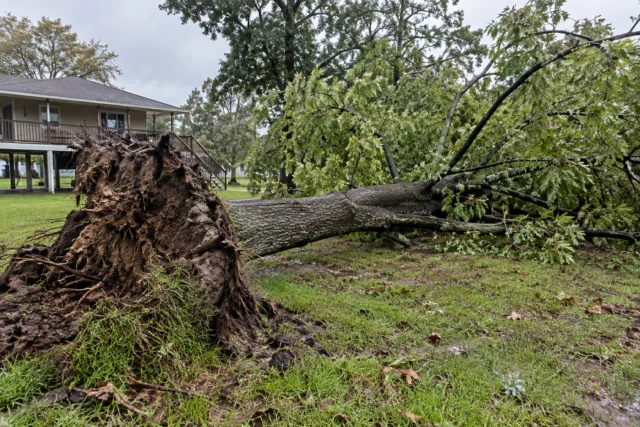
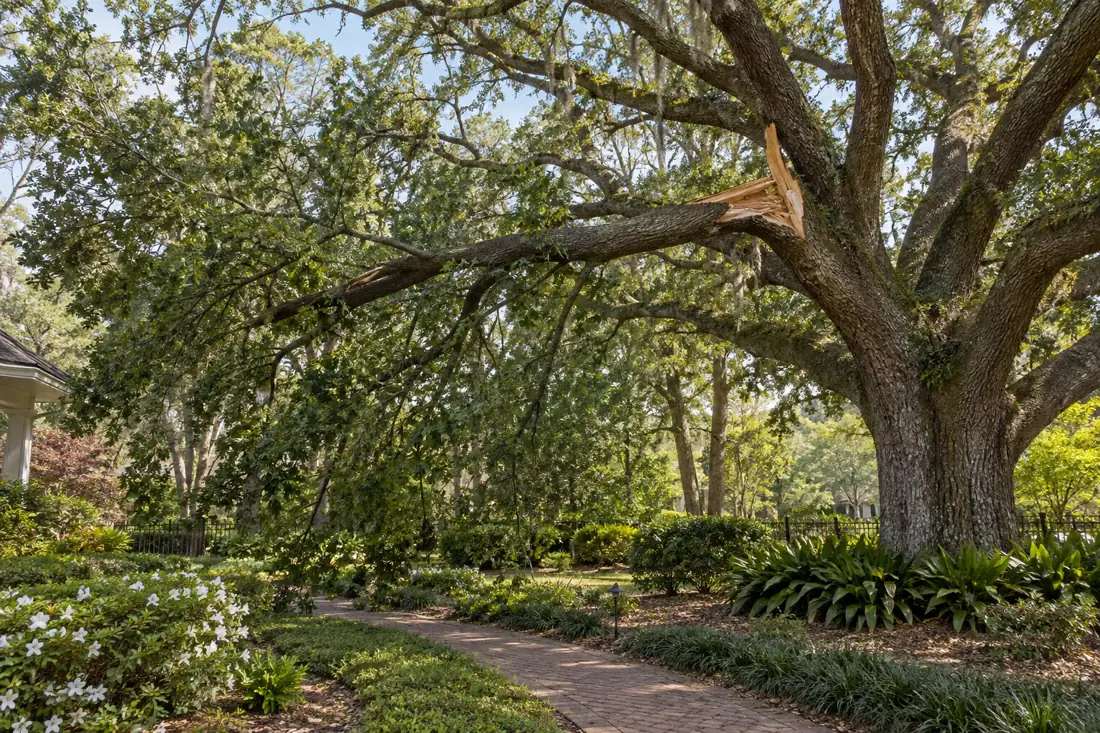
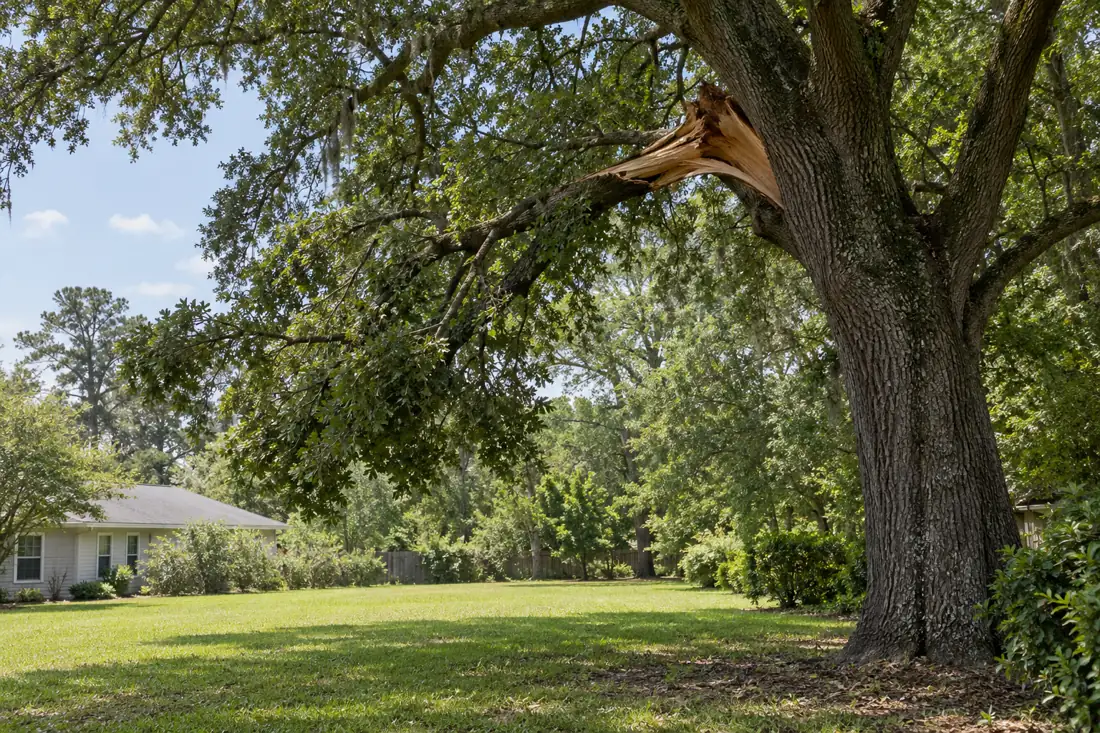
A useful work plan identifies which specialist checks structural support, which qualified crew controls the tree, and which roofing or restoration contractor follows after the contact load is removed. Record decisions and who made them, not merely an estimate total. Preserve dated safe-distance photographs for the property record without asserting whether the damage is covered by a particular policy. Any educational image on this page represents a possible configuration, not a documented customer loss or an engineering diagnosis.
Site-specific information to include with your request
- Keep occupants away from affected rooms until the appropriate building professional evaluates the condition.
- Describe power, solar, HVAC and other nearby services before work begins; assume a damaged line may be energized.
- Agree on the order of tree removal, temporary weather protection, inspection and restoration before authorizing trades.
Photograph roof contact without climbing or entering a danger zone
When tree material reaches an occupied roof, the temptation to climb up for a close-up can create an additional injury risk. Provide a ground-based overview that helps explain where the wood meets the building and what access remains. The tree crew and any roof or electrical specialist may have different responsibilities.
- Take a wide photograph from the street or other safe area showing the tree, roofline and impacted portion together.
- Use zoom from ground level to document an obvious roof contact or broken limb; do not walk beneath unstable wood.
- Include any accessible driveway or side-yard approach and note whether doors are blocked.
- Report water entry or exposed wiring to the appropriate specialist without entering an unsafe attic or roof area.
Request that the written tree-work scope identify temporary stabilization, controlled removal, roof protection, hauling and the separate repair handoff. Never treat a photo estimate as confirmation of structural safety, insurance coverage, price or emergency arrival.
Questions about this project
Should I wait for a form reply about a dangerous tree?
For an urgent condition, call to discuss availability and the next step. A form does not confirm dispatch. Keep clear, and contact emergency services or the utility when there is immediate danger or an electrical hazard.
Does emergency work always include full cleanup?
The initial authorized work may focus on stabilization or restoring access. Ask what is included and what follow-up removal, hauling or repairs need a separate scope. Confirm the plan directly with the contractor.
Can a tree contractor guarantee insurance will pay?
Coverage is determined by the policy, claim facts and insurer. Ask the insurer what records it needs, and keep the tree contractor's work scope and invoice clear. Do not treat a price estimate as coverage approval.
Should tree removal and building repairs be listed separately?
Clear records should distinguish the activities and responsible providers. Stabilization, removal, hauling, stump work and repairs may have separate scopes. Follow the insurer's documentation requests without assuming every item is treated identically.
How should extra work be approved?
Use the agreed approval process and identify the change, reason, scope, price or schedule effect as applicable. Confirm who has authority before treating an additional tree or task as part of the original job.
What completion records are useful?
Keep the agreed scope, tree or area identification, authorized changes, invoice and labeled photos where appropriate. Include unresolved items and a contact. Contract-specific records should follow the buyer's stated requirements.
Which property features should I point out?
Identify buildings, vehicles, fences, fixed fixtures, landscape features, utilities and occupied routes. Explain what can move and what must remain. Include existing damage and any buried features you know about along the access route.
Should people remain inside the work area?
The contractor and site contact should establish an exclusion area and access arrangements appropriate to the work. Keep children, pets, visitors and other workers outside the active zone until the responsible parties say it can reopen.
How should several storm-damaged trees be described?
Use marked photos or a simple tree list showing locations, affected targets and access problems. Identify urgent routes or buildings separately from later cleanup. The contractor can then discuss assessment and a practical work sequence.
Can restoration be handled in phases?
Yes, when the parties agree on clear scopes. Initial hazard or access work, planned removal, hauling and building or landscape repairs may involve different stages and providers. Record the responsibilities and completion requirements for each.
What should I tell Tree Huggers about tree through a roof: coordinating removal and repairs?
Explain the property address, the work you want and the specific concerns: structural contact, repair sequencing, documentation. Send safe photos of the tree, surroundings and access route. The contractor can then discuss the assessment and scope needed for this situation.
How do I request an estimate for this work?
Call 504-458-8336, text photos or use the estimate form on this page. Include the address, desired outcome and any timing constraints. The company will need to review scope and availability; an online request does not confirm a price, appointment or emergency dispatch.
Get a scope for your property
If a tree has penetrated a roof, keep people out of compromised rooms and away from hanging limbs, water intrusion and utilities. Do not enter the damaged area for photographs. Ask the tree contractor and responsible building professional to coordinate which tree sections can be removed, when the structure may be stabilized and who handles weatherproofing and repairs. Keep clear records of the work approved without assuming any particular insurance coverage or payment.