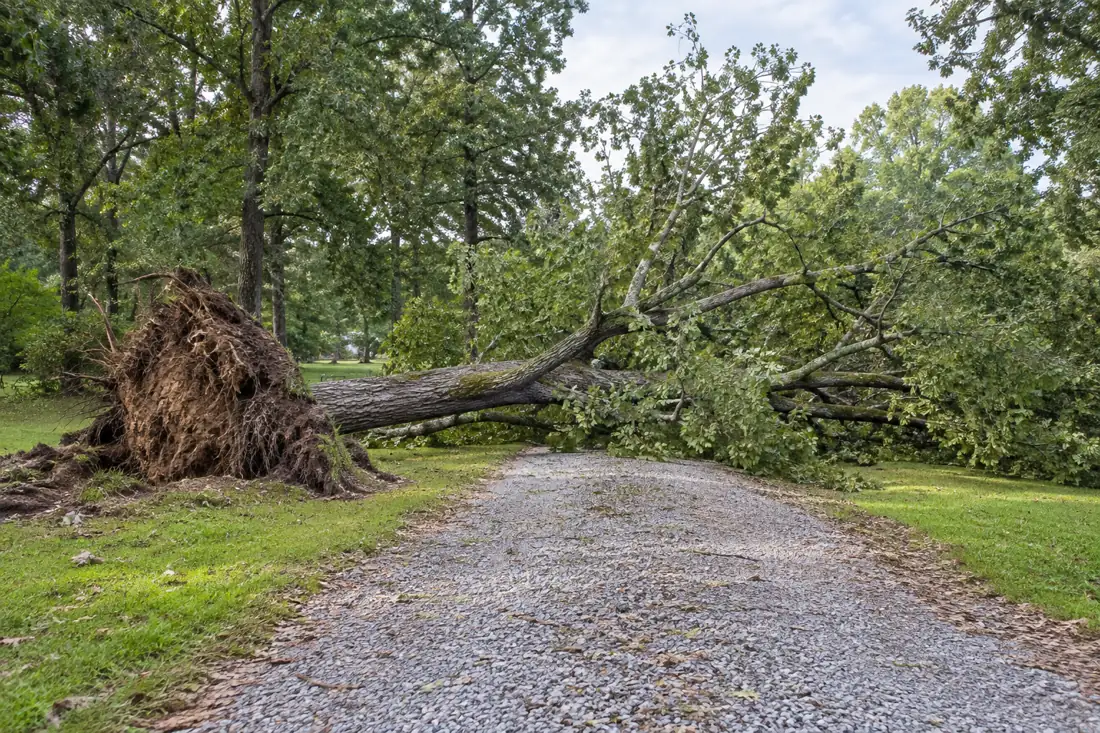
Apartment sites may have several hazards competing for the same crew and access route. Identify blocked entrances, vehicles beneath limbs and buildings with tree contact. Use a marked site plan or photos so trees are not confused. A phased scope can separate immediate access work from later removals and debris hauling.
Use building-by-building status notices after an apartment storm
A complex-wide message such as ‘trees being removed today’ may leave residents unsure which entry, parking row or path they can safely use. Create a small status table for each building or courtyard: closed route, approved alternate, responsible contact, pending tree or utility assessment and date of the next update. Post only verified information without guessing how soon hazards will be cleared.
For work sequencing, separate urgent access restoration from optional cleanup, replacement planting and later stump work. People returning to collect medicine, pets or essential items need instructions from property management that do not direct them past barriers. After the tree crew finishes, management should separately verify accessible paths, lighting, parking, debris and outside repair needs before declaring each affected area reopened.
Attach a tree or limb identifier to every report, with the nearest building, stairwell, dumpster, playground, parking row or walking path. Apartment complexes may have several similar trees; the phrase 'the large oak' can send a crew to the wrong location. Keep residents out of known fall zones and establish one property contact for utility notices, blocked exits and access decisions. Safe-distance photographs help staff communicate without asking tenants to stand beneath suspended branches.
Separate the work into immediate hazard isolation, qualified assessment, controlled removal and follow-up debris hauling. Mark buried utilities, accessible routes and spaces needed by emergency vehicles before equipment is staged. Provide written access restrictions and identify which adjacent properties must approve entry. Track the condition of each work area at handoff so reopening one walkway is not mistaken for declaring the entire site free of storm-related tree hazards.
Storm Tree Damage at an Apartment Complex: Stabilize Occupancy First
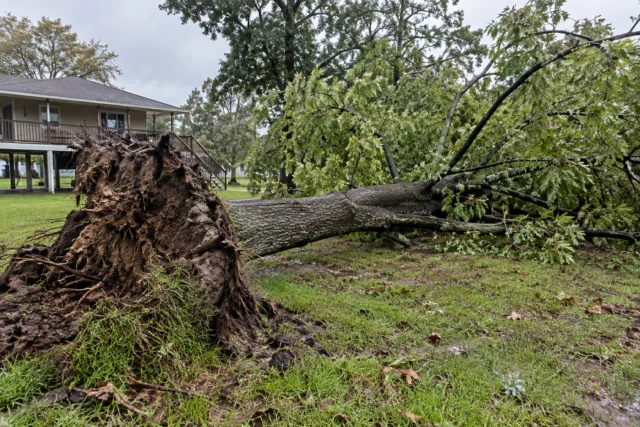
After a storm, a fallen limb is only one part of the site picture. In southeast Louisiana, saturated ground, gusty squalls, and heavy, waterlogged branches can leave trees unstable even when the rain has stopped. Start by directing residents away from visible hazards and identifying blocked exits, damaged roofs, hanging limbs, and areas where trunks or root plates have shifted. Do not send staff or residents beneath suspended branches to investigate, move debris, or retrieve belongings.
Set a single property contact to coordinate incoming reports and emergency responders; ask staff to share observations from safe locations rather than approach damaged trees. If a tree or branch is on or near a power line, treat the line as energized, keep people well back, and contact the utility through its emergency reporting channel. Call emergency services for immediate threats to life or blocked emergency access. Decide which buildings or portions of the property need temporary closure before beginning cleanup.

Read the Site as a Network of Different Hazards
A complex is not one open lawn: buildings, parking courts, walkways, and shared facilities create separate exposure zones. A leaning tree beside a breezeway may threaten people moving between units; a broken crown over a garage can endanger parked vehicles and anyone entering beneath it. At stairwells, a blocked landing or damaged handrail can turn a tree incident into an evacuation problem. Note where limbs touch roofs, gutters, windows, fences, or overhead service connections without approaching to test whether they are secure.
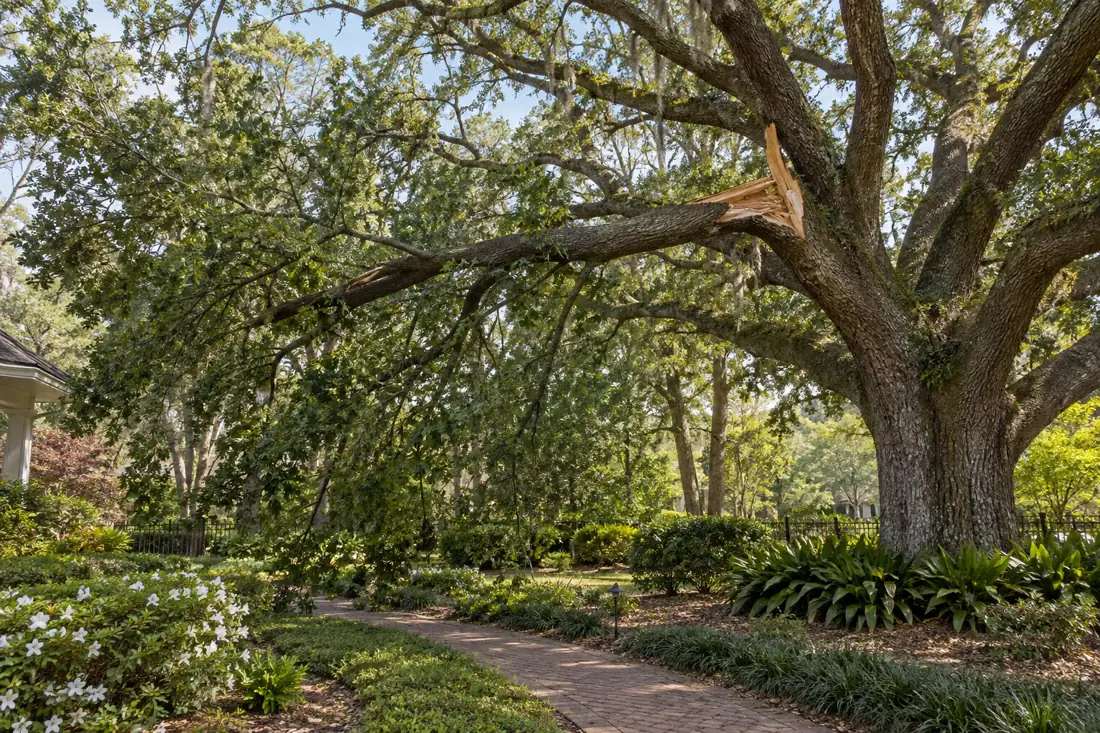
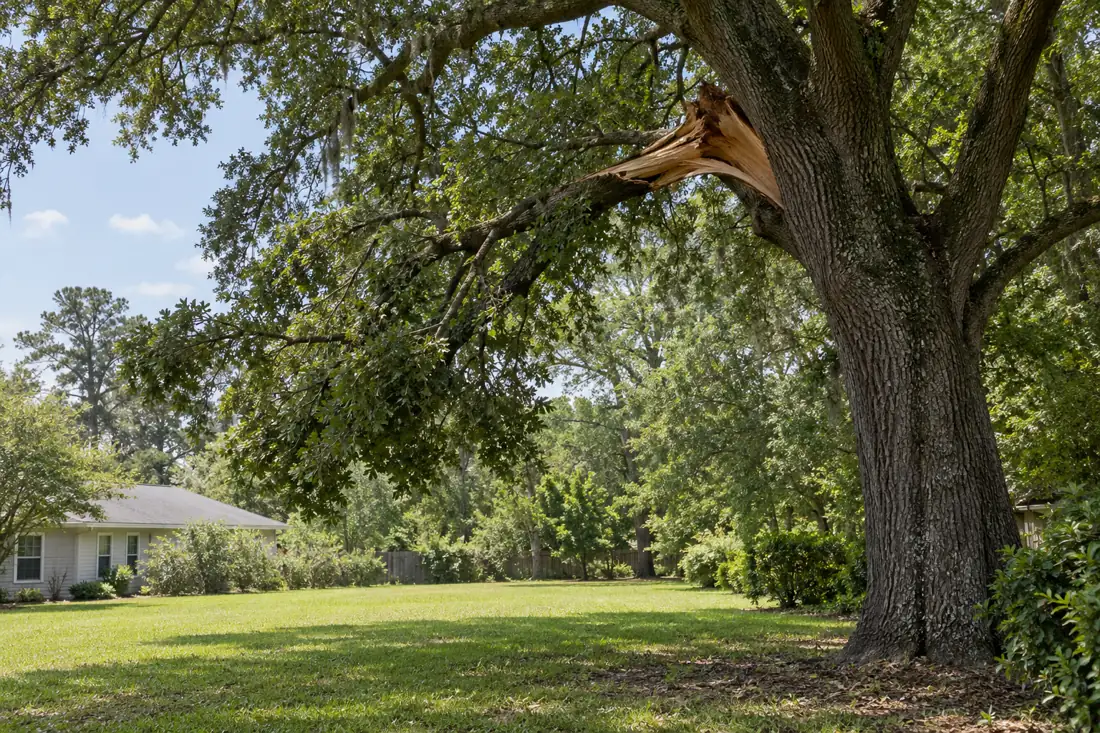
Ask a qualified arborist to assess trees with split unions, hanging limbs, fresh trunk cracks, exposed roots, or substantial lean, as well as trees that appear sound but were struck by falling material. Share building plans and reports of where debris landed, including reports from residents on upper floors. Distinguish a tree that needs prompt professional attention from one that can be monitored after the immediate threat is controlled. The practical decision is which locations require restricted access while the assessment is underway.
Divide apartment-wide damage into traceable work zones
A multifamily property needs a map that identifies damaged trees by building, parking bay, pedestrian route and service entrance rather than a single vague request for storm cleanup. Start by separating emergency hazards from later pruning or debris collection, and mark which entrances must remain open for residents and responding agencies.
Notify property management about accessible routes, reserved parking, waste pickup and possible utility conflicts before equipment is mobilized. Keep a written list of approval contacts and any association, ownership or insurance reporting requirements. If several contractors share the grounds, designate the person who can update the exclusion boundaries and report when each zone is released for normal use. A cleared tree does not automatically restore a damaged walkway or parking surface.

Use a resident-access map during an apartment storm cleanup
An apartment property is not safe or usable merely because its main driveway is clear. Identify every occupied building, stairs, accessible path, parking area, service entrance and refuse route before placing equipment or staging branches. Mark where trees or hanging limbs may affect residents and where utility or building specialists need their own controlled work zones.
Make a priority list by actual exposure, not by which pile is largest: occupied exit paths, blocked emergency access, suspended wood over walkways and vehicle routes may require separate action. Share clear, short closure instructions through the property's normal communication channel. A tree contractor should not issue structural occupancy approval, utility clearance or promises about when a building can reopen.
Track each tree and location separately in the work authorization and capture wide before-and-after images only from safe positions. Note the handoff between tree crews, management, waste haulers and other trades. A repair invoice, tree removal ticket and reopening decision represent different records, and preserving those distinctions helps both safety and later accountability.
Check Each Building’s Routes, Not Just Its Roof
Inspect the condition of access routes from a safe distance and consider how a tree failure would affect people using them. Breezeways can funnel residents beneath overhanging limbs, while enclosed garages may conceal roof damage or debris near vehicle entrances. Stairwells require clear, usable paths for routine movement and emergency egress; do not assume a second stair or exterior route is available to every resident.
Around play areas, look for damaged shade trees, uprooted trunks, broken fencing, and debris that could be hidden in equipment or mulch.
Have facilities staff report conditions from protected positions and keep them out of unstable structures or beneath damaged trees. Ask the arborist or qualified building professional to identify any interaction between tree damage and roof framing, exterior stairs, canopies, or utility attachments. Include accessible routes in the inspection: a closure that leaves no practical step-free route to an occupied building can create a serious access problem. Decide whether to close an entire facility or use a clearly separated alternate route approved by the appropriate professional.
Tag Trees and Record What the Tags Mean
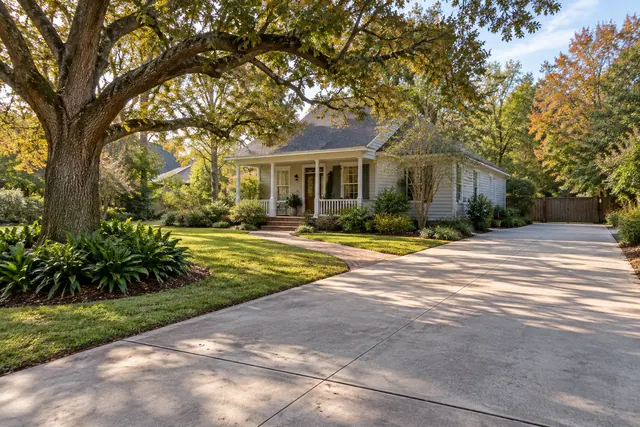
Use a consistent tree-identification system so an arborist, crew, and property staff can discuss the same tree without guesswork. A numbered tag or map reference should connect to a location, nearby building, observed damage, inspection date, and current access status. Marking should be visible to crews but should not invite residents to gather around the tree. Do not attach a tag in a way that requires climbing, entering a hazard zone, or damaging bark; staff can identify the tree from a safe position.
Keep the tag’s meaning simple and written down: for example, assessed, work pending, restricted area, or follow-up needed. A tag is a communication aid, not proof that a tree is safe or a substitute for a qualified assessment. Ask the arborist to explain the urgency, recommended work, and any limits of the inspection, especially where foliage blocks a clear view. Decide who may update a tree’s status and how changes will reach the office, maintenance staff, contractors, and residents.
Apartment storm work: map the resident routes before any tree is moved
Treat the complex as a group of occupied buildings, not one large yard. Identify each damaged tree by building number and a fixed landmark, then mark which entrances, wheelchair-accessible paths, stair landings, mail areas, fire lanes, and parking bays are affected. A limb touching a balcony and a separate tree obstructing the only vehicle entrance require different decisions.
The property representative should establish temporary resident routes and keep people out of the work zone; tree crews should not become responsible for directing residents around unrelated building damage. If utilities are involved, use the appropriate utility and emergency contacts before moving wood.
Give the estimator a current site map, permission to contact the on-site manager, and a short list of required reopenings. Ask for the work to be divided into immediate access and hazard work, deliberate tree decisions after inspection, and debris loading or final grounds cleanup.
A broad promise to 'clear everything' is not a useful scope where cars, playground equipment, irrigation, fences, and occupied balconies surround different trees. Photograph zones from safe public routes only. Residents should receive updates about affected locations, not an unverified promise that all trees will be removed on the same day.
Close Zones Precisely and Preserve Accessible Movement
Use zoned closures rather than relying on a broad warning at the property entrance. A restricted area may include the tree’s potential fall area, the path beneath a hanging limb, a garage bay, a play space, or a section of breezeway. Barriers should be stable, plainly marked, and positioned so residents cannot mistake the boundary or easily walk around it.
Do not place cones or tape where they obstruct an accessible route, emergency exit, fire access, or a path residents must use to reach their homes.
Before restricting a route, identify who depends on it, including residents with mobility, vision, or other access needs, and arrange a usable alternative with the property’s accessibility responsibilities in mind. Tell residents what is closed, why, which route to use, and where to report a change; provide the notice in the communication formats used by the community.
Ask emergency responders or relevant building officials about any concerns involving egress or fire access. Reopen a zone only after the responsible professional and site manager agree its specific hazards are controlled.

Coordinate Utilities, Arborists, and Building Specialists
Tree work near electrical lines, service drops, transformers, or damaged utility attachments requires coordination with the utility and appropriately qualified specialists. Treat every line as energized unless the utility confirms otherwise; do not allow a tree crew, maintenance worker, or resident to approach or handle it. If a tree has struck a building, canopy, or exterior stair, an arborist’s tree assessment may not answer whether the structure is sound. Bring in a qualified building professional when the observed impact calls for structural evaluation.
When requesting help, describe the tree’s location, nearby occupied buildings, line involvement, access restrictions, and whether a route or emergency entrance is blocked. Ask each professional who controls the work boundary, what conditions must be resolved before work begins, and what evidence or observation is needed before reopening.
Clarify who will communicate schedule changes to residents and who can authorize access near the site. Do not promise a completion time or declare a hazard cleared merely because a crew has arrived or visible debris has been removed.
Plan Equipment, Parking, and Resident Movement Together
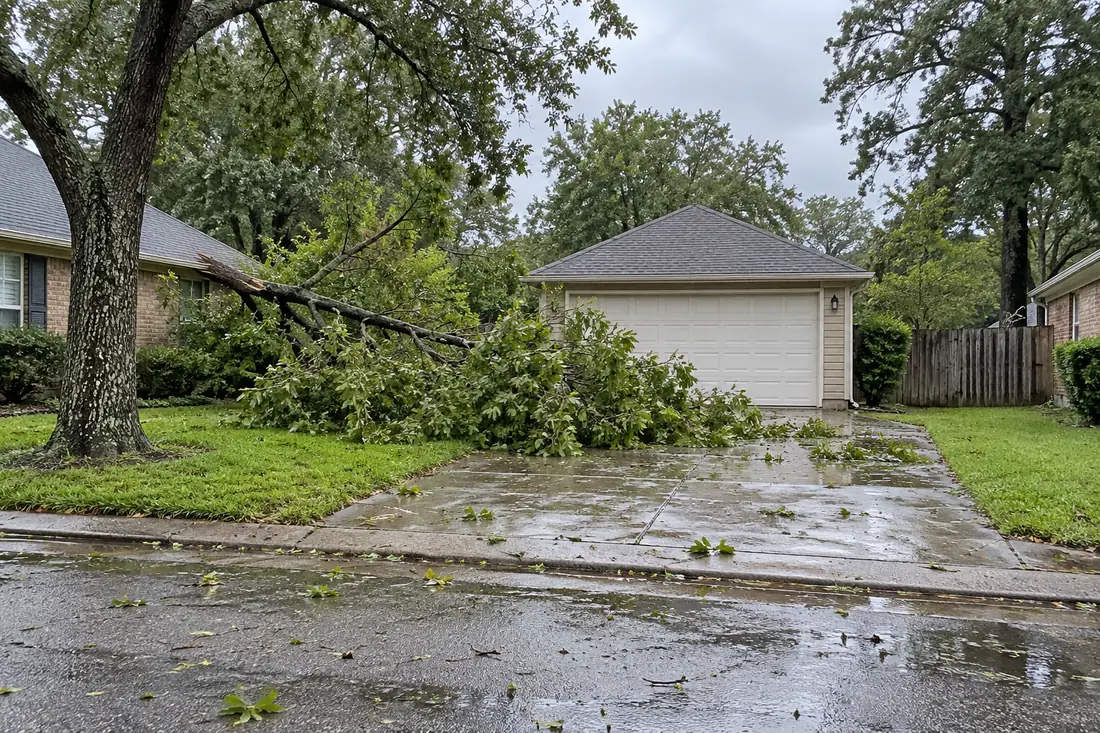
Apartment sites often have tight drives, limited staging space, and vehicles parked beneath damaged trees. Before equipment arrives, identify the safest access point, turning limits, overhead obstructions, loading area, and space needed for workers and debris handling. Coordinate with the contractor before moving or towing vehicles; follow the property’s rules and applicable requirements, and avoid directing anyone beneath a hazardous limb to retrieve a car. Preserve routes for emergency vehicles and maintain access to occupied buildings wherever the work plan safely allows.
Notify residents of affected parking rows, expected vehicle restrictions, pedestrian detours, and the process for reporting an urgent access need. Give staff a map showing work zones, equipment travel paths, temporary no-parking areas, and locations where residents must not pass. Ask the contractor how equipment will be positioned without loading unstable ground, damaging underground services, or blocking accessible circulation.
Decide whether work should be staged by building or parking section so residents can relocate vehicles in an orderly way instead of creating congestion around the active work area.

Separate Mixed Debris Without Creating New Exposure
Storm debris can combine leafy limbs, large wood, roof or fence material, glass, and ordinary household items displaced by wind or water. Keep residents and untrained staff away from piles that may conceal sharp objects, unstable branches, nails, or other hazards. Do not let a general cleanup pile block a drain, doorway, fire lane, accessible route, or equipment access. Ask the contractor and waste provider how they will separate tree material from construction debris and handle any material that may require special disposal.
Set a collection point only after confirming it is outside tree hazards, vehicle paths, and required access routes. Tell residents not to add personal items to contractor piles or move debris to the curb unless the property has given clear instructions. Ask who will identify and report suspected hazardous material and who can authorize its handling; do not ask maintenance staff to investigate unknown substances.
Decide how debris removal will be tracked by work zone so a cleared pile is not confused with a cleared tree hazard or a completed building inspection.
Map every damaged tree against occupied routes
An apartment complex incident map should distinguish individual trees, building entrances, parking aisles and shared pedestrian routes. Give each damaged tree a reference number that matches a safe ground-level photograph, and label the nearest building without exposing tenant details. A limb above a stairway presents a different access problem from one across a closed landscape bed. Mark fire access, accessible entries and mail collection points. A request reading “tree down by building B” is not enough to plan safe work around occupied homes.
Assign one authorized property representative to approve the tree-work scope and coordinate communication to residents. The manager should identify which entrances are restricted, which alternatives are usable, and who can authorize a change. Never direct residents through moving vehicles as an unverified pedestrian detour. Where trees threaten roofs or utilities, the relevant qualified professional must evaluate that condition separately. Make sure the proposed truck, chipper and debris-loading positions do not close an unrelated building’s only practical exit.

Reopen building access in controlled stages
Structure the estimate in phases: establish exclusion zones, coordinate any electrical or structural hold, undertake qualified hazard work, remove remaining wood, and restore paths and loading areas. One building may reopen earlier while another remains restricted because of hanging branches. Document the exact condition for each release, not merely a blanket target date. Avoid asking maintenance staff to trim or drag material from beneath unstable crowns to speed up access.
Supply a simple marked plan, photographs from safe angles, gate widths, the closest unloading areas and a single approval contact. Ask the contractor to list tree-by-tree work, exclusions, retained hazards and debris disposal separately. Closeout should check curb ramps, walkways, drains, lighting and parking as well as the tree bases. Preserve factual photographs and invoices without implying that a synthetic illustration documents an actual job or that an insurer will reimburse the expense.
Reopen in Phases After Specific Checks
Reopening should follow the work and the hazards in each zone, not a single sitewide announcement. A play area may remain closed while nearby breezeways reopen; a garage entrance may need a separate check from the parking spaces beyond it. Confirm that scheduled tree work is complete, debris is removed from the intended route, barriers are repositioned or removed deliberately, and any tree-related building damage has been referred to the appropriate professional.
Keep residents out of zones where crews are still operating or where a separate assessment remains pending.
Use a reopening checklist that names the area, the person responsible for verifying it, unresolved restrictions, and the time the status was communicated. Check that stairwells, exits, accessible routes, and emergency access are usable before telling residents to resume normal movement. Ask the arborist or building professional whether any follow-up observation is needed after additional rain or wind, especially where soil was saturated or roots were disturbed.
Make a specific decision for each zone: reopen, reopen with a defined restriction, or remain closed pending further work.

Document Follow-Up and Improve the Next Response
Keep a site record with dated photographs taken from safe positions, tree identifiers, resident reports, professional findings, work completed, utility contacts, closures, and reopening decisions. Record what remains unresolved and who is responsible for the next check; otherwise, a temporary barrier or parking restriction can persist without an owner. Share necessary status information with incoming shifts and property leadership. Protect residents’ personal information when keeping reports, and use the property’s established records practices rather than posting identifiable details publicly.
After immediate hazards are controlled, review which routes were hardest to protect, where communications failed, and whether contractors could reach the work area without conflicting with residents. Ask the arborist about appropriate inspection or maintenance priorities for trees near buildings, garages, play spaces, and high-use paths; avoid assuming that one storm response settles future risk.
Update contact lists, site maps, barrier supplies, and resident notice procedures while the lessons are fresh. Assign owners and dates to follow-up actions so planning becomes a practical improvement rather than a general intention.
Questions about this project
Can a business stay open during tree work?
That depends on the site and scope. Discuss occupied routes, exclusion areas, loading and work windows with the contractor and property representative. Do not assume normal access can continue through the active work zone.
Who should communicate with tenants or visitors?
Agree on that responsibility with the property representative. The contractor needs a clear site contact, while the owner or manager should use the property's established process to communicate access changes and work windows.
How should several storm-damaged trees be described?
Use marked photos or a simple tree list showing locations, affected targets and access problems. Identify urgent routes or buildings separately from later cleanup. The contractor can then discuss assessment and a practical work sequence.
Can restoration be handled in phases?
Yes, when the parties agree on clear scopes. Initial hazard or access work, planned removal, hauling and building or landscape repairs may involve different stages and providers. Record the responsibilities and completion requirements for each.
Can the crew block a public sidewalk or road?
Required arrangements must be coordinated with the appropriate authority. Identify public routes and restrictions before scheduling. A private work agreement should not be treated as automatic permission to occupy or close public space.
When should parked vehicles be moved?
Set the timing and responsible contact before the work window. Vehicles may need to leave the tree zone, equipment route and loading area. Confirm where access must remain available during each phase.
Is a total tree count enough for a large quote?
Usually the parties also need locations and tasks. Use consistent tree numbers, marked photos or a site plan so the estimate and crew instructions refer to the same trees and retained areas.
Does a work inventory include a condition assessment?
Only if that service is expressly part of the scope. A list used to identify and price tasks should not be mistaken for a documented assessment of every tree's condition or risk.
How should extra work be approved?
Use the agreed approval process and identify the change, reason, scope, price or schedule effect as applicable. Confirm who has authority before treating an additional tree or task as part of the original job.
What completion records are useful?
Keep the agreed scope, tree or area identification, authorized changes, invoice and labeled photos where appropriate. Include unresolved items and a contact. Contract-specific records should follow the buyer's stated requirements.
What should I tell Tree Huggers about storm tree damage at an apartment complex?
Explain the property address, the work you want and the specific concerns: multiple hazards, tree identification, phased scope. Send safe photos of the tree, surroundings and access route. The contractor can then discuss the assessment and scope needed for this situation.
How do I request an estimate for this work?
Call 504-458-8336, text photos or use the estimate form on this page. Include the address, desired outcome and any timing constraints. The company will need to review scope and availability; an online request does not confirm a price, appointment or emergency dispatch.
Get a scope for your property
At an apartment complex, send a map or numbered list identifying each affected building and tree, then describe which resident paths, parking areas and service entrances are blocked. The authorized property manager should coordinate access and notices; a crew cannot safely treat every hazard as a single undifferentiated pile. Safe photographs and a phased priority list help distinguish urgent obstruction removal from later limb work, hauling and restoration at each location.