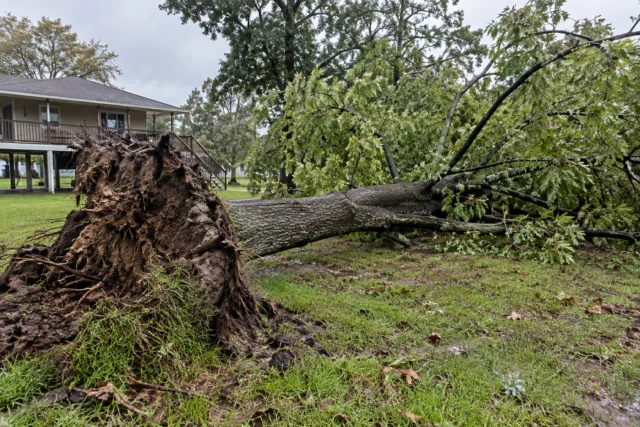
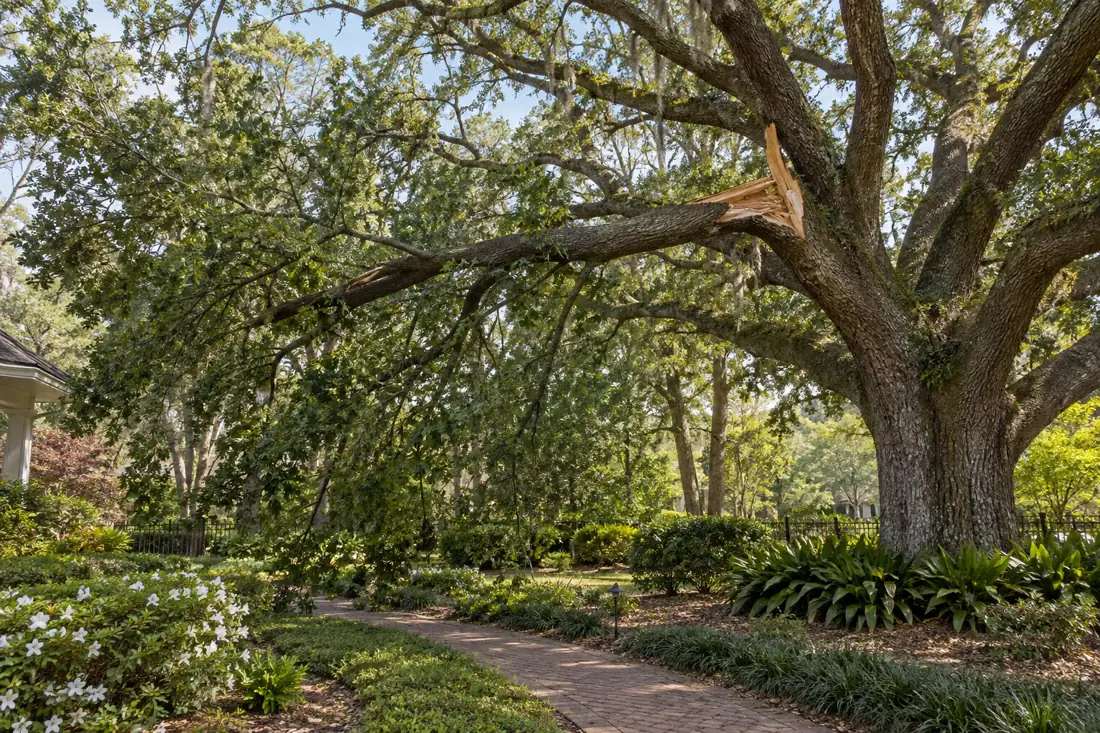
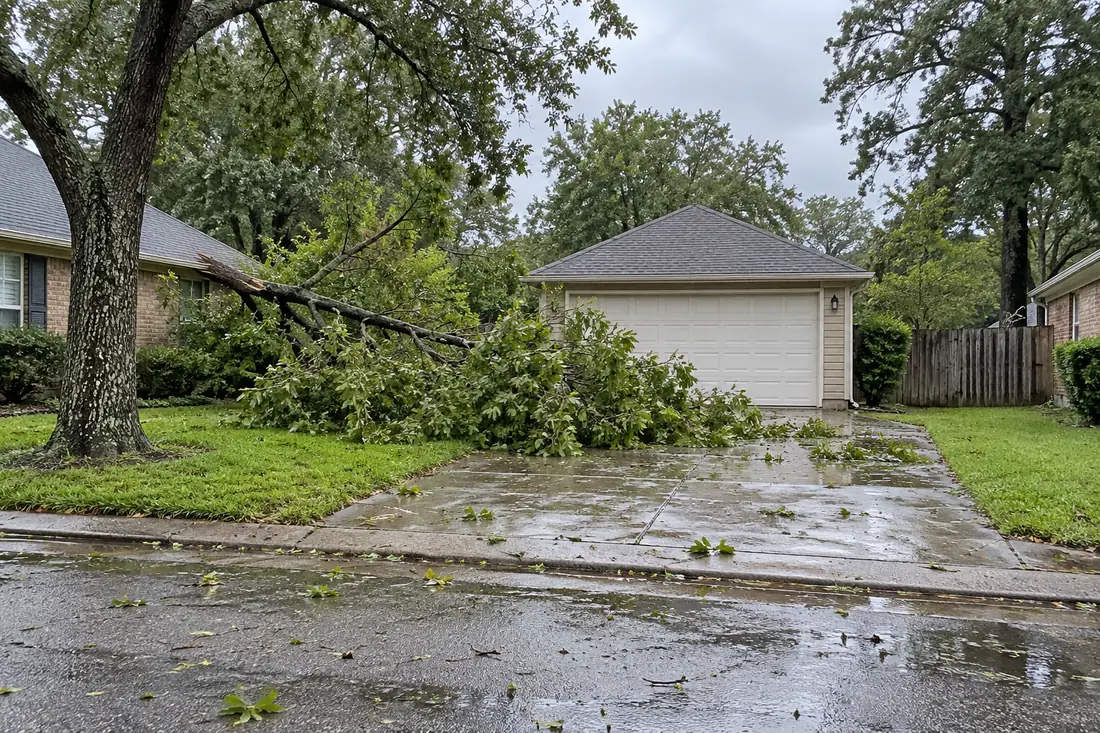
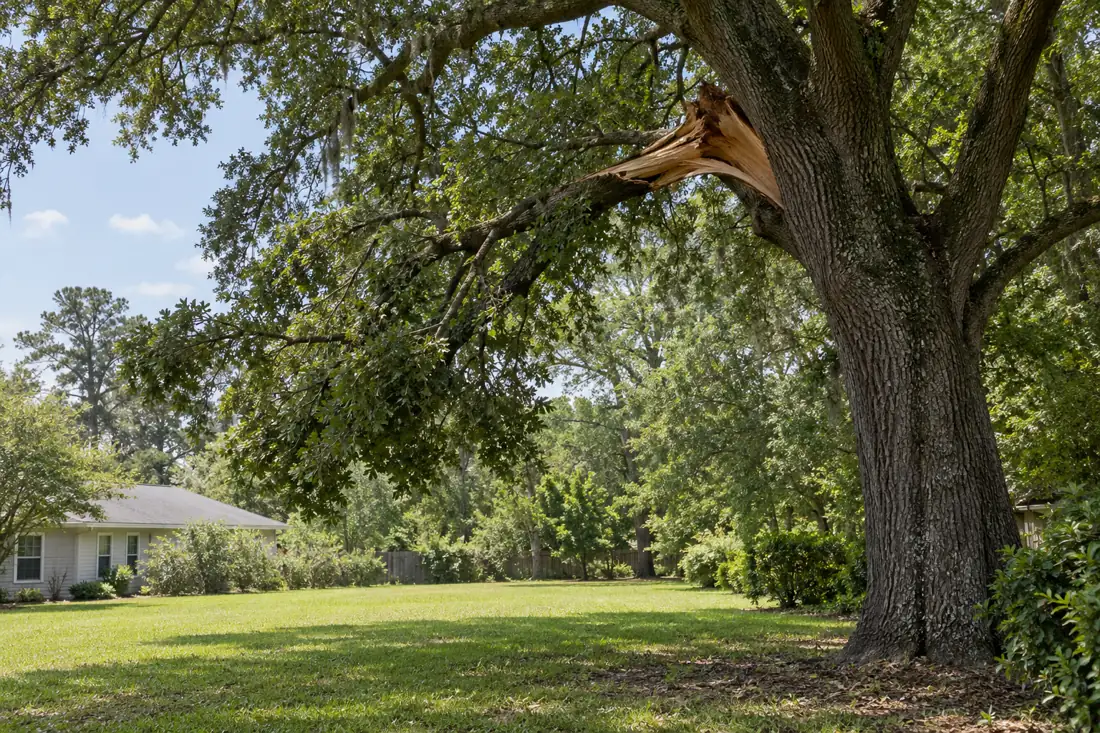
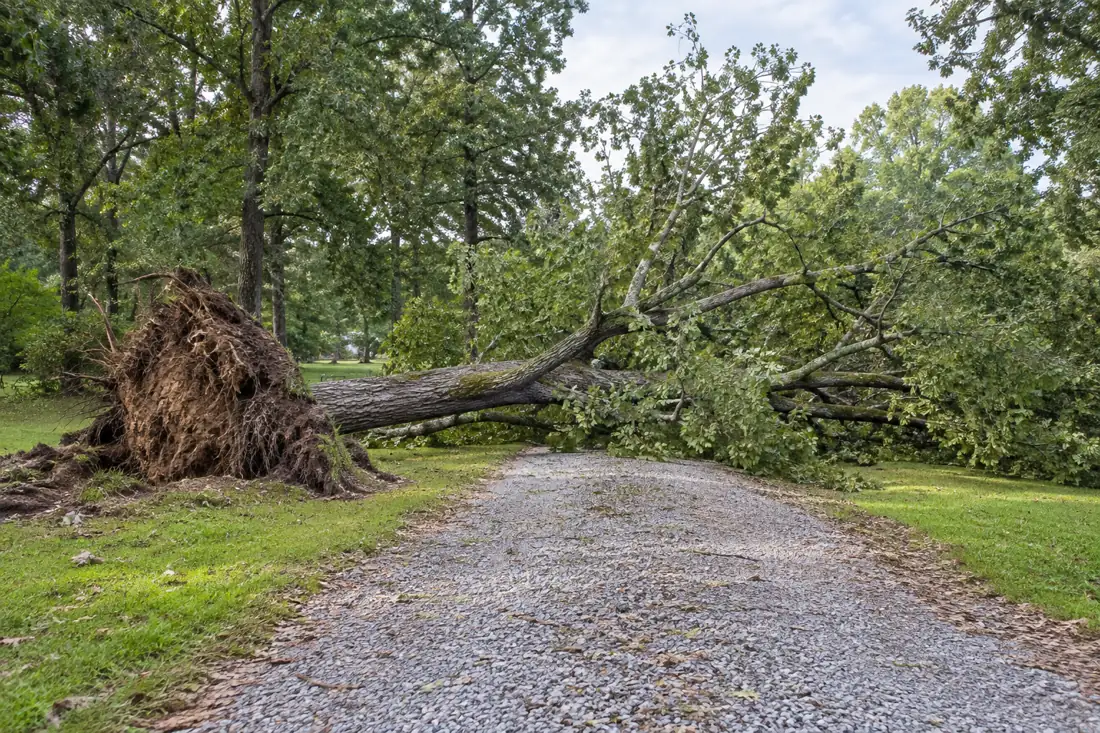
The presence of an emergency does not make every work condition safe. Weather, visibility, unstable trees and utility hazards can limit what a crew can do. Share the current situation without entering the hazard area for better photos. Availability and the work sequence must be discussed directly rather than inferred from a web form.
Set weather-driven response boundaries before the next urgent call
During active wind, lightning, heavy rain or poor visibility, urgency does not remove the need for a safe approach. The caller should report the location, whether anyone is immediately endangered, any downed wire, blocked emergency access and what can be seen without leaving shelter. Do not promise a crew will work inside an unsafe condition; the first useful action may be an emergency-services or utility response and a controlled exclusion area.
Use a staged handoff: initial report, safe weather/access reassessment, qualified tree evaluation, authorized physical work and post-work area review. Time-stamp new facts rather than replacing earlier reports, especially when a hanging limb moves or another tree becomes involved. Keep customer-facing expectations conditional on actual conditions and the contractor’s safety determination, without invented response guarantees.
Lightning, gusts and saturated ground can alter a tree's condition even during a short lull in heavy rain. Keep people out of the fall area and do not send residents or maintenance workers to gather close-up photos. If a trunk or branch contacts electrical lines or blocks essential emergency access, involve the appropriate utility or response service.
Describe the scene safely to the tree contractor and ask for professional judgment on when site access is possible, rather than assuming an urgent request makes aerial work safe during the storm.
Arrange a staged response: protect occupants and circulation first, then inspect and perform controlled cutting when conditions permit. Define who places authorized barriers, who communicates resident access changes and where equipment can stand on wet ground. Record unresolved hazards before reopening anything. Keep emergency hazard management separate from routine stump grinding and landscape repair. Avoid invented arrival guarantees or claims that specialized equipment can overcome unsafe weather.
1. Call a Work Stop When the Weather Is Still Active
During an active storm, the first tree-work decision is often not where to cut; it is whether anyone should approach the tree at all. Gusts can move suspended limbs without warning, lightning can strike beyond the visible rain, and wind-driven rain or darkness can hide broken branches and changing hazards. In southeast Louisiana, squalls may arrive between heavier rain bands, so a brief lull is not proof that conditions are safe. Stop planned cutting and keep people out of the work area.
Wind can make a chainsaw operator, ladder, lift, or suspended limb difficult to control, while lightning makes exposed outdoor work especially dangerous. Poor visibility compounds both problems by obscuring overhead hazards and escape routes. A property owner should ask the contractor what specific weather and site conditions would trigger a stop and how the crew will confirm that conditions have improved. Do not press for work because a tree threatens a schedule. The immediate decision is to protect people and wait for qualified reassessment.

2. Shelter People and Set a Clear Exclusion Zone
Move occupants away from windows facing the damaged tree and, if practical, into a sturdy interior room or another safe building well outside the tree’s fall area. Keep children, visitors, tenants, and pets inside; do not send anyone outside to watch or retrieve belongings. If a tree or large limb is actively threatening a home, occupied building, or road, contact emergency services and follow their instructions. Shelter-in-place is a short-term protective action, not a claim that any particular room is guaranteed safe.
From a safe location, identify doors, driveways, sidewalks, parking areas, and neighboring spaces that people must avoid. Tell household members or site staff exactly which routes are closed, and use interior communication or a phone rather than standing near the tree to give directions. Do not put a person in the fall zone to hold tape, cones, or a barrier. If people cannot be kept away, seek help from emergency responders or site authorities to manage access from a safe position.
Active weather changes whether an inspection can even begin
A dramatic-looking picture does not tell anyone whether wind, lightning, floodwater or unstable power equipment makes a specific location unsafe to enter. During active weather, a report should focus on the address, affected people and routes, observed damage from shelter, and whether utility or emergency responders have been notified. Do not go into the yard or road to photograph branches during dangerous conditions. Avoid offering a crew arrival estimate or a cutting method before the site and weather have been evaluated.
Separate immediate protective decisions from later tree work. The responsible parties may need to close a route, direct residents to another entrance or contact public emergency services before a qualified tree crew can inspect. A written work plan, when conditions permit, should distinguish the initial hazard assessment, authorized tree operations, traffic or pedestrian control, utility involvement and cleanup. The educational illustrations here are not proof that the depicted work is safe in a storm.
Define what is safe to do while weather is still active
A storm-related request should distinguish emergency notification from permission to start tree work immediately. Lightning, gusting winds, saturated soil, poor visibility and unstable neighboring trees may make outdoor operations unsafe even when property damage is urgent. Report any life-safety emergency through the appropriate emergency service, and treat downed lines as energized until the utility takes control.
From inside a safe location, describe the address, blocked routes and whether a structure or vehicle is involved; do not walk into the strike zone for photographs. The contractor can determine whether assessment, access restriction, utility coordination or later mobilization is appropriate. Record the weather and access limitations in the work discussion and do not advertise an unverified dispatch or response guarantee.
3. Treat Every Downed Wire as Energized
A fallen power line may be live even if it is silent, dark, partly buried, or lying on a tree that appears still. Do not touch it, a branch in contact with it, a fence, standing water, or equipment near it. Keep well away and prevent others from approaching without going closer to warn them.
Call 911 for an immediate danger to life, fire, or occupied structure, and contact the appropriate electric utility to report the line. Follow responders’ instructions and wait for the utility to confirm its status.

4. Coordinate Calls Before Anyone Is Dispatched
Use the appropriate emergency number when there is immediate danger, injury, fire, a blocked emergency route, or a tree threatening occupied space. For a non-immediate hazard, contact the relevant utility, property manager, local public works office, or qualified tree-care provider as the situation requires. In a multi-tenant or commercial site, designate one person to make calls and relay verified updates. Clear communication reduces duplicate dispatches and prevents a well-meaning visitor from entering a closed area before responders understand the hazard.
Give responders the exact address, a safe access point, the number of people affected, and observable facts: whether a structure is struck, whether a line is involved, and whether the tree is still moving. Say what you do not know rather than guessing about voltage, stability, or damage beneath the ground. Ask who has authority to close a road or building and who will update occupants. Record call times, names or reference numbers when available, and instructions received, without delaying urgent protective action.
Use a staged response instead of promising work during the storm. During active lightning, strong gusts, flooding or deteriorating visibility, an accurate telephone description cannot establish that the site is safe to enter. Keep people away from hanging branches, partially fallen trunks, fences touching unknown wires and water near electrical equipment. Call the utility or emergency services for immediate utility or life-safety conditions; a tree-service inquiry is not an emergency-dispatch substitute. Once the danger has changed enough for a safe assessment, distinguish a first visit to evaluate access and stabilize the scene from later pruning, dismantling and debris removal. Photographs should be taken from sheltered, stable locations only, not underneath the canopy or a suspended load. Record weather-related changes between the original inquiry and any visit, because the weight, lean and support points of a damaged tree can shift. Agree who may authorize additional work if conditions differ, and state clearly when occupants can re-enter the affected portion of the property. Avoid assurances of arrival or restoration timing during an uncontrolled weather event.
Working during active weather requires a stop-and-resume plan
Active rain or wind is not simply a scheduling inconvenience. Falling branches, shifting root plates, slick surfaces, low visibility, flooded ground and electrical equipment can change the risk after a crew arrives. Describe observable conditions without walking beneath damaged limbs. An emergency call should communicate whether someone is trapped, the road is impassable, or a structure has become unsafe; medical and utility emergencies need the relevant emergency services rather than waiting for an ordinary estimate.
The contractor must decide what work can be performed safely and when work must pause. Customers should not assume that urgency removes the need for exclusion zones.
Divide the request into securing a safe perimeter, preliminary assessment when conditions allow, controlled removal or clearance, and return visits for debris or finish work. If the storm intensifies, the sequence may change. Agree who can authorize a revised scope, how access information will be communicated without entering the hazard area, and whether a later inspection is required for trees that remain standing.
Avoid a blanket arrival-time guarantee; the situation, weather, roads, power utilities and equipment access determine the feasible response. Keep residents and bystanders away from tensioned limbs and displaced root systems.
Do not assume a line is harmless because power is out in the neighborhood, a breaker has tripped, or a tree crew has arrived. Other services, including communications equipment, may also be damaged, and site-specific utility layouts can be unclear after a storm. Report the location from a safe place using a street address, recognizable landmark, and description of what the line touches.
Ask the utility who will coordinate clearance and how you will be notified that its work is complete; only then can tree specialists plan their own assessment.
5. Recognize That the Load Can Change After the Gust
A tree that has stopped swaying may still be under changing forces. A hanging limb can shift as wind direction changes; a split trunk may open further; and a leaning stem can settle after a neighboring branch breaks away. Rain-saturated Louisiana soils can also reduce the root plate’s grip, especially where drainage is poor, soil is disturbed, or water is pooling.
A new lean, lifted soil, fresh cracks, or exposed roots are reasons to keep clear and report observations, not invitations to test the tree.
Do not infer stability from an intact crown, a quiet minute, or a trunk that looks upright from one angle. The tree may be supported by another stem, structure, or interlocked limbs, and removing any part can alter that support. Tell a qualified arborist or other appropriate specialist what changed, when it changed, and what the ground and trunk look like from a safe viewpoint.
Ask how recent rainfall, soil saturation, nearby structures, and the tree’s current loading will shape the assessment and work sequence.

6. Report Conditions With Safe, Useful Photos
Only take photographs if you can do so from a place already considered safe, such as indoors behind a window or from well outside the apparent fall area. Never walk closer to frame a picture, stand beneath a damaged canopy, cross a wet yard near a wire, or use a drone in active wind or lightning. A photo is optional; your safety matters more than documentation. If the view is obscured, report that limitation and let responders or specialists arrange a safe inspection when conditions allow.
Useful images show context as well as detail: the address or landmark, the tree’s relation to a building or road, visible trunk damage, and any line or branch contact that can be seen from a distance. Include the time and direction of the view if known, and distinguish what you directly observed from what someone else reported.
Send images only through an appropriate channel and avoid sharing occupants’ private details publicly. Ask the professional whether images are sufficient for initial triage or whether an on-site assessment must wait.
7. Separate Immediate Response From Tree Assessment
Emergency responders and utility personnel address hazards within their roles; a tree-care professional assesses the tree and possible work after access is appropriate. Those tasks may happen in sequence, not simultaneously. A blocked road, energized line, active lightning, or unstable structure can prevent a tree crew from entering or cutting, even when the damage looks urgent from the property. Confirm who is controlling the scene, what access restrictions apply, and whether another agency must release the location before a specialist can begin.
When arranging a later assessment, ask whether the provider has experience with storm-damaged trees and what qualifications are relevant to the proposed evaluation. Ask how the professional will inspect for root movement, trunk splits, suspended limbs, and damage hidden by surrounding trees, without requesting a remote guarantee from photographs. Clarify whether the visit is an assessment, emergency hazard reduction, or a full removal proposal. Your decision at this stage is to authorize only the appropriate next step, subject to safe access and professional judgment.

8. Use a Staged Response When Conditions Permit
Once the responsible authorities say access is allowed and the weather and visibility permit work, a qualified crew can define a controlled work area and reassess conditions on arrival. The tree may have shifted since the first report, and saturated ground may affect equipment placement or access. Do not direct workers to stand beneath a suspended limb or to begin with the most visible cut. Ask the crew lead to explain the immediate hazards, the proposed sequence, and how the public will be kept outside the work zone.
Emergency work may first address a specific imminent threat, such as a hazard obstructing an essential route, while broader pruning or removal waits for a separate decision. Cutting one section can release tension or transfer weight to another part, so the sequence must be determined by qualified personnel on site.
Owners and site managers should not hold ropes, move limbs, operate equipment, or enter to assist. Agree on who can change the scope if new damage is found and how the crew will pause if weather deteriorates.
Separate emergency requests from work that is unsafe during active weather
An urgent tree hazard does not eliminate the danger of lightning, high winds, poor visibility or soaked ground. A crew may accept an emergency call yet be unable to climb, rig or place equipment until conditions permit. If a person is trapped, injured or facing imminent danger, contact emergency services rather than moving the tree. Report what is blocked and what changed, not an assumed safe cutting method.
Create a short observation record without entering the hazard zone. Note when damage was first seen, whether a trunk or root plate has shifted, and whether a hanging limb or wire is visible from a sheltered viewpoint. Do not approach any downed cable to decide whether it is energized; contact the utility and stay clear. Avoid roof access, tree climbing or moving small branches to get a closer picture. One safe wide image can be more useful than several risky close-ups.

Record changing hazards and authorize a staged response
Distinguish telephone triage, utility coordination, an eventual ground-level assessment, controlled emergency work and later debris hauling. The earliest appointment does not mean cutting can begin on arrival. Qualified personnel must assess remaining wind, visibility, overhead exposure and working surface. Restrict access to threatened windows, entrances and driveways during the wait. If conditions worsen, update the contractor rather than assuming the original photo still describes the hazard.
Resurvey the site from safety after weather subsides. Saturated roots and suspended wood can change position, making an earlier estimate or work sequence inappropriate. Ask for a written description of what will be handled now and what remains for later pruning, removal or restoration. Keep a factual log of actual work and remaining restrictions without making guarantees of response time or suggesting the site is safe merely because rain has stopped.
9. Reopen Areas Only After Hazards Are Rechecked
A cleared driveway or removed limb does not automatically mean the whole site is safe. Hidden hangers, damaged stems, displaced roots, broken service connections, and debris beneath standing water may remain. Ask the responsible professional what area was inspected and what limitations remain, then communicate those limits to staff, residents, contractors, and visitors.
Keep barriers in place where a hazard has not been assessed or work remains unfinished. If a new crack, lean, or falling material appears, close access again and report it rather than relying on an earlier assessment.
Before resuming normal operations, confirm separately that relevant utilities, emergency officials, and site authorities have completed their portions of the response. A tree professional’s findings do not by themselves verify electrical service, structural safety, road approval, or building habitability. Ask who is responsible for each outstanding clearance, what signs require people to leave, and whom to contact if conditions change. For a business or managed property, document the reopening decision, the areas still restricted, and the person authorized to update occupants.

10. Close Out the Incident and Plan the Next Decision
Keep a concise record of the event: when the damage was noticed, weather and ground conditions as observed, locations closed, calls made, instructions received, and work completed. Save safe photographs and written assessments, but do not treat a record or invoice as proof that every hazard is resolved. Ask the tree professional to distinguish urgent work already performed from recommended follow-up, identify any areas not inspected, and explain what changes would require a new evaluation. These details support sound decisions without implying a guaranteed outcome.
After immediate risks are controlled, consider whether drainage, recurring water ponding, construction disturbance, or crowded canopies deserve attention in a separate, planned assessment. Ask a qualified arborist what preventive work is appropriate for the actual trees and site, and what should wait until the ground and weather conditions are suitable.
Do not use a storm response as a reason for unreviewed cutting or assume that a particular insurance policy will cover the work. The next project decision should be specific, documented, and based on an on-site evaluation.
A weather-window response has a stop-work threshold
A call received during an active thunderstorm is not a commitment that crews can safely operate while lightning, strong wind or flooding continue. Give the dispatcher a safe account of the location, whether anyone is exposed, whether a road or building entrance is blocked and whether a utility line may be involved. Do not attempt to prove the damage by stepping into windblown branches or water. The first stage may appropriately be shelter, emergency reporting and an exclusion boundary rather than cutting.
Once conditions permit a site visit, the work plan can distinguish immediate access restoration from full removal and final debris hauling. These may use different crews or equipment and may require different authorizations. Keep a record of weather changes, road closures and the time each stage was accepted, but do not invent an emergency response guarantee. A photograph made after the storm cannot establish the actual conditions at the time a crew was first contacted.
Site-specific information to include with your request
- Report known utility hazards to the responsible utility or emergency service, not through an ordinary estimate form alone.
- Identify a safe callback contact and the location's essential access needs without expecting a fixed dispatch time.
- Reassess hanging material and partially supported limbs after wind and rain subside before reopening the area.
During active weather, safety comes before photographs
No estimate photograph is worth walking outside during dangerous wind, lightning, flooding or an unresolved electrical hazard. During an active storm, use a safe location, follow official warnings, and do not enter a possible fall area to improve the angle. Once conditions are safe, a simple contextual photo set is more useful than a risky close-up.
- During active hazardous conditions, do not go outside merely to photograph a damaged tree.
- Once it is safe, take a broad view of the affected tree and surrounding route from a secure position.
- Use zoom to show obvious hanging limbs or obstructions without standing beneath them.
- State whether roads are blocked or utilities may be involved and which authority has already been contacted.
Where there is immediate danger, call emergency services or the utility as appropriate. Do not wait for online-form confirmation. Later, ask the tree service which work can be assessed first and which cleanup or repairs would require a separate authorized scope.
Questions about this project
Should I wait for a form reply about a dangerous tree?
For an urgent condition, call to discuss availability and the next step. A form does not confirm dispatch. Keep clear, and contact emergency services or the utility when there is immediate danger or an electrical hazard.
Does emergency work always include full cleanup?
The initial authorized work may focus on stabilization or restoring access. Ask what is included and what follow-up removal, hauling or repairs need a separate scope. Confirm the plan directly with the contractor.
Can weather change the scheduled method or date?
It can affect equipment support, visibility and the suitability of the work conditions. Tell the contractor about site changes and confirm the work window. The plan should be reviewed when the assumptions used for the estimate no longer apply.
Should I clear storm material before the crew arrives?
Do not enter a hazard area or move loaded wood to prepare for the crew. Describe the conditions from a safe location and follow the preparation arrangements confirmed with the contractor.
Can I identify a safe wire by looking at it?
No. Do not approach or touch wires, a tree contacting them or connected objects to investigate. Keep clear and contact the utility or emergency services when there is an immediate electrical hazard.
Does a tree estimate include utility disconnection?
Only if the appropriate coordination and responsibilities are explicitly arranged. Utility work may require the service provider or another qualified party. Confirm those arrangements before assuming the tree crew can proceed near affected services.
How should several storm-damaged trees be described?
Use marked photos or a simple tree list showing locations, affected targets and access problems. Identify urgent routes or buildings separately from later cleanup. The contractor can then discuss assessment and a practical work sequence.
Can restoration be handled in phases?
Yes, when the parties agree on clear scopes. Initial hazard or access work, planned removal, hauling and building or landscape repairs may involve different stages and providers. Record the responsibilities and completion requirements for each.
Which photos should I text first?
Send a wide tree view, the base if safely visible, nearby targets and the equipment route. Add the address, desired work and any recent change. Identify each tree clearly if the request involves several.
Can photos confirm that a damaged tree is stable?
No. Photographs may omit defects, support conditions and other important details. Use them to prepare for the contractor's assessment, and avoid entering hazardous areas to obtain a better view.
What should I tell Tree Huggers about emergency tree work during an active weather event?
Explain the property address, the work you want and the specific concerns: weather exposure, visibility, safe staging. Send safe photos of the tree, surroundings and access route. The contractor can then discuss the assessment and scope needed for this situation.
How do I request an estimate for this work?
Call 504-458-8336, text photos or use the estimate form on this page. Include the address, desired outcome and any timing constraints. The company will need to review scope and availability; an online request does not confirm a price, appointment or emergency dispatch.
Get a scope for your property
During active severe weather, avoid trees, downed wires and flooded routes. Do not request that anyone enter an unsafe zone for photographs or access checks. When it is safe, report the general location, visible condition, affected access and any utility involvement to the appropriate emergency or utility service first. Tree work depends on conditions, daylight, safe equipment setup and a qualified crew's onsite judgment; asking for help does not guarantee immediate deployment.