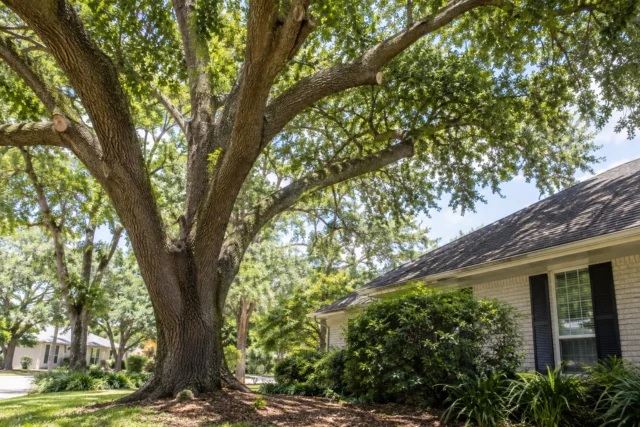
Roofline pruning should address the actual branches, contact points and desired clearance. Share whether the concern is rubbing, access for repairs or a visible defect. Large cuts made only to create a geometric gap can damage a tree. A suitable scope considers the branch structure and the building together.
Roofline clearance: separate branch contact from a structural defect
A branch touching a gutter or brushing shingles is not the same problem as a broken limb that could strike a roof. Identify exact contact locations, signs of abrasion, deadwood, cracked unions and branch movement during wind. Photograph the relationship from the yard without walking onto the roof or leaning a ladder into the tree. Avoid cutting from a rooftop or trying to pull branches clear with ropes.
Good roofline planning preserves the tree’s structure while creating practical separation where appropriate. An overextended limb may need reduction to a healthy lateral instead of being cut flush against the trunk. Removing too much canopy on one side may increase the imbalance that created the concern. The arborist should consider the species, branch attachment, building height and safe rigging path before recommending a cut.
Ask how roof protection will be managed during the operation: placement of personnel, lowering of sections, gutter protection, debris handling and any access on adjacent property. Roof repair and tree pruning are distinct services; identify who is handling existing shingle or gutter damage. Define what the estimate means by clearance and whether it includes follow-up growth management, without promising a permanently branch-free roof.
For this project, separate roof contact, branch size and repair access. These details help the contractor understand what must be protected, what information needs confirmation and what result you want from the work. A clear request is more useful than an assumed method or a price based only on tree size.
Branches touching gutters or shingles can abrade surfaces and trap debris, but cutting too far back may create a poorly balanced canopy or weak regrowth. Identify exactly where contact occurs, whether the branch is broken or simply growing toward the roof, and whether the issue is seasonal movement or an immediate hazard. Roof damage assessment belongs with an appropriate roofing professional, while tree pruning decisions need sound branch structure and safe rigging. Never climb a roof or cut a loaded limb to demonstrate the problem.
Show the estimator the roof pitch, neighboring access, power lines, ground conditions and any delicate landscaping beneath the work. Discuss which cuts provide a reasonable separation without leaving stubs or removing disproportionate foliage. Clarify responsibility for protecting gutters and skylights, collecting wood, and documenting any pre-existing damage. A roofline-clearance estimate should not imply a permanent no-contact guarantee because branches continue to grow and sway.
Identify the exact roof and branch conflict
A branch extending toward a roof may brush shingles in wind, shade a gutter, drop leaves onto a valley or hang over a vulnerable addition. Those are different conditions with different solutions. Begin with ground-level photographs showing the tree's full crown and the affected roof surface, then describe any observed contact, damage or debris buildup without guessing at a hidden cause.
A tree growing near a house does not automatically need removal, and foliage above the roof is not proof the roof is already damaged.
Ask which surface is involved: a steep main roof, low porch cover, gutter, solar equipment, chimney or utility service. A professional should consider movement in wind and the size and position of branches, not only a still photograph. Do not climb onto a roof or set a ladder beneath questionable limbs to measure clearance. If an unstable or broken branch threatens the house, keep the affected area clear from a safe location while seeking qualified assistance.

Inspect the tree and the roof as separate systems
An arborist can evaluate the tree's branch attachments, defects, overall vigor and the potential consequences of pruning. A roofing professional addresses the condition of flashing, gutters, shingles and structural components. One trade should not be asked to certify the other without the relevant expertise. A small branch rubbing a gutter may need selective clearance; a large cracked limb could need broader risk assessment before anyone works beneath it.
Gather prior inspection findings or photos when available, but do not claim a branch caused a leak just because the roof beneath it is wet. Water can enter for many reasons. Note the timing of observed contact or debris accumulation and the location of any damage without treating correlation as proof. The tree-care estimate should specify the proposed branch work and clearly distinguish it from roof repairs, drainage maintenance or insurance documentation.
Identify contact, abrasion and repair-access needs
Branches near a roof can cause different concerns: repeated rubbing on shingles, debris accumulation, limited room for a roofer or apparent deadwood over an occupied room. Note the specific roof plane, gutter or flashing area affected. A tree with a branch close to the house does not automatically require a large crown reduction.
Ask the professional to distinguish live branch clearance from structural defects and to explain how the proposed cut size affects the tree. Do not work from ladders or enter the roof for documentation of a hazardous limb. A homeowner can provide useful ground-level photographs and the roofer’s access requirements without climbing.

Write roofline clearance as a measured objective, not a cutting percentage
A homeowner may request roofline clearance because leaves collect in gutters or a branch appears close to shingles. First distinguish ordinary proximity from rubbing, broken wood or a structural defect. The need for access to gutters, solar panels, vents or skylights may differ from the long-term pruning objective, and a single wide photograph seldom shows the full load on a branch.
Mark the specific roof edge or feature that needs clearance and ask the arborist to recommend cuts consistent with tree biology and structural condition. Topping or removing a blanket percentage of live foliage is not a dependable solution. If damaged wood is suspended over the roof, keep people away and let qualified crews plan access and lowering before anyone enters the area below.
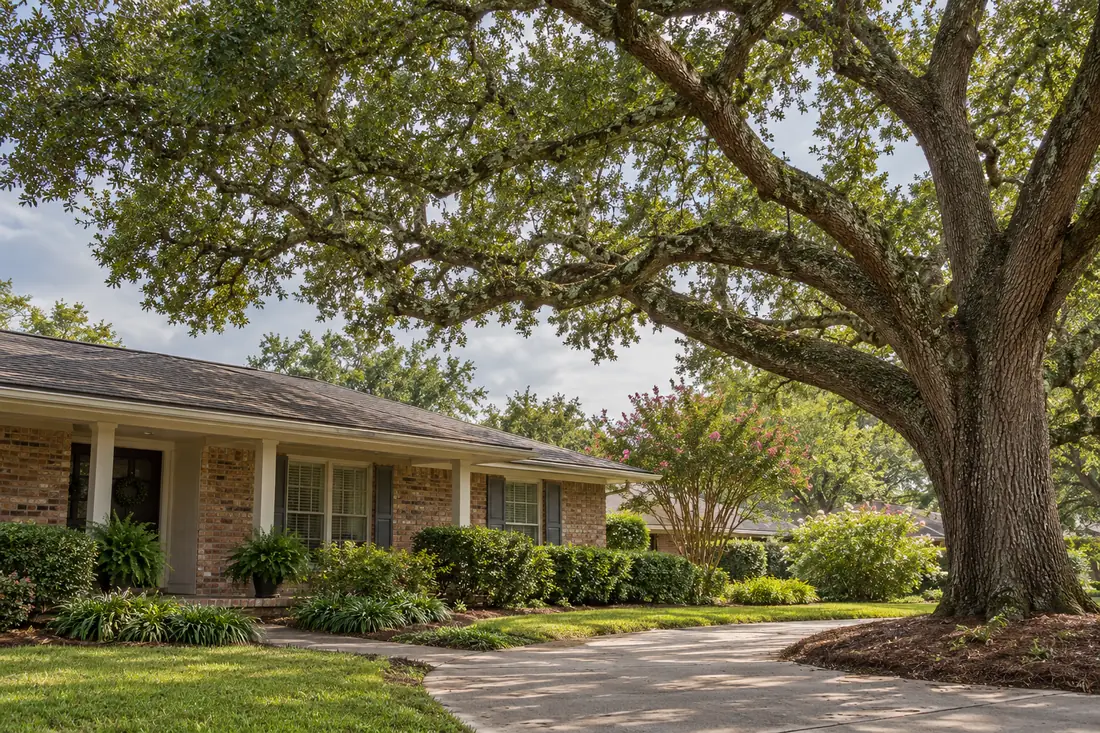
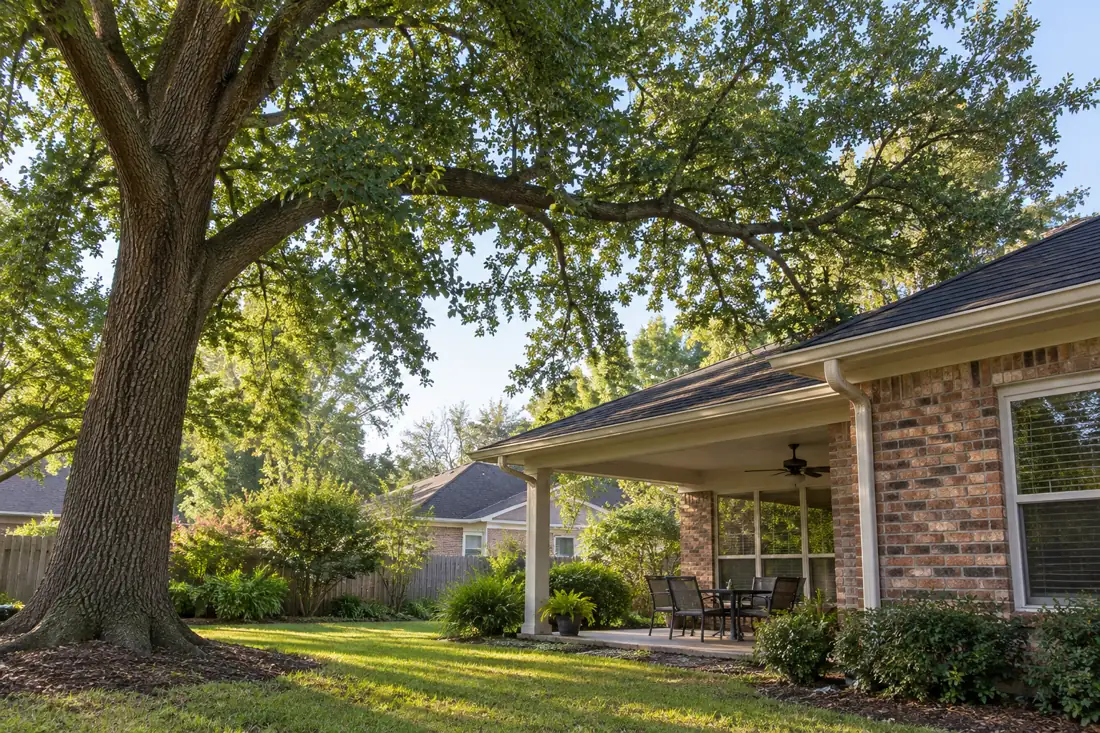
Confirm whether the contractor will protect gutters and roofing, where branches will be lowered and who is responsible for inspecting any existing roof damage. The supporting image illustrates canopy and roof constraints, not a documented customer roof or an assurance of safe clearance.
Prioritize structural integrity over arbitrary distance
A homeowner may ask for a fixed empty space all around the roof, but a single clearance number may not fit every species, branch, roof pitch or exposure. The professional should discuss the actual movement and growth likely at the conflict point and choose cuts that retain sound attachment and adequate foliage. Removing an enormous branch at the trunk merely to gain a little roof space may create a substantial wound or reduce canopy stability.
Some branches can be shortened to an appropriate lateral; others may need a different plan if a sound reduction point is unavailable. The tree's overall condition matters. Avoid topping or shaving a flat edge into the crown above the roof, which can create regrowth and repeated maintenance. Ask the estimator to label the specific limbs and describe what will remain, including any unresolved condition. The objective is a prudent, defensible treatment rather than a dramatic-looking gap.
Coordinate roof protection, tree structure and safe observation
First identify whether a branch is actually touching shingles or gutters, shedding leaves into drainage, obstructing a roof repair, or simply visible above the house. Those are different problems with different possible solutions. Ground-level photos from more than one angle can show the canopy and roof together, while a roofer's documentation can clarify a building defect without requiring a homeowner to climb onto a roof.
Note whether branches move against the building only in wind or rest in contact continuously. A leafy branch near the roof does not automatically call for a major removal cut, and a suspected dead limb should be treated as a condition question rather than a simple height measurement.

The roof covering, gutters, skylights, solar equipment and service drop may restrict how a crew accesses or lowers cut material. State the location of fragile finishes and repairs already planned, and coordinate with the roof contractor where responsibilities overlap. The estimator should consider limb weight, attachment and remaining crown balance before proposing reductions. Cutting a large branch simply to obtain a uniform distance can cause unnecessary wounding and loss of shade. If the concern is recurring leaf litter, gutter maintenance may still be needed even after selective pruning. Do not move energized lines or touch cables to make access easier.
A useful quote request identifies the exact roof plane, the suspected points of contact, whether a leak or damage is known versus merely suspected, and the timing of other building work. Ask how roof and landscaping protection, lowering procedures, debris collection and access will be included in the written scope.
During the work, keep residents away from the drop zone and do not stand under the branch for photographs. Afterwards, a roofing professional may need to inspect the roof surface separately; a tree-service completion image cannot establish that shingles or flashing are sound. Save a safe ground-level comparison view to support future tree and roof maintenance.
Seasonal observations add value. A branch that appears clear on a dry day can move in wind, and a heavy leaf fall can obstruct gutters even when no limb touches the building. Owners can record when the problem occurs without trying to reproduce dangerous conditions.
If roof repairs are already scheduled, share that sequence so tree and roofing contractors can agree on a practical order. Avoid accepting vague statements that either trade will fix the other trade's problems. Each scope should have a clear end point and a responsible reviewer.

Roofline pruning: coordinate tree clearance with roof condition
Record whether a limb is actually rubbing shingles, touching a gutter, hanging damaged wood or merely passing above the roof. Those conditions call for different actions. A healthy branch over the roof is not automatically a defect, and branch movement in a storm can differ from what is seen on a calm day.
Photograph the tree and affected edge from the yard. Avoid walking on a roof, leaning ladders into limbs or climbing to obtain close-up evidence. If there is active water entry or apparent structural damage, the roofing assessment is separate from a pruning estimate.
Ask the roofer or owner to identify required access for gutters, scaffolding and roof materials before major cuts are proposed. Selective pruning to a suitable lateral may create workable clearance while preserving the natural crown, but the tree's condition controls what is appropriate.
Explain whether the cutting can be performed without placing equipment on fragile landscaping or damaging the roof edge. Coordinate roof and tree work so one crew does not work directly beneath the other. At handoff, confirm which branch conflicts were addressed, whether a separate roofing inspection is still needed, and whether further growth or movement could require future review. No trimming alone certifies the roof as sound.

Consider gutters, drainage and trapped debris
Leaves and small twigs may accumulate where a tree overhangs gutters or roof valleys. That problem can involve gutter guards, roof design, routine cleaning or branch proximity. Pruning may reduce some direct contact, but it will not stop all windblown leaves from reaching a roof. A homeowner should understand that severe trimming is not an alternative to appropriate roof drainage maintenance. A clogged downspout may continue to overflow even after branches are cut back.
Photograph gutter overflow or debris from a safe position and let the appropriate specialist evaluate the drainage system. Keep workers from throwing tree debris onto roof drains or allowing sawdust to collect in valleys during the job. The tree crew should explain how cut material will be lowered or carried clear of fragile surfaces. Any existing loose shingle, damaged gutter or water stain belongs in pre-work documentation to help clarify the scope and avoid misunderstandings.
Coordinate tree access with roofing work
Roofers and tree crews need separate safe work zones, especially when one contractor might otherwise stage materials beneath the other’s active work. Clarify whether pruning should occur before scaffolding arrives or after a roof repair is complete. Include gutters, skylights, solar wiring and nearby power service in the access discussion.
The final scope should identify the tree, limbs and clearance objective without promising zero future leaf or twig fall. Confirm which contractor handles any roof damage, debris pickup or repair of displaced gutter guards. Keep roof-replacement and tree-pruning invoices distinct so responsibility remains clear.
See the related Tree Huggers service and request an appropriate assessment
Protect the building during rigging and lowering
A branch positioned above a roof may not be safe to release into an open landing area, even when it looks small from the ground. The crew might need sectional cutting, controlled lowering or access equipment, depending on branch weight, attachment and the site. The method should be chosen by qualified professionals after inspecting the job. Homeowners should not attempt to pull branches from a roof with a vehicle, rope or improvised ladder setup.
Identify nearby wires, air-conditioning units, skylights, fences, decorative structures and windows before the crew establishes its work zone. Plan where the branches will travel and where debris can be staged without blocking exits. Roofing materials may be damaged by equipment or falling cuttings, so the quote should state what protection is planned and what related work is excluded. A promise to make the roof safe without inspecting the tree and access is not a responsible estimate.

Coordinate utilities and rooftop fixtures
Service drops and cables often enter a building close to tree limbs and eaves. Branch clearance near energized equipment is a specialized safety issue, not ordinary yard work. Tell the estimator about visible lines and let qualified parties determine if the utility must be involved. Do not touch a wire, move a drop, climb onto a roof beside electrical hardware or assume a line is harmless because it looks insulated.
Roof-mounted solar panels, antennas and satellite equipment also affect access and debris control. Confirm with the owner which fixtures are present and who may move or protect them. Some conflicts can be reduced by rearranging an accessory rather than heavily pruning a structural branch. The tree contractor should not disconnect or repair equipment outside its scope. Written coordination prevents a small tree-work objective from becoming an unplanned electrical, roofing or communications project.
Preserve shade and tree health where possible
The same crown that approaches a roof may provide valuable summer shade to the house and yard. Ask whether the conflict is one branch tip, a growing scaffold or a tree planted too close for its mature size. Targeted pruning can sometimes solve a minor interference while preserving the broader canopy. If repeated severe cutting would be required, discuss long-term alternatives openly rather than promising the tree can be kept permanently small without consequences.
Assess the root zone and trunk as well as the branches. Roof contact does not tell the whole story of tree condition, and an otherwise healthy tree may need only periodic monitoring. Do not strip interior foliage to lighten the crown by appearance alone. The professional should explain the effect of proposed live-branch removal and any realistic future growth. A thoughtful plan balances building protection with the benefits and limits of retaining a mature tree.

Prepare the property for safe access
Before scheduling work, identify locked gates, narrow side yards, overhead obstructions, patios, landscaping beds and equipment routes. Move loose outdoor furniture when the operator asks, but do not enter the crew's established exclusion zone to retrieve a forgotten item. Keep residents, children and pets away from cutting and lowering areas. If the roof is part of a shared building or rental, coordinate access and approvals with the responsible manager.
A tree crew may need to use a neighboring area, close a driveway or work from a controlled position rather than the most convenient point. Such arrangements require permission and planning, not assumptions. Record delicate features and the desired cleanup standard. Confirm how the job will adapt to rain, high wind or discoveries that change the planned method. No precise completion or access-reopening guarantee should be made without agreement on these practical constraints.
Take photos that distinguish observation from diagnosis
Send a full-tree image, a wide photo showing the roofline, and a safe view of the particular branch or gutter issue. Explain whether contact is seen only during strong wind, whether pieces have fallen, and whether roof damage has actually been observed or only suspected. Avoid standing below hanging branches or climbing for a close-up. If an electrical service enters at the same location, mention it plainly so the correct safety review can be arranged.
Do not upload unrelated personal documents, family photographs or detailed security information when the tree can be described without them. An image may help a contractor plan an assessment but will not prove hidden root stability or roof integrity. If the branch is broken and pressing on the building, restrict access and seek prompt qualified assistance. The ordinary inquiry form is for project information, not a guarantee of emergency dispatch or a substitute for a professional on-site decision.

Review clearance and future maintenance after the work
When the crew finishes, compare the actual roof conflict with the agreed scope from safe ground viewpoints. Confirm that no hanging cuttings remain, gutters and paths are not visibly blocked by the operation and access areas are restored. If damage or debris lies on the roof, have the appropriate professional assess that surface rather than sending an unqualified person onto it. Note any branches intentionally left in place because removing them would be harmful or beyond the authorized scope.
Retain genuine photographs, the specific cuts performed and any follow-up recommendation. The tree will keep growing and branch tips may move differently with future weather. A periodic review can identify renewed contact before it becomes a larger concern, while separate roof maintenance addresses drainage and surface condition. Tree Huggers can use the actual property details to discuss appropriate pruning without inventing a fixed clearance standard, customer review or photographed completed project.
Questions about this project
How should I describe the pruning I want?
Explain the objective: clearance for a route or building, deadwood, a damaged branch or structural development. Ask for suitable tree-specific work rather than requiring an arbitrary shape or amount of canopy to be removed.
Will pruning resolve every tree concern?
No. Root, trunk and major structural problems may need a different assessment or response. State the full concern so pruning is not used as a substitute for evaluating the condition that prompted the call.
Which property features should I point out?
Identify buildings, vehicles, fences, fixed fixtures, landscape features, utilities and occupied routes. Explain what can move and what must remain. Include existing damage and any buried features you know about along the access route.
Should people remain inside the work area?
The contractor and site contact should establish an exclusion area and access arrangements appropriate to the work. Keep children, pets, visitors and other workers outside the active zone until the responsible parties say it can reopen.
Does healthy-looking foliage mean a tree is structurally safe?
No. Leaves do not establish the condition of roots, trunk or branch connections. Explain visible defects and recent changes, and ask for an assessment appropriate to the tree and nearby targets.
Should I test a cracked branch or trunk?
Do not pull, shake, climb or cut damaged material to test it. Keep clear of the affected area and describe the condition from a safe location. Qualified assessment and an appropriate work plan are needed.
Is leaving the trunk untouched enough to protect a tree?
No. Roots, soil conditions and nearby work can matter even when the trunk is not cut. Identify retained trees before planning access, excavation and storage, and ask what site-specific protection is appropriate.
Can pruning undo construction-related root damage?
Do not assume it can. Share the work history and ask for an assessment of the current tree and site. Pruning, monitoring or other recommendations should address an identified need rather than substitute for protection planning.
What should I compare besides the price?
Compare tree identification, work objectives, access assumptions, hauling, stump treatment, site finish and exclusions. Ask whether permits or other coordination are part of the scope and who can approve changes if conditions differ.
Does an online request book the crew?
No. A request starts the estimate conversation. The company still needs to discuss scope, availability and any site assessment. For a dangerous or urgent condition, call 504-458-8336 rather than relying on a form response.
What should I tell Tree Huggers about tree pruning near a roofline?
Explain the property address, the work you want and the specific concerns: roof contact, branch size, repair access. Send safe photos of the tree, surroundings and access route. The contractor can then discuss the assessment and scope needed for this situation.
How do I request an estimate for this work?
Call 504-458-8336, text photos or use the estimate form on this page. Include the address, desired outcome and any timing constraints. The company will need to review scope and availability; an online request does not confirm a price, appointment or emergency dispatch.
Get a scope for your property
When branches approach a roofline, take safe photographs from the ground that show the actual roof contact, gutter edge, window or solar equipment involved. Do not climb the roof or cut from a ladder to obtain proof. Ask for selective pruning that accounts for branch size, attachments, the tree's structure and realistic future growth, rather than promising a permanent no-contact zone.
The scope should identify work positions, roof protection, debris landing zones and whether a roofing professional needs to assess existing damage. Confirm which tree branches will be reduced or removed and how the finished clearance will be judged.