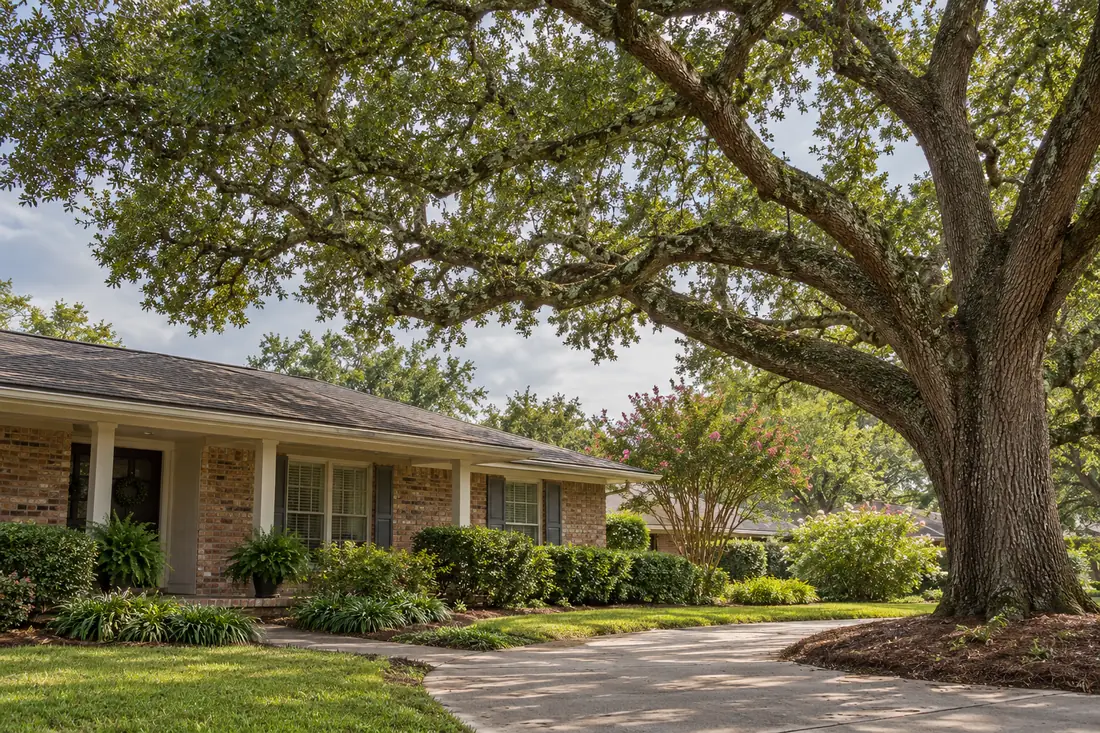
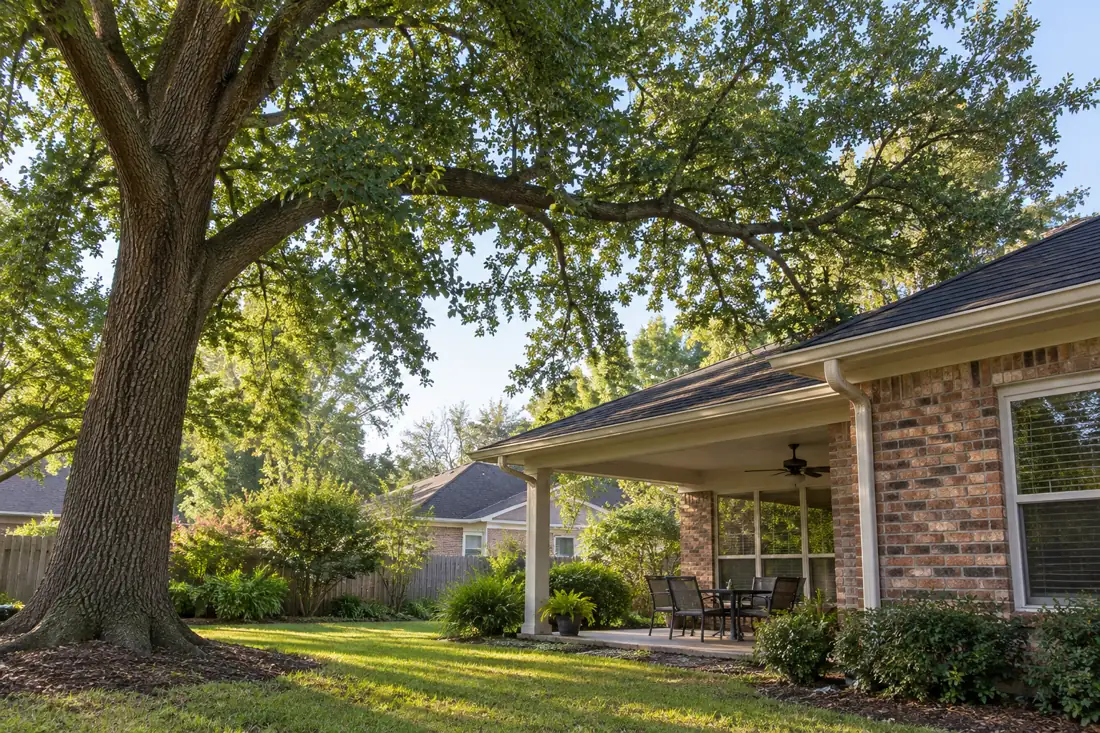
Canopy raising can improve access, but removing too many lower branches or making large cuts can create new problems. Describe the clearance objective rather than requesting a fixed shape. Ask which branches can be addressed appropriately and whether the work should be phased. The condition and development of the tree matter.
Raise clearance while retaining a functional crown
Show the specific entrance, loading path, road or walking route beneath the tree. Include actual vehicle dimensions or access needs rather than demanding an arbitrary uniform height across the whole canopy.
Ask which lower limbs would be reduced versus removed and whether the retained live crown remains balanced. Excessive raising can create stress and expose the tree to other problems. Avoid removing large structural branches for appearance alone.
Coordinate parked vehicles, tenants and deliveries before cutting. An annotated photograph showing target clearances, tree identifiers and retained limbs makes the result easier to verify.
Identify the actual obstruction before asking someone to raise the canopy. Mark the pedestrian route, vehicle height, sight line or maintenance access that needs attention, and photograph the tree from ground level with the obstacle in view. A request to make every lower branch the same height can remove more living foliage than necessary, especially on a mature shade tree. Ask for a branch-by-branch review of which limbs can be reduced, retained or addressed in stages without making large, poorly placed cuts.
For an estimate, distinguish permanent access requirements from a temporary delivery or construction event. Note adjacent planting beds, utilities, fences and occupied walkways that could restrict safe work. Ask how much live crown would remain and whether the clearance can be achieved without a disproportionate change in structure. If the tree cannot safely provide the clearance you want, request an explanation of the constraint and a practical alternative rather than authorizing excessive pruning by default.
Define the clearance goal before choosing any branch
Canopy raising is the selective removal or reduction of lower branches to improve clearance beneath a tree. It should begin with a measured purpose: people walking on a route, vehicles entering a drive, visibility near an intersection or limited clearance above a structure. The same amount of raising may be unnecessary in an open lawn where lower limbs do not interfere with anything. Mark the affected path and describe the type of use rather than instructing a crew to cut everything below an arbitrary line.
Photograph the full tree from several safe ground viewpoints. Include the trunk, primary scaffold branches and the area requiring access so the estimator can see how raising might change overall form. Ask about the tree's species, maturity, health and prior pruning history. A mature tree that has been repeatedly raised may already carry its living foliage unusually high. A qualified professional should assess that structure before removing another level of lower limbs.

Understand why lower branches contribute to tree strength
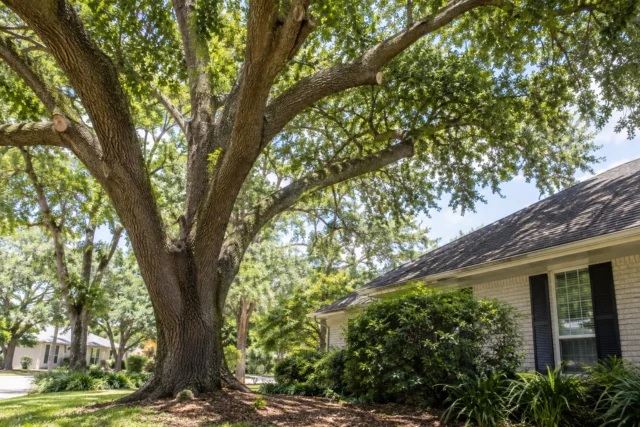
Lower branches are not merely clutter beneath the canopy. They contribute leaves and may influence trunk taper, growth distribution and the tree's response to wind. On a young tree, retaining some temporary lower branches can support development before final clearance is established. On a mature tree, removing large lower scaffolds may leave sizable wounds and a taller sail of foliage above. That is why raising is not a harmless cosmetic operation.
Ask whether a branch can be shortened rather than removed completely, or whether a slightly different path would avoid cutting a major structural limb. An ideal-looking high crown is not necessarily a healthier or safer tree. Site conditions matter as well: compacted roots, a recently altered grade or previous topping may change the professional's recommendation. The plan should preserve a functional crown while meeting a realistic need for space under it.
Choose a clearance target without stripping the trunk
Raising a canopy should begin with a reason: a walkway is blocked, vehicles cannot pass or a window needs limited clearance. The appropriate amount of lower-branch removal varies with tree age, species, health and structure. A round number of feet is not a substitute for evaluating where limbs originate and how the remaining crown carries foliage.
Removing many low limbs at once may leave an unusually long bare trunk or concentrate weight higher in the canopy. Ask whether a phased approach, reduction of a specific branch or adjustment to the route could achieve the goal more conservatively. Keep enough lower growth for the tree’s development when that is part of the professional recommendation.
Match the plan to species and tree age
A young ornamental tree, an established live oak and a mature pine have different natural architectures and pruning responses. Raising all of them to the same height for neatness can conflict with their growth habits. Some species tolerate selective lower-branch work better than others, while certain mature branches should be retained because their removal would create significant defects. Ask the arborist to explain how natural crown form and current vigor inform the decision.
Young trees may be trained over several visits as the trunk develops, whereas a mature tree often needs a more cautious approach to large removals. A fixed age or diameter threshold cannot replace assessment. If the tree's branches naturally sweep low into a landscaped area, allowing that form may be preferable to creating open space no one uses. Every proposed cut should answer a practical question about clearance or condition, not simply conform to an unrelated tree's silhouette.

Avoid creating a top-heavy crown
Removing too many lower limbs can concentrate foliage high in the crown and leave long exposed branches below the remaining growth. This may change load distribution without addressing the original issue of branch clearance. A professional should consider how much live crown will remain relative to the whole tree and whether the proposed cuts would leave an unbalanced structure. Crown raising should not become a one-day race to expose as much trunk as possible.
When substantial clearance is requested, discuss phased work or alternatives. A pathway can sometimes be shifted; a parking or delivery route may be reorganized; a smaller lateral may be shortened. Such options protect valuable shade and avoid large pruning wounds. If the tree is fundamentally incompatible with a site, a long-term site plan may be needed rather than repeated heavy cutting. Ask for an honest explanation of limits, including cases where the requested clearance cannot be achieved responsibly.
Canopy raising: protect lower structure and long-term crown balance
A request to raise a canopy should begin with the specific use below it: people on a path, parked vehicles, a driveway turn or a sign. A uniform height around the entire tree may be unnecessary. Identify which limbs actually obstruct passage and whether those are temporary smaller branches or major permanent members of the crown.
Mature trees can be stressed by removing too much lower foliage at once, and large wounds can remain for years. Provide the desired activity area and known equipment dimensions without asking anyone to walk under a visibly compromised branch.
Discuss branch-by-branch reduction versus removal and whether a staged approach would meet the goal with less structural loss. Excessive raising can create an unbalanced canopy, expose the trunk and leave long branches with foliage only at their tips. No fixed clearance number is appropriate for every species, age and setting.
Include the trunk, retained canopy and equipment route in the estimate rather than measuring success by the amount of material hauled away. On completion, check that the intended route is usable and that the tree retains a functional lower-to-upper crown relationship. Future growth may require planned maintenance rather than repeated severe lifts.
Choose suitable branch reduction points
A proper pruning cut respects the branch collar and the intended remaining structure. It is not the same as cutting every branch flush to the trunk or leaving stubs that may decay without proper closure. A branch interfering with a route may be reduced to a suitable lateral when that option maintains a sound branch architecture. The contractor should identify the specific stems to be addressed and explain why the selected cut is appropriate to their size and location.
Do not use heading cuts across long limbs simply to create a level ceiling. Such cuts can encourage clusters of vigorous shoots that quickly occupy the same space and may be less securely attached. Avoid cutting inside the canopy without an objective; removal of interior foliage can also affect branch response. The desired result is a set of well-selected changes that maintain a coherent crown, not an artificially flat horizontal underside.

Protect sight lines without stripping parking shade
At parking lots and driveways, branches may affect drivers' views, sign visibility and movement of delivery vehicles. But a low limb over a landscape island may pose no operational conflict, even if another branch over a drive needs attention. Make a site sketch that distinguishes the actual clearance route from neighboring areas. Observe vehicle movement safely and note whether visibility is restricted at an entrance or crosswalk. The work should target that precise condition.
Low shade around a parking island can help keep hard surfaces cooler, and removing it indiscriminately can change comfort and appearance. Ask whether a turn could be improved through signage, traffic routing or limited branch reduction rather than wholesale lifting. For commercial sites, coordinate closures and access with the operator. Do not expect the tree crew to guarantee vehicle clearance for every future oversized truck unless the permitted vehicle envelope and scope were explicitly defined.
Check the result from the ground-level use area
Use the height of the actual pedestrian, maintenance equipment or vehicle class as the planning reference. Avoid standing beneath deadwood just to test clearance. If the tree is young, the correct plan may differ substantially from one for a mature live oak over a roadway.
Before approving the estimate, request a description of the intended structural cuts and how the area will be protected. At the final walkthrough, compare the work to the clearance objective from the same approach used during planning. Newly exposed sunlight, temporary asymmetry and seasonal regrowth should be discussed as expected practical considerations, not concealed as surprises.
See the related Tree Huggers service and request an appropriate assessment
Coordinate the crew's access and work zone
Canopy raising may involve cutting above sidewalks, patios, parked cars or occupied outdoor spaces. The contractor must plan a suitable exclusion zone, debris path and equipment position. Move vehicles and loose objects out of the agreed area before cutting, and keep people and pets away until cleanup is complete. A tempting narrow work zone under the trunk may not account for branch length, tool movement or chipper access. Ask how adjacent routes will be protected.
Pay attention to overhead wires, service drops, signs and building surfaces before equipment is placed. Do not let unqualified workers operate near energized infrastructure. Ground conditions and buried features may limit access even when the crown appears straightforward. If the proposed route crosses soft lawns or exposed roots, discuss alternative methods and protective measures. A sound pruning design is only useful when it can be implemented without creating unnecessary risks to people or the retained tree.

Estimate with photos and actual ground measurements
A useful estimate request shows the whole tree, its trunk, the branches near the route and the route itself. Describe the type of clearance needed, such as a walking path or vehicle entrance, and include approximate dimensions only when safely observed. Do not climb, hold a measuring pole near wires or stand in a traffic lane to collect data. If the property has multiple similar trees, label them consistently on a sketch and in the photographs.
Tell the estimator which branches must remain for shade or appearance and whether the owner is willing to consider phased work. A fixed price or promise cannot be responsibly inferred from a few images alone when access, branch size or defects are uncertain. The proposal should distinguish structural pruning, clearance work, debris removal and any additional inspection. It should also avoid treating the owner's preferred clearance height as automatically achievable without harming tree structure.
Review the crown and ground once work is complete
After the crew finishes, examine the clearance area from the original safe observation points. Confirm that the specified route is open and that no hanging debris or unstable cuttings remain. Look at the overall crown as well: a completed job should retain appropriate foliage and sound remaining branches, not merely create open air beneath the trunk. Check sidewalks, drains, mulch areas and equipment routes for debris or disturbance before the property is returned to normal use.
Keep genuine before-and-after photographs and a short record of the tree, selected cuts and reasons. If a branch was left because its removal would create an excessive wound or imbalance, document that limitation. Do not present an unrelated illustrative image as proof of completed work. A later professional can use these notes to decide whether additional training or maintenance is justified without repeating a previous cut unnecessarily.

Plan future growth and reinspection
Trees continue to extend branches into useful space, so clearance is an ongoing relationship between the crown and site use. Set a practical review process rather than assuming the new underside will remain fixed. Look for changes after major storms, changes to vehicle routes or new construction, and ask for qualified assessment if cracking, hanging branches or unexpected movement is observed. A routine calendar visit can help, but concerning conditions should not be ignored until a scheduled date.
For young trees, the next review may focus on continued scaffold development and gradual clearance. For mature trees, it may focus on growth at previously reduced branches and overall crown condition. Keep the site plan updated if paths or landscaping change. Tree Huggers can use a clear description of the clearance conflict and safe photos to discuss a suitable scope; responsible raising preserves as much healthy structure and shade as the actual need allows.
Questions about this project
How should I describe the pruning I want?
Explain the objective: clearance for a route or building, deadwood, a damaged branch or structural development. Ask for suitable tree-specific work rather than requiring an arbitrary shape or amount of canopy to be removed.
Will pruning resolve every tree concern?
No. Root, trunk and major structural problems may need a different assessment or response. State the full concern so pruning is not used as a substitute for evaluating the condition that prompted the call.
Is leaving the trunk untouched enough to protect a tree?
No. Roots, soil conditions and nearby work can matter even when the trunk is not cut. Identify retained trees before planning access, excavation and storage, and ask what site-specific protection is appropriate.
Can pruning undo construction-related root damage?
Do not assume it can. Share the work history and ask for an assessment of the current tree and site. Pruning, monitoring or other recommendations should address an identified need rather than substitute for protection planning.
Does healthy-looking foliage mean a tree is structurally safe?
No. Leaves do not establish the condition of roots, trunk or branch connections. Explain visible defects and recent changes, and ask for an assessment appropriate to the tree and nearby targets.
Should I test a cracked branch or trunk?
Do not pull, shake, climb or cut damaged material to test it. Keep clear of the affected area and describe the condition from a safe location. Qualified assessment and an appropriate work plan are needed.
Is a free work estimate the same as a written risk assessment?
Not necessarily. Explain whether you need pricing, condition advice, a documented assessment or a combination. Ask what the visit includes, who provides it and what limitations apply to any findings or recommendations.
What history should I share?
Share known storm damage, prior failures, construction, root disturbance, flooding, pruning and recent changes. Include the timing and nearby property use. Useful history supports the evaluation without replacing inspection of the current tree and site.
What should I compare besides the price?
Compare tree identification, work objectives, access assumptions, hauling, stump treatment, site finish and exclusions. Ask whether permits or other coordination are part of the scope and who can approve changes if conditions differ.
Does an online request book the crew?
No. A request starts the estimate conversation. The company still needs to discuss scope, availability and any site assessment. For a dangerous or urgent condition, call 504-458-8336 rather than relying on a form response.
What should I tell Tree Huggers about raising a tree canopy without over-pruning?
Explain the property address, the work you want and the specific concerns: clearance goal, retained foliage, phased work. Send safe photos of the tree, surroundings and access route. The contractor can then discuss the assessment and scope needed for this situation.
How do I request an estimate for this work?
Call 504-458-8336, text photos or use the estimate form on this page. Include the address, desired outcome and any timing constraints. The company will need to review scope and availability; an online request does not confirm a price, appointment or emergency dispatch.
Get a scope for your property
If a tree canopy needs to be raised, document the exact walkway, driveway or view that lacks clearance and note the distance you hope to gain. Show the lowest branches and the full shape of the tree from safe positions. A good scope should distinguish shortening a selected limb from removing an entire lower branch and consider how large pruning wounds or excessive crown raising could affect structure and shade.
Ask whether a staged approach would serve the goal better, especially for mature trees. State how access, debris removal and final clearance will be confirmed without promising a fixed clearance in perpetuity.