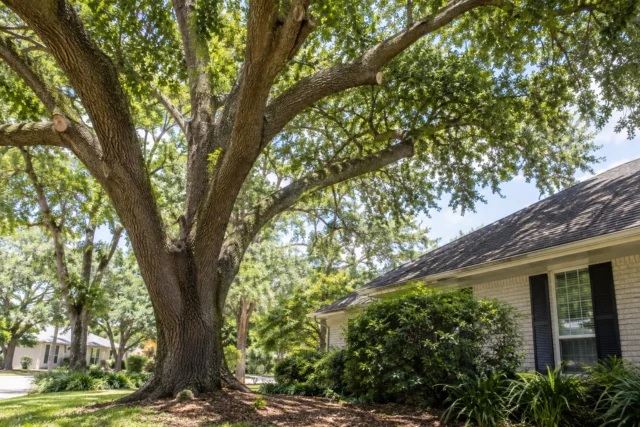
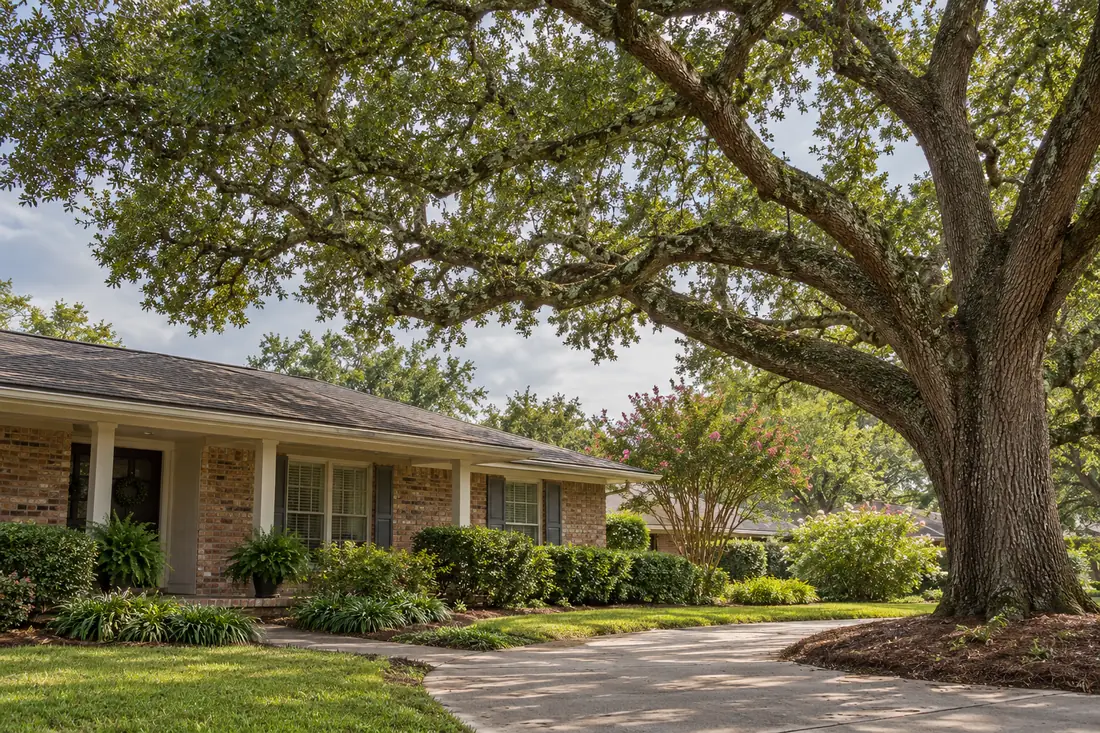
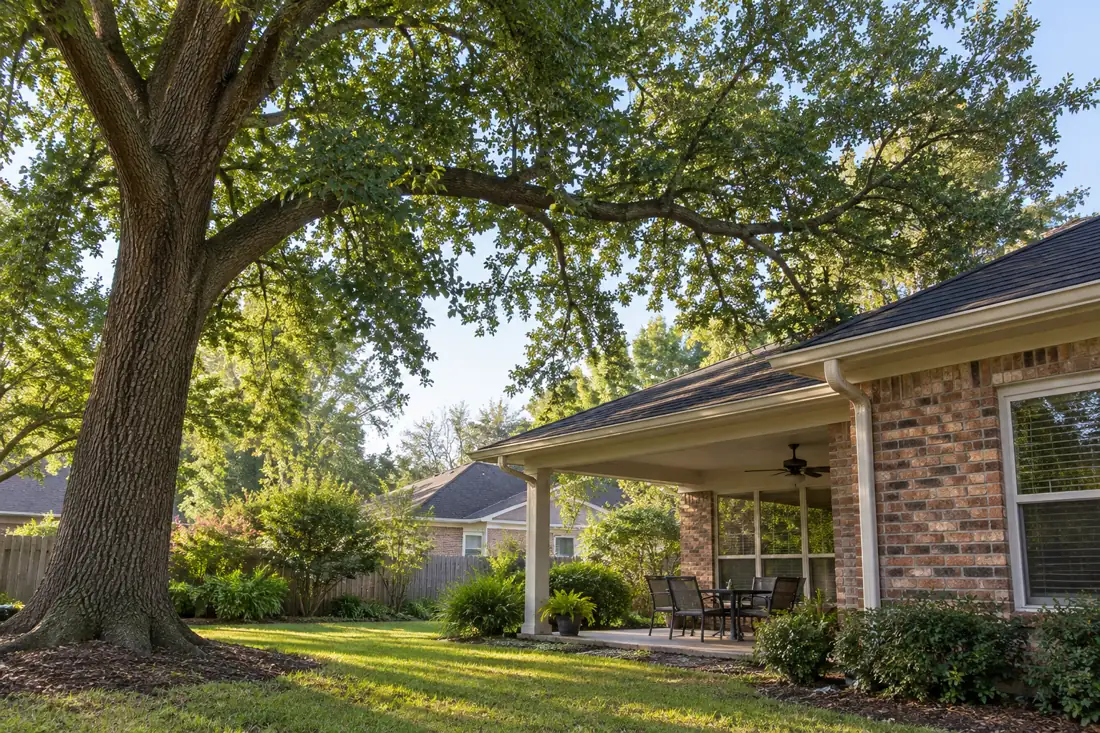
A canopy concern may originate in the trunk, roots or a major structural connection. Removing a few branches does not automatically resolve that condition. Explain the symptoms and ask for an assessment of the whole tree and nearby targets. The recommendation may involve pruning, monitoring, support, further evaluation or removal.
Separate a visible branch problem from a tree-wide defect
Ask which observable condition triggered the request: a hanging limb, cracked union, root-zone movement, progressive crown decline or repeated contact with a structure. Pruning can remove selected branches, but it cannot repair decayed roots or make a severely compromised trunk sound. Do not let a quote for trimming substitute for an assessment of a suspected structural defect.
If the concern appeared after a storm, compare dated photographs and avoid standing beneath newly hanging limbs to inspect them. Sudden soil heave, a new lean or an open trunk crack calls for a different urgency discussion than routine clearance. Establish what area should be kept clear pending evaluation rather than asking the owner to test a limb’s strength.
The decision record should separate the outcome sought—clearance, deadwood removal, preservation work or removal—from the evidence supporting it. Where inspection remains inconclusive, the estimate can acknowledge that uncertainty and identify a further assessment. A long list of pruning cuts is not itself proof that the underlying hazard was addressed.
Describe the observed change before requesting a cut: a new lean, heaving soil, a long crack, fungal growth near the base, widespread dieback or repeated branch failure. Photographs help document symptoms, but a tree with unstable roots or a compromised trunk may not be made safe by removing a few branches.
Stay out of the potential fall area if conditions are changing. Ask for a condition assessment that addresses the entire tree and its surroundings rather than a quote based solely on the amount of wood to cut.
Request a clear explanation of the options: monitoring, soil or site corrections, targeted pruning, structural support where appropriate, additional inspection or removal when warranted. Ask what uncertainty remains and whether further evaluation by an appropriately qualified professional is needed. A good estimate should connect every proposed cut to a stated reason and explain why pruning alone would or would not address the concern. Do not accept a guarantee of safety based only on a shorter canopy.
Define the problem before deciding how much to prune
Pruning can remove selected branches or alter a crown's load, but it cannot automatically correct every structural, root or soil problem. Start by describing the change that prompted the call: a fresh crack, repeated limb loss, thinning leaves, visible decay, building contact or a decline that followed construction. Record which tree is affected and when the change became noticeable. This makes it less likely that an appealing-looking trim will be mistaken for a response to an unexamined defect.
Different problems require different expertise. A pruning contractor can assess branch clearance and structural work, while a plant-health diagnosis, underground utility problem or foundation issue may call for additional evaluation. Ask what evidence would justify each proposed treatment and what conditions the pruning cannot resolve. A tree can appear more balanced after cutting while the original root or trunk concern persists. The estimate should identify both the expected benefit and the important unanswered questions.

Recognize defects that extend beyond individual branches
A split main stem, severe cavity, moving root plate or damaged attachment may change the whole-tree question. Removing a few peripheral limbs might reduce some load but does not rebuild lost wood or make a failing connection sound. Look from a safe distance for new openings, freshly lifted soil or detached limbs. If sudden failure seems possible, keep people away from the potential fall area while a qualified professional determines what action is appropriate.
A tree with a structural concern still deserves an actual assessment rather than an automatic removal based on one photograph. The location of sound wood, existing support, species, adjacent targets and feasible interventions all matter. Ask the professional to distinguish observation from inference and to say whether additional examination would affect the decision. If pruning is recommended as part of risk reduction, the written plan should explain its role and acknowledge remaining uncertainties.
Identify the condition pruning cannot fix
Selective pruning can reduce some crown weight or remove dead limbs, but it cannot restore a severely compromised root system, reverse trunk decay or resolve every unstable union. Before approving repeated pruning, document the defect and whether it affects the tree's ability to remain standing.
Ask what evidence supports the proposed method, what risk remains afterwards and whether support systems, access changes or removal should be considered instead. If a tree poses an immediate safety concern, restrict access to the area and obtain qualified local assessment. A proposal should distinguish short-term hazard reduction from an expectation of long-term health recovery.
When an isolated pruning request needs a wider assessment
If the concern includes fresh soil heaving, a newly developed lean, a widening trunk crack or repeated major-limb failure, describe those observations rather than requesting an automatic trim. Identify nearby people, buildings and access routes, and keep clear of a potentially unstable tree while qualified help evaluates it. Ask the assessor to distinguish branch work from root, trunk, soil or site problems and to explain what uncertainty remains. Any removal or support recommendation should follow the condition assessment, not be presumed from a single photograph.
Recognize when crown pruning cannot resolve the actual problem
Dead tips, scattered leaf loss, a visible cavity, and a leaning trunk are different observations; none alone supplies a treatment prescription. A tree may be responding to drought, flooding, construction disturbance, disease, or mechanical failure. Map where symptoms occur, when they first appeared, and whether the pattern is progressing. Cutting branches without identifying the cause can remove functioning foliage while leaving compromised roots or wood unexamined.
Ask what the proposed pruning would improve and what it cannot change. Removing an obviously detached limb can address a localized overhead hazard, but it will not repair a failing root plate or restore decayed structural wood. Crown reduction may sometimes alter loading, yet its suitability depends on tree architecture and professional judgment. Avoid contractors who equate every canopy problem with a standard percentage reduction regardless of the tree.

Decide whether cutting a branch changes the underlying risk
Pruning can remove selected dead or damaged limbs, but it does not restore failed roots, correct a major trunk split or prove that internal decay is harmless. If a problem involves sudden lean, lifted soil or movement at a major union, communicate that observation before discussing which branches to cut.
Request a documented assessment of the defect and the targets below it, followed by a comparison of reasonable options. Those may include monitoring, selective pruning, support where appropriate or removal, depending on actual conditions. Reject a generic percentage-reduction recommendation when the stated hazard has not been evaluated; the desired outcome should be safer, understandable work, not simply fewer leaves.
Include roots, soil and drainage in the diagnosis
Compacted soil, root cutting, prolonged saturation and burial of the root flare can affect tree vigor or stability in ways crown trimming does not repair. A thin canopy may be a response to root stress rather than evidence that the upper branches need heavy reduction. Document recent grading, utility excavation, changed irrigation and standing water. Avoid digging into the root system or removing large roots to test a theory without professional coordination.
Root conditions often require site management, careful assessment or changes in how the surrounding ground is used. A company may propose preventing further equipment traffic, correcting poor drainage or monitoring the tree instead of drastic pruning. If the tree is close to a home or public route, evaluation should also address consequences if stability is reduced. Do not assume that fertilizer, mulch or a shorter crown can substitute for a diagnosis of the actual underground concern.
Identify the decision that pruning cannot solve
Not every tree problem is an overgrowth problem. A split branch union, extensive cavity, roots displaced by excavation, sudden crown decline or major trunk damage may require diagnosis before any cuts are considered. Ask what outcome the owner actually wants: restoring access, addressing a hazardous defect, preserving shade, or understanding whether the tree can be retained.
Photograph the whole tree and the visible concern from safe ground positions without standing beneath broken limbs. Do not assume a single photograph can establish internal wood strength or the condition of roots below pavement.
A qualified assessment can distinguish targeted pruning from structural support evaluation, root-zone care, monitoring, or a removal decision. Removing foliage from a declining tree does not necessarily address its underlying problem and may reduce available photosynthetic capacity. Equally, a structurally questionable branch may need an access restriction while assessment is arranged, rather than a casual trim requested through a routine quote form.
Explain whether the concern changed after a storm, excavation, prolonged saturation or another event, but do not turn that history into an unverified diagnosis.
For a useful estimate, separate the known facts from the decisions awaiting inspection. State the tree location, approximate access route, nearby structures, visible defects and whether the space below is occupied. Ask for the reasoning behind proposed work, its limitations and whether further specialist evaluation is recommended.
Tree preservation and removal are different services with different risk, equipment and cleanup implications; quotes should not be compared solely by price where they propose fundamentally different outcomes. Never promise that pruning will make every tree 'safe' or permanently eliminate failure risk.
Record the resulting recommendation and communicate it to those who control use of the space, such as residents, tenants or facility staff. If access must remain restricted, make the restriction clear and have an authorized person decide when it can end. Maintain a photo and observation timeline, but avoid replacing professional assessment with a simple annual checklist. An appropriate result can be a decision not to prune at all, supported by a documented reason and a better-directed next step.

Recognize when a trim cannot resolve the underlying problem
Pruning can remove selected deadwood, improve clearance, or address particular branch attachments, but it does not repair an unstable root plate, restore decayed supporting wood, or guarantee that a compromised trunk will remain standing. Start by identifying the actual complaint. Is the concern a low limb touching a roof, a broken branch with visible wood still attached, persistent canopy dieback, a crack through a major union, or movement at the soil line?
These observations lead to different next steps. A photograph of a leaf canopy alone cannot rule out concealed defects below, and trimming out symptom branches may obscure the evidence needed for an informed decision.
Ask for an assessment by a qualified arboricultural professional when the consequences of failure are significant or the observed defect is complex. Document what is visible, what cannot be established without closer investigation, and what the owner is trying to protect. A targeted pruning scope can be reasonable after that assessment, but some conditions instead call for cabling, exclusion from an area, monitoring, or removal after a site-specific decision.
Avoid buying an open-ended promise to 'make the tree safe.' Request the proposed method, expected limitations, cleanup, equipment access, and what would trigger a pause if crews uncover worse conditions. No contractor can promise zero residual tree risk.

Do not treat disease and insect symptoms with cosmetic cutting alone
Scattered dead twigs or discolored leaves can have several causes, including seasonal stress, pests, disease, soil issues or previous injury. Removing symptomatic foliage may make a tree look tidier while leaving the cause unchanged. A qualified diagnosis should identify what tissue is affected and whether pruning has a specific sanitation or structural purpose. Ask about the limitations of any sampling, treatment or monitoring recommendation before paying for repeated indiscriminate trimming.
Some problems may justify removing particular infected or dead branches, while others call for watering adjustments, protection from further injury or advice from a plant-health professional. Broad chemicals and aggressive crown cutting are not universal cures. A tree may also recover from a temporary stress without unnecessary intervention. Separate the objective of improving appearance from the objective of preserving health, and track how the proposed action will be evaluated over time.
Compare treatment, monitoring, and removal using observed conditions
Document the condition of the root flare, trunk, large branch unions, and surrounding soil without climbing, striking, or probing damaged wood. A risk discussion should describe potential targets, evidence of defects, and the limitations of a ground-level inspection. When the tree shades an occupied home or public walkway, the consequence of failure can affect the recommended next step. A recommendation should make that relationship understandable instead of using a generic danger label.
If a treatment is proposed, request a clear goal, what response would count as improvement, what cannot be guaranteed, and when another inspection is needed. Where structural damage makes retention impractical, a removal plan should still cover access, protection of adjacent property and site restoration. Keep dated photos and written conclusions to compare conditions after another storm or growing season. Those records are useful whether the outcome is preservation or removal.
Review pruning options and request an appropriate tree assessment
Consider what can be protected beneath the tree
Risk depends not only on a defect but also on the people and property exposed. A branch above an infrequently used strip of lawn presents a different management question from the same condition above a school entrance, bedroom or heavily traveled path. Sometimes changing parking patterns, fencing off an area or moving outdoor furniture reduces exposure while the tree is assessed. These measures require the property controller's agreement and should never be described as permanent proof of safety.
A thorough scope identifies the exact targets and site restrictions that affect any pruning or removal. If a limb overhangs a neighbor's property, coordinate access and permissions before work. If the tree borders a road or electric line, jurisdiction and utility procedures may govern the method. Aesthetic goals should not override a credible hazard, yet a sound tree should not be removed solely because it produces normal leaf drop or shade.

Compare professional support and preservation options
Where the structure and condition warrant it, a qualified arborist may discuss support systems, selective load reduction, protection of roots or monitoring. Cabling or bracing is not a replacement for healthy structure and should not be presented as a permanent guarantee. Any support proposal should explain the defect being managed, the specifications, future inspection responsibility and why that approach is suitable to the particular tree.
Preservation also has costs and limitations. A large mature tree may need recurring professional evaluation, restricted access during certain conditions or ongoing landscape adjustments. Ask which risks would remain after installation and which changes would trigger reconsideration. If the crown is severely compromised, adding hardware may not be sensible. The owner needs a transparent comparison, not a sales pitch that every tree can be saved or that cutting it down is always the safer option.
Know when removal should enter the discussion
Removal can become reasonable when defects are extensive, repeated damage has changed the tree's condition, the target exposure is high or feasible interventions would not adequately address the concern. The conclusion should be grounded in the tree and site rather than in a rule that all leaning or hollow trees must go. Ask for the observations supporting removal and whether a more detailed assessment could alter the choice.
An estimate should distinguish taking down the tree from stump grinding, hauling, surface repair and protection of adjacent structures. Access over a roof or into a narrow yard changes the work plan. If retention is preferred, ask what alternative measures would actually be required and what their limitations are. For a disputed or high-value decision, a documented second professional opinion can help the owner weigh the options without misrepresenting a guarantee of success.

Preserve environmental value without overlooking safety
Trees contribute shade, habitat, soil protection and neighborhood character, and those benefits deserve attention when decisions are close. A mature canopy can be difficult to replace quickly. Nevertheless, sentimental or ecological value alone does not remove the consequences of a severe structural defect above occupied space. The right discussion compares the condition, available management options, retained benefits and exposure without treating one factor as an absolute answer.
Where removal is necessary, consider how the landscape might recover: choosing an appropriate future planting location, protecting remaining trees and keeping adequate clearances from structures and utilities. Replacement planting should fit the actual mature size and site conditions. Where retention is feasible, adjust lawn and maintenance practices to avoid repeated root injury. A decision is more defensible when it accounts for both immediate protection and long-term landscape stewardship.
Request an estimate that distinguishes diagnosis from work
A useful proposal identifies the subject tree, the observed concern, the exact branches or operations included and the areas to protect. It should describe whether the recommendation is based on a visual assessment or whether another professional evaluation is needed. Inquire about debris handling, property access, equipment setup, neighbor permissions and restoration of disturbed areas. Avoid accepting a vague line such as 'make tree safe,' which does not describe a measurable scope.
Ask the contractor to note conditions that could change the plan once work starts, particularly concealed decay, unexpected utilities or restricted access. If several options are offered, compare them using the same assumptions about cleanup and site protection. A written plan can explain why one branch is being reduced while another remains. Keep the original photographs and decision notes with the estimate so the owner can understand what changed if further work becomes necessary.

Set a monitoring plan and clear triggers for reassessment
If pruning is selected, agree on what it accomplishes today and what symptoms require another look. Fresh cracks, root-plate movement, sudden crown loss, broken support hardware or a storm-related change may justify prompt professional reassessment. Routine leaf shedding or a single small dead twig may be ordinary for the species, but unusual changes should still be recorded with context. Do not rely on a fixed calendar or an optimistic invoice description as a safety warranty.
Take repeat photographs from consistent safe viewpoints and identify the date and tree location. Keep previous inspection and pruning records available for the next professional, including work performed by other providers. If a dangerous condition is suspected, restrict the affected area rather than trying to investigate by climbing, cutting or pulling damaged material. The Tree Huggers inquiry should explain the original problem and desired outcome so the team can discuss an appropriate evaluation or scope.
Questions about this project
Is a free work estimate the same as a written risk assessment?
Not necessarily. Explain whether you need pricing, condition advice, a documented assessment or a combination. Ask what the visit includes, who provides it and what limitations apply to any findings or recommendations.
What history should I share?
Share known storm damage, prior failures, construction, root disturbance, flooding, pruning and recent changes. Include the timing and nearby property use. Useful history supports the evaluation without replacing inspection of the current tree and site.
Does healthy-looking foliage mean a tree is structurally safe?
No. Leaves do not establish the condition of roots, trunk or branch connections. Explain visible defects and recent changes, and ask for an assessment appropriate to the tree and nearby targets.
Should I test a cracked branch or trunk?
Do not pull, shake, climb or cut damaged material to test it. Keep clear of the affected area and describe the condition from a safe location. Qualified assessment and an appropriate work plan are needed.
How should I describe the pruning I want?
Explain the objective: clearance for a route or building, deadwood, a damaged branch or structural development. Ask for suitable tree-specific work rather than requiring an arbitrary shape or amount of canopy to be removed.
Will pruning resolve every tree concern?
No. Root, trunk and major structural problems may need a different assessment or response. State the full concern so pruning is not used as a substitute for evaluating the condition that prompted the call.
Is leaving the trunk untouched enough to protect a tree?
No. Roots, soil conditions and nearby work can matter even when the trunk is not cut. Identify retained trees before planning access, excavation and storage, and ask what site-specific protection is appropriate.
Can pruning undo construction-related root damage?
Do not assume it can. Share the work history and ask for an assessment of the current tree and site. Pruning, monitoring or other recommendations should address an identified need rather than substitute for protection planning.
What should I compare besides the price?
Compare tree identification, work objectives, access assumptions, hauling, stump treatment, site finish and exclusions. Ask whether permits or other coordination are part of the scope and who can approve changes if conditions differ.
Does an online request book the crew?
No. A request starts the estimate conversation. The company still needs to discuss scope, availability and any site assessment. For a dangerous or urgent condition, call 504-458-8336 rather than relying on a form response.
What should I tell Tree Huggers about when pruning is not enough for a tree problem?
Explain the property address, the work you want and the specific concerns: whole-tree condition, limits of pruning, next-step assessment. Send safe photos of the tree, surroundings and access route. The contractor can then discuss the assessment and scope needed for this situation.
How do I request an estimate for this work?
Call 504-458-8336, text photos or use the estimate form on this page. Include the address, desired outcome and any timing constraints. The company will need to review scope and availability; an online request does not confirm a price, appointment or emergency dispatch.
Get a scope for your property
When repeated pruning requests fail to solve a problem, describe what happens between visits rather than asking for more cuts. Is the concern ongoing branch dieback, cracking in a major union, canopy thinning, root disturbance, a newly leaning trunk or damage after heavy rain? A sequence of dated ground-level photos and a short history of previous work can help a qualified reviewer focus on the right part of the tree.
Avoid climbing, probing a cavity or digging around roots for evidence, especially where there is a visible change in stability.
A useful estimate or assessment request should separate the symptoms from the treatment you think might be necessary. Ask what can be established during a visual visit, whether additional diagnostics are appropriate, and what options exist if selective pruning does not address the underlying risk. Record nearby buildings, parking, walks or frequently occupied spaces because target exposure affects the decision. The goal is not to sell another round of cutting; it is to define the problem, document uncertainty and establish a defensible next step.