A property owner may want another opinion when the stakes are high, the diagnosis is uncertain or recommendations differ. Explain the question you need answered and share previous reports. Ask about the assessor’s qualifications, scope and limitations. An independent review can help separate condition findings from the price of a particular work proposal.
Site planning detail: A second opinion is most useful when the questions are written down in advance. Give the independent assessor existing photographs, previous recommendations, observed changes, site plans, and a list of structures or public areas exposed if the tree fails. Ask for a written distinction between confirmed observations, reasonable assumptions, testing limitations, and proposed follow-up. If two professionals disagree, compare the scope of their inspections before treating the disagreement as proof that either is wrong.
A visual-only review may answer a different question from a climbing inspection or instrument-assisted evaluation. Clarify whether the work is a risk assessment, health diagnosis, tree-preservation plan, or litigation-oriented report; their methods and deliverables are not interchangeable. Retain dated documentation without publishing private property or customer details.
Independent tree review is most useful when it answers a defined decision. Explain whether you need an opinion on defect severity, preservation options, contractor scope, disputed responsibility or conditions after nearby construction. Provide previous reports, dated photos, access restrictions and a history of recent changes.
Ask the evaluator to identify relevant qualifications and any limitations caused by inaccessible areas or insufficient records. An independent review should not merely restate a conclusion that one party already wants. Nor should it claim certainty based only on an image or a tree's species.
Before scheduling, agree on the deliverable: an on-site verbal evaluation, written findings, risk observations, recommended additional testing or a comparison of proposed work. Clarify whether the assessor will be separate from a contractor bidding on the job. If urgent movement or a hanging branch is reported, restrict access while arranging prompt assessment rather than waiting for routine paperwork. Preserve the written scope, photographs and dates so later contractors can distinguish actual conditions from assumptions and avoid duplicative or contradictory operations.
Define the decision that an independent opinion must answer
An independent assessment is most useful when the question is specific: whether a significant defect is present, what options exist for a valued tree, or whether a proposed removal is supported by observable conditions. Write that question before approaching a second professional. A general request to look at everything can produce another broad recommendation without resolving the disagreement that led you to seek help.
Separate a tree condition question from the price of performing work. One provider may assess risk or health while another submits a pruning or removal proposal. Neither role automatically disqualifies expertise, but understanding it helps the owner interpret recommendations. Ask whether the assessor will give a written explanation of findings, limitations and possible next steps. The goal is informed decision-making, not shopping for whichever opinion supports a preferred outcome.

Identify situations where another viewpoint adds value
A second opinion can matter when a mature specimen is important to the property, a recommendation involves major irreversible work, or two professionals give materially different explanations for the same defect. It is also valuable when the potential consequences of failure are high, such as a heavily used walkway or occupied building. A change in lean, crown health or root area can create uncertainty that warrants focused review.
However, a new opinion should not become a reason to delay immediate isolation of a visibly hazardous area. Keep people out of an appropriate exclusion zone while arranging qualified evaluation. Where a power line or roadway is involved, coordinate with the controlling authority. The owner can seek independent analysis while taking practical temporary precautions; those are complementary decisions, not alternatives.
Match qualifications to the actual problem
Ask about the person's tree-assessment experience, relevant training, professional credentials and familiarity with the issue at hand. A professional examining decay and structure may need different tools from one evaluating soil, pests or construction-related root impacts. Confirm whether the proposed engagement is a visual inspection, a more detailed investigation or a written risk assessment with a defined method.
A qualification or certification does not make findings infallible, and the absence of a particular test does not automatically invalidate a visual assessment. Ask why the chosen method fits the question, what conditions limit access and what evidence would justify additional testing. For an insurance, legal or development dispute, clarify whether the report format meets the requesting party's needs. Do not assume an ordinary tree-service estimate is a substitute for expert testimony.
Set an independent assessment question that can be answered
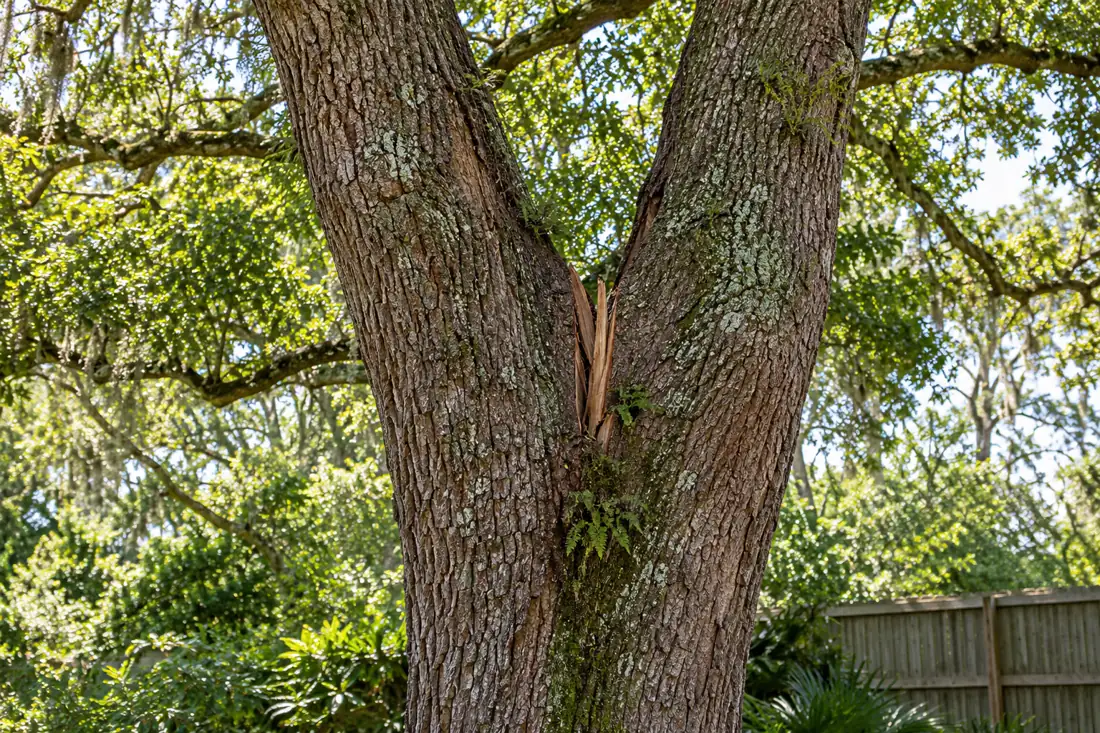
Write the question before choosing the evaluator. 'Is the tree dying?' may be too broad if the immediate decision is whether a cracked union over a driveway needs access restrictions or removal. Define the property use, the structure or route at risk, the change you observed and the decision deadline if there is one. An independent assessor should know whether you need a risk-focused evaluation, a health diagnosis, construction-impact review or a critique of conflicting recommendations. These scopes are not interchangeable.

Ask an independent assessor a question that can be answered
An independent opinion is most useful when the owner supplies a specific decision: whether a cracked union warrants further assessment, whether an apparently declining tree can be retained or which conditions should be addressed before construction. Share existing observations and competing recommendations without instructing the assessor to deliver a preferred conclusion.
Confirm the assessor's relevant qualifications and whether the assignment includes only a ground-based visual inspection or additional testing, photographs, measurements or a written report. Different scopes can produce different levels of certainty. An inspection should explain observed limitations, not imply that inaccessible roots or internal wood were directly examined when they were not.
If professionals disagree, compare the actual site assumptions, assessed targets, time horizon and evidence instead of treating one recommendation as a vote. Keep the written reasoning with any later work authorization and photograph changes from repeatable safe locations. A new storm injury, excavation or sudden structural change can justify a fresh evaluation regardless of the age of the prior report.
Ask about qualifications and independence in plain terms. Relevant arboriculture credentials, experience with the species and condition, and the ability to explain assessment limitations are more informative than a generic promise of a 'certified opinion.' Determine whether the person also bids on the recommended work, and disclose that relationship in the project record rather than automatically assuming bias. Share existing contractor reports, photos and site history so the second assessment addresses the same facts rather than a different tree or a different time.
Plan how the site can be examined without damage. An evaluator may need views of the whole crown, trunk connections, root flare and nearby targets; private gates, parked vehicles, thick mulch or stored materials can obstruct that evidence. Do not excavate roots or open cavities in advance to make the problem more visible. Ask which findings are based on ground-level observation and whether a more intrusive diagnostic method would actually change the decision. A report should distinguish observations, interpretations, uncertainties and recommended next actions.
When opinions disagree, compare their assumptions before deciding that one expert must be wrong. They may have inspected at different dates, included different occupancy scenarios or assigned different importance to a defect. Ask whether each opinion addresses the same target, inspection scope and risk tolerance. Retain both reports and any follow-up photographs; the owner can then request a reconciled written recommendation or additional assessment where warranted. The goal is a defensible property decision, not a preselected conclusion favoring treatment or removal.
[/fusion_text][/fusion_builder_column_inner]

Share prior findings without coaching the conclusion
Give the independent assessor existing photographs, inspection dates, previous recommendations and relevant site plans. Include actual changes such as pruning, excavation, storms or utility work between inspections. State the disagreement plainly and ask which observations could explain it. Suppressing an earlier report may lead the new assessor to overlook useful history or repeat a limited examination that has already been done.
At the same time, distinguish observations from interpretations. A statement that a contractor saw a cavity is different from a claim that the tree will definitely fail. Ask the new assessor to identify which details are independently verified and which remain assumptions. A useful report should make that boundary visible. The purpose is to build a better record of the tree and site, not to turn prior opinions into conclusions by repetition.

Clarify the independent assessment question
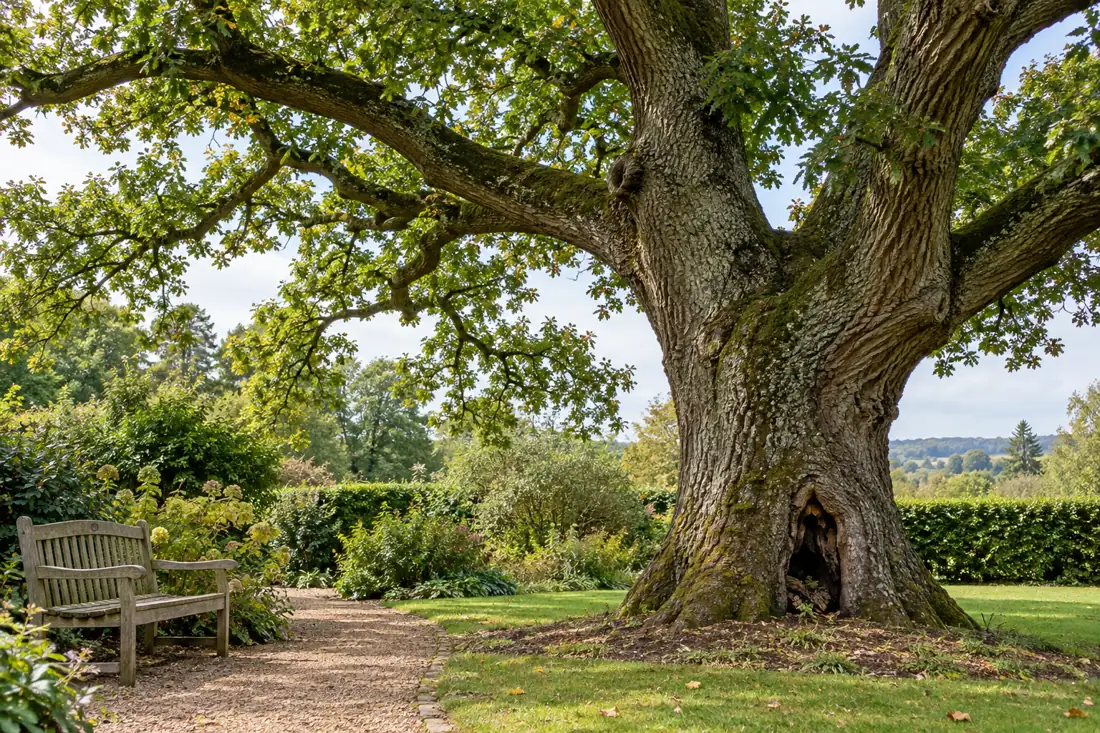
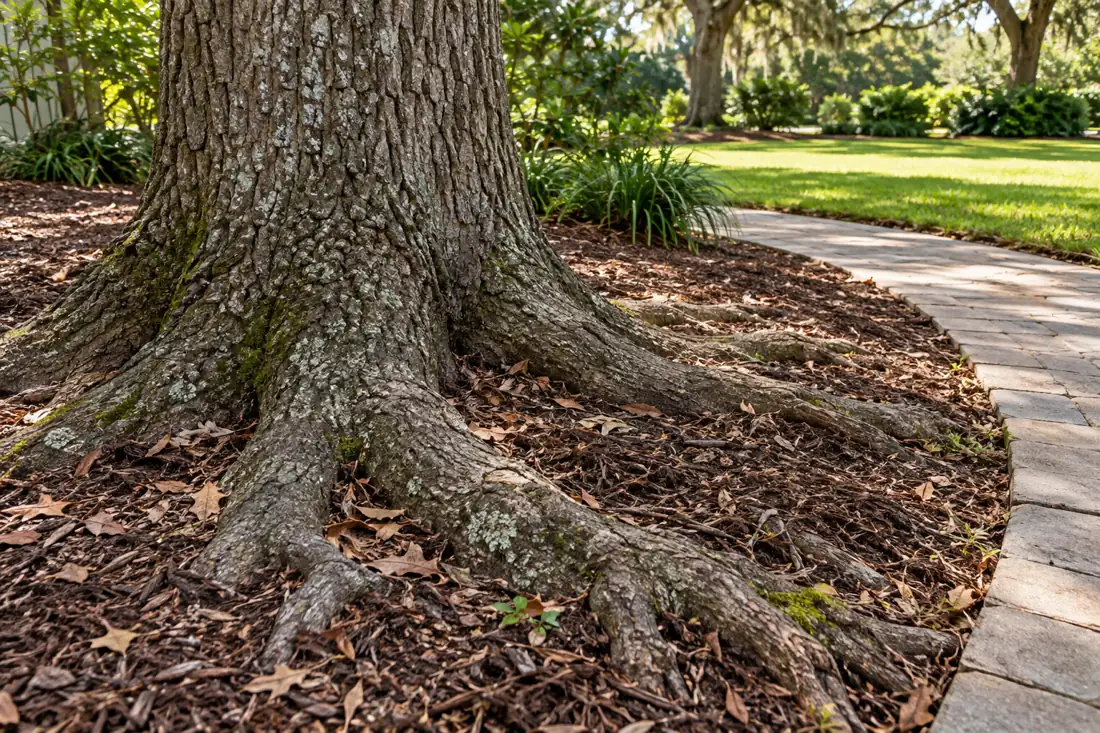
A tree with prominent surface roots beside a walkway can lead to different recommendations depending on the questions being asked. Specify whether the decision concerns tree condition, pedestrian clearance, planned construction, documented damage or the adequacy of a previous inspection. Supply the same relevant site facts and prior reports to each assessor without directing the conclusion.
The educational scene cannot establish a defect or diagnose root stability. Compare written methods, relevant qualifications, stated limitations and follow-up actions, rather than treating two different scopes as automatically conflicting opinions.
Understand what a ground-based visit can and cannot show
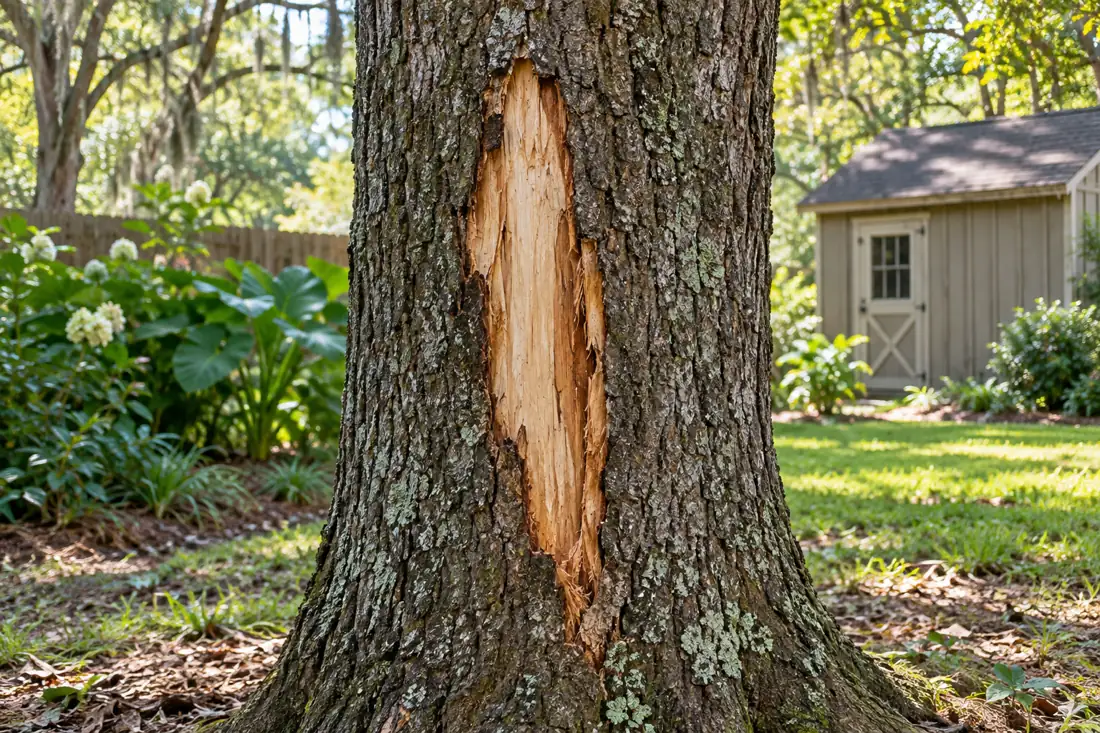
A visual review can reveal canopy dieback, wounds, fungal structures, root-plate changes and obvious cracks, but concealed decay or inaccessible branches may require more investigation. Ask whether sight lines were blocked, whether a neighboring property limited access and whether the assessment occurred during a season when symptoms are difficult to judge. Those limitations should be recorded rather than hidden behind confident language.
Specialized testing is not automatically required for every tree. A qualified professional can explain why additional measurements, aerial review or diagnostic tools might change the decision. Consider the potential benefit, cost and disturbance of testing without assuming that a single instrument reading supplies a complete answer. Context matters: species, targets, soil, prior disturbance and tree architecture all influence the interpretation of isolated observations.

Compare risk recommendations using the same site assumptions
Two assessments may differ because the amount of exposure differs, not solely because the professionals disagree about the tree. A branch above a rarely used corner of a large property may present a different management decision from one above a playground entrance. Share accurate information about how the area is used, what can reasonably be restricted and whether property functions are expected to change.
When reviewing alternatives, ask each professional to distinguish risk reduction from tree preservation. Options might include pruning, changing target use, monitoring, additional testing or removal, depending on the particular findings. Ask what each option is expected to accomplish and what uncertainty remains. Avoid treating a numerical label, if provided, as a universal guarantee of outcome. The owner still makes choices within site, budget and authorization constraints.
Review root and construction history alongside the canopy
Visible canopy symptoms may follow changes below ground. Tell the assessor about trenching, soil fill, excavation, driveway work, drainage changes or heavy machinery within the root area. Historical photographs can help establish whether a grade or paved surface changed. Do not excavate beside roots to obtain evidence without professional guidance; creating new damage could compromise both the tree and the investigation.
Where construction continues, ask which protections or coordination measures are feasible now. The evaluation might need to consider retained trees on adjoining property as well as the specimen closest to the work. A root injury and a crown defect can coexist, but neither should be assumed to cause the other without supporting observations. The report should make the chain of reasoning explicit and note significant unknowns.

Ask for a report that someone else can use
A useful written assessment identifies the tree or group of trees, date, location description, purpose, inspection method, findings, relevant site targets and recommended next actions. Photographs should clearly connect observations to the correct tree. If species or measurements are approximate, label them accordingly. A summary without identifiable specimens makes later maintenance and comparison difficult, especially on properties with several similar-looking trees.
Ask the assessor to distinguish urgent items from elective improvements and specify when or under what changed conditions a reinspection would be appropriate. Confirm whether implementation of recommended work is part of the engagement or requires a separate contractor. If the owner shares the report with an insurer, manager or neighbor, avoid presenting it as a broader warranty than it was intended to be. Retain the original rather than only a brief message paraphrasing its result.
Plan the next step when experts disagree
If reports conflict, identify the precise point of divergence. They may agree that a cavity exists but differ on its significance, or disagree because one observed a recent crack and the other visited earlier. Ask each professional what additional evidence would be useful and whether their recommendations depend on different assumptions. A focused follow-up can be more productive than commissioning a third generic inspection.
The owner should also consider timing. A significant visible defect over a frequently occupied area calls for practical precautions while differences are resolved. In lower-exposure settings, a documented monitoring plan may be reasonable if supported by qualified review. Do not pressure any assessor to guarantee that a tree cannot fail. A good decision records what was known, what options were considered and why the chosen path fit the property.

Use the independent review to improve ongoing records
Once a decision is made, keep photographs, inspection notes, work scopes and completion records together. Revisit the assessment if the tree experiences a new storm injury, major soil disturbance, unusual dieback or significant change in lean. If monitoring is selected, arrange photographs from consistent viewpoints and assign someone to observe agreed indicators rather than relying on vague memory of past condition.
Tree Huggers can discuss the practical service scope arising from a professional evaluation, including access, pruning, removal or debris handling where appropriate. A service estimate and an independent diagnostic report are different deliverables, and requesting one does not automatically supply the other. Ask about availability and whether a site visit is needed before any commitment. Avoid using an online request as evidence that an inspection, appointment or emergency response is already confirmed.
Questions about this project
Is a free work estimate the same as a written risk assessment?
Not necessarily. Explain whether you need pricing, condition advice, a documented assessment or a combination. Ask what the visit includes, who provides it and what limitations apply to any findings or recommendations.
What history should I share?
Share known storm damage, prior failures, construction, root disturbance, flooding, pruning and recent changes. Include the timing and nearby property use. Useful history supports the evaluation without replacing inspection of the current tree and site.
How should extra work be approved?
Use the agreed approval process and identify the change, reason, scope, price or schedule effect as applicable. Confirm who has authority before treating an additional tree or task as part of the original job.
What completion records are useful?
Keep the agreed scope, tree or area identification, authorized changes, invoice and labeled photos where appropriate. Include unresolved items and a contact. Contract-specific records should follow the buyer's stated requirements.
Is leaving the trunk untouched enough to protect a tree?
No. Roots, soil conditions and nearby work can matter even when the trunk is not cut. Identify retained trees before planning access, excavation and storage, and ask what site-specific protection is appropriate.
Can pruning undo construction-related root damage?
Do not assume it can. Share the work history and ask for an assessment of the current tree and site. Pruning, monitoring or other recommendations should address an identified need rather than substitute for protection planning.
What should I compare besides the price?
Compare tree identification, work objectives, access assumptions, hauling, stump treatment, site finish and exclusions. Ask whether permits or other coordination are part of the scope and who can approve changes if conditions differ.
Does an online request book the crew?
No. A request starts the estimate conversation. The company still needs to discuss scope, availability and any site assessment. For a dangerous or urgent condition, call 504-458-8336 rather than relying on a form response.
Does healthy-looking foliage mean a tree is structurally safe?
No. Leaves do not establish the condition of roots, trunk or branch connections. Explain visible defects and recent changes, and ask for an assessment appropriate to the tree and nearby targets.
Should I test a cracked branch or trunk?
Do not pull, shake, climb or cut damaged material to test it. Keep clear of the affected area and describe the condition from a safe location. Qualified assessment and an appropriate work plan are needed.
What should I tell Tree Huggers about when to ask for an independent tree assessment?
Explain the property address, the work you want and the specific concerns: assessment purpose, qualifications, recommendation differences. Send safe photos of the tree, surroundings and access route. The contractor can then discuss the assessment and scope needed for this situation.
How do I request an estimate for this work?
Call 504-458-8336, text photos or use the estimate form on this page. Include the address, desired outcome and any timing constraints. The company will need to review scope and availability; an online request does not confirm a price, appointment or emergency dispatch.
Get a scope for your property
An independent tree assessment can be useful when a large tree affects several households, a costly removal has been proposed, or the diagnosis behind conflicting recommendations is unclear. In your inquiry, explain the decision you actually need to make: safety near a frequently used area, preservation options, construction impacts or a documented second opinion.
Share previous reports and photographs if you have permission to do so, but distinguish observations from assumptions. If possible, list the questions on which earlier opinions disagree and any deadlines connected with the property.
Ask what qualifications, inspection methods and written deliverables the independent evaluator would provide. Clarify whether the scope includes risk assessment, species and structural condition, limitations of visibility, further testing recommendations or a review of a proposed pruning/removal plan. The evaluating professional should make findings independently rather than promising an outcome. A photograph or a tree's age is not enough to justify certainty. When work is urgent, keep people clear of a suspected hazard while arranging the appropriate site evaluation.