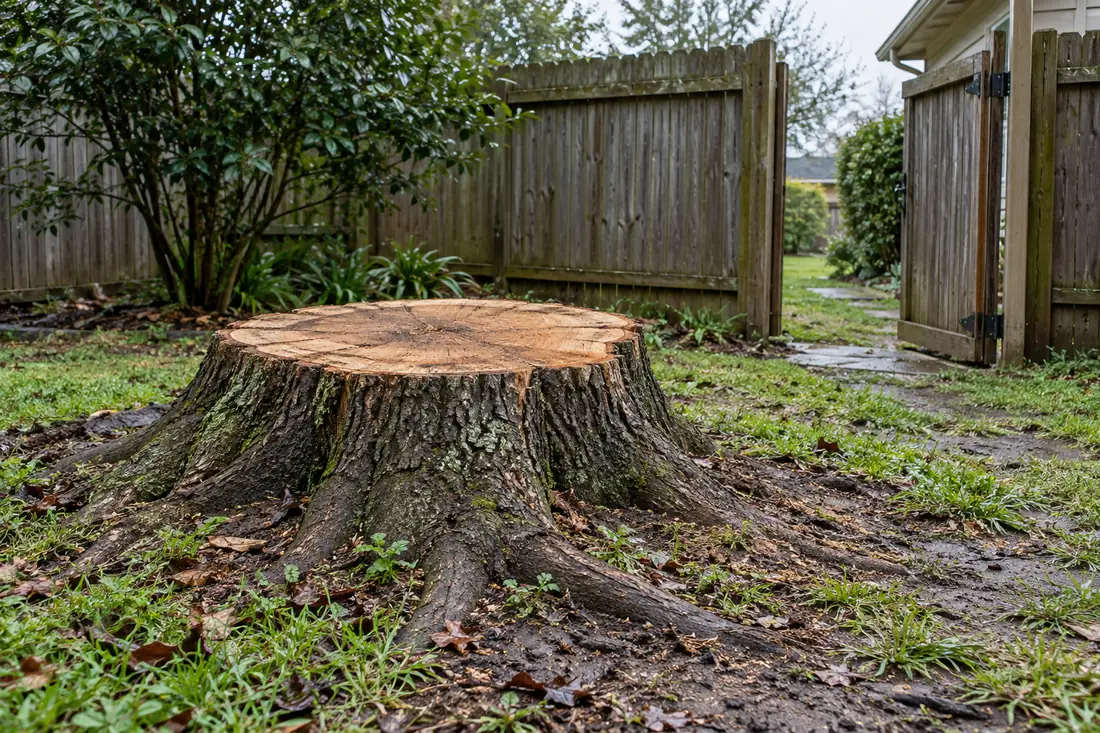
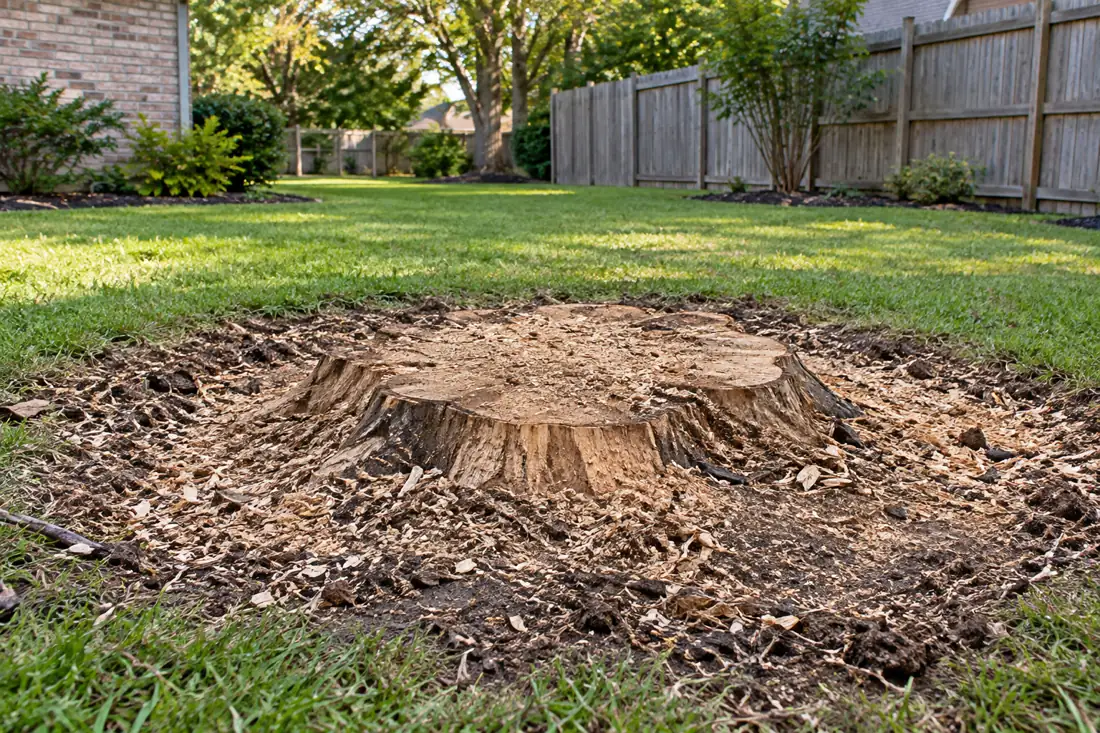
Irrigation lines and heads may cross the grinder’s work area or access route. Mark known components and tell the contractor where information is uncertain. Utility locating and irrigation protection are not always the same service. Agree on who handles disconnection, repair or relocation before work begins.
Site planning detail: Irrigation planning should happen before a grinder rolls across the lawn. Ask the owner or irrigation contractor to map valve boxes, heads, shallow tubing, wiring and recent repairs, and identify zones that cross the work area. Visible heads are not a reliable map of everything underground. Photograph the stump and surrounding system features, mark confirmed routes where possible and explain which locations remain uncertain. Discuss how affected zones will be isolated during work and who will inspect or repair them afterward.
If a line is found unexpectedly, stop work at that point rather than guessing how deep it runs. Check the system after the site is clear, before final backfill conceals damage. Stump grinding and irrigation repair may require separate qualified trades, responsibilities and approvals.
Sprinkler pipes, low-voltage wires, valve boxes and drip lines can cross the ground occupied by a stump and grinder. Have the owner or irrigation contractor mark known routes and supply any available layout. Flags and drawings are useful starting points, not guarantees that every buried line was found.
Agree on whether zones should be shut off, whether a qualified irrigation technician must expose or move lines, and who can authorize repairs when an unknown component appears. Photograph heads, valves and wet spots before work. Treat restoration and post-work system checks separately from stump reduction; grinding near buried irrigation cannot be promised entirely risk-free.
Private irrigation needs its own verification
Public utility marks do not necessarily identify private irrigation laterals, low-voltage valve wiring, drip tubing or abandoned lines. Ask the property owner or irrigation specialist for available zone plans and identify visible heads, boxes and controllers. If a valve or pipe route is uncertain, stop short of instructing the grinding crew to assume a clear underground area. The equipment access track also deserves review because wheels or tracks can damage irrigation components outside the direct cut.
Record who will isolate the system before work, locate private lines when needed, repair any confirmed damage and test affected zones afterward. An irrigation shutdown or test is not evidence of what lies beneath a stump, and a functioning system before work should not be inferred from an old diagram. A house-side stump involves separate foundation and facade protection, so use the house guide when both constraints occur rather than treating irrigation locating as complete building protection. For the related but distinct decision, see Stump Grinding Near a House.
Create an irrigation handoff before machinery arrives
Run the irrigation system if it is safe and practical to do so, noting visible head locations and any known valve boxes. Photograph the stump and route along with sprinklers, drip emitters, backflow equipment and recent repair areas. Existing homeowner drawings can help but should not be treated as proof of exact buried line positions.

Do not rely only on public utility markings
A public utility-locate request is important where applicable, but it may not identify privately installed irrigation tubing or low-voltage control wire. Many systems have been modified over time without updated drawings. A pipe may cross the center of the old root zone even when spray heads are several feet away. Ask whether a separate irrigation technician or private locator should identify the relevant lines before grinding.
Do not infer a clear underground path from the direction the nearest sprinkler head points. Surface clues can help choose where to look, but they do not replace locating when a cutting wheel might approach an unknown line. A safe quote may exclude a portion of the stump until a pipe route is established. That is a useful condition to record instead of an inconvenience to hide behind a firm-sounding depth promise.
Locate irrigation components before choosing grinding depth. Irrigation pipes and control wiring may cross an old root zone rather than staying along a predictable property edge. Identify valve boxes, sprinkler heads and known line routes, then discuss a safe approach to confirming buried components before the grinder is operated. The requested depth must account for those constraints. Ask whether any line isolation, temporary shutdown, repair or system test is excluded from the tree-service scope instead of assuming it will happen automatically.
Ask which party will locate customer-owned irrigation, isolate sections if necessary, document existing leaks and handle repairs if a component is exposed. General utility-marking services may not locate private irrigation lines. The stump quote should distinguish tree work from troubleshooting or replacing the watering system, and the landscape contractor can confirm operation afterward.
Near a house, buried irrigation is only one of several services to coordinate.
Inventory the system before planning a cut
A yard sprinkler network can include supply pipes, small distribution lines, valve boxes, emitters, control wiring, backflow equipment and individual spray heads. The visible heads are only a fraction of that layout. Before asking for a stump quote, locate your irrigation controller and gather any installation sketch, repair history or photographs taken during previous landscape work. Mark known valves and heads without digging to discover pipes yourself.
Tell the tree-service team whether irrigation is currently operating and whether unexplained pressure loss or wet spots already exist. A pre-existing leak can change soil firmness and confuse the assessment after work. If the system is managed by a landscaper or property association, find out who can confirm its routing and authorize a temporary shutdown. This preparation makes the work-zone conversation concrete without claiming that every hidden line has been found.
Measure how the stump overlaps the pipe zone
The stump's visible top, ground-level diameter and root flare can occupy different footprints. Walk around it and note where spray heads, valve covers, tubing risers or drip lines emerge. A broad root flare may have grown around piping installed years after the tree was planted. The relationship matters because the grinder's wheel needs clearance not just at the surface but at the proposed depth.
Photograph the stump and irrigation fixtures together from two directions, then add an overview of the access route. Do not excavate around a pressurized pipe to take a better picture. The contractor needs to assess whether the full stump can be reached or whether a smaller cut is appropriate. Separating observed surface features from uncertain buried infrastructure keeps the scope honest.

Make irrigation locating and post-work testing part of the access plan
Identify every visible sprinkler head, valve cover and controller zone around the stump before the estimator arrives. Draw the approximate route of known pipes using available installation records, but mark unknown sections as unknown rather than inventing an exact underground route. Ask the irrigation professional whether private lines need locating; a public utility markout may not identify property-owned sprinkler pipes. The stump's visible edge does not indicate where shallow PVC, drip tubing or control wiring passes, so access planning must consider more than the wood itself.
Discuss the actual grinding method and its safe clearance from verified pipes and irrigation hardware. A shallow line hidden beneath mulch may be vulnerable even where the grinder does not appear to cut deeply. The operator should determine whether hand exposure, adjusted limits or a different approach is needed, without asking a homeowner to dig blindly around machinery.
If the stump is beside a valve box, record its condition and whether any access lid must be protected during debris collection. Do not bury the lid under chips or backfill.
Before work, run the affected zones when conditions and system status permit, documenting leaks, pressure differences, clogged heads or already damaged components. Agree who isolates the system during grinding and who is authorized to repair it if a line is found. A tree contractor is not automatically the irrigation repair provider. After work, have the appropriate person test the same zones and compare their performance with the baseline, especially where equipment traversed shallow lines along the access route.
Close out with a map or photographs of any line discovered or moved, including its approximate depth if measured and the responsible repair contractor. Record the final grade around valve boxes and sprinklers so future maintenance remains possible. If an area will receive sod, coordinate the final sprinkler-head elevation before that installation. Written documentation is more useful than an unexplained assurance that all irrigation lines are safe, particularly when their exact paths were unknown at the time of grinding.

Coordinate a controlled irrigation shutdown
A temporary irrigation shutdown may prevent the system from operating while machinery is moving through the yard. The person responsible for the controller should know how to stop scheduled cycles and verify the change. Where irrigation serves several properties, coordinate with the manager rather than turning off an unknown valve. The contractor can then consider soil moisture and equipment access without an unexpected sprinkler cycle in the work area.

A controller switched off does not prove pipes are empty or safe to strike. Treat utility clearance and pressure control as distinct issues. If another professional needs to isolate, drain or test a section, schedule that work explicitly. After grinding, irrigation should be reactivated by someone who understands the system and can look for leaks instead of assuming that the absence of a visible spray means nothing was damaged.
Plan access without crushing components
Valve boxes and heads can sit directly along a narrow side-yard route even if the stump itself is in an open lawn. A machine may damage a cover, buried shallow fitting or saturated soil before its wheel ever reaches the wood. Trace the proposed unloading and turning path with the crew, paying attention to steps, drains, paving edges and garden beds as well as sprinklers.
Ask about a machine size suited to the route and whether the lawn is firm enough for travel. Protective materials may reduce surface impact but are not permission to drive over an unsupported valve box. If the route cannot be cleared responsibly, discuss a smaller machine, alternate access or a different work sequence. Avoid representing a wide gate as proof the whole route is safe.

Choose depth around verified clearance
Clients often request that a stump be ground as deep as possible, particularly before replanting or laying sod. Near irrigation, the achievable depth depends on located pipe elevations, remaining wood shape and equipment control. Ask for a proposed depth with explicit conditions rather than a number copied from another property. The right answer may vary around the same stump.
If a section of the root flare passes over an identified line, the contractor may leave wood in that area to avoid an uncontrolled strike. Document the exception and the resulting surface condition. A grinder is not a substitute for relocating plumbing, and a landscape contractor may need to modify the irrigation layout before deeper removal becomes sensible. Do not promise an underground-clear site merely because the visible trunk has disappeared.
Separate repair responsibility from stump work
Discovering an existing line near the wheel may prompt a decision about rerouting irrigation before work, during a pause or after the area is cleared. Identify who is authorized to make that decision and which professional would handle plumbing or electrical repairs. A tree-service quote should describe any excluded irrigation services rather than leaving the owner to infer them from the word cleanup.
Before equipment arrives, note whether each nearby zone was functioning normally. After work, use an appropriate system check to look for leaks, damaged heads and changed coverage. If a repair is needed, document the observed issue and the responsible next step without assigning blame from guesswork. A clear record protects the homeowner's understanding of what was included in the agreed scope.

Keep chips away from heads and drains
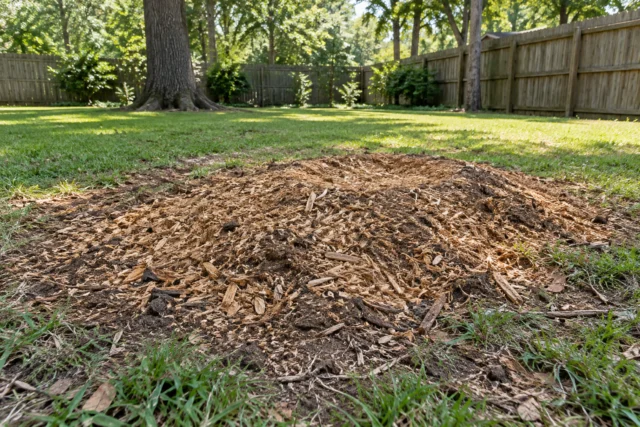
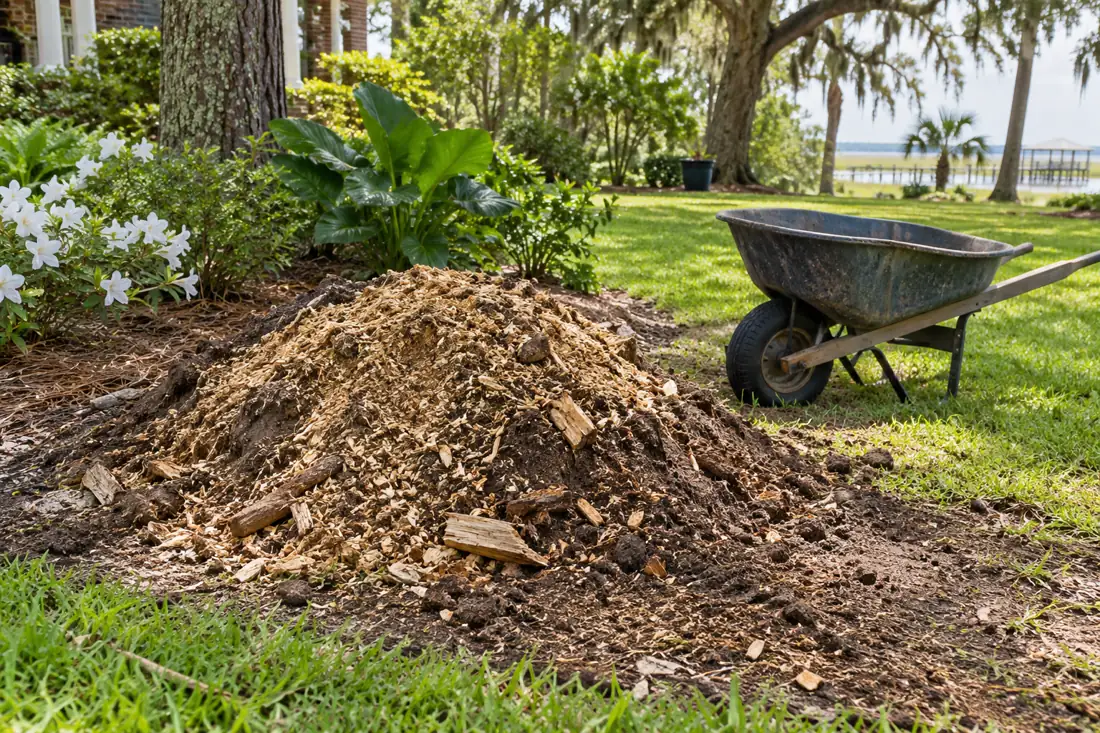
Wood fragments and loose soil can bury sprinkler heads, valve lids or small drainage openings even when cutting stays clear of the pipes. Show the crew where these fixtures are before grinding. Decide whether the quote includes gathering and hauling grindings or leaving them at a designated spot. The goal is a clean enough surface that the irrigation system can be checked without searching through piles of debris.
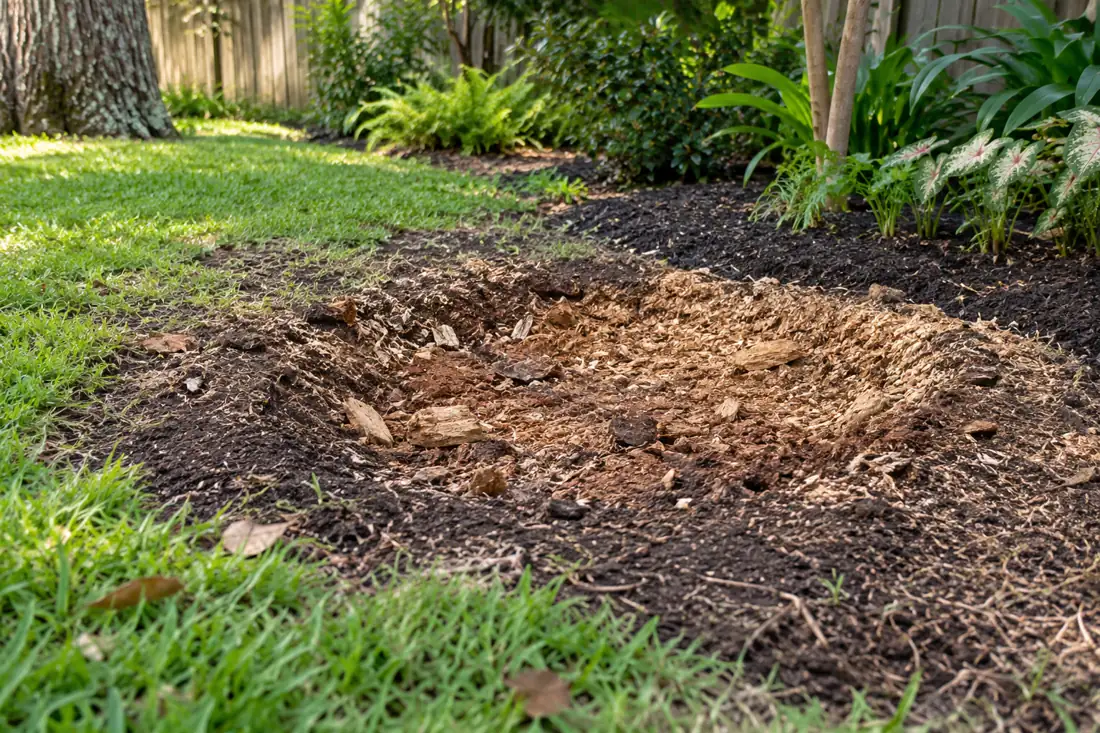
Backfilling a hole with mostly chips can lead to later settling and may obstruct future work on a buried line. For lawn restoration, discuss suitable soil and grading with the landscape professional. Avoid building a mound over valve boxes or changing the surface runoff pattern. A finished area should allow the owner to locate and maintain the irrigation components that remain.
Prepare an irrigation-aware estimate request
Provide the stump width at ground level, intended grinding depth or future use, gate width and photographs showing the nearest sprinklers and valve boxes. Say whether system drawings exist and who maintains the irrigation. Mention any ongoing wet spots, recent repairs or private tubing you know about. A good estimate starts with those constraints rather than a single diameter measurement.
Ask how private lines will be located, which areas could be excluded, what cleanup is included and how the system will be checked afterward. If the route or location is uncertain, request a site assessment and coordination with an irrigation professional. An online inquiry can start the conversation, but it cannot certify an underground clearance or promise that the entire stump can be ground to a universal depth.

Verify function after the grinding zone is cleared
Once equipment and debris are removed, the irrigation owner or technician should inspect exposed heads, valve lids and the surface around known pipes. Run an appropriate system check only when it is safe and authorized to do so. Look for pressure changes, unexpected wet spots, misdirected spray and new leakage. Keep notes about pre-existing conditions so a later maintenance decision is based on observations rather than assumptions.
A passing visual inspection does not certify every buried connection. If a zone behaves differently after work, isolate the problem using the system's normal maintenance process and involve an irrigation professional where needed. The tree contractor's record should identify what wood was removed, any excluded utility-adjacent area and where chips were left. Good documentation helps the next technician investigate without attributing an unseen defect to a particular action prematurely.
Irrigation Protection and Restart Need Named Responsibilities
Shallow sprinkler tubing, emitter lines, electrical control cable and valve boxes can lie within a stump's root spread, sometimes outside the visible trunk or grindings pile. Ask the property owner or irrigation contractor to identify known routes and shutoff points before grinding. Neither a clean photo of the grass nor an old installation drawing guarantees the exact position or depth of a buried line. A grinding contractor should not be asked to trace or reconnect electrical controls without the right qualification.
Keep a before-work record of active zones, sprinkler heads and valve locations from accessible areas. When the job ends, note visible connections, disturbed soil and any areas where additional inspection is warranted. Who will test, repair or recommission the irrigation system should be agreed before the crew starts; a tree-service cleanup does not automatically include a full system pressure test. If irrigation has been compromised, coordinate that restoration with the contractor responsible for the system before relying on normal scheduled watering.
- Identify valve boxes, controller wiring and known lines near the planned grind area.
- State whether irrigation isolation or repair is being handled by a separate qualified trade.
- Record who verifies the affected zones at handover and what remains excluded.
Plan chip removal and soil preparation when replanting follows
Questions about this project
Will a standard utility locate identify my sprinkler lines?
Do not assume it will. Private irrigation, drip systems or pet-fence wiring may not be covered by a general locate. Supply any plans and ask the responsible providers to determine the appropriate locating and protection process.
Who checks the sprinklers after stump grinding?
Agree on that before work. The tree contractor, irrigation provider or owner may have different responsibilities for isolation, inspection, testing and repair. Record the known system condition and the precise scope rather than assuming a new repair is included.
Does stump grinding remove the entire root system?
Grinding normally addresses an agreed stump area and depth. It should not be assumed to extract every underground root. Describe your future use of the site and ask what additional work or coordination is needed.
Can the area be paved or planted immediately afterward?
That depends on the intended project and the agreed finish. Chips, remaining roots, excavation and soil preparation may need separate attention. Coordinate the grinding scope with the installer who is responsible for the next phase.
What access information helps an estimator?
Send the narrowest opening, overhead obstacles, turns and the distance between the tree and the loading area. Include photos of the entire route and identify steps, soft ground or features that must remain protected.
Should I remove a fence before the visit?
First ask the contractor to assess access and agree on any temporary opening. Identify who owns the fence, who can authorize the change and who will reinstall it. Do not assume the opening is necessary or included.
Does cleanup include every root and wood chip?
That depends on the written scope. Tree removal, stump grinding, chip hauling and root excavation are different tasks. Ask what material is removed, what remains and whether soil or landscape restoration is separately included.
What should a final walk-through check?
Compare the identified trees and tasks with the agreement. Check agreed debris handling, stump treatment, access openings and any listed restoration. Record unresolved items clearly instead of relying on a general impression that the property looks finished.
What should I compare besides the price?
Compare tree identification, work objectives, access assumptions, hauling, stump treatment, site finish and exclusions. Ask whether permits or other coordination are part of the scope and who can approve changes if conditions differ.
Does an online request book the crew?
No. A request starts the estimate conversation. The company still needs to discuss scope, availability and any site assessment. For a dangerous or urgent condition, call 504-458-8336 rather than relying on a form response.
What should I tell Tree Huggers about stump grinding when irrigation is nearby?
Explain the property address, the work you want and the specific concerns: irrigation map, locating limits, repair responsibility. Send safe photos of the tree, surroundings and access route. The contractor can then discuss the assessment and scope needed for this situation.
How do I request an estimate for this work?
Call 504-458-8336, text photos or use the estimate form on this page. Include the address, desired outcome and any timing constraints. The company will need to review scope and availability; an online request does not confirm a price, appointment or emergency dispatch.
Get a scope for your property
Sprinkler heads and irrigation pipes can run close to a stump even when no line is visible at the surface. Show the nearest heads, valves, controller location if relevant, and the path by which equipment would approach. Provide any available irrigation diagram and say whether the system has been recently repaired or reconfigured.
Do not excavate lines or run sprinklers while someone is standing in the work area merely to identify their position. The absence of a visible head does not prove buried tubing is clear.
Ask how irrigation locations will be identified before grinding, who is responsible for professional locating when needed, and what working limits will be observed around known lines. The written estimate should specify whether irrigation shutdown, temporary protection, repairs or later system testing are included or separately arranged. If a line crosses the planned grinding area, a revised scope or sequencing may be necessary. State the final intended grade and handling of chips so restored turf or landscaping does not cover damaged or exposed components.