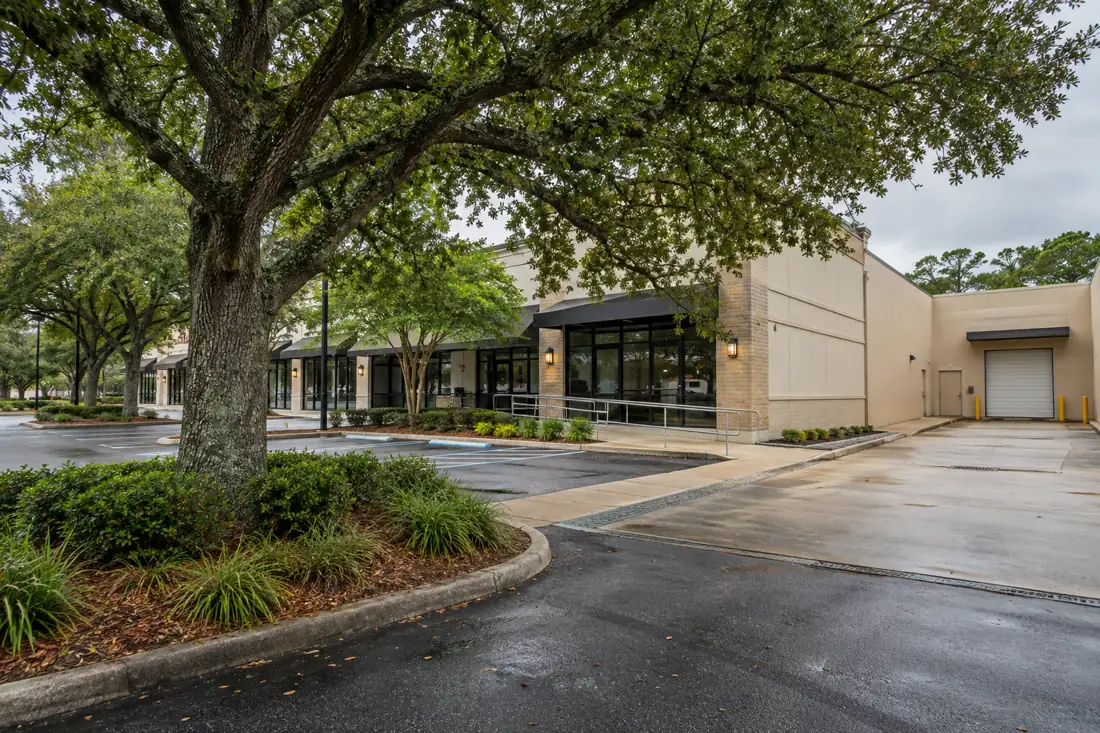
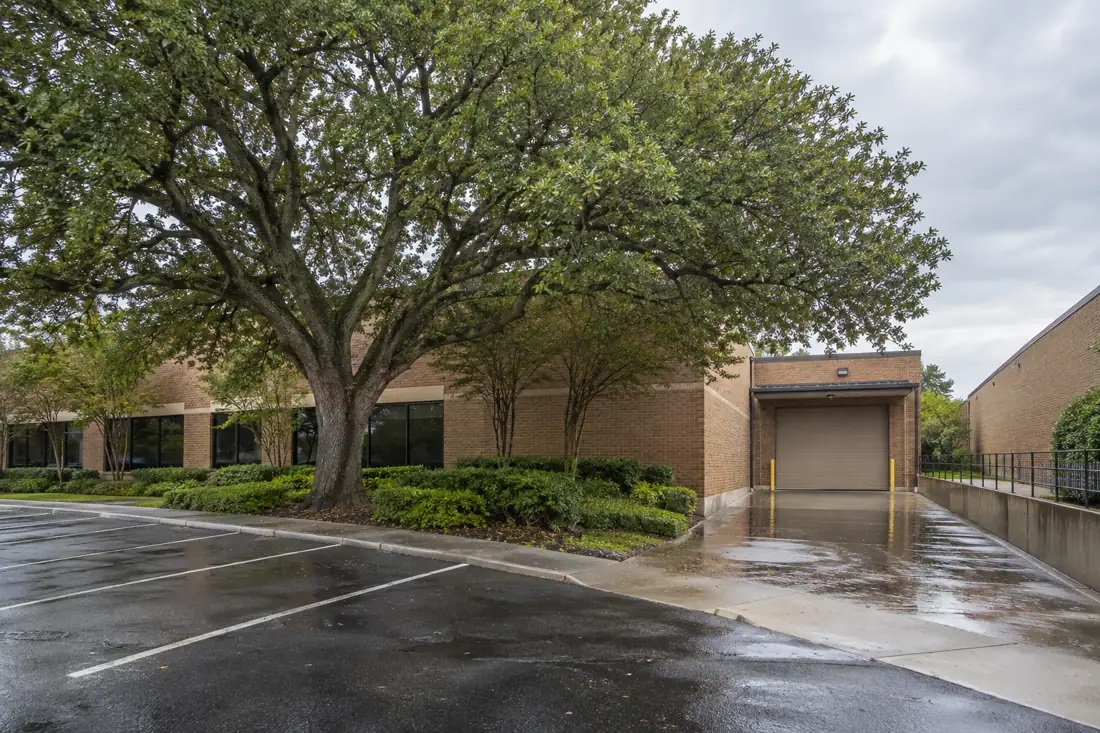
A dealership may have valuable inventory beneath or beside trees and limited room for machinery. Plan vehicle relocation and identify protected surfaces before work is priced. The contractor needs a clear work area, loading route and approval contact. The scope should distinguish tree work from any unrelated lot or building maintenance.
Practical scope and safety guidance: At a car dealership, vehicle inventory and display rows can change daily, so the quote should identify a relocation zone rather than assume the spaces observed onsite stay vacant. Map sales access, service bays, test-drive lanes, customer parking, signage, lighting and rooflines beside the affected trees. Have dealership management designate who can move vehicles and approve any temporary closure; the tree crew should not be expected to relocate customer property.
Note glass facades, service lines, landscape islands and narrow drive transitions before choosing the lowering method. If work is staged before opening, confirm when staff and deliveries actually arrive. Ask for the cleanup condition to include chips and small debris around pavement and tire areas. Distinguish pruning for sign or vehicle clearance from removals that may require additional evaluation. The final site photos must come from the actual job if used as evidence, never a generic planning illustration.
Create a lot diagram with the exact rows of cars under the crown, the route to move them, display signs, lighting poles, cameras, service bays and customer traffic. A dealer's daily inventory changes, so a photo from last week cannot establish which space will be vacant on the workday.
Have an authorized employee identify and relocate vehicles before the crew sets barriers; do not ask a tree contractor to move customer or dealer vehicles without express arrangements. Note pavement edges, underground structures and tight lanes that could affect machine setup and loading. Trimming over a showroom entrance is a different phase from removing a large tree over inventory.
Agree on a row-by-row closure and handoff process, including who checks that each bay is clear and who may reopen it. The written proposal should identify tree work, rigging or lifting method, exclusion distances determined by the crew, surface protection, stump and root treatment if requested, and cleanup.
Discuss how cars arriving during the work are diverted safely. Inspect lighting, banners, roof edges and pavement before returning stock to the affected area. Take after-work photos with the dealership representative and record any unresolved damage or future pruning recommendation without presenting it as a finished item.
Map the inventory rows before looking at the canopy
A dealership tree project must start with the locations of sale vehicles, service vehicles, customer parking and operational lanes. Mark the trees on a lot map alongside the showroom entrance, service drive, test-drive exit, inventory holding area and any off-site overflow. A branch above a display vehicle may create a different exposure problem from one touching a building sign. Identify the actual tree and affected row rather than writing an instruction to trim everything across the property.
Walk with a dealership representative who understands how units move through the lot. Inventory can change rapidly, so document a plan for the work day as well as the current arrangement. Photograph the working tree and its surrounding space without capturing VIN labels, customer documents, plates or keys. A proper map helps the arborist see where a lift can stand and helps the dealer decide which vehicles must be moved before setup.

Arrange vehicle relocation as a formal prerequisite
The safest equipment location may occupy several inventory spaces or cross a drive aisle. Discuss the number of spaces that must be cleared, the time needed to move stock and where relocated vehicles can legally and safely remain. Do not expect a tree crew to move or operate dealership inventory. Set a clear handoff: the dealer verifies that required vehicles are gone before the contractor establishes the work zone and begins handling material overhead.
Identify who can authorize moving a demonstration vehicle, a customer car awaiting service or a vehicle blocked by another row. These categories may have different controls inside the business. If the planned space cannot be cleared, pause and revise the method instead of swinging a branch above a protected asset. Keep a way to notify the contracting representative when inventory is moved back into an unsafe area during the job.
Inspect display trees for defects and intentional shade
Trees at a dealership provide shade and visual character, but deadwood, weak attachments or damaged trunks can require professional attention. The assessor should examine each concern in context: canopy condition, branch unions, exposed roots, previous cuts and what is regularly beneath the tree. A leafless appearance alone does not establish structural failure, and a full canopy alone does not establish safety. Record fresh cracks or sudden changes promptly and consider limiting exposure pending an appropriate assessment.
Request distinct recommendations for selective pruning, structural risk evaluation, removal and continued monitoring. A manager may want improved visibility for inventory displays, but that commercial preference should not be confused with a medically or structurally necessary treatment. The best result may preserve a healthy tree while correcting a targeted clearance issue. Do not make large canopy reductions merely to meet an unmeasured visual objective.

Review light poles, cameras, banners and elevated signage
Tall pole lights, flags, signs and security cameras may occupy the same space as branches and lift equipment. Mark these objects on the working diagram and discuss whether clearance can be obtained without contacting them. A camera or sign may also provide an anchor point that looks convenient but is not suitable for rigging. The contractor must design an appropriate tree-work method and never attach loads to equipment that was not designed or approved for that purpose.
Pay particular attention to overhead electrical conductors and building service drops, especially where they cross a driveway. If the planned work could approach energized lines, coordinate with the utility and qualified personnel before proceeding. The dealership's facilities staff may also need to protect lighting controls or exterior data equipment. Identify these interfaces in the scope rather than assuming every installation can be temporarily disconnected or relocated.
Check pavement, curbs and hidden service structures
Large trucks and lifts may need more area than a normal parked vehicle, and their loads are not distributed like passenger-car tires. Identify cracked asphalt, decorative pavers, curb islands, drain covers, soft turf and underground structures in the proposed route. An older parking slab or buried utility vault deserves evaluation before stabilizers are set nearby. Protective mats may reduce damage in some situations, but they do not remove the need to assess the surface itself.
The dealership should supply known site plans where available and identify private drainage, irrigation or electrical systems that may not appear on ordinary utility markings. If stump grinding or ground disturbance is proposed, coordinate applicable locating and approvals. Take pre-work condition photos of the area selected for equipment. They give both parties a neutral reference point if damage or restoration questions arise after the job.
Keep sales and service traffic separated from equipment
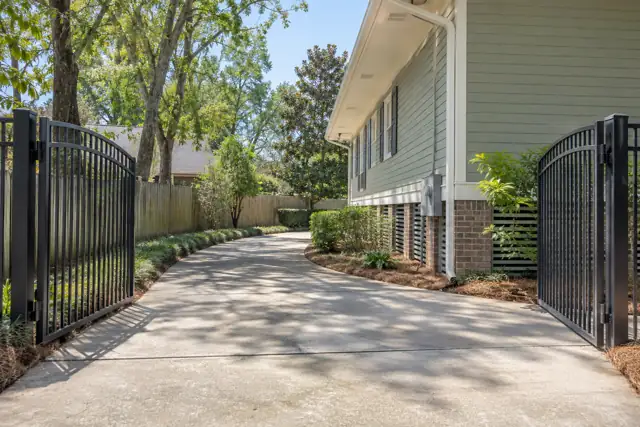
A dealership frequently operates two traffic patterns at once: visitors browsing inventory and service customers arriving on appointments. Consider test-drive routes, shuttle pickup, service-bay entrances and delivery trucks when selecting an exclusion zone. A work boundary must prevent pedestrians from entering the fall area, not merely reserve a parking space. If a branch is lowered over a lane, the lane should remain controlled until the activity and cleanup are genuinely complete.
Assign a dealership contact who understands when the service department, sales staff and detail shop will need access. The crew should not independently manage customer traffic beyond its work area. Choose a schedule that the business can support without promising that a particular period will be quiet. If heavy rain changes ground conditions or unexpected vehicle activity makes the plan unsafe, the crew and management should revisit the sequence.
Define branch handling and debris routes around inventory
Cut material has to leave the lot without brushing parked cars or crossing an occupied display area. Ask the contractor to show a proposed lowering zone, temporary brush position and path to the chipper or haul truck. For limited spaces, sectional rigging may be considered by qualified crews, but the appropriate method depends on actual tree condition and site constraints. The buyer should understand where support equipment will be parked and whether additional setup is included.
Specify whether chips, logs, stump grindings and small twig debris will be removed or retained. Loose wood fragments can become a hazard to tires and pedestrians, while dust or sawdust may settle on vehicle finishes. The contractor and dealer should discuss practical protection and cleanup expectations without inventing a guarantee that no dust or incidental debris can occur. Work-area inspection should be part of the formal completion step.

Use a tree-by-tree scope instead of one vague lot price
Ask the proposal to identify each numbered tree, which branches or defects are involved, the recommended treatment and any different access method. Separate pruning from removals, stump services, debris hauling and follow-up evaluation. Make exclusions visible: a quote for branch clearance may not include pavement repair or cleaning every vehicle. This detail makes it possible to compare proposals fairly and prevents an appearance request from being mistaken for a comprehensive tree-risk assessment.
Include responsibilities for clearing inventory, providing escorts and controlling dealership visitors. Identify the person authorized to approve changes, especially when the work area must expand beyond the originally empty row. Request current evidence of qualifications and applicable coverage through normal verification channels rather than relying on unsupported advertising claims. A well-defined scope can be scheduled and checked without pressuring the crew to improvise around high-value vehicles.
Protect Vehicle Inventory During Dealership Tree Service
A dealership tree project starts with inventory protection. Map the trees closest to display rows, customer parking, sales entrances and service lanes. Vehicles beneath a canopy must not be left in a potential branch or equipment zone; the dealer should designate its own authorized employee to move them. Never assume a tree contractor can reposition vehicles or access their keys. A clean work plan identifies how much empty space is required before any lift or rigging method is selected.
Overhead clearance can involve decorative lights, flags, utility service lines and building eaves as well as tree limbs. Some sites have paved islands that cannot bear outriggers or heavy support loads. The contractor should assess ground bearing, reach and alternative access rather than using the display lane as automatic crane staging. A vehicle may be vulnerable to fine debris or airborne chips even outside the main controlled fall area, so discuss protective separation clearly.

Coordinate movement authority, branches and display lighting
Select a window that respects both customer traffic and the movement of new or serviced vehicles. Confirm who may stop a test-drive route, how temporary barriers will be maintained and where truck loads of debris can exit. A high-value inventory area should have an explicit pause procedure if a vehicle returns unexpectedly. Do not put customer names, VINs, license plates or keys into public progress photos or unsecured request forms.
Ask each bidder to price the same tree and finish condition, with vehicle relocation by the dealer, debris hauling, stump treatment where relevant, and any special surface protection. At completion, check curb islands, pavement, drains, temporary fencing and the restored parking layout. Ordinary photos can document the tree and cleared zone without claiming that any specific vehicle was inspected or that all future limb failures are ruled out.
Plan for storms, sudden inventory changes and delays
A storm between the assessment and the work day may alter a tree's condition or wash out an access location. If a new lean, split limb or root movement appears, document the change and ask for reassessment before following an old plan. Dealership inventory can also arrive unexpectedly, blocking the only equipment route. Both circumstances call for an updated exclusion or schedule decision, not a rushed attempt to proceed on the original assumptions.
Establish who can pause work, how the contractor communicates a revised method and who signs off on any additional work. Protect the emergency entry and do not leave suspended material unattended in an area expected to reopen. A decision log recording the reason for delay is more useful than a casual text saying the trees could not be reached. It can help the business plan a new window without confusing partial completion with a finished project.

Complete a row-by-row handoff before reopening
At the end of the project, check that the agreed trees have been addressed and the vehicle spaces, routes, gates and service entrances are clear of equipment and debris. Walk the previously protected curb islands, lights, sign supports and pavement surfaces. Any damage or unfinished work should be documented promptly rather than concealed by moving vehicles back. The dealership should authorize restocking of the affected area only after its own representative has checked conditions.
Keep a concise record with tree IDs, work dates, completed treatments, any exclusions and future inspection recommendations. Photographs should focus on the completed tree and work area, not on customer cars or sensitive dealership records. This record helps facility managers prioritize later maintenance, including after high winds. It should not be presented as proof that every tree on the property is free of risk indefinitely.
Questions about this project
Which property features should I point out?
Identify buildings, vehicles, fences, fixed fixtures, landscape features, utilities and occupied routes. Explain what can move and what must remain. Include existing damage and any buried features you know about along the access route.
Should people remain inside the work area?
The contractor and site contact should establish an exclusion area and access arrangements appropriate to the work. Keep children, pets, visitors and other workers outside the active zone until the responsible parties say it can reopen.
Can a business stay open during tree work?
That depends on the site and scope. Discuss occupied routes, exclusion areas, loading and work windows with the contractor and property representative. Do not assume normal access can continue through the active work zone.
Who should communicate with tenants or visitors?
Agree on that responsibility with the property representative. The contractor needs a clear site contact, while the owner or manager should use the property's established process to communicate access changes and work windows.
Can the crew block a public sidewalk or road?
Required arrangements must be coordinated with the appropriate authority. Identify public routes and restrictions before scheduling. A private work agreement should not be treated as automatic permission to occupy or close public space.
When should parked vehicles be moved?
Set the timing and responsible contact before the work window. Vehicles may need to leave the tree zone, equipment route and loading area. Confirm where access must remain available during each phase.
How should extra work be approved?
Use the agreed approval process and identify the change, reason, scope, price or schedule effect as applicable. Confirm who has authority before treating an additional tree or task as part of the original job.
What completion records are useful?
Keep the agreed scope, tree or area identification, authorized changes, invoice and labeled photos where appropriate. Include unresolved items and a contact. Contract-specific records should follow the buyer's stated requirements.
What should I compare besides the price?
Compare tree identification, work objectives, access assumptions, hauling, stump treatment, site finish and exclusions. Ask whether permits or other coordination are part of the scope and who can approve changes if conditions differ.
Does an online request book the crew?
No. A request starts the estimate conversation. The company still needs to discuss scope, availability and any site assessment. For a dangerous or urgent condition, call 504-458-8336 rather than relying on a form response.
What should I tell Tree Huggers about planning tree work for a car dealership?
Explain the property address, the work you want and the specific concerns: vehicle inventory, equipment access, work area. Send safe photos of the tree, surroundings and access route. The contractor can then discuss the assessment and scope needed for this situation.
How do I request an estimate for this work?
Call 504-458-8336, text photos or use the estimate form on this page. Include the address, desired outcome and any timing constraints. The company will need to review scope and availability; an online request does not confirm a price, appointment or emergency dispatch.
Get a scope for your property
For a car dealership, document tree locations relative to display inventory, test-drive routes, customer service bays and security lighting. Request a designated dealership coordinator for vehicle relocation, staging authorization and any working-hours restrictions; do not assume equipment can enter a sales aisle. Safe overview photographs and a lot map help show canopy reach and trunk location without exposing customer information.
The contractor's proposal should identify each work area, protective boundaries, debris-loading routes and any crane or lift restrictions. Verify the schedule and closeout inspection in writing before vehicles return to spaces near the work.