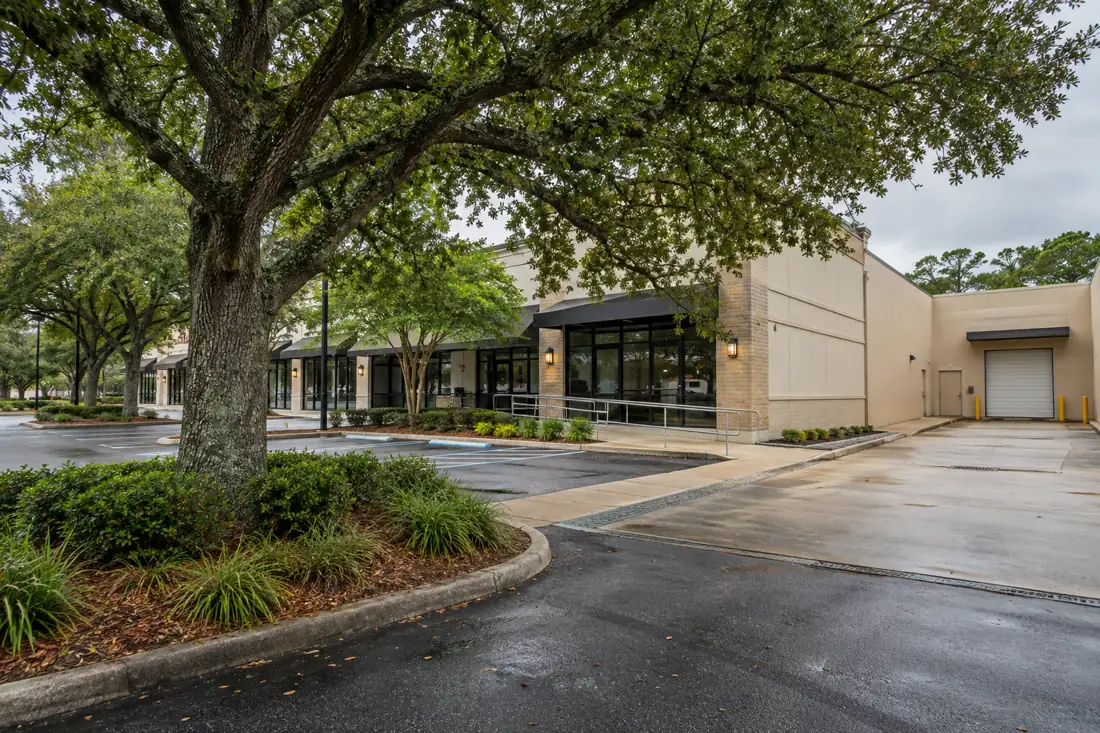
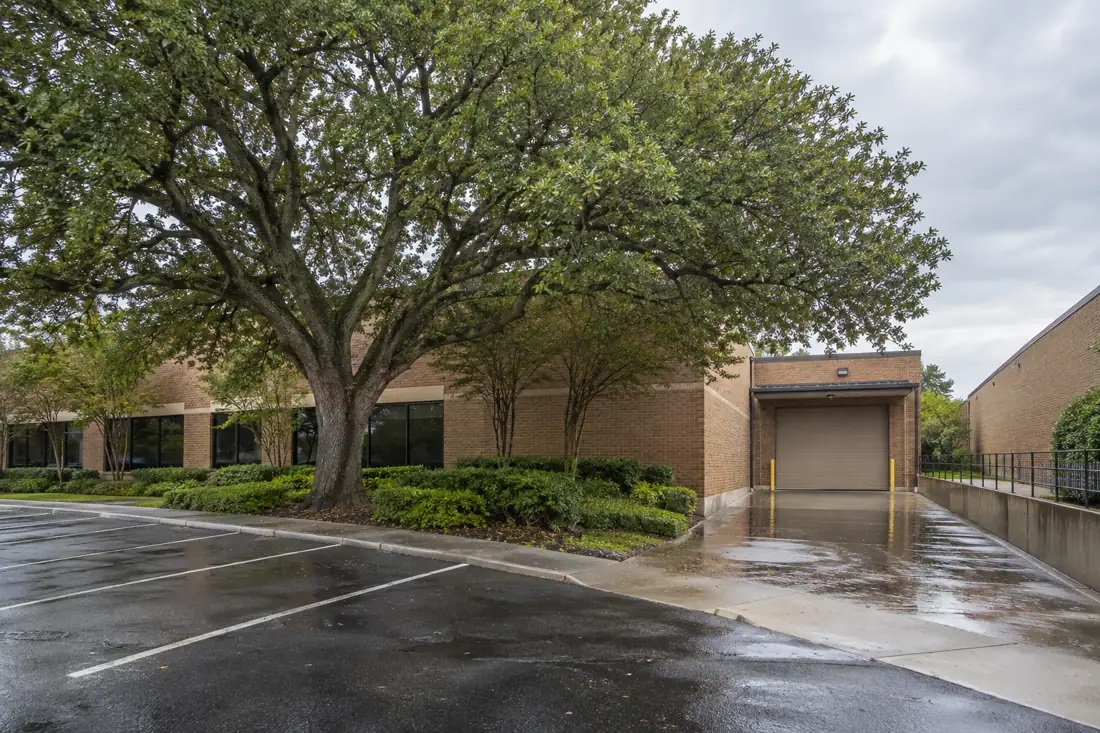
Shared projects can stall when responsibility and approval are unclear. Identify the trees, property boundaries and the person authorized to accept the scope. Access permissions and payment arrangements should be resolved by the owners. The contractor needs one clear work instruction and a documented process for changes.
Site-specific planning checkpoint: Where several property owners are involved, begin with a written list of decision makers and areas they control. A shared canopy does not eliminate separate property boundaries, permissions or responsibility for access. Identify the owner of each trunk as well as fences, utility connections, parking spaces and drainage features that could be affected. Take neutral photographs of conditions before equipment arrives and agree on where debris may be staged. If a proposed route crosses another parcel, request that permission explicitly rather than assuming it follows from a neighbor’s agreement to prune. The contractor’s scope should name who approves changes, who is informed of postponements, and how restoration concerns will be recorded.
When several property owners share a boundary tree, driveway, fence or common area, begin with a map and a list of contacts who can approve specific activities. A branch extending over a parcel does not by itself establish trunk ownership or permission to enter another yard.
Record each requested outcome separately: roof clearance, pruning over parking, concern about roots, full removal or debris access. Where ownership or rights are uncertain, consult appropriate records and qualified guidance before irreversible work. Give the estimator current photos of the tree and all proposed access routes, including utilities and occupied areas on each property.
The written scope should identify which owner approves each cut or access area, which surfaces must be protected and who coordinates notices to occupants. Avoid assuming that one person may promise neighbors' permission or assign costs to them. For changes in tree condition or a blocked route, pause the affected phase until the authorized decision is documented.
The contractor's closeout should list completed areas, restored gates and fences, debris removal and any unresolved recommendations. If an emergency creates immediate danger, follow the appropriate emergency and utility procedures rather than using routine property agreement rules as a substitute for keeping people clear.
Identify the parties and their property interests
A shared tree project can involve neighbors, a homeowners association, a landlord and a tenant, each with different interests. Start by identifying the parcel containing the trunk and any neighboring properties affected by branches, roots or the proposed work zone. A fence or driveway location may not establish the legal boundary. Where ownership is disputed, obtain appropriate survey or legal advice before asking a tree crew to act on one person's assumption.
List the people who must receive information separately from those who can authorize work. A person requesting clearance over a patio might not own the tree, while an owner may need access to another parcel to carry out an approved removal. A site map showing the tree, boundary information and the intended work areas gives everyone a common reference. Keep personal contacts and private negotiations out of publicly displayed inquiry content.

Agree on the actual problem before choosing a remedy
Different property owners may describe the same tree as dangerous, valuable, messy or too close to a building. Record the observable facts: broken branches, new lean, root movement, roof rubbing or obstructed passage. Ask a qualified tree professional to assess structural concerns separately from appearance preferences. A shared project should not default to removal because it is the most decisive-sounding option, nor should an owner dismiss a genuine defect solely because the canopy looks healthy.
Request a written explanation of feasible treatments and the consequences for retained structure, shade and future care. Selective pruning may solve one clearance issue while leaving another concern for separate assessment. If the parties disagree about risk, avoid soliciting unsafe do-it-yourself actions or a rushed cut. Restrict an obvious fall zone where appropriate and obtain professional input before work proceeds.
Make a single numbered tree list and scope map
A contractor receiving instructions from several owners can easily end up pricing different trees or different branches. Give every proposed tree a stable number and annotate the map with the specific task, affected building and ownership status. Include trees intentionally excluded from the current decision. Where a branch crosses a boundary, identify the location and proposed treatment rather than assuming a request to trim the neighbor's side defines a safe pruning method.
Attach photographs showing context from authorized positions; avoid entering private yards without permission. Ask the tree professional to confirm that the map matches the actual tree during the site visit. The scope should distinguish access work, pruning, full removal, stump service and debris handling. An accurate tree list reduces disputes about what each owner thought the price included and helps the crew avoid accidental work on the wrong specimen.

Document access permissions and equipment locations
Controlled lowering, machinery or hauling may require access through a gate or driveway on a parcel other than the one where the tree grows. Identify the proposed route, staging area and working boundary before dates are selected. Obtain the relevant owner's permission in a form suitable for the circumstances, including timing, protection and restoration expectations. A text conversation between neighbors may not address all rights or restrictions, so confirm rather than assume.
If permission is refused or conditional, ask the contractor whether another safe method exists. Do not instruct workers to enter another parcel or reach over an occupied area merely to preserve the original price. Equipment supports, traffic controls and utility proximity can change what is feasible. Record any third-party permission alongside the final work order so the crew understands exactly which paths and surfaces may be used.
Assign one operational contact and clear approval limits
Multiple owners can remain financially involved without each giving daily directions to the saw crew. Designate one operational contact who can answer site questions and transmit agreed decisions. Separately identify the people whose signatures are required for scope changes, access arrangements or additional charges. These may not be the same people. A crew should not expand tree removal because one neighbor gives an informal instruction during an active operation.
Establish a method for notifying all approving parties if a concealed defect, weather change or blocked route alters the plan. Written acceptance of the revised treatment protects against confusion after work has started. If agreement cannot be reached, the parties should pause the disputed portion rather than pressure the contractor to resolve an ownership conflict. Clear authority also helps the contractor protect the work area from unexpected arrivals.

Consider utilities, roots and adjacent structures together
A boundary tree may be close to service drops, buried irrigation, retaining walls, fences or a neighbor's roof. Ask the assessor to consider how the proposed pruning or removal interacts with those features. Root cutting can affect tree stability and should not be treated as an automatic solution to raised paving. Where a wall or foundation is implicated, obtain suitable technical evaluation rather than attributing all observed damage to the tree without evidence.
Electrical conductors require coordination with the utility and qualified personnel, not a decision by neighboring owners to pull branches away. Mark known buried services before stump grinding or digging and follow applicable locating requirements. The work scope should identify what the tree contractor will handle and what requires separate specialists. This division prevents a cooperative tree project from becoming an unapproved building or utility repair project.

Make the tree scope legible to every involved owner
When a tree extends across property lines, agreement on who pays is only one concern. A written diagram should identify the tree, proposed cuts or removal, where equipment may stand, and which owner can authorize access to each parcel. An adjacent owner may allow temporary entry but not permission to remove a shared boundary tree. Clarify the limits of any permission and seek appropriate local legal advice if ownership or authority is disputed; the contractor should not pretend to adjudicate property boundaries.
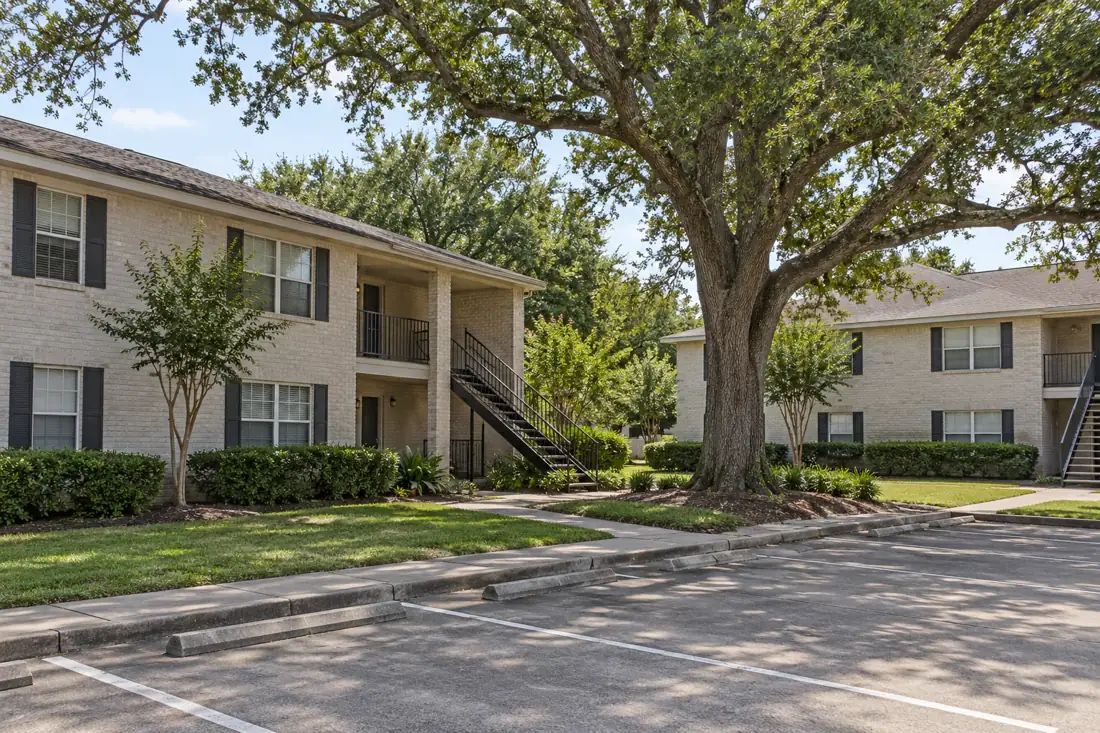
Agree beforehand who will receive the estimate and updates, how unexpected conditions are approved, and where chips, logs or disturbed surfaces will be restored. Keep before-and-after records factual rather than attributing fault. A photo of a fence and canopy helps show why a shared-work scope needs coordination; it cannot establish a legal boundary or a completed customer agreement.
Discuss cost sharing without making the contractor an arbitrator
Owners may choose to divide a cost because several parcels benefit from the work, but that arrangement should be agreed among them in advance. Do not assume that a trunk near the line automatically creates equal legal payment responsibility. Ask for a quote that clearly identifies each treatment and any separate access or cleanup expense. The parties can then make their own allocation agreement, seeking appropriate advice if their rights or obligations are uncertain.
Give the contractor a single contracting instruction and an identified payer or approved billing arrangement. If the parties want separate invoices, confirm that arrangement explicitly instead of assuming the crew will collect shares afterward. Put the payment and change-approval terms in writing. A tree professional can describe methods and scope but should not be asked to settle a disputed property line or impose a cost split.

Protect neighbors during cutting and debris removal
A branch may be lowered over a fence, patio, driveway or roof, and people on both parcels need protection from the active work area. Coordinate the exclusion boundary with all affected owners and make sure access is controlled throughout the operation. A temporary pause in cutting does not mean the area beneath suspended material is safe to cross. Any resident or tenant notices should come through the appropriate property representatives.
Specify where logs and brush will travel and which parcel will host the chipper or truck. Avoid dragging material across landscaping or placing a stockpile where it blocks drainage, fire access or a shared driveway. Discuss ground protection and pre-work condition photographs where machinery will move. At completion, inspect all authorized access areas against the agreed scope and report any observed damage without concealment.
Build One Coordinated Scope When Several Owners Are Involved
A shared tree project often fails at the approval stage, not the cutting stage. Put each affected tree on a single site diagram and identify who owns the trunk, who controls access, and which people can approve work or costs. One resident's verbal approval to remove overhanging limbs is not automatically permission to remove a whole tree or drive equipment across another lot. Keep questions about title, easements or property-line disputes separate from a contractor's technical estimate.
Ask owners to agree on the desired physical result before collecting competing bids. One person may want clearance above a roof, another may want the tree retained, and a third may care most about debris hauling through a shared drive. These are different work objectives. Have the qualified tree professional explain feasible options and any tree-health implications. Do not compress disagreement into a vague instruction such as 'trim until everyone is happy.'

Avoid partial permission and incompatible expectations
The access agreement should cover gates, protected lawns, pavement, drains, parking, work hours and a reliable contact for each participating property. Note where wood and chips may travel and where they may not be stored. If one owner withdraws permission, the scope must be reassessed rather than shifting the work zone without review. Share only the contact and access information necessary for coordination; keep billing arrangements and private identifiers out of public project photos.
Before scheduling, distinguish the scope authorization from payment allocation, insurance questions and any required local permits. The final walkthrough can identify completed tree work, disturbed surfaces, debris removal and deferred recommendations for all approving parties. Photographs should show the physical work, not imply a verified legal boundary or an inspection of neighboring buildings. A clear decision trail reduces repeated site visits without making the contractor an arbiter of ownership disputes.
Plan for bad weather and changing tree conditions
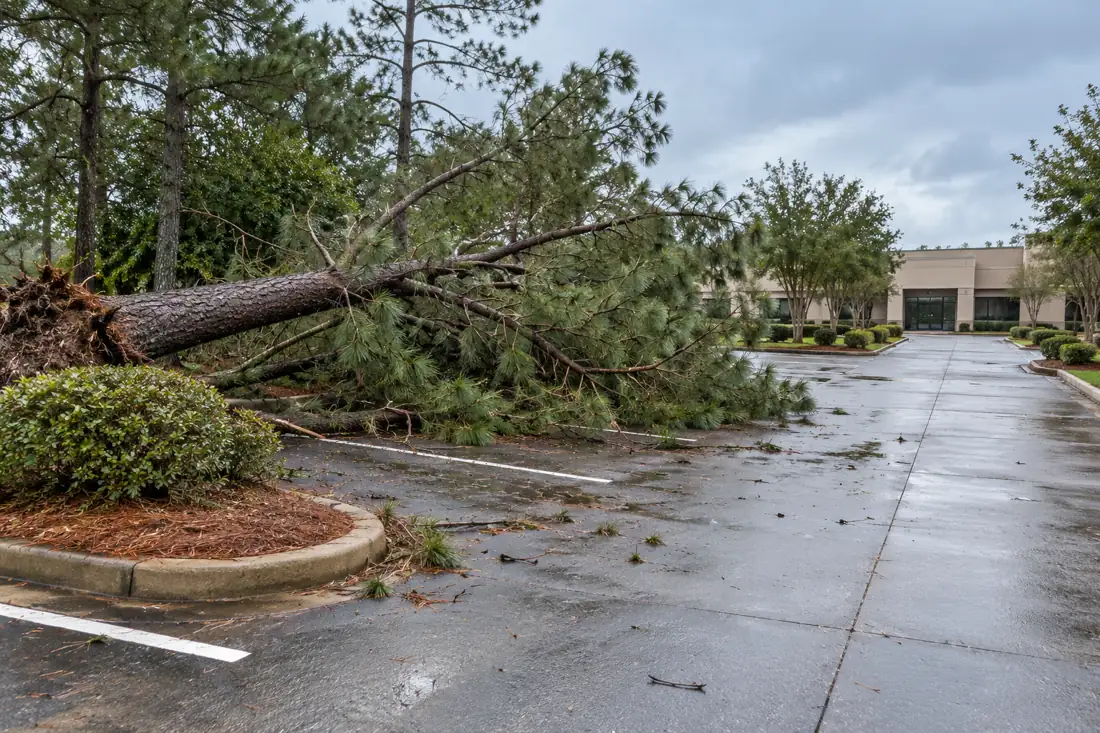
A shared project may wait while several owners reach agreement, during which a storm can change the tree's condition. If a crack opens, a limb breaks or soil moves around the base, document the new concern from a safe location and arrange reassessment. The original bid may no longer describe an appropriate work method. Parties should not assume that prior photos or a neighbor's informal reassurance establish current safety.
Agree who will communicate urgent changes and who can restrict access to affected areas where permitted. Where a branch threatens an occupied structure, seek appropriate professional or emergency assistance rather than encouraging anyone to climb or cut it personally. If work is delayed by rain or utility coordination, update the shared schedule in writing. Clear communication matters more than preserving an outdated date at the expense of safe planning.

Close the shared project with one factual record
After work, the contractor and designated representatives should compare the treated tree numbers with the signed scope. Document which branches or trees were addressed, whether stump or hauling work was included and any remaining follow-up. Check fences, drives, gates and landscaping used for equipment access. Record any unresolved issue before all temporary barriers are removed or the parties forget the agreed boundaries.
Share a concise completion summary with the owners who approved the work, keeping private contact information and internal payment details in suitable records. The summary should not be presented as proof that every neighboring tree is permanently safe or that the work changed legal ownership. Future growth and storms may require further evaluation. A shared, factual record helps prevent the next routine maintenance question from reopening the original dispute.
Questions about this project
Can the contractor use my neighbor's yard?
Only after the required permission and suitable access arrangements are in place. Identify the proposed route and who can authorize it. A quote accepted by one owner does not automatically grant access to someone else's land.
Does a tree estimate determine the property boundary?
No. Resolve an uncertain boundary or ownership question using appropriate property information and professionals. The tree contractor needs an authorized scope and access plan, but a visual work estimate is not a survey or legal determination.
How should extra work be approved?
Use the agreed approval process and identify the change, reason, scope, price or schedule effect as applicable. Confirm who has authority before treating an additional tree or task as part of the original job.
What completion records are useful?
Keep the agreed scope, tree or area identification, authorized changes, invoice and labeled photos where appropriate. Include unresolved items and a contact. Contract-specific records should follow the buyer's stated requirements.
Is a total tree count enough for a large quote?
Usually the parties also need locations and tasks. Use consistent tree numbers, marked photos or a site plan so the estimate and crew instructions refer to the same trees and retained areas.
Does a work inventory include a condition assessment?
Only if that service is expressly part of the scope. A list used to identify and price tasks should not be mistaken for a documented assessment of every tree's condition or risk.
What should I compare besides the price?
Compare tree identification, work objectives, access assumptions, hauling, stump treatment, site finish and exclusions. Ask whether permits or other coordination are part of the scope and who can approve changes if conditions differ.
Does an online request book the crew?
No. A request starts the estimate conversation. The company still needs to discuss scope, availability and any site assessment. For a dangerous or urgent condition, call 504-458-8336 rather than relying on a form response.
What access information helps an estimator?
Send the narrowest opening, overhead obstacles, turns and the distance between the tree and the loading area. Include photos of the entire route and identify steps, soft ground or features that must remain protected.
Should I remove a fence before the visit?
First ask the contractor to assess access and agree on any temporary opening. Identify who owns the fence, who can authorize the change and who will reinstall it. Do not assume the opening is necessary or included.
What should I tell Tree Huggers about tree work with several property owners involved?
Explain the property address, the work you want and the specific concerns: shared approval, boundaries, change process. Send safe photos of the tree, surroundings and access route. The contractor can then discuss the assessment and scope needed for this situation.
How do I request an estimate for this work?
Call 504-458-8336, text photos or use the estimate form on this page. Include the address, desired outcome and any timing constraints. The company will need to review scope and availability; an online request does not confirm a price, appointment or emergency dispatch.
Get a scope for your property
When several owners are involved, a tree project can fail because the decision-maker is unclear even when everyone agrees on the visible issue. Map the tree locations and the property boundaries as accurately as available records permit, and identify shared drives, fences, overhanging limbs or access paths.
Summarize what each owner has actually authorized, leaving disputed boundaries or permissions explicitly unresolved. Provide photographs only from places where the sender has permission to stand. An arborist's assessment of tree condition does not determine property title, easement rights or who can authorize cutting.
Ask for a written proposal addressed to the party with confirmed contracting authority, with work boundaries, neighbor access rights, retained vegetation and any approvals still required. Define how changes, unforeseen obstacles and restoration would be approved when multiple owners are affected. Keep each stakeholder informed through an agreed channel instead of exposing private contact information in site photographs or analytics.
If permission cannot be obtained, defer the affected work or revise the method rather than asking a crew to guess. The estimate should remain conditional on verified access and authority.