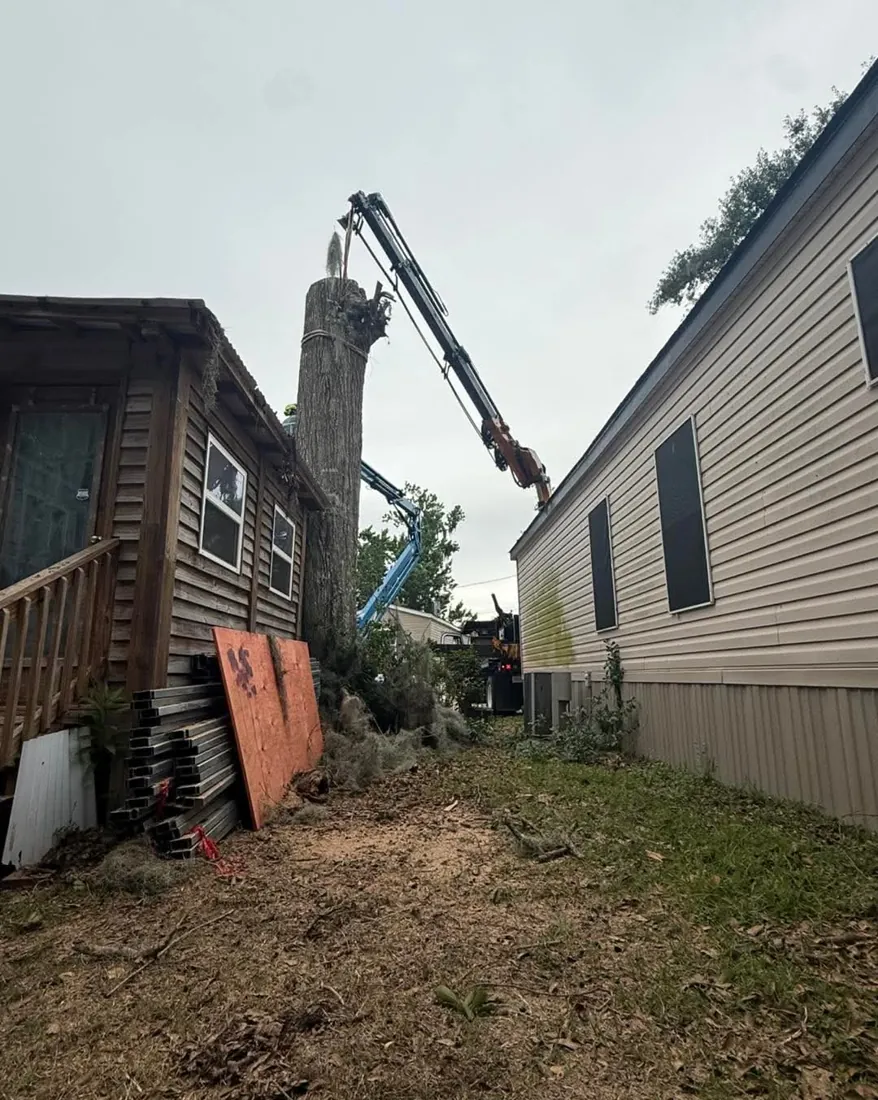
An electronic pet-containment wire may be buried shallowly across the access or stump-work area. Identify the route and contact the installer if information is incomplete. It should not be assumed to appear on a standard utility locate. Plan pet containment and agree on preparation or repair responsibilities before machinery enters the yard.
Site planning detail: Invisible pet containment systems are easy to overlook because the boundary wire may be shallow and unmarked. Before tree work, identify the transmitter location, known wire route, gate crossings and areas where roots or equipment may disturb the line. Ask the system installer for a layout if available; do not assume the boundary follows a survey line exactly. Use the available control to keep pets safely indoors or in another secure area while gates are open and trucks move.
Tell the tree crew about the wire before they select a stump grinder path, dig, place outriggers or stage heavy material. Photograph visible control equipment and any known splice or marker, but avoid exposing wire with tools before coordinating. The estimate should specify any areas where the boundary may need a separate inspection or repair. After work, have the owner or installer check the system before relying on it to contain an animal again.
Site-specific planning checkpoint: Underground dog fencing creates a risk that cannot be assessed from the lawn surface. Ask the homeowner to identify the approximate route, past repairs and the location of the control system, while recognizing that remembered wire positions are not precise. Stump grinders, truck tires, stabilizers and root excavation can disturb shallow buried components. Coordinate locating or temporary isolation with the fence installer or other appropriate professional before machinery crosses uncertain areas. Pets need a separate secure area away from the work zone, whether or not the electronic fence is powered. Agree who will arrange testing and any repair after work. Photos can show access routes, but should not expose access codes or unnecessary household information.
Flag buried pet containment wires before any grinding or access work
An invisible dog-fence wire may be shallow, routed around a tree, or crossing the same gate used by equipment. Before work, locate the controller and document the wire's approximate path using the original installer information or a suitable detection process. Treat the route as uncertain until confirmed; a sketch alone is not proof of depth. Show the contractor known cable exits, sprinkler lines, lighting wires, and other private services that may not appear on public utility marking systems.
Plan pet containment separately from equipment safety. Keep dogs inside or in a secure independent enclosure while gates are open and crews operate, even if the electronic system is believed to be working. If a wire must be disconnected or relocated, use the responsible installer or qualified service and confirm the system functions again before relying on it. Avoid asking a tree worker to dig blindly just to find a cable.
Record the work-zone boundary and whether stump grinding, root cutting, track travel, or surface restoration might disturb the wire. Confirm the agreed approach to exposed or damaged private wiring, including who authorizes repair. After work, test containment according to the equipment provider's instructions and inspect visible routes without entering unsafe areas. Include the known wire location in an estimate request, but do not share security-sensitive property diagrams publicly.

Identify hidden pet-fence wires separately from public utilities
An underground pet containment wire is often a shallow private installation with a route that is not apparent from the surface. Before stump grinding, trenching, vehicle mats or excavation near a tree, ask the owner for the controller location and any installation map. A fence wire can cross an access route even when the visible perimeter appears clear.
Mark the owner's best-known wire route and disclose uncertainty to the contractor. Public utility locating procedures remain necessary where digging is planned, but they do not necessarily locate privately installed pet-fence wire, low-voltage landscape lighting or irrigation tubing. The contractor should decide whether further private locating or an alternate work method is needed. Never treat a hand-drawn mark as a guaranteed underground clearance.
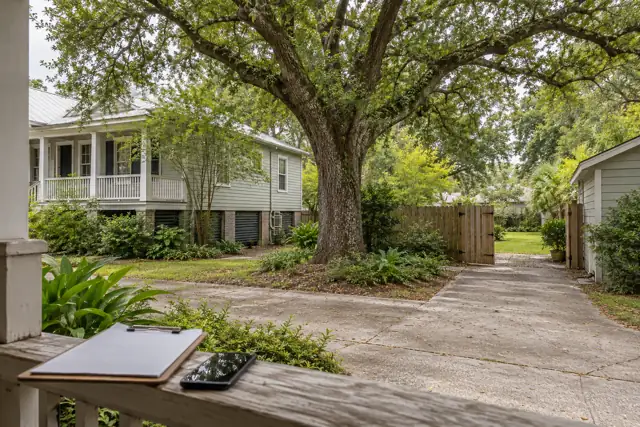
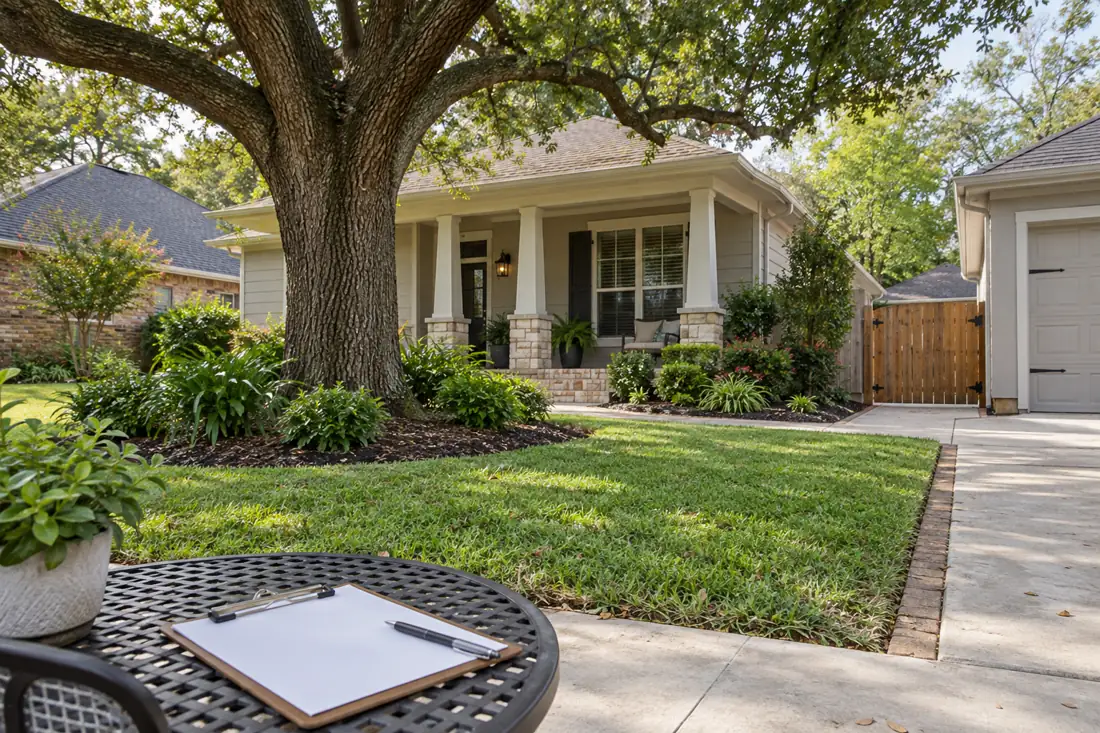
Coordinate safe containment of pets while the system is disabled or vulnerable, and establish who will test or repair a wire if disturbed. The accompanying image shows general utility-easement planning, not a verified pet-fence location. This distinction prevents an illustrative scene from being misread as documentation of the homeowner's actual installation.
Read the related preparing your property for a tree crew guide · Review public-sector tree-work services
Map the fence loop before any ground work
An underground dog fence is usually a private low-voltage containment system, not a utility that a public locating service will necessarily identify. Obtain the owner's installation sketch, find the transmitter and known boundary path, and walk accessible parts of the route without disturbing the wire. Record where the loop crosses the driveway, gates, garden edges and the proposed stump-grinding area.
Where installation records are missing, ask the fence installer or a qualified locator to help trace the line. Do not assume the wire follows the fence posts or a perfectly straight line across open turf. A shallow buried conductor can lie in soil that looks undisturbed.
Mark uncertain segments clearly so the tree contractor does not mistake an approximate route for a verified safe digging limit. Before approving work, ask the fence-system provider whether a temporary bypass, revised loop or post-work diagnostic is appropriate for this installation. Do not assume that any tree contractor has the test equipment or authorization to alter a proprietary receiver system.
If a damaged wire is found, keep pets independently contained while the system professional determines what repair is needed. Record whether the repair is excluded from the tree estimate and who will arrange access for that separate provider. A clear division of responsibility also prevents a property owner from treating a visually repaired patch of lawn as proof that the electronic boundary operates as intended.

Explain the containment function to the work crew
The wire is not merely an incidental cable; damage can disable an animal's boundary even when no trench is visible. Tell the estimator where the transmitter is and whether the loop currently works. Describe how the homeowner will keep pets contained independently during the job, especially if equipment requires gates to stay open. A crew cannot safely act as an animal-control substitute while operating saws or machines.
Some systems include multiple loops or twisted lead wires that cross areas outside the visible boundary. Share the known configuration when available. If a dog is reactive to loud equipment or strangers, arrange a separate safe indoor or off-site location instead of relying on the electronic boundary. These preparations protect people and animals without putting containment decisions onto the tree crew.
Identify crossing points for equipment and hauling
Heavy equipment may compress soft soil or disturb a wire when tracks turn, ground protection is placed or logs are dragged. Walk the proposed travel route and highlight known crossings on the plan. The crew should determine an appropriate movement method; an owner-provided scrap board is not evidence that the ground or buried wire is protected.
Consider the full route from arrival through debris loading, not only the area around the tree. Chippers and trailers may need a stable turning space where the loop passes under a drive or lawn. If the line cannot be positively located or protected, discuss an alternative access method or postponing intrusive work. The estimate should state which route was assumed.

Set stump-grinding limits conservatively
Stump grinding can extend beyond the visible stump diameter, particularly where flare roots spread through the soil. A shallow fence wire might lie close to the trunk even if the transmitter is far away. Verify the wire's position and discuss the intended grinding footprint and depth before approving the job. Do not direct a grinding operator to discover the cable by trial and error.
If a complete grind would cross the loop, one option may be to arrange a temporary disconnection and later repair with the system professional, but only under an agreed plan. Another option is to limit work and leave a specified obstruction. The estimate should describe the residual stump condition rather than implying that an unsafe depth can be reached without consequences.
Private pet-wire protection requires a backup containment plan
A buried containment loop may not appear on the plans used for public utility locating. Its path can run through a gate, cross a stump area or hug fence posts exactly where equipment must pass. Ask the owner or installer for the actual boundary diagram and mark uncertain zones without digging to prove the cable location.
Do not assume a working indicator light alone proves the entire loop or containment behavior is restored.
Separate tree roots from buried fence-wire work
Roots can grow across and around a shallow cable, making it tempting to pull both out during cleanup. That is not a suitable default. Mark retained trees and avoid unnecessary excavation of their root zones while planning how to remove cut material. A root that appears to belong to the removed stump may connect with a nearby tree or conceal the wire beneath it.
Discuss whether loose grindings will remain and how the lawn will be prepared for any cable repair. Soil replacement, irrigation repair and fence-loop testing are different tasks from cutting and hauling a tree. Assign each to the correct provider and avoid describing a generic cleanup as including electrical troubleshooting or landscape restoration.

Protecting Buried Pet-Containment Wiring During Tree Work
A buried pet fence is often a shallow privately installed system rather than a utility marked through a standard public locate. Ask the owner for the installer diagram and identify the transmitter, known crossing points and approximate wire loop. Do not dig to prove the line position as part of routine tree work. Where the drawing is incomplete, consult the installer or another suitable specialist before planning ground disturbance.
Identify where equipment tires, stabilizers, stump grinders and hauling paths may cross the loop. A wire crossing a driveway edge can be easy to miss even when the tree itself is distant. Mark the approximate route in a way that the crew can understand without implying precision that has not been established. If the work requires a different crossing, discuss protective measures or a revised approach before mobilization.

Draw the private wire route before ground disturbance
Pet safety must not depend on the containment system continuing to function during the job. Keep animals in a separate secured location while work is underway and until the loop has been checked. A transmitter light or a collar beep alone does not establish that the entire boundary remained undamaged. Record who is responsible for testing and who can authorize repair if the line is exposed or interrupted.
Distinguish the private dog-fence wire from other buried features such as irrigation, landscape lighting and service connections. Each may require different locating and repair arrangements. The written scope should say whether protecting, temporarily bypassing or repairing the pet system is included. A shared yard sketch and accurate handover notes reduce confusion, but never replace confirmation of the actual subsurface conditions.
Plan pet safety throughout the workday
Before arrival, move pets away from the work zone to a secure place that does not depend on the affected underground loop. Noise, unfamiliar people and temporary openings can defeat ordinary yard routines. Tell household members not to approach equipment to retrieve an animal. A clear containment plan should cover setup, cutting, debris handling and the period before the boundary is confirmed operational.
Do not assume a receiver collar's beep proves the entire loop has survived equipment traffic. The fence may be intermittently damaged or have a weak splice. The owner or installer should verify function using the manufacturer's procedure after the work, without making an animal the test subject. Tree workers should report visible damage, not claim expertise in a system they did not install.
Include other private utilities in the same map
Properties with underground pet fences often also have shallow irrigation pipes, landscape-lighting cable or drainage lines. These systems can occupy the same narrow strip beside garden beds or fences. Gather available records and identify known valve boxes, low-voltage transformers, cleanouts and sprinkler heads in the proposed work area.
A public utility locate remains important where applicable, but it is not a universal survey of private installations. Ask which systems are unverified and require a specialist. The work plan should distinguish confirmed markings from owner recollection and should not equate the absence of paint on the lawn with clearance to dig. This is especially important if stump grinding, winching anchors or machine outriggers are proposed.

Create a change process if a line is exposed
If a cable appears during grading, grinding or debris movement, have the affected operation paused and the condition documented from a safe location. Avoid pulling the line, guessing its ownership or making an improvised splice. Notify the designated contact and determine who is qualified and authorized to inspect the system. Repairs should be handled separately from tree work unless explicitly included by a capable provider.
Record the observed location and the changes needed to the agreed access or grinding limit. A modified plan may require different equipment or a smaller stump finish. Get approval for additional cost or work through the agreed procedure. Clear documentation protects the customer from believing a hidden cable was automatically included in a tree-service estimate.
Compare estimates using the same fence conditions
When collecting quotes, show every bidder the same fence-loop sketch and the same uncertainty about its exact location. Ask each provider to specify protective measures, route assumptions, stump limits and exclusions. A lower price that assumes the wire has already been moved is not directly comparable to a scope that includes careful access and coordination.
Discuss who will arrange verification of the fence before and after work, and whether a third-party visit could delay the job. Avoid false precision about the depth or location of a buried cable if neither has been confirmed. A useful estimate records the risk, the limits of ordinary tree service and the information needed before excavation or loading.

Verify the handoff before pets return to the yard
At completion, inspect the accessible work route from safe ground-level locations and compare it with the marked loop. Check for exposed cable, disturbed soil or open gates and document any observation that requires the installer. Do not interpret an undamaged lawn surface as proof that the electrical loop still works.
Confirm that the authorized owner or qualified installer has tested containment function and that any damage has been repaired before relying on the boundary again. Collect a clear record of the stump finish, debris left or hauled away and changes to the access route. This closes the tree-service work honestly without inventing an assurance about the pet-fence system.
Protect a Buried Pet-Containment Wire During Tree Operations
An underground dog-fence wire may be only a few inches below the surface and its route may differ from the property boundary. Tell the estimator where the controller, boundary loop, splice locations and crossing points are believed to be. Review the manufacturer's instructions and available installation plan, but identify uncertainty honestly; a transmitter indicator does not prove that every buried segment has been located. Tree roots, stump grinding, tracked equipment and log dragging can damage the loop even when no excavation is planned.
Mark the known or suspected wire route with removable flags before the walk-through, without driving a stake into a location that could contain another service. The crew should evaluate whether a tool path, protection arrangement or separate repair contractor is needed. During work, manage pets with a physical enclosure or another safe control instead of assuming the electric boundary will remain operational. After the work, test the system using the manufacturer's approved method and arrange qualified repairs if the loop was interrupted.
- Photograph controller, known wire crossings and existing splice locations.
- Flag uncertain segments and keep equipment off them until the route is discussed.
- Use an independent, reliable pet-containment method throughout the project.
- Document any interruption and who will inspect or repair the system.
Use the broader property-preparation checklist to cover other hidden features
Questions about this project
Will a utility locate show every private line?
Do not assume it will identify all irrigation, pet-fence, drainage or other customer-owned systems. Provide available plans and ask what additional locating or coordination is needed for the actual work and access area.
Who should arrange utility-related preparation?
Set that responsibility before scheduling. The property contact, contractor and relevant providers need to identify who handles locating, disconnection, relocation or separate repair work. Uncertain utility information should be resolved rather than guessed.
Can a business stay open during tree work?
That depends on the site and scope. Discuss occupied routes, exclusion areas, loading and work windows with the contractor and property representative. Do not assume normal access can continue through the active work zone.
Who should communicate with tenants or visitors?
Agree on that responsibility with the property representative. The contractor needs a clear site contact, while the owner or manager should use the property's established process to communicate access changes and work windows.
Does stump grinding remove the entire root system?
Grinding normally addresses an agreed stump area and depth. It should not be assumed to extract every underground root. Describe your future use of the site and ask what additional work or coordination is needed.
Can the area be paved or planted immediately afterward?
That depends on the intended project and the agreed finish. Chips, remaining roots, excavation and soil preparation may need separate attention. Coordinate the grinding scope with the installer who is responsible for the next phase.
What access information helps an estimator?
Send the narrowest opening, overhead obstacles, turns and the distance between the tree and the loading area. Include photos of the entire route and identify steps, soft ground or features that must remain protected.
Should I remove a fence before the visit?
First ask the contractor to assess access and agree on any temporary opening. Identify who owns the fence, who can authorize the change and who will reinstall it. Do not assume the opening is necessary or included.
What should I compare besides the price?
Compare tree identification, work objectives, access assumptions, hauling, stump treatment, site finish and exclusions. Ask whether permits or other coordination are part of the scope and who can approve changes if conditions differ.
Does an online request book the crew?
No. A request starts the estimate conversation. The company still needs to discuss scope, availability and any site assessment. For a dangerous or urgent condition, call 504-458-8336 rather than relying on a form response.
What should I tell Tree Huggers about tree work when you have an underground dog fence?
Explain the property address, the work you want and the specific concerns: buried pet wire, locating limits, pet containment. Send safe photos of the tree, surroundings and access route. The contractor can then discuss the assessment and scope needed for this situation.
How do I request an estimate for this work?
Call 504-458-8336, text photos or use the estimate form on this page. Include the address, desired outcome and any timing constraints. The company will need to review scope and availability; an online request does not confirm a price, appointment or emergency dispatch.
Get a scope for your property
For a yard with buried pet fencing, share a safe wire-route sketch and identify who can authorize locating or repair.