Coordinate with the course team
Golf-course tree work should be coordinated with course operations and the specific objectives for each tree or area. Access over turf, irrigation and public play all affect the method and timing. Use a marked inventory and agree on material handling. Tree removal, pruning and landscape restoration should have defined limits.
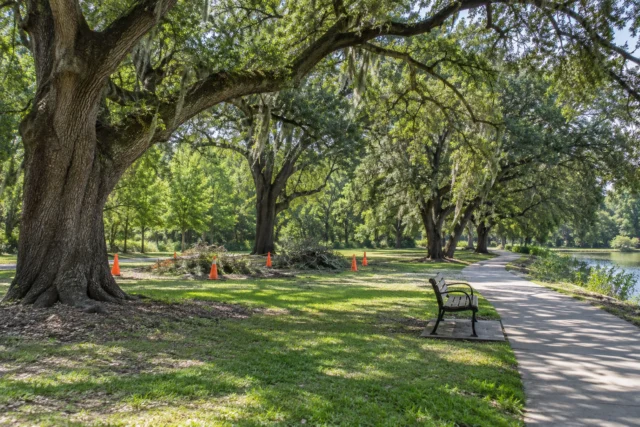
Practical scope and safety guidance: Golf-course tree decisions are not simply about reducing shade. A large tree can affect turf health, player safety, irrigation access, sight lines, playability and the character of a hole. Start with an annotated hole map showing the particular tree and whether the concern involves a cart path, green, tee, fairway, practice area or boundary. Avoid broad instructions such as clearing every branch over a fairway; specify the observed conflict, potential targets and desired outcome.
The superintendent or authorized manager should identify playing hours, tournaments, maintenance windows and areas that equipment cannot cross. Wet turf and shallow irrigation systems can change the work method, so discuss ground conditions, temporary surface protection, chip staging and cleanup before equipment is selected. A scope may need separate line items for individual removals, pruning, stump work and debris removal. Photographs from a safe path, with a distant view and one closer view, can improve the estimate without requiring entry beneath suspended branches.
Large properties need a priority plan
A course may have hundreds of trees but only a small number that require immediate attention. We can help separate dangerous trees, hanging limbs and clearance problems from routine pruning and longer-term preservation work.
Focus first on occupied areas, paths, buildings and known structural concerns.
Coordinate equipment and work zones around course access and traffic.
Plan material handling with attention to turf, irrigation and landscaped areas.
Storm response across large acreage
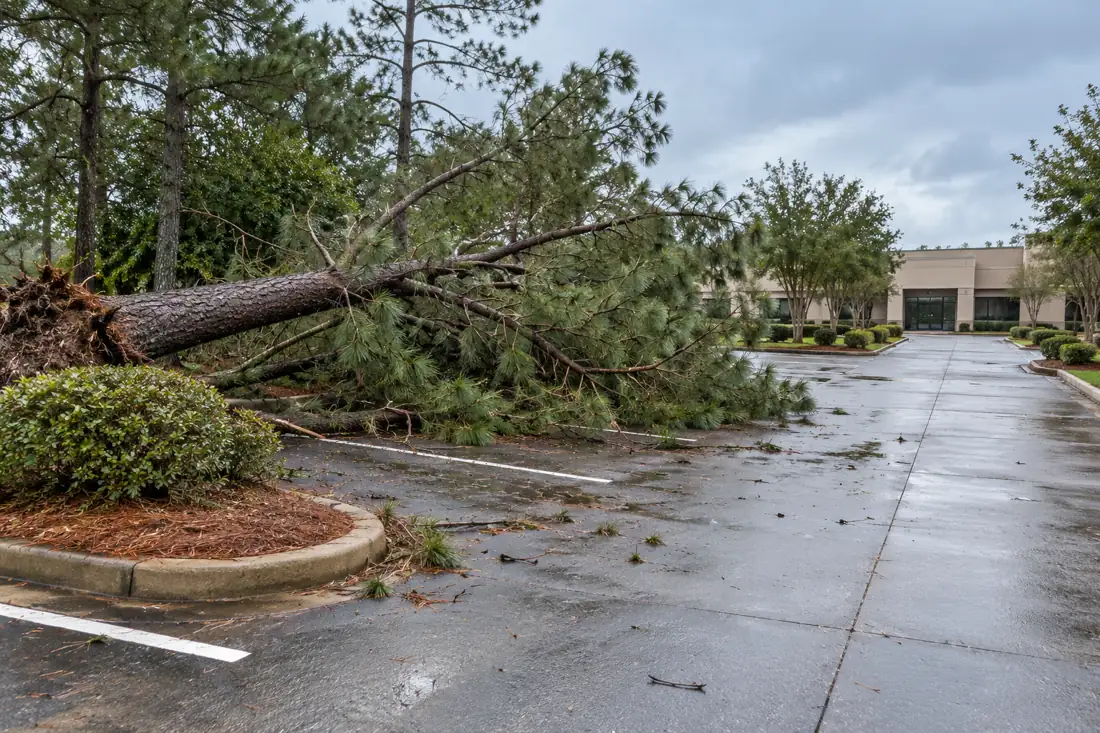
After severe weather, damaged trees and limbs may be spread across the property. Work can be sequenced by life safety, blocked routes, building access and operational importance so crews are not simply chasing the most visible debris first.
Put every requested task on the course map
Use the course’s own hole, path or maintenance-area references and an agreed tree identifier. Connect photographs to those locations. A broad property can contain many similar tree edges, and a close view of a trunk may not explain how to find it later. The same identifiers should appear in the inquiry, accepted scope and completion review so the superintendent, purchaser and tree company discuss the same objects.
Separate care objectives, condition concerns, removals and stumps. Explain which entries are priorities and which are preliminary observations that still need review. The commercial planning hub helps organize a usable brief. A list of reported trees should not be interpreted as a completed assessment of the entire course or authorization to work on every nearby tree visible from the listed location.
Match timing to actual play and maintenance activity
Share the current operating calendar and routes used by play, grounds teams, deliveries and other contractors. Explain which areas can actually be made available and who coordinates that arrangement. A quiet early-morning photograph does not establish an empty work site for the proposed visit. Setup, tree handling and hauling need to be reviewed together with the site’s use before a particular window or approach is accepted.
Identify a contact for changes in play or maintenance activity that affect the work area. Do not assume tree operations can proceed beside continuing use under the affected canopy or across a required material route. The plan should establish clear coordination responsibilities for the actual task. This makes a proposed visit more useful than an informal statement to come when it is quiet, especially when several course areas or other projects are involved.

Describe the route across turf as carefully as the tree
Show gates, paths, turns, surface transitions, current ground and the available setup or loading area. Include the approach between the work location and the material destination. A wide fairway view can hide a restrictive entry or a soft area along the route. Tell the company what changed after rain or maintenance rather than relying on an older photograph from more favorable conditions.
The equipment hub explains how route, support and task inform method selection. Do not assume an existing cart path or open turf automatically fits a proposed machine. Identify retained landscape and any surface-restoration expectations for discussion. A covering or ground-protection arrangement should not be treated as an unlimited guarantee against every site effect. The accepted approach needs to reflect current conditions and the grounds team’s actual requirements for the area afterward.
Bring irrigation and known features into the brief
Provide available information about irrigation, drains, buried features and other fixed items relevant to access, setup or stump work. Explain what is known and which information still needs confirmation by the responsible party. A clean-looking turf surface is not a complete record of what lies beneath it. Keep the information connected to the course location so the estimator can understand the route and task without guessing from a disconnected sketch.
Do not test or alter systems to prepare a tree-work inquiry. Identify the appropriate grounds or specialist contact for relevant requirements. If another provider needs a particular final condition, share that requirement before relying on the quote to produce it. Tree handling, irrigation work, ground preparation and turf restoration are different responsibilities. Keeping their boundaries clear helps the course avoid discovering an unassigned task once the major wood has been moved.
State the purpose of pruning or retention
Explain the identified clearance, deadwood or other care objective and trees the property wants retained. The trimming service provides related scope context. A tree can contribute to the landscape while also raising a specific work question, but that does not establish a diagnosis or a universal treatment. Ask what is proposed for each accepted tree and how its objective will be recognized at completion.

Separate cart-path access from turf and irrigation protection
On a golf course, an equipment route that looks short on a map can cross sensitive turf, a cart path, drainage feature or irrigation line. Identify the tree from the course map and walk the proposed route with the superintendent. The request should distinguish actual machine access, foot traffic, wood handling and material exit. No landscape photograph can establish whether the ground will support a particular load.
Work timing should be discussed against the tee schedule, maintenance windows and course closures actually authorized by management. Identify alternate cart movement, access to adjacent holes and routes that must remain safe. A tree-service estimate can explain the proposed method and protection assumptions, while leaving play-management decisions to the course operator and arboricultural risk decisions to the responsible professionals.
After the work, inspect the immediate turf, edge of cart path, irrigation covers and stump area against the agreed finish. Record whether grinding, topsoil, sod replacement or irrigation repairs are included or excluded; those are separate tasks unless explicitly scoped. The detailed closeout helps the maintenance team restore normal operations without discovering hidden assumptions after the equipment leaves.
The tree health overview and assessment service address related care and condition inquiries. Report new failures, cracks, movement or other observations with timing if known. Clarify selected tasks, review limits and follow-up. One pruning visit should not be read as a complete course-wide assessment, a course-design decision or a permanent guarantee that every retained tree will remain unchanged after work is complete.
Define removal, stump and retained material decisions
For a possible removal, show the whole tree, nearby use areas and the practical handling route. The removal page describes the broader request. Confirm the identified tree and accepted tasks rather than assuming every tree in the same group is included. If design or other grounds changes motivate the work, identify the responsible plan and the person authorized to make those decisions.
Ask what happens to logs, branches, chips and the stump. If material remains on the property, agree on identity, processing and location before it is handled. The stump guide helps frame the future-use question. Grinding, excavation, backfill and turf or surface restoration are different operations. A recognizable handoff keeps the next grounds task visible instead of treating removal of the standing tree as completion of every below-ground and landscape operation.
Organize storm reports by route and occupied use
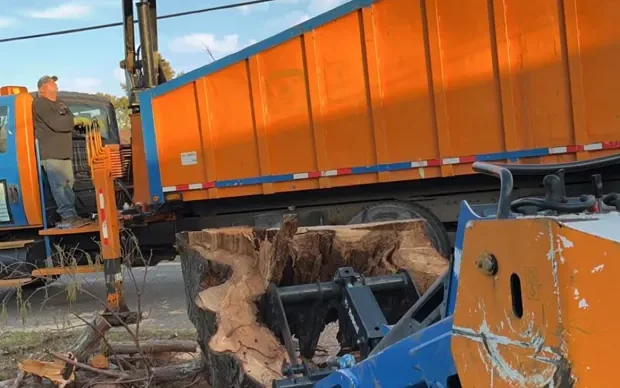
After weather, identify newly fallen trees, hanging material and changed standing trees from safe positions. Keep people away from affected areas. Call 504-458-8336 about current tree-work availability; a form does not confirm dispatch. Immediate threats to people or electrical involvement require the appropriate emergency or utility service. Do not ask grounds staff to approach damage or cut supported wood for a more complete photo set.
The commercial response page gives related context for an area list. Use current map references and explain blocked routes or operating priorities. Separate the first accepted tree or access task from widespread processing and hauling. The most visually prominent debris is not a complete work brief. A useful request connects tree conditions, routes and contacts while leaving later repairs or course restoration assigned to the appropriate next stage.
Walk through completion with the mapped scope
Keep accepted tree identifiers, changes, material handling and required finish together. Name the person who can accept the work and approve additions when conditions differ from the original information. If photos or a particular purchaser format are needed, agree on that before the job. The record should describe actual tasks and remaining items without inventing a broader inspection, condition rating or finding that was not commissioned.
A planning example is selected path-clearance pruning, a separate removal near a maintenance route and later stump-area turf work by the course team. Different tasks can share one coordinated visit while having distinct completion requirements. Compare the finished work with the original map and scope, recording any unresolved item and responsible next contact. That leaves the grounds team with a usable handoff instead of a general statement that all trees are done.
Coordinate tree work with active golf course operations
A golf-course tree program works better when the superintendent can distinguish recurring shade management from specific clearance, risk and storm-response needs. Identify trees by hole, side of fairway and a location marker that the maintenance team can confirm. A request for canopy work near a tee, a cart path and a maintenance building may involve three different targets and access patterns. Mark the exact branches or trees under discussion before scheduling equipment, and avoid assigning a condition rating to trees that have not been assessed.
Schedule decisions should account for golfer circulation and the periods when a work area can actually be closed. A route that looks open early in the day may cross a busy cart path, irrigation line or a soft portion of fairway after rain. The grounds team can help identify surface protection, staging areas, temporary barriers and where material may be stockpiled without interfering with play. A contractor should confirm that its proposed access and equipment footprint fit those restrictions.

Protect turf, irrigation and the pace of play
Keep pruning objectives separate from grass-health or agronomic concerns. Shade, airflow and roots may affect turf, but cutting a large crown cannot be justified solely by a wish for brighter grass without assessing tree response and alternatives. Where the objective is a clear sightline, safe vertical clearance or removal of damaged wood, describe the target dimension and which vegetation is included. Ask what remains after the work and whether follow-up monitoring is needed for an older tree.
Before mobilization, agree on whether hauling, chipping, stump grinding, turf restoration and irrigation repair are in the same scope. Note who can authorize change orders if hidden roots, buried lines or equipment access require a different approach. For a multi-hole program, maintain a simple completed-versus-pending inventory with a photograph or map for each tree. The record should show actual service tasks, not imply that an entire course received a formal safety inspection unless one was separately commissioned.
Golf Course Tree Service questions
What should a golf-course tree request include?
Provide map or hole references, tree identifiers, safe photos, objectives, routes, current conditions and a grounds contact.
Does a reported tree list mean the whole course was assessed?
No. Clarify the selected tasks and any separate inventory or assessment work requested.
Can a quiet morning be assumed available for tree operations?
No. Review actual play, maintenance, delivery and contractor activity before timing is confirmed.
Does an existing cart path guarantee machine access?
No. The full route, surfaces, setup, ground and task need review for the proposed approach.
What should be stated about irrigation or buried features?
Share known information, its limits and the responsible contact for confirmation or relevant requirements.
Does a ground-protection arrangement guarantee no site effects?
Do not assume unlimited protection. Discuss the actual route, conditions and accepted restoration responsibilities.
Can important landscape trees be retained?
Explain valued trees and the specific care or condition objective so appropriate options and limitations can be reviewed.
Does removing one tree include the rest of its group?
No. The accepted tree identifiers and tasks should make the removal boundary clear.
What should be agreed about stumps?
Clarify future use, grindings, roots, ground work and the finish required by the next provider or grounds team.
Can wood or chips stay on the course?
Discuss material, processing and placement before acceptance rather than assuming a destination or firewood preparation.
How should storm concerns be reported?
Use safe observations and current map references, keep people clear and call about availability; involve emergency or utility services where appropriate.
What makes course closeout useful?
Compare actual tasks and finish with the mapped scope, approved changes, material decisions and remaining-item responsibilities.
Let’s plan your tree work.
Send the property address, safe tree photos and the result you need. Include access restrictions and the person who can approve the work.