Coordinate the current subcontract scope
A general contractor needs tree work aligned with the site sequence, retained-tree plan and other trades. Share drawings, tree identification, access requirements and schedule constraints. The subcontract scope should define responsibilities for clearing, hauling, stumps and restoration. Changes should be authorized through the project’s agreed process.
Practical scope and safety guidance: Contractor-to-contractor tree work is easiest to coordinate when responsibilities are explicit. Identify the general contractor, authorized field contact, property owner approval, work order or purchase order process, and the trades sharing the site. Tree crews may need to work before fencing, trenching or demolition, but schedule decisions should account for power lines, delivery routes, ground bearing capacity and adjacent occupied buildings. A bid package should show the specific trees or work areas, photographs, access restrictions and required cleanup standard, not merely a total acreage or canopy estimate.
State whether traffic control, permits, utility coordination, equipment pads, debris transport, stump removal and restoration are within this scope or assigned elsewhere. Ask for a written change-order process if unknown site conditions alter equipment choice or disposal quantity. Provide safe-distance photographs and mark the work boundary on a plan; never have a field employee climb onto unstable debris for a better view.
Tree work should support the project schedule
Contractor-led work usually has dependencies. Access may need to open before excavation, a dangerous tree may need to come down before demolition, or storm damage may have to be cleared before other crews can safely return. We sequence tree work around those project needs.
Tree count, access, removal limits, debris plan and the date the site must be ready.
Select conventional, crane-assisted or mechanized methods based on production and targets.
Complete the agreed stump and debris work so the project can move forward.
Specialized support for difficult trees
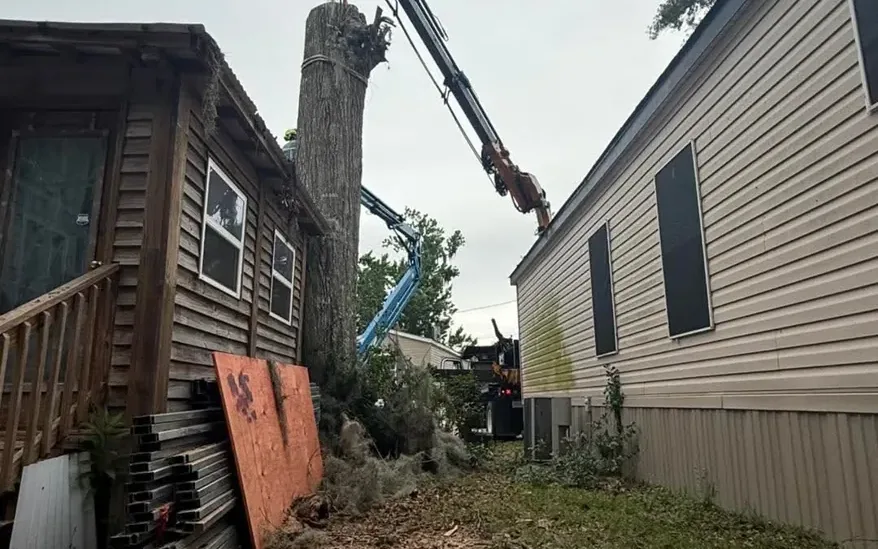
High-risk trees, storm damage and heavy canopy sections may benefit from crane or remote-controlled equipment. Those capabilities can be useful when a contractor needs a specialized tree-service partner rather than a general landscape crew.
Use the drawing revision the field team will follow
Send the current site plan or marked photograph and identify its revision or date. Use matching identifiers for trees to remove, trees to retain and areas still awaiting a decision. A rough concept plan and a later field direction can describe different work even when they share the same property address. Explain which document governs the requested estimate and who can resolve conflicts before the scope is accepted.
The construction-site service page provides related coordination details. State whether the tree company is pricing selected trees, a defined clearing area or a preliminary site review. Keep the decision-maker and site superintendent visible in the inquiry. A colored mark on an outdated drawing should not silently become authority to remove a tree that the current project intends to keep.
Describe the next trade’s actual requirement
Explain what must happen before excavation, demolition, building access or another contractor’s work can proceed. State the required result and the planned dependency, rather than requesting a particular machine without explaining the task. Tree handling, hauling and stump work can leave different conditions for the following phase. A date alone cannot communicate those differences or establish that the next trade will receive a construction-ready surface.
Give the current sequence and any known constraints, then confirm availability directly. The tree scope should identify its own tasks and handoff while the contractor coordinates the wider project. If another trade changes the site or occupies the planned route, report that before the tree visit depends on the old arrangement. An earlier estimate should be checked against a material change in access, tree condition or required finish.

Retained trees need a place in the plan
Identify trees that stay before access, staging or material storage is selected. Show relevant proposed ground changes and work near those trees. Preserving a tree involves more than keeping equipment from touching the trunk; the surrounding root area and site conditions matter too. The preservation guide gives useful context for arranging a tree-specific discussion before project choices become difficult to change.
Provide any existing protection requirements and the person responsible for maintaining them between trades. Ask what still needs assessment or coordination for the particular trees. Do not assume later pruning or fertilizer will undo construction damage. Where the project’s retained-tree objective conflicts with proposed access or excavation, bring the question to the responsible design and tree-care contacts rather than improvising a new route through the protected area.
Review access from entry to loading point
Show gate widths, turns, surfaces, slopes, ground conditions and the space available around the actual task. Include the full material route and any shared access with deliveries or other crews. A photograph taken from a broad open site can omit a narrow public approach or a restrictive turn at the entrance. Current information is particularly useful after rain, grading or temporary site changes.
The crane and equipment overview explains available service categories. It does not establish that a particular method is appropriate for every location. Describe structures, retained landscape and known underground features relevant to access and setup. Clarify responsibility for confirming applicable requirements. Equipment selection should follow the accepted task and site review, with assumptions made visible instead of relying on an informal statement that the property has plenty of room.
Separate cutting, hauling and below-ground work
For removals, identify each accepted tree and the required material handling. For clearing, provide a definite boundary and describe vegetation or other material that changes the scope. The clearing service gives related context. Removal of the standing tree does not automatically mean excavation of roots, unrestricted subsurface work or preparation of every area for a following construction operation.
Ask whether branches, logs, chips and grindings leave the property or remain in a specified place. Give known destination requirements and future-use expectations. A subcontractor cannot infer the next trade’s tolerances from the word clean. If grinding, backfill, grading or restoration is needed, identify it separately and establish who performs it. This makes proposals comparable and helps the superintendent recognize what is ready for the next phase at the agreed handoff.

Sequence tree protection alongside the contractor schedule
General contractors often call for tree help after a driveway or roof subcontractor has already fixed the work sequence. That timing can turn an avoidable clearance issue into a change order. During preconstruction planning, mark the retained trees, planned excavation limits, delivery path, staging areas, and overhead work envelope on the same site plan. A canopy drawing should not replace measurements taken at the property, particularly where branches extend over existing roofs or a neighbor’s lot.
Define a hold point before crews trench, compact soil, store pallets, or move heavy vehicles within a protected root zone. Different trees and sites tolerate disturbance differently, so a generic distance from the trunk is not a reliable approval. If pruning is required for a crane, lift, or roofing operation, have the tree professional assess appropriate cuts before scheduling the dependent activity. Confirm with the responsible party whether any permits or tree-preservation conditions apply.
Include a change-control route in the contractor’s paperwork. Who documents newly exposed roots, an unplanned utility conflict, damaged bark, or a requested extra clearance? Who may stop an activity and authorize the next inspection? A clear process protects owners from competing verbal instructions. Before closeout, record the agreed tree condition, any recommended monitoring, and how landscaping or protective barriers will be restored without describing the work as already done.
Keep site information connected to the scope
Provide available utility, irrigation, drainage and other relevant feature information with its source and limits. Explain who handles confirmation or other necessary coordination. Do not ask a crew to infer underground conditions from a clear surface photograph. Share applicable site access, orientation and work-area requirements before the visit is scheduled around them, including the contact who can make the area available.
Request project-specific documents early enough for review. The capability overview describes service fit, while current insurance, qualifications and purchaser requirements need direct confirmation. A public capability description does not accept a subcontract, certify compliance with a bid package or guarantee a particular resource on a particular date. Keep accepted commercial and operating arrangements connected to the actual project instead of relying on assumptions from a general website statement.
Treat a changed field condition as a decision
Identify who can approve additional trees, revised material handling or a different finish. Record the proposed change and any effect on price, access or timing through the project’s agreed process. A foreman’s request, an owner comment and a marked drawing can conflict if approval authority is unclear. One named path for decisions helps the tree company and general contractor avoid treating every site conversation as an instruction.
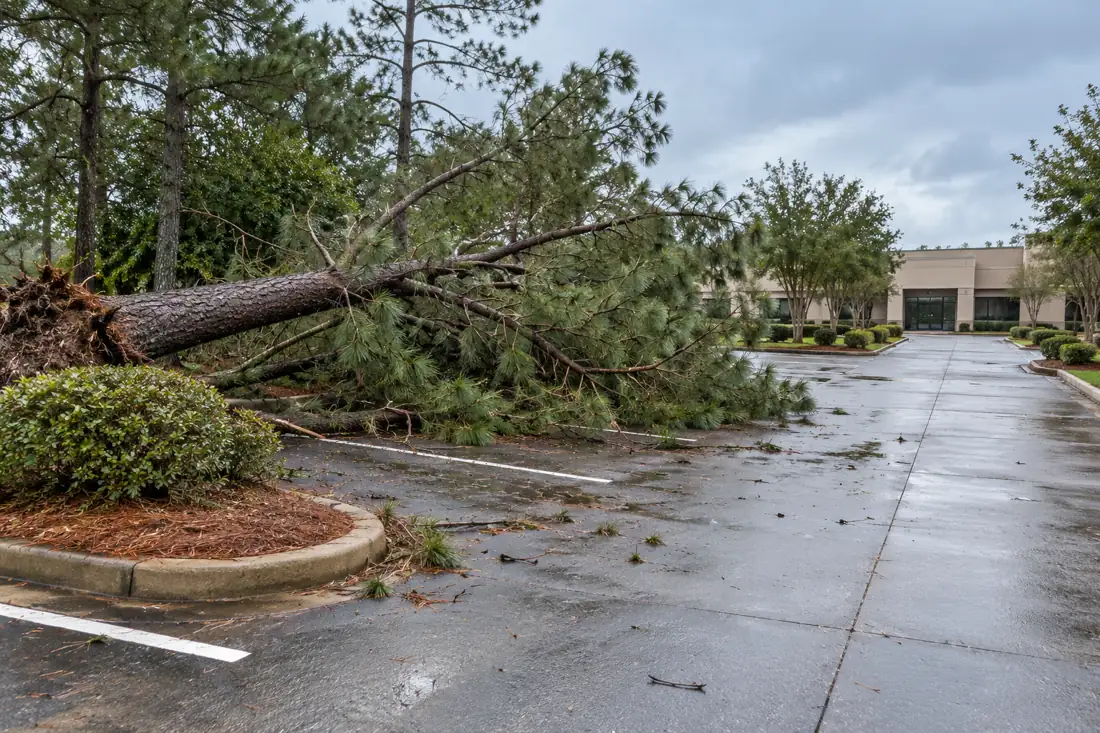
If unexpected damage or unstable material is reported, keep people clear and discuss the current condition directly. The storm response overview provides related context, but a message does not confirm emergency dispatch. Immediate threats or electrical involvement require the appropriate emergency or utility service. Tree work should not resume under an obsolete plan simply because another trade is waiting for the area.
Make the next-trade handoff recognizable
Compare the finished work with the accepted identifiers, limits, material decisions and required finish. Name the site contact who accepts the result and keep any unresolved items visible. Where records are needed, agree on photo labels or a project format beforehand. Completion documentation should describe actual tasks and remaining responsibilities without claiming that the entire construction site is inspected, safe or ready for every operation.
A planning example is selected removals for an access route, a retained-tree protection boundary and separately assigned stump excavation by the site contractor. Those tasks can support one sequence while having different completion points. This example is not a documented project. Send Tree Huggers the current plan, safe photos, access details, required handoff and project contact so the first discussion can focus on the work the contractor actually needs.
Build a usable tree-work subcontract handoff
Refer to the drawing revision that the field crew will actually use. Identify each removal or retained tree using a label that survives meetings and emails. State the next construction dependency: overhead clearance for deliveries, access clearing before utilities, a removal before excavation or stump work before paving. These are distinct outcomes and should not be implied by a broad request for tree clearing.
Discuss loading and equipment routes alongside other trade activity. Temporary fences, open trenches, material stockpiles and deliveries may change practical access from week to week. Name the person authorized to change the work area and how updated instructions reach crews. A subcontractor should never be assumed to have unrestricted access to an active construction site simply because a general contractor requested a price.

Use current drawings and clear acceptance limits
Retained trees need documented protection around root zones, not merely a note to leave them standing. If the design proposes major excavation or a branch conflict, seek qualified review rather than expecting a field crew to improvise cuts. Record any approved change on current plans. Grading and buried utilities may create long-term effects that would not be visible when the tree portion of the job is completed.
Check closeout against the exact tree list, cleared limits, wood handling, stump disposition, barriers retained and ground conditions. State which next tasks belong to excavators, paving crews or landscapers. Arrange photo labels and required records before work starts so the job can be accepted without reconstructing its scope after the fact.
Contractor Tree Service questions
Which plan should be sent for a contractor estimate?
Send the current revision and explain which tree identifiers and work limits govern the inquiry.
Does a colored mark authorize removal?
Only the confirmed scope and approval process establish authorization; resolve conflicts with current plans first.
What does the next-trade finish mean?
It is the actual condition the following contractor needs, including material and below-ground responsibilities.
Can the requested date alone define the work?
No. Include the dependency, work scope, access and required finish, then confirm availability directly.
How should retained trees be handled?
Identify them before routing, storage and ground work, and coordinate appropriate protection requirements.
Does a broad site photo prove machine access?
No. Show the full approach, entry, turns, ground, setup and loading route.
Is stump excavation included in tree removal?
Do not assume it. Grinding, excavation, backfill and restoration require clear scope decisions.
What utility information should be shared?
Provide known information, its limitations and the responsible contact for required confirmation.
Does a capability page accept subcontract requirements?
No. Submit current project requirements for direct review and confirmation.
Who should approve additional trees or changed handling?
Use the project’s named authority and agreed process, with scope and relevant price or timing effects recorded.
What should happen when the site changes after pricing?
Report the change so the accepted assumptions, method and schedule can be reviewed.
What makes the final handoff useful?
Compare work with the current identifiers, limits, finish and remaining-item responsibilities with the accepting site contact.
Let’s plan your tree work.
Send the property address, safe tree photos and the result you need. Include access restrictions and the person who can approve the work.