Understand assessment questions, root conflicts, construction effects and the limits of treatment.
Preservation decisions worth documenting before work begins
Before selecting pruning, cabling, soil work or removal, document the observable problem and the location of the tree’s crown, trunk flare and exposed roots. A thinning canopy by itself does not prove the tree is dead, and a vigorous-looking canopy does not rule out a structural defect.
Compare photographs from the same angle where possible, note recent trenching or changes in drainage, and separate symptoms that appeared suddenly from those developing over several seasons. This record helps a qualified evaluator distinguish a temporary stress response from a condition that needs prompt action.
A useful preservation scope should describe the specific objective, areas that must remain undisturbed and what would cause the recommendation to change. Keep heavy equipment away from important roots unless access has been reviewed, and do not bury the trunk flare while adding landscape material. If an inspection raises questions about internal decay or stability, ask what additional assessment is justified rather than treating an image or a single symptom as a final diagnosis. Record the follow-up date and what the property owner should monitor.
State the decision an assessment needs to support
A homeowner may want to know why a tree has changed, whether a visible defect warrants closer review or how to retain a tree during another project. Those questions are different from requesting a price for a defined pruning task. Explain the decision you need to make when arranging the visit. Ask what the proposed assessment includes, who performs it and what form of findings or recommendations you can expect.
A work estimate is not automatically a comprehensive written condition or risk assessment. The assessment service page provides related scope context. Be clear if an owner, manager or other reviewer needs documentation rather than an informal discussion alone. That helps align the visit with its purpose and avoids treating a brief look used for pricing as proof that every root, branch connection and internal condition has been examined.
Build a history without guessing the diagnosis
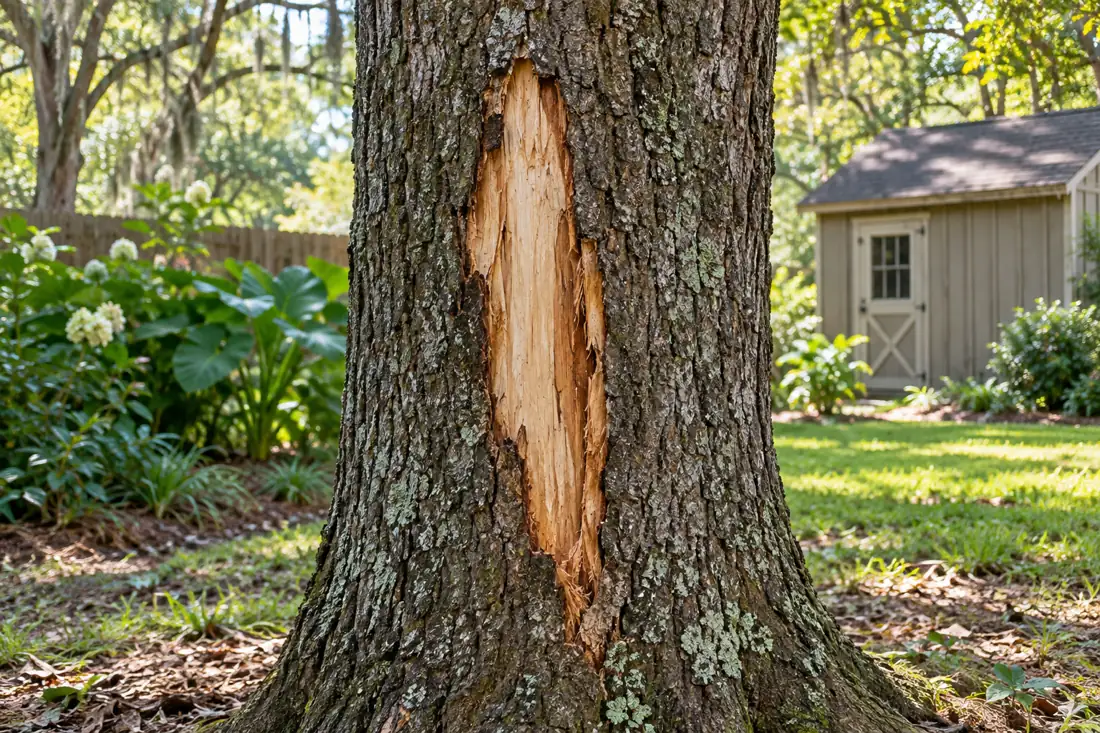
Record what changed and when you noticed it. Useful observations include a thinning part of the crown, recent limb failure, a new lean, bark injury or a change at the soil surface. Add known storm damage, earlier pruning, construction, paving or altered drainage nearby. If you do not know a date or cause, say that honestly. An accurate incomplete history is more useful than a confident explanation that has not been established.
Safe photographs can connect those observations to the tree and surroundings. Include a whole-tree view, the base and the affected area from a location that does not expose you to danger. The decline guide and condition-concern guide explore related questions. Neither a photograph nor a general guide should replace the site-specific review needed to interpret the current condition and decide what action is appropriate.

Keep targets and site use in the review
A tree’s surroundings affect the decision. Explain which buildings, paths, vehicles and occupied spaces lie near it and how those spaces are used. A branch above a seldom-used corner presents a different practical context from one above a regular entrance. Tell the assessor about intended changes, such as a play area, shed or new vehicle route, so the discussion reflects the future use as well as today’s layout.
Avoid asking for a permanent declaration that a living tree is safe forever. Instead, ask what was observed, what the evaluation could not establish and what options or follow-up are recommended. Those distinctions make the result useful for a property decision. A written record should be specific about the tree, scope and date rather than relying on an unqualified assurance. The useful objective is informed management of the tree and site over time.
Protect roots and soil before construction begins
If you want a tree retained during a project, raise that objective before routes, storage and excavation are fixed. Provide the proposed work footprint and explain where equipment, materials and spoil might go. Leaving the trunk standing does not, by itself, define a complete protection plan. The contractor and other relevant professionals need to consider the surrounding root area and site conditions as part of the project discussion.
Ask for site-specific protection and coordination appropriate to the work rather than inventing one universal distance from the trunk. Mark the agreed areas and make sure the people using the site understand them. The roots and foundations guide and construction-site page provide related context. Tree care and building design remain different responsibilities; an after-the-fact treatment should not be assumed to undo whatever damage a construction route or excavation may cause.
Document changes before deciding the tree is declining
Describe changes in the crown, leaves, bark and root-zone environment using dates and comparable views. Seasonal leaf exchange, drought stress and construction effects can resemble more serious trouble in isolated photos. Note recent trenching, fill, ponding, heavy vehicle use and storm damage. Compare similar times of year where older images exist. Keep observed facts separate from suspected causes, and do not attempt to test a weak branch by standing beneath it or pulling on it.

Protect the root area before selecting a route
Keep the proposed retention boundary visible on the drawing and on the ground before machinery arrives. A tree that looks healthy above ground may have shallow roots beneath the intended parking, excavation or stockpile area. Identify who is responsible for approving any change to that boundary and record the condition of the site before equipment enters.
A useful preservation handoff names each retained tree, shows the intended access route and states which activities are excluded near its roots. If another contractor will excavate, install paving or change grade, request a separate review of those impacts. A tree-service estimate by itself is not certification that an altered root zone will remain healthy.
Tree preservation and tree risk are related but different decisions. A defect's significance depends in part on the surrounding use: a busy entrance may require faster assessment than an unused corner of a large site. Ask which conditions can be monitored, which need specialist investigation and which restrictions should apply while uncertainty remains. Soil protection, selective cuts and ongoing inspection serve different purposes; none should be presented as a guaranteed cure or substitute for an individual structural assessment.
Plan for the ground beneath the canopy
A tree can be affected by decisions that seem unrelated to pruning. Parking heavy equipment, storing fill, grading soil and trenching close to the root zone may change site conditions well before the crown shows a response. If the project involves renovation or clearing, share the actual site plan and identify which trees must stay.
Agree on how the protected area will be marked and what work must remain outside it. An orange fence is only a visible boundary; it does not substitute for an appropriate site-specific protection plan or professional assessment. Photos should include the root flare, nearby paving, grade changes and planned access routes from safe locations.
Record changes in the project scope before they happen instead of treating preservation as a cleanup task at the end.
Trees can be harmed by compacted soil, trenching, grade changes and storage below their crowns even when machinery never touches their trunks. Identify retained trees before access routes and material staging are chosen. A realistic protection plan addresses the available rooting area, drainage and any planned excavation rather than assuming a fence close to the bark is enough.
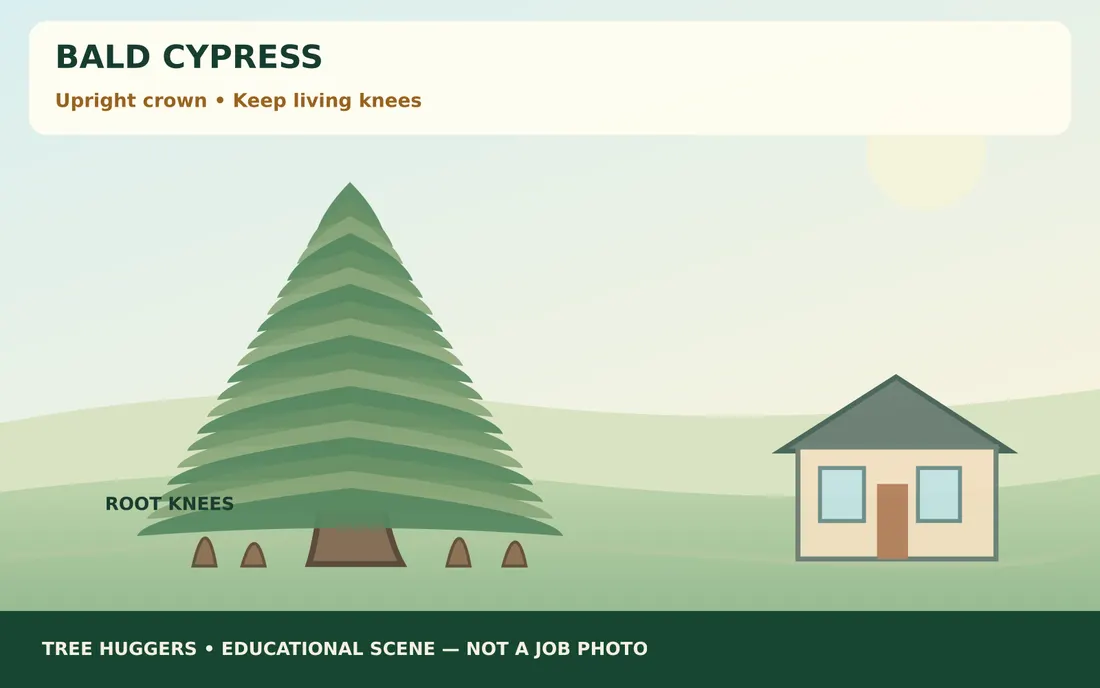
Record the root flare, existing paving and soil grade before nearby construction starts. If trenching or fill will approach roots, ask what evaluation is appropriate and who can authorize a change. A generated image illustrates the planning question; it does not establish the actual root extent or safe construction distances at a customer's property.


Preserve the usable root area
An exclusion fence is only useful when it follows an appropriate protection plan. Identify which trees will remain, where equipment must travel and whether work involves trenching, fill, grading or new paving. Protective fencing should not be interpreted as proof that roots stop at its edge: significant roots may extend well beyond the visible trunk flare. A qualified assessment should establish practical boundaries before construction disturbs soil.
Separate preservation goals from a diagnosis
A preservation plan should begin with why the tree matters: shade, screening, heritage, property use or habitat. Record prior pruning, soil changes, grading, drainage work and any recent shift in appearance. Photographs taken at consistent viewpoints can show trends but cannot diagnose internal decay or root function by themselves.
If construction is planned, map equipment access, storage and excavation in relation to the tree's likely root area before site work begins. Ask a qualified professional to evaluate whether the desired preservation outcome is realistic and what monitoring or protective steps are warranted. The guide should help organize the decision and its uncertainties, rather than implying that a single treatment guarantees a tree will remain healthy.
Planning example: retaining a tree before a patio project
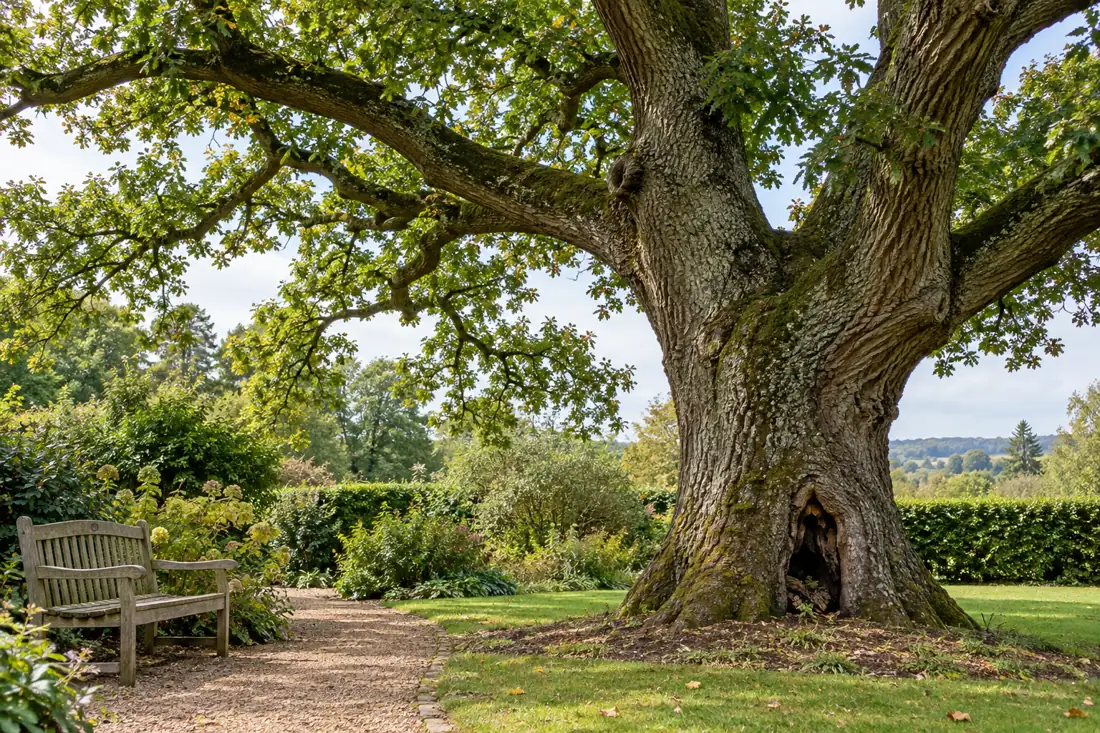
Suppose a homeowner wants to retain an established oak while replacing a nearby patio. The proposed work involves access, excavation and material storage near the tree. The preservation request should include the intended layout and sequence before the building contractor fixes those arrangements. A photograph of the crown alone would leave out the site changes that make the retention decision important. The owner should ask what assessment and site-specific coordination are needed rather than assume that avoiding the trunk settles protection.
The tree discussion can identify relevant concerns and the scope of any findings, while patio design and excavation responsibilities remain with the appropriate providers. Agreed protection areas and change contacts should reach everyone working on the site. If the layout changes, review that change before work rather than relying on later pruning or treatment to reverse an unknown effect.
This hypothetical example illustrates early coordination, not a prescribed protection distance or a documented client project. It also shows why keeping the tree is an ongoing site objective, not simply leaving it off a removal list.
Separate a care option from a guarantee
Pruning, support systems, treatment and monitoring can address different identified concerns. Ask what a proposed option is intended to accomplish, why it fits the current tree and what follow-up it requires. Do not select a treatment simply because it was used for another tree or because a product name sounds like a general solution to decline. A useful recommendation connects an action to an observed problem and its assessment limits.

A preconstruction hold point for the retained tree
Before a patio, trench, driveway or building project begins, identify each retained tree on the same site plan used by the other trades. Record visible trunk and canopy condition, likely excavation limits, vehicle access and any existing drainage problem without claiming a specific root diagnosis. Ask the tree professional to flag the area where digging, fill or heavy traffic may affect roots. A permit or building approval does not itself establish that those roots are protected.
Use one explicit hold point before soil disturbance: the contractor, property owner and tree-care specialist review the work limits and agree what changes require another discussion. Photograph the marked limits and use dated site notes for subsequent changes. After the construction phase, inspect compaction, grade change and irrigation conditions; an apparently healthy crown on one visit does not prove that delayed impacts cannot develop.
The cabling and bracing page and injection page introduce separate service conversations. Discuss their suitability directly if they are proposed. Keep preservation goals realistic: retaining a tree can involve continuing review and changed decisions as conditions evolve. A care scope should not imply that all defects are corrected permanently or that no future failure can occur. Understanding that distinction helps an owner evaluate the proposal on its actual purpose.
Set a review trigger for preservation work
Save an explicit follow-up plan: baseline photos, who monitors the tree, when the next review occurs and which new observation triggers an earlier call. For a managed property, state who can approve additional work. If removal is proposed after attempted preservation, keep the reason tied to actual condition and risk rather than an assumption that large trees are inherently dangerous. Planning illustrations are examples, not company job photographs or promises of survival.
Decisions to confirm
- Compare dated crown and root-zone observations
- Record construction and drainage changes
- Agree on monitoring or urgent-review triggers
- Assign a person responsible for follow-up
Make several trees a record, not a general impression
On a managed property or large yard, give each tree a consistent identifier. Connect the identifier to photographs, the concern, known history and any accepted work. Distinguish an inventory used to locate tasks from a condition assessment of every tree. A list prepared for pricing may not contain the evaluation or written findings a separate decision requires.
If the assessor recommends different next steps for different trees, preserve those distinctions. One tree may need further investigation, another a defined care task and a third periodic review. Do not flatten the result into a statement that the whole property passed. The property-management page provides context for organizing multi-tree and multi-site work. Clear identifiers allow the owner, manager and contractor to discuss the same tree when a later observation or project change occurs.
Turn recommendations into an authorized work scope
After the review, identify which recommendations you are accepting now. Tie them to the tree and task, including access, retained features and the expected record at completion. If monitoring or another assessment is recommended, clarify what triggers the next contact and who is responsible for arranging it. Do not assume a recommendation automatically creates a maintenance appointment or authorizes the contractor to perform additional tasks.
Keep a copy of the findings or notes supplied within the agreed scope, along with accepted proposals and useful photos. If another project changes the site, provide that new information before the work goes ahead. A preservation discussion can become outdated when excavation, storm damage or altered access changes the conditions being managed. The record should help you understand the basis for a decision and recognize when the next decision needs fresh review.
Know when the conversation becomes urgent
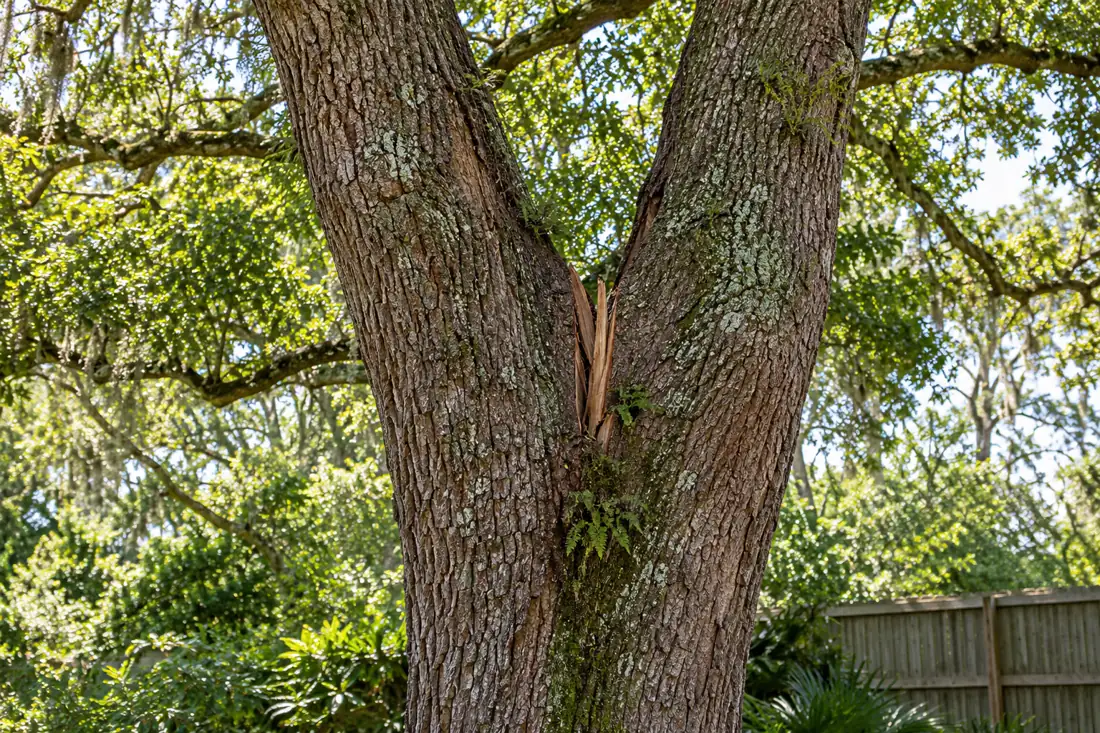
A newly split connection, lifted ground, hanging limb or tree contacting a structure calls for a direct description of the change. Keep people away from the affected area. Do not pull, climb or cut damaged material to investigate. Wires or an immediate threat require appropriate emergency or utility involvement. Call Tree Huggers about current response availability rather than relying on a routine form reply to manage an urgent condition.
For a planned preservation request, send the address, safe tree and base photos, known history and the decision you need supported. State whether you want to retain the tree and whether a written review is needed. The guides below organize specific topics, while tree health and preservation leads to the service discussion. The starting point is a clear question and accurate site information, followed by an assessment and care scope proportionate to that question.
Tree Condition and Preservation Planning questions
What question should I ask when arranging assessment?
Explain the decision you need supported: a visible defect, decline, retention during construction or another concern. Ask what evaluation and documentation the visit includes.
Is a work quote a complete risk assessment?
Not automatically. Pricing a defined task and providing documented condition or risk findings are different scopes that should be clarified before the visit.
What tree history is useful?
Share known storms, failures, pruning, excavation, paving, drainage changes and the timing of visible symptoms. Label unknown dates or causes honestly.
Can photographs establish every internal defect?
No. Safe photos help introduce the concern and surroundings, but they do not replace all site observations or additional investigation where needed.
Why does property use matter to preservation?
Nearby buildings, occupied routes and planned changes help frame the decision. Explain what lies around the tree and how people use those spaces.
Can someone guarantee a retained tree never fails?
No. Ask about observed conditions, evaluation limits, options and follow-up rather than expecting a permanent guarantee for a living tree.
When should retained-tree protection be planned?
Before equipment routes, material storage and excavation are fixed. Share the project footprint and arrange appropriate site-specific protection and coordination.
Is avoiding the trunk enough during construction?
No. The surrounding roots, soil and site changes also need consideration. Do not assume later pruning or treatment can reverse construction-related damage.
Does every declining tree need injection?
No. A treatment should address an identified concern and be appropriate to the tree and assessment. Product choice is not a substitute for diagnosis.
Does a tree inventory assess every tree’s condition?
Only if that evaluation is expressly included. A map or task list used for estimating should not be mistaken for comprehensive condition findings.
Are recommendations automatically authorized work?
No. Identify the accepted trees and tasks, approval contact and follow-up arrangements. Keep optional or deferred recommendations distinct from the current work scope.
What changes should prompt another call?
Report new splits, failures, leaning, lifted soil or changed surroundings. Keep clear of urgent hazards and use appropriate emergency or utility services where needed.
Make retained-tree protection a clear work requirement
Explain which trees should remain, any recent construction or changes in drainage, and known root-zone disturbances. Show the work zone from a safe distance, and identify expected vehicle paths, storage areas and digging limits. The aim is to discuss avoidable impacts before equipment or materials enter the site. A photograph alone cannot establish internal tree health or guarantee future survival; an on-site assessment may be needed for meaningful recommendations.